Category Archives: Liturgical Year

Maybe we should be an ass

Mosaic in El Moallaqah Coptic Orthodox Church: The Flight to Egypt, Cairo, Egypt by Unknown. c. 9th Century AD.

Whoever said the Middle Ages weren’t fun? I bring you glad tidings and happy greetings on this Feast of the Ass.

Yes, according to a blog post by Fr. John Zuhlsdorf: “The feast which became popular in France, could have stemmed from the so-called ‘feast of fools.’ It may tendrils into biblical donkeys, or the integration of the ass into the nativity narrative. It could have been in part inspired by a sermon of pseudo-Augustine. The day included the tradition of a parading a couple of kids (not goats) on an ass (not a Jesuit) right into the church, next to the pulpit during the sermon. The congregation would respond with loud ‘hee haws.’”[i]

This sounds a bit like an early version of Vacation Bible School or maybe fiction, but nope, this liturgical feast was the real deal. It was meant to commemorate the Holy Family’s flight into Egypt. So, on and near the day appointed, congregations would hear donkey-related stories in the Bible including the escape into Egypt (Matthew 2:13–23). Problematically, scripture never explicitly mentions a donkey in the narrative of Christ’s birth or the flight, but that’s firmly in the cultural memory. Why?

Well, donkeys were a symbol of humility and peace while horses were symbols of earthly power and war. Also, through many prophetic texts speaking to ancient Israel, we learn that God did not desire the Holy People of Israel to trust in horses and chariots, as Egypt did, but in the Lord (i.e. Psalm 20:7). Instead, they commonly utilized donkeys also known as asses. Donkeys are also one of the earliest and most frequently mentioned animals in the Bible through multiple texts. In the book of Job, the donkey is one of the fourteen animals that the Lord uses to illustrate God’s own power and creativity to Job (Job 39). Then, Balaam’s donkey actually speaks (Numbers 22:23). The only other animal ever to speak is the serpent of Genesis. Indeed, many verses urge people to be good to their beasts including their donkeys (i.e. Exodus 20:10, Deuteronomy 5:14, Proverbs 12:10).

Yet perhaps most importantly, the donkey was connected to the Messiah as a sign: “Rejoice greatly, O daughter of Zion; shout, O daughter of Jerusalem: behold, thy King cometh unto thee: he is just, and having salvation; lowly, and riding upon an ass, and upon a colt the foal of an ass” (Zechariah 9:9). Jesus embodies this as he rode into Jerusalem for his final Passover. If Jesus ends his life with a ride on a donkey, it does not take a great deal of creativity to imagine Jesus (through his expectant mother, Mary) rode one as he entered into our world incarnate. (It is likely one was not only available but used.)

So, if anyone ever says you are acting like an ass, or you feel like one, don’t be too quick to take offense or lose heart. Think of the humble donkey and give God thanks. For all their drawbacks, the ass remains a valuable animal, born with a purpose, and dearly loved by God. If God can use an ass, God can surely use you or me. The Bible tells us so.

Yes, this feast might no longer be on the liturgical calendar, but blessed Festum Asinorum, Feast of the Ass Day, to one and all!

Epilogue:

Hear is a song from Italian history with the feast to help brighten your celebration.[ii] As the feast was seemingly associated with the Feast of Fools, it is quite jolly unlike other liturgical music of the day. An Italian troubadour version of ‘Orientis Partibus’ with braying chorus.[iii]

Translation:

From the country of the East,
Came this strong and handsome beast:
This able ass, beyond compare,
Heavy loads and packs to bear.

Chorus:
Now, seignor ass, a noble bray,
Thy beauteous mouth at large display;
Abundant food our hay-lofts yield,
And oats abundant load the field.
Hee-haw! He-haw! He-haw!

True it is, his pace is slow,
Till he feels the quickening blow;
Till he feel the urging goad,
On his hinder part bestowed.

Chorus: Now, seignor ass, &c.

He was born on Shechem’s hill;
In Reuben’s vales he fed his fill;
He drank of Jordan’s sacred stream,
And gambolled in Bethlehem.

Chorus: Now, seignor ass, &c.

See that broad majestic ear!
Born he is the yoke to wear:
All his fellows he surpasses!
He’s the very lord of asses!

Chorus: Now, seignor ass, &c.

In leaping he excels the fawn,
The deer, the colts upon the lawn;
Less swift the dromedaries ran,
Boasted of in Midian.

Chorus: Now, seignor ass, &c.

Gold from Araby the blest,
Seba myrrh, of myrrh the best,
To the church this ass did bring;
We his sturdy labours sing.

Chorus: Now, seignor ass, &c.

While he draws the loaded wain,
Or many a pack, he don’t complain.
With his jaws, a noble pair,
He doth craunch his homely fare.

Chorus: Now, seignor ass, &c.

The bearded barley and its stem,
And thistles, yield his fill of them:
He assists to separate,
When it ‘s threshed, the chaff from wheat.

Chorus: Now, seignor ass, &c.

With your belly full of grain,
Bray, most honoured ass, Amen!
Bray out loudly, bray again,
Never mind the old Amen;
Without ceasing, bray again,
Amen! Amen! Amen! Amen!
Hee-haw! He-haw! He-haw!’[iv]

© 2025 The Rev. Louis Florio. All content not held under another’s copyright may not be used without permission of the author.


[i] Zuhlsorf, J. (January 14, 2020). “14 January – Festum Asinorum #FeastoftheAss Day! (No, it’s not a special Jesuit holiday.)” The American Catholic. Downloaded January 14, 2025 from https://the-american-catholic.com/2020/01/14/feast-of-the-ass/.

[ii] Faber Teatro. Orientis Partibus (con asino), a Bracciano, 12 Luglio 2009 at cristinadelmastro.

[iii] Thanks to the Equus Asinus blog for sharing this song among its several great blog posts on the Feast of the Ass. Thomas, G. (January 14, 2023). “Feast of the Ass, 14 January.” As downloaded at https://equusasinus.net/2023/01/14/feast-of-the-ass-14-january/.

[iv] Ibid.
Leave a comment

Filed under Church History, Liturgical Year, worship

The Christmas rush isn’t all bad

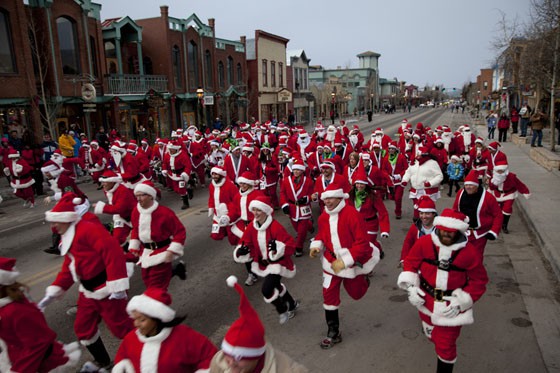
race_of_the_santas_breckenridge_1

“Silent night, holy night, all is calm, all is bright,” so the song goes. Unfortunately, our Advent and Christmas can seem anything but calm. As I write this, it is mid-November, and yet, our congregation’s planning teams have already been working on our Christmas together for weeks. Christmas music has started to play in stores and in some cases on the radio. One of my neighbors has already set up their Christmas tree even though Advent doesn’t begin for almost two weeks!

Our society seems impatient to experience Christmas joy and peace. Perhaps this is because there is too little joy and peace in our world. At this time of year, it gets busier at our congregation and busier in our homes. Light dims and darkness grows. Unexpected bills happen. Sickness and death comes. After Paris, Beirut, Kenya, and on and on, terrorism and war frighten us. We hope for an ideal Christmas because our lives in a fallen world are always less than perfect. Too little is calm, and our future may seem dark to us. We often hunger for a reprieve from our pain and busy, unpredictable life.

Jesus came into a time of trouble not so unlike our own. People were lucky to reach their teens. Thirty was considered old. Israel was an occupied country with isolated rebels and thieves (especially in Judea) seeking to defeat the Roman Empire and perhaps get a little economic advantage and power for themselves at the same time. For their part, the Romans wished to assert their power at all costs. Their vassal king, Herod the Great, was known to be tyrannical if not a bit mentally unstable. It would be he who ordered all babies and toddlers in Bethlehem murdered over fear that the recently born Jesus would usurp his throne. Life was hard and often unfair.

Despite these threats, Jesus came as a most vulnerable babe. He was a child of scandal, for his neighbors had heard of Mary’s pregnancy prior to her marriage with Joseph. Many in that day were poor like Jesus’ own family, and they often lived and died by the discretion and generosity of others with higher stature. Jesus didn’t come into the world to avoid our pain. Instead, he embraced and crushed it forever. As one liturgical communion prayer reminds us, “Dying you destroyed our death, rising you restored our life. Lord Jesus, come in glory.”

Most certainly, we can be encouraged that Jesus shared in our weakness and sorrows in order to share with us his victory over sin, suffering, death and the Devil. Against all odds, peace forcefully broke into our world to live among us and die among us through Jesus. For a moment, all was calm and all was bright because God was finally with us in the flesh. It was time for all creation to pause, worship and give thanks.

A mere 33 years later, all too soon, Jesus died, rose and ascended into heaven. We were warned life would not be easy in his absence, but it wouldn’t remain hard for ever. Similar to our wait for Christmas morning, creation “waits with eager longing for the revealing of the children of God.” It might prove a bumpy, fearful ride at times until then, but there can be joy on our journey. For Christmas day has come, and Easter is on its way. And all the while, we’re not alone. We are the church together: enlivened by God’s Spirit, sharing both our pain and joys with one another; offering pardon to those still in darkness. We are rushing not toward our death but toward a certain future filled with hope.

With all the saints before us, we can pray with confidence as we face any darkness, “Come, Lord Jesus, quickly come.” We don’t know the time, but we can trust Christ is already on his way. And when he comes, all will be calm and bright forevermore. For this time, Christ will be here to stay, and despite whatever might go on around us until then, I for one can’t wait. If that’s our future, let time fly.


Originally published in Messiah Lutheran’s newsletter, The Messenger (December 2015 – January 2016).

Unless otherwise indicated, all scripture quotations for this article are from the New Revised Standard Version (NRSV) translation.

© 2015 The Rev. Louis Florio. All content not held under another’s copyright may not be used without permission of the author.

Leave a comment

Filed under Liturgical Year, Pastoral Letter

In Christ’s “Defeat,” Our Victory: Meditation on Psalm 118

Psalm 118 is perhaps the consummate psalm for Palm Sunday, and as we enter Holy Week. Throughout the Gospel According to Matthew, the gospel writer has lifted up how Jesus was the fulfillment of all God’s promises in the Jewish scriptures. For example within the text, Matthew recounts five major lessons of Jesus’ teachings; much as there are five Books of Moses. When Jesus delivers his first recorded teaching in Matthew, Jesus gives his commands called the Beatitudes from a mountaintop; much like Moses was given the Decalogue on a mountain. Fourteen prophesies are explicitly connected to the actions of Jesus; fourteen being the traditional number of generations between Abraham and the establishment of the Davidic Dynasty, fourteen from David to the exile in Babylon, and fourteen from the exile to Jesus’ birth. It isn’t much different with Psalm 118. As with many, this psalm reflects aspects of the life and death of Jesus.

Psalm 118 is often recited as part of the Hallel, a Jewish prayer consisting of a verbatim recitation of Psalms 113 through 118. The Hallel is used for praise and thanksgiving on holidays such as the Passover, when the Jews recall the Angel of death passed over Jewish homes in Moses’ time leading to their freedom from Egyptian slavery. As Jesus enters Jerusalem for the Passover celebration, he deliberately enters “mounted on a donkey, and on a colt, the foal of a donkey.” This fulfills the apocalyptic prophesy of Zechariah 9 regarding the coming ruler of God’s people and the judgement of Israel’s enemies.

To an oppressed people under Rome’s authority, Jesus was considered by many a messianic figure in the political sense. They quote Psalm 118 (verses 25-26), “Hosanna to the Son of David! Blessed is the one who comes in the name of the Lord! Hosanna in the highest heaven!” Many likely expect Jesus to precipitate their freedom as Moses did long ago and reinitiate a Davidic kingship. In celebration, they will “Bind the festal procession with branches, up to the horns of the altar” – the way to the Temple where Jesus will come into his final conflict with his adversaries.

Yet, Jesus hasn’t come to be king in that sense. “It is better to take refuge in the Lord than to put confidence in mortals. It is better to take refuge in the Lord than to put confidence in princes.” (v. 8-9). Like the ritual sacrifices in the Temple, Jesus will become a bloody, final sacrifice for our sake. Throughout the week, Jesus will remain in conflict until he is finally betrayed. He will be surrounded by adversaries like bees, pushed hard, and find himself crowned with thorns (v. 12).  He will die on a cross like a rebel, falsely accused of proclaiming himself king. It seems that he is defeated. “The stone that the builders rejected has become the chief cornerstone. This is the Lord’s doing; it is marvelous in our eyes.” The Temple, too, will be destroyed in 70 CE, but the church, Christ’s body, will rise in its stead.

Thanks to God’s steadfast love, we will never be rejected. Through Jesus’ cross and resurrection, we have access to our Father in Heaven and forgiveness for our rebellion in sin. With Jesus, our lips and hearts can pray with confidence, “I shall not die, but I shall live, and recount the deeds of the Lord.” Through the events of this upcoming week, we become conquerors with Christ (see Romans 8). We can rightly sing a song of victory – the victory of Jesus for our sake.

Christ’s peace be with you as we enter Holy Week together, Pastor Lou


Please enjoy a musical meditation on Psalm 118 from the Ecumenical Community of Taizé

Unless otherwise indicated, all scripture quotations for this article are from the New Revised Standard Version (NRSV) translation.

© 2015 The Rev. Louis Florio. All content not held under another’s copyright may not be used without permission of the author.

Leave a comment

Filed under Liturgical Year

Food for Thought

psalm34_8-taste-the-goodness-of-the-Lord“O taste and see that the Lord is good.” Psalm 34:8

Ironically a time commonly associated with fasting, Lent can prove a time of refreshment and renewal. Through intentionally refocusing our faith, seeking out spiritual disciplines, service, and yes, even simple food and fellowship together, we can grow as children of God and be used to build Christ’s church.

In John’s Gospel, Jesus first invites his followers, “Come and see.” To walk with him and share his life, that’s where we will come to know him – and perhaps ourselves and our purpose – all the more. Rooted in faith, we often grow by doing. When Jesus calls himself the living water or bread of life, you’ll also read that Jesus invites all to come to him, to taste and see, so that we will never hunger and thirst again.

Certainly, faith in Christ alone saves us, but his intention is for an active, communal faith that blesses us and others. It is a faith that calls us to assemble regularly to feast on his Word, share our gifts to honor God as well as for the good of others, and ultimately “remember” him and meet him; receiving his body and blood as a means of grace through his holy supper. This prepares and empowers us to go back out into the world, where we come to him in the lost, lonely, sick and dying. We become the vessels which carry his living water and bread of life, and yet, we often (if not always) find ourselves blessed more by such compassion than those we serve.

At home or away, we can always take private moments of prayer and meditation, but we are and remain the body of Christ. Jesus doesn’t want us to go through this life alone. Faith in Christ implies relationship with God, our brothers and sisters in Christ, and all our neighbors. For such love always feeds our lives, and Jesus seeks to love us always.

Yet, will we come to the feast being offered us? Do you feel you have been too busy laboring for your daily bread, running after things that don’t last, or beat up by the world, empty or alone? Perhaps you realize you haven’t loved Jesus as you should – that you are human? Well, don’t just sit there. I encourage you to come join your local family of faith. Come, taste and see. Rediscover the love that you were always meant to share.

Everyone is invited to eat, drink and be merry with Christ and his church this Lent, for “The Lord redeems the life of his servants; none of those who take refuge in him will be condemned” (Psalm 34:22). That’s surely something to celebrate with our lives.

Peace,
Pastor Lou

Unless otherwise indicated, all scripture quotations for this article are from the New Revised Standard Version (NRSV) translation.

© 2014 The Rev. Louis Florio. All content not held under another’s copyright may not be used without permission of the author.

Leave a comment

Filed under Community Life, Liturgical Year, Pastoral Letter

Epiphany Blessing


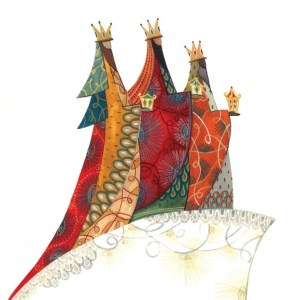
3kings blessing


Epiphany, also historically known as “Little Christmas,” marks the end of Christmas celebrations in Western Christendom on January 6th. The arrival of the Magi is often remembered as part of these celebrations. Although scripture never numbers the gentile Magi who came to worship Jesus, a tradition developed that there were three; each one baring a special gift of gold, frankincense, and myrrh.  They became popularly known as Melchior, Caspar and Balthazar and are often artistically represented as being of different peoples and races, for Jesus came to offer salvation to all.

Over time, a popular custom began to bless one’s home on Epiphany with the words in Latin, Christus Mansionem Benedicat (May Christ bless this house). I surmise this was because of the biblical scene from Matthew 2: 1-12. (Jesus was no longer in the stable but described to be in a house with his own family when the Magi visit.) Yet, I have not confirmed the origin of this practice. The first letter from each word of this blessing corresponds to the traditional names given the Magi. Which came first – the blessing or the names – remains a mystery, but their development within popular culture is likely related.

As we move forward into a new year, I suggest use of a simple blessing ceremony I have adapted from the internet. You can further adapt it to meet your family’s needs:

Once gathered, all may make the Sign of the Cross.

Leader: Peace be to this house and to all who dwell here, in the name of the Lord.

All: Blessed be God forever.

Reading: Matthew 2:1-12

Using chalk, write on the outside of your house’s door or frame (alternatively, on a path or driveway, or above or next to an entrance):

+ 20 C M B 14 +

This stands for the first half of the current year written out, Christus Mansionem Benedicat (Christ bless this house), then the other half of the current year written out. Start and end with a cross.

Optionally, the entire phrase may be written out. Each marking or word could be written by a varied member of the household if desired. The leader can share a prayer of their own or simply ask God to bless your home as the markings are made.

When finished, all can join in a closing prayer – “Lord God of heaven and earth, you revealed your only begotten Son to every nation by the guidance of a star. Bless this house and all who inhabit it. May we be blessed with health, goodness of heart, gentleness and the keeping of your law. Fill us with the light of Christ, that our love for each other may go out to all. We ask this through Christ our Lord. Amen.”

May a joyful and blessed Epiphany be yours!

Pastor Lou

Unless otherwise indicated, all scripture quotations for this article are from the New Revised Standard Version (NRSV) translation.

© 2013 The Rev. Louis Florio. All content not held under another’s copyright may not be used without permission of the author.

Leave a comment

Filed under Christmas, Community Life, Epiphany, Liturgical Year, Uncategorized, worship

My Heart Remains in Wonder

stained glass nativity with sunOn coming to the house, they saw the child with his mother Mary, and they bowed down and worshiped him. Then they opened their treasures and presented him with gifts of gold, frankincense and myrrh.” (Matthew 2:11)

Have you ever taken a good look around our sanctuary? Our stained glass windows are beautiful and educational. Long before the average person could read, people attempted to capture and share the wonder of God’s love for us through the art of stained glass.

At this time of year, my thoughts are always drawn to meditate upon the meaning behind our nativity window. It shows the star of Bethlehem shining above a manger. In the manger is the ancient “Chi Rho” symbol. This symbol is the first two letters of “Christ” in Greek joined together. Early Christians used this mark to represent Jesus. The window reminds us that Jesus, the Christ, came to us in human form at Christmas. Such news becomes even more wondrous when one considers that he comes to us throughout time. He is the Alpha and Omega, the beginning and the end – present before history began and will be after it ends – because Jesus always was, is and will be our God who is with us and for us.

Luther once wrote that the Bible is like the manger where we can meet, know and worship Jesus the Christ over and over again. This, too, is true, but it also doesn’t quite capture this special relationship – the intimacy spoken of goes well beyond “knowing” Jesus with only our intellect. Our holy texts assure us that Jesus has come to live with us in our hearts. Jesus wants to abide in us. He longs to be an intimate part of every aspect of our lives. This joyful mystery cannot be captured fully in written word or by any other human art, yet my thoughts came back to an old 18th Century Danish hymn which focuses upon the joining of our human hearts with the divine heart though the incarnation and gift of faith. It is one of my favorite pieces of Christmas music.

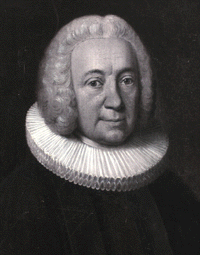
BrorsonWritten by a Danish Lutheran pastor and later bishop, Hans Adolph Brorson, Mitt Hjerte Alltid Vanker (in English, sometimes entitled “My Heart Always Wanders” or “My Heart Remains in Wonder”) movingly grasps at the surprise and mystery of the incarnation. Soundly pietist,  the reflection remains more oriented toward his feelings and heart rather than any intellectual exploration. The lyrics reflect relationship and intimacy, as well as grace and gratitude. Contemplating this miracle, God coming to us as a vulnerable newborn in a stable, Brorson’s own mind and heart wanders and enters a blissful wonderment as he thinks about his current saving, relationship with Christ.

O come, my Lord, I pray Thee!
And be my honour’d guest,
I will in love array Thee
A home within my breast.
That home can be no stranger
You bought it all yourself.
Thou will surely stay here
Swaddled in my heart.

We will never be able to fully appreciate, capture, or understand the miracle of love offered to us through Jesus Christ. Yet because it is not just an historical event, each and every day we may strive to cooperate with grace and make room for the Christ child in our hearts above all other things. His birth should move us to reflect upon the ultimate, ongoing Christmas miracle which comes to us through Christian faith, worship, fellowship and service. Christ’s Spirit continues to shape us and sanctify us into the gift God first intended with our own creation. We become part of God’s greatest gift to the world, where in Jesus’ name, we will love others. Through grace, we concretely become the Christ’s body, here and now.

Throughout your holiday wanderings and celebrations, I pray that you, your family and friends stop and ponder the nativity. Continue to wonder about and experience this joyful mystery and invitation in your life. Rejoice, for a child has been born for us! His name is Jesus, and we will never be alone or unloved. In response, let us seek to rightly worship him, opening our hearts and offering all that we are to him in thanksgiving.

—————————–

Many variants of the song exist in English due to the difficulty of translation. Along with the above video, here are English lyrics for this wonderful Christmas song:

My Heart Remains in Wonder/My Heart Always Wanders

My heart remains in wonder (or better translation: My heart always wanders)
Before that lowly bed
Within the stable yonder
Where Christ, my Lord, was laid. (or: was born)
My faith finds there its treasure,
My soul its pure delight,
Its joy beyond all measure,
The Lord of Christmas night.

But Oh! my heart is riven
With grief and sore dismay
To see the Lord of heaven
Must rest on straw and hay,
That He whom angels offer
Their worship and acclaim
From sinful man must suffer
Such scorn, neglect and shame.

Why should not castles royal
Before Him open stand,
And kings, as servants loyal,
Obey His least command?
Why came He not in splendor
Arrayed in robes of light
And called the world to render
Its homage to His might?

The sparrow finds a gable
Where it may build its nest,
The oxen know a stable
For shelter, food and rest;
Must then my Lord and Savior
A homeless stranger be,
Denied the simplest favor
His lowly creatures see.

O come, my Lord, I pray Thee,
And be my honored guest.
I will in love array Thee
A home within my breast.
It cannot be a stranger
To Thee, who made it free.
Thou shalt find there a manger (or: Thou will surely stay there)
Warmed by my love to Thee.[i] (or: swaddled in my heart)

In English, it is difficult to find a flowing, direct translation of the traditional final stanza in Danish or Norwegian, but it means roughly:

I’ll willingly spread branches
Of palms around your bed.
For you and you alone
I will live and I will die.
Come, let my soul find bliss
In this moment of delight:
To see you born right here,
Deep inside my heart’s abyss. (or: loving heart)[ii]


[i] English version on Hymnary.org

[ii] Translation merging multiple sources, primarily the above video and pust.org

The above piece was adapted from one shared in Messiah’s newsletter, The Messenger, in November 2009. Unless otherwise indicated, all scripture quotations for this article are from the New Revised Standard Version (NRSV) translation.

© 2013 The Rev. Louis Florio. All content not held under another’s copyright may not be used without permission of the author.

Leave a comment

Filed under Christmas, Liturgical Year, Uncategorized

Star of Hope – Advent, Week 4

A comet that gained an earthly following because of its bright tail visible from space was initially declared dead after essentially grazing the sun. Now, there is a silver of hope that Comet ISON may have survived. (Source: AP, 11/19/13)

A comet that gained an earthly following because of its bright tail visible from space was initially declared dead after essentially grazing the sun. Now, there is a sliver of hope that Comet ISON may have survived. (Source: AP, 11/19/13)

“For surely I know the plans I have for you,” says the Lord, “plans for your welfare and not for harm, to give you a future with hope.”(Jeremiah 29:11)

In Jeremiah’s letter to the Jewish people in exile, we hear God speak profound words of hope in the face of their doubt and darkness. God had not abandoned them. God did not stop loving them. The world seemed to be crashing down around them, and many were tempted to give up on forgiveness, salvation and new life. Yet, God would never give up on them. Rather than assimilating to the “realistic” outlook and ways of the world, they were invited to look to the Lord, have faith, and truly live.

No matter the generation, it is no different for us who dare to believe in God amidst our own struggles. Abraham hoped against hope; trusting that he would become “the father of many nations”[1] just because God had promised. We are told not to be jealous or measure ourselves against others. “Surely there is a future, and your hope will not be cut off,” Proverbs assures us.[2] In the face of many trials and losses, Moses and his people were still shown the way to freedom. They just had to trust, seek to follow God, and walk on.

Jesus himself tells us, “Do not worry about tomorrow.”[3] Instead, he only asks us to trust in him, follow his light, and reflect his love. He is our star of hope which no darkness – including our sin – can ever overcome. No matter our challenges, our lives are free to glorify God and rejoice, because of the hope laid up for us in heaven.[4]

Discussion question: How can living as a people of hope shape our lives?  


[4] Colossians 1:4-6

The above reflection was originally published in Messiah Lutheran Church and School’s worship bulletin for the Fourth Sunday of Advent, 2013. It is meant to complement Creative Communications’ Bright Star of Bethlehem series for Advent and Christmas.

Unless otherwise indicated, all scripture quotations for this article are from the New Revised Standard Version (NRSV) translation.

© 2013 The Rev. Louis Florio. All content not held under another’s copyright may not be used without permission of the author.

Leave a comment

Filed under Advent, Grace, Liturgical Year

Star of Creation – Advent, Week 1

This new Hubble photo is but a small portion of one of the largest seen star-birth regions in the galaxy, the Carina Nebula.

This Hubble photo is but a small portion of one of the largest seen star-birth regions in the galaxy, the Carina Nebula.

Luther observed, “Our Lord has written the promise of resurrection, not in books alone, but in every leaf in springtime.” God is, was, and always will be part of the creation that surrounds us.

Yet in a fallen world, that wasn’t good enough. The works of sin, death, and the Devil enslave our lives, separating us from God and one another.

Instead, God longs for relationship and intimacy; to replace our hearts of stone with hearts of flesh. Through the prophets, God promised to make his home with us, not in some new stone temple, but in those same hearts so prone to wander and fail.

Into the world, God sent his only Son to fulfill this promise. Jesus would take on flesh for our sake. He would live for us, work for us, suffer for us, and die for us. From his resurrection, our own eternal life springs forth.

Through the mysteries of our shared faith and baptism, we now become a new creation, freed from our flesh and the limits of this world to be the children of God. We are saved to be his body which proclaims the Good News: Jesus has come into the world to offer new life to all.


Discussion questions: As part of God’s creation, the promise of resurrection is written in each of us, as we are now. How does your life signify or serve as a promise of the resurrection? How could you “shine more brightly” to better give God glory and point others toward Christ?

Image Credit: NASA, ESA, and M. Livio and the Hubble 20th Anniversary Team (STScI), downloaded on November 30, 2013 from:
http://www.nasa.gov/multimedia/imagegallery/image_feature_1647.html

The above reflection was originally published in Messiah Lutheran Church and School’s worship bulletin for the First Sunday of Advent, 2013. It is meant to complement Creative Communications‘ Bright Star of Bethlehem series for Advent and Christmas.

Unless otherwise indicated, all scripture quotations for this article are from the New Revised Standard Version (NRSV) translation.

© 2013 The Rev. Louis Florio. All content not held under another’s copyright may not be used without permission of the author.

Leave a comment

Filed under Advent, Community Life, Grace, Liturgical Year

Rediscovering the Spirit of Halloween

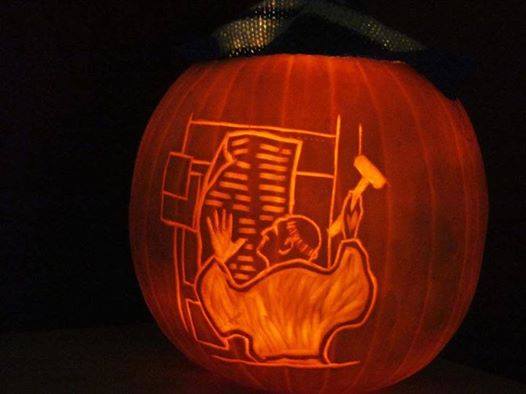
Luther Posting His 95 Theses

Luther Posting His 95 Theses

Each year, we hear debates among Christians regarding Halloween. With all its secular, commercial and bewitching components and hoopla, should Christians celebrate? I argue, “Yes!” If one considers the history of the day and its likely very intentional relationship to the start of the Protestant Reformation, it is impossible to deny the Christian faith’s connection to Halloween. We should celebrate with vigor, yet we should also understand its origins, purpose and potential.

Historically, the word Halloween is a contraction of All Hallows Eve. You might recall that hallow is an Old English word for “to be made holy” (as a verb) or saint (as a noun). Halloween is the evening before the Feast of All Hallows (or in modern English, Saints). Today, we know this religious celebration more commonly as All Saints Day, November 1st.

During All Saints Day, many in the Western church remember with thanksgiving the saints who are now with God. (Orthodox Christians celebrate this feast the Sunday after Pentecost.) Originally, the feast seems to have been celebrated intermittently and not uniformly on May 13th. That’s when Pope Boniface IV consecrated the Pantheon in Rome, a temple formerly dedicated to all gods, in about 609 CE. Thereafter, it became a church dedicated to Mary, the Mother of God and All Martyrs, those who died for their Christian faith. Since the Renaissance period, the building has served as a tomb rather than a church.

This ancient All Saints Day became a time to remember martyrs of the faith and later all canonized saints. During the reign of Pope Gregory III (731-741), the feast day was officially moved to November 1st. Some argue this was done to help combat and suppress the particular pagan Celtic practice of Samhain, a celebration on or about sunset 31 October to sunset 1 November.

Samhain and other similar pagan festivals marked the end of the harvest season and the beginning of winter. It was a time of growing darkness when the Celtic culture and many others – including many early superstitious Christians – believed the lines between our world and the place of the dead became blurred. Stories of hauntings and practicing divination were deeply associated with the pagan holiday.

As with Jewish custom, Christian worship practices recognize the next day begins at sundown. This allowed for a “vigil mass” or service to be held the evening before All Saints Day. This further helped coopt that evening of October 31st into a firmly Christian celebration.

Over the years, the Christian liturgical calendar continued to develop. A Commemoration of All Faithful Departed, not just martyrs or those declared to be saints through canonization, was officially added on November 2nd.[i] In Roman Catholic theology, the belief in purgatory (a place of purging sins to help make one worthy of heaven) had become accepted. This added religious feast day would serve to remember those faithful not yet in heaven and pray for their quick release from purgation. It was intimately associated with the practice of indulgences; pardons earned by works or paid for to free oneself or a loved one from purgatory more quickly.

With the many obvious medieval abuses of this teaching and his own spiritual awakening, Martin Luther began to wrestle with the contemporary practices of the Western church, especially indulgences. A biblical professor and Roman Catholic priest, he wrote 95 points (or theses) he wished to debate regarding how one is saved. Could one buy forgiveness paying for what was called an indulgence? Is it possible to earn your way into heaven or to prove yourself worthy of salvation? These were his ultimate questions.

From studying scripture, the answer had become obvious to Martin Luther. Faith comes down to trusting what Jesus did for us on the cross and through his resurrection. Jesus’ holy work was enough to cover all our sins – past, present and future – just as Jesus promised in scripture, “So if the Son makes you free, you will be free indeed.”[ii]

Although I personally have not yet found any writings explicitly connecting Luther’s posting of his 95 Theses on 31 October 1517  to Halloween, it seems exceedingly likely. Luther would expect large crowds to be present at church for the feast days ahead. Further, this educated man probably recognized the propriety of discerning about indulgences and purgatory as the Western church prepared to celebrate All Hallows Eve or Halloween, the Feast of All Saints, and the Commemoration of All the Faithfully Departed (now commonly known as All Souls Day). His 95 Theses specifically addressed beliefs, practices and excesses associated with these celebrations.

Understanding that we are saved by grace through faith in Jesus Christ, Lutherans no longer recognize purgatory or All Souls Day, but Halloween as well as All Saints Day remain on many of our personal and religious calendars. (For Roman Catholics and some others, many still look at the three days of October 31st through November 2nd as intimately connected and call it “the triduum of Hallowmas.”)

As a Protestant Christian, Halloween need not be a time where we find ourselves over focusing on evil, commercialism, violence or anything else. It can become a time of worship and spiritual formation. Despite its origins and relationship with pagan practices, it can now serve as the perfect time to remember what ignited the Protestant Reformation and particularly the saving work of Jesus Christ. We can celebrate both the love and memories of the faithfully departed as well as share in family fun – yes, trick-or-treating, trunk-or-treating or parties included. Like all things in life, our Halloween celebrations can be whatever we choose to make of them including something appropriate for all Christ’s sinner-saints[iii] still here on earth. How we celebrate can witness to our shared faith in Jesus and love for one another.

Some practices you might like to consider:

  • Visit grave sites of loved ones to place flowers, candles or luminaria (as allowed by regulation or law). Pray with thanksgiving for how God shared love with you through their lives.
  • In your faith community, share the names of those who have died over the last year perhaps ringing a bell for each one. You might allow for a special wreath where flowers can be added to symbolically represent those God used to shape your life and faith. Pray for all those who continue to mourn.

all saints sunday

  • Talk about your ancestors and family history together. Share stories of faith. How did your family communicate and pass down their faith in Jesus? Where do you see God’s steadfast love at work in the stories of the past or in your present lives?
  • Have a Reformation Day party or reenact Martin Luther’s posting of the 95 Theses.
  • Instead of dressing up as a ghost or goblin, consider positive role models such as faith-filled saints of the past or inspiring heroes of the present.
  • Share in a bonfire and hymn sing with friends and family or attend a fall festival.
  • For something different, carve pumpkins with religious or Reformation themes.

We need not grieve like the rest of humanity over those who have died. Sin, death and the Devil no longer have a hold over us thanks be to Jesus Christ, so there is no cause to be afraid. As the children of God, we have a multitude of reasons to celebrate for all eternity. So, why not celebrate Halloween?


[i] Recognitions similar to All Souls Day seem to have been a practice from early Christianity, but they varied greatly in timing and scope. CatholicCulture.org reports this about the origin of All Souls Day: “Masses for the dead are found in the fifth century. But it was St. Odilo [c.962 – c.1048], fourth abbot of Cluny, who was responsible for the institution of the general commemoration of all the faithful departed; he instituted it and fixed its celebration on November 2, the day after All Saints. The practice spread to the rest of Christendom.” (Others claim the three day celebration stems from an order by Pope Gregory IV in the 8th century.) Indulgences are still attached to All Souls Day in the Roman Catholic Church. Learn more at: http://bit.ly/Hstmm5

[ii] John 8:36

[iii] Luther came to argue that Christians remain simultaneously sinners (still struggling with sin) yet saved (through faith in Jesus Christ). We should strive to follow Christ, but we must accept our constant need for grace. Jesus is the only source of our salvation, not our works.

Unless otherwise indicated, all scripture quotations for this article are from the New Revised Standard Version (NRSV) translation.

© 2013 The Rev. Louis Florio. All content not held under another’s copyright may not be used without permission of the author.

The image “pumpkin of Luther posting his 95 Theses” used above with this post is believed not to be copyrighted. If I am in error, please contact me, and I will remove it or provide proper attribution as desired. Efforts were made to identify its source but unsuccessfully.

Leave a comment

Filed under Church History, Liturgical Year, saints, Theology

Jesus is Risen! Now what?

empty_tomb

We welcome Easter morn with shouts of “Jesus is risen. He is risen indeed!” As they echo through our sanctuary, I wonder if that truth will continue to resonate through our lives. Jesus is risen, we proclaim. His resurrection is to be a new, ongoing reality for us; one that changes our actions and very being. This is present tense, touching our here and now; in our lives, our world, and his holy universal church.

Yet like those first disciples surprised by the empty tomb, we can instead get lost in that past moment of time. The resurrection tends to serve as a historical marker rather than a living sign for our present reality. We remain stuck in our shock and fear trying to make sense of things. What can such a resurrection mean? Perhaps more so, what can it mean for me?

Soon after that first Easter morning, Peter preached that Jesus was not abandoned to the realm of the dead, nor did his body see decay. Paul explains to us in many of his letters that through faith the power of that resurrection makes us a new being, a child of God, and we will be heirs to Christ’s victory to share in that resurrection forever.

This is all true, yet neither great Apostle came to understand the resurrection as a singular past event or one all about our far off future with Christ. Instead, the Risen Christ and the Holy Spirit woke them from their initial shock. It was revealed that they were to share in the living resurrection for eternity – starting now. Christ’s light is to shine through us as we walk with him and talk with him, but unlike that old Gospel song (In the Garden), we cannot tarry there.

Jesus instead tells us, “I have come that you may have life, and have it abundantly.” This resurrected life isn’t one found by standing alone; mute and in shock. It isn’t a life solely about what Jesus can do for us as individuals or a community. It calls us to action.

The resurrected life that we are invited to share is one of living relationship. It is one of service, fellowship, and corporate worship. It is one where we seek to follow Jesus each day and introduce him to others. It is one where we might even be called to share in the sting of Christ’s sacrifice and cross out of love.

Let’s not just stand here pondering. Let’s live like we believe in the resurrection. As the Father has sent him, he sends us now. Among the greatest miracles, Jesus has chosen to make the resurrection universal and eternal through our own unworthy love and lives. We must now go and share that miracle with others, for Jesus is truly risen in us. We are to live as his risen body, a resurrected people, forever – starting now.

Christ’s peace be with you always,
Pastor Lou

Unless otherwise indicated, all scripture quotations for this article are from the New Revised Standard Version (NRSV) translation.

© 2013 The Rev. Louis Florio. All content not held under another’s copyright may not be used without permission of the author.

2 Comments

Filed under Church History, Lectionary, Liturgical Year, Pastoral Letter