The readings for Reformation Sunday, Yr. A were: Jeremiah 31:31-34; Psalm 46; Romans 3:19-28; John 8:31-36. This sermon was preached at Grace & Glory Lutheran Church in Palmyra, VA on October 25, 2026.
Several years ago, while I was Dean of the Richmond Conference, the Church celebrated the 500th anniversary of the Reformation. (Today, we mark 509 years.) I felt fortunate to preside at a special worship with All Souls Episcopal and Messiah Lutheran where I served as pastor. (We shared a building and ministry by that point.) Yet, I also had the opportunity to preside at the Lutheran–Roman Catholic event at Epiphany Lutheran and the Lutheran Episcopal regional gathering at St. James the Less Episcopal in Ashland. The momentous anniversary served as a time where we tried to reemphasize the truth of the Gospel that called us to be one in Jesus. Amidst very real differences, we chose to look beyond our woundedness.
And yet, plenty of differences and sin remains. These continue to separate us as Church, family, and community. At the time of the big anniversary, the Archbishop of Canterbury, Justin Welby, shared a personal reflection with the Church of England and the Anglican Communion about the Reformation that challenged a too common view that the Reformation was solely a Lutheran thing.[i] He understood the Reformation story as a Christian and world story, not just for Lutherans. And he recognized there is still work to do.
As he began, the Archbishop noted the Reformation’s many positive, lasting, and powerful effects. Among them, we know how the Reformation further developed our language and communication technologies, opening access to books of all kinds including the Bible. It even helped institute our modern educational system with all the arts and sciences. Our modern political and legal systems and our modern nation states all owe something directly to the Reformation. Scholars agree that the Reformation took us out of the Dark Ages and led us into our modern age.
Still, in that same article, the Archbishop recognized the Reformation challenges and imperfections: the political wars and divisions of the church that continue to impact us today. I agree…for even the idea of denominations did not exist in the Christian church until after the Reformation began. We humans, in seeking to know and follow God, have a knack for boxing God in within our understanding and casting others aside who do not agree with us. This has concrete effects on not just church relations, but communities (such as in Northern Island or locally), and even more intimately with families and friends.
Continuing, the Archbishop spoke about the pain which comes from not being able to share in communion with those our Lord has explicitly commanded us to love. To abide in the Lord, we must love one another in the Church especially. And one day in worshipping with his dear friend, the Roman Catholic Archbishop of Westminster, brokenness became all to evident.
The Archbishop writes, “At that solemn moment in the service I lined up at the front with everyone else. But because I could not put my hands out for the bread and wine, I knelt down to be prayed for by Cardinal Nichols. He took my hand and lifted me to my feet. Both of us had tears in our eyes. We are the closest of friends, and being reminded of the divisions in the global Church pains us both very deeply.”[ii]
As we struggle as human beings for the truth of the Gospel, we often stumble or make others stumble too. It is not that none of these hot button theological issues are important. And the truth always remains the truth. Yet our capacity to listen, contemplate, discern, and understand remains all too human…limited.
Even the brightest of us or most faithful struggles with God’s word. We need God’s help and the help of one another in community to best understand it. With such a communal approach, hopefully, we will grow in intimacy with God and the Church as we grow in clarity of understanding about Christ’s teachings.
In today’s Gospel from John, Jesus is starting to address the growing antipathy of the religious powers gathering around him but also the fickle, questioning nature of his disciples. People are struggling to believe in Jesus. Jesus is pushing the envelope of their understandings about faith, hope, love and community. Jesus confronts the unbiblical lack of grace that is rampant. Rather than simply condemn, Jesus uses this as an opportunity to teach and to call. Jesus is not just a teacher of the truth, he is the Truth, and as the voice from heaven said at his baptism, we should listen to him. He wants to help us follow him.
And so, over and over again, we are to return to the well of Living Water which is Jesus and draw from it. We are to seek to reform and conform our lives to that Truth. It is a truth that is dynamic even as it never changes; alive among us and at work. It speaks to each of us today as much as it did to disciples over 2000 years ago or at the time of the Reformation. And yet, we are still learning. As a pastor friend once said as he retired, “There’s a reason we are called the children of God.”[iii]
Today’s passage reveals only one of Jesus’ interrelated promises shared within chapter 8. In verse 8, Jesus declares, “I am the light of the world. Whoever follows me will never walk in darkness but will have the light of life.” He doesn’t promise an easy path, but he will become the lamp unto our feet as the Psalmist sang (Psalm 119). His words, example, and presence will shield us from the greatest darkness and help us rise when we fall into sin. We are only to ask (or seek), knock, and follow. Jesus promises that despite any confusion and lack of vision on our part, he will show us a way out and forward. (See 1 Corinthians 10:13 for Paul’s understanding of this.)
Then later in verse 32, Jesus declares another promise. He says that trusting him, “you will know the truth, and the truth will make you free.” The tense in Greek (Future-Indicative-Middle) for the word “will” denotes a prediction. He is the Way, the Light, the Bread of Life and more. If we trust in him, follow him, and stand up in faith while under persecution, all will be made known to us. This is most certainly true.[iv]
But for those standing before him, they aren’t too interested in the future. They immediately think of their past ancestors in bondage in Egypt. They deny they are slaves any longer even if the heal of the Roman Empire hovers above their heads waiting to crush them and their nation. In contrast, Jesus is talking about more than political and economic freedom. As will become clear, he is speaking about freedom from sin and death.
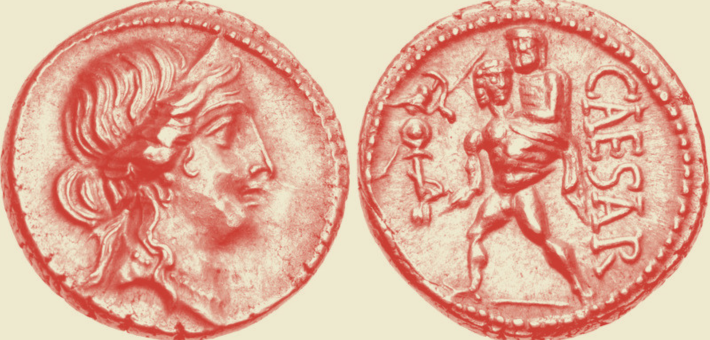
As Zina Jacque writes, “To these sons and daughters of Abraham, Jesus’s use of the word ‘freedom’ implies captivity, and captivity is their invisible wound.”[v] As much as Babylon exacted tears from the ancestors, Rome does so now. “Every time they walk past a Roman soldier, every time they hold a coin bearing the image of Caesar, every time they negotiate their lives inside an occupied land, the wound throbs and the pain intensifies.”[vi] And yet, this, too…this oppression…shall pass. They need to look beyond their pain to focus on Jesus and all the possibilities he brings including true, eternal freedom.
Still, stuck in their woundedness, they cannot bear the truth. Healing could be there’s if they admit their predicament and trust in Jesus. Yet, they deny Jesus as much as someone who says their pain, sin, faults and failures are just too grave for the cross to transform them…to free them. In doubting Jesus as savior, we remain trapped. We remain slaves to Sin, Death and the Devil.
And so, we get to the third promise. Jesus explains that every human being who sins is a slave to sin. Many back then as with today, do not want to admit they need grace. We don’t want to think of ourselves as sinners, wretched, or as Martin Luther left in a note as he died, beggars. We sin and cannot save ourselves. At the best, we are simultaneously sinner and saint. This can be a bitter pill to swallow with our human pride.
And so, with the third promise in verse 35, Jesus draws from real world images. As he does elsewhere, Jesus speaks again of his contemporary household, a mansion of sorts with many rooms for grandparents, parents, children, servants, and yes, slaves. In the ancient world, the first son often inherited everything. As a result, his words are binding. Thus, Jesus says, “if the Son makes you free, you will be free indeed.” The power and penalty of sin, the sting of death, has no hold over us when we trust in the Son’s promises…not even a little bit.
Indeed, Jesus closes in verse 51 saying that if we keep his word…not perfectly (which is impossible) but by grace through faith…as we are able to with God’s help…we will never see death. His words will act in and upon our lives to save us. He’s not saying that we will not experience death, but that we will not face eternal judgement…permanent destruction or separation from God. In trusting in Jesus as the truth…even if we do not understand everything or struggle to follow…we will be looked upon as righteous. His word will claim us as his own.
As noted by a bible professor and songwriter, Michael Card, “Jesus promises light, freedom, and eternal life” in this chapter.[vii] Will we accept his promises, or will we hold onto our woundedness like the crowds before him? Abraham was looked upon as righteous because he trusted God. He did not know everything. Those who followed him faced loss, family brokenness, and hardship, and yet, they affirmed the same faith despite all they had left to learn about God. Moses and his people, the prophets that followed, and even John the Baptist did not fully understand God or God’s ways. We know this partly because they, too, are human like us, but also because scripture indicates that Jesus, coming and serving as he did, surprised everyone.
If the Apostles and disciples struggled with faith and had more to learn, why are we surprised when we have questions? Or when we have wounds that need to be healed, why deny them? Or when we struggle with sin, why pretend that we are ok? The faith of Abrham, the faith of Israel, the faith of the Reformation, and of today proves the same. We need to turn toward God in trust in order to live. In modern Protestant parlance, we might say, we are always reforming and being transformed. We are saved by grace through faith.
The Letter to the Hebrews (13:8) tells us that “Jesus Christ is the same yesterday and today and forever.” His promises are eternal, and as Martin Luther quipped, Jesus does not lie. Amidst ongoing theological disagreements, we can choose to be patient, forgive, and love one another. As we struggle with sin, we can confess and repent. As we strain within a lack of hope, we can seek to become living signs of hope to one another and the world through word and deed anyway.
For despite our doubts and darkness, we now know the Lord and his light. And it is Jesus who has ultimately declared, “I will forgive their iniquity and remember their sin no more” (fulfilling Jeremiah 31:34). So, do not be afraid to ask, seek, and knock. With his cross and resurrection, Jesus has opened the door to you and to all.[viii] He’s left his light on for you, and a room has been prepared.[ix] Amen.
[i] Welby, J. (27 October 2017). Justin Welby: Luther’s historic act did so much to shape the world we live in. The Standard. https://www.standard.co.uk/comment/comment/justin-welby-luther-s-historic-act-did-so-much-to-shape-the-world-we-live-in-a3669686.html – This story was shared in my 500th anniversary sermon at Messiah Lutheran as well.
[ii] Ibid.
[iii] Pastor Chris Price
[iv] Martin Luther repeats this phrase throughout his catechisms.
[v] Jacque, Z. (October 2026). Commentary on John 8:31-36. Working Preacher. https://www.workingpreacher.org/commentaries/revised-common-lectionary/reformation-day/commentary-on-john-831-36-20
[vi] Ibid.
[vii] Card, M. (2014). John: The Gospel of Wisdom. Downers Grove, IL: InterVarsity Press. p. 115
[viii] In John 10, Jesus will declare he is the Door, “if anyone enters by Me, he will be saved, and will go in and out and find pasture.”
[ix] A famous commercial campaign for Motel 6 included the phrase, “We’ll leave the light on for you,” originally an ad lib by Tom Bodett. In John 14, Jesus speaks of heaven being like a mansion with many rooms.
Below, please find a video of our worship service. The sermon starts at about the 29:15 minute mark.
© 2026 The Rev. Louis Florio. All content not held under another’s copyright may not be used without permission of the author unless under terms of fair use and properly attributed. Scripture passages when used are from the NRSVue translation unless otherwise indicated.