Image source: the Evangelical Lutheran Church in America (ELCA)
Hearing the story of Jesus’ Passion hits differently when you hear it all at one time, doesn’t it? The pace of the story and the details woven into it wash over us in a more discernable way. You might sense a theme in the author’s focus…get a better feeling of what Jesus went through in his human form. Our beloved Jesus faced extreme exhaustion and grief as these stressful events went on overnight and into the next day; a body slowly giving in to torture, bleeding, and pain; a heart hurting as people he loved abandoned him and still others mocked him ceaselessly. Then, ultimately a final gasp, most likely amidst the sounds of what is commonly called a death rattle…“It is finished.”
We have moved away from the Narrative Lectionary during this Tenebrae service, a service of growing shadow echoing the growing darkness of that day long ago. Instead of Luke, we chose to solemnly reflect upon John’s witness. And among the most ancient practices of the service, sights and sounds might be added to reflect the words of the story. Thanks to Mike Moffit, we heard the occasional clang of a bell, tolling us toward Jesus’ death on the cross. In the earliest traditions, a loud bang was often created to simulate the closing of the tomb. Or, shrill lamenting might be heard as the chanting of Psalms continued. The final lit candle might be taken out of the sanctuary as if it was Jesus’ body being transported to the grave…only to have it come back again after a time of meditation. For just as John began his Gospel witness, “The light shines in the darkness, and the darkness has not overcome it” (John 1:5).
In some traditions for Good Friday, you might hear from more than one Gospel witness, and perhaps like in a courtroom, this can help us move closer to the horrible, full truth of the events. Imagine if we had heard Matthew, Mark, or Luke, along with John this evening. We would have heard differences, nuances, and varied details, because that’s what happens when people speak truly. They don’t get their story straight. They report on what they know as best they can. As humans, we focus on and remember various things. We tell our stories differently. I argue that this attests to the truth of scripture. These words are considered so sacred that despite knowing these differences, the Church has decided to rest in their mystery. And so, amidst some glaring discrepancies and questions…not only on the our Bible’s pages but in our lives…we wait for God’s Spirit to speak to us…to help us understand…perhaps more importantly to trust.
At my former congregation, we used to have a three-hour service from noon to three where we listened to Matthew, Mark and Luke, one per hour, interspersed with silence, song, and reflections. People came and went, or they stayed for three hours, likely as people did during the crucifixion of Jesus itself. Jerusalem was a busy city after all, and it was packed with holiday excitement and people going to and fro. Then, we shared in a John-centered service that night. Still other congregations have shared in a three-hour service with multiple pastors preaching on the seven last sayings of Jesus as recorded in the Gospels. There are many more Good Friday traditions than there are Christian congregations – no one tradition perfect. For, we never can fully express or understand Jesus’ suffering. Words can never capture it. Only Jesus knows the full truth.
Certainly, there are countless creative ways to help us try to encounter the suffering and death of Jesus. I’ve used art to reflect upon the Stations of the Cross. It is not unusual, and has always been a tradition of the Church, to have Jesus reflect varied ethnicities and races. For Jesus came to draw all people to himself, and sometimes seeing ourselves reflected in Jesus’ person can make us more likely to approach him.
In movies, plays, even musicals such as Jesus Christ Superstar (now at the Riverside Center by the way), the stories are melded together to elicit an emotional response (perhaps more so than any objective accuracy). Even a number of our children recently went to the King of Kings, an animated version of Jesus’ life and Passion. As a result of the film, we overheard their young voices asking awe inspired questions, and a few tears were seen shed as Jesus died. Such artistic renderings have their place in conveying the realities of the story, for art can mirror life. It can help focus our attention on what we might have otherwise missed. It can facilitate the connection of our emotions to life…even as such efforts remain imperfect… glossing over facts, or taking artistic license at times to help the story flow.
Among my favorite Holy Week spiritual practices, I look forward to listening to Bach’s “St. John’s Passion.” It stands out for its dramatic portrayal of Jesus’ suffering, trial, and crucifixion. Its musical settings are meant to evoke emotion, not just images in your mind, because Jesus’ suffering was not just some mechanical, step by step history. It is not “just a story.” It really happened and the suffering was real with a human toll. As we contemplate how Jesus suffered and died for us…his loneliness, his own emotional desolation as people abandoned him, sadness as he gasped his last words…his life might just touch our own heart.
And if we slow down to listen closely, we find that scripture itself very well captures the truth of Roman executions. The Gospels are validated by outside histories of the day and archeology. There are three main parts to any Roman crucifixion: scourging, carrying the cross, and being hung to a cross publicly to warn others not to offend. In Jesus’ case, he was nailed. The scourging Roman soldier used a flagellum (a whip with multiple ends to tear your flesh more efficiently). You see, that would start bleeding and potentially send your body into shock.
Many have tried to guess how many times Jesus was struck. Some suggest thirty-nine times as that’s the limit under Jewish law, but it could have been more. The Gospels don’t say, and Jesus died under a Roman sentence. Many more strikes with the whip remain a possibility.
The carrying of the cross subjected one to more abuse – people hurling more than just curses at you. The fatigue helps facilitate one’s death. Then, hung on the cross, a means of execution usually reserved for the worst offenders against Rome, your death could last for days. Your body could remain on the cross to rot much longer. Again, the cross served as a warning to those who would defy the power of Rome.
Perhaps you have never considered this, but why would Jesus be offered poison instead of water to drink? For gall was usually a mixture of myrrh and vinegary, foul wine. Yes, it could serve as a painkiller or anesthetic for your suffering, slight relief though it would prove, but it wasn’t what your body longed for. And yet, even then, Jesus refuses this bitter consolation…this mockery of kindness. He chose to bear the full pain of his death…a death he would die thinking of us.
And then, why would the authorities want to break Jesus’ legs? You die on the cross from fatigue, exposure, blood loss and your system shuts down, but ultimately you can no longer support yourself in a way that you can freely breathe. Your legs give out. Your lungs cannot expand enough to welcome life-giving air. Breaking Jesus’ legs would suffocate Jesus prior to the start of the sabbath holiday…not for mercy’s sake, but out of political convenience, efficient calculation, and a nod to cultural and religious propriety. To ensure that Jesus was truly dead, that the breaking of his legs was not necessary, the Romans speared his side.
Now, I know this is graphic, horrific, seemingly inappropriate perhaps to speak about in detail at a church service, but this is indeed what Good Friday asks us to remember. Our Easter joy and our redemption come at a great cost…amidst great sadness. This should not be a surprise or a shock. For we have already heard all this from our faithful readers this evening.
It’s true! John attests to this very thing, as does our other Gospel writers. The early Christians would have known this horror well. Today, it seems far removed…almost unreal. Still…and I know this is true for me…I don’t want to understand it. I resist it. I want to gloss over it. I don’t want to believe it. It is too horrible to contemplate. Each wound, every insult, his horrid death…was for me…was for you. It is hard enough for me to accept the violence that I have seen and experienced in my life…but this? To contemplate this story makes my heart cry, and I want to push its realities away and move quickly past it toward Easter joy.
Yet, John won’t let us. He wants us to hear and contemplate the details. For even amidst the horrors of Jesus’ death…the horrors of our own life and losses…there remain signs of hope that we must recognize. Jesus said these things must happen. He died when the time was right. And through his death, prophesies and ancient promises are fulfilled.
From the prophet Zechariah 12:10, we hear that the nation would look upon the one they have pierced. Psalm 22 hinted that the Chosen One would have his garments shared among his oppressors. Pieces of clothing would be won through the casting of lots. Further, his strength would become dried up; and his tongue would cleave to his jaws…He would thirst. Then according to Psalm 34:20, none of the Messiah’s bones were to be broken…just has happened with Jesus. There are many other passages that prophetically point to Jesus’ death, but they also shout of who he is and his purpose. He came to gift us with true, abundant, and eternal life. He is our Messiah.
“It…is…finished.” Jesus’ mission…God’s plan for our salvation…was fulfilled on the cross, and Resurrection joy with a new and final age would soon begin as a direct result. Yes, Jesus wanted to fully share in our life, so he had to suffer our death, too. Even before we were ever born…Jesus was remembering us as he suffered each indignity, with every stroke of the hammer, in every tear he shed, with every faltering breath…as he died…remembering us as much as he did when forgiving the criminal at his side (recorded in Luke).
It is ultimately Jesus that asks us to remember what he went through so long ago. He wants us to have our hearts to be ripped open like his tomb would soon be, to watch and learn…to find assurance. For if anyone wants to follow after him, Jesus says that we must deny ourselves, take up our cross, and follow. Peter later wrote (1 Peter 2:21), “To this you were called, because Christ suffered for you, leaving you an example, that you should follow in his steps.”
Yes, Jesus really suffered and died, but it was because he really loves us. His death can never be understood rightly unless we also understand that suffering and death never has the final word under the sovereignty of our loving God. Jesus hopes our lives and love will be just as passionate, sacrificial, and real…that we won’t reject suffering if that cup most be drunk in order to fulfill God’s will and share God’s love concretely with others.
For through faith, we have become Christ’s body to be broken in love for the world. Fears of our own want, sin and death need not control us. They don’t have to dominate our decision-making process, worldview, or actions. We are to live in hope even as we suffer and die, for the powers of this world will never defeat us because of Jesus and his cross. Never! The dark powers of this world might still rage, but they are done for…It is they that are finished.
“So maybe today,” a non-ordained friend of mine (Robert Keith Cartwright, Facebook post, 4/18/25) so wisely urged in a reflection shared with his friends, “the invitation is this: Don’t rush through Friday. Don’t numb it. Don’t theologize it away. Don’t skip to Sunday. Let Friday do its work. Let it remind you that some of the best things come not by conquering the darkness, but by trusting God enough to walk through it.” Amen.
If you would like to hear my sermon or watch our service, the video can be found below. The Gospel text and sermon begins at about the 42:16 minute mark.The preaching text isJohn 18:1—19:42.
“So when Pilate saw that he could do nothing but rather that a riot was beginning, he took some water and washed his hands before the crowd, saying, ‘I am innocent of this man’s blood; see to it yourselves'” (Matthew 27:24).
Coming across this meme today made me consider the Pilate in me. I can clearly remember times in my life when I looked away, walked by, thought others could help instead of me, or assumed that things were hopeless, so I did not try. I absolved myself from sin as I washed the pain of others away from my consciousness. As humans, we have all likely been like Pilate at times – frustrated, feeling powerless or tired, wanting to say, “I don’t care anymore,” “It is not my problem,” or “The heck with them!”
Yet, Jesus modeled a new way to live. He reached out to people to heal, and he let himself be touched for healing too. It wasn’t because they deserved it, and it always came free of charge. He never let religious piety or cultural propriety get in his way as he did so. His life embodied the heart of the law which is love – loving God with all he was and others as himself, for God is only love (1 John 4:8).
So, he asked his followers to share what they had with others in need, loving even enemies, and not just from their abundance, but trusting in the provision of our daily bread. He saw the blind man needing help although the man was obscured by a large and noisy crowd – a crowd that wanted him to shut up. He recognized the timid Zacchaeus in his tree. He loved the child of God within each sinner waiting to be set free. He sometimes healed people, understanding their need, before they even asked. He had compassion on me when I felt utterly desolate, far from God, and he changed the direction of my life forever.
I don’t want to be Pilate anymore. I want to love with my life. I pray that by God’s help that I can be more like Jesus every day, no matter the cost. I know its a struggle to do what is right, because I still struggle. I know I will fail, but I trust I will never be condemned. I can repent, get up again, and walk like the forgiven adulteress without shame. It can be hard to speak truth when accusers seem always ready to pounce. We can fear potential consequences. Bullies real and imagined might threaten us. Certainly, we are not Jesus.
Yet, Jesus asks us to bear our crosses in his name anyway. As Paul urged early Christians in Corinth, “Be on your guard; stand firm in the faith; be courageous; be strong. Do everything in love” (1Corinthians 16:13-14). We have been washed through our faith and baptism, so that the promise of scripture will prove true. There’s no bowl of stagnant, dirty water good enough for those freed by Jesus. Instead, we are told, “Out of the believer’s heart shall flow rivers of living water” (John 7:38). It is a water (and life) meant to be shared; splashing onto others, blessing and nurturing new life with a grace filled abandon. It is a life like Jesus’ own.
Image: Jerzy Hulewicz, Detail from “The Cross.” 1918; public domain
This April, our Jewish siblings recall several major events in their history once again. Among them, Passover Festival is from sundown, April 12, through sundown, April 20 this year. This marks the passing of the Angel of Death over Jewish homes and their subsequent flight from slavery. On April 12, 1951, the Knesset passed a resolution establishing 27 Nisan on the Jewish calendar, a week after Passover, and eight days before Israel’s Independence Day, as the annual Yom HaShoah or Holocaust Remembrance Day. In 2025, this begins on Wednesday, April 23rd. Yet in 1943, 27 Nissan was also the day of the brave Warsaw Uprising against the Nazis. It occurred on April 19 during that year.
Remembering the sadness of slavery and the evils of the Holocaust with them, you will often read or hear the words “gam zu latova” in Hebrew which means “this too is for the good.” Most certainly in the face of such horrors and ongoing struggles, it seems a bit difficult to say such hopeful words. Yet, these words are shared out of deep trust despite what is seen, reason, or any emotion. It is about God’s glory but also God’s pledged steadfast love to the descendants of Abraham. God will always be faithful, and God will make good eventually come from any bad.
It is a similar theological belief that had Paul, a former Pharisee, write, “We know that all things work together for good for those who love God, who are called according to his purpose” (Romans 8:28). One of my favorite passages, it reminds us that while we face any family discord or rift, struggle with sin, or threat from any evil, persecution or death itself, God will not let us down. God will change curse into blessing much as he did with Balaam’s curse of Israel in Deuteronomy 23:5. God does this because our Lord God loves us. It is just who God is.
As we have entered another Holy Week and face any stressors and discord internationally, nationally, or within our personal lives, we come to remember Jesus’ own suffering and death. In the face of defeat with our Lord Jesus on the cross, his disciples scattered and afraid, only a few daring to watch and wait amidst tears and wailing. As Jesus shouts (quoting the Psalmist), “Why have you forsaken me!” toward God the Father in heaven, we might struggle to call Holy Week holy or Good Friday good. Yet, we now know this barbarous, desolate scene is not the end of the story. As an old sermon proclaims, “It is Friday…but Sunday is coming.”
Although Jesus is now risen, a bigger and more perfect “Sunday” is still yet to come. We live in an in between time of Jesus’ Resurrection and Ascension and his coming again to make all things new. Only then, when the time is right, will Jesus end suffering and death and wipe away every tear (Revelation 21:4). This time that we find ourselves within is often hard. It might be appropriate to grieve. Yet, it is not the entire story. Jesus is coming, and we pray in hope and love that he comes soon.
Until then, we walk step by step in faith, trusting in what has not yet come to pass, sharing hope and love with others, because Jesus loves us and will not abandon us. It is just who Jesus is. It is who we are called to be. And although God might seem hidden, we can trust that God’s ultimate will for us, our perfect joy, is being somehow worked out in our present.
Despite his own experience with desolation and abandonment, overcoming death, Jesus promises that we are not and never will be alone. We will overcome too, thanks be to his unending love for us. We can sing with the ancient Church and Church yet to be, “Christ has died. Christ is risen. Christ will come again,” for it is true. Jesus does not lie. This life we share, hard as it might prove at times, will all be for the good.
Adapted from an essay written for the April 15, 2025 weekly newsletter, the Hub, of Christ Lutheran Church, Fredericksburg, VA.
Remains of St Bonaventure Roman Catholic Church, Philadelphia (2014). Photo credit: Abandoned America.
“Why do we tear and rip apart the members of Christ, and rebel against our own body and get worked up to such a frenzy that we forget that we are members of one another? Remember the words of the Lord Jesus, for it says, ‘Woe to that person, it would be better for him if he had not been born than to cause one of my elect to sin. It would have been better for him to be tied to a millstone and to sink into the sea than to turn away one of my elect.’ Your schism has turned many away, has plunged many into discouragement, many into doubt; all of us into grief, yet your rebellion is continuous!” – The First Epistle of Clement of Rome to the Church in Corinth, date uncertain, sometime before 70 AD or even at the end of the reign of Domitian (c. 96 AD).
I’ve recently been reading The Apostolic Fathers in English. The book includes ancient texts from the earliest days of the Church. Some are pastoral letters. Others were likely sermons. Yet they often reveal the controversies and arguments of their day.
Apparently the early Church was filled with ill tempered people prone to pride. They often seem to have struggled with submission to authority, and yet they seem to have needed more often than not the proverbial rod rather than the shepherd’s staff to keep them focused on the Gospel. They fought among themselves. They jockeyed for power and position. They could be dishonest as they did so. They became divided, sometimes hating one another. I have come to notice through my reading that early Christians were much like some of us modern Christians today.
In today’s world when a theological argument comes (as they will thanks to our limited human intelligence and sin), we are prone to split denominations or congregations rather than face the difficult call from Jesus to reconcile – or at least struggle towards reconciliation. These splits are often precipitated by one or two people shaping a consensus then drawing others into the fray. Paul warned the early Church about people stirring the proverbial church coffee pot and drawing up grounds of discontent. He writes, “I urge you, brothers and sisters, to keep an eye on those who create dissensions and hindrances, in opposition to the teaching that you have learned; avoid them. For such people do not serve our Lord Christ but their own appetites, and by smooth talk and flattery they deceive the hearts of the simple-minded.” Certainly, their appetites could reflect greed or a desire for power, a disordered search for significance or other sin, but sometimes, people causing such disarray don’t realize it. It might not be intentional. They can be acting out over wounds of their own past. Unhealthy people can make unhealthy choices. They can also influence others.
Likewise, my social media feed gets too often filled with Christians demonizing one another intentionally or not. For example, “Lutherans,” some Christians posted recently, “are sex traffickers and money launderers.” These posts came into being because member agencies of Lutheran Services of America help our federal government contractually serve citizens and others in need within our country’s jurisdiction. Often, these agencies do so more cost effectively than if the government did it themselves. Through such government contracts and grants from other entities, one in fifty Americans are helped through addressing all kinds of needs – foster care, adoptions, at risk schools, senior services, homes for the physically and intellectually disabled, and much more. Services can include immigrants and refugees. And there lies the rub…
As member nonprofits already provided foster care and adoption services since the 1800s, they have been asked by past administrations (both Republican and Democrat) to help care for unescorted minors in the United States for decades. With an history dating back to World War II helping refugees, they were requested to help with the currently unpopular task of assisting immigrants and refugees. They do only what they are asked to do by the government or through grants as legally contracted to do. If one doesn’t like a program, individual grants and contracts can be cancelled or redefined. No one is helped to run across our nation’s border. Laws aren’t broken, and the organizations are audited annually by outside groups. They operate in a way where any profits go toward maintenance of current efforts or establishing new services. Lutheran Services in America even has a four star, 100% rating on Charity Navigator.
Yet, I see some people openly espousing Christian values on social media, then they turn to virtually shout that these organizations are betraying our nation, corrupt, and “getting rich.” They often wrongly conflate independent nonprofits with denominations as they do so and repeat false claims heard elsewhere with more rumors than evidence. No reason or fact mitigates their attacks. All remain guilty in their minds, even as independent nonprofits (like people) can vary in quality and performance. Yes, Roman Catholic, Episcopal, and other denominational efforts are condemned in similar ways.
Further, I have seen other Christian people who support such nonprofits denounced by these publicly self-identified Christians. They can be called “libtards,” parasites, and worse. The negative rhetoric of television personalities, radio hosts, podcasters, or even memes can infect the body of Christ and spread. In Philippians 4, Paul requests, “Let your gentleness be evident to all. The Lord is near.” Rather than being anxious and angry, he suggests that trusting in God and turning to him with hope “will guard your hearts and your minds in Christ Jesus.” He commands, “Finally, brothers and sisters, whatever is true, whatever is noble, whatever is right, whatever is pure, whatever is lovely, whatever is admirable—if anything is excellent or praiseworthy—think about such things.” Instead, too many modern Christians keep a list of transgressions both real and imagined. Focusing on these, they lose their peace and too often their tempers.
As I’ve written elsewhere, when it comes to the growing influence of New Apostolic Reformation (NAR) churches, it can become much worse. Those who disagree with the NAR view are said to be possessed by demons, thus they need to be soundly defeated if not (amidst extreme adherents) wiped out. They adhere to a Seven Mountain Mandate, seven aspects of society that believers seek to gain influence and dominate to prepare if not precipitate Christ’s return: family, religion, education, media, arts and entertainment, business, and government. The problem comes when abuse and problematic techniques are employed; when sin is excused in the pursuit of power. The disease spreads as elements of the teaching become accepted by other Christians. Battle lines are drawn.
Some avowed Christians with NAR backgrounds in the government or influenced by similar theologies have thus reluctantly called the above organizations providing social services and the people supporting them Christian, for they will only do so in quotes. It seems clear that they wish to insinuate that such organizations and people are not Christian, at least in the way that they define Christians. In fact, they aren’t afraid to call other Christians’ salvation in doubt or claim they are controlled by literal demons. Those who do such things bring to my mind the Super Apostles of Paul’s time who were neither super nor Apostles in Paul’s assessment (see 2 Corinthians 11). Unfortunately, many of the President’s spiritual advisors reflect this theological view, and its unyielding harshness has made its way subtly yet influentially into our political speech.
Bearing false witness is a serious sin causing brokenness no matter what positive goals we might claim. Yet, I have had pastors and other Christians (most often Baptist, Evangelical, or conservative Roman Catholic) tell me privately that they can live with statements they know to be false, coarse, even overtly sinful during this political season of history because the ends in their mind are good. (I was taken aback that they so easily excused such behaviors.)
Luther’s comments extensively about the commandment not to bear false witness in his Large Catechism. He expands our understanding of the commandment beyond legal necessities to all offenses of the tongue, “For it is a common evil plague that every one prefers hearing evil to hearing good of his neighbor; and although we ourselves are so bad that we cannot suffer that any one should say anything bad about us, but every one would much rather that all the world should speak of him in terms of gold, yet we cannot bear that the best is spoken about others.”
If things cannot be properly proved, don’t say them. If you hear of secret sins that are not “notorious” (illegalities or causing significant harm to others), keep them secret. And interpret your neighbors’ actions in the most generous way possible, for we will be judged as we judge our neighbors (Matthew 7:2). We also are taught to pray by Jesus. We are to ask that we be forgiven our trespasses/sin/debts as we forgive others in the Lord’s Prayer.
Luther further writes, “and it is especially an excellent and noble virtue for one always to explain advantageously and put the best construction upon all he may hear of his neighbor (if it be not notoriously evil), or at any rate to condone it over and against the poisonous tongues that are busy wherever they can pry out and discover something to blame in a neighbor, and that explain and pervert it in the worst way.” As I have asked my pastor friends who feel differently than me, I will ask you, dear blog reader, “Does the end justify the means?” As far as I have seen, Jesus never taught us that. Let our yes mean yes and our no mean no, and love even your enemies (Matthew 5). Jesus says, “be wise as serpents and innocent as doves” (Matthew 10:16), but he never tells us to be bullies. Meekness is the way of Jesus. To take up our cross is what he modeled.
Certainly in the age of DOGE, it is easy to find examples of right leaning Christians attacking the left leaning ones, as such hot button issues regarding cuts to social service, education, and immigration are for the present often in the forefront of the news. Yet leftist Christians can be just as insensitive, callous, and hateful as they speak or post about rightist Christians. For they are human, too.
I’ve mentioned elsewhere that conservative leaning Christians can be called fascist or Nazis just because they might want to secure borders, address concerns about violent crime, and promote economic growth. Certainly, as with the left, some among the right can go to excess in their dogmatic pursuit of political ends. Some can indeed sin or support sinful policies. Yet, the basic goals represented are not always or automatically unreasonable. One could come up with policies between a wide open border and one sealed completely shut for example. Yet, we tend to be rigid like Pharisees when it comes to our politics, even though we are called as Christians to be open to the possibility of much more. God says in Isaiah 43:19,
I am about to do a new thing; now it springs forth; do you not perceive it? I will make a way in the wilderness and rivers in the desert.
Then during the sometimes violent demonstrations and riots against police use of force over the last decade, I was indeed treated differently if not rudely by some other pastors who could not understand or did not seem to like that I was a police chaplain. One pastor I know in a position of authority spent time questioning not just police policies but the need for police. Fair enough, I suppose, at least philosophically, although I think that assertion misguided. Yet, a number of that pastor’s social media posts during that period went further calling all police blue thugs…in effect calling me who had been an officer a blue thug, too. (This epithet echoed the too often misdirected anger of a popular theologian at the time.) There was no public openness to recognize that each officer and agency is different even as they all struggle with sin. One should not assume all people in a neighborhood are criminals. One should offer law enforcement officers the same amount of grace.
And further in these times of heightened tensions over “culture wars,” I had two younger pastors insist that I would not understand an issue because of my generation. They continued to speak on the issue as if I was not there. (Ironically as liberal politically as they viewed themselves, they exemplified the bias called ageism.) Certainly, context matters. Our knowledge is impacted by our experiences. Yet, that doesn’t mean that a person cannot have understanding or empathy. In denying that truth, sometimes even well meaning people can be blind.
In addition, I have seen people who often post about their faith attack me as a “bad” pastor/priest and poor Christian when I post something they don’t like or understand. For example, I suggested turning the other cheek over the Paris Olympic scandal – a transgender portrayal of the Last Supper during the opening ceremonies. Yes, it was insensitive to many conservative Christians’ worldview. Sure, they would not likely portray Mohammed in a similar way. Definitely, Christians disagree over gender issues and much more. Yet why waste time raging?
Paul, the great Apostle and missionary, gives this advice, “Therefore, as God’s choice, holy and loved, put on compassion, kindness, humility, gentleness, and patience.” I think I was on pretty solid ground to try to act and talk about the issue patiently in love rather than react in anger calling people names.
Still, one old friend asked how I could not be mad. They were mad at me for not being mad! Well, I have known people oppressed by laws forbidding faith practices, physically tortured, threatened with death because they loved Jesus. A potentially rude skit (depending on one’s beliefs perhaps) seems a regrettable but much lower threat to Christianity to me. Indeed, Christ can defend himself and has looked with kindness toward greater transgressions – like people abusing him and hanging him on a cross. So, let us offer such insensitive people forgiveness. They likely don’t truly know what they do.
And in response to my concerns over confirmed war crimes of the Russian Army in Ukraine or the US taking over Greenland “one way or another,” “no matter what,” I’ve had a fellow Christian try to shame me publicly in their own posts. I was to him a pastor against peace and security when I’m anything but. Some others have claimed I am being political when I am rather trying to suggest that we cannot ignore war crimes as Christians even as overall policy and goals might need to be debated. We should not threaten (even by insinuation) to take by force other lands against the will of the people who live there. We should demand honesty and transparency rather than lies or half truths when government policies on intelligence matters are violated, employee reduction of force is outside of regulations and laws and completed in an insulting way to people who dedicated their lives to service, or our potentially wrongly deporting people is at stake. If the government has admitted one mistake, potentially there can be or will be others.
Yet, Christians are imperfect humans, often casting us all into grief as Clement suggests. Another person responding to one of my posts swore in their own, “I don’t give a F**K about those who are unhappy about Ukraine. I’m sticking with my President.” All the while, their Christian identity was flaunted in multiple pictures on their page. What about sticking with Christ to defend an innocent populace; to try to offer justice with mercy as we strive for peace? Or how about being patient or kind amidst disagreements? That’s a better way in my mind. I’m not political for suggesting this, but I am humbly trying to apply Christian ethics as we work toward any goals. I believe we are capable of being more just and loving.
Christians have always had disagreements with one another because they are human and can err at any time. I am not foolish enough to think that I am not blind to my own bias and sin. We all are blinded by our pride and lack of faith at times. It is a good reason to listen to one another – especially those who disagree with us. They might see something that we…that I…don’t. Indeed, my Lutheran heritage suggests that our will is always in bondage to sin, and we cannot do or speak good without God’s help. So, we need to constantly reflect and pray about what we are to do and say. I confess that I can always be wrong when it comes to my thoughts on our political, communal life together. Yet, bishops and priests are called to address sin wherever they see it, as best as they can anyway, despite their personal weakness or imperfections.
Thus, trying to apply scripture to the real world can always be dicey if not done with humility, prayer, and the recognition that you can be wrong. It’s always imperfect. This means we should not hold people hostage in the pews during sermons, spouting overtly political policy statements, at least in all but the most unusual cases. Those in the pews can’t raise questions or respond back during the usual sermon. I have found it always easier, more productive, and fair to discuss bigger questions in small groups while sitting or standing face to face.
That said, Christians still might need to refer to current events in sermons, blogs, podcasts, or social media posts because that’s where we will find our modern people. If attempting to communicate over hot button issues, I think we should urge for people to love better and more, to remember grace not just utilitarian ideals, to encourage empathy and compassion, to condemn lies by commission or omission or any other deceitful acts, and encourage people to look to scripture with others and seek the Spirit’s guidance. And let us not forget that we need to be about our God-given work (within our worldly vocation) to serve as agents of reconciliation offering others forgiveness and peace in Christ’s name not condemnation. Addressing world events or public errors through the lens of Christian ethics and with a spirit of gentleness and grace is not being political if done soberly. Even Paul rebuked Peter and others when in Antioch over their hypocrisy.
Ultimately, I’m not talking about policy here. I’m suggesting that how we treat one another, speak to one another, post about one another, and even think about one another are all part of our public witness about Jesus. We must be rooted in Jesus even as we walk in the world. For, our children can be shaped by what we do or fail to do. Non-Christians can be pushed away by our infighting and hostility.
In this day of anonymous attacks, conspiracy theories, interpreting things in the worst way instead of through a lens of grace, and with half truths or outright lies being reposted without a care on social media and sometimes even shared through sermons, we modern Christians become guilty of a similar if not magnified sin brought up in the ancient text quoted above. “Why do we tear and rip apart the members of Christ, and rebel against our own body and get worked up to such a frenzy that we forget that we are members of one another?” This should give us all reason to pause.
With increased hostility on social media particularly since President Trump’s inauguration, I have posted several times that arguing on social media is vanity – as all things are vanity. It is a useless exercise too often ending in broken relationship. Mobs of people – sometimes people you don’t know – can seek to force one to defend an observation, prove an assertion, and ultimately submit to their favored view as they post article after rebutting article with an angry insult or accusation like a cherry on top. Memes and sarcasm often pass for debate. Insults become a norm.
Still in this time when the louder voices (not necessarily wiser ones) are often heard most clearly and other people fear being bullied, people with important things to say can wrongly choose to remain quiet out of fear. So, I often receive a thank you message or even a call as I try to reframe issues or address what I think might be wrong – hopefully politely and nonanxiously while referencing scripture and Christian values. People long to hear dissenting yet reassuring voices rather than the most angry ones. They are glad to see mature behaviors and dialogue fostering peace rather than conflict. As for me, if I feel insulted or triggered by what others say, I, too, can consider what they wrote, turn my cheek, and scroll away. Dissenting and minority views need to be heard, or else we risk a tyranny of the majority, a form of group think potentially affirming injustice from the left or the right. Engaging people with gentleness and respect, offering empathy and compassion, are biblical models of discourse despite so many modern denials.
A friend asked why I still post articles and observations if I think arguing on social media is such a waste of time. He posted that my practice to post opinions, articles, and blog pieces seemed ironic in view of my assertion. Well, love much like arguing is always a choice. I can still post articles which I think are important and speak about weighty issues, but I can choose whether to engage others or not. I don’t even have to allow for comments (using social media controls) if I don’t want to, because people can read what I post or ignore it. And to be honest, I don’t have time to type my arguments back and forth all day when I have more important work to do.
Meanwhile in the very real world, we can find positive examples of repentance and reconciliation. My former congregation had suffered a major split. Ultimately, the pastor was blamed by many for the congregation failing to grow. I believe that he did do some things wrong in trying to address his accusers, but the congregation was stuck in a rut. People to often said to new people, “We don’t do it that way,” and sidebar conversations fostering dissent were common problems. These behaviors are often identified by research as church-busting behaviors and attitudes. Rumors, gossip, and angry words took a toll. All the while, people left. They did not come to church in order to take sides and fight. They longed for something else entirely. Eventually, there was a vote to remove the pastor who did not want to leave. It was a tie, broken by the President of the Council whom voted to keep the pastor. Things deteriorated from there until they had to choose between what bill to pay. They were running out of people, money, and time.
Digging out of this situation was a Spirit-led process. The remaining members, previously addicted to infighting, hit a bottom of sorts. They repented from their past behaviors in community. They became open not only to change but perhaps importantly more open to God and others. During the recovery period, there was a lot of hard work by the Assistant to the Bishop Jean Bozeman, the Interim Pastor John Waltonen, and the leaders of the congregation and its people to help them heal, forgive and reconcile. Prayer and biblically honest self-reflection were a big part of the process.
When I came into the community as pastor, I was asked to continue that journey with them, and together we grew not just in numbers but in love for one another and in shared mission outside of our doors. After a few years passed, the bishop at the time said we had become a new people. Where neighbors said they previously did not even recognize there was a church in our lot, local county authorities began to call our community a hub of the county for our congregation’s welcome of others to use our resources, a willingness to work with other community groups to help neighbors, and our loving others even when we received nothing in return. It was a beautiful thing to see and to be part of. It stands as a witness to Jesus and the power of his Spirit, and there are many more miracles that I could report from my eleven years there.
So, if we think that as the people of God that we cannot change, that we must conform to the behaviors of the world around us in order to get by, well, that itself is a lie. Before I was ever ordained, I had a foundational, transformative experience that later informed my approach to ministry. I tasted what the Church can be at its best. I was deeply blessed to have encountered the example of Brother Roger of Taizé and eventually live with him and his community.
You might know that Br. Roger helped refugees and Jews in Vichy France risking his own arrest. He helped German released prisoners of war following World War II. He continued to reach out to and support his French neighbors who were communist or anti-church as the community sought to recover from the war together. Over time, he attracted people to Christ through the authentic love which he lived – not badgering or bullying or vilifying. Br. Roger sought to embody Christ, and soon others came to share in his vision and life. The Community of Taizé is an ecumenical one, half Protestant and half Roman Catholic, and church leaders can come from all kinds of Christian traditions to reflect, discuss, and learn while visiting. Popes, Patriarchs, political leaders, authors and more have come.
In addition, thousands of young adults can also come to that small village each week from all the inhabited continents and across denominations. Some young adults just show up because they hear lots of young adults are there, but many more come seeking something deeper. Through a ministry of hospitality and a community centered on becoming a living parable of trust based on the Beatitudes, people often come to see Christ and the Church in an entirely new and vibrant way. Again, love is a choice, and when we gather, not to dominate but to serve, not to just speak but to listen, as one Church in common fellowship despite important theological, political, ethnic or other differences, people can begin to see the Risen Christ alive in us. And we might be blessed to catch a glimpse of Jesus in them, too.
In lieu of schisms, we can seek unity. In the face of anger, we can refuse to respond in kind. For as the Second Epistle of Clement critiqued Christians of that day, when people who do not believe in Jesus “see that not only do we [Christians] not love those who hate us, but that [we do] not even [love] those who love us, they laugh at us and the name [of Jesus] is blasphemed.” How we do things, accomplish things, talk about things, is as important as any goal or value that we espouse. Yet if our words, actions and hearts don’t reflect love especially to other Christians, let us not fool ourselves. We are not of Christ but more like children splashing in the dank puddle of our sin rather than the wide and deep waters of our baptism. We need to repent and do better. For, we bear the name of Christ. That is to remain our primary identity at all times – over national, political, ethnic, or racial identities. We are in this world, but not of this world. As Jesus prayed, he is in us, and he wants to be seen. He longs for us to be one, not tearing one another apart.
No indeed, we are not the first in salvation history to be hardhearted, stiff necked, and prone to taking our eyes off of God in order to pursue bright and shiny objects of our desires in this world. In our hubris, we can too easily strive to be our own god. Whereas, Ephesians 5:1-2 urges, “So try to be like God, because you are his own dear children. Love others as Christ has loved us. He gave his life for us, a sweet smelling offering and a sacrifice to God.”
This is a struggle as old as time itself ongoing in all of us. So as the Israelites transitioned from slavery into freedom, as they moved from being tribal to one nation, God gave them this direction that speaks to us, too, “Circumcise, then, the foreskin of your heart, and do not be stubborn any longer. For the Lord your God is God of gods and Lord of lords, the great God, mighty and awesome, who is not partial and takes no bribe, who executes justice for the orphan and the widow, and who loves the strangers [immigrants], providing them food and clothing.”
If we wish to become one as Jesus prayed, we must always seek to somehow bless “the other” in whatever we do. We are to seek to love one another as ourselves (Mark 12:28-31) – at home, school, work, in politics, and yes, even on social media. Especially as Christ’s body, we are to remember Christ’s instructions as he shared his Last Supper with those he loved, “A new command I give you: Love one another. As I have loved you, so you must love one another. By this everyone will know that you are my disciples, if you love one another” (John 13: 34-35).
Tearing one another apart should be deemed anathema whatever the fears we face, our feelings, or excuses. For we are “called to be saints, together with all those who in every place call on the name of our Lord Jesus Christ, both their Lord and ours” (1 Corinthians 1:2b).
Unless otherwise indicated, all scripture quotations for this post are from the New Revised Standard Version Updated Edition (NRSVue) translation.
“Christ healing the blind,” by Thobias Minzi, Tanzania (2010)
This morning as we come within a day’s walk from Jesus’ goal, the cross, we hear the third of three predictions within Luke’s account of Jesus’ death and resurrection. These predictions have been gifted to his disciples to help them prepare themselves for what must come – a future they have been resisting. “Everything that is written about the Son of Man by the prophets will be accomplished,” Jesus taught, to include his suffering and death. The cross cannot be avoided.
So, who’s responsible for Jesus’ suffering and death? These three prophecies give us a clue. In the first prophesy (Luke 9:21-22), Jesus accuses the elders and chief priests and scribes of what will come. During the second (Luke 9:44), Jesus says he will be handed over the hands of men – all humankind is hinted at here, including the Passover mob in Jerusalem. They will soon shout for another’s release rather than for the release of our beloved Jesus. In the third prediction (from today’s sermon text), we hear that he will be handed over to the Gentiles, nonbelievers, the Romans, and he will be mocked and insulted and spat upon. The religious authorities against Jesus, the Romans and powers of this world, and we ourselves share responsibility for Jesus’ death. For through our sinfulness and participation in the fallen nature of this world, we all share guilt in his condemnation. Not one of us is free of this sin. For even as he “died for us,” Jesus died for our sins.
You might also notice that Luke’s account leading to Christ’s cross is not a straight-line journey geographically. Jesus has wondered a bit to attend to his ministry and await the right time. Yet it remains a journey of destiny…a fulfillment and offering of all that Jesus is and has for the sake of others. And as he speaks of his death, this love for the world, Jesus often teaches that disciples (including us) have our own crosses to bear as we might be ridiculed, attacked, or even killed for our faith – our trust in Jesus. Yet, our cross is also found in the sacrificial love we are to offer each day to others including our enemies – such things as patience, charity and care, as well as forgiveness. In doing so, we are to die to ourselves. We lay aside our will and our good in order to fulfill God’s will and the good of others. (Whether they deserve it or not is not the issue at all, for we don’t deserve our Christ’s love or salvation either – not one of us.)
Surprisingly, his disciples still don’t get it. They are blind. In fact, Luke says so in three ways. (There’s that number three again, a symbol of divine fullness and completion in Jewish numerology.) The three phrases describing the disciples blindness drive Luke’s point home for us as if they are three nails being pounded into Jesus’ two hands and feet: “They understood nothing…it was hidden from them…they did not grasp what was said to them.” These three descriptions of Jesus’ followers are somewhat ironic, for you might recall Jesus’ visit to a synagogue where he first preached. It was among his earliest words spoken as reported by Luke.
Remember? Jesus took a scroll and read from Isaiah (Isa. 61): “The Spirit of the Lord is upon me, because he has anointed me to bring good news to the poor. He has sent me to proclaim release to the captives and recovery of sight to the blind, to let the oppressed go free, to proclaim the year of the Lord’s favor.”
Along with other promises of the prophets, this passage revealed the essence of Jesus and his purpose among us. Jesus has come to save and to heal…to seek out the lost, forgotten and suffering…for those that are blind. As we prepare for Jesus’ Palm Sunday entrance to Jerusalem, today’s stories where he heals the literally and figuratively blind serve almost like a bookend to his reading from Isaiah as he began his public mission.
This time, Jesus will embody Isaiah’s promises. Just outside of Jericho, an unnamed blind man demands healing. “Son of David, have mercy on me!” Son of David was a traditional, prophetic title anticipated for the Messiah. And Jesus hearing the beggar stops…and Jesus heals. Yet, it is almost a non-miracle miracle. There’s no grand pronouncement or discourse. There’s no mumbo jumbo like a magician or any concrete action on Jesus’ part. No one is touched. No, he simply declares, “Receive your sight; your faith has saved you.” The man saw Jesus for who he was with the Spirit’s help, with the gift of faith…of trust in Jesus. Then, that’s when healing happened. A new life for this culturally and religiously marginalized man began.
And as Jesus finally enters Jericho, we meet the beloved Zacchaeus made popular in the children’s song. And if you have been to VBS, you likely recall that he’s a rich but wee little man. Certainly, he was short, but he was also little esteemed by his neighbors because of the way he lived. He was short in stature and status – a traitor working for Rome, a cheat as tax collectors of this days often were, and despised and hated as a sinner. Yet, Zacchaeus had come to a point of spiritual poverty too. As a chief tax collector, a Jew turned chief oppressor to his people…a neighbor who stole from and cheated others…a person who lived for himself first… he died a bit more each day inside from his sin. Zacchaeus was blind in a different way than the first man, yet blind, nonetheless. And hearing of Jesus, he appears at some level to understand who Jesus was. He felt a need for Jesus and healing, and the Spirit drew him toward Jesus.
And so, hoping against hope, Zacchaeus climbs a tree to just catch a glimpse of Jesus…Perhaps, he’s much like the woman who weeks ago we heard desired to just touch the hem of Jesus’ garments and be healed. Jesus saw Zacchaeus in his hunger and hope, way up, hidden in the tree, and before Zacheus even had the chance to ask for it, Jesus declared Zacchaeus’ healed. “I must stay at your house today.” That’s joyfully what Jesus said. It is what Jesus does. It is who he is. He welcomes people into relationships with him and forgives them. As the Pharisees and others so often grumble and accuse, Jesus enjoys being the guest of sinners. Jesus is not ashamed to be seen with them, for he has come to find, and to heal, and to save them…to save us.
This encounter between Jesus and Zacchaeus reminds me of a scene reported by Matthew 8 where a centurion says, “Lord, I am not worthy to have you come under my roof (to be my guest), but only say the word, and my servant will be healed.” Now in this story, another similar non-miracle miracle has happened with Zaccheus…no pretense…no show…just blindly trusting in who Jesus is with his heart. Through that gift of trust, Jesus heals Zacchaeus’ spiritual blindness. Knowing his hunger Knowing his need. He is not worthy to receive Jesus under his roof or in his heart, yet Jesus doesn’t stand for that. He comes to him anyway.
In response, Zacchaeus is so emotionally and spiritually touched, he says that he will make amends for what he has done beyond that called for by the laws of Moses. He’s going to be more generous than necessary. And yet note that he is forgiven before he ever, ever, ever makes a commitment to any penance. He’s making amends…his desire to love others and make things right…it is a response to his being loved first. (Just as in 1 John 4:19, we, are to love because God in Jesus loved us first.)
Jesus affirms Zacchaeus and his own purpose by saying, “Today salvation has come to this house, because [Zacchaeus] too is a son of Abraham.” Abandoned by the Jewish community…left outside the family of Abraham as far as they are concerned, Zacchaeus seems like a hopeless case. Yet Jesus has fulfilled God the Father’s promise to Abraham and his descendants (see Genesis 12:1-3 and Genesis 17) that his children would be heirs to God’s love forever. Never forgotten. Never alone. Never abandoned. This is just as Jesus will remember and fulfill his promises to us who believe…who trust him.
Yes, whatever our blindness…whatever our own poverty and need…Jesus knows it before we even ask. (We cannot hide our sin from Jesus. We cannot hide our needs. He knows!) In the blindness of the disciples…in the blindness of the beggar or Zacchaeus…in the blindness of our own sin…Jesus’ journey was and remains about his seeking out and saving the lost. Healing the blind was one of the great Messianic miracles forecasted, predicted, promised in Isaiah. And, it proves the final miracles that Jesus will perform before he enters Jerusalem for the last time.
The beggar and Zacchaeus had no right to expect anything, and yet Jesus knew of their need and responded in love. He reflected the great and profound Jewish virtue of hesed. It is a hard to define word as it incorporates an ongoing love, mercy, grace and kindness…the love of God. It is a quality that moves someone to act for the sake of the other…not expecting anything in return…not considering what is in it for them. It is a love reflecting how God loves His people genuinely, immutably, loyally, generously. It is what Jesus shows in his life. It is who Jesus is. It is the love that we are called to share in his name in our families, other relationships, and as we participate in the political and unfair and “real” world that’s around us. We are to seek to love for Love’s sake…God’s sake….For, God is only love (1 John 4:8).
Next Sunday is Palm Sunday, the start of Holy Week. We are invited to walk with Jesus in remembrance as he travels within the city of Jerusalem and accepts his cross. It is a time within our liturgical year which challenges us to understand Jesus better…to look beyond our own sin and suffering to try to grasp onto his own purpose….his passion for us and our world…his grace. It is another opportunity to invite Jesus under our roof and into our hearts again, so that by his word we may be healed. Then, we are to go into the world to love, serve, care and reconcile in thanksgiving for this gift.
“Come down,” Jesus tells each of us, “Follow me. I have a surprise for you. Salvation has come to your house. I want to dine with you, because I love you. Will you let me in?….Will you trust me that I won’t lie to you?” Through trusting in and sharing that perfect hesed which is Jesus…a new journey may begin for us where we seek to follow his example…But following Christ’s own example, he asks us to also to look beyond our household, and our congregations, and our human borders – interpersonal, cultural, racial, geographical, political, whatever borders you want to define! “Go beyond them,” he says, “I want to call all people to myself” (John 12:32). We are not to be like the grumbling scribes and pharisees judging people as fallen too far. We are to look for the poor, the captive, the blind, the oppressed, and the lost that are all around us…to proclaim the year of the Lord’s favor (echoing Jesus’ own words). We are to do so in his holy name as a joyful penance, as amends…not to gain anything, but as a thank you. For we are why he died…and it is through his death and rising, he has gifted us eternal life with him. Amen.
If you would like to hear my sermon or watch our service, the video can be found below. The Gospel text and sermon begins at about the 18:22 minute mark.The preaching text isLuke 18:31—19:10.
Unless otherwise indicated, all scripture quotations for this post are from the New Revised Standard Version Updated Edition (NRSVue) translation.
Happy National Peacock Day! Oh, you did not know that National Peacock Day was a thing? Well, it is. While a quick Google search indicates that there is no official, widely recognized “National Peacock Day” designated by any government or organization, Upper Iowa University (UIU) uses March 25th as a day to celebrate its mascot, the Peacock, as part of their UIU Giving Days. You will find that zoos and arboretums have also signed onto the practice. So, it seems that this national day is just coincidentally placed on a day when Christians might want to celebrate the symbolism of this beautiful bird too. You see, today is when the Church marks both the Annunciation of Mary and the unnamed thief of Luke’s Gospel forgiven on the cross beside Jesus (Luke 23:39-43). The celebrations are set on the liturgical calendar as the day that Jesus came into the world within Mary’s womb and also the day that he died.
How and why is this? Jesus came into the world to suffer, die, and rise for our sins. He called for people to repent and hear the Good News throughout his ministry. So theologically, it appears quite beautiful to keep this connection – Jesus came into Mary’s womb to save sinners and bring abundant, eternal life through the cross. Yet really, it likely has much more to do with how the early Church understood salvation history and the world itself.
Looking at existing Jewish beliefs about the date for creation being on March 25, perhaps that itself being influenced by the timing of the spring equinox, Christians of the Middle Ages for unclear reasons came to agree that March 25 was the date on which creation began. It was also to become the date on which Christ was crucified. Among those earlier movers and shakers influencing this discernment process, you will find Tertullian, a 2nd-century theologian who suggested that Jesus’ death on the 24th of the Hebrew month Nisan (the day of the crucifixion in the Gospel of John) corresponded to March 25th in the Roman calendar, and Augustine of Hippo in his treatise “On the Trinity.” It seems a popular day, for ancient martyrologies also assigned the fall of Lucifer, the passing of Israel through the Red Sea, and the binding of Isaac to March 25.
If Jesus entered Mary’s womb on March 25, it made sense that Christmas be set on the liturgical calendar nine months later, December 25. (This is the real reason Christmas is remembered on that date, not simply to usurp pagan holidays.) Thus, the doctrines of creation, incarnation, and redemption were brought together as one through this liturgical remembrance, although the Bible never gives us a firm date for any of these events. In fact, scholars even debate over the year of Christ’s birth. The Bible is quiet on specifics. Yet with this important connection being made by the Church, March 25 was subsequently observed as New Year’s Day in much of Christian Europe. The Gregorian calendar, introduced by Pope Gregory XIII only made January 1 the universally recognized New Year’s Day in 1582. The United Kingdom, along with its colonies, was the last hold out to switch from the Julian calendar to the Gregorian calendar In 1752. (They likely resisted looking like Papists, but economics and other influences convinced them to finally change.)
So why peacocks? Where do they come into our tale? They were commonly used in the Greco-Roman world for decoration. Peacocks symbolized royalty, beauty, and immortality. People of that time associated “the eyes” on a tail of the peacock with the goddess Hera (Juno). She had a hundred-eyed giant for a guardian, Argus or Argos Panoptes. Eventually slayed by Hermes on Zeus’s orders, his eyes were said to have then been incorporated into the peacock’s tail by Hera in his honor.
Now, flash forward to early Christendom. Augustine of Hippo referred to a meal shared in his famous work, The City of God, where peacock, a delicacy of the time, was served. He reports that after taking a large slice of its breast, he “ordered it to be kept, and when it had been kept as many days as make any other flesh stinking, it was produced and set before me, and emitted no offensive smell. And after it had been laid by for thirty days and more, it was still in the same state; and a year after, the same still, except that it was a little more shriveled, and drier. (Book XXI, ch. 4).[i] This further supported the already existent cultural belief that the peacock was incorruptible and a sign of eternity.
Over time, peacocks became a common symbol for Christians. Peacocks with a floral motif alluded to the bounty of God’s creation in icons about creation. It also could signify immortality and Christian resurrection. The peacock portrayed drinking from a vase came to symbolize drinking the waters of eternal life – a baptismal motif. With those symbolic connections, you find peacocks in many icons about paradise and eternal life, as well as on ancient baptismal fonts, liturgical furnishings and architecture, and even tombs.
As the Penitent Thief is recorded in Luke pleading, “Jesus, remember me when You come into Your kingdom!” Jesus answers, “Truly I say to you, today you will be with me in Paradise.” This theologically and symbolically forges links between creation’s Paradise, the promise of eternal life in Paradise through the gift of our faith and baptism (available only because of Jesus’ death and resurrection), and the restoration of our fallen world with Jesus’s Second Coming.
The man who died beside Jesus found Paradise through trusting in Jesus, fully human and fully divine, dying unjustly for us all. Thus, he is often depicted with a peacock in his iconography. The guilty one who turns toward Jesus in hope is not named in scripture, and people from the Greek and context interpret him as a rebel, thief, and ultimately repentant sinner – none of these roles being mutually exclusive. Yet if you see a man with a peacock in icons, it’s likely there to help identify Adam or the one who was forgiven from the cross.
Over time, the man was given names by the Church. He’s called Dismas (this may have been adapted from a Greek word meaning “dying”) in the West. He’s called Demas (meaning “popular” or “the people,” stemming from the Greek word “demos”) in Coptic Orthodoxy. In an apocryphal gospel from Syria, he is called Titus (meaning “title of honor” or “honorable”). In Russian Orthodoxy, he became known as Rakh. The name origin is unclear, but one scholar theorizes that the Russian title may have come from a garbled reading of an inscription possibly due to damage of the title of a particular icon type of the Penitent Thief that is called “The Wise/Prudent Thief in Paradise,” written in Cyrillic.[ii]
Perhaps it is best we do not know his name. Much as the peacock symbolizes our eternal destiny through Christ, he can become a symbol for us all. For we, too, can prove to be malefactors, thieves, and rebels in our own way through our sin, yet Jesus will always remember us when we turn to him in trust. The signs, portents, and his own promises points us toward celebrating eternally in Paradise with Jesus – saved sinners, repenting on our way, looking with our own eyes only toward Jesus for our salvation.
Peacock Sarcophagus, Basilica of San Vitale, Ravenna. Peacocks look toward a Chi Rho, a symbol for Jesus. c. 7th Century (Source in references.)
Image: The Paris European Meeting (1994), (c) Taizé.
Thirty years ago (as of December 26, 2024 through January 1, 2025), I served at and attended my first European Meeting in Paris as “a permanent” (long-term volunteer) with the Brothers of Taizé. “100,000 Youths Invade Paris for Prayer” was the New York Times headline. “Spurred by an ideal that helped undermine communism in Eastern Europe, more than 100,000 young people have poured into Paris for a five-day prayer marathon.”
A number of volunteers had been working all year long helping to prepare the site (Porte de Versailles) and coordinating with local congregations and families to help receive the many young adult pilgrims. At these meetings, visitors live with local families or congregations to help deepen the relationships built and foster greater reconciliation and unity among the people of varied nations and denominations represented. The opening of the Iron Curtain after communism facilitated many coming from the East for the first time.
Just a couple of weeks before the meeting, a few thousand people still needed housing. I was invited to be with Brother Roger and the younger brothers for a song practice in their home when he spoke of the news. He shrugged his shoulders at this challenge and said in French, “God will provide.” It was among many of the lessons learned while I lived with them; challenging me to radically trust God. And of course, God did provide. As some friends from that time reminded when previously reminiscing, the provision was through the willing hearts and sweat of many – people risking the opening of their homes, and many volunteers and locals churches working long and hard to identify and prepare a welcome of young adults from across Europe primarily, but also the world. Hospitality remains a too often overlooked but important, ancient mark of the Church, but it can prove more difficult when at such a large scale.
At the event, I was assigned to work under Br. Ulrich (originally from Germany) distributing food. I helped oversee three of the large feeding stations which served lunch and dinner to these multitudes – more than 25k people at each area for each meal. (I was told that approximately 110,000 in total attended the event.) It was up early before dawn and in bed after midnight each day. My teams and I were outside in the elements for most of the day. I felt a bit like I was back in the Army, especially as among the food items many NATO surplus meals were served. Each food item had its place in multiple serving lines – bread, fruit, cheese, main course. As stockpiles grew smaller, they were replaced quickly. I became expert at driving a forklift. It wasn’t the Feeding of the 5,000, but it was miraculous in its own way. People cooperated well despite the use of varied languages. Volunteers and those served were for the most part patient and joyful.
The positive spirit of the event spread throughout our work, but it proved fatiguing nonetheless. With multiple languages and abilities, it could indeed be challenging. So, I along with other volunteers there from Taize’ tried to keep the pilgrims assigned to help us in brighter spirits. I taught many the poem Fuzzy Wuzzy was a Bear. Or as it rained, I shared the song, “It’s raining, it’s pouring, the old man is snoring,” along with other silly things – new to them, often as I said, people who knew little or no English. As young adults, many were keen to have fun but also learn or improve their English. Humor helped pass the time, and just as I survived many an Army field exercise with laughter, humor played well at the European Meeting too. I learned about 26 ways to say the word “cheese” as we served meals that week. Taizé is famous for its musical chants, and this ode to cheese almost became a chant on its own repeating the list in a sing-song voice: “cheese, fromage, formagio, queijo, queso, ost, ser, syr…”
True, I did get to see Paris a bit during the wonderful season of Christmas to include walking up the Eiffel Tower or visiting Notre Dame and the Champs de Lycee, but this trip was primarily about service. Yet, there was much joy and many new friendships made too. I became friends with a young woman from Germany who hated her “old fashioned” name, Cordelia. She liked American names, she said. So, I dubbed her Joe. I recall my friend, Petr, who spoke long and lovingly on a metro ride about the superior virtues of Czech chocolate, “the best chocolate in the world,” after tasting some French chocolate. Walking down the street one night with new friends from Lithuania and Poland, the Lithuanian man had to translate my English to the Polish woman in English because she could not understand my accent. She said it sounded like “waw waw waw.” I sounded a bit like Charlie Brown’s teacher if I comprehended correctly, but I understood them both! And what a splendid Feierabend, a phrase a German volunteer taught me for “quitting time,” as we watched New Year’s Eve fireworks explode over the Eiffel Tower from our warehouse rooftop as we closed up services. There are so many memories of wonderful people and conversations.
Unfortunately, the realities of the world were seen too. I noted a greatly increased police presence as the program neared completion. I learned later that a terrorist threat had come in, but – praise the Lord – nothing occurred and everyone had a safe time. If you know the more recent history of France, you know there have been significant, successful attacks since then. I’ve been told that since my time there, there’s a constant police presence on the hill of Taizé now because of increased threats. That saddens me even as I understand the need.
My week in Paris fell only a few weeks after my arrival in France, and it helped shape all that came after. It was a transformative experience for many including me. The managers of Porte de Versailles remarked with great amazement at how little trouble there had been, how friendly people were, and that the facilities and property were left cleaner than before we came. (Pilgrims had helped throughout including the cleanup.) Before the age of email, people left for home with new friends’ addresses and hope for the future. I learned more of what the Church could be, even amidst disagreements, and how peace could be made manifest most simply and beautifully between individuals.
Like most, I definitely left with deeper faith than I had come with, and I still ponder the miracles that are the European Meetings hosted by Taizé. This Paris encounter was the 17th annual meeting for young people organized by the community and was also at that time the biggest. As reported in the earlier cited article, “Organizers turned four austere halls at a Paris exhibition center into copies of the main church at Taizé, with saffron- colored drapes and icons glittering in the light of hundreds of candles.” Yet what makes the meeting is the people and the Holy Spirit, not the spaces.
Each year, the formal meeting is held in a different European city from December 28 through January 1. It’s not usually as big, but I suspect each one is profound in its own way. I’ve only been to one other meeting (Barcelona, 2000), but amidst the divisions of today’s world, I recognize the meetings’ sacredness. It’s import and the import of any efforts like it should not be underestimated. These meetings have the power to change your view of the world and your place in it.
As reported by the BBC, Brother Roger, the community’s founder, shared in Lisbon (2004) with the young people present, “If we are at present undertaking a pilgrimage of trust on earth with young people from every continent, it is because we are aware of how urgent peace is. We can contribute to peace to the extent that we try to respond to the following question by the life we live: Can I become a bearer of trust where I live? Am I ready to understand others better and better?”
As some governments expect war in the Pacific or a more expansive war in Europe within five years, such efforts nurturing trust in God and others, reconciliation, and peace remain beyond urgent. Perhaps beyond the importance of any treaty, I learned that peace must start with each one of us, today. We must seek to be reconciled with God and one another. For, Christ becomes more visibly present when we do. His joy and hope are experienced as real.
Yes, the importance of such a pilgrimage never ends. It continues through one’s life.
On March 7, 1992, I cried out to God through the simplest of heartfelt prayers. “God help me! I cannot take this anymore! Just show me the way out of this!” This lament wrapped in tears was uttered during a time of extreme desperation and loss while I walked my dog, Falstaff, late on a quiet, lonely night. It would be answered almost immediately in the most profound, miraculous way. I discovered an unexpected, long ignored door open wider than it ever had before.
As I shouted to heaven, I came to think of past joys that I had experienced through youth groups, college ministry, and faith-filled friendships. These relationships had planted seeds of faith, hope and love, when sometimes as a youth from a troubled home, I could feel unloved and unforgiveable. That’s pretty common thinking when you grow up in an alcoholic family, but for me, it was a realization still hidden amidst family secrets and a lack of understanding. It was all I knew, and I could not see more.
As a young adult facing new wounds as a police officer and after unhealthy relationships and choices, I had become cut off from the Church, and I had lost touch with many who loved me. Yet, as these former faces and spaces came to mind, I felt a strong urge to call someone from that past time. It was a risk. Would the reject me? Laugh at me? Think I was stupid? Yet, it seemed also something I could not resist any longer.
The first person I spoke to diagnosed my problems quickly and gently. I had meant to call a dear, old friend, but his wife answered. As I told her my story, she spoke of things hidden in my heart that I had not yet shared with anyone. Yet, she knew! Unbeknownst to me, she had experience working with people from alcoholic and codependent families, and through that conversation, she lovingly pointed me back to Jesus, his promises for me, and the Church. I got off the phone with a sense of hope I don’t think I ever experienced before.
No, it was not that I didn’t know God before that moment. I can see how my earlier baptism and faith (if immature faith) made a difference. I recognize in hindsight how God often saved me from myself and the snares of this world while planting seeds all along the way. I remain thankful for the many people who tried to love me on my way. Yet, for me, I chalk this up to a similar experience to that described by Jonathan Daniels in his own life. My faith was synthesized. I encountered and understood everything in a new way.
It was most certainly a conversion of sorts, or a radical deepening of relationship, as my heart tore open and God’s Spirit filled my emptiness. The Spirit’s light scattered my darkness, and a deep joy began. I had much still to learn, but I was on my way again – really Christ’s way. Despite the suffering and grief that I would still have to work through, and their were things that I would need to let go of, although it was only a beginning, I knew everything had changed. I had changed. I sensed that I was free.
As I dug into scripture, Gospel truths invited me to trust Christ in a new way and see promises fulfilled springing forth like the lilies of the field all around me. I began to understand that all things – my losses and sin included – would be used for my good (Romans 8). Although I had guilt, I no longer needed to be ashamed. I was forgiven, and I could do better in the future by God’s help. As Christ’s peace grew within me, people even began to see my life and daily attitude change. I became committed to never turning back. More importantly, I came to understand that Jesus would never let me go.
This experience – starting particularly that night in March – has taught me to trust God as I never had before, a trust that I am still learning about today. As humans, we can never know enough or trust enough. Doubts and struggles can remain…do remain to tempt us. Taking advantage of the disciplines of Lent (happening at the time), I was helped into this new start and ongoing sanctification of my life. The gifts of being Church with others has helped me stay on the path since then. So as I think of that time throughout the year, but especially on this date and during Lent, I give great thanks.
Perhaps someday, I will share more details about the experience. I have with some, but for now, I most often use the Psalmist’s words from Psalm 30, my annual “scripture of the day.” I had been ill, lost and blinded in the darkness of my own sin and the powers of this world – dead in a sense. I just had not recognized it. Once I more clearly saw the light, even as I might falter or stumble at times, I have not wanted to go back. I won’t go back. I trust the Lord will help me on my way, and the gift of his joy still growing in me will never die.
Psalm 30 follows (NRSVue translation):
1 I will extol you, O Lord, for you have drawn me up and did not let my foes rejoice over me. 2 O Lord my God, I cried to you for help, and you have healed me. 3 O Lord, you brought up my soul from Sheol, restored me to life from among those gone down to the Pit. 4 Sing praises to the Lord, O you his faithful ones, and give thanks to his holy name. 5 For his anger is but for a moment; his favor is for a lifetime. Weeping may linger for the night, but joy comes with the morning. 6 As for me, I said in my prosperity, “I shall never be moved.” 7 By your favor, O Lord, you had established me as a strong mountain; you hid your face; I was dismayed. 8 To you, O Lord, I cried, and to the Lord I made supplication: 9 “What profit is there in my death, if I go down to the Pit? Will the dust praise you? Will it tell of your faithfulness? 10 Hear, O Lord, and be gracious to me! O Lord, be my helper!” 11 You have turned my mourning into dancing; you have taken off my sackcloth and clothed me with joy, 12 so that my soul may praise you and not be silent. O Lord my God, I will give thanks to you forever.
Amen.
Taizé chant, English translation: Lord Jesus Christ, your light shines within us. Let not my doubts nor my darkness speak to me. Lord Jesus Christ, your light shines within us. Let my heart always welcome your love. (Inspired by the writings of St. Augustine of Hippo.)
I recently read an article about the benefit of watching sunrises and sunsets. Based on research, people across the world find such solar events to be “the most beautiful and awe-inspiring weather.” It has long been argued that being out in nature can help one’s mental, emotional, physical, and spiritual health. Time outdoors can help lower blood pressure for example.
Yet, it appears gazing at sunrises and sunsets can bring extra benefit. (Even looking at pictures of sunrises and sunsets on screensavers or paintings can have an impact apparently.) The lead author of the study, Alex Smalley, said, “We have, as Western populations, become very disconnected from the natural world. When you see something vast and overwhelming or something that produces this feeling of awe, your own problems can feel diminished and so you don’t worry so much about them.”
This should really be no surprise. John Calvin argued that looking at sunrises and the marvels of creation can become the start of a human’s search for or belief in the existence of a divine being. Martin Luther seems to have agreed. He reportedly said, “God writes the Gospel not in the Bible alone, but also on trees, and in the flowers and clouds and stars.” Recognizing that there is a beauty and purpose bigger than ourselves can lead to awe and ultimately a sense of joy and peace,
Perhaps that’s why St. Paul commended people to focus on the good rather than the bad. He wrote, “Finally brothers and sisters, whatever is true, whatever is honorable, whatever is just, whatever is pure, whatever is pleasing, whatever is commendable, if there is any excellence and if there is anything worthy of praise, think about these things” (Philippians 4:8).
Readings such as Psalm 8 even use nature to argue for our significance thanks be to God’s love for us, “When I look at your heavens, the work of your fingers, the moon and the stars that you have established; what are humans that you are mindful of them, mortals that you care for them?”
We aren’t just talking about positive thinking here. In looking at the cosmos around us, listening to the laughter of children, resting in the quiet, or even sharing laughter among friends, we can sense a connectedness to something bigger than ourselves. A spark of joy and meaning can come.
So, put down the phone. Set aside rushing to the next program or event. Be still, look around, and take note of the beauty that is always in your midst. Hear it from the word of God found in scripture or the birds singing to God’s glory above you. Feel the beauty under your toes and smell it in the forests or by the sea. Then, let your awe rise with your prayers of thanksgiving. For our God created this all out of love for you and for all.
The below essay was edited and updated on March 20, 2026 for corrections and hopefully clarity.
I know a bit about the New Apostolic Reformation (NAR). Sure, I’ve seen articles, and some sermons plus speeches on video. Yet I first started studying this theology as I went through training regarding nationalist hate groups or Central and South American dictatorships in the 1980s/90s as a police officer and military intelligence analyst.
Why? The teachings have roots in the 1940s and have been “repackaged” over the years. Not all those espousing such beliefs are inherently dangerous, although many Christians consider their theology heretical. Yet, this family of theological ideas has been often used and manipulated to help hold up dictatorships in Central America; rationalizing abuses and violence. Closer to home, White Nationalists and groups against the US government also often incorporated beliefs from this theology into their religious practices back then and still do. The theology seemed to support their worldview establishing a “Christian” nation in expectation of and preparation for Jesus’ return.
You see, even in a purest form, many adherents favor Christian dominion over society in a belief this will help prepare for an End Time army. This kind of thinking is easily adapted to extremism. People can use it to oppress others. Thus, my classes and research back in the day wasn’t to suppress religion, but it was to help understand and help combat people who wanted to overthrow the government, kill law enforcement, disregard laws, and oppress minorities or other faith traditions using violence.
Not everyone with an End Time (eschatological) theological focus or a belief in contemporary prophecy is criminal or dangerous, but sadly, some are. Partly, this is because NAR theology and teachings often rely heavily on personal revelation and prophesy which historically has led many astray when left untested or improperly interpreted. Also, wanting a theocracy in a democratic republic espousing freedom of religion is…problematic. What will qualify one as the right kind of Christian? How will those who don’t believe be dealt with?
Further, there exists a stated goal of reinstating the Temple in Jerusalem (a Third Temple) to help precipitate or be a sign of Jesus’ return. What is not often recognized, this Zionism often masks a teaching among some adherents that once the Temple is restored, non-converting Jews can be eliminated. Thus, this is a popular belief among some related White Nationalist hate groups.
Adherents are also commonly known for imprecatory prayer; asking God to smite those they feel are against them. They see demons at work and controlling people, places and organizations. With such a worldview, they tend to desire the dismantling of secular government. That’s antithetical to a Constitutional system espousing freedom of religion – the freedom to believe as you want even as one might not have religious faith at all. As a Lutheran Christian, I believe the Gospel rightly preached (with words as necessary as St. Francis once remarked) is strong enough to attract people without force or intimidation. It’s important to note once again that the eschatology they hold dear is not held by the majority of Christians in the world.
Also note that NAR followers reject rapture theology, but these two teachings often conflated by the greater public. Rapture theology stems from biblical interpretation by members of the Plymouth Brethren which broke away from Anglicanism in the 1820’s. You can trace contemporary rapture theology to the 1830’s within this movement. It derived from both supposedly prophetic vision and biblical interpretation. A leader, John Nelson Darby, had his ideas popularized in the United States during the 20th Century through the Scofield Reference Bible. Through its extensive commentary, many fundamentalist began to hold strongly to the notion of dispensationalism. This also began an extensive speculation about the Book of Revelation and eschatology in general. Not all of this speculation has been good, as we have seen with a number of groups trying to discern and manipulate the timing of Jesus’ Second Coming. It has spread even more thanks to popular books and movies echoing these themes.
In contrast, NAR advocates for a dominion theology. This mostly comes out of a Pentecostal or charismatic tradition where people expect for a literal kingdom to be set up in the world before Jesus returns. Where most Christians in the world reject the rapture theology, they also reject this newer construct. Along with rejecting the rapture, most, more traditional Christians dating back to the earliest Church argue that Revelation and other teachings are symbolic. God’s kingdom is “here but not yet.” Jesus currently reigns from heaven, and Satan has already lost his fight. Yet we still experience the fallen realities of sin and death, Jesus has conquered them, and we share in his victory even now, so we work and we wait for Jesus to return and establish fully his Kingdom in a new heaven and earth. Where this amillennial argument focuses us toward helping those suffering now by cooperating with the ongoing inrushing of the kingdom, dominionism began to grow to prominence in the 1970s and looks toward the establishment of God’s Kingdom in the future as the preeminent goal. Humans basically facilitate and institute the Kingdom. To do this, they want control of all aspects of society. Adherents want an overt Christian nationalism and international control. They will restore God’s Kingdom through spiritual warfare and practical means before Jesus returns reigning for one thousand years. Their views of politics and faith leave little room for others who disagree.
Many in the United States have come to see the rapture or dominion theology as THE eschatological teachings of the Church due to their many cultural influences. It has seeped into the theology of many unaware when forebears might actually have considered it anathema. This is particularly true in the South or anywhere charismatic faith traditions are common. Yet the Orthodox, Roman Catholic Church, Lutherans (both confessional and non-confessional), Anglican tradition, Methodism, and more (the majority of Christians in the world) consider it a terrible misunderstanding of scripture and Apostolic teaching. You are hard pressed to find it in early Church teachings, and even in scripture, the verses used in support often are out of context or linked with a great bit of mental gymnastics. Even Evangelicals, charismatic churches, and Anabaptists often interpret and apply the relevant scriptures quite differently then NAR.
The New Apostolic Reformation comes out of questionable biblical interpretation and often personal visions. The ministries associated often have a tendency toward personality cult surrounding the favored “prophets” and “Apostles” of their sect. It too often becomes problematic if not dangerous when applied in the real world. Unfortunately, there are parallel theologies, such as Roman Catholic integralism. None of it represents the best that the United States has to offer, and it leans heretical in my view. That said, people in the United States are free to be theologically wrong, but it doesn’t mean they have to be accepted in leadership positions. So, if the President is surrounding himself with folks adhering to this theological worldview held by friends of the NAR, and he is, to include his new faith office leader, I want to learn more. You might like to as well.
I encourage you to read up on the movement, talk to other Christians as well as others, and take a look at scripture also in dialogue with others, to help you discern about this movement for yourself. I fear a number of adherents will likely have a profound negative impact on the President’s own view of things and ultimately our national policy. It has been historically used by bad actors for their personal agendas or benefit, and that should give one pause. Upon reflection, it will be good to have our educated, thoughtful voices and votes heard.
According to Matthew D. Taylor, Senior Scholar at the Institute for Islamic, Christian and Jewish Studies in Baltimore, the circles identify people he knows to be identified as NAR or NAR-affiliated people in this White House photo. He suggests there might be more that he cannot clearly see in the back due to crowding. I believe the picture is from Inauguration Day.
Husband, Pastor, Law Enforcement Chaplain, and member of the Clerical Errors (aka "The Three Priests"), I'm sharing my two cents with anyone who cares...
You can also find me on social media as Loudluthrn (Lou-d-Luthrn or Lou the Lutheran). It is a moniker given me while attending a Presbyterian Seminary, but I'm a loud and proud Lutheran too (just not too loud and proud, mind you).



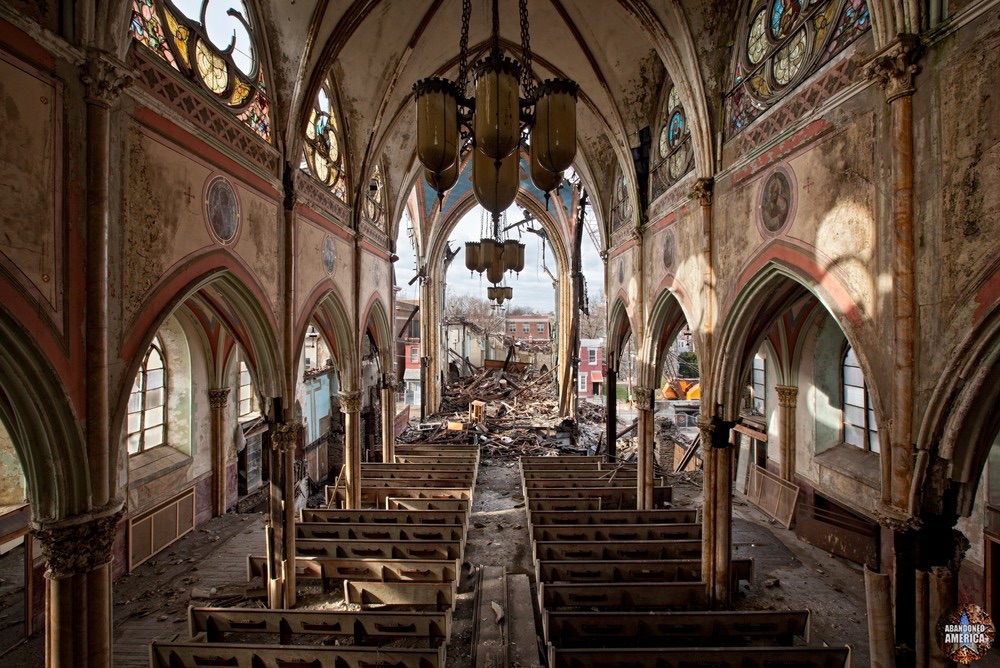





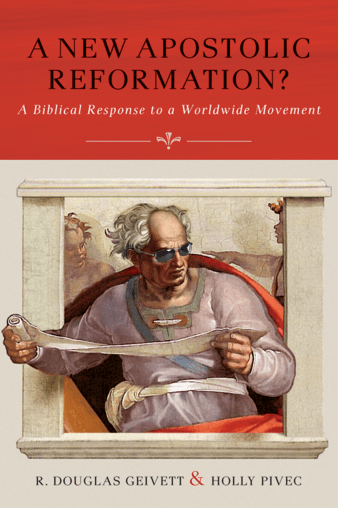



 2pennyblog
