To commune or not to commune, that is the question.

For those who attend our theology on tap meetings, Three Priests Walk in a Bar, you might recall that we originally created a special Facebook group so conversations could continue. Our producer and facilitator, Nick2, similarly invited folks to “pick apart” our gatherings conversation at a later date. Here’s a few more items I wish to share after listening to the recent podcast of the live event held on “Can Christians Worship Together or Not?,” Episode 3.

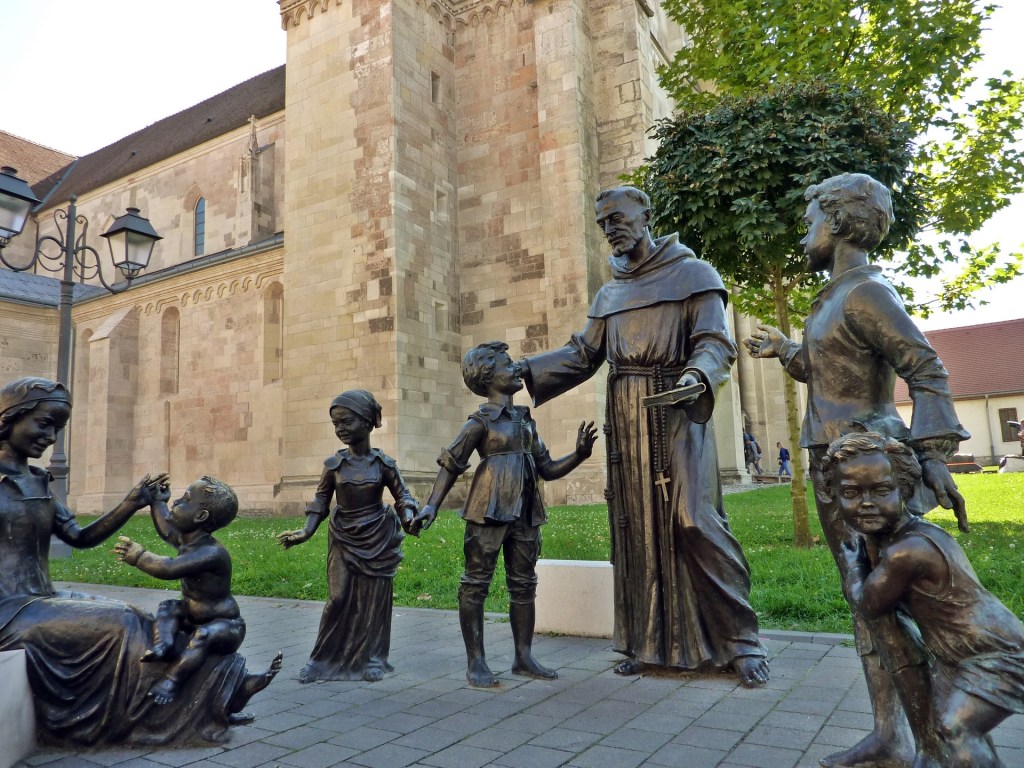
Source: Pixaby. Used by Permission

During our recent discussions, I told a story of a young man in high school who came forward to the altar in order to commune. As I provided him the body of Christ, he said, “Amen,” consumed it, and added excitedly, “This was my first time!” I did not know this young man or his mother kneeling beside him at the time, but she appeared visibly dismayed. Traditionally, Lutherans prepare young people and new adult members for sharing in the Lord’s Supper. Her body language and facial expression indicated she and her son had done something wrong. In response, I simply said, “Welcome to the Lord’s Table.” Then, I continued to commune others and preside over the closing of our worship together.

Normally, I try to be in the narthex (the entrance area of the church building) to greet both visitors and returning church members to our Sunday service. This mother and son were visitors, but they came in as the service began. In our bulletin, we had an invitation to commune which outlined not only how to commune but also who can commune. (It specifically invited all baptized, communing members of any Christian church to do so.) I approached the mother and son after the service, not only to greet them formally, but to invite the mother and son into deeper relationship with our congregation. I didn’t overtly accuse or correct. I didn’t lecture. I just met them where they were in order that we could walk forward together with Jesus Christ.

It turned out that the family had fallen away from church attendance after moving to our area, but they desired to be one with the church again. How wonderful! Why would I put additional stumbling blocks before them to hinder them from coming to Jesus? Instead, I conversed with them, properly instructed them (especially the son regarding the Lord’s Supper), and we welcomed them into our congregation. The previously baptized young man went on to not only commune regularly but also to become a young adult leader in the congregation – one who continued in relationship with the Church through the rite of confirmation and beyond.

If he had not been baptized, it might have been a mistake or a shame, certainly improper by our polity, but I argue it would not necessarily be a sin for him to commune. A sin and a human mistake are not always the same thing. No evil or affront was intended. In 1 Corinthians 11, Paul does indeed argue against receiving the sacrament unworthily (as Fr. Nik noted), but it seems Paul is primarily addressing disunity in the community and not baptism or knowledge of the Sacrament. He never indicates how often the community should commune, but he expresses concern that some have privatized a communal act. Paul appears most concerned with how our lives relate to Jesus’ own and how love ties us in one body together.

As a result, he encourages self-reflection and examination more than present some theological argument over the form and substance of the elements or whom should be admitted to the supper. (Although some of that might have been assumed by Paul, it isn’t his main point nor preserved in writing.) The good news is that we can repent and be renewed even when facing judgement for our lack of discernment regarding love and unity. “Paul’s counsels are driven not by a veneration of the supper properly observed, but by the Corinthians’ failure to have the supper function among them as it should, namely as a beacon by which to keep their lives on the proper path of faith” (The New Interpreter’s Bible Commentary, Abingdon Press, 2002, p. 938). In Paul’s mind the illness and death in the community is a sign of eschatological judgement for disunity, not some sudden, wrath of God, superstitious punishment for lack of understanding while consuming the Eucharist. He seems to believe it is better not to participate in the meal than to dishonor it with disunity. To receive it improperly (in disunity) profanes the life and death of our Lord (Harper Collins Bible Commentary, Harper San Francisco, 2000, p. 1088).

Perhaps this is why “the kiss of peace” and confession were deemed critical to the Lord’s Supper and reserved only for the baptized in some early communities according to some Roman Catholic sources I’ve read in the past. Yet, this particular passage might not prove a great argument against who should commune or changes in practice. It isn’t really about that. Indeed, Christian communities including the Orthodox have changed some practices regarding the Lord’s Supper over time. For example, even when catechumens are dismissed in certain Orthodox liturgies, they actually don’t leave any more. (Listen to our podcast for more on this.) Reserving reception of the Lord’s Supper to those whom are baptized is primarily based upon the earliest known church practices as observed in and interpreted from scripture. It is a tradition handed down to us. Yet just as the “kiss of peace” (now “the sign of peace”) is now open to all, and catechumens are not actually dismissed any longer, perhaps other changes might be discerned by the Church in who should receive the Eucharist. (I’m not saying we should change, as I value the voices of the past, but people aren’t necessarily evil for raising the question.)

In rebuttal to my personal example above, our Orthodox friend, Fr. Adam, spoke about the necessity of knowing whom you commune and protecting the sanctity of the eucharist by overseeing (if not controlling) who participates. In ordination, the Orthodox priest promises “unto death” to protect the Sacrament. They are thought stewards of this mighty, miraculous gift. Those outside of the Orthodox Church, the only true expression of Church in their understanding, cannot and must not commune. He argued this is not exclusionary but a sign of hope that in the future we may all commune. To have someone unprepared or unworthy to commune is anathema, a grave sin in his tradition. Therefore, he must seek to welcome unfamiliar persons, and it is the responsibility of visiting Orthodox to present themselves to him. The expectation remains that only those properly baptized, confirmed and confessed, free of grave sin, participate. Thus, he inferred that the error in this case was not ultimately the young man’s but the priest’s (mine). In the Orthodox view, I should have stopped him from communing. In fact, he never should have even had the opportunity.

Meanwhile the Evangelical Church in America (ELCA), our pastors when ordained or installed promise to love, serve, and pray for God’s people, nourishing them with the word and sacraments. While respecting the sanctity of the Sacrament and the need to preside in a meet and right way, there is no explicitly, strong guardian language as with the Orthodox, although we understand that we are stewards. We recognize that the Sacraments are a means of grace, not an end in themselves. We understand that we share this responsibility with the congregational council and the people of the congregation as well. The sacrament belongs ultimately to Jesus and is our gift and honor to share.

Among those who commune, Martin Luther and our confessions condemn any requirement for preparatory acts such as confessing or fasting in order to do so. We can perform such practices as a personal spiritual discipline, but they aren’t required, and we receive no merit for salvation with any of our efforts. No one is worthy on their own or by their own efforts of receiving the Lord’s Supper – ever. No one can properly prepare to receive what is this pure gift of grace. At some level the sacrament as a means of grace always remains a mystery. It doesn’t truly belong to any bishop’s office or any pastor, but it remains a gift from Christ left in the care of the priesthood of all believers, administered in accordance with scripture, our confessions and polity. In that sense, we all are stewards of it.

Again, following Apostolic tradition, only those baptized commune. (Although, this is now being debated by some.) We instruct those baptized about to commune for the first time in scripture, our confessional beliefs, and our practices, so that they might better participate and value what they are receiving. The methodology and scope of this training varies widely by community. Hopefully, faith will increase through the training and education (by cooperating with the grace being offered), but no specific training is explicitly mandated or outlined by scripture. Though, it appears to have been a practice to educate new members of the community. Our modern model for it based on early Christian communities, early writings and traditions, but again, they vary widely within our denomination and the wider Church.

Traditionally, many if not most Lutherans appear to have communed upon confirmation. Yet with changes in the Roman Catholic Church under Pope Pius X in the 1920s regarding the age for communing and growing ecumenism, it appears discernment over these issues continued. A pan-Lutheran meeting in the 1960s settled on fifth grade as an appropriate age to commune, or nearly settled, for this wasn’t a mandate. Lutherans began to commune youth members at earlier ages as time passed, fifth grade, and still at confirmation. Today, you still find a wide variety of practices with children communing even younger than second grade at times. Even in some Confessional Lutheran bodies, it is left up to pastoral discretion. As for my practice, I enter conversations with parents to discern what might be best for the Church and the individual child. We remember that the age requirement isn’t scriptural but a practice discerned, developed even changed over time. Through our baptism, we are “qualified” in a sense or made worthy by the Holy Spirit’s presence and claim upon us (received through baptism) to be welcomed at the table. We are saved in Baptism and receiving the Eucharist through grace by faith alone. These Sacraments are deemed special means of grace.

Although requiring preparation and sacrifice for communing is condemned, I have actually heard of some American Lutheran pastors (especially in the 1940/50s) requiring confession before communing. This appears contrary to our common understanding of our confessions, the Book of Concord. We do have a rite to offer private confession, and we most often include confession as part of our Sunday liturgy or other times we share in the Lord’s Supper, but it isn’t required. Like the Orthodox, some Lutherans do require visitors present themselves before communing, and I have even been told of congregations expecting some form or written confirmation of denominational participation before one can commune. Still other Lutheran bodies will not let anyone outside of their denomination participate and refuse altar fellowship between Christian bodies if they don’t accept our Confessions fully. These more restrictive measures prove often to be taken by Confessional Lutheran congregations in my experience and the testimonies I have heard, not members of the Lutheran World Federation and ELCA (90+% of all Lutherans globally.)

In contrast, most congregations seem to just include requirements for communing in the Sunday bulletin or make announcements, and we hope and trust visitors will comply. Some of the common wording will invite any baptized communing Christians to participate. Others add that participants must also affirm the real presence of Christ in the Sacrament. We often explicitly explain our understanding of the Sacrament and mention our expectations for communing before weddings, funerals and community worship services where we sometimes celebrate the Eucharist and know many from other traditions might be present. Like the Orthodox, offering the Lord’s Supper at weddings and funerals remains rare, but it is allowed.

Whatever our policy, the majority of Lutherans do not usually challenge people at the altar rail from what I have seen and heard, although perhaps some Confessional Lutherans might. In practical terms, we do not always have the capacity (especially in a 200+ person church) to engage everyone before the service. So, again, trust might be required that people will accept our training, requests and guidance. Ushers, greeters and people in the pews are also asked to help with the welcome and orientation to the service. If people come to the rail, we usually commune them. If they did so in error and we come to know this, pastors tend to meet them later to offer future guidance and instruction. It might be deemed sloppy if not wrong by Fr. Adam and our Orthodox brothers and sisters, but I suspect God has a way of “protecting” the Eucharist better than we do. Here, my supposed “error” providentially led the young man and his family into deeper faith and rootedness in the Church likely because I responded pastorally; taking our theological and scriptural stances seriously while seeking to meet people where they are.

As much as I hear our Orthodox, Roman Catholic and Confessional Lutheran friends framing the need for theological, denominational compliance prior to communing as a hopeful thing, I struggle to accept that. It focuses on division more than welcome. It puts into question the power of our shared baptism. I accept the historic teaching and guidance that only baptized, believing Christians should commune, but if we worship the same Lord and share in baptism, why not commune together? No one properly and fully understands this mystery. I agree with John XXIII that there is more that unites us than divides us. I have witnessed grace in the way pastors and communities welcomed outsiders to the table – sometimes making pastoral exceptions to the common rules. Some communities such as Taizé seem particularly creative in their welcome. Therefore, I accept the benefit of communal standards while arguing for sensitivity and grace.

It brings to mind a story shared by Jean Vanier, founder of L’Arche:

“A young girl with a mental disability made her First Communion during a beautiful celebration of the Eucharist. After the ceremony her uncle said to her mother: ‘What a beautiful liturgy! The sad thing is that she did not understand anything.’ The young girl overheard this remark and said to her mother: ‘Don’t worry, Mommy, Jesus loves me as I am.’”

Perhaps, just perhaps, we self-assured bishops, pastors and lay leaders could learn something about the Eucharist from her?
Leave a comment

Filed under Church History, Uncategorized

Fili-ok or Fili-noway?

Image by Thomas B. on Pixaby, used by permission.

For those who attend our theology on tap meetings, Three Priests Walk in a Bar, you might recall that we originally created a special Facebook group so conversations could continue. Our producer and facilitator, Nick2, similarly invited folks to “pick apart” our gatherings conversation at a later date. Here’s a few items I shared after listening to the recent podcast of the live event held on “Can Christians Worship Together,” Episode 3.

Our producer and facilitator, Nick2, will likely address this later in a future podcast, but the word filioque is pronounced in classical Latin as “FIL-ee-oak” while ecclesiastical Latin is “FIL-ee-OH-kway.” (There was some discussion over this during the podcast.) What is Ecclesiastical Latin? It is Latin developed in Medieval times, particularly in the West according to some, that was a simpler form and reflects the Vulgate’s use of Latin. I confess that I don’t remember exactly how my seminary instructors said the word. They likely used the Ecclesiastical Latin, but the filioque isn’t a huge issue for modern Lutherans if not most modern Christians in general (day to day anyway). Also, Lutherans aren’t usually big “liturgical nerds” as many Episcopalians on social media self-identify, and if it weren’t for Fr. Adam, who is Orthodox, I don’t know if this specific theological split between East and West would even have come up explicitly again in my life after seminary.

Saying that the Holy Spirit proceeds from the Father and the Son (“and the son” is “filioque” in Latin) is considered one of the major causes of the schism between the Eastern and Western churches. Unfortunately, it remains a lasting, important theological issue in certain contexts. Fr. Adam, again an Orthodox priest, still argues, “FIL-ee-NO-way.” Fr. Nik, an Episcopal priest, argues primarily that it is “FIL-ee-OK.” As an ordained minister in the ELCA, I have options. In the Nicene Creed, the West added the “filioque” phrase unilaterally during the Middle Ages. The ELCA and Lutheran World Federation has agreed to recognize the unilateral nature of the addition and allows for it to be removed for ecumenical purposes. More about that later, but here is partly how we got to that decision:

In a half-joking way, I stated the Lutherans could do pretty much anything in worship as long as it isn’t explicitly prohibited in scripture. Yes, the Lutherans have rubrics (“a direction in a liturgical book as to how a church service should be conducted”), but we take them seriously, not rigidly. In general, good Anglicans I know would be horrified at changing any of the words of the Book of Common Prayer which guides and informs their worship. It can happen with prior approval of a bishop in extraordinary circumstances, but not often. They are in a way centered around and unified by the Book of Common Prayer as it reflects scripture. (Although Fr. Nik has joked scripture stole things from the Book of Common Prayer.) The majority of Orthodox and Roman Catholics I have known would be more than horrified to have words changed in the liturgy unless (at least in the West) there is explicit options offered. I know of a Roman Catholic priest disciplined for changing a small phrase in the communion prayers. Lutherans are a people with theological, formal confessions called the Book of Concord (meaning unity). Thus, scripture and theology (why we do things) tend to have more import than liturgical rigidity (the way we do things).

With the Reformation, Lutherans, Reformed and others were reconsidering worship in light of scripture. On the Reformed and “Radical” (Anabaptists and others) side of the house, there were arguments over what instruments to use. Some wanted only those mentioned in scripture. Others only wanted psalms as prayer during worship because they are in the Bible. Stained glass, icons, crosses and crucifixes were often condemned. Lutherans took a different track. Although valuing the liturgy, again we are not rigid about it. For pastoral concerns and other reasons, the pastor may choose changes beyond the approved options in the rubrics. We can adjust further if deemed necessary or helpful.

As I said previously, this is not to be done willy-nilly. We are accountable to our bishops, council and congregation, guided by scripture and liturgical catholic (universal) traditions. So if for good reason and complementary to if not grounded in scripture, we can introduce a wide variety of music, dance, art and icons, as well as alternative liturgical practices and rituals at the congregational level without approval from any “higher-ups” in our polity. We can wear or not wear certain traditional vestments and religious items. In some Lutheran communities, the pastor does not wear a collar for example. European Lutherans tend to be more like Roman Catholics, while American Lutherans tend to be lower church. In Europe, Lutherans can call our worship the mass (understanding that we don’t get extra credit for heaven nor is is a sacrifice) while Americans tend to call it “worship” or a “service” not wanting (historically) to sound too Papist and likely conforming to their low-church Protestant neighbors.

Thus, we do allow for variations in practice based on context and some times (to be honest) preference – which of course, can prove dicey. Pastors and worship committees can err. Still, I say all this because it reflects an agreement that we have with the Orthodox regarding the filioque.

In short, ELCA Lutheran are allowed to omit the filioque for ecumenical purposes. Episcopalians may as well if the context requires it, but they need approval of the bishop. I imagine many if not most Episcopal priests, including Fr. Nik, would hesitate to omit it as long as the Orthodox and Anglican Communion and/or Episcopal Church are not in full communion. Currently, I do not know of any other such accommodation in other denominations. (If you know of any, please let me know in the comments or contact me directly.) Here’s a link to the ELCA document which does a much better job than me in explaining the discussions and end result in detail:

https://bit.ly/38Tjxd9

Not wanting to copy Fr. Nik’s practice of being “real quick” before entering a nine-minute soliloquy, I will end briefly this way: I believe we are one Church even amidst our divisions and differences whether we like it or not. Our shared baptismal identity assures me of this. I trust in the end of time, God will make us fully one. In the meantime, we should strive to live in unity as much as possible. (I’m sorry, Fr. Adam, if this makes you shudder.)

2 Comments

Filed under Uncategorized

Every visitor counts to Jesus

Image source: © 3DMaennchen at Pixabay. Used by permission.

It is November and Thanksgiving is coming. Yet this year, I’m filled with thanksgiving for one primary reason. Twenty years ago, I became a Lutheran right here at Christ Lutheran.

Like many young adults, I wondered and wandered in my journey with God. As I began to refocus my life with the help of friends, someone recommended I check-out this faith community. Coming from my Roman Catholic background, I found the theology sound and grace focused. The liturgical worship was familiar and like home to me. The music and preaching encouraged me to trust in God and rejoice. They didn’t just entertain. Yet among my greatest reasons to join the congregation was the people I found here – people willing to engage with the word, the world, and me.

Every seeker’s needs and ultimate experience will be different. Some might benefit from moving on, but they can still be blessed on their way. Others might find hope here and remain. Every visitor’s contact with us – no matter how short or seemingly insignificant – matters. For in welcoming them, we welcome Christ, and potential miracles lie before us. Lives can change for the better.

In Matthew 8, there was a centurion who desired to see his servant healed. Jesus responded that he would come to the centurion’s home to heal the servant. Understanding the honor this represented, the centurion protested, “Lord, I am not worthy to have you come under my roof; but only speak the word, and my servant will be healed.” With this sign of faith, the servant was declared immediately healed.

We might not be worthy of Christ entering our home (spiritual or otherwise), but Christ desires to come in anyway. Through our experiences in welcome and hospitality, we don’t just meet cultural expectations. We don’t just bring joy to others or ourselves. We are offered the opportunity to meet Christ in a new and vibrant way. Christ is seeking to do something new through our experiences with every visitor.

As we begin to see holiday visitors, I invite each and every one of us to recommit in our authentic, gracious welcome of people who are new to us. Make the time to welcome them with a heartfelt graciousness. Get to know them a bit. Let them know you. Open your hearts; vulnerably sharing your faith and struggles. Just as happened with me, you might prove just who the person needs to have their lives changed eternally. Also, in my experience since, you will likely find that welcoming Christ in others will bless you as well.  

Originally published in the June 2019 newsletter of Christ Lutheran Church, Fredericksburg, VA.

© 2019 The Rev. Louis Florio. All content not held under another’s copyright may not be used without permission of the author.

Leave a comment

Filed under Uncategorized

Still Transforming & Reforming

The Hub, October 27, 2019

Image source:
© Cocoparisienne on Pixabay

“By the end of the seventeenth century, many Lutheran churches celebrated a festival commemorating Martin Luther’s posting of the Ninety-five Theses, a summary of abuses in the church of his time. At the heart of the reform movement was the gospel, the good news that it is by grace through faith that we are justified and set free.” (Bread for the Day 2019, p. 414)

What is Reformation Day? Historically, it marks the day when Martin Luther called for reforms in the church on October 31, 1517, All Hallows Eve (All Saints Eve).

On November 1, All Saints Day, and November 2, All Souls Day (no longer observed by Lutherans), the Church traditionally celebrated the saints while pondering human mortality. Martin Luther chose this specific time to challenge the theological status quo. He provided ninety-five reasons (or theses) as to why no purchased or earned indulgences (a kind of pardon) were needed to save us from damnation. He argued that Jesus’ death and resurrection had opened the door to heaven for us as a free gift. All one needs to do is to hear, believe and claim this gift as our own. Trust in the promises given us in Christ.

Many noble reforms came out of the resulting theological debate. There was an explosion in personal faith. Both religious and secular institutions changed forever. Yet occasion for sin came as well. Christians began to divide and accuse one another of error. So today, we tend to say that we “mark” the day instead of “celebrate.” Christ’s universal church continues to be transformed and reformed led by the Spirit even as we seek to be reconciled with God, one another and the world.

As important as the historic Reformation events remain, perhaps we should use this day to ponder God’s activity today. What changes are God calling us to make?

Originally published in The Hub, a weekly email of Christ Lutheran Church, Fredericksburg, VA.

© 2019 The Rev. Louis Florio. All content not held under another’s copyright may not be used without permission of the author.

Leave a comment

Filed under Uncategorized

An A+ Kind of Love

The Hub, October 15, 2019

This Sunday, I presided at a bittersweet wedding. The bride’s beloved grandfather had died unexpectedly this past year, and he was sorely missed. The grandfather’s absence was palpable, but there was a lot of joy as people shared stories about him. As part of this celebration of ongoing life and love, the bride’s grandmother gifted the bride with a Bible given to her at her own wedding over 60 years ago as a remembrance to be used during the service. Among the texts chosen was the popular John 15:9-12 where Jesus invites us to abide in his love.

The bride’s grandfather, John, was a very intelligent, loving, Italian grandfather, the kind who could lovingly dote on children without spoiling them. Indeed, he often became a surrogate grandfather to many children at my former congregation. Not only would he give them little penny candies, he often asked questions about their week. He would offer them advice and encouragement in response to their answers. He was never too busy for a child.

It had become John’s habit long ago with his own children to jokingly offer a grade whenever a task was performed, or a challenge met. No matter how well they did, it was a C (an average grade) – maybe on a very good day a C+. Perhaps this was meant to challenge people to increasingly do better, or perhaps it was offered for the laughs and smiles it would solicit as they heard this grade and saw his smile again, and again, and again. Whatever the reason, I found in it a loving reminder. We are all human. We can always do better, love better, be better, and we need one another.

The liturgical wedding service reminds all of us through its words that although life is filled with love and excitement, it can become overcast and hard. Yet, the service, especially the Gospel, also reminds us of an A+ kind of love.  It’s a love that we can rest in and find strength from. It is a love that helps us bear all things patiently, to wait with hope, to accept one another as we are and not for what we would hope to be. It is a love that grows and lasts; always protects, always trusts, always hopes, always perseveres. It is a love that forgives and never fails. It reflects our God who is love and loves us.

As individuals, couples or community, we might only reach the grade of C+ on our own (even at our best), but God’s love is transformative. It is an A+ kind of love that we can abide in each and every day. It has the power to make our lives significant and declare us perfectly forgiven and free.

Originally published in The Hub, a weekly email of Christ Lutheran Church, Fredericksburg, VA.

© 2019 The Rev. Louis Florio. All content not held under another’s copyright may not be used without permission of the author.

Leave a comment

Filed under Uncategorized

Sacred People. Sacred Work.

The Hub, October 1, 2019

Everyone has a unique call from God. Ultimately, we are to glorify God by loving God with all that we are and through loving others as ourselves – no matter what we do or where we find ourselves. Yet, the Devil is often in the details! How do we know which way to go?

Interests, hobbies, varied experiences and talents all come together to help clarify our way. Some of us end up in overt care, teaching or service professions. Others might find their primary place is in the home building family life. Still others might find themselves placed in jobs which seem far removed from faith. Indeed, our call may even change over time as we learn more, encounter new people and experiences, or our abilities change.

Yet not surprisingly, if love for God and our neighbor is present in the way we fulfill our duties, we will discover sacred moments in ANY job. If faith shapes how we treat others in business, Christ will be there with us. God wants sacred light to shine throughout the world, even where we work or study. Our intended vocation (at its root meaning “sacred call”) often will be discovered where our passions and God’s purpose for us cross.

Last Sunday, we exposed our youth to a “Wheel of Service.” In one station, a Fredericksburg medic taught them about emergency medical care for serious, bleeding wounds. He also shared about volunteer opportunities for teens with his department and the joys of his career. In a second station, our youth group served other youth by packing “Feed the Children” bags. These bags help food insecure students in our region. They also learned about the operations of our Food Pantry and how it helped our neighbors. Finally, Pastor David Casey, our Campus and Young Adult Missioner, led us in a discussion about campus ministry. Not only are such ministries an opportunity for food, fellowship and relaxation, such programs can help one grow in faith and find one’s way forward to the place Jesus is trying to lead us. Retreats, spiritual direction, volunteering (such as with Young Adults in Global Mission or the Lutheran Volunteer Corps), service projects, presentations about other people’s calls and our shared ministries, and yes, even attendance at Sunday worship can all come together to plant seeds for tomorrow.

However, don’t think such discernment is only for the young. Each and every day, we have a new adventure instore when following Jesus. No matter how old we are, our perceived abilities or disabilities, our assets or struggles, Jesus is calling us. Jesus is calling you. Seek to intentionally discern that call and follow Jesus. There might be a time of waiting. Perhaps we will only understand looking backward. Yet, Christ will get us to where we each need to be for the sake of his Church and the world.

Originally published in The Hub, a weekly email of Christ Lutheran Church, Fredericksburg, VA.

© 2019 The Rev. Louis Florio. All content not held under another’s copyright may not be used without permission of the author.

Leave a comment

Filed under Uncategorized

Raising Little Evangelists

The Hub, September 2, 2019

Picture credit: zsuga on Pixabay. Used by Permission.

Over the next few months, our ministry teams will each have an opportunity to share about their ministry area through music. They will choose our hymns for worship. How appropriate our Evangelism Team started us out by choosing the hymns last Sunday. The hymns helped remind us that as we (re)gather this fall, we do so for the sake of being sent. Together, no matter our age or skills, we share the Great Commission to go into all the world for the purpose of making disciples for Jesus.

To many, evangelism can seem like a daunting task. Yet, it proves much easier than people think. Successful evangelism is based on relationships: with God; with one another as brothers and sisters in Christ; as well as with those who God sends to cross our path in daily life. In a recent article, Christian author, Jen Wilkin, offered a few simple ways “to raise little evangelists,” but it provides incites for all of us who are children of God.

First, she suggests we should practice being fluent in kind words. This skill is in short supply in our world. When we don’t exercise such prudence, we can become the stumbling blocks to faith Christ warned his followers about. When we do, our gentleness can become an invitation to deeper relationship.

We should also be fluent in reconciling words. Words of confession (such as “I’m sorry”) and grace-filled words (such as “I forgive you”) reflect the Gospel. In relationships, we can give and receive these signs of God’s own love for us.

Third, she suggests that we should become fluent in slow words echoing James 1:19 – quick to listen, slow to speak and slow to become angry. Measured words at the right moment help us share love and life rather than discord and death.

Here in this season of Sunday school, we are also reminded that as children of God the Word should dwell in us richly. We should be fluent in eternal words – words that help us help others discover our Triune God and the great love waiting to embrace them. Memorizing scripture, participating in small groups (classes and Bible studies) reflecting upon life applications, attending worship and meditating of scripture are times used by God to fill us with God’s Spirit. From this intimacy, love can flow more freely.

Last, we should practice hospitable words. Inviting people into our homes is often a normal consequence of new relationships. So, why not invite folks into our church home as well? “Why don’t you come to church with me some Sunday?” “I find hope from going to church. Maybe you can meet me there?” “Looking for a church family? I’m part of a great one. Maybe you would like to visit mine?”

These are all the kind of words Jesus used with great success. They are our legacy which can be easily shared – spoken, sung, written or even digitally – along with our faith, hope and love.

Originally published in The Hub, a weekly email of Christ Lutheran Church, Fredericksburg, VA.

© 2019 The Rev. Louis Florio. All content not held under another’s copyright may not be used without permission of the author.

Leave a comment

Filed under Uncategorized

One Church? Yes, but not quite yet…

Knock, knock, knock…Below is my response to “Protestantism is Not United, Not Catholic, and Not a Church,” by Fr. Andrew Stephen Damick (2017).

The argument that Protestants are not united, not Catholic, and not a Church doesn’t upset me much as a Lutheran. The Great Schism (1054) and the start of the Protestant Reformation (1517) left the Christian world divided with the Orthodox, Roman Catholics (or Papists), Evangelicals (the first called Protestants and eventually Lutherans), and what were often at first named Radicals (Anabaptists and others pushing the traditional theological envelope). The Augsburg Confession was written with the hope for unity even amidst some practical, concrete theological differences.

As regional and theological breaks continued to occur, “Protestant” became an umbrella term for many disparate groups, and Evangelicalism more recently became connected to believer-baptism, “Bible based” traditions. The term, Protestant, is now sometimes used to indicate mainline denominations, but in general, the term covers a disparate group in common usage – often Mainline Protestant, Evangelical, Pentecostal and others. Although, it is important to note that some high church Episcopalians/Anglicans don’t like to be thought of as Protestant at all. Still, most everyone else considers them so (whether fair or not).

I would argue that some Protestants are more attached to the “Catholic” (universal) heart of the church than others. Determining what that heart is remains the rub. For my part, I put my trust in Jesus, Son of the Living God, risen from the dead. Beyond that, I’m open to arguments and even ultimately being proved wrong. Despite our hardheartedness, I find continually that the Holy Spirit makes us one Church out of many denominations (or “church bodies” if you prefer) whether we like it or not. There are many commonalities. There is an ecumenical movement affirming catholicity over division. Yes, we find these are muddied, sinful waters, but I expect the Baptismal waters will win out yet.

So, I believe the author fails to adequately or even fairly differentiate between varied beliefs of Protestantism. Echoing his own argument, must of us confess that we are not one! We understand that the Church is fractured, but we don’t have to look far to identify fractures in the Orthodox edifice as well. Just look at what’s going on in orthodoxy over in the Ukraine. Closer to home, in my own county, I know of Orthodox Christians that mutually condemn one another. Certainly, we know Orthodox folks in the Richmond area who are viewed with suspicion if not distaste by other Orthodox folks. The catholicity of the Church is broken, and so, many Christians are working toward repairing the breach when and where they can. There’s a hunger for unity with God and one another.

In my view, the author makes a mistake by conflating Protestant traditions. He focuses on the “Reforming Catholic Confession” as if it is a seminal Protestant document. It is actually a document initiated (as I understand it) by Kevin Vanhoozer, a seminary instructor at Trinity Evangelical Divinity School (Deerfield, IL). Interestingly, the seminary is affiliated with the Evangelical Free Church of America. This denomination is Evangelical in the modern sense (believer-baptism, “bible based,” etc.) not the Lutheran sense (“of or according to the teaching of scripture”). The Evangelical Free Church of America’s deepest roots are indeed found among Swedish, Danish, and Norwegian Lutheranism, but they are ultimately a break-off sect in the United States – former Lutherans influenced by Baptist and Evangelical neighbors. Ironically, they were originally considered “liberal” by some, as the predecessor bodies were trying to cast off the cloak of the “Old World” religion and hungered to be a “free” (not state supported) church. Today, Evangelicalism is in fact often closely connected to conservative politics and traditions, but not always.  

I would argue we all fall short of the “Catholic” standard. Orthodox, Roman Catholics, Mainline Protestants, Evangelicals, Pentecostals, and all others have plenty of repenting to do rather than casting stones. I’m thankful to be part of a Protestant denomination that is trying to live out the Augsburg Confession’s hope of our being one, and most importantly, Jesus’ own prayer for us to be one (John 17:20-23).

I don’t fault the authors of “The Reforming Catholic Confession” for arguing for the catholicity of their faith (as they see it), even though, I do often disagree with their theological claims. Thanks to the Holy Spirit, I trust we are one even as we disagree. Thus, perhaps we as Church would find it more productive (and in line with God’s will) to focus on what unites us rather than divides us as Pope John XXIII suggested; even if we need good beer and conversation as the starting course.

Amidst our Christian brokenness and sin, I trust the fullness of the promised feast is yet to come. Someday, Jesus’ prayer will be completely fulfilled. Yes, we are one Church, just not quite yet.

Pastor Lou is a member of “the Three Priests.” Join him (an ELCA pastor), Fr. Adam (an Orthodox Church in America priest), and Fr. Nic for a Three Priests Walk in a Bar event in Ashland, Virginia, or through their (hopefully) upcoming podcast series.

This post was created in response to an article shared by an Orthodox friend, Fr. Adam, on Facebook, “Protestantism is Not United, Not Catholic, and Not a Church – Orthodoxy and Heterodoxy,” by Fr. Andrew Stephen Damick, on Reformation Day 2019. Find it here: https://bit.ly/36o4XtI

You can learn about “The Reforming Catholic Confession” at https://reformingcatholicconfession.com/

You can learn about the Orthodox-Lutheran dialogue here:

Via my denomination, Evangelical Lutheran Church in America, an LWF member body at https://www.elca.org/Faith/Ecumenical-and-Inter-Religious-Relations/Bilateral

Via the Lutheran World Federation (“a communion of churches” in the Lutheran tradition) https://www.lutheranworld.org/content/lutheran-orthodox-dialogue

© 2019 The Rev. Louis Florio. All content not held under another’s copyright may not be used without permission of the author.

Leave a comment

Filed under Uncategorized

Fever vs. Faith: Handling Hot Topics

Bells rang on Sunday, August 25, 2019

As August ends, I am participating in a community worship service and national ringing of church bells. Sunday, August 25, will mark four hundred years since the first Africans arrived by force at Fort Monroe, Virginia. Slavery is a tough subject to address, and when you add the many ongoing sins related to slavery, Jim Crow Laws, segregated communities, and other signs of personal and systemic racism, it becomes even more difficult.

Whether racism or any other hot button issue, it is helpful to remember that forgiveness is already ours. We need not get stuck in shame whether it is our sin, the sin of others or of the world. Nor should we fear acknowledging guilt. Instead, humility calls us forward into a future together with Christ. We who have been reconciled to God through Christ have also been entrusted with a ministry of reconciliation (see 2 Cor. 5: 11-21). We can indeed address hurtful, “hot button” issues without defensiveness or unholy anger.

As election fever rises again and troubles of the world present themselves, I find it helpful to listen more than talk. What is really being said and why? Is my momentary adversary speaking from their own woundedness and therefore wounding me? Sometimes angry people facing compassion and gentleness can be moved toward compassion and gentleness themselves. In speaking, I try to avoid blanket statements, as hot button issues are often multilayered, nuanced and intersect with others. As a flawed human, I might even be wrong, so I try to consider both what I might need to learn and where we might be able to find areas of agreement. Although Lutheran Christians have always been encouraged to engage the world and call authorities to account when necessary, regarding the Eighth Commandment (as Lutheran’s count them, the admonition to avoid bearing false witness), Martin Luther cautions, “We are to fear and love God, so that we do not tell lies about our neighbors, betray or slander them, or destroy their reputations. Instead we are to come to their defense, speak well of them, and interpret everything they do in the best possible light” (Small Catechism).

And then, of course, we have Christ’s own teaching and example, “You have heard that it was said, ‘Love your neighbor and hate your enemy.’ But I tell you, love your enemies and pray for those who persecute you, that you may be children of your Father in heaven.” Praying for those we oppose might not always result in an observed change in their behaviors, but I always find it brings a change in me – in attitude toward them and the world, in my own general peace, or sometimes in my own repentance. Consider praying before you hit that post button or begin a difficult conversation. Or, just step away, and then come back to address things after some prayer and reflection. It is amazing how the Spirit can give us just the right words.

Like the Psalmist in Psalm 27, “I believe that I shall see the goodness of the Lord in the land of the living.” Sometimes that goodness will enter the world through us.

Originally published in the June 2019 newsletter of Christ Lutheran Church, Fredericksburg, VA.

Unless otherwise indicated, all scripture quotations for this article are from the New Revised Standard Version (NRSV) translation.

© 2019 The Rev. Louis Florio. All content not held under another’s copyright may not be used without permission of the author.

Leave a comment

Filed under Community Life, Pastoral Letter

Is the biblical canon closed?

Picture credit: Gerard Seghers (attr) – The Four Doctors of the Western Church, Saint Augustine of Hippo (354–430); or as I would call it, “Let me think, think, think…”

At a recent “Three Priests” theology discussion, one sticking point remained as we closed our talk on the Word of God: Is the biblical canon closed? Well, I argue that depends on how you look at it.

Due to some modern fictional books and movies, the Emperor Constantine is sometimes wrongly given credit for the canon inherited in Western Christendom. Constantine did call the Council of Nicea (325), which was the first general conference or “ecumenical Council” of the Christian church, but this first gathering is not reported to have addressed the canon. In 330 CE, Constantine did finance the copying of fifty Christian “bibles,” comprised of commonly accepted books, but he, too, does not seem to have officially influenced the cannon. 

So, did any council approve what we know as the cannon? That in itself is a tricky question. There *was* a “council” (small “c”) to help establish the Roman Catholic/Western cannon and later councils affirmed it, but these were not any of the seven great “Ecumenical Councils” which occurred before the split of Eastern and Western Christendom.

The Synod of Hippo of 393 is one of several gatherings of bishops sharing this name. (Synods of Hippo were also held in 394, 397, 401 and 426.) This specific gathering is commonly held by Roman Catholics as the first time any council of bishops (again, not to be confused with one of the seven “Ecumenical Councils”) listed and approved a Christian biblical canon. This list corresponds closely to the modern canon in the West. This canon included the six later books classed as deuterocanonical/apocryphal as well as First Ezra/Esdras and Second Ezra/Esdra. Also included among these apocryphal texts: Tobit, Judith, 1 and 2 Maccabees, Wisdom, Sirach, Baruch, parts of Esther and parts of Daniel. It left out some apocryphal books recognized by the Orthodox.

This canon list was later approved at the Council of Carthage (again a series of synods and not listed as one of the seven ecumenical councils) pending ratification by the “Church across the sea”, that is, the See of Rome. This Council of Carthage (the third of several synods in the 3rd, 4th and 5th Centuries sharing this name) affirmed the canon established in Hippo on 28 August 397 (and again in 419).

The councils held at Hippo were held under the authority of Augustine, and I’ve read he considered the cannon closed. In reality, others (both saints and heretics) continued to propose varied lists. Indeed, First Ezra/Esdras was excluded in the Vulgate Bible (late fourth century) and ceased to be considered canonical in the West. The modern Book of Ezra formerly included the Book of Nehemiah in a single book, but it is now commonly split since the 9th century onwards. It was not until 1516/17, in the first printed Rabbinic Bible of Daniel Bomberg that the separation was introduced generally in Hebrew Bibles.

The cannon solidified over time in the West, but Luther stirred the pot again with his Reformation review when he asked, “What is truly scripture?” He evaluated opinions and judgments of the past, but he wasn’t afraid to challenge them. He ultimately rejected the Apocrypha. Jewish religious leaders of Germany tended to reject them, so why shouldn’t Christians? He also attempted to remove the books of Hebrews, James, Jude and Revelation from the canon. To him, they were out of whack with “grace alone” and “faith alone” doctrine. Other Reformers disagreed. In the end, he kept these New Testament books, but these books are still to be found toward the end of the German Language “Luther Bible.”

The Council of Trent (1545-1563), the 19th “ecumenical council” of the Roman Catholic Church, was called in response to the Reformation. Indeed, my old priest and Sunday school teacher (from pre-Lutheran days), Father Foley, considered this council the start of the “Catholic Reformation” in response to the “Protestant Revolt.” (These terms were common among Catholics, and remains so among some hard-corps, conservative Roman Catholics.) This council was not truly ecumenical, as it did not include anyone from the Orthodox Church. In response to the Reformation, it approved the Catholic Cannon we know today. This includes apocryphal books.

The Lutheran/Protestant cannon continued to exclude the Apocrypha as scripture. Although not viewed as being the standard of scripture, these works remained valued even by Martin Luther. They are often included in modern editions of scripture, but you will find them clearly designated as apocryphal or deuterocanonical texts.

So, is the cannon closed? Theoretically, it closed in the 300s, but one can see there have been and remain variations. The Church (East and West; Catholic, Protestant and Orthodox) could work toward more unity someday, as unlikely as that sounds. Or, maybe the West might accept just as my Orthodox friend, Father Adam Sexton, proposes, “The Orthodox Church is right. We have received what we were meant to receive.” Then, in that sense, the West could accept the East’s ruling and “go back” to that. Yet many of those Christians who are orthodox (small “o” meaning more traditional) would say, the canon is absolutely closed as is. Some suggest the canon was closed with the death of the last Apostle. Others say that scripture points to the revelation in the Christ which has fully come in Jesus.

Yet some scholars and others do indeed argue about the closing of scripture. Usually, they suggest better, more complete surviving texts might someday be found calling for an amendment to the canon. Or, they suggest texts formally rejected for theological or political reasons might need to be reevaluated. Or, they argue that there is nothing in scripture that defines the canon, only councils of men did. Yet again, most of the catholic (small c meaning universal), orthodox (small o, meaning more traditional) Church deems the canon closed by the Spirit. To do otherwise can be viewed heretical and certainly false prophets and revelation could mislead us.

In practice, some argue that the canon was closed with early gatherings of bishops (in the 300s), as well as with the East-West break, or even with the Reformation and/or Council of Trent (1500s). Yet even after choosing any of these historic markers, disputes remain between Christians over exactly which books belong. Is it really closed if the entire church can’t reach a consensus? Some past and present Protestants believe that the Church recognizes the canon, but it does not have the authority to close it.

Looking at history, Karl Barth, a Reformed theologian of the 20th Century, put it this way, “The insight that the concrete form of the Canon is not closed absolutely, but only very relatively, cannot be denied even with a view to the future” (Karl Barth, Church Dogmatics: The Doctrine of the Word of God, Vol. I/2, trans. Bromiley, G. W., & Torrance, T. F. London; New York: T&T Clark. 2004. Print. p. 476). Another major shaking of the Church could yet cause the books to be reevaluated, shuffled, or who knows what. Well, as I said last night, only God knows, and we will find out. Until then, we seem to be left with a general, human consensus – we trust guided by the Holy Spirit – and thus could be in error or not done discerning, “What is scripture?”

*As this was just for fun and general edification, I’m not listing all my resources, but they included the Catholic Encyclopedia, US Catholic Bishops Conference website, multiple Wikipedia articles (yeah, I know, not always authoritative), multiple blogs (some kind of out there), and classes by Father James Foley, SJ (may he rest in peace).

© 2019 The Rev. Louis Florio. All content not held under another’s copyright may not be used without permission of the author.

Leave a comment

Filed under Church History, Uncategorized