Tag Archives: bible

Invite the weak. Don’t sacrifice them.

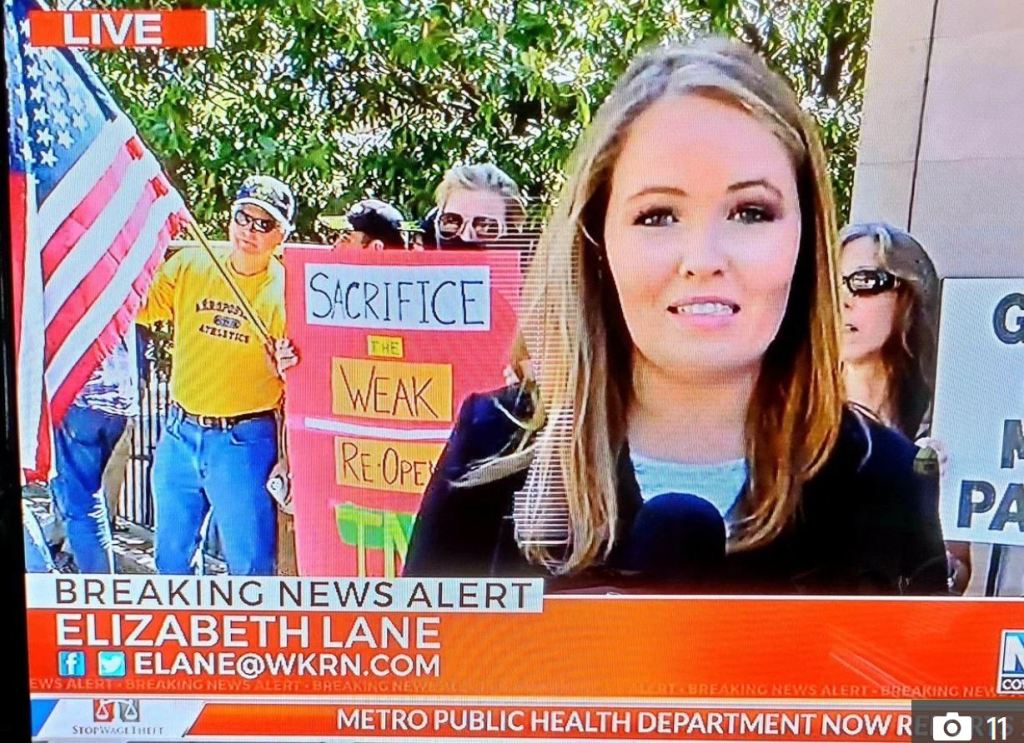
Photo credit: WKRN screenshot

I wouldn’t post this if it weren’t for the fact I see too many friends on Facebook expressing the same opinion in not so many words. “Sacrifice the weak. Reopen the economy.” A simple, utilitarian approach is antithetical to Christian faith.

No, we need not unnecessarily “martyr” the economy nor “sacrifice the weak.” Yes, I understand that sacrifices will need to be made, among all, and these sacrifices won’t always be perceived as fair. Life isn’t fair. Yet, we do need to remember the “least of these” and the most vulnerable of our society as we seek a way forward. They must remain an important part of our “equation.”

Out of love for our neighbors, some freedoms and prosperity might need to be given up freely; not out of obligation but in love, at least for a time. There is no other way forward if we want to walk with Christ. Loving your neighbor cannot be based solely on death counts or the perceived liabilities of “others.” Who rightly judges who is “weak” and without worth? That’s the way of that past in Nazi Germany and the Soviet Union.

Tough economic decisions can’t be based solely on fear of the virus nor fear about where our daily bread will come from. We can and must do better. Jesus said, “…But when you give a banquet, invite the poor, the crippled, the lame, the blind, and you will be blessed. Although they cannot repay you, you will be repaid at the resurrection of the righteous” (Luke 14:13-14). If you hope to someday celebrate an economic recovery, you might just want to invite these folks as well.

© 2020 The Rev. Louis Florio. All content not held under another’s copyright may not be used without permission of the author.
Leave a comment

Filed under Uncategorized

Fever vs. Faith: Handling Hot Topics

Bells rang on Sunday, August 25, 2019

As August ends, I am participating in a community worship service and national ringing of church bells. Sunday, August 25, will mark four hundred years since the first Africans arrived by force at Fort Monroe, Virginia. Slavery is a tough subject to address, and when you add the many ongoing sins related to slavery, Jim Crow Laws, segregated communities, and other signs of personal and systemic racism, it becomes even more difficult.

Whether racism or any other hot button issue, it is helpful to remember that forgiveness is already ours. We need not get stuck in shame whether it is our sin, the sin of others or of the world. Nor should we fear acknowledging guilt. Instead, humility calls us forward into a future together with Christ. We who have been reconciled to God through Christ have also been entrusted with a ministry of reconciliation (see 2 Cor. 5: 11-21). We can indeed address hurtful, “hot button” issues without defensiveness or unholy anger.

As election fever rises again and troubles of the world present themselves, I find it helpful to listen more than talk. What is really being said and why? Is my momentary adversary speaking from their own woundedness and therefore wounding me? Sometimes angry people facing compassion and gentleness can be moved toward compassion and gentleness themselves. In speaking, I try to avoid blanket statements, as hot button issues are often multilayered, nuanced and intersect with others. As a flawed human, I might even be wrong, so I try to consider both what I might need to learn and where we might be able to find areas of agreement. Although Lutheran Christians have always been encouraged to engage the world and call authorities to account when necessary, regarding the Eighth Commandment (as Lutheran’s count them, the admonition to avoid bearing false witness), Martin Luther cautions, “We are to fear and love God, so that we do not tell lies about our neighbors, betray or slander them, or destroy their reputations. Instead we are to come to their defense, speak well of them, and interpret everything they do in the best possible light” (Small Catechism).

And then, of course, we have Christ’s own teaching and example, “You have heard that it was said, ‘Love your neighbor and hate your enemy.’ But I tell you, love your enemies and pray for those who persecute you, that you may be children of your Father in heaven.” Praying for those we oppose might not always result in an observed change in their behaviors, but I always find it brings a change in me – in attitude toward them and the world, in my own general peace, or sometimes in my own repentance. Consider praying before you hit that post button or begin a difficult conversation. Or, just step away, and then come back to address things after some prayer and reflection. It is amazing how the Spirit can give us just the right words.

Like the Psalmist in Psalm 27, “I believe that I shall see the goodness of the Lord in the land of the living.” Sometimes that goodness will enter the world through us.

Originally published in the June 2019 newsletter of Christ Lutheran Church, Fredericksburg, VA.

Unless otherwise indicated, all scripture quotations for this article are from the New Revised Standard Version (NRSV) translation.

© 2019 The Rev. Louis Florio. All content not held under another’s copyright may not be used without permission of the author.

Leave a comment

Filed under Community Life, Pastoral Letter

Is the biblical canon closed?

Picture credit: Gerard Seghers (attr) – The Four Doctors of the Western Church, Saint Augustine of Hippo (354–430); or as I would call it, “Let me think, think, think…”

At a recent “Three Priests” theology discussion, one sticking point remained as we closed our talk on the Word of God: Is the biblical canon closed? Well, I argue that depends on how you look at it.

Due to some modern fictional books and movies, the Emperor Constantine is sometimes wrongly given credit for the canon inherited in Western Christendom. Constantine did call the Council of Nicea (325), which was the first general conference or “ecumenical Council” of the Christian church, but this first gathering is not reported to have addressed the canon. In 330 CE, Constantine did finance the copying of fifty Christian “bibles,” comprised of commonly accepted books, but he, too, does not seem to have officially influenced the cannon. 

So, did any council approve what we know as the cannon? That in itself is a tricky question. There *was* a “council” (small “c”) to help establish the Roman Catholic/Western cannon and later councils affirmed it, but these were not any of the seven great “Ecumenical Councils” which occurred before the split of Eastern and Western Christendom.

The Synod of Hippo of 393 is one of several gatherings of bishops sharing this name. (Synods of Hippo were also held in 394, 397, 401 and 426.) This specific gathering is commonly held by Roman Catholics as the first time any council of bishops (again, not to be confused with one of the seven “Ecumenical Councils”) listed and approved a Christian biblical canon. This list corresponds closely to the modern canon in the West. This canon included the six later books classed as deuterocanonical/apocryphal as well as First Ezra/Esdras and Second Ezra/Esdra. Also included among these apocryphal texts: Tobit, Judith, 1 and 2 Maccabees, Wisdom, Sirach, Baruch, parts of Esther and parts of Daniel. It left out some apocryphal books recognized by the Orthodox.

This canon list was later approved at the Council of Carthage (again a series of synods and not listed as one of the seven ecumenical councils) pending ratification by the “Church across the sea”, that is, the See of Rome. This Council of Carthage (the third of several synods in the 3rd, 4th and 5th Centuries sharing this name) affirmed the canon established in Hippo on 28 August 397 (and again in 419).

The councils held at Hippo were held under the authority of Augustine, and I’ve read he considered the cannon closed. In reality, others (both saints and heretics) continued to propose varied lists. Indeed, First Ezra/Esdras was excluded in the Vulgate Bible (late fourth century) and ceased to be considered canonical in the West. The modern Book of Ezra formerly included the Book of Nehemiah in a single book, but it is now commonly split since the 9th century onwards. It was not until 1516/17, in the first printed Rabbinic Bible of Daniel Bomberg that the separation was introduced generally in Hebrew Bibles.

The cannon solidified over time in the West, but Luther stirred the pot again with his Reformation review when he asked, “What is truly scripture?” He evaluated opinions and judgments of the past, but he wasn’t afraid to challenge them. He ultimately rejected the Apocrypha. Jewish religious leaders of Germany tended to reject them, so why shouldn’t Christians? He also attempted to remove the books of Hebrews, James, Jude and Revelation from the canon. To him, they were out of whack with “grace alone” and “faith alone” doctrine. Other Reformers disagreed. In the end, he kept these New Testament books, but these books are still to be found toward the end of the German Language “Luther Bible.”

The Council of Trent (1545-1563), the 19th “ecumenical council” of the Roman Catholic Church, was called in response to the Reformation. Indeed, my old priest and Sunday school teacher (from pre-Lutheran days), Father Foley, considered this council the start of the “Catholic Reformation” in response to the “Protestant Revolt.” (These terms were common among Catholics, and remains so among some hard-corps, conservative Roman Catholics.) This council was not truly ecumenical, as it did not include anyone from the Orthodox Church. In response to the Reformation, it approved the Catholic Cannon we know today. This includes apocryphal books.

The Lutheran/Protestant cannon continued to exclude the Apocrypha as scripture. Although not viewed as being the standard of scripture, these works remained valued even by Martin Luther. They are often included in modern editions of scripture, but you will find them clearly designated as apocryphal or deuterocanonical texts.

So, is the cannon closed? Theoretically, it closed in the 300s, but one can see there have been and remain variations. The Church (East and West; Catholic, Protestant and Orthodox) could work toward more unity someday, as unlikely as that sounds. Or, maybe the West might accept just as my Orthodox friend, Father Adam Sexton, proposes, “The Orthodox Church is right. We have received what we were meant to receive.” Then, in that sense, the West could accept the East’s ruling and “go back” to that. Yet many of those Christians who are orthodox (small “o” meaning more traditional) would say, the canon is absolutely closed as is. Some suggest the canon was closed with the death of the last Apostle. Others say that scripture points to the revelation in the Christ which has fully come in Jesus.

Yet some scholars and others do indeed argue about the closing of scripture. Usually, they suggest better, more complete surviving texts might someday be found calling for an amendment to the canon. Or, they suggest texts formally rejected for theological or political reasons might need to be reevaluated. Or, they argue that there is nothing in scripture that defines the canon, only councils of men did. Yet again, most of the catholic (small c meaning universal), orthodox (small o, meaning more traditional) Church deems the canon closed by the Spirit. To do otherwise can be viewed heretical and certainly false prophets and revelation could mislead us.

In practice, some argue that the canon was closed with early gatherings of bishops (in the 300s), as well as with the East-West break, or even with the Reformation and/or Council of Trent (1500s). Yet even after choosing any of these historic markers, disputes remain between Christians over exactly which books belong. Is it really closed if the entire church can’t reach a consensus? Some past and present Protestants believe that the Church recognizes the canon, but it does not have the authority to close it.

Looking at history, Karl Barth, a Reformed theologian of the 20th Century, put it this way, “The insight that the concrete form of the Canon is not closed absolutely, but only very relatively, cannot be denied even with a view to the future” (Karl Barth, Church Dogmatics: The Doctrine of the Word of God, Vol. I/2, trans. Bromiley, G. W., & Torrance, T. F. London; New York: T&T Clark. 2004. Print. p. 476). Another major shaking of the Church could yet cause the books to be reevaluated, shuffled, or who knows what. Well, as I said last night, only God knows, and we will find out. Until then, we seem to be left with a general, human consensus – we trust guided by the Holy Spirit – and thus could be in error or not done discerning, “What is scripture?”

*As this was just for fun and general edification, I’m not listing all my resources, but they included the Catholic Encyclopedia, US Catholic Bishops Conference website, multiple Wikipedia articles (yeah, I know, not always authoritative), multiple blogs (some kind of out there), and classes by Father James Foley, SJ (may he rest in peace).

© 2019 The Rev. Louis Florio. All content not held under another’s copyright may not be used without permission of the author.

Leave a comment

Filed under Church History, Uncategorized

So many books

The Hub, August 13, 2019

“So many books, so little time.” Perhaps few know that as well as a pastor! We love and depend upon books even in this digital age for sound theology and ideas for better ministry. Come into any pastor’s office, and you will likely see books on shelves and tables, if not the floor. Today, this clutter has likely spread through electronic versions on their tablet or phone as well. Our lives seem fed by books.

Yet what would happen if the pastor attended to all these other books but moved away from reading scripture daily? As with anyone else, Bible stories will be conflated into cultural understandings rather than scriptural ones. Faith might become challenged if not weaker, and a hunger for meaning, understanding and hope would grow. As with satiating one’s thirst, we need to go back to the well often. We need to hear what scripture really says to us, for as an early Puritan pointed out, “God is still speaking.”

Now certainly, other books have value, as do our many commitments, but through scripture, we encounter our Living God who loves us anew in a special way. Scripture is the norm for teaching and our discernment over all daily matters in our lives. The Spirit can literally touch and reshape our hearts. Martin Luther argued the Word of God has the power to bring about repentance, faith, and salvation. “What pasture is to the beast…the nest for the birds, the stream for fish, the Scriptures are for believing souls,” Luther wrote.

As our community’s children return to their academic studies, let us also return as families and individuals to scripture. Take advantage of the free daily meditation guides in our welcome area. (Perhaps even take the extra step of reading each scriptural citation in full and in their original context.) Challenge yourself to a Bible reading plan based on themes for life or for reading the Bible throughout the year. It is easier than you think. Intentionally dig into scripture when facing decisions or problems, start or end your day. Listen for the Spirit through other’s interpretations that might affirm, challenge or shape your own. (Bible study with a spouse, family, or group is immensely helpful.) Also, engage Sunday’s sermons more deeply by taking notes or talking about the sermon or readings of the day with others afterward. You can also discuss scripture with our Christian tradition and the universal Church as you, just like a good pastor, attend ongoing classes and Bible studies to help you better understand historical and other contexts as well as hear what people of the very diverse past and present have to say.

If you need some direction, please ask Pastor Anne or me. We will be excited to open up the Bible with you. For each time we do, we encounter God’s love anew. And you with your faith (and questions) have something to teach us as well.

Originally published in The Hub, a weekly email of Christ Lutheran Church, Fredericksburg, VA.

© 2019 The Rev. Louis Florio. All content not held under another’s copyright may not be used without permission of the author.

Leave a comment

Filed under Pastoral Letter, Uncategorized

Walk in Hope

May the God of hope fill you with all joy and peace in believing, so that by the power of the Holy Spirit you may abound in hope. (Romans 15:13)

long walk flikr

With each January, I’m usually contacted by several of our congregation’s youth and young adults as well as younger staff members at our school. They want me to write recommendations for college entrance or a new job. Almost always, the person making this request is humbled by the choices before them. They fear rejection or failure. At the same time, they feel dwarfed by the opportunities looming before them. Could their dreams be realized? They are almost afraid to find out!

Certainly, we aren’t always successful in our plans, but perhaps we should not get stuck in despair. Look instead toward God’s plans for us and be comforted. Through the prophet Jeremiah, God tells us, “For surely I know the plans I have for you, says the Lord, plans for your welfare and not for harm, to give you a future filled with hope” (Jeremiah 29:11). God seeks to be in communion with our hearts. Jesus came to rescue not condemn. The Spirit is our gift to console and guide us. With such company, need we become paralyzed in fear?

Jean Vanier, founder of L’Arche, reminds us, “Prayer is to say to Jesus, ‘Tell me what you want. May your will be done.’ Then, unexpectedly, Jesus says to us, ‘Tell me what you want.’ ‘Whatever you ask in my name, I will do…. If you ask anything of me in my name, I will do it’ (John 14:13, 14).” Peter begs us, “Cast all your cares on Jesus, for he cares for you” (1 Peter 5:7). Paul reminds us, “All things work for the good of those that love the Lord” (Romans 8:28).

Fear is very human, but Jesus wants to walk with us through our fear to the place God needs us to be. God’s plans may not prove our own. If we seek to listen to Jesus and follow, even if we mishear him a wee bit or a lot, it is he who will lead us to that place. That’s his promise to all God’s children, yes, even you.

The future is like a cloud to us, but then is it really just a coincidence that God so often is heard speaking from clouds in scripture? I don’t think so. We only have one way to go – forward. We can only navigate properly by following the Christ who loves us…into the gray…into sickness…into failure…into joblessness…even into the valley of death…

Yet through faith, we know any sadness need not last. Grace, forgiveness, healing and a peace beyond understanding awaits us. You see, God is already in our future awaiting us with open arms wherever and whatever that future may be. There’s nothing really to fear. God’s ready and willing to welcome us home. Like the paralytic healed in Capernaum, we really just need to pick up our mat and walk. We are forgiven. We are healed. We are free.

I pray that your Lenten walk be one centered on Jesus and the abundant hope he has in store for you.

Pastor Lou


References:

Vanier, J. (u.d.). What is prayer? As posted at Pallotinesisters.org

Voegtli, R. (30 Oct. 2010) Photo: “Long walk”used with permission. The photographer retains all rights to its use. 

Scripture quotations my translation, other than in Jean Vanier’s quote.

© 2015 The Rev. Louis Florio. All content not held under another’s copyright may not be used without permission of the author.

3 Comments

Filed under Pastoral Letter, Uncategorized

Relax & Let Go – Always!

matthew6_34“For everything there is a season, and a time for every matter under heaven…” (Ecclesiastes 3:1)

Life is indeed challenging, but when the theology of our faith meets the bumpy roads of our lives, we will be reminded that God will make all things work for the good of those who love him in God’s good time.

Our Lord is sovereign, all powerful, omnipresent, omniscient, eternal, all knowing, all loving, and you know what? God loves you – at every time and in all seasons, good and bad. So, we don’t need to walk alone, and we were never meant to do so. Our lives are not meant to be about pressure or time crunches, although those do happen. The fate of the world doesn’t rely on us even if it sometimes feels that way. Our God is, well, our God. We need to trust rather than work and worry.

True, we were created to share in God’s creative, redemptive work, but we are not God. We never will be. So, God provides us with a call to Sabbath, a time for rest, worship, and reconnecting to God and one another as a community. God provides us with people to love, care for and walk with us called family, friends and church. And if these should ever fail you as humans sometimes do? God in his Word directs us to cast all our cares upon Christ, for he cares for us.

We aren’t to shirk our responsibilities. We aren’t to hang back when called to act. We are not to forsake the assembly as some are prone to do. (Consider Hebrews 10:19-25, for example.) Yet we can let go, and let God do the heavy lifting in our lives through the grace and forgiveness offered us. The refreshing Fruit of the Spirit is always at our disposal: love, joy, peace, patience, kindness, generosity, faithfulness, gentleness, and self-control. We don’t have to work for them. Yet, we need to slow ourselves down and savor their taste. We need to seek them out even when they seem most far off.

As the world seemingly goes crazy, we are called to discernment. Rather than asking what God is doing, we ask, “What should we be doing to help?” Sometimes there will be lots to do. Many more times the answer is “ do nothing” due to our powerlessness…nothing other than watch and wait in hope…nothing other than pray for God’s will to be done in our lives and the courage to live it out…nothing other than trusting that God’s Spirit is at work in the craziness around us and battling for our welfare just as promised.

What good does worrying do? In his Sermon on the Mount, Jesus said it does no good at all. The wisdom of God isn’t as hard to live out as we might at first think. Do what you can as you discern that you are called to do. Seek to love God and neighbor as yourself. Yet also recognize God’s authority and love reigning over your life. You don’t have to be in control of everything. You don’t have to be your own savior. You can let God and others seek to love you, even as you seek to love them. Trust God to do what we cannot. The pressure is off.

At work or on vacation, rest in the Spirit that is reaching out to you. Attend to the Spirit and let it direct your path. Trust God in all things. Those who have God’s love have enough. This is the true wisdom of God.

As one saying goes, “Growing closer to God isn’t the result of working harder, but of surrendering more.” So, relax, and let Christ complete his work in you. The Spirit will make our paths clear and is there to catch us when we fall.

Wishing you a joyful summer with spiritual growth,
Pastor Lou

This post originally appeared as a pastoral letter in Messiah Lutheran‘s newsletter, The Messenger (July 2015).

Unless otherwise indicated, all scripture quotations for this article are from the New Revised Standard Version (NRSV) translation.

© 2015 The Rev. Louis Florio. All content not held under another’s copyright may not be used without permission of the author.

Leave a comment

Filed under Pastoral Letter

Who said growing in grace was easy?

3108_1920x1080There has been a great number of people to pray for of late. Both people in my family and our family of faith faced serious hardship. Some dealt with a reality that so often comes with age – the deterioration of our mortal bodies, some even facing death. Farther afield, too many folks remained hungry, cities burned in upheaval, the earth shook, and war and terrorism was much of the news. Some reported the shrinking of Christianity while an RV on the road was covered with threats: “Repent! The end is near! Jesus is coming in judgment!”

Is this really the abundant life Christ promised us or our doom? Ponder Paul’s words: “I consider that our present sufferings are not worth comparing with the glory that will be revealed in us. For the creation waits in eager expectation for the children of God to be revealed” (Romans 8:18-19). He’ll go on to say that like birth pangs presenting new life, the Kingdom of God is both here and on its way.

If we focus on our suffering – if it is all we meditate on and what shapes our decisions – then, no, we aren’t likely living the life Jesus intended nor experiencing the fullness of God’s grace. That false “reality” misshapes our lives. To Paul, Christ’s resurrection has changed our world and our lot. We shouldn’t trust gossip or the news. We can’t trust our senses. We need to trust in the promises of God alone. A new heaven and new earth are on their way – as certain as the fall harvest even though we might find ourselves presently under the most blistering sun.

Here and now, the seeds of God’s love are germinating and beginning to sprout, but the harvest day isn’t quite here. That’s right, we aren’t just waiting for heaven in some far off future, but we are surrounded by heaven breaking into a very real and difficult world. It’s being revealed in the signs of comfort offered us and sustaining grace experienced during trial. It proves manifest in new life – creation itself, the birth of new children or opportunities, but also in the transformed and still changing children of God. Peter agrees with Paul writing, “Therefore, beloved, while you are waiting for these things, strive to be found by him at peace, without spot or blemish; and regard the patience of our Lord as salvation.”

This true reality is rooted in faith and a certain hope that feeds the hungry, ministers to the sick and dying, welcomes the stranger, or can love in the face of death. I’m not talking about the power of positive thinking here but radically trusting in the power of God. While we wait, we choose to believe. We seek to trust and follow. We only try to act on the certainty of eternal love around us and in us – not the uncertainty of our passing, present experience. Our Triune God does the rest.

Amidst wars and rumors of war, Jesus will come again. He is coming here and now. Yet, that’s not a threat. It is a new reality that has the power to redirect and bless every minute of our lives.

I pray your summer prove a time of fun, refreshment and new growth.

Pastor Lou

This post originally appeared as a pastoral letter in Messiah Lutheran‘s newsletter, The Messenger (June 2015).

Unless otherwise indicated, all scripture quotations for this article are from the New Revised Standard Version (NRSV) translation.

© 2015 The Rev. Louis Florio. All content not held under another’s copyright may not be used without permission of the author.

Leave a comment

Filed under Pastoral Letter

In Christ’s “Defeat,” Our Victory: Meditation on Psalm 118

Psalm 118 is perhaps the consummate psalm for Palm Sunday, and as we enter Holy Week. Throughout the Gospel According to Matthew, the gospel writer has lifted up how Jesus was the fulfillment of all God’s promises in the Jewish scriptures. For example within the text, Matthew recounts five major lessons of Jesus’ teachings; much as there are five Books of Moses. When Jesus delivers his first recorded teaching in Matthew, Jesus gives his commands called the Beatitudes from a mountaintop; much like Moses was given the Decalogue on a mountain. Fourteen prophesies are explicitly connected to the actions of Jesus; fourteen being the traditional number of generations between Abraham and the establishment of the Davidic Dynasty, fourteen from David to the exile in Babylon, and fourteen from the exile to Jesus’ birth. It isn’t much different with Psalm 118. As with many, this psalm reflects aspects of the life and death of Jesus.

Psalm 118 is often recited as part of the Hallel, a Jewish prayer consisting of a verbatim recitation of Psalms 113 through 118. The Hallel is used for praise and thanksgiving on holidays such as the Passover, when the Jews recall the Angel of death passed over Jewish homes in Moses’ time leading to their freedom from Egyptian slavery. As Jesus enters Jerusalem for the Passover celebration, he deliberately enters “mounted on a donkey, and on a colt, the foal of a donkey.” This fulfills the apocalyptic prophesy of Zechariah 9 regarding the coming ruler of God’s people and the judgement of Israel’s enemies.

To an oppressed people under Rome’s authority, Jesus was considered by many a messianic figure in the political sense. They quote Psalm 118 (verses 25-26), “Hosanna to the Son of David! Blessed is the one who comes in the name of the Lord! Hosanna in the highest heaven!” Many likely expect Jesus to precipitate their freedom as Moses did long ago and reinitiate a Davidic kingship. In celebration, they will “Bind the festal procession with branches, up to the horns of the altar” – the way to the Temple where Jesus will come into his final conflict with his adversaries.

Yet, Jesus hasn’t come to be king in that sense. “It is better to take refuge in the Lord than to put confidence in mortals. It is better to take refuge in the Lord than to put confidence in princes.” (v. 8-9). Like the ritual sacrifices in the Temple, Jesus will become a bloody, final sacrifice for our sake. Throughout the week, Jesus will remain in conflict until he is finally betrayed. He will be surrounded by adversaries like bees, pushed hard, and find himself crowned with thorns (v. 12).  He will die on a cross like a rebel, falsely accused of proclaiming himself king. It seems that he is defeated. “The stone that the builders rejected has become the chief cornerstone. This is the Lord’s doing; it is marvelous in our eyes.” The Temple, too, will be destroyed in 70 CE, but the church, Christ’s body, will rise in its stead.

Thanks to God’s steadfast love, we will never be rejected. Through Jesus’ cross and resurrection, we have access to our Father in Heaven and forgiveness for our rebellion in sin. With Jesus, our lips and hearts can pray with confidence, “I shall not die, but I shall live, and recount the deeds of the Lord.” Through the events of this upcoming week, we become conquerors with Christ (see Romans 8). We can rightly sing a song of victory – the victory of Jesus for our sake.

Christ’s peace be with you as we enter Holy Week together, Pastor Lou


Please enjoy a musical meditation on Psalm 118 from the Ecumenical Community of Taizé

Unless otherwise indicated, all scripture quotations for this article are from the New Revised Standard Version (NRSV) translation.

© 2015 The Rev. Louis Florio. All content not held under another’s copyright may not be used without permission of the author.
Leave a comment

Filed under Liturgical Year

Preparing the Barren Fields

Sun Snow, by Trenton Jones (2015)

Sun Snow, by Trenton Jones (2015) Gizmodo.com

“The harvest is plentiful, but the laborers are few; therefore ask the Lord of the harvest to send out laborers into his harvest.” (Matthew 9:37)

As we approach another Lenten season, I see barren farm fields around us. In the midst of winter, they don’t look like much. They are tired and seem spent. Yet with the right amount of gifts from God (water and nutrients) as well as care from the farmer (tilling, planting, weeding, etc.), these same fields will become abundant signs of life as we enter spring.

This is much as our Lent should be. We intentionally cooperate with the grace of God to promote and nurture life and love in the world. Following chosen disciplines and special worship or by making extra efforts of charity and service, we tend to the plot of land God has given us. We till and plant (reflecting on our lives, confessing our sin, and turning with expectation toward God’s promises). We weed (repent) and grow (renew). This sacred process is not just for us but also for our neighbor as we seek to share the love and grace we ourselves receive.

Yes, as we enter Lent, we return once again to the mission fields. We seek to reconnect to Christ and one another. What will you do to cooperate with God’s grace and nurture new life? Certainly, Jesus offers us his love freely, and so we could just watch and wait for spiritual growth. Yet as good farmers know, seeds of faith grow better with intentional love rather than lukewarm care.

Grace abounds, but Jesus invites all of us to roll up our sleeves and grow with God this Lent. Come join Jesus in the fields before us and witness the miracles God can do through your life and love.

Christ’s peace,
Pastor Lou

This post was originally published in Messiah Lutheran Church and School’s newsletter, The Messenger (February 2015).

Unless otherwise indicated, all scripture quotations for this article are from the New Revised Standard Version (NRSV) translation.

© 2015 The Rev. Louis Florio. All content not held under another’s copyright may not be used without permission of the author.

1 Comment

Filed under Pastoral Letter

Star of Joy – Advent, Week 3

Star of Joy

Stunning Geminid Meteor Shower Views Wow Skywatchers (Source: Space.com)

When they saw that the star had stopped, they were overwhelmed with joy. (Matthew 2:10)

The word joy is one of the most frequent words found in scripture – about 200 times depending upon the translation you read. This might surprise some people who think of faith as a burden. Yet, joy is exactly what God desires for us.

Oh, it isn’t that joy we get as we open a new Christmas gift. Nor was it fully reflected in the joy of the Magi as their journey came to an end by the manger. No, this joy goes deeper, lasts longer, and never ends. It is the joy that Christ gives us through trusting in his love for us. It is the kind of joy that can’t help but overflow.

Indeed, Jesus is our joyful gift; to welcome into our hearts or reject freely. Rather than forcing us to come to him, he comes to us. He put people in your life to invite you, challenge you, and call you to himself. He saves you because he delights in you (Psalm 18:19). You bring him joy! In fact, he says he chose you as you are, so that you can share in his mission of bringing his joy to others and find joy along your way.

Jesus said that his life, teachings and example were given for us “so that my joy may be in you, and that your joy may be complete.” This joy isn’t something we chase after or hide away. Instead, it is something we live in community – whenever we love one another as Jesus taught.


Discussion questions: How are you personally called to bring the joy of Christ to others? What joy do you share with your family of faith?


The above reflection was originally published in Messiah Lutheran Church and School’s worship bulletin for the Third Sunday of Advent, 2013. It is meant to complement Creative Communications’ Bright Star of Bethlehem series for Advent and Christmas.

Unless otherwise indicated, all scripture quotations for this article are from the New Revised Standard Version (NRSV) translation.

© 2013 The Rev. Louis Florio. All content not held under another’s copyright may not be used without permission of the author.

Leave a comment

Filed under Advent