Christ in the Desert, by Ivan Kramskoi, oil on canvas, 1872. Public domain, via Wikimedia Commons
Many people ask pastors about fasting as Lent begins. For Lutherans, it is commended, but it is in no way a mandate. Why do some choose to fast during Lent? We do so because of Christ’s own example during his forty days in the wilderness, but it is also recommended to us in both the Hebrew and Christian scriptures as a helpful spiritual discipline – not just during Lent but at any time of the year. It can also serve as a sort of penance.[i] The Augsburg Confession states, “Fasting in itself is not rejected, but what is rejected is making a necessary service of fasts on prescribed days and with specified foods, for this confuses consciences. . . . Such outward forms of service do not make us righteous before God . . . therefore it is not a sin to omit them.”[ii]
Primarily, fasting often involves a restriction on when, how much, or what type of food (for example, choosing fish or vegetarian dishes over meat) one might eat. We should not fast from food if it puts our health at risk. You might like to speak with your doctor as to what might work for your circumstances, and please stop fasting if you begin to feel unwell. Yet in modern times, many people fast from activities or things such as social media, enjoyable hobbies, or drinking alcohol. If choosing to fast, you might like to choose something meaningful to you, so that when you feel the pangs of any absence or sacrifice, you might draw your thoughts to God and Christ’s own sacrifice for our sake. Prayer, meditation, and Bible study are helpful during a fast, as they can make the experience all the more meaningful as God’s Spirit seeks to speak to us. Through fasting, we wish to open and refocus our hearts toward God with the Spirit’s help.
Certainly, some kinds of fasting might help us curb unhelpful behaviors or improve our health. Yet, never think we earn more of God’s love in the process. We cannot earn such a gift already freely offered us by Jesus. In speaking about fasting, Martin Luther argued:
“The Scriptures present to us two kinds of true fasting: one, by which we try to bring the flesh into subjection to the spirit, of which St. Paul speaks in 2 Cor 6:5: ‘In labors, in watchings, in fastings.’ The other is that which we must bear patiently, and yet receive willingly because of our need and poverty, of which St. Paul speaks in 1 Cor 4:11: ‘Even unto this present hour we both hunger, and thirst,’ and Christ in Mt 9:15: ‘When the bridegroom shall be taken away from them, then will they fast.’ This kind of fasting Christ teaches us here while in the wilderness alone without anything to eat, and while he suffers his penury without murmuring. The first kind of fasting, one can end whenever he wills, and can satisfy it by food; but the other kind we must observe and bear until God himself changes it and satisfies us. Hence it is much more precious than the first, because it moves in greater faith.”[iii]
Can’t fast for forty days? Well, try it for a week or on the occasional day during Lent. Whatever you choose to do or don’t do, offer it up in love to the glory of God. Prayerfully and expectantly watch and wait for the Spirit to help and guide you.
[iii] Excerpted from Volume II:133-147 of The Sermons of Martin Luther, published by Baker Book House (Grand Rapids, MI). It was originally published in 1906 in English by Lutherans in All Lands Press (Minneapolis, MN), as The Precious and Sacred Writings of Martin Luther, vol. 11. Original sermon title: “The fast and temptation of Christ.” Downloaded at liturgies.net/Lent/Sermons/lutherlent1.htm on February 23, 2023.
Unless otherwise indicated, all scripture quotations for this post are from the New Revised Standard Version Updated Edition (NRSVue) translation.
This sermon was preached on the Seventeenth Sunday after Pentecost (October 2, 2022) at Christ Lutheran Church in Fredericksburg, VA. You can listen to this sermon at my podcast, 2 Penny Blog.
For unknown reasons, God chose Egypt to be a land intimately connected to our salvation history. For a few examples, consider that Egypt was the land that saved the family of Joseph from starvation. Years passed, and the extended family later grew into a numerous people who became viewed by a later Pharoah as a threat. As a result, they were enslaved. Out of Egypt, God would call what had become twelve disparate, squabbling tribes (descendants of Joseph and his eleven brothers) to become one people serving God but also intended to bless the world.
“Out of Egypt I called my son,” spoke Hosea for God. The people of Israel were the inheritors of God’s grace, God’s children. That’s how Hosea understood the story of the Exodus when he originally spoke the words that we heard quoted in Matthew’s Gospel. Yet, Egypt also becomes the place Jesus as a child would find safety with his family from Herod’s power. Jesus, God’s only true son, would be called later from Egypt to fulfill his purpose in a way Hosea likely could not have imagined.
You might also know that Mark the Evangelist would seek to build the Church in Egypt. He would become the first Bishop of Alexandria (Egypt). For a time, it was the most Christian nation in the world until Islam oppressed the church in that region and supplanted it. Yet no human, natural or supernatural powers can fully extinguish faith. Believers remain.
And perhaps most curious of all, one sees in today’s reading from the Book of Exodus how God used Egypt’s folly and sin to firmly establish God’s sovereignty before the people of Israel and all the earth. More than a mere rescue or miracle story, the story of the Red Sea’s parting is ultimately revealing God’s self and purpose.
This is an extremely ancient story. Although there is only one historic column found thus far in Egypt with hieroglyphics believed to be identifying the people of Israel, scant other physical or extrabiblical, written testimony of the escape from Egypt remains. This should be no surprise, as Egyptian pharaohs tended only to preserve the history that lifted them up as gods and declared their power as supreme. Defeats and struggles were to be forgotten, as these didn’t fit their agenda.
The location of Yam Suph, or technically “the Reed Sea,” might lead us to consider the crossing in the north. This is where marshy waters of the Red Sea basin historically existed. Yet, tradition only indicates the crossing was through what we know today as the Red Sea. It does not indicate exactly where the Israelites traveled. Some scientists have tried to explain the waters parting through the impacts of wind. Perhaps it was a miracle not so unlike the reverse storm surge seen with Hurricane Ian. In this historic case, what is called a wind setdown is suspected. With a wind setdown, strong winds — a little over 60 miles per hour — create a ‘push’ on coastal water which, in one location, creates a storm surge. But in the location from which the wind pushes — in this case, the east — the water moves away.”[i] Other ideas have been suggested.
Yet when all is said and done, we have this inherited story lasting thousands of generations, a story that shapes the identity of the Jewish people and our own. For the events did not just happen for the sake of those present on that shore long ago. As noted elsewhere, “The story of the stunning triumph of Yahweh over the great power of Egypt is told in order to summon Israel to faith.”[ii] It is a faith we have inherited and share. Trapped before the waters, the people cry to God in fear. They also attack Moses three times. “Was it because there were no graves in Egypt that you have taken us away to die in the wilderness? What have you done to us, bringing us out of Egypt? Is this not the very thing we told you in Egypt…” (Exodus 14:11-12). And Moses replies three times, explicitly calling them to faith, “Do not be afraid, stand firm, and see the deliverance that the Lord will accomplish for you today…” (Exodus 14:13-14). Much as Joseph had a defender in God, Moses says the people who God chose to love will be defended. Moses shouts, “The Lord will fight for you, and you have only to keep still.” This understanding is echoed later in the Psalms and elsewhere when God says, “Be still and know (trust) that I am God.”
With the greatest army of the earth at the time descending upon them…facing the most developed armaments of war, the chariot, with basically no weapons…the people of Israel are asked only to be still…to trust in God. Even in the face of defeat, they are conquerors. Some scholars suggest that it is unlikely Saint Paul would have understood Jesus in the same way if not for this incredible scene.[iii] In Romans 8 (verse 37), he would declare, “No, in all these things [all the sufferings and tribulations of our lives] we are more than victorious through him who loved us.” (Or many translations say, we are more than conquerors.) Even facing our greatest losses, challenges, or defeats, when pushed up against raging seas of despair, we are conquerors because of God’s great love for us. God will do what we cannot…always. God will save. We will survive the tumult because our ultimate destination is assured. This has been decreed by God since before the time of Israel…promised us…and as I often quote and Luther often said, “God does not lie.”
Psalm 46 teaches us, “God is our refuge and strength, an ever-present help in trouble. Therefore, we will not fear, though the earth give way and the mountains fall into the heart of the sea, though its waters roar and foam and the mountains quake with their surging” (verses 1-3). The theological understanding behind these later words is the same reality of the Israelites cornered at the sea. It remains true for us as we are cornered by whatever threatens or demoralizes us. God is with us. God loves us. Watch, wait, and see for our deliverance – even when the face of death is near.
This is an amazing promise. It is perhaps even hard for us humans to believe, and yet stories like today’s challenge us to cling to God in faith like a life preserver.[iv] Be still before this awesome God who loves you…before this remarkable God who wills to save you. Trust, believe, and worship. Stop what you are doing, still your mind, “and acknowledge that God alone is the sovereign ruler of the universe and commit to following him”[v]…wherever God leads us.
Through our support and rescue, through the many Hurricane Ians, the wars like the one in Ukraine, the economic hardships of recent times…the daily loss and death before us…nothing will separate us from the love of God. Indeed, I don’t think my faith would be as strong if I had not come from a family with so many troubles, seen so much violence, or faced cancer. God will be glorified and his sovereignty be made known as he helps us through and saves us. Then as we praise and give God thanks (even when we can only do so with tears in our eyes), others will come to believe.
“Be still and remember who God is, be still and stop fearing, be still and see what God is doing, be still and acknowledge his greatness, be still and know God is with you…now spread the knowledge of who he is!”[vi] So counsels Christian blogger, Liz Auld. Be still doesn’t mean we no longer need to try. The Israelites still had to walk through those two imposing walls of water, didn’t they? It doesn’t mean things will be easy. It doesn’t release us from toil or tears. Again, the history of the Israelites exemplifies this. Yet, God’s faithfulness teaches us that we will be ok no matter what we face.
Do not fear. Stand firm. Trust and see. Everything that has already been done by God, has been done for you. Indeed, God gave his only Son to die for you. After so much effort, God won’t give up on you now, so don’t you give up. Keep walking in God’s love, for no empire, no principality, not even our own doubts or darkness will stop our God’s will to save us. Amen.
[i] Moony, C. (December 8, 2014). “No, really: There is a scientific explanation for the parting of the Red Sea in Exodus.” Washington Post. Washington, DC: Nash Holdings.
[ii] Keck, L.E. (2004). “Exodus 14:1-31.” The New Interpreter’s® Bible Commentary Volume I: Introduction to the Pentateuch, Genesis, Exodus, Leviticus, Numbers, Deuteronomy, p. 796.
This sermon was preached on the Sixth Sunday in Easter (May 22, 2022) at Christ Lutheran Church in Fredericksburg, VA. You can listen to the sermon on my companion podcast:S1, Ep17, or watch it on our congregational YouTube channel.
Grace and peace to you from God our Father and from the Lord Jesus Christ. Amen.
Through our Gospel lesson this morning, we have just heard part of Jesus’ farewell discourse from the night before his death. As he speaks of his departure, his death, resurrection, and ascension as well, the Apostles suspect that there are many dangers which lie in wait for them. There’s both anxiety and questions in their life. There’s also misunderstanding. As Prof. Elisabeth Johnson points out, “First Peter (John 13:36), then Thomas (14:5), then Phillip (14:8), and then Judas (not Iscariot)[i] (14:22) ask for clarification about what Jesus is telling them,”[ii] as they gather for the last time.
Not included in today’s assigned reading, the Apostle Judas (not Iscariot), sometimes identified as Jude, has just asked, “Lord, how is it that you will reveal yourself to us and not to the world?” The answer is not found in some secret spiritual knowledge. It is not a matter of extensive study or any kind of perfection. Jesus seeks to make clear that the Advocate, the Holy Spirit, will come in a new, intimate way as a gift. Those of the world will not recognize the Spirit any more than the world has recognized Jesus. Yet that won’t stop the Spirit’s purposeful movement or power. Jesus’ children will hear that voice, and as a result, those children will share the love of God with the world.
Yes, Jesus reveals himself through the Holy Spirit, just one part of our one Triune (Trinitarian) God…a Spirit which was, is, and always will be one with Jesus. Through that Holy Spirit on the move through circumstances and individual hearts, Jesus continues to work in the world. As noted in many Bible commentaries, Jesus’ promise stands out “that the Father will send the Holy Spirit to be alongside his disciples, to teach them and remind them of all that Jesus has said to them (John 14:26).”[iii] As Advocate, the Spirit acts like our ambassador or attorney, conveying our needs to God and guiding us -advising us, counseling us. It empowers us through grace and forgiveness and thus makes us holy. The Spirit is also called the Paraclete, meaning “called along beside.” For as predicted through the prophets, the Spirit will finally come to reside in our hearts through the experience of Pentecost. The Spirit goes with us into the world, binding us with God and in communion with one another as one holy catholic (or universal) Church.
Just as the earth was first shaped with the God’s breathing of commands (“Let their be light!”), life came into the first human beings through God’s breath, “the breath of life.” And as the Church comes into being, the risen Jesus will breathe upon his disciples to gift them peace and guide them. Finally with the event called Pentecost, the Spirit will come to the disciples in a locked room amidst a sound like the rush of a violent wind and appearing as if tongues of fire. The Spirit, often portrayed as wind or breath, comes to breathe life into our lives, comes to protect us in our life, and call us into deeper trust of God. It is through the Spirit that the disciples finally, truly became Church, and we ourselves have come to believe. For no one can come to acknowledge Jesus as Lord without the Spirit’s help (see 1 Cor. 12:3). No one can truly live or experience an abundant life without that “breath of life”…the gift of the ever active, always present, Holy Spirit.
Now, we don’t have time to do this right now, but if we were to break into small groups and consider how God brought us to this place, as we are on this day, we would likely identify miraculous and expansive connections – an intermingling of events and people – that have guided us, shaped us, and perhaps even thrust us into this time and place as the people we have become. Without even knowing the details of your history, I know that nothing that you’ve experienced (good or bad), none of your weaknesses or strengths, nor even any of your relationships (no matter how deep, hurtful, or blessed) has been wasted by God. God has the will and the knack for using everything for our good (see Romans 8:28) because God loves us.
However, this love means that God is not done with us. We certainly aren’t keeping Jesus’ word perfectly even as we try to do so…that’s impossible for any human, imperfect sinner-saints that we are…so God through the Holy Spirit acts for us, and in us, and upon us. In a fallen world…a fallen life…God has not given up on you. God never gives up on us. The Spirit blows where it will, and in being part of our lives…in bringing us faith and peace…we are shaped and sanctified (made holy) over time through the Sacraments, the Word of God that we hear and read, and even through our experiences encountered through faith. We are blown forward toward God’s goal despite what choices we might make. God’s will will be done.
Yes, with complete confidence, I can proclaim that all of us have been led here for a singular, shared – yet at the same time unique to each one of us – purpose. God is doing something in our lives whether we see it or not, feel it or not, or understand it or not. Indeed, not one of us came up with the idea of God or understanding of Jesus on our own. The Good News of Jesus was heard and received through others. It is exactly as Luther identified long ago, “[One] would find Christ must first find the Church.”[iv] You have to hear the Good News of Jesus Christ from somebody. When all is said and done, the Spirit spreads faith and increases the Church through imperfect, unfinished people like you and me.
And is not that what we see today in Lydia’s life back in Philippi? Throughout all the Book of Acts? God’s love spreads (as an old French proverb suggests) similar to a disease…from person to person…but in a good way. Paul had a vision of someone calling for his aid, “Come over to Macedonia and help us.” As Lydia happened to hear Paul, Silas, and Timothy preach and teach, “The Lord opened her heart to respond to Paul’s message.” She already believed in God, but something changed. She grew in faith and understanding. She came to know Jesus. And that experience led her to welcome Paul into her home…welcome Jesus into her heart. That small home Church would eventually become the famous church of Philippi, and in her hospitality, we discover that relationship and community matter. Human relationship, community, is used by Spirit to make the Church and individual believers grow.
Throughout time, we see this repeatedly. For example, Martin Luther’s faith and understanding did not grow in isolation. He treasured the transcendent, heart-centered faith of the mystics before him (in the period of the 1000s to 1200s) – voices shared with him through both books and teaching. He learned from them of a loving God offering grace. He benefitted from the grace-filled, loving faith and guidance of his confessor, Johann von Staupitz. He learned from the witness of reformers like Jan Huss who came before him, even as he grew in the present from what became known as his Table Talks. These gatherings were simply where questions, doubts and faith were shared over food and beer among friends…perhaps as you might share about life and faith at your own table. Martin Luther and others grew in faith and found strength through such communal meals.
Later, Moravians, formally the United Brethren (followers of Huss’ teachings), came to better understand Martin Luther’s theology through a Lutheran named Zinzendorf who offered the Moravians protection from persecution in the early 18th century. Luther’s Catechism is still studied by the Moravians today. And as some Moravians read Luther’s Preface to the Epistle to Romans, sang and prayed, John Wesley overheard them and felt his heart “strangely warmed.” Wesley came to a deeper, more personal, enlivened faith;a witness that lives on in the faith tradition we know as Methodism. What we see here is an example of how the Holy Spirit works. Zigging and zagging through time and individuals, the Spirit draws us together, moves us apart, and drives us forward as much as Jesus was driven into the wilderness.
So, how did you come to know Jesus? What parent, grandparent or friend spoke in such a way that opened your heart to Jesus? Was it an instantaneous change or did their faith plants seeds to grow yours over time? Perhaps you aren’t that far on your journey, and you come with deep questions…more questions than answers perhaps. Those are gift of the Spirit too. The Spirit was at work in all such moments. That’s worth thinking about, giving thanks for, and talking about perhaps as you go home today. Your story is connected directly from person to person all the way back to Paul and Lydia’s story and the story of all in the early Church. And you might not feel like it right now or recognize it, but listen closely….Your story is as sacred as what we find in any piece of scripture…your story, your experience, your struggles, your hopes are as sacred as what is recorded in the scriptures for God’s Spirit is there alongside you…in you.
For those here who already believe, your faith is not an accident. For those here who struggle to believe, don’t think for a moment that God is not reaching out to you. We are told that the Holy Spirit is always active, reaching out to one and all through the imperfect lives of those around us as well as through direct whispers, dreams and visions received through our hearts. We aren’t alone. The Holy Spirit is always with us even when we are not aware of it.[v] Just wait and watch. Seek and eventually, thanks to the Spirit, we will discover our sacred purpose within God’s own story and plan. Amen.
[i] “Judas (not Iscariot)” is used by the evangelist to differentiate this Apostle from Judas who betrayed Jesus. Outside of scripture, there arose a tradition to call him Saint Jude to help avoid this confusion.
[ii] Johnson, E. (May 1, 2016). Commentary on John 14:23-29. Downloaded from workingpreacher.org on May 14, 2022.
[iv] Martin Luther, “Sermon for the Early Christmas Service; Luke 2:15-20” (1521-1522). Luther’s Works, Sermons II. Ed. Hans J. Hillerbrand, Helmut T. Lehmann (Philadelphia: Fortress Press, 1974), vol. 52: 39-40.
[v] “God of love, by the Holy Spirit you are always present. Your presence is invisible, but you live at the center of our soul, even when we are unaware of it.” – Br. Roger of Taizé
Unless otherwise indicated, all scripture quotations for this post are from the New Revised Standard Version (NRSV) translation.
Photo by Alexas_Fotos on Pixaby. Used by permission.
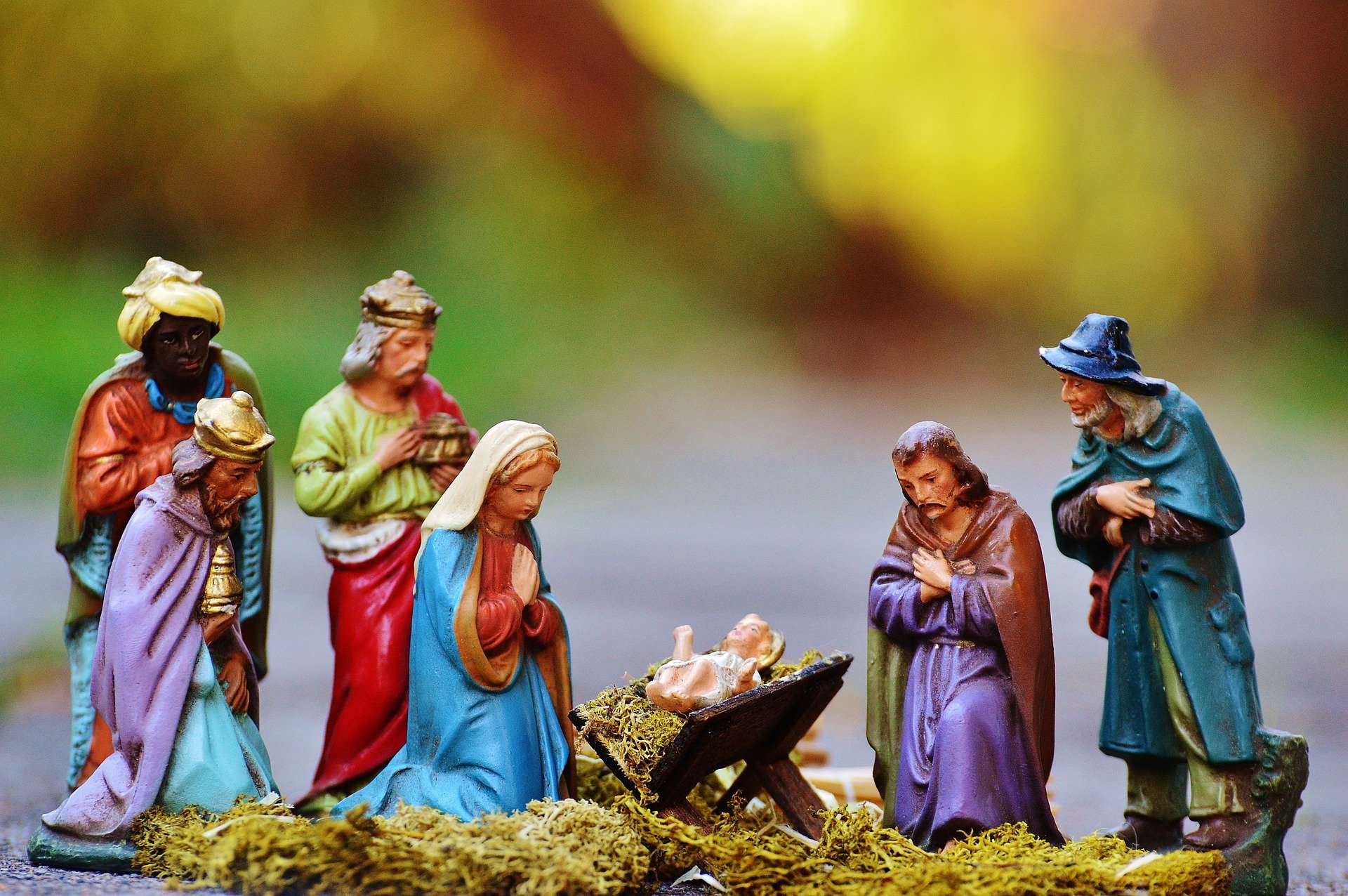
During the pandemic of 2020, it seems many people are being tempted to put our 2020 goggles on (rather than see the world with 20/20 vision) as we look toward the holiday season, especially Christmas. “There won’t be much to Christmas this year.” “Christmas won’t be like we remember it.” Some have wondered out loud if there will be any Christmas at all!
This is very human, but it is not seeing things very clearly. Among the greatest biblical truths regarding Christmas, we do not find feasts, bright colored lights, and gifts wrapped in bows. We find Jesus who came to us as a vulnerable babe to share our lot. In this incarnate form, he would grow up to face emotional wounds, isolation, sickness, physical suffering, and death. Members of his own family would reject him, at least for a time. In other words, he became fully human in a fallen world – just like us.
Yes, suffering was part of Christ’s experience, so it remains an important part of the Christmas story. A baby is born in abject poverty in unsanitary conditions. His parents are so poor, all he can be dressed in are bands of cloth. He is surrounded by threats: war and revolution, plagues, and early death accepted as a norm. His mother and father flee with their child to avoid assassination. A tyrant king sends his troops to kill innocent babes and toddlers in the insane hope of stopping God’s will. This is Christmas too.
And yet thanks to scripture, carols, family and community traditions over the years, we know that this is not the full story. To only focus on the negative would be like telling ourselves a lie. We hear angels come to announce good news of great joy for us amidst any suffering. We see poor and marginalized shepherds find hope in the Christ child. It is a hope so bursting with possibility, they cannot help but share it despite (or perhaps because of) the exceedingly difficult lives they share with their families and neighbors. We also learn how God protects those God loves. Yes, Jesus and his parents are protected, but we are told our God desires to offer that same protection and peace to all the earth. Amidst all the frightening and sad things, God’s loving will remains. Jesus has come for our good – to ultimately crush suffering, sin and death – and nothing will stop God’s will…not even our own doubts and fears.
A Spanish priest poetically answered the question of “Will there be a Christmas?” in this way:
Will there be Christmas? Of course! More silent and with more depth. More like unto the first one, when Jesus was born in solitude. Without many lights on earth, but with the star of Bethlehem shining on paths of life in its immensity. Without colossal royal processions, but with the humility of feeling as if we are shepherds, young and old, seeking the Truth. Without big tables and with bitter absences, but with the presence of a God who will fill everything.
Merry Christmas, dear Church. Let nothing trouble us, for Christ is here.
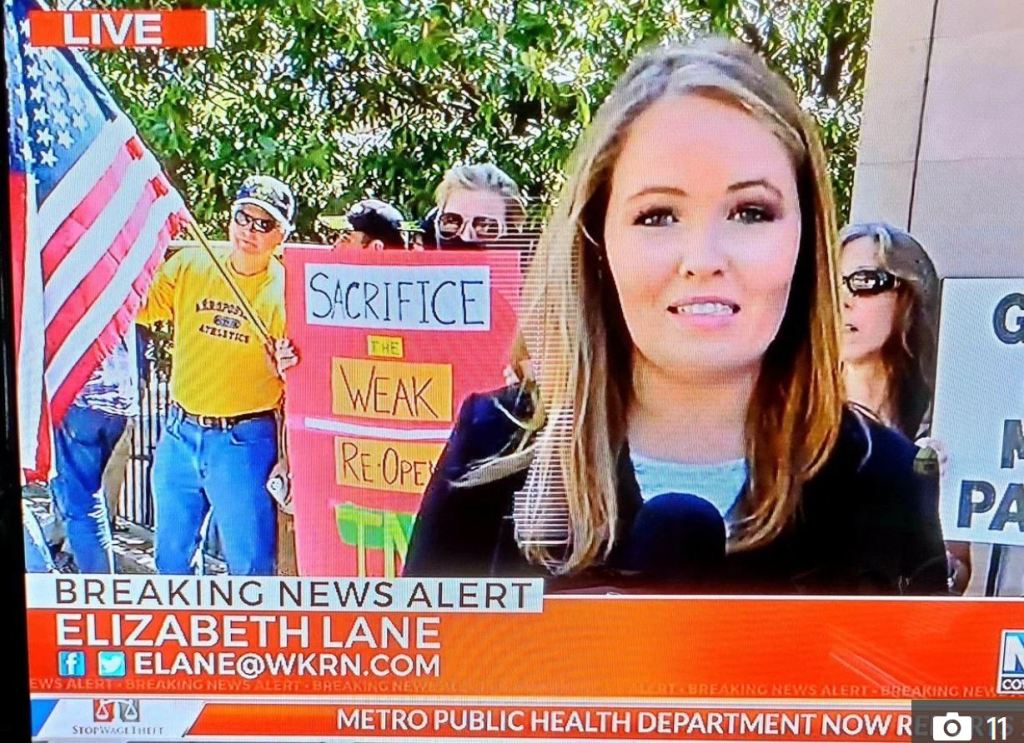
I wouldn’t post this if it weren’t for the fact I see too many friends on Facebook expressing the same opinion in not so many words. “Sacrifice the weak. Reopen the economy.” A simple, utilitarian approach is antithetical to Christian faith.
No, we need not unnecessarily “martyr” the economy nor “sacrifice the weak.” Yes, I understand that sacrifices will need to be made, among all, and these sacrifices won’t always be perceived as fair. Life isn’t fair. Yet, we do need to remember the “least of these” and the most vulnerable of our society as we seek a way forward. They must remain an important part of our “equation.”
Out of love for our neighbors, some freedoms and prosperity might need to be given up freely; not out of obligation but in love, at least for a time. There is no other way forward if we want to walk with Christ. Loving your neighbor cannot be based solely on death counts or the perceived liabilities of “others.” Who rightly judges who is “weak” and without worth? That’s the way of that past in Nazi Germany and the Soviet Union.
Tough economic decisions can’t be based solely on fear of the virus nor fear about where our daily bread will come from. We can and must do better. Jesus said, “…But when you give a banquet, invite the poor, the crippled, the lame, the blind, and you will be blessed. Although they cannot repay you, you will be repaid at the resurrection of the righteous” (Luke 14:13-14). If you hope to someday celebrate an economic recovery, you might just want to invite these folks as well.
As August ends, I am participating in a community worship service and national
ringing of church bells. Sunday, August 25, will mark four hundred years since
the first Africans arrived by force at Fort Monroe, Virginia. Slavery is a
tough subject to address, and when you add the many ongoing sins related to
slavery, Jim Crow Laws, segregated communities, and other signs of personal and
systemic racism, it becomes even more difficult.
Whether racism or any other hot button issue, it is helpful to remember
that forgiveness is already ours. We need not get stuck in shame whether it is
our sin, the sin of others or of the world. Nor should we fear acknowledging
guilt. Instead, humility calls us forward into a future together with Christ. We
who have been reconciled to God through Christ have also been entrusted with a
ministry of reconciliation (see 2 Cor. 5: 11-21). We can indeed address
hurtful, “hot button” issues without defensiveness or unholy anger.
As election fever rises again and troubles of the world present
themselves, I find it helpful to listen more than talk. What is really being
said and why? Is my momentary adversary speaking from their own woundedness and
therefore wounding me? Sometimes angry people facing compassion and gentleness
can be moved toward compassion and gentleness themselves. In speaking, I try to
avoid blanket statements, as hot button issues are often multilayered, nuanced
and intersect with others. As a flawed human, I might even be wrong, so I try
to consider both what I might need to learn and where we might be able to find
areas of agreement. Although Lutheran Christians have always been encouraged to
engage the world and call authorities to account when necessary, regarding the Eighth
Commandment (as Lutheran’s count them, the admonition to avoid bearing false
witness), Martin Luther cautions, “We are to fear and love God, so that we do
not tell lies about our neighbors, betray or slander them, or destroy their
reputations. Instead we are to come to their defense, speak well of them, and
interpret everything they do in the best possible light” (Small Catechism).
And then, of course, we have Christ’s own teaching and example, “You
have heard that it was said, ‘Love your neighbor and hate your enemy.’ But I
tell you, love your enemies and pray for those who persecute you, that you may
be children of your Father in heaven.” Praying for those we oppose might not
always result in an observed change in their behaviors, but I always find it
brings a change in me – in attitude toward them and the world, in my own
general peace, or sometimes in my own repentance. Consider praying before you
hit that post button or begin a difficult conversation. Or, just step away, and
then come back to address things after some prayer and reflection. It is
amazing how the Spirit can give us just the right words.
Like the Psalmist in Psalm 27, “I believe that I shall see the goodness of the Lord in the land of the living.” Sometimes that goodness will enter the world through us.
Originally published in the June 2019 newsletter of Christ Lutheran Church, Fredericksburg, VA.
Unless otherwise indicated, all scripture quotations for this article are from the New Revised Standard Version (NRSV) translation.
Picture credit: Gerard Seghers (attr) – The Four Doctors of the Western Church, Saint Augustine of Hippo (354–430); or as I would call it, “Let me think, think, think…”
At a recent “Three Priests” theology discussion, one sticking point remained as we closed our talk on the Word of God: Is the biblical canon closed? Well, I argue that depends on how you look at it.
Due to some modern fictional books and movies, the Emperor Constantine is sometimes wrongly given credit for the canon inherited in Western Christendom. Constantine did call the Council of Nicea (325), which was the first general conference or “ecumenical Council” of the Christian church, but this first gathering is not reported to have addressed the canon. In 330 CE, Constantine did finance the copying of fifty Christian “bibles,” comprised of commonly accepted books, but he, too, does not seem to have officially influenced the cannon.
So, did any council approve what we know as the cannon? That in itself is a tricky question. There *was* a “council” (small “c”) to help establish the Roman Catholic/Western cannon and later councils affirmed it, but these were not any of the seven great “Ecumenical Councils” which occurred before the split of Eastern and Western Christendom.
The Synod of Hippo of 393 is one of several gatherings of bishops sharing this name. (Synods of Hippo were also held in 394, 397, 401 and 426.) This specific gathering is commonly held by Roman Catholics as the first time any council of bishops (again, not to be confused with one of the seven “Ecumenical Councils”) listed and approved a Christian biblical canon. This list corresponds closely to the modern canon in the West. This canon included the six later books classed as deuterocanonical/apocryphal as well as First Ezra/Esdras and Second Ezra/Esdra. Also included among these apocryphal texts: Tobit, Judith, 1 and 2 Maccabees, Wisdom, Sirach, Baruch, parts of Esther and parts of Daniel. It left out some apocryphal books recognized by the Orthodox.
This canon list was later approved at
the Council of Carthage (again a series of synods and not listed as one of the seven
ecumenical councils) pending ratification by the “Church across the
sea”, that is, the See of Rome. This Council of Carthage (the third of
several synods in the 3rd, 4th and 5th
Centuries sharing this name) affirmed the canon established in Hippo on 28
August 397 (and again in 419).
The councils held at Hippo were held under the authority of Augustine, and I’ve read he considered the cannon closed. In reality, others (both saints and heretics) continued to propose varied lists. Indeed, First Ezra/Esdras was excluded in the Vulgate Bible (late fourth century) and ceased to be considered canonical in the West. The modern Book of Ezra formerly included the Book of Nehemiah in a single book, but it is now commonly split since the 9th century onwards. It was not until 1516/17, in the first printed Rabbinic Bible of Daniel Bomberg that the separation was introduced generally in Hebrew Bibles.
The cannon solidified over time in the West, but Luther stirred the pot again with his Reformation review when he asked, “What is truly scripture?” He evaluated opinions and judgments of the past, but he wasn’t afraid to challenge them. He ultimately rejected the Apocrypha. Jewish religious leaders of Germany tended to reject them, so why shouldn’t Christians? He also attempted to remove the books of Hebrews, James, Jude and Revelation from the canon. To him, they were out of whack with “grace alone” and “faith alone” doctrine. Other Reformers disagreed. In the end, he kept these New Testament books, but these books are still to be found toward the end of the German Language “Luther Bible.”
The Council of Trent (1545-1563), the 19th “ecumenical council” of the Roman Catholic Church, was called in response to the Reformation. Indeed, my old priest and Sunday school teacher (from pre-Lutheran days), Father Foley, considered this council the start of the “Catholic Reformation” in response to the “Protestant Revolt.” (These terms were common among Catholics, and remains so among some hard-corps, conservative Roman Catholics.) This council was not truly ecumenical, as it did not include anyone from the Orthodox Church. In response to the Reformation, it approved the Catholic Cannon we know today. This includes apocryphal books.
The Lutheran/Protestant cannon continued
to exclude the Apocrypha as scripture. Although not viewed as being the
standard of scripture, these works remained valued even by Martin Luther. They
are often included in modern editions of scripture, but you will find them
clearly designated as apocryphal or deuterocanonical texts.
So, is the cannon closed? Theoretically, it closed in the 300s, but one can see there have been and remain variations. The Church (East and West; Catholic, Protestant and Orthodox) could work toward more unity someday, as unlikely as that sounds. Or, maybe the West might accept just as my Orthodox friend, Father Adam Sexton, proposes, “The Orthodox Church is right. We have received what we were meant to receive.” Then, in that sense, the West could accept the East’s ruling and “go back” to that. Yet many of those Christians who are orthodox (small “o” meaning more traditional) would say, the canon is absolutely closed as is. Some suggest the canon was closed with the death of the last Apostle. Others say that scripture points to the revelation in the Christ which has fully come in Jesus.
Yet some scholars and others do indeed argue about the closing of scripture. Usually, they suggest better, more complete surviving texts might someday be found calling for an amendment to the canon. Or, they suggest texts formally rejected for theological or political reasons might need to be reevaluated. Or, they argue that there is nothing in scripture that defines the canon, only councils of men did. Yet again, most of the catholic (small c meaning universal), orthodox (small o, meaning more traditional) Church deems the canon closed by the Spirit. To do otherwise can be viewed heretical and certainly false prophets and revelation could mislead us.
In practice, some argue that the canon was closed with early gatherings of bishops (in the 300s), as well as with the East-West break, or even with the Reformation and/or Council of Trent (1500s). Yet even after choosing any of these historic markers, disputes remain between Christians over exactly which books belong. Is it really closed if the entire church can’t reach a consensus? Some past and present Protestants believe that the Church recognizes the canon, but it does not have the authority to close it.
Looking at history, Karl Barth, a Reformed theologian of the 20th Century, put it this way, “The insight that the concrete form of the Canon is not closed absolutely, but only very relatively, cannot be denied even with a view to the future” (Karl Barth, Church Dogmatics: The Doctrine of the Word of God, Vol. I/2, trans. Bromiley, G. W., & Torrance, T. F. London; New York: T&T Clark. 2004. Print. p. 476). Another major shaking of the Church could yet cause the books to be reevaluated, shuffled, or who knows what. Well, as I said last night, only God knows, and we will find out. Until then, we seem to be left with a general, human consensus – we trust guided by the Holy Spirit – and thus could be in error or not done discerning, “What is scripture?”
*As this was just for fun and general edification, I’m not listing all my resources, but they included the Catholic Encyclopedia, US Catholic Bishops Conference website, multiple Wikipedia articles (yeah, I know, not always authoritative), multiple blogs (some kind of out there), and classes by Father James Foley, SJ (may he rest in peace).
“So many books, so little time.” Perhaps few know that as well as
a pastor! We love and depend upon books even in this digital age for sound
theology and ideas for better ministry. Come into any pastor’s office, and you
will likely see books on shelves and tables, if not the floor. Today, this
clutter has likely spread through electronic versions on their tablet or phone
as well. Our lives seem fed by books.
Yet what would happen if the pastor attended to all these other books but moved away from reading scripture daily? As with anyone else, Bible stories will be conflated into cultural understandings rather than scriptural ones. Faith might become challenged if not weaker, and a hunger for meaning, understanding and hope would grow. As with satiating one’s thirst, we need to go back to the well often. We need to hear what scripture really says to us, for as an early Puritan pointed out, “God is still speaking.”
Now certainly, other books have value, as do our many commitments,
but through scripture, we encounter our Living God who loves us anew in a
special way. Scripture is the norm for teaching and our discernment over all
daily matters in our lives. The Spirit can literally touch and reshape our
hearts. Martin Luther argued the Word of God has the power to bring about repentance,
faith, and salvation. “What pasture is to the beast…the nest for the birds, the
stream for fish, the Scriptures are for believing souls,” Luther wrote.
As our community’s children return to their academic studies, let
us also return as families and individuals to scripture. Take advantage of the
free daily meditation guides in our welcome area. (Perhaps even take the extra
step of reading each scriptural citation in full and in their original context.)
Challenge yourself to a Bible reading plan based on themes for life or for
reading the Bible throughout the year. It is easier than you think. Intentionally
dig into scripture when facing decisions or problems, start or end your day.
Listen for the Spirit through other’s interpretations that might affirm,
challenge or shape your own. (Bible study with a spouse, family, or group is
immensely helpful.) Also, engage Sunday’s sermons more deeply by taking notes
or talking about the sermon or readings of the day with others afterward. You
can also discuss scripture with our Christian tradition and the universal
Church as you, just like a good pastor, attend ongoing classes and Bible
studies to help you better understand historical and other contexts as well as
hear what people of the very diverse past and present have to say.
If you need some direction, please ask Pastor Anne or me. We will
be excited to open up the Bible with you. For each time we do, we encounter
God’s love anew. And you with your faith (and questions) have something to
teach us as well.
Originally published in The Hub, a weekly email of Christ Lutheran Church, Fredericksburg, VA.
May the God of hope fill you with all joy and peace in believing, so that by the power of the Holy Spirit you may abound in hope. (Romans 15:13)
With each January, I’m usually contacted by several of our congregation’s youth and young adults as well as younger staff members at our school. They want me to write recommendations for college entrance or a new job. Almost always, the person making this request is humbled by the choices before them. They fear rejection or failure. At the same time, they feel dwarfed by the opportunities looming before them. Could their dreams be realized? They are almost afraid to find out!
Certainly, we aren’t always successful in our plans, but perhaps we should not get stuck in despair. Look instead toward God’s plans for us and be comforted. Through the prophet Jeremiah, God tells us, “For surely I know the plans I have for you, says the Lord, plans for your welfare and not for harm, to give you a future filled with hope” (Jeremiah 29:11). God seeks to be in communion with our hearts. Jesus came to rescue not condemn. The Spirit is our gift to console and guide us. With such company, need we become paralyzed in fear?
Jean Vanier, founder of L’Arche, reminds us, “Prayer is to say to Jesus, ‘Tell me what you want. May your will be done.’ Then, unexpectedly, Jesus says to us, ‘Tell me what you want.’ ‘Whatever you ask in my name, I will do…. If you ask anything of me in my name, I will do it’ (John 14:13, 14).” Peter begs us, “Cast all your cares on Jesus, for he cares for you” (1 Peter 5:7). Paul reminds us, “All things work for the good of those that love the Lord” (Romans 8:28).
Fear is very human, but Jesus wants to walk with us through our fear to the place God needs us to be. God’s plans may not prove our own. If we seek to listen to Jesus and follow, even if we mishear him a wee bit or a lot, it is he who will lead us to that place. That’s his promise to all God’s children, yes, even you.
The future is like a cloud to us, but then is it really just a coincidence that God so often is heard speaking from clouds in scripture? I don’t think so. We only have one way to go – forward. We can only navigate properly by following the Christ who loves us…into the gray…into sickness…into failure…into joblessness…even into the valley of death…
Yet through faith, we know any sadness need not last. Grace, forgiveness, healing and a peace beyond understanding awaits us. You see, God is already in our future awaiting us with open arms wherever and whatever that future may be. There’s nothing really to fear. God’s ready and willing to welcome us home. Like the paralytic healed in Capernaum, we really just need to pick up our mat and walk. We are forgiven. We are healed. We are free.
I pray that your Lenten walk be one centered on Jesus and the abundant hope he has in store for you.
“For everything there is a season, and a time for every matter under heaven…” (Ecclesiastes 3:1)
Life is indeed challenging, but when the theology of our faith meets the bumpy roads of our lives, we will be reminded that God will make all things work for the good of those who love him in God’s good time.
Our Lord is sovereign, all powerful, omnipresent, omniscient, eternal, all knowing, all loving, and you know what? God loves you – at every time and in all seasons, good and bad. So, we don’t need to walk alone, and we were never meant to do so. Our lives are not meant to be about pressure or time crunches, although those do happen. The fate of the world doesn’t rely on us even if it sometimes feels that way. Our God is, well, our God. We need to trust rather than work and worry.
True, we were created to share in God’s creative, redemptive work, but we are not God. We never will be. So, God provides us with a call to Sabbath, a time for rest, worship, and reconnecting to God and one another as a community. God provides us with people to love, care for and walk with us called family, friends and church. And if these should ever fail you as humans sometimes do? God in his Word directs us to cast all our cares upon Christ, for he cares for us.
We aren’t to shirk our responsibilities. We aren’t to hang back when called to act. We are not to forsake the assembly as some are prone to do. (Consider Hebrews 10:19-25, for example.) Yet we can let go, and let God do the heavy lifting in our lives through the grace and forgiveness offered us. The refreshing Fruit of the Spirit is always at our disposal: love, joy, peace, patience, kindness, generosity, faithfulness, gentleness, and self-control. We don’t have to work for them. Yet, we need to slow ourselves down and savor their taste. We need to seek them out even when they seem most far off.
As the world seemingly goes crazy, we are called to discernment. Rather than asking what God is doing, we ask, “What should we be doing to help?” Sometimes there will be lots to do. Many more times the answer is “ do nothing” due to our powerlessness…nothing other than watch and wait in hope…nothing other than pray for God’s will to be done in our lives and the courage to live it out…nothing other than trusting that God’s Spirit is at work in the craziness around us and battling for our welfare just as promised.
What good does worrying do? In his Sermon on the Mount, Jesus said it does no good at all. The wisdom of God isn’t as hard to live out as we might at first think. Do what you can as you discern that you are called to do. Seek to love God and neighbor as yourself. Yet also recognize God’s authority and love reigning over your life. You don’t have to be in control of everything. You don’t have to be your own savior. You can let God and others seek to love you, even as you seek to love them. Trust God to do what we cannot. The pressure is off.
At work or on vacation, rest in the Spirit that is reaching out to you. Attend to the Spirit and let it direct your path. Trust God in all things. Those who have God’s love have enough. This is the true wisdom of God.
As one saying goes, “Growing closer to God isn’t the result of working harder, but of surrendering more.” So, relax, and let Christ complete his work in you. The Spirit will make our paths clear and is there to catch us when we fall.
Wishing you a joyful summer with spiritual growth,
Pastor Lou
This post originally appeared as a pastoral letter in Messiah Lutheran‘s newsletter, The Messenger (July 2015).
Unless otherwise indicated, all scripture quotations for this article are from the New Revised Standard Version (NRSV) translation.
Husband, Pastor, Law Enforcement Chaplain, and member of the Clerical Errors (aka "The Three Priests"), I'm sharing my two cents with anyone who cares...
You can also find me on social media as Loudluthrn (Lou-d-Luthrn or Lou the Lutheran). It is a moniker given me while attending a Presbyterian Seminary, but I'm a loud and proud Lutheran too (just not too loud and proud, mind you).