Tag Archives: christian

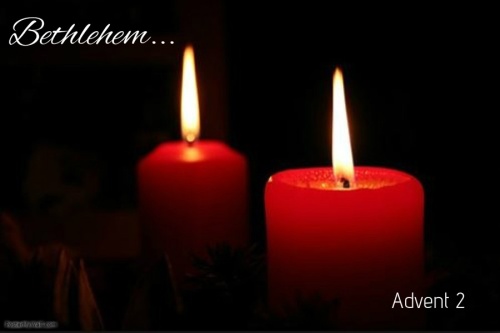
Great things can come from little ones (Advent Week 2)

advent 2.bethlehem“But you, O Bethlehem of Ephrathah, who are one of the little clans of Judah, from you shall come forth for me one who is to rule in Israel, whose origin is from of old, from ancient days.” Micah 5:2

Bethlehem means “house of bread” in Hebrew. It was first occupied by the Canaanites for farming as early as 1350-1300 BC, the earliest known written reference. Overshadowed by Jerusalem only 10 km away, this small, out of the way village – often known for nothing more than its anonymous farmers and shepherds – would play a major part in Jewish history.

Rachel, the favored wife of the patriarch Jacob (also known as Israel) and mother of Joseph, died there. Joseph would be sold into slavery by his eleven jealous brothers while herding sheep on the outskirts of Bethlehem. Guided by God, Joseph would end up saving Egypt and his family from starvation during a time of famine. His ability to interpret dreams would convince the Pharaoh to store grain for the dark days ahead. After subsequent enslavement in Egypt and forty years of desert wondering sustained by manna, the brothers’ descendants would return as one people, the Twelve Tribes of Israel.

Later, Naomi and her gentile daughter-in-law, Ruth, would return to Bethlehem after the death of Naomi’s husband and sons. It was Naomi’s ancestral home and former village. If nothing else, they hoped to survive by gleaning, collecting leftover crops from farmers’ fields as allowed by Mosaic Law to show mercy toward the poor. Ruth will meet Boaz amidst the grain fields and a relationship will be forged one night on the threshing room floor. Where there had seemed no hope, love and new life would come.

Their descendants would include a simple shepherd boy, David, who would become a great king. According to Matthew 2 and Luke 2, Bethlehem would eventually become the birthplace of Jesus, descendant of David, Son of God, the Bread of Life.

Bread was the basic food for all Israelites, rich or poor. Thus, it came to be a common metaphor for life and abundance. In the Temple, bread would be used as part of a symbolic offering to God. It wasn’t meant to be a food to God, but it was there as a sign of thanksgiving for the provision of the people with their daily bread. In homes, breaking bread became a sign of hospitality. Bread is not really extraordinary. It’s the ordinary stuff of daily life, and yet it proves also the stuff of miracles. For God is active in the ordinary, blessing us right down to the provision of our homes, clothing and food.

Much as bread and grain woven throughout the Bible, so was Bethlehem. Unremarkable in and of itself, Bethlehem and its ordinary people would become part of an extraordinary story. It’s the story of salvation which ultimately came to a climax through the life of a small and seemingly ordinary baby.

Our congregation might be small. Our lives might prove ordinary. Yet God is here – active amidst the ordinary, making us sacred, opening a way forward to new life. Here, we share in the joys and struggles of life together. Here, hopelessness is transformed into hope. Here, we are being made part of God’s story, one God is still telling. A happy, miraculous ending lies before us.

Unless otherwise indicated, all scripture quotations for this article are from the New Revised Standard Version (NRSV) translation.

© 2015 The Rev. Louis Florio. All content not held under another’s copyright may not be used without permission of the author.


Leave a comment

Filed under Advent, Uncategorized

What do you expect? (Advent, Week 1)

advent 1.expectation

As we enter this busy season of Advent, we seek to dig deeper into scripture, practice spiritual disciplines, and prepare in many practical ways for Christmas to come, but do we really hear the promises of God amidst our hurry?

As human beings, we find ourselves too often really human doers. The scriptural mandate to “be still and know that I am God” probably is far from our reality. With the stress we face and time crunching around us, we probably aren’t so keen on listening to or looking for God. Life can wear us down, and instead of joy, we tend to find it difficult to believe that the ancient promises of God can leap off dusty pages of the Bible and into our busy, modern lives. We tend to expect too little from this season and from our God who loves us.

“Expect nothing and you will never be disappointed.” “Expectation is the root of all heartache.” “Expect the worst and hope for the best.” If you look up this week’s Advent theme, expectation, on the internet, that’s the kind of worldly wise statements that you’ll find. Yet as Christians, expectation really proves the breeding ground for miracles.

For long ago, a prophet foretold that a virgin shall conceive and give birth to a son. He would be called Wonderful Counselor, Mighty God, Everlasting Father, Prince of Peace. Prophesy also promised that the babe would be born in Bethlehem, although it was a small and dusty town on the outskirts of civilized Jewish society. He would be a descendant of a remarkably surprising collection of people: Jews and gentiles, kings and paupers, untrustworthy shepherds and even a prostitute. He came to share our life and lose his for our sake. He would prove to be God with Us, Emmanuel.

Although this all was promised, few could say anyone really expected it to happen as it did. In fact when it finally came to pass, the story starts quite simply, “[Joseph] went to be registered with Mary, to whom he was engaged and who was expecting a child.” What a child he would prove to be!

Much like those who first heard the message of the angels and encountered Jesus in the manger, please slow down. Redirect your attention to what God is doing in our world and your life. Ponder the great purpose of Christ’s coming. Don’t let this season pass without its good news touching your life. Advent invites us to expect the impossible. Jesus, who came as a baby, God in the flesh, came for you and for me. He came that we may have life and have it abundantly.

Trusting in Jesus, seek first to know what he expects from you and your life. Expect nothing less than a future full of hope and life without end. Amen.

Unless otherwise indicated, all scripture quotations for this article are from the New Revised Standard Version (NRSV) translation.

© 2015 The Rev. Louis Florio. All content not held under another’s copyright may not be used without permission of the author.


Leave a comment

Filed under Advent

The Christmas rush isn’t all bad

race_of_the_santas_breckenridge_1

“Silent night, holy night, all is calm, all is bright,” so the song goes. Unfortunately, our Advent and Christmas can seem anything but calm. As I write this, it is mid-November, and yet, our congregation’s planning teams have already been working on our Christmas together for weeks. Christmas music has started to play in stores and in some cases on the radio. One of my neighbors has already set up their Christmas tree even though Advent doesn’t begin for almost two weeks!

Our society seems impatient to experience Christmas joy and peace. Perhaps this is because there is too little joy and peace in our world. At this time of year, it gets busier at our congregation and busier in our homes. Light dims and darkness grows. Unexpected bills happen. Sickness and death comes. After Paris, Beirut, Kenya, and on and on, terrorism and war frighten us. We hope for an ideal Christmas because our lives in a fallen world are always less than perfect. Too little is calm, and our future may seem dark to us. We often hunger for a reprieve from our pain and busy, unpredictable life.

Jesus came into a time of trouble not so unlike our own. People were lucky to reach their teens. Thirty was considered old. Israel was an occupied country with isolated rebels and thieves (especially in Judea) seeking to defeat the Roman Empire and perhaps get a little economic advantage and power for themselves at the same time. For their part, the Romans wished to assert their power at all costs. Their vassal king, Herod the Great, was known to be tyrannical if not a bit mentally unstable. It would be he who ordered all babies and toddlers in Bethlehem murdered over fear that the recently born Jesus would usurp his throne. Life was hard and often unfair.

Despite these threats, Jesus came as a most vulnerable babe. He was a child of scandal, for his neighbors had heard of Mary’s pregnancy prior to her marriage with Joseph. Many in that day were poor like Jesus’ own family, and they often lived and died by the discretion and generosity of others with higher stature. Jesus didn’t come into the world to avoid our pain. Instead, he embraced and crushed it forever. As one liturgical communion prayer reminds us, “Dying you destroyed our death, rising you restored our life. Lord Jesus, come in glory.”

Most certainly, we can be encouraged that Jesus shared in our weakness and sorrows in order to share with us his victory over sin, suffering, death and the Devil. Against all odds, peace forcefully broke into our world to live among us and die among us through Jesus. For a moment, all was calm and all was bright because God was finally with us in the flesh. It was time for all creation to pause, worship and give thanks.

A mere 33 years later, all too soon, Jesus died, rose and ascended into heaven. We were warned life would not be easy in his absence, but it wouldn’t remain hard for ever. Similar to our wait for Christmas morning, creation “waits with eager longing for the revealing of the children of God.” It might prove a bumpy, fearful ride at times until then, but there can be joy on our journey. For Christmas day has come, and Easter is on its way. And all the while, we’re not alone. We are the church together: enlivened by God’s Spirit, sharing both our pain and joys with one another; offering pardon to those still in darkness. We are rushing not toward our death but toward a certain future filled with hope.

With all the saints before us, we can pray with confidence as we face any darkness, “Come, Lord Jesus, quickly come.” We don’t know the time, but we can trust Christ is already on his way. And when he comes, all will be calm and bright forevermore. For this time, Christ will be here to stay, and despite whatever might go on around us until then, I for one can’t wait. If that’s our future, let time fly.


Originally published in Messiah Lutheran’s newsletter, The Messenger (December 2015 – January 2016).

Unless otherwise indicated, all scripture quotations for this article are from the New Revised Standard Version (NRSV) translation.

© 2015 The Rev. Louis Florio. All content not held under another’s copyright may not be used without permission of the author.

Leave a comment

Filed under Liturgical Year, Pastoral Letter

Relax & Let Go – Always!

matthew6_34“For everything there is a season, and a time for every matter under heaven…” (Ecclesiastes 3:1)

Life is indeed challenging, but when the theology of our faith meets the bumpy roads of our lives, we will be reminded that God will make all things work for the good of those who love him in God’s good time.

Our Lord is sovereign, all powerful, omnipresent, omniscient, eternal, all knowing, all loving, and you know what? God loves you – at every time and in all seasons, good and bad. So, we don’t need to walk alone, and we were never meant to do so. Our lives are not meant to be about pressure or time crunches, although those do happen. The fate of the world doesn’t rely on us even if it sometimes feels that way. Our God is, well, our God. We need to trust rather than work and worry.

True, we were created to share in God’s creative, redemptive work, but we are not God. We never will be. So, God provides us with a call to Sabbath, a time for rest, worship, and reconnecting to God and one another as a community. God provides us with people to love, care for and walk with us called family, friends and church. And if these should ever fail you as humans sometimes do? God in his Word directs us to cast all our cares upon Christ, for he cares for us.

We aren’t to shirk our responsibilities. We aren’t to hang back when called to act. We are not to forsake the assembly as some are prone to do. (Consider Hebrews 10:19-25, for example.) Yet we can let go, and let God do the heavy lifting in our lives through the grace and forgiveness offered us. The refreshing Fruit of the Spirit is always at our disposal: love, joy, peace, patience, kindness, generosity, faithfulness, gentleness, and self-control. We don’t have to work for them. Yet, we need to slow ourselves down and savor their taste. We need to seek them out even when they seem most far off.

As the world seemingly goes crazy, we are called to discernment. Rather than asking what God is doing, we ask, “What should we be doing to help?” Sometimes there will be lots to do. Many more times the answer is “ do nothing” due to our powerlessness…nothing other than watch and wait in hope…nothing other than pray for God’s will to be done in our lives and the courage to live it out…nothing other than trusting that God’s Spirit is at work in the craziness around us and battling for our welfare just as promised.

What good does worrying do? In his Sermon on the Mount, Jesus said it does no good at all. The wisdom of God isn’t as hard to live out as we might at first think. Do what you can as you discern that you are called to do. Seek to love God and neighbor as yourself. Yet also recognize God’s authority and love reigning over your life. You don’t have to be in control of everything. You don’t have to be your own savior. You can let God and others seek to love you, even as you seek to love them. Trust God to do what we cannot. The pressure is off.

At work or on vacation, rest in the Spirit that is reaching out to you. Attend to the Spirit and let it direct your path. Trust God in all things. Those who have God’s love have enough. This is the true wisdom of God.

As one saying goes, “Growing closer to God isn’t the result of working harder, but of surrendering more.” So, relax, and let Christ complete his work in you. The Spirit will make our paths clear and is there to catch us when we fall.

Wishing you a joyful summer with spiritual growth,
Pastor Lou

This post originally appeared as a pastoral letter in Messiah Lutheran‘s newsletter, The Messenger (July 2015).

Unless otherwise indicated, all scripture quotations for this article are from the New Revised Standard Version (NRSV) translation.

© 2015 The Rev. Louis Florio. All content not held under another’s copyright may not be used without permission of the author.

Leave a comment

Filed under Pastoral Letter

Church arson: More than a hoax or what meets the eye

Church_on_fire_Credit_butterbits_via_Flickr_CC_BY_SA_20_CNA_8_3_15

Church on fire. Photo credit butterbits via Flickr CC by SA 20 CNA 8-3-15.

Arson is a horrific crime. When motivated by hate, it becomes even more abominable. If in the context of the Charleston active shooter at Emanuel AME Church (Charleston, SC) and then eight black congregations erupting in flame within ten days, it causes great terror and outrage.

It is little wonder many reporters, pastors and others are tweeting and posting speculations about these recent incidents. It seems a pattern. One should indeed be open to the possibility of a racially motivated attack, yet others point out that it seems a hoax when such fires are too quickly attributed to racism. Yet to be fair to both sides, the average person tends to be ignorant of the broader context of arson committed against faith communities. They don’t necessarily have access to the wealth of research, experience and training available to properly interpret such events.

Certainly, things aren’t always what they first seem. Already, three of the ten religious building fires have been (at least initially) attributed to other causes such as a lightning strike. Many don’t realize that church fires are all too common, and that many of these fires prove to be arson events. The National Fire Protection Association has reported from their research:

From 2007 to 2011, U.S. fire departments responded to an average of 1,780 structure fires in religious and funeral properties each year.  NFPA estimates that these fires resulted in an annual average of two civilian fatalities, 19 civilian injuries, and $111 million in direct property damage. The largest share of fires involved religious properties, with just four percent taking place in funeral parlors. Since 1980, the average number of reported fires in religious and funeral properties has fallen by 54%, from 3,500 per year to 1,660 in 2011.[i]

The Southern Poverty Law Center and others are not totally off base to suspect a more sinister, violent pattern perhaps lies underneath these recent fires. Arson happens, and even one faith community burned down for hate is too much. Still, we need to be accurate in our discussions. We shouldn’t base our reactions on often misleading, summary headlines. Exaggerations tend to distract people from the very real dangers of such arson and fires in general. They tend to cause greater fear (if not panic), suspicion and division. People act on perceptions and emotion rather than any factual basis. Even an honest mistake can appear a lie or manipulation of fact; unintentionally hurting efforts to combat racism and violence in our communities by fermenting fear or suspicion. Yet, lackadaisical attitudes can also help facilitate such crimes and cover-up very real racist threats in our communities.

Past media outcry over what appeared to be a rash of attacks against minority churches caused the formation of the National Church Arson Task Force in 1996. (It has since been disbanded.) The Church Arson Prevention Act passed that same year. This made arson against faith communities a Federal offense and doubled the potential sentence from ten years to twenty years.

Since then, the Federal Bureau of Investigation (FBI) and the Bureau of Alcohol, Tobacco, Firearms and Explosives (ATF) have been tasked to oversee church fire investigations. Things have improved dramatically, but we still face great risk. Citing NFPA, the Insurance Information Institute (III) reports that incidents of arson of religious buildings dramatically dropped from 1,320 in 1980 to 240 in 2002. However from 2007-2011, they report 1,600 cases of arson targeting houses of worship causing $105 million in property damage.[ii] This means that over that five year period an average 320 houses of worship per year were victims of arson. Studies vary, but one may expect an estimated three to five cases of church arson per week nationally.

Many express dismay that what appears an obvious hate crime to them isn’t regarded as such by law enforcement authorities. Report details can vary depending on methodology and data source(s). Statistics can be hard to come by for those outside law enforcement or the insurance industry. It also appears that since the National Church Arson Task Force disbanded, statistics for “church arson” are included within the larger published hate crime statistics. This clouds the already complicated issue of hate crimes.

By their nature, hate crimes remain difficult to classify or quantify. A criminal offense needs to be confirmed as motivated by hate. If there are no connections established by previous threats, evidence on scene, or suspect admission, it may not be listed as a hate crime. As explained by the Federal Bureau of Investigation (FBI):

A hate crime is a traditional offense like murder, arson, or vandalism with an added element of bias. For the purposes of collecting statistics, Congress has defined a hate crime as a “criminal offense against a person or property motivated in whole or in part by an offender’s bias against a race, religion, disability, ethnic origin or sexual orientation.” Hate itself is not a crime—and the FBI is mindful of protecting freedom of speech and other civil liberties.[iii]

For 2013, the FBI recorded 6,933 confirmed hate crimes. It is probable that more occur. Arsons have a low closure and arrest rate compared to other crimes, because of their destructive nature. Evidence indicating the suspect’s intent might not be available. If motive cannot be determined, the event is not captured as a hate crime. When victims, agencies, or organizations don’t participate in the reporting process, incidents obviously cannot be included. Just as the debate about officer involved shootings (OIS) has revealed, criminal justice reporting needs to improve. Yet of the data captured, approximately thirty-five percent of hate crimes were crimes against property totaling 2,424 incidents. Only thirty-six of these confirmed hate related incidents were determined to be arson.

Still, one can discern that accidental fires and arson occur relatively and regrettably often at houses of worship. Religious buildings too often have flammables poorly stored, faulty electrical work, and other property risks. About a third of religious structure fires are from cooking related accidents. Yet, faith communities tend to be high profile organizations in their neighborhoods, and their buildings are occupied often on a fixed schedule. They might serve at-risk community members. This makes them attractive targets for burglars, vandals and arsonists.  Motives for arson go beyond hate and may include: concealing another crime, fireplay, influence of media/copy cats, monetary gain, mental illness, pyromania, and (the most common) vandalism. III reports, “In 2013, 27.9 percent of the people arrested for arson were under the age of 18.” One should not automatically assume that every church fire is arson or a hate crime. The research doesn’t support it.

Racially based arson does occur. One case is too many, but all houses of worship face risk. Media reports indicate that the Quba Islamic Institute (Houston, TX) experienced a confirmed arson in February 2015 when one of its unoccupied buildings was torched. A predominately white ELCA congregation, First Evangelical (Lorain, OH), was a victim of arson following a break-in.

Without suspect admission, known threats, or other firm evidence, one can’t necessarily prove hate as a cause, but arson for any reason remains appalling. Trying to speak and write accurately about the issue won’t minimize the horror to any black or other faith communities being targeted. However, we might reduce their occurrence further by working together. It might just help us get to the bottom of things quicker by limiting gossip and misinformation. Undoubtedly, it will help defeat a primary goal of such terrorist acts – fear and discord in the community. Unity of vision and purpose in the local community best fights such fires.

What your faith community can do:

  • Cut back bushes and growth near your buildings. This helps slow the spread of fire, but it also increases visibility for law enforcement and any passersby.
  • Keep up general maintenance, landscaping and cleaning on the property. Disheveled surroundings and unsecured premises tend to encourage unwanted activity.
  • Remove possible sources for ignition and accelerants.
  • Correct problematic landscape designs or features facilitating furtive activity.
  • Post no trespassing signs in problem areas.[iv]
  • Lighting, fencing and other physical security measures are proven deterrents.
  • Secure and lock as many interior parts of the building as you can to inhibit access of unwelcome guests and spread of any fire.
  • Don’t hide keys in fake rocks, etc. People know to look for these. Know who has keys and is allowed access. Key control is important.
  • Consider electronic surveillance and alarms, preferably connected to an outside monitoring service.
  • Speak of security awareness to your congregation. Ask nearby members to keep a watch on the building. Don’t be afraid to report anything suspicious.
  • Report domestic threats against employees or members, vandalism, other “petty crimes,” and any signs of suspicious activities or footprints around remote parts of the building.
  • Take advantage of free security surveys often offered by local fire departments, law enforcement, insurance carriers, lock smiths and security companies.
  • Participate in available community crime prevention programs such as a Business Watch or Worship Watch program.
  • The recommended insurance carrier for the ELCA, Church Mutual, has educational products available for clients. Check with your own insurance carrier to learn more.

Updated statistical review:

Since first publishing this post, Pew Research has done a statistical review of church arson dated October 26, 2015:

Half of all church fires in past 20 years were arsons

Endnotes

[i] Campbell, R. (June 2013) US Structure Fires in Religious and Funeral Properties. Quincy, MA: National Fire Protection Association. http://www.nfpa.org/research/reports-and-statistics/fires-by-property-type/assemblies/religious-and-funeral-properties

[ii] Insurance Information Institute (February 2015). Arson. New York, NY. http://www.iii.org/issue-update/arsons

[iii] Federal Bureau of Investigation (UD). Hate Crime – Overview. Washington, DC.  https://www.fbi.gov/about-us/investigate/civilrights/hate_crimes/overview

[iv] Virginia has a code (18.2-125) prohibiting trespassing on graveyard and church property at night, but not every law enforcement officer is familiar with it or prone to enforce it without permission of the property owners. Signs fit into the general trespassing code (18.2-119). It might be prudent to ban repeat offenders. Consult local law enforcement.

Resources

Bonetti, E. (7 Apr 2014). Church Arson: Facts and prevention. Posted on EpiscopalCafe.com. As found at http://www.episcopalcafe.com/church_arson_facts_and_prevention/ on July 1, 2014

Campbell, R. (June 2013). US Structure Fires in Religious and Funeral Properties. Quincy, MA: National Fire Protection Association. [Electronic Version] As downloaded from http://www.nfpa.org/research/reports-and-statistics/fires-by-property-type/assemblies/religious-and-funeral-properties on July 1, 2014.

Federal Bureau of Investigation (UD). Hate Crime – Overview. Washington, DC. As found at https://www.fbi.gov/about-us/investigate/civilrights/hate_crimes/overview on July 1, 2015.

Ingraham, C. (1 Jul 2015). The surprising frequency of church arson. Washington, DC: Washington Post. As found at https://www.washingtonpost.com/blogs/wonkblog/wp/2015/07/01/church-arsons-happen-way-more-often-than-you-think/ on July 2, 2014.

Insurance Information Institute (February 2015). Arson. New York, NY. As found at http://www.iii.org/issue-update/arsons on July 1, 2015.

U.S. Fire Administration (2010). Community Arson Prevention: National Arson Awareness Media Kit. Washington, DC: Federal Emergency Management Administration (FEMA). [Electronic Version] As downloaded from https://www.usfa.fema.gov/downloads/pdf/arson/aaw10_media_kit.pdf on July 3, 2015.

U.S. Fire Administration (n.d.). Statistical reports on the U.S. fire problem. Emmitsburg, MD: Federal Emergency Management Administration (FEMA). As found at http://www.usfa.fema.gov/data/statistics/reports.html on July 1, 2015.

Virginia’s Legislative Information System (LIS) as found at http://lis.virginia.gov/

© 2015 The Rev. Louis Florio. All content not held under another’s copyright may not be used without permission of the author. This blog post has also been shared at  ELCA.org.

Leave a comment

Filed under Crime

A difficult way…but true

baltimore 2As I write this, Baltimore is in flames. Pundits are spouting off. Peace seems a mirage; very much out of reach. Yet the peace Christ offers us isn’t of this world. It is both available to us here and now but also on its way.

If we say we want peace and justice, I found through the years that it isn’t achieved by pointing fingers of protest or in harsh judgments. It begins with a searching, fearless and ongoing look at my life and how I contribute to the injustices around me. Then, I make amends where I can.

It requires listening to the voices, pain, and problems of those I disagree with or who might not wish to listen to me. It comes from loving your enemies, and doing the good to those who hate you.

This is all difficult, but I think it is the only way for real and lasting change – Christ’s way.

We don’t offer such a love based upon people deserving it. We love because Jesus loved us even when we were his enemy. It is a conscious, heart centered choice. We make this offering even though we might be rejected, made fun of or worse.

This doesn’t mean we become doormats, for even the first disciples needed to dust off their sandals and walk away at times. Yet we might at other times be called to a form of martyrdom, where our pride, prejudice and preference are surrendered to the will of God despite the cost.

Our relationship with Christ calls us into relationship with others, even our enemies. That has to be our intentional goal. We need to seek them out. Again like the early disciples, we might have to return multiple times to try just once more to offer our faith and friendship. The person we seek to love might never get it. They may never understand and remain suspicious of us. Yet, change is possible.

If nothing else, you’ll witness the peace of Christ breaking into your heart and your world in a new way. Christ promised this. And maybe…just maybe…one who was your enemy might become your brother and sister, an unexpected gift in your life and to the world.

This is a difficult way, but it is true. Let’s seek to walk this way together, no matter what others might choose.

Christ’s peace,
Pastor Lou

This post originally appeared as a pastoral letter in Messiah Lutheran‘s newsletter, The Messenger (May 2015).

Unless otherwise indicated, all scripture quotations for this article are from the New Revised Standard Version (NRSV) translation.

© 2015 The Rev. Louis Florio. All content not held under another’s copyright may not be used without permission of the author.

Leave a comment

Filed under Pastoral Letter

A Resurrected People

“I shall not die, but I shall live, and recount the deeds of the Lord.” (Psalm 118:7)

Recently, I finally broke down and bought a smart phone. After eight years with my old phone, it was sadly necessary and overdue. One of its many features is the ability to play a musical alarm. Recalling my past joyful experiences with the Community of Taizé as well as the many prayers shared between All Souls Episcopal and Messiah Lutheran, I immediately thought to make a Taizé chant my alarm tone. Of all the many choices available, I selected Psalite Deo (Praise God), based on Psalm 118. [Listen below]

What a blessing it has proven to have my first conscious thoughts each day be of God’s love and the great things done and being done in my life. “This is the day the Lord has made” with all its opportunities. “Sing a new song to the Lord for all the wonders God has done.” It is another day for me to give thanks and praise with all the earth. “Sing out for joy!” No matter what happens in this day, “I shall not die but live!” “For God’s love endures forever.” “Alleluia! Alleluia!”

With such affirmations thrust upon my mind and heart, my day begins somehow differently than before. I recognize once again that God is always doing something new in my life. No matter the adversity laying before me in wait, I need not be afraid. It is truly time for me to awake from my slumber and witness to the new, joyful reality of the Risen Christ in my life.

In our Lenten class on grief, I mentioned that life can often seem like a number of “little deaths” with its many trials and losses. Yet as we might rightly grieve, we should never forget that through Jesus we have access to an abundant life. Our “little deaths” will be used by God to show love for us. Blessing will surely come, and so, we can live in hope. We are called as a resurrected people where we trust God is doing new and wonderful things in and through our lives. We need not get stuck in our doubts and darkness. We can instead embrace the resurrection dawning in our lives.

“In my distress, I called to the Lord. God heard my voice and set me free. God is my strength. God is my song.” How shall I proclaim this Good News? How can I not? It is humbling to think that our extraordinary God is breaking into our ordinary lives in such a joyful, intimate way.

Yes, we have access to God through the Risen Christ. The tomb is empty. Let us not linger there, but instead run and tell all we know through word and deed. Jesus is Risen! He is risen indeed! A new song and new life lie before us.

In thanksgiving, I want to live for him and those he entrusts to our care. I intend to lift my voice to the Lord for he is surely good, for his steadfast love endures forever (Psalm 118). I pray your life will join mine and the lives of all the saints in singing praises to God forever.

Happy and blessed Easter to you all!

Pastor Lou

Posted again (after an earlier, recent post on Psalm 118), here is Psalite Deo the Ecumenical Community of Taizé

This post originally appeared as a pastoral letter in Messiah Lutheran‘s newsletter, The Messenger (April 2015).

Unless otherwise indicated, all scripture quotations for this article are from the New Revised Standard Version (NRSV) translation.

© 2015 The Rev. Louis Florio. All content not held under another’s copyright may not be used without permission of the author.

Leave a comment

Filed under Pastoral Letter

In Christ’s “Defeat,” Our Victory: Meditation on Psalm 118

Psalm 118 is perhaps the consummate psalm for Palm Sunday, and as we enter Holy Week. Throughout the Gospel According to Matthew, the gospel writer has lifted up how Jesus was the fulfillment of all God’s promises in the Jewish scriptures. For example within the text, Matthew recounts five major lessons of Jesus’ teachings; much as there are five Books of Moses. When Jesus delivers his first recorded teaching in Matthew, Jesus gives his commands called the Beatitudes from a mountaintop; much like Moses was given the Decalogue on a mountain. Fourteen prophesies are explicitly connected to the actions of Jesus; fourteen being the traditional number of generations between Abraham and the establishment of the Davidic Dynasty, fourteen from David to the exile in Babylon, and fourteen from the exile to Jesus’ birth. It isn’t much different with Psalm 118. As with many, this psalm reflects aspects of the life and death of Jesus.

Psalm 118 is often recited as part of the Hallel, a Jewish prayer consisting of a verbatim recitation of Psalms 113 through 118. The Hallel is used for praise and thanksgiving on holidays such as the Passover, when the Jews recall the Angel of death passed over Jewish homes in Moses’ time leading to their freedom from Egyptian slavery. As Jesus enters Jerusalem for the Passover celebration, he deliberately enters “mounted on a donkey, and on a colt, the foal of a donkey.” This fulfills the apocalyptic prophesy of Zechariah 9 regarding the coming ruler of God’s people and the judgement of Israel’s enemies.

To an oppressed people under Rome’s authority, Jesus was considered by many a messianic figure in the political sense. They quote Psalm 118 (verses 25-26), “Hosanna to the Son of David! Blessed is the one who comes in the name of the Lord! Hosanna in the highest heaven!” Many likely expect Jesus to precipitate their freedom as Moses did long ago and reinitiate a Davidic kingship. In celebration, they will “Bind the festal procession with branches, up to the horns of the altar” – the way to the Temple where Jesus will come into his final conflict with his adversaries.

Yet, Jesus hasn’t come to be king in that sense. “It is better to take refuge in the Lord than to put confidence in mortals. It is better to take refuge in the Lord than to put confidence in princes.” (v. 8-9). Like the ritual sacrifices in the Temple, Jesus will become a bloody, final sacrifice for our sake. Throughout the week, Jesus will remain in conflict until he is finally betrayed. He will be surrounded by adversaries like bees, pushed hard, and find himself crowned with thorns (v. 12).  He will die on a cross like a rebel, falsely accused of proclaiming himself king. It seems that he is defeated. “The stone that the builders rejected has become the chief cornerstone. This is the Lord’s doing; it is marvelous in our eyes.” The Temple, too, will be destroyed in 70 CE, but the church, Christ’s body, will rise in its stead.

Thanks to God’s steadfast love, we will never be rejected. Through Jesus’ cross and resurrection, we have access to our Father in Heaven and forgiveness for our rebellion in sin. With Jesus, our lips and hearts can pray with confidence, “I shall not die, but I shall live, and recount the deeds of the Lord.” Through the events of this upcoming week, we become conquerors with Christ (see Romans 8). We can rightly sing a song of victory – the victory of Jesus for our sake.

Christ’s peace be with you as we enter Holy Week together, Pastor Lou


Please enjoy a musical meditation on Psalm 118 from the Ecumenical Community of Taizé

Unless otherwise indicated, all scripture quotations for this article are from the New Revised Standard Version (NRSV) translation.

© 2015 The Rev. Louis Florio. All content not held under another’s copyright may not be used without permission of the author.

Leave a comment

Filed under Liturgical Year

Kayla Mueller: child of God, child of Love

kayla

“You are the light of the world. A city built on a hill cannot be hid. No one after lighting a lamp puts it under the bushel basket, but on the lampstand, and it gives light to all in the house. In the same way, let your light shine before others, so that they may see your good works and give glory to your Father in heaven. (Matthew 5:14-16)

Kayla Mueller, an American hostage of ISIS, has been in the news a lot since her death was announced. Her Christian faith and love, inspirational to her friends and family over the years, is now being recognized by the wider world. In confirming her death Tuesday, the Mueller family quoted an earlier letter the young woman penned to her father on his birthday in 2011.

“I find God in the suffering eyes reflected in mine. If this is how you are revealed to me, this is how I will forever seek you,” Kayla reflected. “I will always seek God. Some people find God in church. Some people find God in nature. Some people find God in love; I find God in suffering. I’ve known for some time what my life’s work is, using my hands as tools to relieve suffering.”

In her final letter, she wrote “If you could say I have ‘suffered’ at all throughout this whole experience it is only in knowing how much suffering I have put you all through; I will never ask you to forgive me as I do not deserve forgiveness. I remember mom always telling me that all in all in the end the only one you really have is God. I have come to a place in experience where, in every sense of the word, I have surrendered myself to our creator b/c literally there was no else…. + by God + by your prayers I have felt tenderly cradled in freefall. I have been shown in darkness, light + have learned that even in prison, one can be free. I am grateful. I have come to see that there is good in every situation, sometimes we just have to look for it. I pray each each day that if nothing else, you have felt a certain closeness + surrender to God as well + have formed a bond of love + support amongst one another…”

A friend, the Rev. Kathleen Day, recently commented, “They tried to silence her. They locked her up. They kept us silent out of fear. But now she is free. She said she found freedom even in captivity. Her light shines. And we thank you for shining your light, not on Kayla, but shine your light on the suffering that Kayla saw.”

As humans, our political solutions to the world’s problems may differ. People may disagree over faith issues. Yet, I think we all could learn something important from Kayla.

Our lives need to be shaped by the love of Christ, who humbled himself to serve us and set us free to love.

Certainly, God will present us with different calls and spiritual gifts. (Charisms some call this.) We will find Christ reaching out to each of us differently through ordinary people, places, situations, and for some perhaps a more direct, mystical call. It might prove hard to see the Christ in others, and at times, ourselves. Still, we are all created and called to share in the same purpose: making God’s love manifest in the world.

Most simply, we are asked to love God and one another.

Through our faith and baptism, Christ declares us the children of God; a God who is only love. Our acts of love – no mater how small – will never be wasted. We and the love we seek to share remain God’s own forever. It changes our world a relationship at a time. God intends to use us all – liberal, conservative or anywhere in between.

Listen for Christ’s call in your life at all times and in ever place. Seek him even in the utmost darkness when God seems most silent and far way. Don’t fear mistakes or rejection, but instead love with abandon. For, God’s kingdom will surely come. It is already at work through remarkable people like Kayla and like you, children of Love created and sent to this time and place.

Some might argue, “…but I’m no saint.” Yet before we ever recognized it, the Love which is God knew us. Jesus promises to be with us always. The Spirit is sent to sustain us. Wherever we find ourselves, it is the right time and place for us to make Christ’s love known throughout the world. For, deny it as we may, we who believe in Jesus are his saints in communion with the Heavenly Host and one another. We are never alone, and our lives prove part of a sacred plan bigger than ourselves. Miracles will happen (both large and small) when we only seek to love.

So, seek Jesus in your life as Kayla tried to do – in nature, love, suffering, whatever. Keep your heart and mind open, for God can meet you anywhere and at any time. Don’t be afraid. We won’t all be called to martyrdom. (Yet, if we ever are, Jesus will help us find freedom even then.) We only need start with our small piece of the world. Our context is our mission field. Our gifts are Christ’s own.

Just try to love those Christ has entrusted to your care or sends to intersect your life. Seek and serve Jesus in others. He is there. Don’t fear mistakes but please reflect upon your actions as honestly and gently as possible. Speak with trusted friends and spiritual advisers to help you discern your course. Listen to those who oppose you with patience and a desire to learn. Be open to repentance if you ever sense you are wrong.

As scripture attests, you were created to be a child of Love. Do your best to love. Then, trust Christ has done or will do the rest. He’ll lead all his children home.

Sources:
http://www.azcentral.com/…/kayla-mueller-portrait…/23218063/

http://www.nytimes.com/…/document-kayla-muellers-letter-fro…

http://www.azcentral.com/…/12news-parents-receive…/23165397/

Picture: A photo of Kayla Mueller previously volunteering as a relief worker in India found on AZCentral.com

Unless otherwise indicated, all scripture quotations for this article are from the New Revised Standard Version (NRSV) translation.

© 2015 The Rev. Louis Florio. All content not held under another’s copyright may not be used without permission of the author.

Leave a comment

Filed under Community Life, Ministry, saints, social justice

Preparing the Barren Fields

Sun Snow, by Trenton Jones (2015)

Sun Snow, by Trenton Jones (2015) Gizmodo.com

“The harvest is plentiful, but the laborers are few; therefore ask the Lord of the harvest to send out laborers into his harvest.” (Matthew 9:37)

As we approach another Lenten season, I see barren farm fields around us. In the midst of winter, they don’t look like much. They are tired and seem spent. Yet with the right amount of gifts from God (water and nutrients) as well as care from the farmer (tilling, planting, weeding, etc.), these same fields will become abundant signs of life as we enter spring.

This is much as our Lent should be. We intentionally cooperate with the grace of God to promote and nurture life and love in the world. Following chosen disciplines and special worship or by making extra efforts of charity and service, we tend to the plot of land God has given us. We till and plant (reflecting on our lives, confessing our sin, and turning with expectation toward God’s promises). We weed (repent) and grow (renew). This sacred process is not just for us but also for our neighbor as we seek to share the love and grace we ourselves receive.

Yes, as we enter Lent, we return once again to the mission fields. We seek to reconnect to Christ and one another. What will you do to cooperate with God’s grace and nurture new life? Certainly, Jesus offers us his love freely, and so we could just watch and wait for spiritual growth. Yet as good farmers know, seeds of faith grow better with intentional love rather than lukewarm care.

Grace abounds, but Jesus invites all of us to roll up our sleeves and grow with God this Lent. Come join Jesus in the fields before us and witness the miracles God can do through your life and love.

Christ’s peace,
Pastor Lou

This post was originally published in Messiah Lutheran Church and School’s newsletter, The Messenger (February 2015).

Unless otherwise indicated, all scripture quotations for this article are from the New Revised Standard Version (NRSV) translation.

© 2015 The Rev. Louis Florio. All content not held under another’s copyright may not be used without permission of the author.

1 Comment

Filed under Pastoral Letter