A Smithsonian Institution sign is seen on the National Air and Space Museum on the National Mall in Washington, D.C., on March 28, 2025. KEVIN DIETSCH/GETTY/Newsweek – See the Newsweek article sparking this post.
Recently, the President pondered about slavery in the context of what he suggested was one sided history presentations at the Smithsonian. Certainly, one can point to possible errors, but the President made a big one himself. Plenty of people on social media have regrettably expressed similar things before and since. He said that their portrayal of U.S. history was too negative and focused too much on “how bad Slavery was.”
Well, unfortunately, slavery was worse in the USA than many understand or admit. Don’t take my word for it. Read first hand slave narratives from diaries and interviews: extreme poverty, dismemberments, whipping, rape, murder, and more abominable acts were a norm. Many potential slaves, Native American, African and others, historically feared slavery more than death. In fact, you read of suicidal acts rather than being dragged into slavery or returned to it.
So if anyone is wondering, in the best of circumstances one could imagine, slavery is wrong. It was and always has been steeped in sin, a sign of our fallen world not God’s Kingdom. In Genesis, every human was created in God’s image, male and female alike. Some (I sadly know from experience) will say God allowed it. They will point at a few verses which l agree seem to affirm slavery in that period, but even in speaking of the Ten Commandments, Mosaic law called for better treatment and freedom processes for slaves.
God’s patience with our sin should not be confused with God’s approval of it. (God was not too keen on Israel having a king other than God or the Temple in Jerusalem being built either, for they could lead to idolatry and other sin. Yet, God consented.) By the time the Church comes around, Jesus has extended the understanding of the neighbor whom we should love as oneself to include everyone. Paul emphasizes how slave and master should live within the existing structure while prioritizing Christ, as he did regarding women, but he never argued for slavery. He argued that Christ’s plan is to make all one. In the dangerous context of the Roman Empire where slavery was so embedded, order valued, and social roles defined, he expects Jesus back soon. He didn’t want anything to hinder the spread of the Gospel, so within an unjust fallen world, he counsels humility, patience and love even to one’s enemy. Living faithfully was his primary concern whether a slave or any other lot in a fallen life.
Yet, God did not stop speaking in biblical times. As the Church grows and becomes more diverse, as education spreads (both knowledge and wisdom are said to be gifts of the Spirit), as people pray, meditate on scripture, preach and teach about our Lord, the consensus and understanding grew that slavery and prejudice of any kind is sin. The Spirit works through such holy discernment to try to open our hearts to God’s truth. So again, God called and created everyone. Jesus is to call all peoples to himself. And we are to love one another and see the Christ, the sacred, in one another – in everyone whether friend or foe, believer or not.
Still to this day, prejudice of all kinds, slavery, and ignorance sadly continue to exist. Some people don’t want to see their ancestors as “bad,” but we are all sinnners, so let’s get over it. Going in circles about the multiple causes of the Civil War is a distraction distancing us from the horror. Slavery always takes away a person’s self determination, rights, dignity, health and ultimately life. It’s a kind of theft and murder, as Luther extended those commands similarly to many sins in his Large Catechism. (He suggests we are all murderers at times as we lack care for our neighbors or live selfishly.) As I often quote from Jesus, let your yes be yes, and your no be no. Slavery was evil. It was and remains sin. Let’s leave it at that.
Our ancestors might not have understood this was a sin, but we now do. So, we shouldn’t forget or be shy about their errors. We can learn from them. Sinner-saints all, certainly there could be signs of kindness or generosity back then like now. Yet let God be their ultimate judge, for we have our own sins still to address including modern slavery and human trafficking.
Good thing God is still patient and kind. For, we all need his forgiveness.
Remains of St Bonaventure Roman Catholic Church, Philadelphia (2014). Photo credit: Abandoned America.
“Why do we tear and rip apart the members of Christ, and rebel against our own body and get worked up to such a frenzy that we forget that we are members of one another? Remember the words of the Lord Jesus, for it says, ‘Woe to that person, it would be better for him if he had not been born than to cause one of my elect to sin. It would have been better for him to be tied to a millstone and to sink into the sea than to turn away one of my elect.’ Your schism has turned many away, has plunged many into discouragement, many into doubt; all of us into grief, yet your rebellion is continuous!” – The First Epistle of Clement of Rome to the Church in Corinth, date uncertain, sometime before 70 AD or even at the end of the reign of Domitian (c. 96 AD).
I’ve recently been reading The Apostolic Fathers in English. The book includes ancient texts from the earliest days of the Church. Some are pastoral letters. Others were likely sermons. Yet they often reveal the controversies and arguments of their day.
Apparently the early Church was filled with ill tempered people prone to pride. They often seem to have struggled with submission to authority, and yet they seem to have needed more often than not the proverbial rod rather than the shepherd’s staff to keep them focused on the Gospel. They fought among themselves. They jockeyed for power and position. They could be dishonest as they did so. They became divided, sometimes hating one another. I have come to notice through my reading that early Christians were much like some of us modern Christians today.
In today’s world when a theological argument comes (as they will thanks to our limited human intelligence and sin), we are prone to split denominations or congregations rather than face the difficult call from Jesus to reconcile – or at least struggle towards reconciliation. These splits are often precipitated by one or two people shaping a consensus then drawing others into the fray. Paul warned the early Church about people stirring the proverbial church coffee pot and drawing up grounds of discontent. He writes, “I urge you, brothers and sisters, to keep an eye on those who create dissensions and hindrances, in opposition to the teaching that you have learned; avoid them. For such people do not serve our Lord Christ but their own appetites, and by smooth talk and flattery they deceive the hearts of the simple-minded.” Certainly, their appetites could reflect greed or a desire for power, a disordered search for significance or other sin, but sometimes, people causing such disarray don’t realize it. It might not be intentional. They can be acting out over wounds of their own past. Unhealthy people can make unhealthy choices. They can also influence others.
Likewise, my social media feed gets too often filled with Christians demonizing one another intentionally or not. For example, “Lutherans,” some Christians posted recently, “are sex traffickers and money launderers.” These posts came into being because member agencies of Lutheran Services of America help our federal government contractually serve citizens and others in need within our country’s jurisdiction. Often, these agencies do so more cost effectively than if the government did it themselves. Through such government contracts and grants from other entities, one in fifty Americans are helped through addressing all kinds of needs – foster care, adoptions, at risk schools, senior services, homes for the physically and intellectually disabled, and much more. Services can include immigrants and refugees. And there lies the rub…
As member nonprofits already provided foster care and adoption services since the 1800s, they have been asked by past administrations (both Republican and Democrat) to help care for unescorted minors in the United States for decades. With an history dating back to World War II helping refugees, they were requested to help with the currently unpopular task of assisting immigrants and refugees. They do only what they are asked to do by the government or through grants as legally contracted to do. If one doesn’t like a program, individual grants and contracts can be cancelled or redefined. No one is helped to run across our nation’s border. Laws aren’t broken, and the organizations are audited annually by outside groups. They operate in a way where any profits go toward maintenance of current efforts or establishing new services. Lutheran Services in America even has a four star, 100% rating on Charity Navigator.
Yet, I see some people openly espousing Christian values on social media, then they turn to virtually shout that these organizations are betraying our nation, corrupt, and “getting rich.” They often wrongly conflate independent nonprofits with denominations as they do so and repeat false claims heard elsewhere with more rumors than evidence. No reason or fact mitigates their attacks. All remain guilty in their minds, even as independent nonprofits (like people) can vary in quality and performance. Yes, Roman Catholic, Episcopal, and other denominational efforts are condemned in similar ways.
Further, I have seen other Christian people who support such nonprofits denounced by these publicly self-identified Christians. They can be called “libtards,” parasites, and worse. The negative rhetoric of television personalities, radio hosts, podcasters, or even memes can infect the body of Christ and spread. In Philippians 4, Paul requests, “Let your gentleness be evident to all. The Lord is near.” Rather than being anxious and angry, he suggests that trusting in God and turning to him with hope “will guard your hearts and your minds in Christ Jesus.” He commands, “Finally, brothers and sisters, whatever is true, whatever is noble, whatever is right, whatever is pure, whatever is lovely, whatever is admirable—if anything is excellent or praiseworthy—think about such things.” Instead, too many modern Christians keep a list of transgressions both real and imagined. Focusing on these, they lose their peace and too often their tempers.
As I’ve written elsewhere, when it comes to the growing influence of New Apostolic Reformation (NAR) churches, it can become much worse. Those who disagree with the NAR view are said to be possessed by demons, thus they need to be soundly defeated if not (amidst extreme adherents) wiped out. They adhere to a Seven Mountain Mandate, seven aspects of society that believers seek to gain influence and dominate to prepare if not precipitate Christ’s return: family, religion, education, media, arts and entertainment, business, and government. The problem comes when abuse and problematic techniques are employed; when sin is excused in the pursuit of power. The disease spreads as elements of the teaching become accepted by other Christians. Battle lines are drawn.
Some avowed Christians with NAR backgrounds in the government or influenced by similar theologies have thus reluctantly called the above organizations providing social services and the people supporting them Christian, for they will only do so in quotes. It seems clear that they wish to insinuate that such organizations and people are not Christian, at least in the way that they define Christians. In fact, they aren’t afraid to call other Christians’ salvation in doubt or claim they are controlled by literal demons. Those who do such things bring to my mind the Super Apostles of Paul’s time who were neither super nor Apostles in Paul’s assessment (see 2 Corinthians 11). Unfortunately, many of the President’s spiritual advisors reflect this theological view, and its unyielding harshness has made its way subtly yet influentially into our political speech.
Bearing false witness is a serious sin causing brokenness no matter what positive goals we might claim. Yet, I have had pastors and other Christians (most often Baptist, Evangelical, or conservative Roman Catholic) tell me privately that they can live with statements they know to be false, coarse, even overtly sinful during this political season of history because the ends in their mind are good. (I was taken aback that they so easily excused such behaviors.)
Luther’s comments extensively about the commandment not to bear false witness in his Large Catechism. He expands our understanding of the commandment beyond legal necessities to all offenses of the tongue, “For it is a common evil plague that every one prefers hearing evil to hearing good of his neighbor; and although we ourselves are so bad that we cannot suffer that any one should say anything bad about us, but every one would much rather that all the world should speak of him in terms of gold, yet we cannot bear that the best is spoken about others.”
If things cannot be properly proved, don’t say them. If you hear of secret sins that are not “notorious” (illegalities or causing significant harm to others), keep them secret. And interpret your neighbors’ actions in the most generous way possible, for we will be judged as we judge our neighbors (Matthew 7:2). We also are taught to pray by Jesus. We are to ask that we be forgiven our trespasses/sin/debts as we forgive others in the Lord’s Prayer.
Luther further writes, “and it is especially an excellent and noble virtue for one always to explain advantageously and put the best construction upon all he may hear of his neighbor (if it be not notoriously evil), or at any rate to condone it over and against the poisonous tongues that are busy wherever they can pry out and discover something to blame in a neighbor, and that explain and pervert it in the worst way.” As I have asked my pastor friends who feel differently than me, I will ask you, dear blog reader, “Does the end justify the means?” As far as I have seen, Jesus never taught us that. Let our yes mean yes and our no mean no, and love even your enemies (Matthew 5). Jesus says, “be wise as serpents and innocent as doves” (Matthew 10:16), but he never tells us to be bullies. Meekness is the way of Jesus. To take up our cross is what he modeled.
Certainly in the age of DOGE, it is easy to find examples of right leaning Christians attacking the left leaning ones, as such hot button issues regarding cuts to social service, education, and immigration are for the present often in the forefront of the news. Yet leftist Christians can be just as insensitive, callous, and hateful as they speak or post about rightist Christians. For they are human, too.
I’ve mentioned elsewhere that conservative leaning Christians can be called fascist or Nazis just because they might want to secure borders, address concerns about violent crime, and promote economic growth. Certainly, as with the left, some among the right can go to excess in their dogmatic pursuit of political ends. Some can indeed sin or support sinful policies. Yet, the basic goals represented are not always or automatically unreasonable. One could come up with policies between a wide open border and one sealed completely shut for example. Yet, we tend to be rigid like Pharisees when it comes to our politics, even though we are called as Christians to be open to the possibility of much more. God says in Isaiah 43:19,
I am about to do a new thing; now it springs forth; do you not perceive it? I will make a way in the wilderness and rivers in the desert.
Then during the sometimes violent demonstrations and riots against police use of force over the last decade, I was indeed treated differently if not rudely by some other pastors who could not understand or did not seem to like that I was a police chaplain. One pastor I know in a position of authority spent time questioning not just police policies but the need for police. Fair enough, I suppose, at least philosophically, although I think that assertion misguided. Yet, a number of that pastor’s social media posts during that period went further calling all police blue thugs…in effect calling me who had been an officer a blue thug, too. (This epithet echoed the too often misdirected anger of a popular theologian at the time.) There was no public openness to recognize that each officer and agency is different even as they all struggle with sin. One should not assume all people in a neighborhood are criminals. One should offer law enforcement officers the same amount of grace.
And further in these times of heightened tensions over “culture wars,” I had two younger pastors insist that I would not understand an issue because of my generation. They continued to speak on the issue as if I was not there. (Ironically as liberal politically as they viewed themselves, they exemplified the bias called ageism.) Certainly, context matters. Our knowledge is impacted by our experiences. Yet, that doesn’t mean that a person cannot have understanding or empathy. In denying that truth, sometimes even well meaning people can be blind.
In addition, I have seen people who often post about their faith attack me as a “bad” pastor/priest and poor Christian when I post something they don’t like or understand. For example, I suggested turning the other cheek over the Paris Olympic scandal – a transgender portrayal of the Last Supper during the opening ceremonies. Yes, it was insensitive to many conservative Christians’ worldview. Sure, they would not likely portray Mohammed in a similar way. Definitely, Christians disagree over gender issues and much more. Yet why waste time raging?
Paul, the great Apostle and missionary, gives this advice, “Therefore, as God’s choice, holy and loved, put on compassion, kindness, humility, gentleness, and patience.” I think I was on pretty solid ground to try to act and talk about the issue patiently in love rather than react in anger calling people names.
Still, one old friend asked how I could not be mad. They were mad at me for not being mad! Well, I have known people oppressed by laws forbidding faith practices, physically tortured, threatened with death because they loved Jesus. A potentially rude skit (depending on one’s beliefs perhaps) seems a regrettable but much lower threat to Christianity to me. Indeed, Christ can defend himself and has looked with kindness toward greater transgressions – like people abusing him and hanging him on a cross. So, let us offer such insensitive people forgiveness. They likely don’t truly know what they do.
And in response to my concerns over confirmed war crimes of the Russian Army in Ukraine or the US taking over Greenland “one way or another,” “no matter what,” I’ve had a fellow Christian try to shame me publicly in their own posts. I was to him a pastor against peace and security when I’m anything but. Some others have claimed I am being political when I am rather trying to suggest that we cannot ignore war crimes as Christians even as overall policy and goals might need to be debated. We should not threaten (even by insinuation) to take by force other lands against the will of the people who live there. We should demand honesty and transparency rather than lies or half truths when government policies on intelligence matters are violated, employee reduction of force is outside of regulations and laws and completed in an insulting way to people who dedicated their lives to service, or our potentially wrongly deporting people is at stake. If the government has admitted one mistake, potentially there can be or will be others.
Yet, Christians are imperfect humans, often casting us all into grief as Clement suggests. Another person responding to one of my posts swore in their own, “I don’t give a F**K about those who are unhappy about Ukraine. I’m sticking with my President.” All the while, their Christian identity was flaunted in multiple pictures on their page. What about sticking with Christ to defend an innocent populace; to try to offer justice with mercy as we strive for peace? Or how about being patient or kind amidst disagreements? That’s a better way in my mind. I’m not political for suggesting this, but I am humbly trying to apply Christian ethics as we work toward any goals. I believe we are capable of being more just and loving.
Christians have always had disagreements with one another because they are human and can err at any time. I am not foolish enough to think that I am not blind to my own bias and sin. We all are blinded by our pride and lack of faith at times. It is a good reason to listen to one another – especially those who disagree with us. They might see something that we…that I…don’t. Indeed, my Lutheran heritage suggests that our will is always in bondage to sin, and we cannot do or speak good without God’s help. So, we need to constantly reflect and pray about what we are to do and say. I confess that I can always be wrong when it comes to my thoughts on our political, communal life together. Yet, bishops and priests are called to address sin wherever they see it, as best as they can anyway, despite their personal weakness or imperfections.
Thus, trying to apply scripture to the real world can always be dicey if not done with humility, prayer, and the recognition that you can be wrong. It’s always imperfect. This means we should not hold people hostage in the pews during sermons, spouting overtly political policy statements, at least in all but the most unusual cases. Those in the pews can’t raise questions or respond back during the usual sermon. I have found it always easier, more productive, and fair to discuss bigger questions in small groups while sitting or standing face to face.
That said, Christians still might need to refer to current events in sermons, blogs, podcasts, or social media posts because that’s where we will find our modern people. If attempting to communicate over hot button issues, I think we should urge for people to love better and more, to remember grace not just utilitarian ideals, to encourage empathy and compassion, to condemn lies by commission or omission or any other deceitful acts, and encourage people to look to scripture with others and seek the Spirit’s guidance. And let us not forget that we need to be about our God-given work (within our worldly vocation) to serve as agents of reconciliation offering others forgiveness and peace in Christ’s name not condemnation. Addressing world events or public errors through the lens of Christian ethics and with a spirit of gentleness and grace is not being political if done soberly. Even Paul rebuked Peter and others when in Antioch over their hypocrisy.
Ultimately, I’m not talking about policy here. I’m suggesting that how we treat one another, speak to one another, post about one another, and even think about one another are all part of our public witness about Jesus. We must be rooted in Jesus even as we walk in the world. For, our children can be shaped by what we do or fail to do. Non-Christians can be pushed away by our infighting and hostility.
In this day of anonymous attacks, conspiracy theories, interpreting things in the worst way instead of through a lens of grace, and with half truths or outright lies being reposted without a care on social media and sometimes even shared through sermons, we modern Christians become guilty of a similar if not magnified sin brought up in the ancient text quoted above. “Why do we tear and rip apart the members of Christ, and rebel against our own body and get worked up to such a frenzy that we forget that we are members of one another?” This should give us all reason to pause.
With increased hostility on social media particularly since President Trump’s inauguration, I have posted several times that arguing on social media is vanity – as all things are vanity. It is a useless exercise too often ending in broken relationship. Mobs of people – sometimes people you don’t know – can seek to force one to defend an observation, prove an assertion, and ultimately submit to their favored view as they post article after rebutting article with an angry insult or accusation like a cherry on top. Memes and sarcasm often pass for debate. Insults become a norm.
Still in this time when the louder voices (not necessarily wiser ones) are often heard most clearly and other people fear being bullied, people with important things to say can wrongly choose to remain quiet out of fear. So, I often receive a thank you message or even a call as I try to reframe issues or address what I think might be wrong – hopefully politely and nonanxiously while referencing scripture and Christian values. People long to hear dissenting yet reassuring voices rather than the most angry ones. They are glad to see mature behaviors and dialogue fostering peace rather than conflict. As for me, if I feel insulted or triggered by what others say, I, too, can consider what they wrote, turn my cheek, and scroll away. Dissenting and minority views need to be heard, or else we risk a tyranny of the majority, a form of group think potentially affirming injustice from the left or the right. Engaging people with gentleness and respect, offering empathy and compassion, are biblical models of discourse despite so many modern denials.
A friend asked why I still post articles and observations if I think arguing on social media is such a waste of time. He posted that my practice to post opinions, articles, and blog pieces seemed ironic in view of my assertion. Well, love much like arguing is always a choice. I can still post articles which I think are important and speak about weighty issues, but I can choose whether to engage others or not. I don’t even have to allow for comments (using social media controls) if I don’t want to, because people can read what I post or ignore it. And to be honest, I don’t have time to type my arguments back and forth all day when I have more important work to do.
Meanwhile in the very real world, we can find positive examples of repentance and reconciliation. My former congregation had suffered a major split. Ultimately, the pastor was blamed by many for the congregation failing to grow. I believe that he did do some things wrong in trying to address his accusers, but the congregation was stuck in a rut. People to often said to new people, “We don’t do it that way,” and sidebar conversations fostering dissent were common problems. These behaviors are often identified by research as church-busting behaviors and attitudes. Rumors, gossip, and angry words took a toll. All the while, people left. They did not come to church in order to take sides and fight. They longed for something else entirely. Eventually, there was a vote to remove the pastor who did not want to leave. It was a tie, broken by the President of the Council whom voted to keep the pastor. Things deteriorated from there until they had to choose between what bill to pay. They were running out of people, money, and time.
Digging out of this situation was a Spirit-led process. The remaining members, previously addicted to infighting, hit a bottom of sorts. They repented from their past behaviors in community. They became open not only to change but perhaps importantly more open to God and others. During the recovery period, there was a lot of hard work by the Assistant to the Bishop Jean Bozeman, the Interim Pastor John Waltonen, and the leaders of the congregation and its people to help them heal, forgive and reconcile. Prayer and biblically honest self-reflection were a big part of the process.
When I came into the community as pastor, I was asked to continue that journey with them, and together we grew not just in numbers but in love for one another and in shared mission outside of our doors. After a few years passed, the bishop at the time said we had become a new people. Where neighbors said they previously did not even recognize there was a church in our lot, local county authorities began to call our community a hub of the county for our congregation’s welcome of others to use our resources, a willingness to work with other community groups to help neighbors, and our loving others even when we received nothing in return. It was a beautiful thing to see and to be part of. It stands as a witness to Jesus and the power of his Spirit, and there are many more miracles that I could report from my eleven years there.
So, if we think that as the people of God that we cannot change, that we must conform to the behaviors of the world around us in order to get by, well, that itself is a lie. Before I was ever ordained, I had a foundational, transformative experience that later informed my approach to ministry. I tasted what the Church can be at its best. I was deeply blessed to have encountered the example of Brother Roger of Taizé and eventually live with him and his community.
You might know that Br. Roger helped refugees and Jews in Vichy France risking his own arrest. He helped German released prisoners of war following World War II. He continued to reach out to and support his French neighbors who were communist or anti-church as the community sought to recover from the war together. Over time, he attracted people to Christ through the authentic love which he lived – not badgering or bullying or vilifying. Br. Roger sought to embody Christ, and soon others came to share in his vision and life. The Community of Taizé is an ecumenical one, half Protestant and half Roman Catholic, and church leaders can come from all kinds of Christian traditions to reflect, discuss, and learn while visiting. Popes, Patriarchs, political leaders, authors and more have come.
In addition, thousands of young adults can also come to that small village each week from all the inhabited continents and across denominations. Some young adults just show up because they hear lots of young adults are there, but many more come seeking something deeper. Through a ministry of hospitality and a community centered on becoming a living parable of trust based on the Beatitudes, people often come to see Christ and the Church in an entirely new and vibrant way. Again, love is a choice, and when we gather, not to dominate but to serve, not to just speak but to listen, as one Church in common fellowship despite important theological, political, ethnic or other differences, people can begin to see the Risen Christ alive in us. And we might be blessed to catch a glimpse of Jesus in them, too.
In lieu of schisms, we can seek unity. In the face of anger, we can refuse to respond in kind. For as the Second Epistle of Clement critiqued Christians of that day, when people who do not believe in Jesus “see that not only do we [Christians] not love those who hate us, but that [we do] not even [love] those who love us, they laugh at us and the name [of Jesus] is blasphemed.” How we do things, accomplish things, talk about things, is as important as any goal or value that we espouse. Yet if our words, actions and hearts don’t reflect love especially to other Christians, let us not fool ourselves. We are not of Christ but more like children splashing in the dank puddle of our sin rather than the wide and deep waters of our baptism. We need to repent and do better. For, we bear the name of Christ. That is to remain our primary identity at all times – over national, political, ethnic, or racial identities. We are in this world, but not of this world. As Jesus prayed, he is in us, and he wants to be seen. He longs for us to be one, not tearing one another apart.
No indeed, we are not the first in salvation history to be hardhearted, stiff necked, and prone to taking our eyes off of God in order to pursue bright and shiny objects of our desires in this world. In our hubris, we can too easily strive to be our own god. Whereas, Ephesians 5:1-2 urges, “So try to be like God, because you are his own dear children. Love others as Christ has loved us. He gave his life for us, a sweet smelling offering and a sacrifice to God.”
This is a struggle as old as time itself ongoing in all of us. So as the Israelites transitioned from slavery into freedom, as they moved from being tribal to one nation, God gave them this direction that speaks to us, too, “Circumcise, then, the foreskin of your heart, and do not be stubborn any longer. For the Lord your God is God of gods and Lord of lords, the great God, mighty and awesome, who is not partial and takes no bribe, who executes justice for the orphan and the widow, and who loves the strangers [immigrants], providing them food and clothing.”
If we wish to become one as Jesus prayed, we must always seek to somehow bless “the other” in whatever we do. We are to seek to love one another as ourselves (Mark 12:28-31) – at home, school, work, in politics, and yes, even on social media. Especially as Christ’s body, we are to remember Christ’s instructions as he shared his Last Supper with those he loved, “A new command I give you: Love one another. As I have loved you, so you must love one another. By this everyone will know that you are my disciples, if you love one another” (John 13: 34-35).
Tearing one another apart should be deemed anathema whatever the fears we face, our feelings, or excuses. For we are “called to be saints, together with all those who in every place call on the name of our Lord Jesus Christ, both their Lord and ours” (1 Corinthians 1:2b).
Unless otherwise indicated, all scripture quotations for this post are from the New Revised Standard Version Updated Edition (NRSVue) translation.
Image: from Just & Sinner, Rev. Dr. Jordan Cooper (See link below.)
The following is a much expanded essay on “Why didn’t Lutherans reform back to Orthodoxy?” When I first posted this blog in 2021 on Lutherans and Orthodoxy (the Eastern tradition of Christianity), I had no idea that an off the cuff post would become consistently my most popular. I suspect there are many reasons for this, but here are a few.
First, The Moscow-Constantinople Schism of 2018 has continued to rear its ugly head in news thanks to the invasion of Ukraine by Russia. In Ukraine, the two main Orthodox churches are the Ukrainian Orthodox Church of the Moscow Patriarchate (UOC-MP) and the Ukrainian Autocephalous Orthodox Church (UAOC), which later merged with the Kyiv Patriarchate to form the Orthodox Church of Ukraine (OCU). The OCU, no surprise, has no real interest to be under the care of the Russian Patriarch, someone whom is largely believed to have served with the KGB as an informant while a priest in the 1970s and a spy in Switzerland, whom has declared that those that are fighting for Russia and are killed in Ukraine will be martyrs gaining access to heaven (partly to help with Army recruitment), and whom is pals with Vladimir Putin. The native Ukrainians also have an historic but disputed by Moscow claim to religious independence. Yes, as Ukraine fights for its existence, some holy places have been forcibly reclaimed from the Russian-friendly Orthodox, and some priests suspected of cooperating with the Russians arrested or deported. This is often the undercurrent for the claim that the Ukrainian government is anti-Christian. It is likely more specifically anti-Russian. Let’s just say that wherever you fall on this international disagreement, it has attracted attention to Orthodoxy.
Numerous surveys also indicate that while many other denominations in the United States have faced losses, the Orthodox Church in America (OCA) has experienced some growth. Of course, it remains a small entity domestically, so when throwing around percentages, one needs to keep things in context. When an article states that young men are joining Orthodoxy in “droves,” understand that droves is a relative term. Such articles often suggest this growth is particularly due to young adult males seeking peace and more certainty in their lives. Less complimentary, others think some of those moving toward Orthodoxy are from the far-right, attracted by its connection to what they read about Russia and Putin.
Then, this year is the 1700th anniversary of the Nicaean (or Nicene) Creed. As people fought over who Jesus was, this creed became a seminal, theological lens to help us interpret and confess our shared faith as Christians. It holds much significance as it came from a council before the Great Schism of Eastern and Western Christianity. People, at least some people, want to understand why the Church fractured and what is all the hubbub about the filioque. (In our podcast, we jokingly say the west is Fili-ok, and the East is Fili-no way.)
Adding to confusion is the Orthodox world itself. They often say they never change, but they certainly fight among themselves. Yes, there are issues between Eastern Orthodoxy and Oriental Orthodoxy. Yet, jurisdictions (patriarchates) can get mad at one another thanks to theological differences often couched in deeper cultural or nationalistic issues. At such times, they may condemn one another as heretics (such as with the Moscow-Constantinople Schism mentioned above) or simply not recognize one another. The Orthodox Church in America (OCA) is itself in such a dilemma. In 1970, the Russian Orthodox Patriarchy approved the OCA’s request to become autocephalous. Constantinople felt the Russians overstepped their bounds due to lack of consultation. To this day, some Orthodox jurisdictions recognize the OCA as autocephalous while others don’t. The Orthodox world tends to not like being called denominations as they see themselves as the one and only Church, but they sure can treat one another roughly as if varied denominations. The unity of Orthodoxy proves to be on shaky ground historically.
Let me be clear, there’s no doubt in my mind or heart that Orthodoxy is a beautiful expression of Christianity with a rich theological heritage incorporating wonderful art, music, and ultimately worship into community life. God is at work. I have been to their worship several times, and as my friend Fr. Adam, an OCA priest, gleefully, playfully reminds me, a godson of mine converted to Orthodoxy not too long ago. Orthodoxy is too often ignored in the West when we should listen to them. We might not ever fully agree, but we should listen. As a valid member within the body of Christ, they have much to teach us!
So yes, I understand the attraction and positive aspects of Orthodoxy even if it is still not the place for me. And although the Orthodox might assess me as a Lutheran or Western Christian to be deficient – at risk of damnation for not being part of “the Church” as they define it – I look at them perhaps as Martin Luther did with some esteem and love. They are Christians, even if I profoundly disagree with them at times. Indeed, I have learned a lot from them particularly about the early Church voices and practices. If you ever listened to our Three Priests Walk in a Bar Podcast, you have heard some wise and gentle words from Fr. Adam. (I know…surprising, right?!) He says, “We know where Christ is [in his mind, Orthodoxy], but not where Christ is not [that Christ might be active somehow in the other Christian expressions, but yes, they are outside the Church].” Our podcast is on an undefined hiatus, but I have continued to try to learn about Orthodoxy to hopefully affirm, stretch, or even correct my faith beliefs. If one seeks to be humble, one should recognize that there’s always something to learn.
This leads us to my previous blog (2021) on this issue. Immediately below, I am sharing part of a Facebook discussion that occurred between my dear friend, Fr. Adam, me, and others regarding a famous Martin Luther quote cited often by the Orthodox or incorporated into a meme around Reformation Day each year:
“The Greeks [Orthodox] . . . are not heretics or schismatics but the most Christian people and the best followers of the Gospel on earth.” Martin Luther (1999). Vol. 32: Luther’s Works, vol. 32: Career of the Reformer II (J. J. Pelikan, H. C. Oswald & H. T. Lehmann, Ed.) (59). Philadelphia: Fortress Press.)”
A most common version of the meme often simply quotes, “The truth lies with the Greeks.”
That proves somewhat ironic when it comes from a person who is Russian Orthodox or participates in another jurisdiction in schism with the Greek Orthodox. It certainly does not reflect the whole story. Their use of the quote proves too simplistic if not misleading.
So, one Orthodox person in our past podcast’s Facebook group asked in response:
“Why didn’t they [Lutherans] reform back to Orthodoxy?” That’s a most excellent and complicated question. There are many people and groups trying to address this troubled history theologically and through formal and informal conversation. Many Christians long for the unity Christ prayed for, but it is never easy.
My immediate response (with some current edits and updates) was basically as follows:
The short, quick (?) answer, since [name withheld] asked: Lutherans who saw themselves as reforming back to earlier roots of the universal Church assumed (always a bad thing) that the cultural and religious differences between the East and West would not be too hard to work through. What they found instead was that the Orthodox in some areas were (in their view) too much like the Papists, and the Orthodox found the Lutherans in some areas too much like the Papists. So, you had a theological, religious and cultural divide much larger than first anticipated.
The quote is best understood in this context. Luther seems to have hoped to be reconciled with the Orthodox and earn their support, but even perhaps more so, he wanted to win his arguments with those that supported Rome’s supremacy. The above, “often-cited-by-the-Orthodox” quote seems to be shared in order to assert a sort of superiority (Orthodoxy over other Christians) sometimes for humor and sometimes not so graciously. This proves especially so around the time of Reformation Day. (So much for humility, Fr. Adam Sexton, but you know I love you anyway.)
Instead, the statement by Martin Luther was offered within a debate with Johann Eck, a Roman papal representative. Eck argued that the fullness of the Christian Church lay only in Rome under the authority of the Pope. Martin Luther’s complement seems intended to push back such claims and reinforce the universality of Christendom and the Lutheran right to descent.
The complete history of actual early dialogue and interaction between Orthodoxy and Lutherans appears largely lacking from what I can immediately see. For example, one Orthodox resource on the web suggested the East really didn’t interact with Lutheranism in any intentional manner until about 50 years after Luther’s death. (I can’t validate this as of yet.) Orthodox-Lutheran dialogue was picked up again in later years and is ongoing.
For the 90+% of all world Lutherans represented by the Lutheran World Federation (LWF), a communion of Lutheran religious bodies, it is primarily conducted through the LWF. These church bodies understand that scripture has primacy over the Lutheran confessional documents. They only hold true as far as they agree with scripture. Thus, although our disagreements might be important, the church bodies see no issue entering conversations with the Orthodox, and if shown to be wrong, changing the accepted understanding of theology and practice.
“Confessional Lutherans” (about 10% of Lutheranism) would see Orthodoxy as in error as with anyone else that doesn’t fully agree with the Lutheran Confessions, the Book of Concord. They see the Lutheran Confessions as a true reflection of scripture. Thus, their approach to the confessions is almost fundamentalist. (This might be an oversimplification, but if you disagree with the Lutheran confessions, you aren’t fully in the Christian club.) They tend to loathe to disagree with any point, change, or expand upon the wording of the confessions.
The World Council of Churches, which many Lutheran bodies belong to, has some ongoing discussions with Orthodoxy, but there are also some conversations held directly between the Evangelical Lutheran Church in America (ELCA) and Orthodoxy (including the Orthodox Church in America). Although shrinking, the ELCA remains the largest Lutheran church body in the United States. (In Virginia, it has been growing smaller in membership at about the same rate as Evangelical and Baptist communities according to a PEW study, so it might not just be “liberal” theology and behaviors that are the root cause of decline. Even as the ELCA might prove unsustainable by some of its own estimations, I don’t think Lutheran theology – whether more liberal or orthodox – will disappear. It remains an important witness of the Church.)
If you do a search, you can also easily find many Orthodox blogs on Lutheranism and Orthodoxy, but I find many of these authors honestly misunderstand (or perhaps intentionally remain ignorant toward) Lutheran theology and practice. Yet, be aware these authors might also often conflate variations of “Protestants” as if sharing one theology. They lack understanding if not education on what “Protestants” are or believe. The Orthodox tend not to play well with others theologically and cut off from interfaith dialogue. The word ecumenism to the Orthodox only applies to those within the Orthodox world, so errors are likely.
In Luther’s time, those called Evangelicals (not in the modern US sense, but as a people trying to live according to scripture) and Protestants (those protesting Roman Catholic errors in theology and practice in the West) were first and foremost early Lutherans. The term “Lutheran” was eventually projected on to them as the Reformation progressed. Over time, some of these early Luther-friendly Christians began to wear the name Protestant and Lutheran with pride, although “Evangelical” often remains part of denominational and congregational names. Interesting to note, Martin Luther argued against using his name to represent any church body, and so one can still run into “Lutheran” denominations bearing other words or phrases as part of their names such as churches “of the Augsburg Confession.” (The Augsburg Confession is the primary confessional document of faith for the Lutheran Church, presented to the Holy Roman Emperor Charles V at the Diet of Augsburg on June 25, 1530.)
Over time, Protestant became a big umbrella term for all those protesting Rome’s church and resulting break off groups – including Anabaptist traditions, English separatist movements, and the bodies leading toward and including modern American Evangelicals and Pentecostalism. In the time of the Reformation, people generally identified branches of Christendom as Papists/Roman, Evangelicals/Protestants/Lutherans, Calvinist/Reformed, and Radicals/Anabaptists, and of course Orthodox.
The modern, US understanding of “evangelicalism” tends to be anabaptist or separatist in theology and often very conservative politically. It is often a far cry from Lutheran theology in many areas, including the more conservative Lutheran bodies. Some who claim the title Protestant are not so in the traditional sense any more than some Anglicans claiming to be Catholic are a perfect fit. See for example, my recent blog post on the New Apostolic Reformation. The many western branches of Christendom often have some touchstones of faith and practice – thus the umbrella use of the term – but perhaps this is in a similar way that varied Orthodox bodies cross-condemn one another although sharing some beliefs.
Convince a Lutheran by both scripture and reason, and you might yet see a Reform back to Orthodoxy. Yet with much of Orthodoxy often fighting among themselves throughout history, and with ongoing cultural differences and approaches to scholarship, I don’t think that could be easily done. (Fr. Adam, I again assert that this is where I duck for incoming abuse and scorn from your friends…if so, you owe me a beer.)
My wrestling with Orthodoxy continues, because I think they have some things to teach me, and perhaps I have something to teach them. When quoting the Lutheran confessions, I often have Orthodox folks say, “That sounds very Orthodox.” In return, I might at times say, “That’s very Lutheran of you.” Despite differences, we should not be surprised of any overlapping theology. Jesus’ prayer for unity will be fulfilled in perhaps some surprising ways. Indeed, there was actually a reported movement of many LCMS toward the Orthodox in the 1990s according to Dr. Jordan B. Cooper. (Lutherans tend not to move toward Roman practice, but some do.) Anything is possible when the Spirit is involved.
The filioque debate (in Ecclesiastical Latin pronounced filiˈokwe; meaning “from the Son” as used by the West in the later Nicene Creed without Eastern agreement) remains a huge issue, even as the LWF and ELCA have shown some willingness to lean into or accommodate the Orthodox take. Ongoing cultural differences, respected Western voices like Augustine of Hippo (who used the Latin Vulgate as opposed to the Greek scriptures causing some interpretive issues for the Orthodox), and many other interpretive issues remain serious hurdles.
Yet, there are similarities too. As widely noted, there is a tendency of both Lutherans and Orthodox to hold Thomistic scholasticism in disdain. I think I have made that clear in our podcast particularly when conversing with Fr. Nik who loves Thomas. While I appreciate Thomas Aquinas’ intellect, I think he goes too far at times in his attempts to define “mystery.” One cannot clearly see them as explicitly biblical, therefore once can disagree. Lutherans, including Martin Luther himself, have traditionally understood and valued the mystical nature of the Spirit’s work among us and in us. (See the book, Theology of the Heart or Luther and the Mystics by Bengt R. Hoffman to learn more.) Yet, we historically hesitated to go into any specificity. Traditional Lutherans might still use or appreciate scholasticism at times, but as a whole, Lutherans have been suspicious of overuse of our reason. This is all not unlike many Orthodox believers. And like the Orthodox, Martin Luther never intended biblical interpretation to be done in isolation. We listen to the voices of the past such as the Church Patriarchs, the voices of Christians around us (Lutherans would look to a more diverse group, of course), and then form and share our own opinions as we listen for the Spirit’s guidance to truth. In cooperation with God and one another, we discern truth.
If you wish to dig into this topic further, I highly recommend the following:
Although he falls theologically to my right, I very much admire and give thanks for the scholarship of Dr. Jordan B. Cooper. He is a pastor in the American Association of Lutheran Churches, a small (16,000 member) confessional, Lutheran body. He draws upon, compares and contrasts many sources quite fairly in my view. Watching his video, A Lutheran Response to Eastern Orthodox Theology, will likely be a fruitful use of your time. The image used for this blog post is from that video.
You can find news and joint statements between Lutherans of the LWF and Orthodoxy (primarily Greeks) on their page about Lutheran-Orthodox Dialogue. This includes a recent important document, Lutheran-Orthodox Common Statement on the Filioque (July 2024), where in regards to the Nicene Creed they “suggest that the translation of the Greek original (without the Filioque) be used in the hope that this will contribute to the healing of age-old divisions between our communities and enable us to confess together the faith of the Ecumenical Councils of Nicaea (325) and Constantinople (381).”
For the Orthodox bilateral conversations with the ELCA and/or their representatives, you can visit their website’s page on “bilateral conversations.”
As we discern together, I think we must be mindful of Paul’s heartfelt request from Ephesians 4:1-6: I, therefore, the prisoner in the Lord, beg you to walk in a manner worthy of the calling to which you have been called, with all humility and gentleness, with patience, bearing with one another in love,making every effort to maintain the unity of the Spirit in the bond of peace: there is one body and one Spirit, just as you were called to the one hope of your calling,one Lord, one faith, one baptism, one God and Father of all, who is above all and through all and in all.
This is me in Taizé shortly after my arrival, perhaps January 1995. A new Lithuanian friend who was a former draftee in the Soviet Army took the photo for me. I finished my own US Army commitment in 1994. Enemies can become friends.
“Ah, Taizé, that little springtime,” remarked Pope John XXIII about the ecumenical monastic community nestled on a hill in Burgundy, France. Being there definitely was a springtime experience for me. I have recently been thinking about my time there a lot. For, I moved to Taize’ in France on December 5, 1994 – 30 years ago!
I first met the brothers escorting Mary Washington College students to their first large meeting ever held in the US at Dayton University. Several thousand young adults from across the US gathered across denominational lines. As part of “the Pilgrimage of Trust,” we stayed with local families where conversations would continue.
I had no idea how my heart would open when I first volunteered to go as a chaperone and participant. My experience changed the way I looked at life and the Church – how I understood myself as well. People sharing their faith, positive interactions with people who were previously “other” to me, and a more intimate prayer life energized me.
I read much about the Ecumenical Community of Taizé and from Br. Roger, the founder, after that. I continued to pray with chants at home and with friends. I went to a few smaller regional meetings. It slowly became a part of me. I’d even catch myself singing their chants (ultimately prayers) as I drove to emergency calls or in quiet moments of my day. Like the prophet, Nehemiah, my prayer life and work life merged. I found myself praying all the time. As I found more peace, I became more patient and discerning when working with others or arresting people. I discovered peace even when amidst the thick of things. Even my sergeant noticed the change. He said during my review, “I don’t know what you are doing, but keep it up.” I think it was more what God was doing in my life, but his observations affirmed for me that I was in a better place and heading in the right direction. Whatever my future, God was with me.
All the while, I began to wonder if I was being called to become a brother. When younger, I had investigated becoming a priest while Roman Catholic. Yet like many young adults, with unaddressed trauma, grief and sin from the past, I had wondered far. I finally became open to radically trusting God after a crisis. Thanks to seeds planted in my past, faith-filled friends, and intentional spiritual, mental, and emotional work, I found my way back home. The Dayton meeting came when the time was right and catapulted me forward toward a new, radical trust in God. Now, I also understood the Church was more than my denomination. I came to believe my past errors need not hold me back. I was and remain forgiven and free. I became determined to address the issue of serving in the Church once and for all wherever God might lead me. For God had been faithful to me, and again, I trusted the Spirit would set me on the right path.
During this time of growth, I had come to know Br. John. Br. John is one of the community’s American brothers, and he is often asked to go abroad. He had introduced me to a Croatian immigrant in Alexandria who hoped to have a meeting in the DC region where I then lived. Certainly, I would help! It proved such a special event. Only about 100 attended, but the impact was similar to my time in Dayton. As I spoke with Br. John during a break, I tentatively told him of my vocational search over the years – on and off. My friend Tony and I would be visiting Taizé in France for the first time, and I wondered – although I can’t sing well or speak French – maybe there was still an answer for me there?
Brother John did not laugh at me as I feared. I was not rejected, but instead taken seriously in my search. Although I had not been before to the community, Br. John said that as I was in a different place than many in my search (I had done a lot of work regarding my repentance, healing, and discernment) perhaps I should spend a week in silence. I still would go to the three daily prayers. I would have moments of conversation. Yet mostly, I would spend time in silence or speaking with my future contact brother, Br. Francois, who would serve as a kind of spiritual director. (He was an early brother, and much later, I learned he was also a Lutheran pastor.)
My contact brother, Brother Francois
Of course, most of my time was indeed spent meditating on scripture, praying, or going for walks. Yet, I was invited to eat with Br. Roger and the brothers once during this first visit as well. A brother who did not know me introduced himself and said, “You are in a week of silence aren’t you?” I said yes, but asked how he knew. He said that people experiencing a week of silence often had a glow about them. (Although I did not understand it at the time, I would later see that glow on other faces.) My growing trust and peace showed.
As my week closed, I told Br. Francois that I thought perhaps I should come for a longer time for more discernment. This would necessitate my resigning from the police department. My eyes and heart had opened wider, so I understood it was time to take a leap of faith. I felt pulled there. He said after a short time of discussion, “We cannot know yet what the answer will be, but we have similar hearts. You must come.” And so, long story very short, I resigned from the police department and came. I began my service as a long term volunteer, “a permanent” in Taize’ parlance, primarily working among the campsites and with meeting preparations.
Upon arrival, I continued to meet with Br. Francois, and there were many, many more important friendships and memories made during my time there including at the Paris European Meeting with over 100,000 young adults!
A group photo of the male Permanents at the time from all over the globe. Br. Mathew, a “young brother” in charge of caring for us, is now the Prior of the community (far right). Great memories!
Yet after about seven months, it became clear that I was not to stay, but I never doubted that I had been called there. I came to that little hill, and I saw Christ more clearly than ever before. I just now knew he was calling me to something else. Back to the valley for me! This led me to other people, and thus more new understandings of God’s love, but that’s for another time to share.
I have not been back to what I still consider my spiritual home, but my wife, Kristine, and I did make it to a European Meeting in Barcelona. (It was the last time I saw Br. Francois. He died a few years ago.) I also was able to welcome Br. John and Br. Emile for a meeting at my church in the Richmond area in 2019. I hope our paths will cross again, but as I have written to my many dear fellow volunteers now across the globe, it’s ok if I don’t meet them again. I still sense the deep, living communion which we share any time I hear Taize’ chants, see a photo, or think of them. The Spirit works this way among the Church, a communion of saints. That communion spoken about in the creeds of the Church is tangible.
Yes, we are together still. It’s hard to explain, but it is true. I trust – thanks be to God – that it will be so forever.
Luther schlägt die 95 Thesen an (Painting of Luther nailing 95 theses), by Julius Hübner (1878), Public Domain
All Hallows’ Eve, more commonly known as Halloween, is an important time for us Lutherans (and the entire Church, I might add). Yes, on October 31, 1517, good old Martin Luther posted his 95 Theses critiquing practices and teachings related to indulgences.(1) It was good – and likely not coincidental – timing. The Church was thinking about matters of death and resurrection.
Indeed, the harvest was ending. Plants were dying or growing dormant. Hunting became harder as animals became scarce due to migration or the movement into hibernation. The season was growing darker and days shorter. People’s minds in these more superstitious days could turn to some very dark things. As a television show popularized, they would sense, “Winter is coming” in the worst sense. Death seemed afoot with demons, goblins, and ghosts to boot.
Pagan cultures for centuries had used this time of year to remember the dead and dark things, especially those who might still be walking or floating around them. As Christianity supplanted paganism, people did not really change. Many of the fears remained the same. Not everyone trusted that Jesus had fully defeated death, at least where they were concerned. It seemed reasonable and likely that more suffering was to come as people they loved transitioned into the afterlife.
In this context, people strained to make sense of it all. Drawing from some dubious scriptural citations and some very creative thinking, people expected they would never be good enough to merit heaven. The idea of limbo and purgatory – places where those not ready or quite good enough for heaven could be purged of sin and maybe one day enter heaven after much suffering – came into the fore. Hell caught more and more of the common folk’s attention, as heaven seemed more and more unattainable. They feared God’s judgement in a world where many died before thirty years of age. The world was a frightening place, and God seemed distant, angry and terrifying.
So, the Church tried as it could in those times to respond to (and within) that worldview. Although there certainly were early practices honoring saints and imploring divine help and mercy for the dead, one can trace a more significant line toward today’s practices. On 13 May 609 or 610, Pope Boniface IV consecrated the former Pantheon at Rome to become a Christian shrine, Our Lady and the Martyrs. He is believed to have chosen this date to witness against and supplant the ancient, Italian pagan feast of the Lemuria. The Lemuria was celebrated on three days — May 9, 11, and 13. Even days were considered unlucky by the Romans. The day honored the dead and particularly the lemures, the unfriendly if not dangerous spirits of people who died violent or untimely deaths. Pope Boniface IV ordered a celebration should be held every year.
In a similar fashion, sources indicated that Pope Gregory III dedicated a worship space in Old St. Peter’s Cathedral to venerate relics of saints, martyrs, and the Apostles of the Church on November 1, 731. This, too, was to be remembered each year with festival worship. By the late 8th Century, a practice to remember the saints and martyrs also grew seperately in what is now the British Isles and Ireland as the Church fought back popular Celtic pagan practices related to remembering the dead. A Northumbrian abbot, Alcuin, whether reflecting upon events in Rome or perhaps something else, argued alongside others that an annual remembrance and celebration should occur every November 1. At the insistence of Pope Gregory IV and other religious leaders, the Holy Roman Emperor, Louis the Pious, finally decreed November 1 would become a “day of obligation” in 835.(2) Failure to attend worship would risk one’s salvation and perhaps result in fines or punishment. By the 12th Century, the 13 May celebration had been supplanted by the November 1 saintly celebration and its accompanying October 31 vigil services.
It was easy in those days to assume the “perfect” and holy saints might be with God, but what about our family members who, well, we knew not to be so perfect or even “bad”? In the 13th Century, All Souls’ Day became a companion observance on Novmber 2 to remember all those still in pergatory. All Saints’ Day remained a day to recognize the exulted few. Also known as the Commemoration of All the Faithful Departed and the Day of the Dead, All Souls’ Day is specifically meant to be about prayer and remembrance for the souls of these still suffering, baptized members of the Church. (3)
All the while as these litrugical practices developed, amidst the ravages of the plague and on and off again wars in Europe, things became more frightening. Coffers became emptier. The Church began to seek funds through the selling of indulgences. Indulgences were like a “get out of Purgatory free card,” a way to reduce the amount of punishment one had to undergo for their sins.(4) In other words, one could pay for oneself or one’s family members (even those already dead) to be released earlier from purgatory, and you received a paper that said so. Looking upon the mass as a sacrifice, people could also pay for masses to be said to help their dearly beloved departed. Each mass paid for meant less time suffering. Under the auspices of “the keys” (Matthew 16:19), believed to be a hereditary power gifted to those succeeding St. Peter as bishop of Rome, Popes began to use that power to their advantage and disgrace. The money would build a new cathedral in Rome, but it also fueled a growing corruption in the western Church.
On October 31, 1517, in walked a college professor, a Bible scholar, theologian, and Augustinian Monk, named Martin Luther. He posted his 95 Theses, or Disputation on the Power and Efficacy of Indulgences, against these abuses in the hope of sparking discussion and reforms. The day he chose to do this was the Vigil of All Hallows (or now, All Saints’) Day, also originally called All Hallows’ Eve (now Halloween to most people). The Church was remembering Christ’s victory over sin, death, and the Devil. It was celebrating the freedom his faithful followers had been gifted. What a perfect time to assert, “When our Lord and Master Jesus Christ said, ‘Repent’ (Mt 4:17), he willed the entire life of believers to be one of repentance.” He went on to argue ninety-five theological points that the process of repentance (a turning back toward God) and frogiveness of sin should not be about money or based on fear. Martin Luther had come to believe our loving God has already freed us in love through what Jesus had done and promised. If the Papal authorities really had the power to forgive sin, why not do so out of love? In response to Christ’s sure promises, we are invited to trust and reorient our life toward God and others in love – in thanksgiving not fear. We can run back to God for foregivenss over and over agains without fear. We can walk on through tribulations, punishments and even hell itself with confidence. Our battle is already won by Jesus, and death has lost its sting. This good news turned into what we know today as the Reformation.
Foot notes:
(1) Some scholars suggest that Martin Luther did not nail his 95 Theses to any door, but instead, they argue he only mailed (“posted”) it. Yet, I would argue to accept that he mailed something does not necessarily exclude the possibility that he also (or only) posted/nailed/tacked something on to the door of the university church. He we are in the 21st century, and I still see occasional missives posted on or near the nearby university – much as I did in the 2000s and 90s. I’ve seen this behavior in other countries as well. I’m not so fast to give up on pervasive social memory. I’ve seen “stories” discarded as myth as told by Native Americans and others, and then someone goes and discovers something proving the story holds some truth. Anything is possible. Indeed, in the early 1600s, he was depicted writing them on the door with a quill. Here’s an article from the Washington Post (2017) that might help explain this still unsettled debate – to often presented as fact: https://www.washingtonpost.com/news/retropolis/wp/2017/10/31/martin-luther-shook-the-world-500-years-ago-but-did-he-nail-anything-to-a-church-door/
(2) For Roman Catholics, All Saints’ Day remains a “holy day of obligation.” All Souls’ Day is not. Yet, the Code of Canon Law (1246 § 2) declares that an Episcopal Conference “can suppress some of the holy days of obligation or transfer them to a Sunday” with the required approval of the Apostolic See. The United States Conference of Catholic Bishops decided to eliminate the obligation to attend Mass when the solemnities of January 1 (Mary, Mother of God), August 15 (The Assumption) and November 1 (All Saints’ Day) fell on Saturday or Monday. The Holy See approved this decree on July 4, 1992. Thus, All Saints’ Day will not be a day of obligation for Roman Catholics in 2021.
(3) Later with the Reformation’s influence affirming the unbiblical nature of beliefs in pergatory and Martin Luther’s and other Reformers’ contentions that at our best we can be only imperfect sinner-saints, All Souls Day became primarily a Roman Catholic observance. Most Protestants remember and give thanks for the Christian life and witness of all our dearly departed on All Saints’ Day along with all the more famous saints of the Church. After all, we are all saints through our faith and baptism, even as we struggle with sin. We don’t believe the blessed dead need our prayers when they already have Jesus. We are all considered saints through the power and promise of our faith and baptism – by grace through faith in Jesus Christ. That said, some Protestants in the Anglican Communion and elsewhere still have liturgies for that similar purpose on November 2, although individuals might or might not fully reject the concept of pergatory.
(4) Indulgences could also be earned for praying certain prayers, wearing certain medals or scapulas, or making a pilgrimage.
The 504th anniversary of the Reformation will fall on October 31 in 2021. Modern Lutherans tend to mark it in worship on the Sunday closest to or on Ocvtober 31. All Saints’ Day, still on November 1, will be marked most years on the following Sunday (if November 1 is not a Sunday) by most Lutherans and many others in Christ’s one, holy, and apostolic Church – and by that, I mean many across the ecumenical Church. Roman Catholics still observe All Saints’ Day on November 1 along with All Souls’ Day on November 2.
Originally published in the October 26, 2021 edition of Christ Lutheran Church’s (Fredericksburg, VA) weekly newsletter, the Hub.
Read an article about what Valentine might have looked like here.
Much like Charlie Brown waiting to be noticed by the little red-haired girl, it seems we have come to overlook and ignore the very source of “Valentine’s Day.” Yes, the living, breathing follower of Christ who died as a martyr seems to have been forgotten. Even his title of “Saint” has most often disappeared from February 14th. Somehow, his historic contribution to our shared faith has been transfigured into candy sales, cards, and romantic movies. Good grief!
Valentine of Rome, known as Valentinus in Latin, was a well-known saint at one time with a popular devotion dating back to the late 3rd Century. There exist several Valentines on liturgical calendars, but much of the details of his life are lost to us. As questions exist about the veracity and scope of what we know, Roman Catholics took him off their liturgical calendar in 1969 as part of their process of liturgical renewal and modernization. Some other denominations – including the ELCA – followed suit. (He is still considered a saint, but he does not have a dedicated feast day celebrated at worship; excepting any local commemorations.)
Despite some doubts, a consensus about THE Valentine’s life exists. Some argue the famed Valentine was a Roman priest and physician or healer of some kind. He died during a general persecution of Christianity led by Emperor Claudius II Gothicus in about 269 AD. His day of martyrdom, February 14th, became his feast day. (The Church tends to recognize the day of death as a day of new birth in Christ, so the day of death most often becomes the feast day.) Other candidates include a bishop killed during a similar persecution under Emperor Aurelian in 273 and a person only known by this name martyred with other Christians in Africa during an unspecified date that same century. Both later Valentines allegedly also died on February 14th, and some argue the bishop may even be the priest (just two versions of the same life). Valentine was a common name back in those imperial days, and there are about one dozen other saints with that name, as well as a Pope (reigning for two months in 827 AD). So with limited documentation, one can understand the confusion.
Mythic stories have been shared about the primary Valentine’s marrying people in secret, sharing a card with his jailer’s daughter signed “your Valentine,” healing a judges blind daughter (inspiring the judge to convert to Christianity), and other such things, but they do not seem strongly supported by evidence. Valentine’s life and death probably had little to do with romance, but more likely a love for God and neighbor; a love that always heals and brings new life. Valentine appears to have been beheaded for his faith, and his flower crowned skull is now venerated in a Roman Catholic cathedral. That is not a very romantic ending, but it did inspire many others toward faith in Jesus.
So, how might we best put the saint back into the day? Perhaps, we could strive to serve our neighbors somehow? How could we help heal others – in mind, body, or spirit? Families might seek to take the focus from romantic love and refocus on the mutual love that builds others up. It has become the practice of some to draw names and seek to do something nice for the person chosen. We might take some time to tell one another how we see God at work in them. We could do something nice for those in the healing profession or serving as first responders. We could even pray for the Church, especially the persecuted Church. No, I am not suggesting we need to avoid fancy dinners and chocolates entirely, but maybe there could be more to the day than some would have us believe.
Originally published in The Hub, a weekly email of Christ Lutheran Church, Fredericksburg, VA.
Psalm 118 is perhaps the consummate psalm for Palm Sunday, and as we enter Holy Week. Throughout the Gospel According to Matthew, the gospel writer has lifted up how Jesus was the fulfillment of all God’s promises in the Jewish scriptures. For example within the text, Matthew recounts five major lessons of Jesus’ teachings; much as there are five Books of Moses. When Jesus delivers his first recorded teaching in Matthew, Jesus gives his commands called the Beatitudes from a mountaintop; much like Moses was given the Decalogue on a mountain. Fourteen prophesies are explicitly connected to the actions of Jesus; fourteen being the traditional number of generations between Abraham and the establishment of the Davidic Dynasty, fourteen from David to the exile in Babylon, and fourteen from the exile to Jesus’ birth. It isn’t much different with Psalm 118. As with many, this psalm reflects aspects of the life and death of Jesus.
Psalm 118 is often recited as part of the Hallel, a Jewish prayer consisting of a verbatim recitation of Psalms 113 through 118. The Hallel is used for praise and thanksgiving on holidays such as the Passover, when the Jews recall the Angel of death passed over Jewish homes in Moses’ time leading to their freedom from Egyptian slavery. As Jesus enters Jerusalem for the Passover celebration, he deliberately enters “mounted on a donkey, and on a colt, the foal of a donkey.” This fulfills the apocalyptic prophesy of Zechariah 9 regarding the coming ruler of God’s people and the judgement of Israel’s enemies.
To an oppressed people under Rome’s authority, Jesus was considered by many a messianic figure in the political sense. They quote Psalm 118 (verses 25-26), “Hosanna to the Son of David! Blessed is the one who comes in the name of the Lord! Hosanna in the highest heaven!” Many likely expect Jesus to precipitate their freedom as Moses did long ago and reinitiate a Davidic kingship. In celebration, they will “Bind the festal procession with branches, up to the horns of the altar” – the way to the Temple where Jesus will come into his final conflict with his adversaries.
Yet, Jesus hasn’t come to be king in that sense. “It is better to take refuge in the Lord than to put confidence in mortals. It is better to take refuge in the Lord than to put confidence in princes.” (v. 8-9). Like the ritual sacrifices in the Temple, Jesus will become a bloody, final sacrifice for our sake. Throughout the week, Jesus will remain in conflict until he is finally betrayed. He will be surrounded by adversaries like bees, pushed hard, and find himself crowned with thorns (v. 12). He will die on a cross like a rebel, falsely accused of proclaiming himself king. It seems that he is defeated. “The stone that the builders rejected has become the chief cornerstone. This is the Lord’s doing; it is marvelous in our eyes.” The Temple, too, will be destroyed in 70 CE, but the church, Christ’s body, will rise in its stead.
Thanks to God’s steadfast love, we will never be rejected. Through Jesus’ cross and resurrection, we have access to our Father in Heaven and forgiveness for our rebellion in sin. With Jesus, our lips and hearts can pray with confidence, “I shall not die, but I shall live, and recount the deeds of the Lord.” Through the events of this upcoming week, we become conquerors with Christ (see Romans 8). We can rightly sing a song of victory – the victory of Jesus for our sake.
Christ’s peace be with you as we enter Holy Week together, Pastor Lou
This fall has seen a flurry of activity at Messiah: new audio-visual assets installed in the sanctuary; a very successful and well attended effort during God’s Work – Our Hands Day; a growing craft fair and pet blessing; wonderful and numerous contacts made at the county’s community fellowship festival; and of course an attention getting but very helpful effort by Kevin Hendrickson and our Virginia Synod team at Over the Edge for Special Olympics. I could make a longer list if I cared to do so. In short though, it has been a busy but productive time, and it couldn’t have happened without your support. I give thanks to you and our God for all the mighty things that God has accomplished through our small church family and its shared ministry.
As we continue into November, things will seem only to get busier. I would encourage all of us (me included) to not get lost in the hustle and bustle. Turn toward God and his church instead. Remember we were created to be human beings, not human doers. God reminds us, “Be still and no that I am God” (Palm 46:10). Let’s take time to reconnect with friends and family, as well as our family of faith. Let’s take time to be together and to rejoice in the love that we share. If you have been away, we invite you to come back and join our celebrations. Let’s give thanks together.
The truth remains, we need one another, and the world needs our witness. As Jesus reminds us, “Wherever two or three are gathered in my name, I am there” (Matthew 18:19-20). Yet also we are told that we proclaim the risen Christ through our gatherings, service and celebrations. “By this all people will know that you are my disciples, if you have love for one another” (John 13:35). Jesus needs to be invited into our lives and thus made manifest in the world. Do you already sense his presence, or is he perhaps inviting you to seek him out? Either way, we’ll find our place at his table when we live as church together.
I pray that the holiday season ahead serves to bless you to be a blessing to your family, your congregation, and the world. Come, taste and see that the Lord is good; his love endures forever. His love is at work in you.
Happy Thanksgiving!
Pastor Lou
This post was originally published in Messiah Lutheran Church and School’s newsletter, The Messenger (November 2014).
Unless otherwise indicated, all scripture quotations for this article are from the New Revised Standard Version (NRSV) translation.
On coming to the house, they saw the child with his mother Mary, and they bowed down and worshiped him. Then they opened their treasures and presented him with gifts of gold, frankincense and myrrh.” (Matthew 2:11)
Have you ever taken a good look around our sanctuary? Our stained glass windows are beautiful and educational. Long before the average person could read, people attempted to capture and share the wonder of God’s love for us through the art of stained glass.
At this time of year, my thoughts are always drawn to meditate upon the meaning behind our nativity window. It shows the star of Bethlehem shining above a manger. In the manger is the ancient “Chi Rho” symbol. This symbol is the first two letters of “Christ” in Greek joined together. Early Christians used this mark to represent Jesus. The window reminds us that Jesus, the Christ, came to us in human form at Christmas. Such news becomes even more wondrous when one considers that he comes to us throughout time. He is the Alpha and Omega, the beginning and the end – present before history began and will be after it ends – because Jesus always was, is and will be our God who is with us and for us.
Luther once wrote that the Bible is like the manger where we can meet, know and worship Jesus the Christ over and over again. This, too, is true, but it also doesn’t quite capture this special relationship – the intimacy spoken of goes well beyond “knowing” Jesus with only our intellect. Our holy texts assure us that Jesus has come to live with us in our hearts. Jesus wants to abide in us. He longs to be an intimate part of every aspect of our lives. This joyful mystery cannot be captured fully in written word or by any other human art, yet my thoughts came back to an old 18th Century Danish hymn which focuses upon the joining of our human hearts with the divine heart though the incarnation and gift of faith. It is one of my favorite pieces of Christmas music.
Written by a Danish Lutheran pastor and later bishop, Hans Adolph Brorson, Mitt Hjerte Alltid Vanker (in English, sometimes entitled “My Heart Always Wanders” or “My Heart Remains in Wonder”) movingly grasps at the surprise and mystery of the incarnation. Soundly pietist, the reflection remains more oriented toward his feelings and heart rather than any intellectual exploration. The lyrics reflect relationship and intimacy, as well as grace and gratitude. Contemplating this miracle, God coming to us as a vulnerable newborn in a stable, Brorson’s own mind and heart wanders and enters a blissful wonderment as he thinks about his current saving, relationship with Christ.
O come, my Lord, I pray Thee!
And be my honour’d guest,
I will in love array Thee
A home within my breast.
That home can be no stranger
You bought it all yourself.
Thou will surely stay here
Swaddled in my heart.
We will never be able to fully appreciate, capture, or understand the miracle of love offered to us through Jesus Christ. Yet because it is not just an historical event, each and every day we may strive to cooperate with grace and make room for the Christ child in our hearts above all other things. His birth should move us to reflect upon the ultimate, ongoing Christmas miracle which comes to us through Christian faith, worship, fellowship and service. Christ’s Spirit continues to shape us and sanctify us into the gift God first intended with our own creation. We become part of God’s greatest gift to the world, where in Jesus’ name, we will love others. Through grace, we concretely become the Christ’s body, here and now.
Throughout your holiday wanderings and celebrations, I pray that you, your family and friends stop and ponder the nativity. Continue to wonder about and experience this joyful mystery and invitation in your life. Rejoice, for a child has been born for us! His name is Jesus, and we will never be alone or unloved. In response, let us seek to rightly worship him, opening our hearts and offering all that we are to him in thanksgiving.
—————————–
Many variants of the song exist in English due to the difficulty of translation. Along with the above video, here are English lyrics for this wonderful Christmas song:
My Heart Remains in Wonder/My Heart Always Wanders
My heart remains in wonder (or better translation: My heart always wanders)
Before that lowly bed
Within the stable yonder
Where Christ, my Lord, was laid. (or: was born)
My faith finds there its treasure,
My soul its pure delight,
Its joy beyond all measure,
The Lord of Christmas night.
But Oh! my heart is riven
With grief and sore dismay
To see the Lord of heaven
Must rest on straw and hay,
That He whom angels offer
Their worship and acclaim
From sinful man must suffer
Such scorn, neglect and shame.
Why should not castles royal
Before Him open stand,
And kings, as servants loyal,
Obey His least command?
Why came He not in splendor
Arrayed in robes of light
And called the world to render
Its homage to His might?
The sparrow finds a gable
Where it may build its nest,
The oxen know a stable
For shelter, food and rest;
Must then my Lord and Savior
A homeless stranger be,
Denied the simplest favor
His lowly creatures see.
O come, my Lord, I pray Thee,
And be my honored guest.
I will in love array Thee
A home within my breast.
It cannot be a stranger
To Thee, who made it free.
Thou shalt find there a manger (or: Thou will surely stay there)
Warmed by my love to Thee.[i](or: swaddled in my heart)
In English, it is difficult to find a flowing, direct translation of the traditional final stanza in Danish or Norwegian, but it means roughly:
I’ll willingly spread branches Of palms around your bed. For you and you alone I will live and I will die. Come, let my soul find bliss In this moment of delight: To see you born right here, Deep inside my heart’s abyss. (or: loving heart)[ii]
[ii] Translation merging multiple sources, primarily the above video and pust.org
The above piece was adapted from one shared in Messiah’s newsletter, The Messenger, in November 2009. Unless otherwise indicated, all scripture quotations for this article are from the New Revised Standard Version (NRSV) translation.
In case you come across this article by Thomas Cahill as I have being reposted and misused by some Roman Catholic brothers and sisters (along with some rather un-Christian remarks), be assured the author misses the mark somewhat when it comes to Luther’s psychology and theology. His take is too simplistic.
Luther’s efforts to reform the church (especially at the start) weren’t about ego alone, but about the Word of God being adhered to without mental gymnastics to make them fit corrupt and superstitious practices of the day. He was a pastor caring for his people, and a teacher seeking truth. His intent was not to be independent, revolutionary, or famous.
Unlike the short quote within the article, Luther’s words at Worms were more nuanced [please note the points I emphasize]:
“Unless I am refuted and convicted by testimonies of the Scriptures or by clear arguments (since I believe neither the Pope nor the Councils alone; it being evident that they have often erred and contradicted themselves), I am conquered by the Holy Scriptures quoted by me, and my conscience is bound in the word of God: I can not and will not recant any thing, since it is unsafe and dangerous to do any thing against the conscience.” (History of the Christian Church, vol. VII, ch. 3, sec. 55).
Martin Luther was posting an academic disputation – a common practice of his day – and wrote later writings to be discussed in community. He wasn’t looking for a fight nor a break with the church catholic, and his efforts were shaped by much more than just a matter of an individual’s ego.
True, self-interpretation of scripture has its weaknesses and excesses, but Luther wasn’t guilty there either. His focus remained on the assembly (the church) in relationship with one another and Christ. (This is made quit clear in his Large Catechism and other theological writings.) The church guided by the Spirit and tested by the divine revelation of scripture is the corrective for us all when it comes to interpretation, for Luther knew we all can err as much as popes and councils. We need to open scripture, listening for the Spirit and to one another.
As the debates rolled on and intensified, Luther failed to do that at times himself. Much like those posting anti-Lutheran insults and commentary, he let his anger and disappointment (and perhaps later his mental illness) govern some of his responses. After all, many people wanted to see him dead and weren’t exactly charitable either.
Martin Luther was human, and he realized it. In reviewing much of his writings, you will see him hesitate to state things definitively rather than to risk error. He critiques himself and his lack of ability. You will see calls for discernment rather than name calling over theological issues. He turns toward grace to light his way forward and not some internal power of his own.
I think such an attitude represents a very human, Christian humility and maturity rather than egocentricity. Adapted beyond theology discussions to a way of life, such an attitude will likely prove the best answer to what gridlocks us in our politics and divides our culture today.
As St. Paul reminded Luther and reminds us all, “And do not grieve the Holy Spirit of God, with which you were marked with a seal for the day of redemption. Put away from you all bitterness and wrath and anger and wrangling and slander, together with all malice, and be kind to one another, tenderhearted, forgiving one another, as God in Christ has forgiven you.” (Eph. 4:30-32). Even amidst important theological or other disputes, we are to remain one family of faith, the holy people of God.
Unless otherwise indicated, all scripture quotations for this article are from the New Revised Standard Version.
Husband, Pastor, Law Enforcement Chaplain, and member of the Clerical Errors (aka "The Three Priests"), I'm sharing my two cents with anyone who cares...
You can also find me on social media as Loudluthrn (Lou-d-Luthrn or Lou the Lutheran). It is a moniker given me while attending a Presbyterian Seminary, but I'm a loud and proud Lutheran too (just not too loud and proud, mind you).


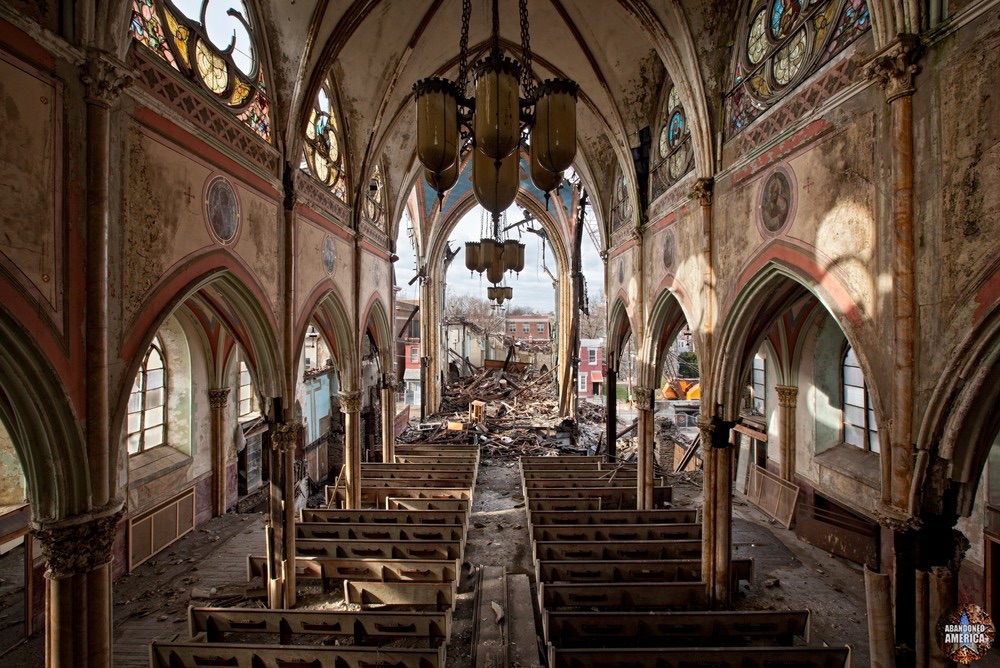
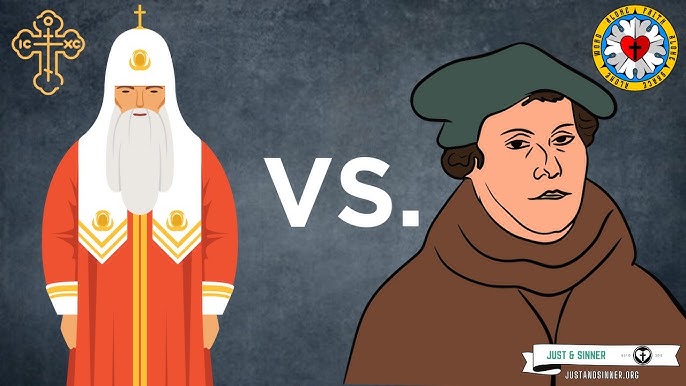



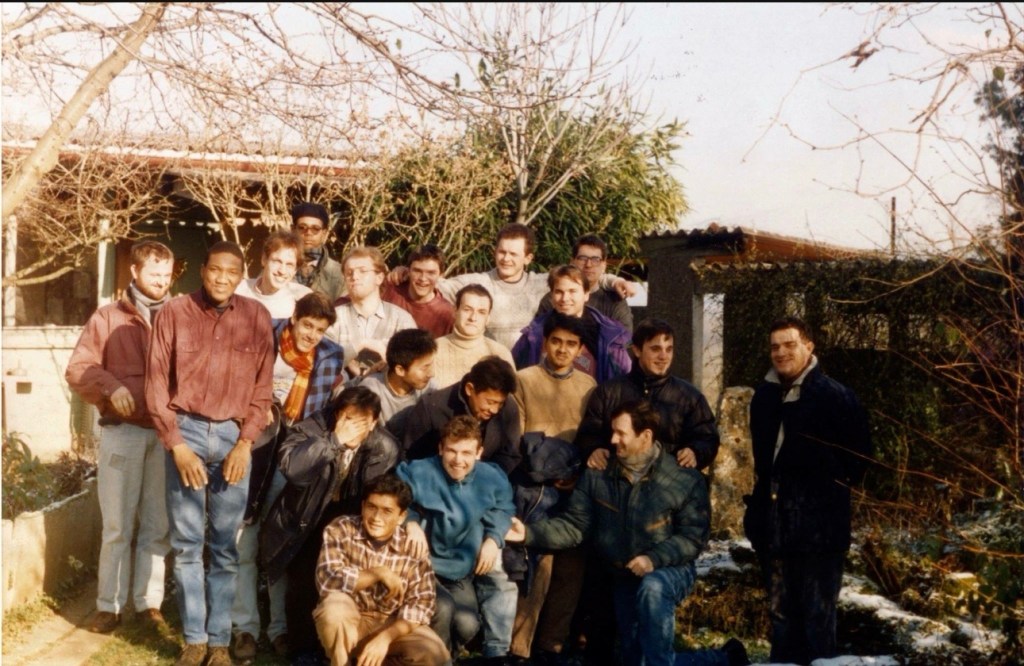


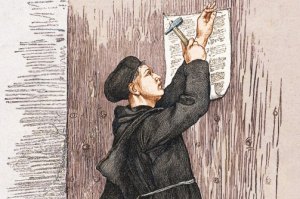

 2pennyblog