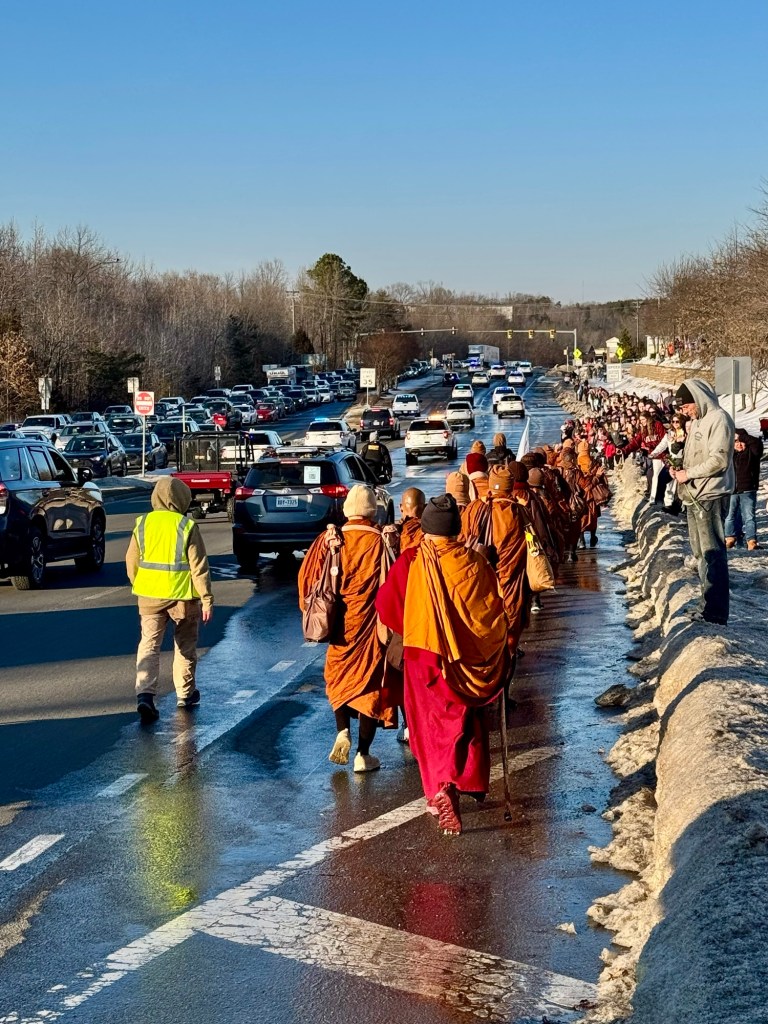
Have you seen this recent meme and posts about it?
First off, she never said this. We really need to have our yes mean yes and our no mean no just as Jesus said. Disinformation is problematic and often harmful in the long run if we claim that we want any kind of justice. I have seen people write about this as if a quote. It doesn’t matter who we are or how we vote, our personal honor is important because it builds trust, helps build relationships, and over time, what we say might eventually influence people in surprising ways. Please be careful reposting memes and quotes, as people can be mislead.
Why is this important? We live in caustic times. If people don’t trust us, we lose the opportunity to positively influence others. If we are correct in our opinions or beliefs, left or right, why lie of tolerate those who do? I think we should not, and yes, that should include lies from those in political parties and authority of any kind. It should not matter if we agree with their stated goals.
Attorney General Bondi did say it was unacceptable to interrupt services and federal authorities would charge those who do it. This leads to my second point. Virginia already has laws on the books against this kind of protest action or disturbance dating to the 1950s. I suspect others do as well. Just as with the mask laws, it seems the law was partly in response to the KKK and other such groups active at the time due to struggles over Civil Rights. I’d like to suggest there are better ways to influence change including peaceful protests outside the church or faith community. That seems to generally be the law already. To become what we say we hate – again left or right – is a grave error often making things worse and hardening hearts. It can become fodder for more untruths or questionable legal actions.
All faith communities should be protected from unlawful interference as with our homes. It matters not if their theology or politics is bad in your view, because someone could claim the same about your faith community and take action. And if someone does not believe in a god, they should not be harassed. That’s what the constitutional mandate for Freedom of Religion protects. We should seek to love and respect the humanity of other humans even if deemed our enemies. We should seek to encounter people as the individuals they are, not say, “All (fill in the blank) are bad.” This does not negate social repercussions, law suits, or convictions when the group opposed to us doesn’t live to this standard, but our giving up our moral and ethical values to achieve our goals often proves like a cancer long term. I recognize the risks, but particularly if a Christian, we should understand that doing the right thing often comes with costs. It is why Jesus taught so often that we must take up our own cross and follow him.
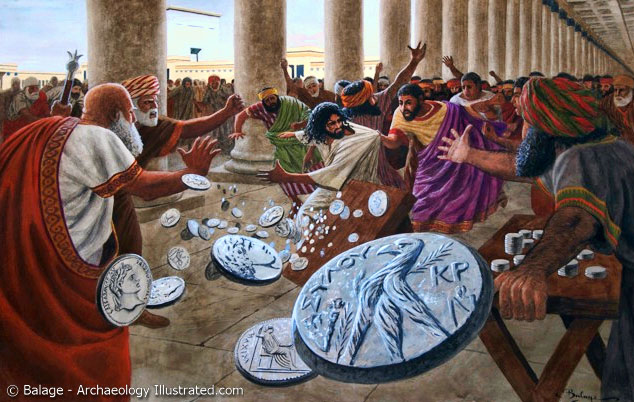
If Jesus is Lord, and I believe he is, we must try not to act out of fear, and we should humbly seek to listen to one another. In the end, we might be the ones who are wrong. Regarding this meme people have pointed to Jesus’ “cleansing of the Temple” as a defense of the protesters. I think it’s important to note that he didn’t enter the inner sanctum. He was in the courtyard. Jesus was trying to embody scriptural prophesy, and he likely knew he was provoking authorities to precipitate his arrest and crucifixion. I don’t think Jesus’ situation and purpose fully informs our own. We are not Jesus. Otherwise, there would be plenty of churches having tables flipped every Sunday for their lack of love or other sinfulness. He might even chase you or me with that whip of cords, for at times, we likely all deserve it.
Art by Balage Balogh. See more of his work at Archaeology Illustrated here.
Fight for justice? Yes, but seek to love all the more – even those who persecute us. For God has promised a full and lasting justice is on its way.
Postscript: Sadly, on the evening of this post, I read that the White House X account changed a photo image itself. A woman arrested for her part in the above incident was altered to make it appear that she was crying. Presented as if true, the falsity of the image was soon identified. The person in charge of the White House account answered bluntly and unrepentantly, “Enforcement of the law will continue. The memes will continue.” Forgive us, Father, we know not what we do.
Yesterday, I joked with friends that I was skipping Festivus this year. My list of grievances was just too long. Then, I was reminded of John Cantius in my reading.
Have you ever heard of St. John of Kanty (Cantius in Latin). His feast day was yesterday, but he actually died on December 24, 1473. A 15th-century Polish theologian, professor, and said to be an incredibly generous priest known for his austerity and devotion to the poor, he became the patron saint of Poland, Lithuania, teachers, students, and academic institutions. It struck me that his feast day being placed on what as a lark became known in modern times as Festivus (from Seinfeld, the television show) could seem ironic. His Christian witness is like an antidote to the human tendency for resentment, rumination, and griping.
Frank Costanza and John Cantius
If you are familiar with the television show, you probably remember that Festivus is a day for the “Airing of Grievances.” A character, Frank Costanza, humorously informs his family and friends, “I got a lot of problems with you people, and now you’re gonna hear about it!” Theoretically according to Festivusweb.com, this practice “can serve as a cathartic method to cleanse people of the evils of dissatisfaction.” Although that might seem to serve the self, I doubt that there are lasting benefits for the community.
In his life, John of Kanty knew disappointment and likely had valid grievances. All humans in a fallen world do to some extent. For example, it is recorded that he was removed from his teaching post at the University of Kraków due to jealousy from rivals. Facing false accusations, he was reassigned as a parish priest in Olkusz until eventually restored to his teaching position.
For someone called by God to scholarship, this must have been disconcerting if not crushing. Our vocations and dreams for the future are part of who we are after all. Such loss can result in a deep and lasting wound. Despite the disappointment of it all (or maybe through this experience by grace through faith), John sought to dedicate his life to humility and peace with others. (Could this be an example of post-traumatic growth?) His motto became, “Beware disturbing: it’s not sweetly pleasing; Beware speaking ill: for taking back words is burdensome.” He is also known for teaching, “Fight all error, but do it with good humor, patience, kindness, and love. Harshness will damage your own soul and spoil the best cause.”
Let us not assume that this means John was ignorant of sin and evil or ignored it. I’m sure he was disappointed and angry at times. (I imagine he was angry less often as he matured in faith, but it likely happened.) He probably fell short of his goal here and there because that’s what imperfect humans do. His teachings also do not mean that we should avoid standing up to or naming injustice and sin – sometimes more forcefully than at other times as needed. (John the Baptist shouting, “You brood of vipers!” comes to mind.) Though, I think it says much that John of Kanty didn’t seem to get stuck in such feelings. If he had, his life would have likely become deformed rather than transformed by Christ’s example and love. When looking at the entirety of John’s life, people did not remember shortcomings. They ultimately remembered God’s grace and peace at work through him.
This has concrete applications for many of us this time of year. As Christmas looms, not everyone is excited to be with family. Being in relationships always proves hard; sometimes incredibly hard. This morning, I was reminded by a short mindfulness meditation on the Calm app (Daily Calm with Tamara Levit, December 24, 2025) that despite our desire to share an harmonious time, old wounds or current struggles can make that complicated. The meditation reminded me that before seeing family, we can mediate (and, if Christian, pray) to calm ourselves and open our hearts wider toward others. If speaking on difficult topics, we can strive to slow down and mindfully choose each word. And if triggered, we can pause, breathe and reflect before committing to any response. This is wise, and I think it ultimately reflects many biblical teachings.
Sure, even Jesus was angry as he flipped tables in the Temple, but he was without sin. As fallen creatures, we aren’t so enabled naturally. Our anger can easily mutate into harm. The discussion at the Council of Jerusalem recorded in Acts 15 was likely tense if not loud at times. Also in Acts 15, Paul and Barnabas argued and had to go their separate ways. Hey, our beloved (real) St. Nicholas is said to have even struck the heretic, Arius, in the nose at the Council of Nicaea. And my theological friend, old Martin Luther, was known to be quite cranky in the 16th century sometimes speaking in grave error. In life, disagreements, disappointments, betrayal, even crimes against us happen, and we can fall short as a result. Once again, we are only human.
Jesus, who as part of our Triune God always existed, was born in the flesh as one person with two distinct natures—perfectly God and perfectly human. (In theology, we call thus the hypostatic union.) We are “creatures” created by God, and our created being uses emotions to process and interact with the world and one another. So, the Bible doesn’t tell us, “don’t get angry.” It reminds us not to sin in our anger. For that, we need God’s help including Christ’s own example and teachings.
So, we can benefit from and be blessed by community. We might need trusted friends, mentors, or counselors to dialogue with and unpack our anger so that we can seek a way forward. Or perhaps, as I’ve mentioned before, we can turn our cheeks and walk away. If doing so, we should seek to not emotionally stuff and ignore our feelings nor ruminate or gossip. There’s a middle ground available, allowing us to be human and feel feelings without getting stuck or sinning in response. We should also understand that we are not meant to emotionally cut off (not caring about others or never praying for them) but seek to establish a new boundary for personal or communal protection hoping for restoration or reconciliation all the while. As Jesus taught, we are to pray for our enemies; not forget they exist. And sometimes, all we can do is seek to let go of the situation leaving it in God’s hands emotionally so it doesn’t disturb or infect our prayer, vision, and actions. Praying for enemies might not help others, but it can help us move forward in love.
Not too long ago, I posted on social media a great article from The Christian Century, “Praying the imprecatory psalms with Bonhoeffer.” If you look it up, you will read that imprecatory psalms are biblical songs of lament that call for God to curse, judge, or destroy His enemies, with examples in Psalms like 35, 59, 69, and 109. As I wrote then, these Psalms reflect a very human sentiment, but they ultimately trust in God to provide justice. God’s our ultimate Defender and Provider to the Psalmist. Taken at face value out of context from other scriptures, they might seem like any old curse. Yet, Bonhoeffer provides a wonderful methodology to look deeper and move us toward compassion and love for “the enemy.”
We are told that Jesus fulfilled all the law and the prophets. When we lack our own words, the Psalms can help us find voice, but it is Jesus who helps us take heart by reshaping them; making them wider and bolder; gifting us with a sacred peace. Rethinking these Psalms through the lens of trusting in God’s ultimate justice and victory, turning our anger over to Jesus and praying as he prayed for our enemies, does make a difference. At the very least it changes us, and that gives us hope that maybe, if we persevere in trust and love, we can do something to make at least our bit of the world a bit better. I suspect St. John’s experience and wisdom shares the same holy roots.
Like many, I was let down by some people in 2025, but doesn’t that happen every year? People do that, sometimes in profoundly hurtful ways while doing what was right in their own eyes. Not unlike the situation in Judges 21:25, people can lose their way. And if self-reflective and honest, I must admit that I have let others and myself down at times too. That’s just being human as well. Yet turning to God’s word for guidance, using resources and tools available to us, humbly surrendering to God’s will while praying even for our enemies, trusting in and listening for the Spirit to guide us, we can avoid being stuck and become more than we are on our own. Indeed, we become freed from the weight of sin whether someone else’s or our own.
Like John of Kanty, people might look past our missteps and see the Prince of Peace working in and through our lives one day and relationship at a time. Our lives might even inspire others as we share the Good News through deed which might include our own repentance. When this happens, know this reflects Christ’s Kingdom rushing into the world through the imperfect vessels that we are. And in that, we and the world will be ultimately well blessed.
And when we fail? If we hurt others or fail to forgive when hurt by others, or even when we can’t seem to be able let go of the pain of the past, recognize that healing can take time. We learn as we go, and miracles can take shape over a lifetime. Like the lepers healed by Jesus in Luke 17, we might heal as we walk on. Holy wisdom and growth can come at any age. So, never stop trying to do better or give up hope. God’s healing love will be at work in us when we confess, repent, and try again. It’s ok to point out a wrong, sometimes it’s very important to do so, but instead of just airing grievances, God empowers us to do something about them. We can heal, and if others are willing and able, reconciliation might come at last.
They are four simple words, “Thy will be done.” It’s a phrase easy to say, but it proves hard to live. On the mountain top, it’s easier to trust God’s love. It seems that you can see forever. Walking in the messy, dark valleys of our days, it proves much harder. Even Elijah almost gave up when his life was at risk. So, is it really a surprise that we who are not great prophets can struggle?
No, God understands our weakness, but more than that, God loves us. As a favorite song of mine says, God can’t love us more than God loves us right now. We are promised God’s will is for our ultimate good. Can we hold on? In our day, can we see signs, no matter how small, to help sustain us? God’s Spirit groans in prayer for us with words we can’t seem to say. Angels might be ministering to us in ways we can’t detect. The laughter of a child or smile of a friend can bring us joy. The songs of birds at the sunrise invite our own hearts to sing in praise.
“Thy will be done” is often rightly said in the acceptance of suffering as Jesus did before he was crucified. Yet, never forget that God’s ultimate will is to love us forever. Pain passes and even death has no power over us. So, maybe…just maybe… “Thy will be done” should be said with hope, although we might still say it through tears.
As we accept our crosses, real or imagined, remember the resurrection that we will be part of someday. As Paul rights, “And we know that in all things God works for the good of those who love him, who have been called according to his purpose” (Romans 8:28). We are loved and chosen. We will never be forgotten or cast away by God even when it seems the world might give up on us or want to cast us aside. In fact, Jesus promises he’s here with us always to the end of the world.
Amidst any suffering, accident or betrayal, whatever happens or fails to occur like we wish, Jesus, too, is here with us; calling us to accept our cross, pick it up and walk in faith. All is well even when life’s seemingly unfair.
The Apocrypha including texts like the Book of Sirach is not considered part of the Protestant cannon of scripture, but Martin Luther did suggest the Apocrypha was “profitable and good to read.” The Apocrypha is a collection of works primarily in Greek, and they can help provide historical context for the period between what is identified as Jewish scriptures and the Christian scriptures. They also can help us better understand God and our world.
As they contain teachings that some traditions find unbiblical, they can be challenged. Jewish people of Luther’s time and today have consistently found that they are not the level of scripture. That said, the Roman Catholic and Orthodox world both consider the Apocryphal texts scripture, but they do recognize some different texts as part of those works. So, there’s no fully ecumenical or interfaith consensus. Our Lutheran bibles often include them with explanation (and we do study them in seminary), but I’ve read some Protestant editions began to drop them over time after the Reformation to help make the Bible more affordable. So, they aren’t always well known.
And still, some Evangelicals and others – like Pat Robertson who I saw once denounce them as dangerous – have had no use for them. It’s a minority voice among worldwide Christianity, and I have suggested that if such people don’t want you to risk reading the Apocryphal texts, then perhaps they should offer the same counsel about their own writings available for purchase. For, those aren’t scripture either.
I stand with Luther. There’s no consensus among Jewish traditions nor Christian ones regarding them. That gives me pause to consider them scripture. Yet, they are profitable and good to read, for historical insights or wisdom including this saying by Sirach about friends (Sirach 6:14-17):
14 A faithful friend is a sturdy shelter: he that has found one has found a treasure. 15 There is nothing so precious as a faithful friend, and no scales can measure his excellence. 16 A faithful friend is an elixir of life; and those who fear the Lord will find him. 17 Whoever fears the Lord directs his friendship aright, for as he is, so is his neighbor also.
Through chapter 6, he argues, “True friends are discerned not by prosperity (v. 11), but through the trials of adversity: distress, quarrels (v. 9), sorrow (v. 10) and misfortune (v. 12) (USCCB Daily Readings, 2025).
The Book of Sirach which was written in Hebrew remains the oldest example of such wisdom literature. It is absolutely applicable to modern times as it addresses friendship. Similar to Proverbs or Ecclesiastes, it offers helpful sayings about ethics written by Yeshua ben Eleazar ben Sira (Ben Sira), a Hellenistic Jewish scribe of the Second Temple period, yet it also can inspire or encourage.
Friends prove a treasure as other scriptural texts and my own life suggest. Friends helped me reconnect to the Church and lift me up after traumas in my past. Friends helped identify my call as a pastor, and they have concretely and through prayer supported my work. Friends helped me as I grieved the death of loved ones, faced cancer, or experienced past jobless periods in my life. In many ways, I discover Gospel truth and holy wisdom through them, not of the level of scripture but true nonetheless.
Friends, new and old, I covet your prayers always, and give thanks for you as I pray. Peace+ and love be with you this day and always. Yet if you ever find yourself doubting or afraid, if you ever feel like giving up, remember your trusted friends. For Christ is waiting in their hearts ready to help and embrace you.
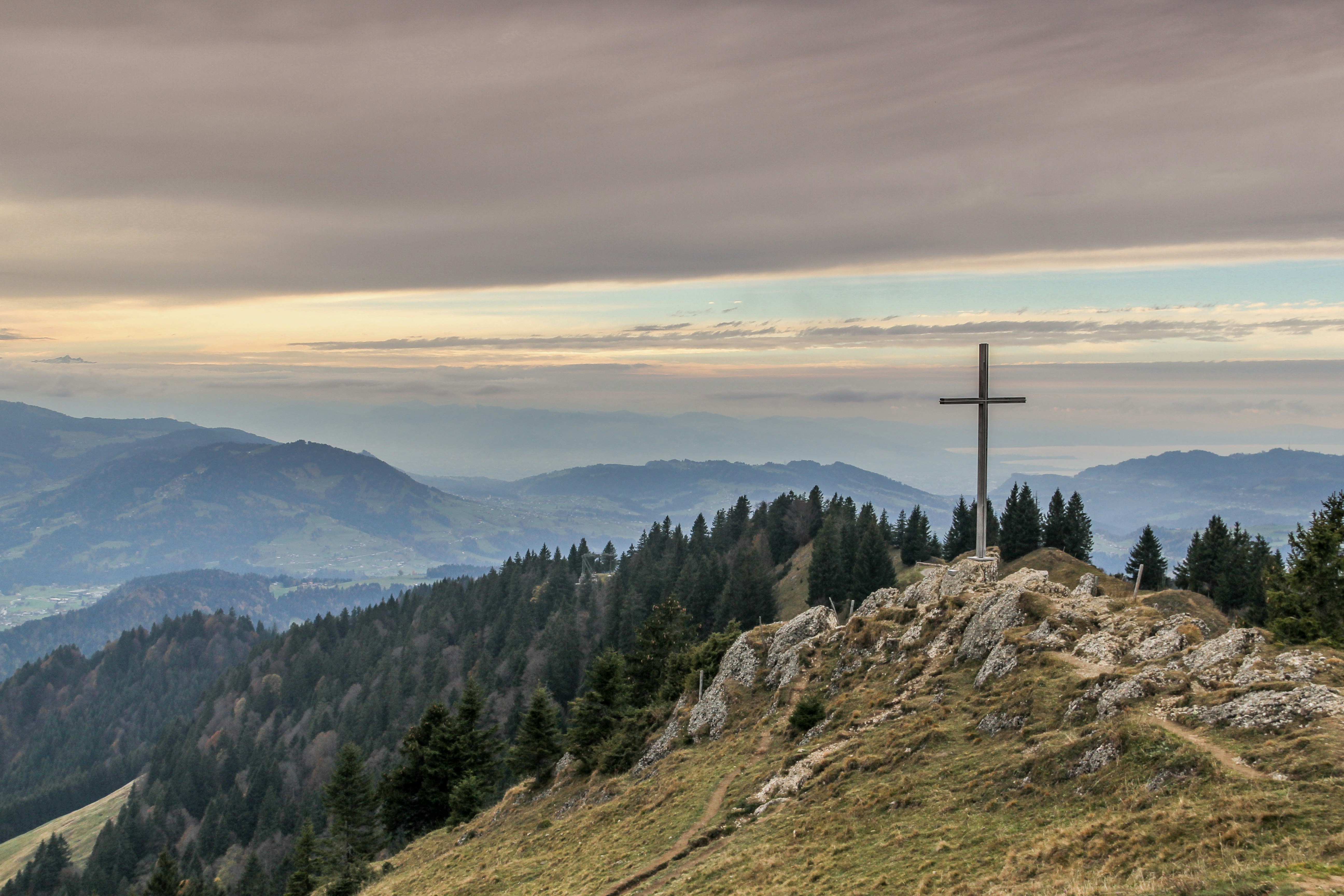
Image: VMI Cadets on House Mountain, from House Mountain Reserve and the Virginia Military Institute. They retain all rights.The words below are my own, and do not reflect the views of these or any other entities or persons.
The below sermon was preached on the Sixteenth Sunday After Pentecost, September 28, 2025, following the Narrative Lectionary (Year 4). The preaching text isExodus 2:23-25; 3:1-15; 4:10-17:
Thirty-nine years ago, among a crucible of challenges faced as I began to attend the Virginia Military Institute, New Cadets (nicknamed “Rats” for their lowly position at the school) were “invited” to hike up House Mountain. This mountain is a beautiful mountain indeed shaped a bit like a house, and it reaches about 3600 feet in elevation. It stands uniquely alone in the skyline, a bit separate from the other mountains of the Shenandoah Valley, and it is clearly visible from the Institute.
This annual event made the mountain a bit like holy ground for us. The forced march, a very fast one, up a very steep and fatiguing incline, was a tool used to bind us closer together. On the way, New Cadets were not only expected to challenge themselves individually, but they were also to help and encourage one another on the way – carrying their “Brother Rats” if necessary. And once the arduous climb to the top is done, you look around at the beautiful expanse of the valley below you, and you feel pride for your accomplishment, but also a deeper connection to those around you and to those who came before. Dare I say that you get the sense that you find yourself in a kind of sacred space and time. To this day, whenever I drive up and down route 81 and see that mountain, I remember the importance of that cherished experience.
There’s something empowering about mountaintop experiences. Sure, the climb can be challenging and the view spectacular, but I find that I often get the sense that amidst my smallness, I am part of something greater than myself. Throughout history, mountaintops have been used for signal fires, monuments, and just a place to see the scenery, but they also have been used for religious rituals and prayer. They have often proved the site of important spiritual awakenings or experiences for people throughout time and across cultures. This is much as the Lakota and Cheyanne look at Bear Butte in South Dakota as a sacred site…praying on and around the mountain, performing rituals or leaving sacred offerings at the top. We might come to understand why the “high places” so often referred to in the Bible were outdoor religious sites on mountaintops. Where was Abraham to sacrifice Isaac?[i] It was to be on a mountaintop, much as the pagan religions around him sacrificed their children. When we lift our eyes to the hills (to the mountains or high places), from whence does our help come from?[ii] God is the answer, for God has dominion over the high places. El Shaddai is one of the names for God used in Jerusalem meaning “God Almighty.” In the most ancient times, it appears that among what would become the Jewish people (as with other peoples around them), the gods were often associated with peoples and places, especially mountains. And in the Akkadian language, the earliest known Semitic language, the root of Shaddi – shadû – means “mountain.” Some suggest that El Shaddai conceives of our God as holding dominion over their regional high places.
Therefore, I don’t think it should surprise us that Moses’ own call story takes place on such heights. Indeed, it was already thought to be sacred ground, “the Mountain of God.” It was a place said to be where God rested at times, but it was to become a place where Moses’ life and the life of his people would be changed forever. Though, it really isn’t the ground or the elevation that’s key to this story. It is the relationship forged between Moses and his God that truly matters. Within our text, we can see a number of ancient hints for this. For example, Moses takes off his shoes to approach the burning bush. That’s an ancient sign of respect. Through the outward sign of humbling oneself, one is reflecting an inward sign of reverence and worship. For God’s part, God calls Moses forward while reminding Moses of past powerful relationships, “I am the God of your father, the God of Abraham, the God of Isaac, and the God of Jacob.” The three covenants or promises made by God to Abraham, Isaac, and Jacob – three being itself a symbol of perfection and fullness in Judaism – still hold. God broke into these lives with the intention of changing the course of history, and that remains God’s will. With this mountaintop experience, God intends to break into and claim Moses’ life so that he can be used for a sacred purpose. We are witnessing what is known as a call story.
And in the face of such power (as displayed by a burning bush which really didn’t burn), Moses turned away. Ancient peoples believed that if a mortal was to look upon such immortal power, one would die. Instead of destroying Moses, God chooses to be humble and approachable. God offers Moses a sign of friendship…a name, “I am who I am.” In ancient cultures through the indigenous cultures of today, a person’s name is deemed sacred. It is thought to have a kind of force. Yes, it might identify one’s heritage or family, or represent what they have experienced or hope to accomplish in life, but it commonly was believed (and in some cultures is still believed) to give one person power over another. That is why one usually blesses or curses using a name in most traditional cultures, and the ancient Jews refrained from using the Lord’s specific name for a fearful respect of the power it represents and could unleash. This Jewish traditions is captured in our modern bibles when you see LORD (in all capital letters) in lieu of speaking God’s name. We even baptize in the name of Father, Son, and Holy Spirit, but also officially give infants a name. We are said to Christen them.
Through this account, we are witnessing something extraordinary. Our perfect Almighty God from on high comes down to meet Moses (and us) as imperfect as humans are. Unlike other gods, our God is not distant and uncaring. God hears the groaning of God’s people and acts when the time was right. This is just as we are told later – Jesus came when the time was right (Galatians 4:4-5). It is still that way as Paul writes, “Likewise the Spirit helps us in our weakness, for we do not know how to pray as we ought, but that very Spirit intercedes with groanings too deep for words” (Romans 8:26).
Yes, this powerful yet merciful god was calling a very ordinary, imperfect human to do great things. Still as many humans do…all humans at times…Moses resisted. He doubts instead of trusts. No wonder God gets angry? I think of Jesus, too, who was so often frustrated by his disciples’ unwillingness to trust him no matter how many miracles were performed. Yet to be fair, Moses by many human standards was a very unlikely prophet. Remember, Moses descended from a lowly people, slaves. He was a murderer, killing an Egyptian slave master. Moses was only a poor shepherd with an adopted family and home. He had no great family name or social status. Significantly, Moses apparently had a speech impediment. As Professor Fretheim of Luther Seminary in St. Paul wrote, “Moses raises sharp objections to God regarding this calling. One could name a total of eight objections on Moses’ part, ranging from issues of competence to knowledge to the nature of the situation and the kind of people (and God!) involved.”[iii]
In this very dynamic back and forth of confrontation met by assurance, God basically reminds Moses by word and deed…as God will do throughout the entire cycle of the Exodus story over and over again…“I am with you…I am your God…I am yours, and you are mine.” Where Moses is so hesitant to give of himself, God offers the divine-self to Moses. As Moses seeks to trust and move forward, than trust and move forward a bit more…trust grows…a heart of faith based on a personal relationship with God begins to flourish. Our God is willing to be present in Moses’ life and work through it…that’s what gave his life and our lives true meaning…that’s what makes an ordinary human extraordinary.
Eventually, Moses will prove to be one of the greatest of God’s prophets. No, he will never be perfect. Just like us, Moses will struggle to trust at times, and with his people, grumble or drag his feet. Yet in the end, Moses will walk on in trust…step by step into the unknown but seeking to trust the god revealed to him. This revealed and now known god, our God, is with him. It is God that gives Moses his vision…a vision that directs Moses’ life through many adversities in order to help his faith grow and bless others.
Yet again, it isn’t the high ground, or Moses, or his staff who has the power and glory…it is God alone. Despite any of Moses’ flaws or hesitation, even his sin, God wants to work through Moses and with Moses to change the world. Much as with Moses, God wishes to interact with us…to enter a powerful, personal relationship with us. Yes, we can confess our weaknesses to God. We can speak of our faults or fears…even our doubts. Yet, we can’t let them shape our lives. It’s God’s presence and promise that matters.
Through our faith and baptism, God is always with us…truly with us. And by Christ’s death and resurrection…through the Holy Spirit (reflecting the power of Pentecost)…we have an ongoing, intimate, most powerful and lifechanging access to God in ways that Moses did not. True, we might never prove to be an Abraham, Isaac, or Jacob, but we are their descendants through our shared faith. We may never be a great prophet like Moses. As recent days remind us, we can surely be a lowly, sinful people. Yet, God still claims us and is with us. At any time, where we walk might become like holy ground for us as we sense God’s presence more clearly, feel the holy communion with Christ’s Church more dearly, or sense the Spirit’s call to love, forgive, and serve others and our world. [This is much as St. Richard of Chichester, (c. 1197–1253), prayed: O most merciful redeemer, friend and brother, may I know thee more clearly, love thee more dearly, and follow thee more nearly, day by day. Amen.]
In response to such an invitation, we should seek to answer our unique call from God. This might in the end be just to do small but hard and necessary things within the sphere of influence where we have been planted – helping as we can, loving and forgiving with God’s help, being patient and gracious toward others, maybe not saving the world but just saving or positively shaping or redirecting even just one life that we come in contact with. God can use us in that way to change the world, too.[iv]
Indeed, we are used by God daily…aware of it or not…when we just try to love as we have been loved by God. For through this messy, stressful, frightening life, God is leading us together toward the highest ground…an eternal life to be shared with the one revealed to Moses as “I am who I am,” and comes to us as Jesus and the Holy Spirit. Amen.
[iv] There is an ancient Jewish precept, “Whoever saves one life is considered as if he saved an entire world.” This highlights the infinite value of each life and our interconnectedness.
If you would like to listen to the above sermon or watch our service, the video can be found below. The sermon begins at about the 11:14 minute mark.
What our Jewish siblings call the Writings (or Ketuvim) are examples of “wisdom literature.” They are the third and final section of the Tanakh (the Jewish scriptures, or what many Christians call the Old Testament). These selections are found after the Torah (“instruction”; the five Books of Moses, also called the Pentateuch) and Nevi’im (the “prophets”). How does this journey to wisdom start? Proverbs tells us, “The fear of the Lord is the beginning of knowledge.”
No, we aren’t supposed to run away from God like Adam and Eve after sinning in the Garden of Eden. We are supposed to seek after God. We experience a holy fear as we encounter the one true God, and we come to understand our vulnerability and reliance in something greater than ourselves. We tremble before God’s greatness, because we discover we are not God, nor even masters of our destiny. In fact, on our own, we are worthy of condemnation. To think otherwise is vanity. Yet, we turn to God humbly, because we discover that God is only love, and we know we need God’s grace and salvation. We also know through Jesus and the tug of the Holy Spirit, God desires to save us, not destroy.
A favorite Christian musician and Bible scholar of mine back in the 1990s was a man named Michael Card. He used his love of scripture to ponder God’s greatness through music. He created a three CD work contemplating the Torah, The Prophets, and the Writings. In his reflection song on Proverbs, he reframes this fear with these words, “The Way of Wisdom beckons us; To find the end of fear that perfect love pursues; Wisdom did not come to simply speak the words of truth; He’s the Word that makes us true.” In other words, our holy fear leads us eventually to our grace-filled salvation found only in Jesus. Jesus’ love has the power to transform us.
The path of wisdom leads us from fear toward a perfect love, one that wishes to help and embrace us. Indeed, Wisdom in the Writings is often personified as a welcoming woman. It is much as the Jewish faith has often contemplated and represented God’s Spirit in female imagery in art and other poetry. As Jesus describes God’s love as a Mother Hen, Proverbs tells us that Wisdom beckons us home in our weakness and need. It invites us to knock at the door and seek as Jesus did saying, “I love those who love me, and those who seek me diligently find me.”
So how do we seek? The way of Wisdom calls us to live a life in community where forgiveness is offered, where support is shared, where we meet Christ in one another as well as the Word and Sacraments. The original wisdom works were based on observations and experiences rather than visons and dreams – people found God at work in real life and reflected upon it.
Through their lives, poetry, and sayings preserved in scripture, we learn that our seeking is not just a Sunday adventure or a diversion to our week. It cannot be fully explored alone. We seek to listen for Wisdom daily as we interact with the world. For, God is there. We uncover our true place is among God’s chosen people, and we see that God is at work around us. Even in small acts of love or kindness to our neighbor, we might spot Wisdom.
It is only through such Wisdom that we find our true significance. As we are promised, whoever finds Lady Wisdom, finds true life. I think it comforting that the source of such Wisdom, the Holy Spirit (by the way, spirit is a feminine word in ancient Hebrew), is already seeking and reaching out to us. Perhaps, we should stop, look, and listen for her during our busy days or on days when we feel overwhelmed or afraid. She’ll be there waiting to not just teach us, but embrace us, as our Triune God’s children.
Unless otherwise indicated, all scripture quotations for this post are from the New Revised Standard Version (NRSV) translation.
Originally published in the July 18, 2023 weekly newsletter, the Hub, of Christ Lutheran Church, Fredericksburg, VA, this post was edited and expanded upon for my blog.
A 2023 study found that 40 percent of both Biden and Trump supporters “at least somewhat believed the other side had become so extreme that it is acceptable to use violence to prevent them from achieving their goals.” That’s pretty disturbing. Yesterday, I could sadly look at my feeds on social media and make a list of people that feel that way from the left and right, some who I know personally. According to Stefani McDade in Christianity today, “Most Americans are in shock, grieving, and rightly concerned for the future of our nation [after the assassination of Charlie Kirk]. Yet there are outliers on both ends of the ideological spectrum who seem inclined to assign a deeper meaning to Kirk’s murder—one that instrumentalizes it to galvanize further support for their respective camps and causes.” That’s not healthy or right either. Making violence sacred in one’s preferred image is itself a form of idolatry.
Many have said that there’s no going back even though our future is never set in stone. Some have just suggested that the Rubicon crossed will lead to more violence (which is likely correct knowing human nature). Others, unwittingly or not, want more – the destruction or elimination of the other, and that’s a bad bridge to cross. “The (fill in the blank party) are evil.” (They don’t act with evil, they are evil, they say. That’s a serious and unbiblical accusation.) People angrily resist that violence is an “us” problem, not just “them.” (Martin Luther in his Large Catechism argues quite effectively that we are all murderers.) They can point out the plank in other people’s post easy enough (Matthew 7:3-5), but they often fail to see how their own vitriol potentially facilitates evil actions of others (if not eventually their own down the line). It’s easy to hate those we objectify. They can become to us something less than human, a being made in God’s image who Jesus died to save.
Jesus calls us to be more and do better. Aggression and violence is a choice, to be an exception in a fallen world, always tainted by sin, if one believes what Jesus taught and exemplified. This is why the Orthodox and others encourage soldiers to go to confession with a priest after wartime experiences. Violence is never “pure” as too many wish to frame it. None of our actions are if we ascribe to Lutheran or Reformed theology. Indeed, because of sin, even the concept of free will is a deception. (Read Luther’s The Bondage of the Will if interested in hearing that argument.)
Instead, we are invited, “Do not be overcome by evil, but overcome evil with good” (Romans 12:21). Love and forgiveness can always be a choice too…always. If you feel stuck in your anger, unable to forgive, pray about it. Talk to a pastor, rabbi or other spiritual leader. (And if they are preaching about retribution or going to war over cultural or political issues, perhaps go somewhere else. Spiritual leaders can live in error, too.) Read and meditate upon the Jewish scriptures and Jesus’ teachings about love of others, forgiveness, and violence. God’s Spirit will help.
Yes, Jesus wishes us his peace, a peace beyond understanding (Philippians 4:7). Jesus offered this to his first disciples and to us when he said, “Peace I leave with you; my peace I give to you. I do not give to you as the world gives. Do not let your hearts be troubled, and do not let them be afraid.”
People can quibble about the veracity of research studies regarding our divisions, or who did what first, but Jesus is clear. “Love one another, as I have loved you” (see John 13). Let us choose to abide in his love.
A Smithsonian Institution sign is seen on the National Air and Space Museum on the National Mall in Washington, D.C., on March 28, 2025. KEVIN DIETSCH/GETTY/Newsweek – See the Newsweek article sparking this post.
Recently, the President pondered about slavery in the context of what he suggested was one sided history presentations at the Smithsonian. Certainly, one can point to possible errors, but the President made a big one himself. Plenty of people on social media have regrettably expressed similar things before and since. He said that their portrayal of U.S. history was too negative and focused too much on “how bad Slavery was.”
Well, unfortunately, slavery was worse in the USA than many understand or admit. Don’t take my word for it. Read first hand slave narratives from diaries and interviews: extreme poverty, dismemberments, whipping, rape, murder, and more abominable acts were a norm. Many potential slaves, Native American, African and others, historically feared slavery more than death. In fact, you read of suicidal acts rather than being dragged into slavery or returned to it.
So if anyone is wondering, in the best of circumstances one could imagine, slavery is wrong. It was and always has been steeped in sin, a sign of our fallen world not God’s Kingdom. In Genesis, every human was created in God’s image, male and female alike. Some (I sadly know from experience) will say God allowed it. They will point at a few verses which l agree seem to affirm slavery in that period, but even in speaking of the Ten Commandments, Mosaic law called for better treatment and freedom processes for slaves.
God’s patience with our sin should not be confused with God’s approval of it. (God was not too keen on Israel having a king other than God or the Temple in Jerusalem being built either, for they could lead to idolatry and other sin. Yet, God consented.) By the time the Church comes around, Jesus has extended the understanding of the neighbor whom we should love as oneself to include everyone. Paul emphasizes how slave and master should live within the existing structure while prioritizing Christ, as he did regarding women, but he never argued for slavery. He argued that Christ’s plan is to make all one. In the dangerous context of the Roman Empire where slavery was so embedded, order valued, and social roles defined, he expects Jesus back soon. He didn’t want anything to hinder the spread of the Gospel, so within an unjust fallen world, he counsels humility, patience and love even to one’s enemy. Living faithfully was his primary concern whether a slave or any other lot in a fallen life.
Yet, God did not stop speaking in biblical times. As the Church grows and becomes more diverse, as education spreads (both knowledge and wisdom are said to be gifts of the Spirit), as people pray, meditate on scripture, preach and teach about our Lord, the consensus and understanding grew that slavery and prejudice of any kind is sin. The Spirit works through such holy discernment to try to open our hearts to God’s truth. So again, God called and created everyone. Jesus is to call all peoples to himself. And we are to love one another and see the Christ, the sacred, in one another – in everyone whether friend or foe, believer or not.
Still to this day, prejudice of all kinds, slavery, and ignorance sadly continue to exist. Some people don’t want to see their ancestors as “bad,” but we are all sinnners, so let’s get over it. Going in circles about the multiple causes of the Civil War is a distraction distancing us from the horror. Slavery always takes away a person’s self determination, rights, dignity, health and ultimately life. It’s a kind of theft and murder, as Luther extended those commands similarly to many sins in his Large Catechism. (He suggests we are all murderers at times as we lack care for our neighbors or live selfishly.) As I often quote from Jesus, let your yes be yes, and your no be no. Slavery was evil. It was and remains sin. Let’s leave it at that.
Our ancestors might not have understood this was a sin, but we now do. So, we shouldn’t forget or be shy about their errors. We can learn from them. Sinner-saints all, certainly there could be signs of kindness or generosity back then like now. Yet let God be their ultimate judge, for we have our own sins still to address including modern slavery and human trafficking.
Good thing God is still patient and kind. For, we all need his forgiveness.
“You, my brothers and sisters, were called to be free. But do not use your freedom to indulge the flesh; rather, serve one another humbly in love.” Galatians 5:13
Left or right or in between in the US, we all are a sinful, stiff necked people in need of grace; called to become more through Christ. As a culture and fallen people, we historically swing dysfunctionally between political poles of excess and denouncing the “other,” hurting ourselves and those entrusted to our care all the while. Platforms tend to become more important than people, for we rest in the assurance that we are “right,” and we want to defeat the “other.” We self righteously think, “They are the evil ones after all.” In doing so, we often forget that true justice requires mercy and the least of these are indeed our responsibility. At the same time, or perhaps because of this plank in our eye, we tend not to like to reflect deeply on our own sins – what we have done and failed to do – with the gift of holy wisdom at our disposal. We prefer passion and group-think over the Holy Spirit’s guidance and light.
It ultimately doesn’t matter what wrong was done in the past. We must let it go instead of letting anger metastasize. We are called to love one another in the present, not ignoring or enabling wrongs, but striving with God’s help to see the Christ in others and treating them with gentleness, patience, and the love we ourselves have received first. As I’ve said before, it is a habit of life which takes practice. We are to forgive and forgive again when wronged. “Seventy times seven” times according to Jesus, we should forgive. This means we should forgive others without limit even when they don’t deserve it. For Jesus died for our sin – that which we have been born into or done, those we struggle with today, and the sins we’ve yet to do – when we still don’t and never will deserve it.
And what about us? Our recalcitrance in regard to all the teachings of Jesus including doing good to those whom hate us? What evil is at work in and through us and our choices as we face the fears and pressures of our day? How might we be making a bad situation worse? Who are we to condemn people to hell in our hearts or cause others to suffer through our actions? Each day in a similar way to our siblings in Twelve Step programs, we who are addicted to sin and selfishness can take a searching and fearless moral inventory of ourselves. Then, we ask for God’s forgiveness, seek to repent of our wrongs (turning back to God), make amends as we can (as we are empowered by God). We do so because Jesus said he wants us to have his abundant life and peace, and this is the Way.
We might feel caught in an impossible situation, but all things remain possible with God. We can make choices to help change our behaviors and attitudes for the better today; repenting of our wrongs and positively influencing others. God’s Spirit has already been sent to help us, residing in our hearts through the gifts of our faith and baptism. Most importantly, Jesus promises that we are never alone. He will carry our cross when we cannot. He already has!
Jesus once said, “People do not light a lamp and put it under the bushel basket; rather, they put it on the lampstand, and it gives light to all in the house. In the same way, let your light shine before others, so that they may see your good works and give glory to your Father in heaven.” In times of trouble and discord, this is even more true. We need our yes to mean yes and to seek to love God and others as ourselves no matter the cost. It is Jesus who has called us to this time and place to be his body. Don’t be afraid.
Whatever happens around us or to us, our first allegiance as a Christian is always to Jesus. As we American Christians look upon fireworks tonight celebrating Independence Day, never forget that Jesus always wants us to reflect his light…always. Sinning in our anger is never his way. Political waffling is not his style. We can be better as a person and a nation. We can be healed. We live in hope thanks be to God.
I wish you a happy and safe Independence Day, while remembering and seeking to serve the only One who truly makes us free.
I pray with my friends in France for world peace (see link in comments as it wouldn’t post), and I’m praying for those impacted by today’s political violence in the US. Sad is an understatement. We might feel impotent in the face of such senseless violence, but we aren’t. Loving our neighbor including our enemies can be lived out through our lives. If enough people do, just as bad or hate filled sentiment can spread like a disease, so can faith, hope and love from person to person. As hard as it is, try to pray for your political opponents and try to treat them with respect as human beings even as we might think they live in grave error. Ask the Spirit to use you as an agent of reconciliation and peace in your context. Pray for the person or persons who did this for they do not know what they do even as we pray for justice. And seek to defeat evil with good. Sounds easy enough, but it’s a biblical intentional practice often in tension against our baser instincts. Yet if we seek to practice over and over, with God’s help, it will become a habit – a new instinct or gift from the Holy Spirit dwelling within you. Jesus said to his anxious friends, “Peace I leave with you; my peace I give you. I do not give to you as the world gives. Do not let your hearts be troubled and do not be afraid” (John 14:27). He’s still saying that to us today.
Stained glass window in L’Eglise de la Réconciliation
Husband, Pastor, Law Enforcement Chaplain, and member of the Clerical Errors (aka "The Three Priests"), I'm sharing my two cents with anyone who cares...
You can also find me on social media as Loudluthrn (Lou-d-Luthrn or Lou the Lutheran). It is a moniker given me while attending a Presbyterian Seminary, but I'm a loud and proud Lutheran too (just not too loud and proud, mind you).