A 2023 study found that 40 percent of both Biden and Trump supporters “at least somewhat believed the other side had become so extreme that it is acceptable to use violence to prevent them from achieving their goals.” That’s pretty disturbing. Yesterday, I could sadly look at my feeds on social media and make a list of people that feel that way from the left and right, some who I know personally. According to Stefani McDade in Christianity today, “Most Americans are in shock, grieving, and rightly concerned for the future of our nation [after the assassination of Charlie Kirk]. Yet there are outliers on both ends of the ideological spectrum who seem inclined to assign a deeper meaning to Kirk’s murder—one that instrumentalizes it to galvanize further support for their respective camps and causes.” That’s not healthy or right either. Making violence sacred in one’s preferred image is itself a form of idolatry.
Many have said that there’s no going back even though our future is never set in stone. Some have just suggested that the Rubicon crossed will lead to more violence (which is likely correct knowing human nature). Others, unwittingly or not, want more – the destruction or elimination of the other, and that’s a bad bridge to cross. “The (fill in the blank party) are evil.” (They don’t act with evil, they are evil, they say. That’s a serious and unbiblical accusation.) People angrily resist that violence is an “us” problem, not just “them.” (Martin Luther in his Large Catechism argues quite effectively that we are all murderers.) They can point out the plank in other people’s post easy enough (Matthew 7:3-5), but they often fail to see how their own vitriol potentially facilitates evil actions of others (if not eventually their own down the line). It’s easy to hate those we objectify. They can become to us something less than human, a being made in God’s image who Jesus died to save.
Jesus calls us to be more and do better. Aggression and violence is a choice, to be an exception in a fallen world, always tainted by sin, if one believes what Jesus taught and exemplified. This is why the Orthodox and others encourage soldiers to go to confession with a priest after wartime experiences. Violence is never “pure” as too many wish to frame it. None of our actions are if we ascribe to Lutheran or Reformed theology. Indeed, because of sin, even the concept of free will is a deception. (Read Luther’s The Bondage of the Will if interested in hearing that argument.)
Instead, we are invited, “Do not be overcome by evil, but overcome evil with good” (Romans 12:21). Love and forgiveness can always be a choice too…always. If you feel stuck in your anger, unable to forgive, pray about it. Talk to a pastor, rabbi or other spiritual leader. (And if they are preaching about retribution or going to war over cultural or political issues, perhaps go somewhere else. Spiritual leaders can live in error, too.) Read and meditate upon the Jewish scriptures and Jesus’ teachings about love of others, forgiveness, and violence. God’s Spirit will help.
Yes, Jesus wishes us his peace, a peace beyond understanding (Philippians 4:7). Jesus offered this to his first disciples and to us when he said, “Peace I leave with you; my peace I give to you. I do not give to you as the world gives. Do not let your hearts be troubled, and do not let them be afraid.”
People can quibble about the veracity of research studies regarding our divisions, or who did what first, but Jesus is clear. “Love one another, as I have loved you” (see John 13). Let us choose to abide in his love.
A Smithsonian Institution sign is seen on the National Air and Space Museum on the National Mall in Washington, D.C., on March 28, 2025. KEVIN DIETSCH/GETTY/Newsweek – See the Newsweek article sparking this post.
Recently, the President pondered about slavery in the context of what he suggested was one sided history presentations at the Smithsonian. Certainly, one can point to possible errors, but the President made a big one himself. Plenty of people on social media have regrettably expressed similar things before and since. He said that their portrayal of U.S. history was too negative and focused too much on “how bad Slavery was.”
Well, unfortunately, slavery was worse in the USA than many understand or admit. Don’t take my word for it. Read first hand slave narratives from diaries and interviews: extreme poverty, dismemberments, whipping, rape, murder, and more abominable acts were a norm. Many potential slaves, Native American, African and others, historically feared slavery more than death. In fact, you read of suicidal acts rather than being dragged into slavery or returned to it.
So if anyone is wondering, in the best of circumstances one could imagine, slavery is wrong. It was and always has been steeped in sin, a sign of our fallen world not God’s Kingdom. In Genesis, every human was created in God’s image, male and female alike. Some (I sadly know from experience) will say God allowed it. They will point at a few verses which l agree seem to affirm slavery in that period, but even in speaking of the Ten Commandments, Mosaic law called for better treatment and freedom processes for slaves.
God’s patience with our sin should not be confused with God’s approval of it. (God was not too keen on Israel having a king other than God or the Temple in Jerusalem being built either, for they could lead to idolatry and other sin. Yet, God consented.) By the time the Church comes around, Jesus has extended the understanding of the neighbor whom we should love as oneself to include everyone. Paul emphasizes how slave and master should live within the existing structure while prioritizing Christ, as he did regarding women, but he never argued for slavery. He argued that Christ’s plan is to make all one. In the dangerous context of the Roman Empire where slavery was so embedded, order valued, and social roles defined, he expects Jesus back soon. He didn’t want anything to hinder the spread of the Gospel, so within an unjust fallen world, he counsels humility, patience and love even to one’s enemy. Living faithfully was his primary concern whether a slave or any other lot in a fallen life.
Yet, God did not stop speaking in biblical times. As the Church grows and becomes more diverse, as education spreads (both knowledge and wisdom are said to be gifts of the Spirit), as people pray, meditate on scripture, preach and teach about our Lord, the consensus and understanding grew that slavery and prejudice of any kind is sin. The Spirit works through such holy discernment to try to open our hearts to God’s truth. So again, God called and created everyone. Jesus is to call all peoples to himself. And we are to love one another and see the Christ, the sacred, in one another – in everyone whether friend or foe, believer or not.
Still to this day, prejudice of all kinds, slavery, and ignorance sadly continue to exist. Some people don’t want to see their ancestors as “bad,” but we are all sinnners, so let’s get over it. Going in circles about the multiple causes of the Civil War is a distraction distancing us from the horror. Slavery always takes away a person’s self determination, rights, dignity, health and ultimately life. It’s a kind of theft and murder, as Luther extended those commands similarly to many sins in his Large Catechism. (He suggests we are all murderers at times as we lack care for our neighbors or live selfishly.) As I often quote from Jesus, let your yes be yes, and your no be no. Slavery was evil. It was and remains sin. Let’s leave it at that.
Our ancestors might not have understood this was a sin, but we now do. So, we shouldn’t forget or be shy about their errors. We can learn from them. Sinner-saints all, certainly there could be signs of kindness or generosity back then like now. Yet let God be their ultimate judge, for we have our own sins still to address including modern slavery and human trafficking.
Good thing God is still patient and kind. For, we all need his forgiveness.
“You, my brothers and sisters, were called to be free. But do not use your freedom to indulge the flesh; rather, serve one another humbly in love.” Galatians 5:13
Left or right or in between in the US, we all are a sinful, stiff necked people in need of grace; called to become more through Christ. As a culture and fallen people, we historically swing dysfunctionally between political poles of excess and denouncing the “other,” hurting ourselves and those entrusted to our care all the while. Platforms tend to become more important than people, for we rest in the assurance that we are “right,” and we want to defeat the “other.” We self righteously think, “They are the evil ones after all.” In doing so, we often forget that true justice requires mercy and the least of these are indeed our responsibility. At the same time, or perhaps because of this plank in our eye, we tend not to like to reflect deeply on our own sins – what we have done and failed to do – with the gift of holy wisdom at our disposal. We prefer passion and group-think over the Holy Spirit’s guidance and light.
It ultimately doesn’t matter what wrong was done in the past. We must let it go instead of letting anger metastasize. We are called to love one another in the present, not ignoring or enabling wrongs, but striving with God’s help to see the Christ in others and treating them with gentleness, patience, and the love we ourselves have received first. As I’ve said before, it is a habit of life which takes practice. We are to forgive and forgive again when wronged. “Seventy times seven” times according to Jesus, we should forgive. This means we should forgive others without limit even when they don’t deserve it. For Jesus died for our sin – that which we have been born into or done, those we struggle with today, and the sins we’ve yet to do – when we still don’t and never will deserve it.
And what about us? Our recalcitrance in regard to all the teachings of Jesus including doing good to those whom hate us? What evil is at work in and through us and our choices as we face the fears and pressures of our day? How might we be making a bad situation worse? Who are we to condemn people to hell in our hearts or cause others to suffer through our actions? Each day in a similar way to our siblings in Twelve Step programs, we who are addicted to sin and selfishness can take a searching and fearless moral inventory of ourselves. Then, we ask for God’s forgiveness, seek to repent of our wrongs (turning back to God), make amends as we can (as we are empowered by God). We do so because Jesus said he wants us to have his abundant life and peace, and this is the Way.
We might feel caught in an impossible situation, but all things remain possible with God. We can make choices to help change our behaviors and attitudes for the better today; repenting of our wrongs and positively influencing others. God’s Spirit has already been sent to help us, residing in our hearts through the gifts of our faith and baptism. Most importantly, Jesus promises that we are never alone. He will carry our cross when we cannot. He already has!
Jesus once said, “People do not light a lamp and put it under the bushel basket; rather, they put it on the lampstand, and it gives light to all in the house. In the same way, let your light shine before others, so that they may see your good works and give glory to your Father in heaven.” In times of trouble and discord, this is even more true. We need our yes to mean yes and to seek to love God and others as ourselves no matter the cost. It is Jesus who has called us to this time and place to be his body. Don’t be afraid.
Whatever happens around us or to us, our first allegiance as a Christian is always to Jesus. As we American Christians look upon fireworks tonight celebrating Independence Day, never forget that Jesus always wants us to reflect his light…always. Sinning in our anger is never his way. Political waffling is not his style. We can be better as a person and a nation. We can be healed. We live in hope thanks be to God.
I wish you a happy and safe Independence Day, while remembering and seeking to serve the only One who truly makes us free.
I pray with my friends in France for world peace (see link in comments as it wouldn’t post), and I’m praying for those impacted by today’s political violence in the US. Sad is an understatement. We might feel impotent in the face of such senseless violence, but we aren’t. Loving our neighbor including our enemies can be lived out through our lives. If enough people do, just as bad or hate filled sentiment can spread like a disease, so can faith, hope and love from person to person. As hard as it is, try to pray for your political opponents and try to treat them with respect as human beings even as we might think they live in grave error. Ask the Spirit to use you as an agent of reconciliation and peace in your context. Pray for the person or persons who did this for they do not know what they do even as we pray for justice. And seek to defeat evil with good. Sounds easy enough, but it’s a biblical intentional practice often in tension against our baser instincts. Yet if we seek to practice over and over, with God’s help, it will become a habit – a new instinct or gift from the Holy Spirit dwelling within you. Jesus said to his anxious friends, “Peace I leave with you; my peace I give you. I do not give to you as the world gives. Do not let your hearts be troubled and do not be afraid” (John 14:27). He’s still saying that to us today.
Stained glass window in L’Eglise de la Réconciliation
The post began simply, “Meet Jennifer Thurston – the latest activist on the bench.” Those responsible went on from there saying this judge was stopping Border Patrol from arresting “illegal aliens without a warrant.” They continue with self righteous indignation, “You read that right: The people tasked with protecting our borders are now being told to stand down unless they have paperwork—while illegal entry is happening in real time. This isn’t about justice. It’s about tying the hands of law enforcement and opening the gates even wider. Border security should be law. Not optional.”
The post was unsolicited; promoted on Facebook and likely coming to me through my feed thanks to AI and my interest in law enforcement. It spoke of a desire for justice. Yet, I think it reflects the deep darkness impacting our public discourse; infecting us through social media’s memes and posts as well as uninformed podcasts and sites pretending to be news. Fake news and incendiary commentary is sadly a problem among all political persuasions. It just happened to be leaning conservative this time.
I’m not naming the page because I don’t want them to be promoted. I also don’t need anyone hunting me down on line or in real life. Yet as a pastor, former law enforcement officer, and current chaplain, I want to warn anyone who will listen to be careful trusting nondescript Facebook groups, other social media posts, and podcasts claiming a law enforcement connection. Just because someone claims to love and support law enforcement, it doesn’t mean the poster knows what they are talking about. Indeed, watch out for the veracity of posts from such sources and in general. Verify claims. This one just popped up in my Facebook feed, and I immediately found it distressing. I saw major red flags in its tone but also broad brush of accusations.
In this case, they insinuated Judge Jennifer Thurston was an activist judge, thus an enemy to justice. I don’t claim to know all her cases, yet with a quick Google search, one finds her statement at the ruling was actually, “You just can’t walk up to people with brown skin and say, ‘Give me your papers.” Is that so evil? Do we really want our Native, Hispanic and other neighbors to have papers checked because they look foreign in some official’s eyes or because they have an accent? We aren’t supposed to be judged by the color of our skin, accent, etc.
In the 1990s when the Clinton administration floated national identification cards, I clearly remember conservatives were concerned about illegal stops and tracking of citizens especially (the Cato Institute, for one, argued) during times of emergency. They feared abuse of our civil liberties. What’s changed? At some level, law enforcement agents always needed to have a warrant or reasonable suspicion for a stop – much like police are expected to do. If we have an immigration emergency as is claimed, this doesn’t mean all judicial precaution is to be thrown in the trash.
Yes, border security should be and is the law. Laws should be enforced, including immigration enforcement, but we also have laws on the books about when a legal stop can be made to help prevent abuse of our civil liberties. Case law has also historically shaped law enforcement policy. This is all for our protection. Imagine repeatedly being stopped because of your appearance or accent. How might you feel? It would likely anger or annoy most people. Imagine being falsely detained for days (as has happened) because you look Hispanic and was found to be walking without identification. Then, your rights have been abridged. You don’t need a law degree to understand that.
During this time of discord, journalists, judges, and others are having threats made against them and their families. The post invites condemnation which can indirectly call people, especially unhealthy people, to action. They claim the judge is not doing her job, abusing our rights. They point an accusatory finger with words; words not supported by fact.
It was wrong when extremists threatened police families during the last decade’s protests over alleged law enforcement wrongs, and this kind of propaganda which can incite violence is wrong too. Unhealthy people could follow through on the misrepresentations and seriously injure or kill somebody. The page in question, at least through this post, appears to be about inciting people to anger rather than making legal claims. Yet, it ultimately doesn’t rely on “just the facts” as Detective Friday might want on Dragnet. It omits them. In the end, lies of omission can be as harmful as lies of commission, and this kind of post is ultimately sinful.
Martin Luther writes in detail about the Eighth Commandment (as Lutheran’s count them), “Thou shalt not bear false witness against thy neighbor.” He addresses the social and spiritual and practical values of this commandment in courts, in the family, and amidst the greater community. “In the third place, what concerns us all, this commandment forbids all sins of the tongue whereby we may injure or approach too closely to our neighbor. For to bear false witness is nothing else than a work of the tongue.” He suggests this sin includes speaking behind a person’s back and slandering. We often love to hear people speak of us like we are gold, “yet we cannot bear that the best is spoken about others.”
Indeed, he goes on, we too often behave like base beasts when we “know a slight offense of another, carry it into every corner, and are delighted and tickled that they can stir up another’s displeasure [baseness], as swine roll themselves in the dirt and root in it with the snout.” We pass sentence, taking God’s place as judge. In doing so, we might not wield a sword like worldly powers, but we use or “poisonous tongue to the shame and hurt of your neighbor.” In a sense, we murder them – killing their honor and the respect due to another.
Martin Luther makes many other great points about how our lies and assumptions hurt others and our unity. It can tear communities apart and lead to injustice rather than justice. This easily applies to our social media posts in a way that would horrify Luther. (I suspect it certainly saddens Christ.) Luther argues we should assume the best of people rather than the worst. Although he doesn’t use this specific word, he suggests that we be empathetic. How would we like to be treated?
Luther concludes, “Thus we have now the sum and general understanding of this commandment, to wit, that no one do any injury with the tongue to his neighbor, whether friend or foe, nor speak evil of him, no matter whether it be true or false, unless it be done by commandment or for his reformation, but that every one employ his tongue and make it serve for the best of every one else, to cover up his neighbor’s sins and infirmities, excuse them, palliate and garnish them with his own reputation. The chief reason for this should be the one which Christ alleges in the Gospel, in which He comprehends all commandments respecting our neighbor, Matt. 7, 12: Whatsoever ye would that men should do to you, do ye even so to them.”
Today, we have arguments over many laws and court cases. These spill from the courtroom into online discussions. Yet to irresponsibly mischaracterize a legal argument may not just end a person’s career. It could conceivably end a life. The post in question makes no threat, but it doesn’t need to. Someone reading it could act on the anger stirred by its inferences.
Yet, this just isn’t just a problem for others. James writes, “If any think they are religious and do not bridle their tongues but deceive their hearts, their religion is worthless” (James 1:26). Along with our mouths, we need to bridle our fingers today. If we share such posts, take them at face value, or act on them, we are likely guilty of sin too.
Can’t understand why some are upset over any potential autism registry? Culling data from medical records, pharmacies, genetic tests, even smartwatches reminds many of similar lists Nazis used to kill hundreds if not thousands of autistic and intellectually disabled kids. (It is estimated that close to 250,000 disabled people were murdered under the Nazi regime.) Whether one thinks it fair or not, likely to happen in the US or not, people are concerned, if not afraid.
It’s all being done because Secretary Kennedy is convinced autism is an epidemic. The term “epidemic” is typically used to describe a rapid increase in the incidence of a disease, and most reasearchers and medical professionals understand autism as a neurodevelopmental brain condition. It ignores that better tools and awareness has increased detection.
Many on the spectrum work, marry, and live full lives despite Kennedy’s suggesting otherwise this past week. His comments were not generous nor true. (I wonder what Kennedy’s friend, Elon Musk, thinks. He’s on the spectrum too.) And ultimately as a Christian, does one’s ability to produce make one more valuable in the Kingdom of God? The answer is no. Every life has value to God. They should to us as well.
This is ultimately the government accessing private medical histories for its own use – theoretically for research, but without any historically required consent. It’s instigated by a person with no true medcal knowledge, just theories too often echoing the evils of eugenics. He’s suggesting an answer to the causes of autism will be found by September because he has a preferred cause in sight based on his assumptions and half baked ideas, not scientific research. Nothing says that this proposed list won’t result in black lists of some kind, restrictions on rights or care, insurance loss, or who knows what.
We are a fallen humanity and capable of great evil, even when we think we are doing good. Now all of a sudden, it seems we are to trust the government (or anyone) implicitly? That’s ignoring biblical and real world realities. In fact, the US government doesn’t have such a great track record. (Nor does humanity in general.) Consider as just one example the moral depravity of the Tuskegee Experiment. And so, we must not be too quick to look away from your neighbors’ loss of privacy if not eventually many other rights. It can become a downward spiral. It could be any of us next.
Love of neighbor, in this case protecting and caring for those with special needs, is a call of all Christians and a civilized society. Meanwhile as debate rages over any registry, services to our autistic neighbors or loved ones (and others) are being cut. These cuts can lead to reduced access to therapy, longer wait times, increased financial burdens, and limitations in school-based services, potentially affecting low-income and rural families the most.
I understand cuts or changes in policies, but the ways this is being done is not loving our neighbors well. It has been utilitarian. This leads me to share why I am posting about this when just a pastor, not a medical professional. It’s because I love people on the spectrum and with intellectual disabilities – in and outside of my family over many years. I invite you to get to know such people better and love them too; supporting their families as you can and they allow. It can be hard in some cases, but no human is ever a curse. You will likely learn more about love, joy and Jesus on your way.
Image: Jerzy Hulewicz, Detail from “The Cross.” 1918; public domain
This April, our Jewish siblings recall several major events in their history once again. Among them, Passover Festival is from sundown, April 12, through sundown, April 20 this year. This marks the passing of the Angel of Death over Jewish homes and their subsequent flight from slavery. On April 12, 1951, the Knesset passed a resolution establishing 27 Nisan on the Jewish calendar, a week after Passover, and eight days before Israel’s Independence Day, as the annual Yom HaShoah or Holocaust Remembrance Day. In 2025, this begins on Wednesday, April 23rd. Yet in 1943, 27 Nissan was also the day of the brave Warsaw Uprising against the Nazis. It occurred on April 19 during that year.
Remembering the sadness of slavery and the evils of the Holocaust with them, you will often read or hear the words “gam zu latova” in Hebrew which means “this too is for the good.” Most certainly in the face of such horrors and ongoing struggles, it seems a bit difficult to say such hopeful words. Yet, these words are shared out of deep trust despite what is seen, reason, or any emotion. It is about God’s glory but also God’s pledged steadfast love to the descendants of Abraham. God will always be faithful, and God will make good eventually come from any bad.
It is a similar theological belief that had Paul, a former Pharisee, write, “We know that all things work together for good for those who love God, who are called according to his purpose” (Romans 8:28). One of my favorite passages, it reminds us that while we face any family discord or rift, struggle with sin, or threat from any evil, persecution or death itself, God will not let us down. God will change curse into blessing much as he did with Balaam’s curse of Israel in Deuteronomy 23:5. God does this because our Lord God loves us. It is just who God is.
As we have entered another Holy Week and face any stressors and discord internationally, nationally, or within our personal lives, we come to remember Jesus’ own suffering and death. In the face of defeat with our Lord Jesus on the cross, his disciples scattered and afraid, only a few daring to watch and wait amidst tears and wailing. As Jesus shouts (quoting the Psalmist), “Why have you forsaken me!” toward God the Father in heaven, we might struggle to call Holy Week holy or Good Friday good. Yet, we now know this barbarous, desolate scene is not the end of the story. As an old sermon proclaims, “It is Friday…but Sunday is coming.”
Although Jesus is now risen, a bigger and more perfect “Sunday” is still yet to come. We live in an in between time of Jesus’ Resurrection and Ascension and his coming again to make all things new. Only then, when the time is right, will Jesus end suffering and death and wipe away every tear (Revelation 21:4). This time that we find ourselves within is often hard. It might be appropriate to grieve. Yet, it is not the entire story. Jesus is coming, and we pray in hope and love that he comes soon.
Until then, we walk step by step in faith, trusting in what has not yet come to pass, sharing hope and love with others, because Jesus loves us and will not abandon us. It is just who Jesus is. It is who we are called to be. And although God might seem hidden, we can trust that God’s ultimate will for us, our perfect joy, is being somehow worked out in our present.
Despite his own experience with desolation and abandonment, overcoming death, Jesus promises that we are not and never will be alone. We will overcome too, thanks be to his unending love for us. We can sing with the ancient Church and Church yet to be, “Christ has died. Christ is risen. Christ will come again,” for it is true. Jesus does not lie. This life we share, hard as it might prove at times, will all be for the good.
Adapted from an essay written for the April 15, 2025 weekly newsletter, the Hub, of Christ Lutheran Church, Fredericksburg, VA.
Remains of St Bonaventure Roman Catholic Church, Philadelphia (2014). Photo credit: Abandoned America.
“Why do we tear and rip apart the members of Christ, and rebel against our own body and get worked up to such a frenzy that we forget that we are members of one another? Remember the words of the Lord Jesus, for it says, ‘Woe to that person, it would be better for him if he had not been born than to cause one of my elect to sin. It would have been better for him to be tied to a millstone and to sink into the sea than to turn away one of my elect.’ Your schism has turned many away, has plunged many into discouragement, many into doubt; all of us into grief, yet your rebellion is continuous!” – The First Epistle of Clement of Rome to the Church in Corinth, date uncertain, sometime before 70 AD or even at the end of the reign of Domitian (c. 96 AD).
I’ve recently been reading The Apostolic Fathers in English. The book includes ancient texts from the earliest days of the Church. Some are pastoral letters. Others were likely sermons. Yet they often reveal the controversies and arguments of their day.
Apparently the early Church was filled with ill tempered people prone to pride. They often seem to have struggled with submission to authority, and yet they seem to have needed more often than not the proverbial rod rather than the shepherd’s staff to keep them focused on the Gospel. They fought among themselves. They jockeyed for power and position. They could be dishonest as they did so. They became divided, sometimes hating one another. I have come to notice through my reading that early Christians were much like some of us modern Christians today.
In today’s world when a theological argument comes (as they will thanks to our limited human intelligence and sin), we are prone to split denominations or congregations rather than face the difficult call from Jesus to reconcile – or at least struggle towards reconciliation. These splits are often precipitated by one or two people shaping a consensus then drawing others into the fray. Paul warned the early Church about people stirring the proverbial church coffee pot and drawing up grounds of discontent. He writes, “I urge you, brothers and sisters, to keep an eye on those who create dissensions and hindrances, in opposition to the teaching that you have learned; avoid them. For such people do not serve our Lord Christ but their own appetites, and by smooth talk and flattery they deceive the hearts of the simple-minded.” Certainly, their appetites could reflect greed or a desire for power, a disordered search for significance or other sin, but sometimes, people causing such disarray don’t realize it. It might not be intentional. They can be acting out over wounds of their own past. Unhealthy people can make unhealthy choices. They can also influence others.
Likewise, my social media feed gets too often filled with Christians demonizing one another intentionally or not. For example, “Lutherans,” some Christians posted recently, “are sex traffickers and money launderers.” These posts came into being because member agencies of Lutheran Services of America help our federal government contractually serve citizens and others in need within our country’s jurisdiction. Often, these agencies do so more cost effectively than if the government did it themselves. Through such government contracts and grants from other entities, one in fifty Americans are helped through addressing all kinds of needs – foster care, adoptions, at risk schools, senior services, homes for the physically and intellectually disabled, and much more. Services can include immigrants and refugees. And there lies the rub…
As member nonprofits already provided foster care and adoption services since the 1800s, they have been asked by past administrations (both Republican and Democrat) to help care for unescorted minors in the United States for decades. With an history dating back to World War II helping refugees, they were requested to help with the currently unpopular task of assisting immigrants and refugees. They do only what they are asked to do by the government or through grants as legally contracted to do. If one doesn’t like a program, individual grants and contracts can be cancelled or redefined. No one is helped to run across our nation’s border. Laws aren’t broken, and the organizations are audited annually by outside groups. They operate in a way where any profits go toward maintenance of current efforts or establishing new services. Lutheran Services in America even has a four star, 100% rating on Charity Navigator.
Yet, I see some people openly espousing Christian values on social media, then they turn to virtually shout that these organizations are betraying our nation, corrupt, and “getting rich.” They often wrongly conflate independent nonprofits with denominations as they do so and repeat false claims heard elsewhere with more rumors than evidence. No reason or fact mitigates their attacks. All remain guilty in their minds, even as independent nonprofits (like people) can vary in quality and performance. Yes, Roman Catholic, Episcopal, and other denominational efforts are condemned in similar ways.
Further, I have seen other Christian people who support such nonprofits denounced by these publicly self-identified Christians. They can be called “libtards,” parasites, and worse. The negative rhetoric of television personalities, radio hosts, podcasters, or even memes can infect the body of Christ and spread. In Philippians 4, Paul requests, “Let your gentleness be evident to all. The Lord is near.” Rather than being anxious and angry, he suggests that trusting in God and turning to him with hope “will guard your hearts and your minds in Christ Jesus.” He commands, “Finally, brothers and sisters, whatever is true, whatever is noble, whatever is right, whatever is pure, whatever is lovely, whatever is admirable—if anything is excellent or praiseworthy—think about such things.” Instead, too many modern Christians keep a list of transgressions both real and imagined. Focusing on these, they lose their peace and too often their tempers.
As I’ve written elsewhere, when it comes to the growing influence of New Apostolic Reformation (NAR) churches, it can become much worse. Those who disagree with the NAR view are said to be possessed by demons, thus they need to be soundly defeated if not (amidst extreme adherents) wiped out. They adhere to a Seven Mountain Mandate, seven aspects of society that believers seek to gain influence and dominate to prepare if not precipitate Christ’s return: family, religion, education, media, arts and entertainment, business, and government. The problem comes when abuse and problematic techniques are employed; when sin is excused in the pursuit of power. The disease spreads as elements of the teaching become accepted by other Christians. Battle lines are drawn.
Some avowed Christians with NAR backgrounds in the government or influenced by similar theologies have thus reluctantly called the above organizations providing social services and the people supporting them Christian, for they will only do so in quotes. It seems clear that they wish to insinuate that such organizations and people are not Christian, at least in the way that they define Christians. In fact, they aren’t afraid to call other Christians’ salvation in doubt or claim they are controlled by literal demons. Those who do such things bring to my mind the Super Apostles of Paul’s time who were neither super nor Apostles in Paul’s assessment (see 2 Corinthians 11). Unfortunately, many of the President’s spiritual advisors reflect this theological view, and its unyielding harshness has made its way subtly yet influentially into our political speech.
Bearing false witness is a serious sin causing brokenness no matter what positive goals we might claim. Yet, I have had pastors and other Christians (most often Baptist, Evangelical, or conservative Roman Catholic) tell me privately that they can live with statements they know to be false, coarse, even overtly sinful during this political season of history because the ends in their mind are good. (I was taken aback that they so easily excused such behaviors.)
Luther’s comments extensively about the commandment not to bear false witness in his Large Catechism. He expands our understanding of the commandment beyond legal necessities to all offenses of the tongue, “For it is a common evil plague that every one prefers hearing evil to hearing good of his neighbor; and although we ourselves are so bad that we cannot suffer that any one should say anything bad about us, but every one would much rather that all the world should speak of him in terms of gold, yet we cannot bear that the best is spoken about others.”
If things cannot be properly proved, don’t say them. If you hear of secret sins that are not “notorious” (illegalities or causing significant harm to others), keep them secret. And interpret your neighbors’ actions in the most generous way possible, for we will be judged as we judge our neighbors (Matthew 7:2). We also are taught to pray by Jesus. We are to ask that we be forgiven our trespasses/sin/debts as we forgive others in the Lord’s Prayer.
Luther further writes, “and it is especially an excellent and noble virtue for one always to explain advantageously and put the best construction upon all he may hear of his neighbor (if it be not notoriously evil), or at any rate to condone it over and against the poisonous tongues that are busy wherever they can pry out and discover something to blame in a neighbor, and that explain and pervert it in the worst way.” As I have asked my pastor friends who feel differently than me, I will ask you, dear blog reader, “Does the end justify the means?” As far as I have seen, Jesus never taught us that. Let our yes mean yes and our no mean no, and love even your enemies (Matthew 5). Jesus says, “be wise as serpents and innocent as doves” (Matthew 10:16), but he never tells us to be bullies. Meekness is the way of Jesus. To take up our cross is what he modeled.
Certainly in the age of DOGE, it is easy to find examples of right leaning Christians attacking the left leaning ones, as such hot button issues regarding cuts to social service, education, and immigration are for the present often in the forefront of the news. Yet leftist Christians can be just as insensitive, callous, and hateful as they speak or post about rightist Christians. For they are human, too.
I’ve mentioned elsewhere that conservative leaning Christians can be called fascist or Nazis just because they might want to secure borders, address concerns about violent crime, and promote economic growth. Certainly, as with the left, some among the right can go to excess in their dogmatic pursuit of political ends. Some can indeed sin or support sinful policies. Yet, the basic goals represented are not always or automatically unreasonable. One could come up with policies between a wide open border and one sealed completely shut for example. Yet, we tend to be rigid like Pharisees when it comes to our politics, even though we are called as Christians to be open to the possibility of much more. God says in Isaiah 43:19,
I am about to do a new thing; now it springs forth; do you not perceive it? I will make a way in the wilderness and rivers in the desert.
Then during the sometimes violent demonstrations and riots against police use of force over the last decade, I was indeed treated differently if not rudely by some other pastors who could not understand or did not seem to like that I was a police chaplain. One pastor I know in a position of authority spent time questioning not just police policies but the need for police. Fair enough, I suppose, at least philosophically, although I think that assertion misguided. Yet, a number of that pastor’s social media posts during that period went further calling all police blue thugs…in effect calling me who had been an officer a blue thug, too. (This epithet echoed the too often misdirected anger of a popular theologian at the time.) There was no public openness to recognize that each officer and agency is different even as they all struggle with sin. One should not assume all people in a neighborhood are criminals. One should offer law enforcement officers the same amount of grace.
And further in these times of heightened tensions over “culture wars,” I had two younger pastors insist that I would not understand an issue because of my generation. They continued to speak on the issue as if I was not there. (Ironically as liberal politically as they viewed themselves, they exemplified the bias called ageism.) Certainly, context matters. Our knowledge is impacted by our experiences. Yet, that doesn’t mean that a person cannot have understanding or empathy. In denying that truth, sometimes even well meaning people can be blind.
In addition, I have seen people who often post about their faith attack me as a “bad” pastor/priest and poor Christian when I post something they don’t like or understand. For example, I suggested turning the other cheek over the Paris Olympic scandal – a transgender portrayal of the Last Supper during the opening ceremonies. Yes, it was insensitive to many conservative Christians’ worldview. Sure, they would not likely portray Mohammed in a similar way. Definitely, Christians disagree over gender issues and much more. Yet why waste time raging?
Paul, the great Apostle and missionary, gives this advice, “Therefore, as God’s choice, holy and loved, put on compassion, kindness, humility, gentleness, and patience.” I think I was on pretty solid ground to try to act and talk about the issue patiently in love rather than react in anger calling people names.
Still, one old friend asked how I could not be mad. They were mad at me for not being mad! Well, I have known people oppressed by laws forbidding faith practices, physically tortured, threatened with death because they loved Jesus. A potentially rude skit (depending on one’s beliefs perhaps) seems a regrettable but much lower threat to Christianity to me. Indeed, Christ can defend himself and has looked with kindness toward greater transgressions – like people abusing him and hanging him on a cross. So, let us offer such insensitive people forgiveness. They likely don’t truly know what they do.
And in response to my concerns over confirmed war crimes of the Russian Army in Ukraine or the US taking over Greenland “one way or another,” “no matter what,” I’ve had a fellow Christian try to shame me publicly in their own posts. I was to him a pastor against peace and security when I’m anything but. Some others have claimed I am being political when I am rather trying to suggest that we cannot ignore war crimes as Christians even as overall policy and goals might need to be debated. We should not threaten (even by insinuation) to take by force other lands against the will of the people who live there. We should demand honesty and transparency rather than lies or half truths when government policies on intelligence matters are violated, employee reduction of force is outside of regulations and laws and completed in an insulting way to people who dedicated their lives to service, or our potentially wrongly deporting people is at stake. If the government has admitted one mistake, potentially there can be or will be others.
Yet, Christians are imperfect humans, often casting us all into grief as Clement suggests. Another person responding to one of my posts swore in their own, “I don’t give a F**K about those who are unhappy about Ukraine. I’m sticking with my President.” All the while, their Christian identity was flaunted in multiple pictures on their page. What about sticking with Christ to defend an innocent populace; to try to offer justice with mercy as we strive for peace? Or how about being patient or kind amidst disagreements? That’s a better way in my mind. I’m not political for suggesting this, but I am humbly trying to apply Christian ethics as we work toward any goals. I believe we are capable of being more just and loving.
Christians have always had disagreements with one another because they are human and can err at any time. I am not foolish enough to think that I am not blind to my own bias and sin. We all are blinded by our pride and lack of faith at times. It is a good reason to listen to one another – especially those who disagree with us. They might see something that we…that I…don’t. Indeed, my Lutheran heritage suggests that our will is always in bondage to sin, and we cannot do or speak good without God’s help. So, we need to constantly reflect and pray about what we are to do and say. I confess that I can always be wrong when it comes to my thoughts on our political, communal life together. Yet, bishops and priests are called to address sin wherever they see it, as best as they can anyway, despite their personal weakness or imperfections.
Thus, trying to apply scripture to the real world can always be dicey if not done with humility, prayer, and the recognition that you can be wrong. It’s always imperfect. This means we should not hold people hostage in the pews during sermons, spouting overtly political policy statements, at least in all but the most unusual cases. Those in the pews can’t raise questions or respond back during the usual sermon. I have found it always easier, more productive, and fair to discuss bigger questions in small groups while sitting or standing face to face.
That said, Christians still might need to refer to current events in sermons, blogs, podcasts, or social media posts because that’s where we will find our modern people. If attempting to communicate over hot button issues, I think we should urge for people to love better and more, to remember grace not just utilitarian ideals, to encourage empathy and compassion, to condemn lies by commission or omission or any other deceitful acts, and encourage people to look to scripture with others and seek the Spirit’s guidance. And let us not forget that we need to be about our God-given work (within our worldly vocation) to serve as agents of reconciliation offering others forgiveness and peace in Christ’s name not condemnation. Addressing world events or public errors through the lens of Christian ethics and with a spirit of gentleness and grace is not being political if done soberly. Even Paul rebuked Peter and others when in Antioch over their hypocrisy.
Ultimately, I’m not talking about policy here. I’m suggesting that how we treat one another, speak to one another, post about one another, and even think about one another are all part of our public witness about Jesus. We must be rooted in Jesus even as we walk in the world. For, our children can be shaped by what we do or fail to do. Non-Christians can be pushed away by our infighting and hostility.
In this day of anonymous attacks, conspiracy theories, interpreting things in the worst way instead of through a lens of grace, and with half truths or outright lies being reposted without a care on social media and sometimes even shared through sermons, we modern Christians become guilty of a similar if not magnified sin brought up in the ancient text quoted above. “Why do we tear and rip apart the members of Christ, and rebel against our own body and get worked up to such a frenzy that we forget that we are members of one another?” This should give us all reason to pause.
With increased hostility on social media particularly since President Trump’s inauguration, I have posted several times that arguing on social media is vanity – as all things are vanity. It is a useless exercise too often ending in broken relationship. Mobs of people – sometimes people you don’t know – can seek to force one to defend an observation, prove an assertion, and ultimately submit to their favored view as they post article after rebutting article with an angry insult or accusation like a cherry on top. Memes and sarcasm often pass for debate. Insults become a norm.
Still in this time when the louder voices (not necessarily wiser ones) are often heard most clearly and other people fear being bullied, people with important things to say can wrongly choose to remain quiet out of fear. So, I often receive a thank you message or even a call as I try to reframe issues or address what I think might be wrong – hopefully politely and nonanxiously while referencing scripture and Christian values. People long to hear dissenting yet reassuring voices rather than the most angry ones. They are glad to see mature behaviors and dialogue fostering peace rather than conflict. As for me, if I feel insulted or triggered by what others say, I, too, can consider what they wrote, turn my cheek, and scroll away. Dissenting and minority views need to be heard, or else we risk a tyranny of the majority, a form of group think potentially affirming injustice from the left or the right. Engaging people with gentleness and respect, offering empathy and compassion, are biblical models of discourse despite so many modern denials.
A friend asked why I still post articles and observations if I think arguing on social media is such a waste of time. He posted that my practice to post opinions, articles, and blog pieces seemed ironic in view of my assertion. Well, love much like arguing is always a choice. I can still post articles which I think are important and speak about weighty issues, but I can choose whether to engage others or not. I don’t even have to allow for comments (using social media controls) if I don’t want to, because people can read what I post or ignore it. And to be honest, I don’t have time to type my arguments back and forth all day when I have more important work to do.
Meanwhile in the very real world, we can find positive examples of repentance and reconciliation. My former congregation had suffered a major split. Ultimately, the pastor was blamed by many for the congregation failing to grow. I believe that he did do some things wrong in trying to address his accusers, but the congregation was stuck in a rut. People to often said to new people, “We don’t do it that way,” and sidebar conversations fostering dissent were common problems. These behaviors are often identified by research as church-busting behaviors and attitudes. Rumors, gossip, and angry words took a toll. All the while, people left. They did not come to church in order to take sides and fight. They longed for something else entirely. Eventually, there was a vote to remove the pastor who did not want to leave. It was a tie, broken by the President of the Council whom voted to keep the pastor. Things deteriorated from there until they had to choose between what bill to pay. They were running out of people, money, and time.
Digging out of this situation was a Spirit-led process. The remaining members, previously addicted to infighting, hit a bottom of sorts. They repented from their past behaviors in community. They became open not only to change but perhaps importantly more open to God and others. During the recovery period, there was a lot of hard work by the Assistant to the Bishop Jean Bozeman, the Interim Pastor John Waltonen, and the leaders of the congregation and its people to help them heal, forgive and reconcile. Prayer and biblically honest self-reflection were a big part of the process.
When I came into the community as pastor, I was asked to continue that journey with them, and together we grew not just in numbers but in love for one another and in shared mission outside of our doors. After a few years passed, the bishop at the time said we had become a new people. Where neighbors said they previously did not even recognize there was a church in our lot, local county authorities began to call our community a hub of the county for our congregation’s welcome of others to use our resources, a willingness to work with other community groups to help neighbors, and our loving others even when we received nothing in return. It was a beautiful thing to see and to be part of. It stands as a witness to Jesus and the power of his Spirit, and there are many more miracles that I could report from my eleven years there.
So, if we think that as the people of God that we cannot change, that we must conform to the behaviors of the world around us in order to get by, well, that itself is a lie. Before I was ever ordained, I had a foundational, transformative experience that later informed my approach to ministry. I tasted what the Church can be at its best. I was deeply blessed to have encountered the example of Brother Roger of Taizé and eventually live with him and his community.
You might know that Br. Roger helped refugees and Jews in Vichy France risking his own arrest. He helped German released prisoners of war following World War II. He continued to reach out to and support his French neighbors who were communist or anti-church as the community sought to recover from the war together. Over time, he attracted people to Christ through the authentic love which he lived – not badgering or bullying or vilifying. Br. Roger sought to embody Christ, and soon others came to share in his vision and life. The Community of Taizé is an ecumenical one, half Protestant and half Roman Catholic, and church leaders can come from all kinds of Christian traditions to reflect, discuss, and learn while visiting. Popes, Patriarchs, political leaders, authors and more have come.
In addition, thousands of young adults can also come to that small village each week from all the inhabited continents and across denominations. Some young adults just show up because they hear lots of young adults are there, but many more come seeking something deeper. Through a ministry of hospitality and a community centered on becoming a living parable of trust based on the Beatitudes, people often come to see Christ and the Church in an entirely new and vibrant way. Again, love is a choice, and when we gather, not to dominate but to serve, not to just speak but to listen, as one Church in common fellowship despite important theological, political, ethnic or other differences, people can begin to see the Risen Christ alive in us. And we might be blessed to catch a glimpse of Jesus in them, too.
In lieu of schisms, we can seek unity. In the face of anger, we can refuse to respond in kind. For as the Second Epistle of Clement critiqued Christians of that day, when people who do not believe in Jesus “see that not only do we [Christians] not love those who hate us, but that [we do] not even [love] those who love us, they laugh at us and the name [of Jesus] is blasphemed.” How we do things, accomplish things, talk about things, is as important as any goal or value that we espouse. Yet if our words, actions and hearts don’t reflect love especially to other Christians, let us not fool ourselves. We are not of Christ but more like children splashing in the dank puddle of our sin rather than the wide and deep waters of our baptism. We need to repent and do better. For, we bear the name of Christ. That is to remain our primary identity at all times – over national, political, ethnic, or racial identities. We are in this world, but not of this world. As Jesus prayed, he is in us, and he wants to be seen. He longs for us to be one, not tearing one another apart.
No indeed, we are not the first in salvation history to be hardhearted, stiff necked, and prone to taking our eyes off of God in order to pursue bright and shiny objects of our desires in this world. In our hubris, we can too easily strive to be our own god. Whereas, Ephesians 5:1-2 urges, “So try to be like God, because you are his own dear children. Love others as Christ has loved us. He gave his life for us, a sweet smelling offering and a sacrifice to God.”
This is a struggle as old as time itself ongoing in all of us. So as the Israelites transitioned from slavery into freedom, as they moved from being tribal to one nation, God gave them this direction that speaks to us, too, “Circumcise, then, the foreskin of your heart, and do not be stubborn any longer. For the Lord your God is God of gods and Lord of lords, the great God, mighty and awesome, who is not partial and takes no bribe, who executes justice for the orphan and the widow, and who loves the strangers [immigrants], providing them food and clothing.”
If we wish to become one as Jesus prayed, we must always seek to somehow bless “the other” in whatever we do. We are to seek to love one another as ourselves (Mark 12:28-31) – at home, school, work, in politics, and yes, even on social media. Especially as Christ’s body, we are to remember Christ’s instructions as he shared his Last Supper with those he loved, “A new command I give you: Love one another. As I have loved you, so you must love one another. By this everyone will know that you are my disciples, if you love one another” (John 13: 34-35).
Tearing one another apart should be deemed anathema whatever the fears we face, our feelings, or excuses. For we are “called to be saints, together with all those who in every place call on the name of our Lord Jesus Christ, both their Lord and ours” (1 Corinthians 1:2b).
Unless otherwise indicated, all scripture quotations for this post are from the New Revised Standard Version Updated Edition (NRSVue) translation.
“Christ healing the blind,” by Thobias Minzi, Tanzania (2010)
This morning as we come within a day’s walk from Jesus’ goal, the cross, we hear the third of three predictions within Luke’s account of Jesus’ death and resurrection. These predictions have been gifted to his disciples to help them prepare themselves for what must come – a future they have been resisting. “Everything that is written about the Son of Man by the prophets will be accomplished,” Jesus taught, to include his suffering and death. The cross cannot be avoided.
So, who’s responsible for Jesus’ suffering and death? These three prophecies give us a clue. In the first prophesy (Luke 9:21-22), Jesus accuses the elders and chief priests and scribes of what will come. During the second (Luke 9:44), Jesus says he will be handed over the hands of men – all humankind is hinted at here, including the Passover mob in Jerusalem. They will soon shout for another’s release rather than for the release of our beloved Jesus. In the third prediction (from today’s sermon text), we hear that he will be handed over to the Gentiles, nonbelievers, the Romans, and he will be mocked and insulted and spat upon. The religious authorities against Jesus, the Romans and powers of this world, and we ourselves share responsibility for Jesus’ death. For through our sinfulness and participation in the fallen nature of this world, we all share guilt in his condemnation. Not one of us is free of this sin. For even as he “died for us,” Jesus died for our sins.
You might also notice that Luke’s account leading to Christ’s cross is not a straight-line journey geographically. Jesus has wondered a bit to attend to his ministry and await the right time. Yet it remains a journey of destiny…a fulfillment and offering of all that Jesus is and has for the sake of others. And as he speaks of his death, this love for the world, Jesus often teaches that disciples (including us) have our own crosses to bear as we might be ridiculed, attacked, or even killed for our faith – our trust in Jesus. Yet, our cross is also found in the sacrificial love we are to offer each day to others including our enemies – such things as patience, charity and care, as well as forgiveness. In doing so, we are to die to ourselves. We lay aside our will and our good in order to fulfill God’s will and the good of others. (Whether they deserve it or not is not the issue at all, for we don’t deserve our Christ’s love or salvation either – not one of us.)
Surprisingly, his disciples still don’t get it. They are blind. In fact, Luke says so in three ways. (There’s that number three again, a symbol of divine fullness and completion in Jewish numerology.) The three phrases describing the disciples blindness drive Luke’s point home for us as if they are three nails being pounded into Jesus’ two hands and feet: “They understood nothing…it was hidden from them…they did not grasp what was said to them.” These three descriptions of Jesus’ followers are somewhat ironic, for you might recall Jesus’ visit to a synagogue where he first preached. It was among his earliest words spoken as reported by Luke.
Remember? Jesus took a scroll and read from Isaiah (Isa. 61): “The Spirit of the Lord is upon me, because he has anointed me to bring good news to the poor. He has sent me to proclaim release to the captives and recovery of sight to the blind, to let the oppressed go free, to proclaim the year of the Lord’s favor.”
Along with other promises of the prophets, this passage revealed the essence of Jesus and his purpose among us. Jesus has come to save and to heal…to seek out the lost, forgotten and suffering…for those that are blind. As we prepare for Jesus’ Palm Sunday entrance to Jerusalem, today’s stories where he heals the literally and figuratively blind serve almost like a bookend to his reading from Isaiah as he began his public mission.
This time, Jesus will embody Isaiah’s promises. Just outside of Jericho, an unnamed blind man demands healing. “Son of David, have mercy on me!” Son of David was a traditional, prophetic title anticipated for the Messiah. And Jesus hearing the beggar stops…and Jesus heals. Yet, it is almost a non-miracle miracle. There’s no grand pronouncement or discourse. There’s no mumbo jumbo like a magician or any concrete action on Jesus’ part. No one is touched. No, he simply declares, “Receive your sight; your faith has saved you.” The man saw Jesus for who he was with the Spirit’s help, with the gift of faith…of trust in Jesus. Then, that’s when healing happened. A new life for this culturally and religiously marginalized man began.
And as Jesus finally enters Jericho, we meet the beloved Zacchaeus made popular in the children’s song. And if you have been to VBS, you likely recall that he’s a rich but wee little man. Certainly, he was short, but he was also little esteemed by his neighbors because of the way he lived. He was short in stature and status – a traitor working for Rome, a cheat as tax collectors of this days often were, and despised and hated as a sinner. Yet, Zacchaeus had come to a point of spiritual poverty too. As a chief tax collector, a Jew turned chief oppressor to his people…a neighbor who stole from and cheated others…a person who lived for himself first… he died a bit more each day inside from his sin. Zacchaeus was blind in a different way than the first man, yet blind, nonetheless. And hearing of Jesus, he appears at some level to understand who Jesus was. He felt a need for Jesus and healing, and the Spirit drew him toward Jesus.
And so, hoping against hope, Zacchaeus climbs a tree to just catch a glimpse of Jesus…Perhaps, he’s much like the woman who weeks ago we heard desired to just touch the hem of Jesus’ garments and be healed. Jesus saw Zacchaeus in his hunger and hope, way up, hidden in the tree, and before Zacheus even had the chance to ask for it, Jesus declared Zacchaeus’ healed. “I must stay at your house today.” That’s joyfully what Jesus said. It is what Jesus does. It is who he is. He welcomes people into relationships with him and forgives them. As the Pharisees and others so often grumble and accuse, Jesus enjoys being the guest of sinners. Jesus is not ashamed to be seen with them, for he has come to find, and to heal, and to save them…to save us.
This encounter between Jesus and Zacchaeus reminds me of a scene reported by Matthew 8 where a centurion says, “Lord, I am not worthy to have you come under my roof (to be my guest), but only say the word, and my servant will be healed.” Now in this story, another similar non-miracle miracle has happened with Zaccheus…no pretense…no show…just blindly trusting in who Jesus is with his heart. Through that gift of trust, Jesus heals Zacchaeus’ spiritual blindness. Knowing his hunger Knowing his need. He is not worthy to receive Jesus under his roof or in his heart, yet Jesus doesn’t stand for that. He comes to him anyway.
In response, Zacchaeus is so emotionally and spiritually touched, he says that he will make amends for what he has done beyond that called for by the laws of Moses. He’s going to be more generous than necessary. And yet note that he is forgiven before he ever, ever, ever makes a commitment to any penance. He’s making amends…his desire to love others and make things right…it is a response to his being loved first. (Just as in 1 John 4:19, we, are to love because God in Jesus loved us first.)
Jesus affirms Zacchaeus and his own purpose by saying, “Today salvation has come to this house, because [Zacchaeus] too is a son of Abraham.” Abandoned by the Jewish community…left outside the family of Abraham as far as they are concerned, Zacchaeus seems like a hopeless case. Yet Jesus has fulfilled God the Father’s promise to Abraham and his descendants (see Genesis 12:1-3 and Genesis 17) that his children would be heirs to God’s love forever. Never forgotten. Never alone. Never abandoned. This is just as Jesus will remember and fulfill his promises to us who believe…who trust him.
Yes, whatever our blindness…whatever our own poverty and need…Jesus knows it before we even ask. (We cannot hide our sin from Jesus. We cannot hide our needs. He knows!) In the blindness of the disciples…in the blindness of the beggar or Zacchaeus…in the blindness of our own sin…Jesus’ journey was and remains about his seeking out and saving the lost. Healing the blind was one of the great Messianic miracles forecasted, predicted, promised in Isaiah. And, it proves the final miracles that Jesus will perform before he enters Jerusalem for the last time.
The beggar and Zacchaeus had no right to expect anything, and yet Jesus knew of their need and responded in love. He reflected the great and profound Jewish virtue of hesed. It is a hard to define word as it incorporates an ongoing love, mercy, grace and kindness…the love of God. It is a quality that moves someone to act for the sake of the other…not expecting anything in return…not considering what is in it for them. It is a love reflecting how God loves His people genuinely, immutably, loyally, generously. It is what Jesus shows in his life. It is who Jesus is. It is the love that we are called to share in his name in our families, other relationships, and as we participate in the political and unfair and “real” world that’s around us. We are to seek to love for Love’s sake…God’s sake….For, God is only love (1 John 4:8).
Next Sunday is Palm Sunday, the start of Holy Week. We are invited to walk with Jesus in remembrance as he travels within the city of Jerusalem and accepts his cross. It is a time within our liturgical year which challenges us to understand Jesus better…to look beyond our own sin and suffering to try to grasp onto his own purpose….his passion for us and our world…his grace. It is another opportunity to invite Jesus under our roof and into our hearts again, so that by his word we may be healed. Then, we are to go into the world to love, serve, care and reconcile in thanksgiving for this gift.
“Come down,” Jesus tells each of us, “Follow me. I have a surprise for you. Salvation has come to your house. I want to dine with you, because I love you. Will you let me in?….Will you trust me that I won’t lie to you?” Through trusting in and sharing that perfect hesed which is Jesus…a new journey may begin for us where we seek to follow his example…But following Christ’s own example, he asks us to also to look beyond our household, and our congregations, and our human borders – interpersonal, cultural, racial, geographical, political, whatever borders you want to define! “Go beyond them,” he says, “I want to call all people to myself” (John 12:32). We are not to be like the grumbling scribes and pharisees judging people as fallen too far. We are to look for the poor, the captive, the blind, the oppressed, and the lost that are all around us…to proclaim the year of the Lord’s favor (echoing Jesus’ own words). We are to do so in his holy name as a joyful penance, as amends…not to gain anything, but as a thank you. For we are why he died…and it is through his death and rising, he has gifted us eternal life with him. Amen.
If you would like to hear my sermon or watch our service, the video can be found below. The Gospel text and sermon begins at about the 18:22 minute mark.The preaching text isLuke 18:31—19:10.
Unless otherwise indicated, all scripture quotations for this post are from the New Revised Standard Version Updated Edition (NRSVue) translation.
The “Stunads all of you” t-shirt can be found at Paisano Prints.
Often as we hear the parables of the lost sheep, the lost coin, and what some might also call the parable of the lost son (better known as the Prodigal Son), they might often be broken up and addressed as individual teaching stories. Yet the Narrative Lectionary (our assigned readings) that we are using right now intentionally challenges us to look at them differently. How might we see something new or hear something different if these parables are lumped together?
The lost sheep, the lost coin, the lost son…just naming the parables in that way starts us to see a sacred thread of meaning woven within them. The lead up to this “unit” of scripture is Jesus with his face set toward Jerusalem. He is going there to suffer and die for all people…all people…to draw them to himself. As he goes, he heals people, dines with others, and this all becomes a time for teaching. He speaks to crowds again and again as they follow him as well as smaller groups around tables, banquets of sorts in his honor. Most often, he does so in parables or teaching stories.
Often these three stories are interpreted in a very personal, grace-filled way. We see ourselves as sinners struggling, and our Savior, the Light of the world, comes to us as the lost sheep, lost coin, or lost son in our darkness. And that’s a true and worthy interpretation. We are all sinners, some historically on a grander scale than others, but all of us are addicted to sin. We cannot help ourselves, and all sin separates us from the love of God, one another, and even the “true self” (the person) that God hopes for us to become. We need salvation! We need a savior to find us and bring us home.
I know this is a very common interpretation from the many commentaries that I have read, but also the personal stories that I have heard shared at Bible studies over the years. And even as a young person, someone who felt like an outsider, I often related well to this understanding of the stories. For it remains true, that God loves us and was willing to do anything for us, even die on a cross, so that we might come to understand and live in that love that’s being offered us. God’s greatest treasure is you, and you have been sought out, and waited for patiently, and run too to be embraced, so that you and all who believe might come to understand this great, sacred, life-giving love is for us.
Still, these are parables, right? These are a teaching method of Christ’s time meant to challenge the student, inviting us to wrestle. There’s no one meaning to a parable…not necessarily one best meaning. It can speak to us over and over again as we move forward in life and learning. So this morning, I want to suggest that we might like to look at the placement of this story more closely as a start.
Before today’s scene, Jesus has just spoken about humility and hospitality. These are meant to be great Christian virtues and an ongoing, embodied attitude in our daily lives. He then shares a parable of a great banquet. The invited guests made excuses – concerns about wealth, property, and family – and they refused to come. So, more are invited that do come, but there is still room. So, the master says to the slave, “Go out into the roads and lanes, and compel people to come in, so that my house may be filled” (Luke 14:15-24).
Then, Jesus speaks once again about the cost of discipleship. “Whoever comes to me and does not hate father and mother, wife and children, brothers and sisters, yes, and even life itself, cannot be my disciple. Whoever does not carry the cross and follow me cannot be my disciple.” He has mentioned such things before in Luke, but here it is a bit different. Taking up the cross requires all kinds of sacrifices and costs, not just literal death. He’s asking the crowds if they are ready to give up all they possess – family, friends, wealth, reputation – to do what is right and follow him. Yes, we might even have to give up our long-held expectations and assumptions about others who Jesus is calling…even those who might be our traditional enemies. That’s a kind of surrender too, a cross bearing of sorts.
And then we come to yet another dinner, today’s passage. Who gathers near to him? It is the tax collectors and sinners. They gather near while the Pharisees and scribes are stand offish. “This fellow welcomes sinners and eats with them,” that’s what the proud grumble. There’s that theme again – invitation, hospitality, giving up predispositions and long held expectation in order to welcome others. Ahh, now that gives us something to think about. What if we are not just the lost, but also like the Pharisees and scribes in these stories?
In the parable of the lost sheep, the shepherd abandons everything to seek out the lost one. In the parable of the lost coin, the woman does everything to seek for her treasure – little though it might seem. In the parable of the lost son, it is true the father waits for his son’s return, loving him from afar as the son wonders aimlessly. Yet, the father sees him approaching home because he never stopped looking for him to come home. With every glimpse at the horizon, the father would wonder where his son was and actively, hopefully scanned for his return. And what about the faithful son – the son who served seemingly without much thanks (at least in his own mind)? He has no room for welcome in his heart. He cannot even call the other man his brother. He says, “That’s your son…that son of yours…nothing to do with me.” He is too concerned about himself and his own status when he should see that his brother’s needs just might be greater than his own.
Now if we reflect, we’ve seen such stubbornness before in others in scriptural passages. We might sometimes see it in ourselves. You might know that on March 19th, it was St. Joseph’s Day, a traditional Italian celebration like St. Patrick’s Day, but a lot more pastry. I’m part Italian, so on that day, I saw an advertisement on social media targeting me. I saw a t-shirt for sale that had Jesus looking downward in sadness and beneath him were the words, “Stunads,all of you.” Stunads is an Italian American phrase (slang) that means “stupid.” “Stupid people, all of you!” Jesus on the t-shirt is perhaps with disbelief, saying, “Stupid, all of you.” Jesus in sadness, frustration, and dismay is confessing on that t-shirt that he is disappointed with us. We’ve let him down. It is an Italian American company that makes that shirt, but perhaps they are secretly Lutheran or Calvinist. For we, too, are supposed to recognize that we are stupid. We are selfish and we sin because we don’t see the big picture. We need help for that, forgiveness for that.
It might be shocking to some to see such an image and read those words, but this is not much different than John the Baptist. Remember what he called those who should know better but are resistant to his invitation and judgmental of others? He calls them a brood of vipers. It is reminiscent of Jesus own frequent words of grief, “you of little faith.” “You’ve disappointed me.” Humans have been stiff necked and tribal since before God said to Moses, “Go and tell the children of Israel that they are stiff necked people”…In Hebrew, that means they are haughty, stubborn, obstinate, churlish, severe, hard hearted, and harsh. We are stunads…stupid people bent inward upon ourselves as Luther says…lost in our depravity as Calvin says…always, always, we are bondage to sin…Sin impacts our decisions and the way we look at others in the world, and we need help. We are stupid and blind in our sin; thinking we are better and more self-sufficient than we are.
At about that same time, a friend of mine came across a quote from Penn Jillette, of the popular magicians, Penn and Teller. He is a well-known atheist who reflected upon someone’s attempt to share about Jesus with him. Penn insisted that he was not upset. He was touched. He said, “If you believe there is a heaven and hell, and you think it’s not worth telling someone about it because it would make it socially awkward, how much do you have to hate [that person] to not proselytize?” If this is true, than why are you hiding this truth from others. “To believe that everlasting life is possible and not tell people?” he asks, “This man cared enough about me to proselytize.” And that touched his heart.
My friend reading these words felt convicted, and although not a pastor or priest or church leader of any kind, he mustered these deep and meaningful words of faith, a confession and a hope: “This hits hard. I’m reminded of opportunities I’ve had to speak on this issue and passed. Because I’m all too aware of my own failures. But it’s not about me. It’s about Jesus. Who is the Son of God. Who died for our sins and rose again. There will one day be judgement for our choice of accepting Jesus or not.”
What if through such parables Jesus is speaking to both the believing sinner and the Pharisee that’s within each of us – the imperfect saint and overconfident, judgmental sinner? Within scripture, we see some Pharisees and other religious leaders rebuked because they judge. In their mind, the sinner is too far gone. They’ve lost any value. They aren’t worth seeking for, nor talking too. They are a little bit concerned about their reputation as well. In the light of Jesus’ teaching and actions what an immense failure. Stunads…stupid people.
My friend saw his failure…owned it…but he knew that grace meant it was not too late to give that sin to Jesus, receive forgiveness, and share the story of Jesus as best as he could…no theology degree…despite concerns for what others might say…but only shared because at some level he knew he was a sinner too. And, that grace helped him. Who better to speak of Christ’s love and salvation than one who knows his grace intimately…even when they might not understand it perfectly in its mechanics. (We will someday when we see Jesus face to face, but we don’t right now.)
God’s love, justice, and righteousness is so very different from the world’s. A small thing, a simple person can bring great joy to God. A child can speak with deep and divine wisdom. Meanwhile, the world looks for bells and whistles, and entertainment, huge miracles, and happy, shiny, seemingly perfect people to lead them. In arrogance, they can look at the small, simple, messy, and childlike as fools without worth. That aren’t worthy of going after…or looking for…or talking to. There’s a tension here. Something’s wrong, and it is called sin.
A favorite author of mine, Philip Yancey, once wrote, “Life is not fair, but God’s grace is not fair either.” We are asked by Jesus to not get in the way of those who wish to come near to him and listen. Better yet, we are to look for those outside the Church – those struggling, filled with doubt and questions, alone, forgotten, or perhaps strange to us in other ways…yet invite them to the banquet to experience Christ’s love and forgiveness without delay. After all, it is not really our love and forgiveness. It was gifted to us underserved and for free when Jesus died and rose again for our sake and the sake of all people. Amen.
If you would like to hear my sermon or watch our service, the video can be found below. The Gospel text and sermon begins at about the 17 minute mark.The preaching text is Luke 15:1-32.
Husband, Pastor, Law Enforcement Chaplain, and member of the Clerical Errors (aka "The Three Priests"), I'm sharing my two cents with anyone who cares...
You can also find me on social media as Loudluthrn (Lou-d-Luthrn or Lou the Lutheran). It is a moniker given me while attending a Presbyterian Seminary, but I'm a loud and proud Lutheran too (just not too loud and proud, mind you).



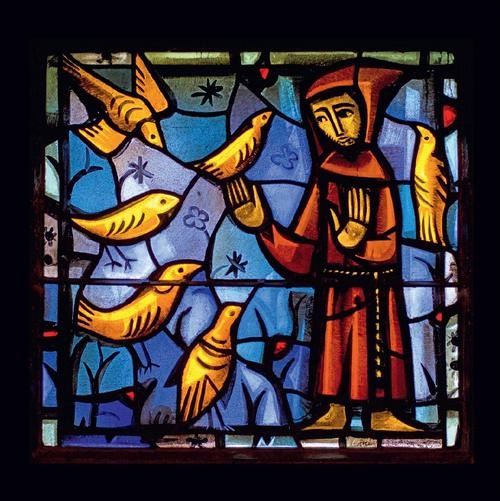







 2pennyblog