Image: The Paris European Meeting (1994), (c) Taizé.
Thirty years ago (as of December 26, 2024 through January 1, 2025), I served at and attended my first European Meeting in Paris as “a permanent” (long-term volunteer) with the Brothers of Taizé. “100,000 Youths Invade Paris for Prayer” was the New York Times headline. “Spurred by an ideal that helped undermine communism in Eastern Europe, more than 100,000 young people have poured into Paris for a five-day prayer marathon.”
A number of volunteers had been working all year long helping to prepare the site (Porte de Versailles) and coordinating with local congregations and families to help receive the many young adult pilgrims. At these meetings, visitors live with local families or congregations to help deepen the relationships built and foster greater reconciliation and unity among the people of varied nations and denominations represented. The opening of the Iron Curtain after communism facilitated many coming from the East for the first time.
Just a couple of weeks before the meeting, a few thousand people still needed housing. I was invited to be with Brother Roger and the younger brothers for a song practice in their home when he spoke of the news. He shrugged his shoulders at this challenge and said in French, “God will provide.” It was among many of the lessons learned while I lived with them; challenging me to radically trust God. And of course, God did provide. As some friends from that time reminded when previously reminiscing, the provision was through the willing hearts and sweat of many – people risking the opening of their homes, and many volunteers and locals churches working long and hard to identify and prepare a welcome of young adults from across Europe primarily, but also the world. Hospitality remains a too often overlooked but important, ancient mark of the Church, but it can prove more difficult when at such a large scale.
At the event, I was assigned to work under Br. Ulrich (originally from Germany) distributing food. I helped oversee three of the large feeding stations which served lunch and dinner to these multitudes – more than 25k people at each area for each meal. (I was told that approximately 110,000 in total attended the event.) It was up early before dawn and in bed after midnight each day. My teams and I were outside in the elements for most of the day. I felt a bit like I was back in the Army, especially as among the food items many NATO surplus meals were served. Each food item had its place in multiple serving lines – bread, fruit, cheese, main course. As stockpiles grew smaller, they were replaced quickly. I became expert at driving a forklift. It wasn’t the Feeding of the 5,000, but it was miraculous in its own way. People cooperated well despite the use of varied languages. Volunteers and those served were for the most part patient and joyful.
The positive spirit of the event spread throughout our work, but it proved fatiguing nonetheless. With multiple languages and abilities, it could indeed be challenging. So, I along with other volunteers there from Taize’ tried to keep the pilgrims assigned to help us in brighter spirits. I taught many the poem Fuzzy Wuzzy was a Bear. Or as it rained, I shared the song, “It’s raining, it’s pouring, the old man is snoring,” along with other silly things – new to them, often as I said, people who knew little or no English. As young adults, many were keen to have fun but also learn or improve their English. Humor helped pass the time, and just as I survived many an Army field exercise with laughter, humor played well at the European Meeting too. I learned about 26 ways to say the word “cheese” as we served meals that week. Taizé is famous for its musical chants, and this ode to cheese almost became a chant on its own repeating the list in a sing-song voice: “cheese, fromage, formagio, queijo, queso, ost, ser, syr…”
True, I did get to see Paris a bit during the wonderful season of Christmas to include walking up the Eiffel Tower or visiting Notre Dame and the Champs de Lycee, but this trip was primarily about service. Yet, there was much joy and many new friendships made too. I became friends with a young woman from Germany who hated her “old fashioned” name, Cordelia. She liked American names, she said. So, I dubbed her Joe. I recall my friend, Petr, who spoke long and lovingly on a metro ride about the superior virtues of Czech chocolate, “the best chocolate in the world,” after tasting some French chocolate. Walking down the street one night with new friends from Lithuania and Poland, the Lithuanian man had to translate my English to the Polish woman in English because she could not understand my accent. She said it sounded like “waw waw waw.” I sounded a bit like Charlie Brown’s teacher if I comprehended correctly, but I understood them both! And what a splendid Feierabend, a phrase a German volunteer taught me for “quitting time,” as we watched New Year’s Eve fireworks explode over the Eiffel Tower from our warehouse rooftop as we closed up services. There are so many memories of wonderful people and conversations.
Unfortunately, the realities of the world were seen too. I noted a greatly increased police presence as the program neared completion. I learned later that a terrorist threat had come in, but – praise the Lord – nothing occurred and everyone had a safe time. If you know the more recent history of France, you know there have been significant, successful attacks since then. I’ve been told that since my time there, there’s a constant police presence on the hill of Taizé now because of increased threats. That saddens me even as I understand the need.
My week in Paris fell only a few weeks after my arrival in France, and it helped shape all that came after. It was a transformative experience for many including me. The managers of Porte de Versailles remarked with great amazement at how little trouble there had been, how friendly people were, and that the facilities and property were left cleaner than before we came. (Pilgrims had helped throughout including the cleanup.) Before the age of email, people left for home with new friends’ addresses and hope for the future. I learned more of what the Church could be, even amidst disagreements, and how peace could be made manifest most simply and beautifully between individuals.
Like most, I definitely left with deeper faith than I had come with, and I still ponder the miracles that are the European Meetings hosted by Taizé. This Paris encounter was the 17th annual meeting for young people organized by the community and was also at that time the biggest. As reported in the earlier cited article, “Organizers turned four austere halls at a Paris exhibition center into copies of the main church at Taizé, with saffron- colored drapes and icons glittering in the light of hundreds of candles.” Yet what makes the meeting is the people and the Holy Spirit, not the spaces.
Each year, the formal meeting is held in a different European city from December 28 through January 1. It’s not usually as big, but I suspect each one is profound in its own way. I’ve only been to one other meeting (Barcelona, 2000), but amidst the divisions of today’s world, I recognize the meetings’ sacredness. It’s import and the import of any efforts like it should not be underestimated. These meetings have the power to change your view of the world and your place in it.
As reported by the BBC, Brother Roger, the community’s founder, shared in Lisbon (2004) with the young people present, “If we are at present undertaking a pilgrimage of trust on earth with young people from every continent, it is because we are aware of how urgent peace is. We can contribute to peace to the extent that we try to respond to the following question by the life we live: Can I become a bearer of trust where I live? Am I ready to understand others better and better?”
As some governments expect war in the Pacific or a more expansive war in Europe within five years, such efforts nurturing trust in God and others, reconciliation, and peace remain beyond urgent. Perhaps beyond the importance of any treaty, I learned that peace must start with each one of us, today. We must seek to be reconciled with God and one another. For, Christ becomes more visibly present when we do. His joy and hope are experienced as real.
Yes, the importance of such a pilgrimage never ends. It continues through one’s life.
On March 7, 1992, I cried out to God through the simplest of heartfelt prayers. “God help me! I cannot take this anymore! Just show me the way out of this!” This lament wrapped in tears was uttered during a time of extreme desperation and loss while I walked my dog, Falstaff, late on a quiet, lonely night. It would be answered almost immediately in the most profound, miraculous way. I discovered an unexpected, long ignored door open wider than it ever had before.
As I shouted to heaven, I came to think of past joys that I had experienced through youth groups, college ministry, and faith-filled friendships. These relationships had planted seeds of faith, hope and love, when sometimes as a youth from a troubled home, I could feel unloved and unforgiveable. That’s pretty common thinking when you grow up in an alcoholic family, but for me, it was a realization still hidden amidst family secrets and a lack of understanding. It was all I knew, and I could not see more.
As a young adult facing new wounds as a police officer and after unhealthy relationships and choices, I had become cut off from the Church, and I had lost touch with many who loved me. Yet, as these former faces and spaces came to mind, I felt a strong urge to call someone from that past time. It was a risk. Would the reject me? Laugh at me? Think I was stupid? Yet, it seemed also something I could not resist any longer.
The first person I spoke to diagnosed my problems quickly and gently. I had meant to call a dear, old friend, but his wife answered. As I told her my story, she spoke of things hidden in my heart that I had not yet shared with anyone. Yet, she knew! Unbeknownst to me, she had experience working with people from alcoholic and codependent families, and through that conversation, she lovingly pointed me back to Jesus, his promises for me, and the Church. I got off the phone with a sense of hope I don’t think I ever experienced before.
No, it was not that I didn’t know God before that moment. I can see how my earlier baptism and faith (if immature faith) made a difference. I recognize in hindsight how God often saved me from myself and the snares of this world while planting seeds all along the way. I remain thankful for the many people who tried to love me on my way. Yet, for me, I chalk this up to a similar experience to that described by Jonathan Daniels in his own life. My faith was synthesized. I encountered and understood everything in a new way.
It was most certainly a conversion of sorts, or a radical deepening of relationship, as my heart tore open and God’s Spirit filled my emptiness. The Spirit’s light scattered my darkness, and a deep joy began. I had much still to learn, but I was on my way again – really Christ’s way. Despite the suffering and grief that I would still have to work through, and their were things that I would need to let go of, although it was only a beginning, I knew everything had changed. I had changed. I sensed that I was free.
As I dug into scripture, Gospel truths invited me to trust Christ in a new way and see promises fulfilled springing forth like the lilies of the field all around me. I began to understand that all things – my losses and sin included – would be used for my good (Romans 8). Although I had guilt, I no longer needed to be ashamed. I was forgiven, and I could do better in the future by God’s help. As Christ’s peace grew within me, people even began to see my life and daily attitude change. I became committed to never turning back. More importantly, I came to understand that Jesus would never let me go.
This experience – starting particularly that night in March – has taught me to trust God as I never had before, a trust that I am still learning about today. As humans, we can never know enough or trust enough. Doubts and struggles can remain…do remain to tempt us. Taking advantage of the disciplines of Lent (happening at the time), I was helped into this new start and ongoing sanctification of my life. The gifts of being Church with others has helped me stay on the path since then. So as I think of that time throughout the year, but especially on this date and during Lent, I give great thanks.
Perhaps someday, I will share more details about the experience. I have with some, but for now, I most often use the Psalmist’s words from Psalm 30, my annual “scripture of the day.” I had been ill, lost and blinded in the darkness of my own sin and the powers of this world – dead in a sense. I just had not recognized it. Once I more clearly saw the light, even as I might falter or stumble at times, I have not wanted to go back. I won’t go back. I trust the Lord will help me on my way, and the gift of his joy still growing in me will never die.
Psalm 30 follows (NRSVue translation):
1 I will extol you, O Lord, for you have drawn me up and did not let my foes rejoice over me. 2 O Lord my God, I cried to you for help, and you have healed me. 3 O Lord, you brought up my soul from Sheol, restored me to life from among those gone down to the Pit. 4 Sing praises to the Lord, O you his faithful ones, and give thanks to his holy name. 5 For his anger is but for a moment; his favor is for a lifetime. Weeping may linger for the night, but joy comes with the morning. 6 As for me, I said in my prosperity, “I shall never be moved.” 7 By your favor, O Lord, you had established me as a strong mountain; you hid your face; I was dismayed. 8 To you, O Lord, I cried, and to the Lord I made supplication: 9 “What profit is there in my death, if I go down to the Pit? Will the dust praise you? Will it tell of your faithfulness? 10 Hear, O Lord, and be gracious to me! O Lord, be my helper!” 11 You have turned my mourning into dancing; you have taken off my sackcloth and clothed me with joy, 12 so that my soul may praise you and not be silent. O Lord my God, I will give thanks to you forever.
Amen.
Taizé chant, English translation: Lord Jesus Christ, your light shines within us. Let not my doubts nor my darkness speak to me. Lord Jesus Christ, your light shines within us. Let my heart always welcome your love. (Inspired by the writings of St. Augustine of Hippo.)
As his official biography reveals, “Hendro Munsterman is a Religion journalist and Vatican correspondent in Italy, The Netherlands, and France. After having studied and taught theology and religious studies at universities in The Netherlands, Switzerland and France, he became a full-time religious journalist and analyst for the national Dutch daily, Nederlands Dagblad.” Yes, he’s a smart cookie, as we might say in the United States, with a heart for God and others. I am also blessed that he is a friend. We served together in France as volunteers with the Ecumenical Community of Taizé in our young adult years.
I’ve enjoyed listening to or reading his reports and ponderings over the years. Yesterday, I came across his Facebook post about a recent television panel he was invited to join. As a “Vatican Watcher,” Hendro was asked to comment on the current Pope’s legacy as his health has recently declined. (For those that have not heard, Pope Francis suffered a polymicrobial infection with subsequent pneumonia in both lungs which forced him to remain in the hospital.) The short clip from the panel discussion got me thinking.
In the clip, Hendro provided some helpful analysis of the current Pope Francis’ legacy. Hendro mentioned how Pope Francis sought to turn the Vatican’s face outward. He is one who wants the Church to go to the people where they are, not wait for others to come to the Church. Pope Francis is a “pope of proximity” where people want to touch him in his approachability, yet he exemplifies the desire for the Church to go into the world and to touch human realities and consider those on the peripheries. This is at its heart all a great witness for a Savior who asked us go and make disciples of all nations, baptizing them in the name of the Father and of the Son and of the Holy Spirit (Matthew28:19) – even if the Devil can be in the details of political policies and realities.
In listening to him speak, I thought of the many conservative Roman Catholics whom I know personally that hate (yes, hate) this Pope. I have seen them post about it, and in some cases, I somehow ended up on an email chain with argumentative, unfriendly articles attached. Sometimes, the complaints surrounded his openness to relationships with Protestants or the fearful perception that Pope Francis was reinterpreting dogma or traditional practices. His restrictions on the Latin Mass is also unpopular in that camp, as is his Franciscan, Argentinian approach to liberation theology, which they claim has created confusion. They often claim he is too political, sometimes as if the Church should never interact with business or the world. Speaking of business, Pope Francis has sought to reform the Vatican bank, the Institute for Works of Religion (IOR), to make it more transparent and accountable. This was not always popular with movers and shakers in the Vatican. The list can go on much further, but whatever he has done or failed to do, the posts, articles and emails are often very ungenerous. In fact, some can demonize him as if he is an antipope or antichrist of some sort seeking to kill the Roman Catholic Church.
This is all in the face of a broad popularity – 75% of United States Catholics see Pope Francis in a positive light. (It is much harder to gage any sure Protestant view of the Pope due to historic differences and in some traditions animosity, yet a Barna study found that 35% of respondents thought Pope Francis actually improved their view of the Roman Catholic Church.)
Yet as with all of us who believe in Jesus, imperfect as we are, God can still always use our humble, sin tainted witness for good (Romans 8:28). Martin Luther’s caution regarding the commandment not to give false testimony – number eight as Lutherans count them – comes first to my mind: “We should fear and love God so that we do not tell lies about our neighbor, betray him, slander him, or hurt his reputation, but defend him, speak well of him, and explain everything in the kindest way” (from his Small Catechism). Then in the case of Pope Francis, I must say that his hoping to turn the Vatican’s face outward, having the Church go to the people outside the walls, is admirable. All Christians should agree that this is needed in a world with so much pain, suffering, and often times ignorance.
Sure, Martin Luther was no fan of Popes. (He called his contemporary Pope the Antichrist in 1520.) Yet, he, too, would likely agree that this is the way the Church should seek to live out the Gospel. He once argued, “Anyone who is to find Christ must first find the Church.” He goes on to say the Church is not a building but us in the flesh! Luther wrote extensively on vocation, God’s call in our ordinary, day to day lives. Our vocation is ultimately for the glory of God and the service of others. To Luther, even a father changing a dirty diaper becomes holy when done in love. Yet, this is never about earning merit for heaven. “God does not need our good works, but our neighbor does,” quipped Luther. The Church, you and me and all who believe, need to be active in the world to meet people, love them, and share our love of God with them through word and example.
Then, Martin Luther taught a great deal about what we call the Theology of the Cross. Yes, this understanding holds that we can never save ourselves. Only Jesus through his cross and resurrection can do that. Yet, it also reminds us that God often shows up not in and through power but in places of weakness and suffering. We remember that we were saved for a purpose. As Jesus told his disciples, “If any wish to come after me, let them deny themselves and take up their cross and follow me. For those who want to save their life will lose it, and those who lose their life for my sake will find it” (Matthew 16:24-25). Our lives are not just about us; our security and happiness. We are sent to this time and this place to love as Jesus loved. This often infers sacrifice and suffering alongside or for the benefit of “the least of these” (Matthew 25:45).
Finally, Martin Luther thought of sin as ultimately our being “curved inward on ourselves” (incurvatus in se). Looking out for ourselves first can keep us from caring for the neighbors and world around us. It can lead to greed. It might encourage indifference to the suffering of those around us. We might abuse employees or others close to us. We might hear ourselves saying, “That’s not my problem” when Jesus says, “Love one another as I have loved you” (John 13:34). When our eyes are on ourselves, we can’t accurately see the world as it is, nor our place in it. We tend to take our eyes off of Jesus and lose our way, hurting ourselves, others, and our world – intentionally or not. So despite some profound theological, polity, and worship differences, I think Pope Francis is taking his stand not too distant from us Lutherans. We are indeed asked to be Light bearers to the people of this world.
When Lutherans are baptized, they are often presented a small candle lit from the Paschal candle (a much larger candle in the sanctuary representing Christ’s own light). The lay leader giving the candle to the newly baptized quotes Jesus telling them, “Let your light shine before others, so that they may see your good works and give glory to your Father in heaven.” (Matthew 5:16). We have to fight by God’s help our human tendency to be curved inward on ourselves. Look to Christ in his examples, teachings and promises. He’s the Light of the World (John 8:12). We can ask for his Spirit to guide us and correct our course when we are wrong (John 14:16 and John 16:7).
As old Marty would repeatedly say in his catechism, “This is most certainly true.” We were created and called to cooperate with the grace offered us to help fulfill God’s will for the world. Yet if we are in the habit of not doing so, our lives will likely become similar to an old, ill-used wick bent inward and broken. Our light, really Christ’s light, can appear as if snuffed out. At the very least, we won’t shine with the abundant life Jesus promised and intended for us (John 10:10 and Romans 5:17). What a loss for us and our world!
If you wish to see the video of the full panel conversation at France24 in English, click here– “Which direction for the Church? Pope’s hospitalisation puts prelates on stand-by.”
This detailed post evolved from a simple Facebook exchange on February 26, 2025. I want to thank Hendro Munsterman again for sharing about his panel discussion.
The below sermon was offered at Christ Lutheran Church in Fredericksburg on February 23, 2025. It proved a difficult sermon for me to preach on several levels, but it was received extraordinarily well by people I know as left, right, and in between. I don’t post all my sermons, but based on that response and the many people that I have already spoken with because of my sermon at our two services, I suspect it might resonate with many others as well. So, here I post. I hope it somehow blesses you. If you prefer to listen to the sermon, a recording of our worship service follows the below text.
The woman that we meet today in Luke’s account proves a bit of a mystery, and everything about this meeting seems a bit unorthodox for that day. Here, we have an unescorted, unnamed woman of low rank and reputation barging into a high-ranking citizen’s home, a rabbi’s home, to approach a great religious teacher, Jesus. Then, she unceremoniously baths his feet in perfumed oils and her tears…drying them with her hair…kissing the feet that Peter would later say he was unfit to wash. How dare she presume such a scandalous interaction?
Well, she does so because she is thankful beyond words. Jesus commends her and identifies her actions as a sign of her gratitude for being forgiven of many sins…many sins…potentially very grave and serious sins…yet sins which are never explicitly named in Luke…any more than the woman herself.[i]
As I have shared before, when I was a teen and young adult, I often felt unlovable and unworthy. I imagined my sins were too great even for the power of the cross. So, as I came back into the Church, finally trusting in the forgiveness of all my sins, it proved easy for me to imagine myself in the place of that woman. Thinking of it, I can still experience a joy that can bring me to tears at times.
This realization of forgiveness changed the direction of my life, but I had much still to learn. You see, I could still play the part of the Pharisee. Sure, I finally trusted Jesus’ promises, and it had changed my life in remarkable ways…ways that others even began to notice. Yet, notwithstanding Paul’s encouragement to forgive one another, as God in Christ forgave us (Ephesians 4:32), it proved terribly hard to put forgiveness into practice.
I had been through a lot of traumatic experiences in my family of origin. I have experienced much trauma later through my police service. Such wounds of the world can last. The sin and unfairness we face can warp the way we look at ourselves and others. Despite my best intentions, I could judge people harshly. I could objectify them. I still could return hatred for the hate that I encountered on patrol, because I was prone to only see the sin and not the struggling, wounded person underneath…a person who through grace could be forgiven by Jesus too.
This past week on social media, I expressed to a friend that I was really concerned with the immediate cessation of all aid overseas. I suggested that perhaps some people who urgently needed help might suffer and die. A person unknown to me chimed in, “I chalk that up to [stuff] happens.” (Now, he used a different word than stuff, but we are in church.) Stuff happens? Well, my first response was, yes, stuff does happen to the just and the unjust alike just as Jesus taught (Matthew 5:45). That’s partly why God calls us to care for one another, because stuff happens.
I came across others who called government workers vermin and parasites. And yet although some government workers might fail in their duties, I look around here in this sanctuary, seeing current and past government workers that I know well, and I see people who are nothing of the kind. They are people who work hard and honorably. I don’t see vermin… I don’t see parasites, no matter any failings that might have…No matter any failings, I see Children of God, imperfect but loved siblings in Christ whom I must love…who I do love.
Then, I encountered others who thought anyone who supported the President at any level must be white trash and racist, ignorant or cruel…perhaps even a Nazi. And yet I see people here that I know have voted for president Trump…who are supportive of some of his policies…and I know them differently. They are nothing of the kind. These people are prone to generosity and love, who just want what they think is best for their country, and so they voted that way. No matter any failings, I see Children of God, imperfect but loved siblings in Christ whom I must love…who I do love.
You know…y’all are messed up! …We are all messed up in our own way. And yet I love you…and I hope that comes across…I love you. And I hope you can love the mess that is me. For, we are only human even at our best. We fail often. We can be selfish or shortsighted, and we always need one another’s love and forgiveness. We can also just be plain and blindly wrong at times.
Yet as tribal, sinful humans, we can be awful to one another…truly, abysmally awful. We can close off our hearts…And those we should love, we push away…We judge…We coldly condemn…We see evil, but we fail to see evil at work within our own hearts. And those who hate us, we might tend to hate all the more. This might surprise many in the world, but we can actually say we think someone or something is wrong without hating or objectifying. In fact, the Bible says for us to defeat evil with good (Romans 12:21), not with name calling or insulting memes.
Not doing good with our words and actions can have unintended, deadly consequences. For with such sin, as Luther teaches, we can become murderers killing peace, relationships, and in some cases, killing the spirit of others. This sin is like a disease that can spread from person to person. Perhaps this is partly why an eleven-year-old girl died by suicide in Texas after being taunted over her immigration status by other children. We can become murderers, Luther argues, through the simmering anger, hatred, and contempt hidden in our hearts, and others like our children might just pick up on that and go further than we ever intended.
So, Luther states passionately in his Large Catechism, that “Thou shall not murder” goes way beyond actually stabbing someone. “God wishes,” he writes, “to remove the root and source by which the heart is embittered against our neighbor…[urging us] to commit to [God] the wrong which we suffer. Thus, we shall [put up with] our enemies to rage and be angry, doing what they can, and we learn to calm our [own] wrath, and to have a patient, gentle heart, especially toward those who give us cause to be angry, that is, our enemies.”
Thus, this week, I thought of my own hard and terrible lesson about this sin that works within me. As a police officer in the 1980s and 1990s, I told you before that my heart had grown hard. I was on bicycle patrol one night with my partner and close friend, Willie, when a burglary of an athletic store occurred. The thieves had gone through the roof, stole a lot, and they had successfully gotten away. Hours later in the early morning…hours before any commuters had awoken…Willie and I saw a young male walking with an athletic bag. His clothes were covered in black pitch and tar, and the bag was stuffed to the brim with items. In the context of the recent theft, this seemed like reasonable suspicion for a stop.
Yet soon after we began to speak to him, the suspect got nervous and began to fight us with all his might. He was big. He was strong…very strong…and it took all we had to try to contain and restrain him. And during the fight, the suspect reached for my weapon and tried to wrench my weapon multiple times out of its holster violently. I was fighting with all my might to keep control of it. It came to my mind that if I lost this fight I might die. (I can remember this moment so unbelievably clearly.)
He broke away almost as quickly as he had begun to attack us, and a pursuit by foot and bicycle began. We had already called a Signal 13 which in Alexandra meant an officer was in dire trouble, and units were screaming their way toward us from all over the city. As we sought to cut off and corner the man, Willie and I were separated during the chase, and in the midst of the pursuit my radio went dead just as a large bang could be heard echoing through the darkness. (I remember that clearly too.) A friend told me later that with no one able to reach me, he feared that I had been shot and killed.
So, it was chaos. There was adrenaline pumping, and there was fear. And there was righteous anger, too. After all, he was a thief. He had fought the police. He had even fought for my gun likely to use it against us. This man was caught hiding in a dumpster. (That was the loud bang that people heard.) Yet to arrest him, a police K9 had to be deployed. And as the man fought more and more, the dog bit him more and more…He was damaged pretty badly…until he submitted.
So when I came up to the group, there he was, my enemy, on the pavement in cuffs, profusely bleeding and waiting for an ambulance. He was in pain…that’s for sure…but what I remember very clearly was looking at his eyes and seeing a lot of anger and hatred. (A look that I will not forget…a lot of hatred.) And as I surveyed him in all his suffering, I thought in the depths of my heart, “Good. I am glad he is hurt. He deserves to suffer. He deserves to die. He is trash.” I am ashamed to say it. It is ugly, but it is true. I would have been happy in that time of my anger if he had died.
Yet it was at that very moment, like a voice in my head, I heard the words, “How can you condemn him, after all that I have forgiven you? He could be with you in heaven someday.” Whether that voice was the Spirit of God, or my mind’s synapses had finally made a new but powerful connection between scripture and my life[ii]…I knew I was a murderer…a sinner…a person who must repent. And although I know that the use of force was necessary, and the arrest was ultimately for the community and even the man’s safety (stopping him from harming himself and others more), my heart immediately softened. I saw myself in him, and I began to have compassion for him…to love him…wanting him to have the love and forgiveness that I had myself received. Now, this did not mean that I regretted any consequences for him that he faced. (Consequences can be necessary or unavoidable.) Yet, I recognized that more was going on in that situation…something eternal.
Years later, I have no idea what became of this man, but I still pray for him when he comes to mind. And he often does whenever I struggle to forgive someone, or whenever I start to objectify someone, or whenever I call someone a jerk. I catch myself thinking of that moment and of him. This was a life-changing event for me. It is one still difficult to share, especially in the context of what happened in Virginia Beach this past week.[iii] But it is also difficult to share because I am ashamed of my sin. And yet at this time, where people are failing in love so often and to such a great extent, painting groups of people with a broad brushstrokes with little or no discernment of their unique differences or situations, I see so many strong parallels.
You likely have seen it or experienced it yourselves. We tend cut off from one another in judgement and hate…where an adult child might not wish to speak to a parent due to disagreements over hot button political issues of our day. And after arguments, longtime friendships have died. I thought it important to confess my sin once again…this time to you. To acknowledge that I struggle at times to resist becoming the Pharisee of this tale, the one saying, “Doesn’t Jesus know who these people are, these sinners?”
Why, yes…yes, he does. They are the people he has come to love and save. Jesus taught us in his Beatitudes, as children of the Kingdom of God, saved-sinners, that we must love our neighbor as ourselves, even our enemies. In fact, Jesus had just shared the Beatitudes in Luke’s account immediately before this dinner. As with the women in Luke, it might seem sometimes a mystery how others have found themselves struggling in sin or on another political side opposed to us. Yet the mystery of Jesus’ suffering, death, and resurrection for our sake, for all of us, points us only toward love for those whom we might otherwise judge without mercy or objectify.
My brothers and sisters, we live in a time of trouble. There are wars and rumors of wars – but not just overseas. These wars are happening in our communities, congregations, and within our families. People are turning against the ones they should love, forgive, and be gentle toward, and in their hearts, they start to think of others as trash…disposable. Our hearts have divided allegiances between Jesus’ way and the world’s way.
Yet, we who have been forgiven so much need not give in to the malevolent spirit of these times. By God’s help, whatever others say or do, we can be moved by the Holy Spirit toward patience, compassion, and forgiveness for those who might not deserve it in the eyes of the world. We can seek to protect and speak up for those who are maligned, objectified, or threatened even when those people are wrong. For we have been forgiven all our sin, because of what Christ suffered on the cross and nothing else…proving that no one is trash to Jesus, including you or me. Amen.
[i] Jane Schaberg, “Luke,” The Women’s Bible Commentary, ed. Carol A. Newsome and Sharon H. Ringe (SPCK, 1992), p. 285-286.
[ii] I know what I believe, that it was a theophany of sorts, but I will leave it up to you to decide for yourselves.
[iii] Two Virginia Beach Police officers died after being shot during a traffic stop the Friday night (February 21, 2025) before this sermon was delivered. The sermon was already written, but many police friends and I had been reflecting how such a loss impacted us. Losses from our own departments came back to haunt us. I lost four colleagues during my six years as an officer – two from being shot, one from suicide, and one from a unknown, preexisting heart condition after a foot pursuit. The death of any officer resonates through the police community plus their families in a way hard to describe. The grief sticks with us for the rest of our lives.
I am not sure of the original source of the above artwork. I found it at the Holy Smack blog. If you know the artist, please let me know. I’d like to give proper attribution.
If you would like to hear my sermon or watch our service, the video can be found below. The Gospel text and sermon begins at about the 17 minute mark.
As an ethicist from Grove City College, a conservative, evangelical institution, opined recently, a consequentialist “holds that good ends, however they might be defined, can justify the use of unethical means.” As he reflects on recent administration’s behaviors, he suggests that sort of thinking is a utilitarian approach, but not truly Christian. I agree, and I’ve been suggesting the same over the last few weeks. “I don’t agree with what’s happening (or all that’s being done or said), but…” isn’t a great approach to Christian ethics.
I’ve spoken or written to a number of Christians including pastors in favor of the administration’s ultimate goals about current events. I, too, want safety, prosperity, and justice. I am sensitive to how people long for a government that reflects their values, American traditional values included. I love and have served my country, making an oath to defend the Constitution. I have been injured doing so at times (as a police officer), and I have had several near death experiences. I say this as evidence that I love our nation, and I admit that I am supportive of some (not all) of the stated goals. Yet, I also know there is no justice without mercy (Micah 6:8). I remember that Jesus came to call all people to himself, not just Americans (John 12:32). We live in a political world where good people might not agree, but we don’t have to hate one another or demonize. Jesus calls us to be better than that.
I have come to understand from scripture that there is no “me first” sentiment overruling love of neighbor or enemy, but we are told to follow Jesus which means we must instead cary a cross (Matthew 16:24). Sacrifice is often necessary. I’ve sought to apply Christ’s Beatitudes to whatever I should do or not do, especially in difficult situations. I have of course failed at times, sometimes abysmally so, but I try to repent and make amends for my sin, turning to God so that I might live (Isaiah 45:22) – to live abundantlynow as well as eternally as Jesus promises.
As Christians, we need to have our yes mean yes, and no mean no (Matthew 5:37). We should not explain away sin, rude behaviors or hurting people – intentionally or not – because we think the goals are “good.” We are to defeat evil with good (Romans 12:21) whether a liberal, a conservative, or an “anywhere in between” Christian. Humbly, we should listen and consider where we might be wrong, because no human is always right. We should repent and show others grace if they are willing to change. For as Jesus says in Mark 8:36, “For what does it profit a man to gain the whole world and forfeit his soul?”
This doesn’t mean we must go to war, culture war or otherwise, but we are called to decency – to be human in the best sense of the word, loved and changed by God. St. Peter himself argued, “but as he who called you is holy, you also be holy in all your conduct” (1 Peter 1:25). We are to love, not objectify, demean or abuse. Meekness was a word used to describe both Moses and Jesus, so I expect it does not mean what much of the world thinks. It takes courage, and it’s hard.
So perhaps like Sophie Scholl, Christian martyr of WW2, we must grow to understand that, “Just because so many things are in conflict does not mean that we ourselves should be divided” (as quoted in Seeking Peace: Notes and Conversations Along the Way, 1998, by Johann Christoph Arnold, p. 155). Or as with Dietrich Bonhoeffer, we can try to just be decent in the face of evil, as Victoria Barnett, a Bonhoeffer scholar, points out so well. Or even as Mother Teresa, Br. Roger of Taizé, and so many others who sought to live simply and at peace demonstrated through the simplicity of their lives, we can seek to do all things with great love. That’s often how the world experiences change; ultimately experiences Jesus.
A hero of mine, Jonathan Daniels, closed his valedictory address at VMI with this sentiment, one which I share, “I wish you the decency and nobility of which you are capable.” By God’s help, we are all capable of such a life no matter how impossible it might seem.
This is me in Taizé shortly after my arrival, perhaps January 1995. A new Lithuanian friend who was a former draftee in the Soviet Army took the photo for me. I finished my own US Army commitment in 1994. Enemies can become friends.
“Ah, Taizé, that little springtime,” remarked Pope John XXIII about the ecumenical monastic community nestled on a hill in Burgundy, France. Being there definitely was a springtime experience for me. I have recently been thinking about my time there a lot. For, I moved to Taize’ in France on December 5, 1994 – 30 years ago!
I first met the brothers escorting Mary Washington College students to their first large meeting ever held in the US at Dayton University. Several thousand young adults from across the US gathered across denominational lines. As part of “the Pilgrimage of Trust,” we stayed with local families where conversations would continue.
I had no idea how my heart would open when I first volunteered to go as a chaperone and participant. My experience changed the way I looked at life and the Church – how I understood myself as well. People sharing their faith, positive interactions with people who were previously “other” to me, and a more intimate prayer life energized me.
I read much about the Ecumenical Community of Taizé and from Br. Roger, the founder, after that. I continued to pray with chants at home and with friends. I went to a few smaller regional meetings. It slowly became a part of me. I’d even catch myself singing their chants (ultimately prayers) as I drove to emergency calls or in quiet moments of my day. Like the prophet, Nehemiah, my prayer life and work life merged. I found myself praying all the time. As I found more peace, I became more patient and discerning when working with others or arresting people. I discovered peace even when amidst the thick of things. Even my sergeant noticed the change. He said during my review, “I don’t know what you are doing, but keep it up.” I think it was more what God was doing in my life, but his observations affirmed for me that I was in a better place and heading in the right direction. Whatever my future, God was with me.
All the while, I began to wonder if I was being called to become a brother. When younger, I had investigated becoming a priest while Roman Catholic. Yet like many young adults, with unaddressed trauma, grief and sin from the past, I had wondered far. I finally became open to radically trusting God after a crisis. Thanks to seeds planted in my past, faith-filled friends, and intentional spiritual, mental, and emotional work, I found my way back home. The Dayton meeting came when the time was right and catapulted me forward toward a new, radical trust in God. Now, I also understood the Church was more than my denomination. I came to believe my past errors need not hold me back. I was and remain forgiven and free. I became determined to address the issue of serving in the Church once and for all wherever God might lead me. For God had been faithful to me, and again, I trusted the Spirit would set me on the right path.
During this time of growth, I had come to know Br. John. Br. John is one of the community’s American brothers, and he is often asked to go abroad. He had introduced me to a Croatian immigrant in Alexandria who hoped to have a meeting in the DC region where I then lived. Certainly, I would help! It proved such a special event. Only about 100 attended, but the impact was similar to my time in Dayton. As I spoke with Br. John during a break, I tentatively told him of my vocational search over the years – on and off. My friend Tony and I would be visiting Taizé in France for the first time, and I wondered – although I can’t sing well or speak French – maybe there was still an answer for me there?
Brother John did not laugh at me as I feared. I was not rejected, but instead taken seriously in my search. Although I had not been before to the community, Br. John said that as I was in a different place than many in my search (I had done a lot of work regarding my repentance, healing, and discernment) perhaps I should spend a week in silence. I still would go to the three daily prayers. I would have moments of conversation. Yet mostly, I would spend time in silence or speaking with my future contact brother, Br. Francois, who would serve as a kind of spiritual director. (He was an early brother, and much later, I learned he was also a Lutheran pastor.)
My contact brother, Brother Francois
Of course, most of my time was indeed spent meditating on scripture, praying, or going for walks. Yet, I was invited to eat with Br. Roger and the brothers once during this first visit as well. A brother who did not know me introduced himself and said, “You are in a week of silence aren’t you?” I said yes, but asked how he knew. He said that people experiencing a week of silence often had a glow about them. (Although I did not understand it at the time, I would later see that glow on other faces.) My growing trust and peace showed.
As my week closed, I told Br. Francois that I thought perhaps I should come for a longer time for more discernment. This would necessitate my resigning from the police department. My eyes and heart had opened wider, so I understood it was time to take a leap of faith. I felt pulled there. He said after a short time of discussion, “We cannot know yet what the answer will be, but we have similar hearts. You must come.” And so, long story very short, I resigned from the police department and came. I began my service as a long term volunteer, “a permanent” in Taize’ parlance, primarily working among the campsites and with meeting preparations.
Upon arrival, I continued to meet with Br. Francois, and there were many, many more important friendships and memories made during my time there including at the Paris European Meeting with over 100,000 young adults!
A group photo of the male Permanents at the time from all over the globe. Br. Mathew, a “young brother” in charge of caring for us, is now the Prior of the community (far right). Great memories!
Yet after about seven months, it became clear that I was not to stay, but I never doubted that I had been called there. I came to that little hill, and I saw Christ more clearly than ever before. I just now knew he was calling me to something else. Back to the valley for me! This led me to other people, and thus more new understandings of God’s love, but that’s for another time to share.
I have not been back to what I still consider my spiritual home, but my wife, Kristine, and I did make it to a European Meeting in Barcelona. (It was the last time I saw Br. Francois. He died a few years ago.) I also was able to welcome Br. John and Br. Emile for a meeting at my church in the Richmond area in 2019. I hope our paths will cross again, but as I have written to my many dear fellow volunteers now across the globe, it’s ok if I don’t meet them again. I still sense the deep, living communion which we share any time I hear Taize’ chants, see a photo, or think of them. The Spirit works this way among the Church, a communion of saints. That communion spoken about in the creeds of the Church is tangible.
Yes, we are together still. It’s hard to explain, but it is true. I trust – thanks be to God – that it will be so forever.
St. Isaac the Syrian knew what he was talking about. For the Orthodox and many other Christians (sadly not all) humility isn’t docileness. It’s an understanding and deep trust that all we have comes from God. We are sinners in need of God’s mercy and direction. Yet because God is love and loves us, we can find peace. We can be nonanxious as others rage. We can rest in Jesus even as we work hard for justice, mercy and truth. We can be patient with those who don’t see the world as we do. We know who we are but also whose we are. This doesn’t mean we don’t struggle with fear at times or never fail or fall, but we find the strength in God’s Spirit to keep trying; to seek to love as God loves us; to keep moving forward knowing we don’t walk alone. Some people will see Christ in us and want the peace we have. Many more might reject us as they do Jesus and his message through word or deed, even as they might call themselves “Christians.” That matters not. Embraced by Christ, we can do no other than cling to Christ and our call nonetheless, even as we fight the interior whisper of demons telling us we aren’t good enough, don’t have the strength, must give up. Yet how can we give up when we have everything in Jesus who has already made us victorious? In that shared victory, we ought not judge or puff ourselves up. We must love the other. We should forgive. We should nurture peace. We do this from a God-given humility, not out of our willfulness. “What is hell as compared with the grace of resurrection?” St. Isaac once asked. Nothing. We can always choose to live in hope by God’s help. And through the power of his Spirit, God will.
The below sermon was offered at Christ Lutheran Church in Fredericksburg on February 2, 2025. It is definitely much longer than my normal sermon, because the topic was immediate, adjusted last minute to a high profile current event on the fly, and about an issue prone to nurture strong disagreement. Although our denomination, the Evangelical Lutheran Church in America leans politically liberal, multiple surveys suggest that the membership leans toward the center. Indeed at this congregation, we have strong supporters for President Trump and those adamantly against him. This sermon was intentionally crafted so that all people could hear and reflect about these things without shutting down. Maybe it would spark conversation? I cannot change Elon Musk’s mind with my sermon, but I might be able to help my congregation see things in a new way.
In my time with Brother Roger and his community in France, the Ecumenical Community of Taizé, we often had people come who lived in severe conflict with one another in their home country or region. How can we speak to one another with open hearts if we call one another names or shut down? So in small groups, people were asked to share their experiences of faith, but not in a way of debate or even to convince. Listen for the Spirit in what others say. I also learned and came to believe that the Spirit is calling all people and within them even before they might realize it. We should treat them with respect, even if we struggle to like them or do not approve of what they do or say.
This was modeled in Brother Roger’s own history. Before the community formed, he risked his life to help Jews escape persecution in France. As a result, he was narrowly escaped arrest by the Gestapo. After the war, he offered care and hospitality to German prisoners returning home. This was not popular with some of his French neighbors who had suffered so much and were rightfully angry. And living in one of the most Communist areas of post-war France, amidst people who sometimes overtly hated Christ and his Church, he and his brothers helped their neighbors no matter their political leanings. They even were able to start food cooperatives which benefitted all. In time, authentic love at work in his life and the lives of other brothers earned trust and effected change. This witness has impacted the way I try to address conflicts of our day and in my life. It shows in this sermon.
Some pastors and others will likely say I did not go far enough to condemn or fight what they perceive as evil. (They might be right. At the very least, it is a mistake to have stripped the funding in the way it was done – too carelessly and with false accusations – likely a sin, certainly a shame despite any intentions.) Yet, like the brothers, I feel a profound call to try to live as an agent of reconciliation. (See 2 Corinthians 5:17-20.) If we wait for people to be perfect before we seek to reconcile, reconciliation will never happen. In reconciling, sometimes people change or see their wrongs more clearly. It proves a give and take process, requiring ongoing forgiveness and patience along with self-awareness.
Further, this sermon was shared with people whom I know well and deeply love. Sometimes a pastor can do more good using the gentle nudging of a staff rather than the full force of a rod. And I take Jesus’ mandate for us to love one another very seriously. I want my congregation to as well. I think this approach might prove the same for you in your relationships even if not a pastor.
The text of my sermon follows, but I will also include the YouTube link at the bottom of this post if you prefer to watch all or part of the service. I have tried to adjust the original manuscript to better reflect what was said balanced with clarity. Is a sermon ever truly done? I am confident I will write or speak more about what appears to be bad policy if not illegal as it impacts a nonprofit I know to be honorable. This is only a start of a conversation.
It has been a stressful 2025 for many of us. There’s a lot going on in the world – wars and pestilence – but there’s been a lot of change, too. Whether you like change or not, whether good or bad, our recent political changes are still change. And as any health practitioner will tell you, “Even good changes can leave you feeling drained, out of control, and depressed.”[i] And as our national administration does change things, we have seen many fast and furious changes making some neighbors of ours worried about the security of their jobs, what might happen to their medical aid, or even the legality of their marriage. And much as it was when I lived along the Arizona border while in the Army, a lot of people are rightly afraid of some of the violence or other negative issues that can come with unbridled, unsecured immigration, and perhaps at the same time, we might be concerned about our friend, or neighbor, or fellow employee, or fellow student who has a questionable immigration status – someone that might have been here for many years, who is a good worker and kind neighbor, but at risk because of past choices they made. (Or maybe, adult relatives made a choice for them.) And I know of friends that have already had their adult child lose their government job suddenly as a result of different government priorities. It happens. My uncle used to be an executive with Lincoln-Mercury, and he had to lay people off at times… regrettable, difficult, but it happens.
Yet coming in this morning (I’m going off text now, so hang in there), I saw a tweet from Elon Musk, and it talked about “the Lutherans.” Oooo, that tweaked my attention. Basically, he was complaining about all the money going to Lutheran parachurch organizations for their social services. Yet, he never explained what this money went for. His main concern was probably immigration, because there are elements that do help with refugees and other immigrants including our allies from Afghanistan. (Some of these live right here in Fredericksburg.) Yet, he lumped all the services together. The thing that I would like you to know…that I know because I used to be on the board of Lutheran Family Services of Virginia (now enCircle)…is that Lutheran Services of America, the overarching organization (which is kind of like the United Way) helps one in fifty Americans with all different kind of things. (This is a correction from the recording. I said, “one in five,” in error. Still, this is a staggering, impressive number.)
And so, when you look at a group like Lutheran Family Services of Virginia (now enCircle), they have some programs that help refugees and immigrants, but they also facilitate adoption and foster care. They help with counseling services which some people in our community have taken advantage of. They help with schools for at-risk youth. They have helped with kids who are on the spectrum. They helped with elder care. They have houses for folks with intellectual disabilities and help them live independently or in community. So, there are a lot of things that go into these nonprofits…these parachurch organizations (started by the Church, but not the Church). And they receive grants from the government, yes, but also from industry and other nonprofit funds, and then, they get funding from good people like you who donate in support of what they do. Yet as funding streams change, so does their ministry or outreach. Even in the nine years that I was a board member, Lutheran Family Services did that.
And so, funding streams are changing because political priorities are changing. And that really is “fair,” right? That’s the way our government works. That’s the way the world works. Yet, I do hope that we are concerned that with doing things quickly…lumping all things together…that maybe, some people will be left behind or hurt unintentionally. And that, I think, is something that we can certainly speak about as Christians. We want to do things “smart.” We want to do things in a way that doesn’t hurt others and make things worse.
So, with all these political changes, right or wrong (as you see them), good or bad (as time will tell), I hope we can recognize that this is a stressful time for many people. During this period of change, mistakes might be made, and there are things people will have to adjust to, but some people might even be afraid. (Whether you understand why or not, they might be afraid.) And that is no secret. You can just look at social media posts and see that. Yet, whenever we strive for justice and peace, to do the right thing, whether left or right in our political leanings, we as Christians are supposed to approach others empathetically…care for them…offering mercy and help as we can (as all the prophets say)…forgiving when they make mistakes…and try to love and help them as they are…even as we see them as totally wrong, or sinful, or whatever the problem may be. Even when I was a police officer, long ago in the 80s and 90s, and I would arrest people…one of the things I learned as I came back into the Church again…started to really believe this Jesus stuff was true…one of the big challenges I had as I arrested people for violations that were serious remained: How do I treat this arrestee as a human? Do justice, but how do I show mercy in the way I relate to them. That’s a kind of love and a kind of Christian witness, too. So, I know it is hard…but with God’s help, we can do it. We can do it and change becomes possible.
These are all huge issues that we are talking about nationally and locally…important issues! You should care! And I am not going to tell you today how to vote or think. I am not going to dissect policies or waste your time during this sermon pointing fingers at those “bad people.” You can fill in the blank for who those bad people are. Yet, I do believe today’s sacred stories perhaps ask us not to point at others, but instead, maybe point at ourselves. Where am I in all of this? What am I doing or failing to do? These stories lend themselves to discernment. Are we responding from our faith, hope, and love as we should, or are maybe some other influences…even sin…are affecting our decisions? This comes up with issues of religiosity (how we behave in church, how we live our faith), politics, or any other areas of our lives. Are we responding in faith, or is something else guiding us? So, we can always do better whoever we are, because none of us are perfect in our ability to love…ever.
In fact, our friend Martin Luther always sought to remind us that we can be sure that we are absolutely, positively not perfect. You and I are a mess. Selfishness, shortsightedness, and other sin can always creep in to blind us, to trick us, so that we start to call bad something good. In fact, he argued that really, we don’t truly have free will. We think that we do, but we don’t, because sin is so powerful that even when we do our best, what we do is always tainted…always. We remain fallen creatures even if are saved; sinner-saints all.
And so much like the days of old, theological and political debates can happen, and they can merge into hot button issues of our day. Thus, we must ask ourselves, how should we act? What are the right standards to maintain? How do we uphold justice while trying to be merciful at the same time? And faithful people, “good people,” end up all over the political spectrum. And why is that? Because they are applying their experiences, their knowledge, the wisdom God has given them, but in the end, it is all coming through and from a human being. So, we come to different conclusions. (Sometimes these are very wrong conclusions.) And so, that begs us to try to treat each other with a great amount of compassion or patience. We are only human. And only God perhaps knows the best and perfect answer for any situation you can come up with. We are like beggars that can only reach out for grace-filled guidance and commit to try to do our best in striving to be like Jesus…yet also always ready to repent…and always ready to forgive.
Certainly, one side of any human argument might be closer to God’s truth than the other, but in humility…recognizing our own human fallibility…perhaps we should not be so quick to think that we are totally, infallibly correct and the other side totally, unbelievably wrong. Again and again, it must be said, we are all human with limited intellects and an imperfect capacity for unselfish love. We need God’s help. We need to listen to God, as well as listen and learn from one another. Spiritual and moral truths exist to be sure, but our ethical and our concrete situations change. How we apply our beliefs and laws need to change sometimes. We must keep our minds open to new possibilities when a God claiming to always be doing something new comes around.
Today’s passage proves an example of situations just like that. Jesus doesn’t cancel out the law, but we see him reapply and interpret it under specific, challenging circumstances. He kind of expands our understanding of the law. So, here we are…in a field with Jesus on the Sabbath. His disciples are hungry, and so they plucked some heads of grain. They took what they needed to satiate their hunger and no more. That was an allowable practice on other days…except on the Sabbath. So, what should Jesus have done? Let them starve? Does God’s care for the hungry end on the Sabbath? Jesus thinks not. Jesus understands that he is Lord of the Sabbath, but also, the Sabbath is a gift to us. It serves us. It blesses us. We don’t serve it.
In fact, there is the precedent with David as he fled from King Saul, and he ate the bread of the Temple meant to be offered to God. Technically by the law, this was explicitly wrong, but in that situation, he is not condemned by scripture. Jesus declares, “The Son of Man is the Lord of the Sabbath,” and it is not the other way around. Now, Jesus isn’t throwing the law away or ignoring it. He’s reapplying it in a way that allows for a greater capacity to love in a certain circumstance…a way that honors God’s original intentions. His teaching is consistent with the love of God and neighbor accentuated in Deuteronomy 11. When it comes to the laws of God, they are always meant to prove a blessing and not a curse.
And similarly, on another Sabbath Day, Jesus is faced with a man who has a withered hand. He could have waited until the Sabbath was over to heal him, but is our God a God of love or indifference…a God of life or death? Jesus has come to proclaim the Good News that the Kingdom of God is at hand, and so healing such illnesses were an important sign of the things to come. Could there be any better place than the sanctuary in the context of praise and worship among God’s beloved people to make God’s love known through healing? The time was right and the place appropriate, so Jesus opted for life and love (the intended fulfillment of the law) over a rigorous observance of the law.
As one commentator points out, Pharisees were like the mainline Protestants of first century Judaism.[ii] They were trying to bring faith into the community and into the home. They created local houses of worship, the synagogue. And they also suggested religious disciplines, practices, that people could do to embody the faith…deepen their faith. They studied the Word of God arduously and tried to apply it to the everyday life rigorously. And so, we have extra-biblical writings – the teachings of the rabbis, not always agreeing – describing how faithful Jews should live out their faith as best as they can. They believed all the actions of our lives, even those of less consequence, should seek to reflect our faith in the one true, living God concretely. I hope all of us agree with that, for faith should inform our lives.
Yet at that time, keeping the Sabbath holy was a critical, central faith conviction of the Pharisees as well as other Jews. Yet what constituted rest and what constituted work…ah, that’s the question. It appears that at least some Pharisees tended to opt for the strictest construction of the Law – no work at all, even to feed people who are hungry or heal someone in need. Over time, very fine points of Jewish ritual law have been defined by Rabbis – both in and outside of scripture – in admittedly a copious and complex way. On one Jewish site that I visited, the consensus suggested that we really can never learn enough about keeping the Sabbath holy.[iii] Yet even today, the more orthodox believers of Judaism avoid writing, erasing and tearing paper on the Sabbath for that is work…a kind of physical exertion. They aren’t allowed to make business transactions or prepare food either. (That can be done ahead of time with proper planning.) As kindling or sparking fires were prohibited in the Levitical law, turning on lights or a stove (allowing for a sparking of electricity) remain forbidden today. And the list goes on and on, but this is not out of some obsessive love for the Law, but it is an explicit, intentional attempt to encourage people to honor and love our one true God with their lives…through those actions, to bring God to the forefront of our minds and hearts. It stops us during our day to think about God in our life.
These two Sabbath controversies are about observing the Sabbath day rightly, but it is also ultimately about how we should honor and love God and neighbor. That dual command of loving God and neighbor that Jesus lifted up over and over again is critical to interpreting the scene put before us today. Loving God and neighbor as ourselves, reflecting the biblical teachings and mandates, proves the highest form of worship and holy living according to Jesus. Our actions should embody this faith. Yet, this wasn’t new with Jesus…just sometimes not properly applied or understood. Many of the earliest Jewish interpretations (through many today) always emphasize that saving a life always overrides Sabbath law.[iv] They agree with Jesus’ interpretation.
Name whatever hot button political issue you like…consider any ethical dilemma you are facing (or our nation might face for that matter)…we are to consult scripture and discern our response the best we can. (Hopefully, we do so in community.) According to Luther, the prophets, and Jesus, loving God and neighbor as ourselves is to remain our ultimate maxim and measure. When justice and mercy are at odds, there is to be a bias toward mercy.
Yet when we are asked to love others, this doesn’t mean we aren’t to love our community, family, or ourselves and automatically ignore any of our risks or needs. No, no, no, the context matters, and that’s what makes Christian ethics so difficult. The context matters. Our options and gifts that we have been given matter. Our willingness to be open to God’s love and sharing that love with others matters. We should wrestle with our problems intentionally, not fall back into some kind of autopilot, for if we have not love, we gain nothing. (So, St. Paul argued.)
As we face the many controversies of our own time, I am not called here as pastor to provide you specific, political answers for your life. I’m human, and I can be just as wrong or more wrong than you. (I’m wrong all the time…ask my wife.) Instead, what I wish to do is encourage us all to engage the issues of our days in a faith-centered, faith-filled, intentional way as Jesus did. In doing so, seek to be gracious and humble. Seek to listen more than we talk…to love more than we judge or condemn…to try to understand and be empathetic toward the opposition rather than for us to worry about being understood…because when we do that, then we might just learn something. All these hot button issues are important. In some cases, they are life or death matters. So, I don’t think we should expect easy, pat answers…We should more likely expect a cross.
Therefore, our Savior is rightly consulted and trusted: through prayer and bible study…through following Christ’s own example of humility, gentleness and peace…and yes, through listening to the concerns and cares of our neighbors…even those opposed to us…even those we might think have lost their way or lost their minds…for God has often used “the least of these” to help redirect others whom God loves. It might even be helpful to take a moment to rest, to step away from all that troubles us, or to find others to share our time with. So, don’t feel obligated to post that meme that might insult another or stir the pot. If you see something offensive to you, it is ok to turn the other cheek and scroll right by it. After all, among all the controversies Jesus faced and busyness of starting his ministry with others, there’s one little verse today that we might have missed (v. 12)…this is about Jesus: “Now during those days he went out to the mountain to pray; and he spent the night in prayer to God.” Facing all these controversies and dangers, he stopped to pray, to rest.
I don’t have all the answers to the troubles of our time any more than you, and that’s ok, because we are not God. Yet, we can turn to God in trust. We can seek to love one another as best as we are able, even our enemy. As God’s chosen people, holy and dearly loved, clothe ourselves with compassion, kindness, humility, gentleness and patience (Colossians 3:12). Fast and pray, repenting of our own sins first, before trying to fix others…because we really cannot fix anybody. That’s the way of true wisdom; leading us to where we need to be…walking with Jesus as his disciples…loving and learning as we go. Amen.
Mosaic in El Moallaqah Coptic Orthodox Church: The Flight to Egypt, Cairo, Egypt by Unknown. c. 9th Century AD.
Whoever said the Middle Ages weren’t fun? I bring you glad tidings and happy greetings on this Feast of the Ass.
Yes, according to a blog post by Fr. John Zuhlsdorf: “The feast which became popular in France, could have stemmed from the so-called ‘feast of fools.’ It may tendrils into biblical donkeys, or the integration of the ass into the nativity narrative. It could have been in part inspired by a sermon of pseudo-Augustine. The day included the tradition of a parading a couple of kids (not goats) on an ass (not a Jesuit) right into the church, next to the pulpit during the sermon. The congregation would respond with loud ‘hee haws.’”[i]
This sounds a bit like an early version of Vacation Bible School or maybe fiction, but nope, this liturgical feast was the real deal. It was meant to commemorate the Holy Family’s flight into Egypt. So, on and near the day appointed, congregations would hear donkey-related stories in the Bible including the escape into Egypt (Matthew 2:13–23). Problematically, scripture never explicitly mentions a donkey in the narrative of Christ’s birth or the flight, but that’s firmly in the cultural memory. Why?
Well, donkeys were a symbol of humility and peace while horses were symbols of earthly power and war. Also, through many prophetic texts speaking to ancient Israel, we learn that God did not desire the Holy People of Israel to trust in horses and chariots, as Egypt did, but in the Lord (i.e. Psalm 20:7). Instead, they commonly utilized donkeys also known as asses. Donkeys are also one of the earliest and most frequently mentioned animals in the Bible through multiple texts. In the book of Job, the donkey is one of the fourteen animals that the Lord uses to illustrate God’s own power and creativity to Job (Job 39). Then, Balaam’s donkey actually speaks (Numbers 22:23). The only other animal ever to speak is the serpent of Genesis. Indeed, many verses urge people to be good to their beasts including their donkeys (i.e. Exodus 20:10, Deuteronomy 5:14, Proverbs 12:10).
Yet perhaps most importantly, the donkey was connected to the Messiah as a sign: “Rejoice greatly, O daughter of Zion; shout, O daughter of Jerusalem: behold, thy King cometh unto thee: he is just, and having salvation; lowly, and riding upon an ass, and upon a colt the foal of an ass” (Zechariah 9:9). Jesus embodies this as he rode into Jerusalem for his final Passover. If Jesus ends his life with a ride on a donkey, it does not take a great deal of creativity to imagine Jesus (through his expectant mother, Mary) rode one as he entered into our world incarnate. (It is likely one was not only available but used.)
So, if anyone ever says you are acting like an ass, or you feel like one, don’t be too quick to take offense or lose heart. Think of the humble donkey and give God thanks. For all their drawbacks, the ass remains a valuable animal, born with a purpose, and dearly loved by God. If God can use an ass, God can surely use you or me. The Bible tells us so.
Yes, this feast might no longer be on the liturgical calendar, but blessed Festum Asinorum, Feast of the Ass Day, to one and all!
Epilogue:
Hear is a song from Italian history with the feast to help brighten your celebration.[ii] As the feast was seemingly associated with the Feast of Fools, it is quite jolly unlike other liturgical music of the day. An Italian troubadour version of ‘Orientis Partibus’ with braying chorus.[iii]
Translation:
From the country of the East, Came this strong and handsome beast: This able ass, beyond compare, Heavy loads and packs to bear.
Chorus: Now, seignor ass, a noble bray, Thy beauteous mouth at large display; Abundant food our hay-lofts yield, And oats abundant load the field. Hee-haw! He-haw! He-haw!
True it is, his pace is slow, Till he feels the quickening blow; Till he feel the urging goad, On his hinder part bestowed.
Chorus: Now, seignor ass, &c.
He was born on Shechem’s hill; In Reuben’s vales he fed his fill; He drank of Jordan’s sacred stream, And gambolled in Bethlehem.
Chorus: Now, seignor ass, &c.
See that broad majestic ear! Born he is the yoke to wear: All his fellows he surpasses! He’s the very lord of asses!
Chorus: Now, seignor ass, &c.
In leaping he excels the fawn, The deer, the colts upon the lawn; Less swift the dromedaries ran, Boasted of in Midian.
Chorus: Now, seignor ass, &c.
Gold from Araby the blest, Seba myrrh, of myrrh the best, To the church this ass did bring; We his sturdy labours sing.
Chorus: Now, seignor ass, &c.
While he draws the loaded wain, Or many a pack, he don’t complain. With his jaws, a noble pair, He doth craunch his homely fare.
Chorus: Now, seignor ass, &c.
The bearded barley and its stem, And thistles, yield his fill of them: He assists to separate, When it ‘s threshed, the chaff from wheat.
Chorus: Now, seignor ass, &c.
With your belly full of grain, Bray, most honoured ass, Amen! Bray out loudly, bray again, Never mind the old Amen; Without ceasing, bray again, Amen! Amen! Amen! Amen! Hee-haw! He-haw! He-haw!’[iv]
Who knew the well-known and respected Serenity Prayer could cause something other than peace – doubts, anxiousness, and many more questions? After sharing it on our Facebook page post-election, I have had many great and fruitful discussions about the theology behind it. On its face it sounds crazy to accept the world as it is. Yet, that is not really all that it says.
As I wrote someone recently, the Serenity Prayer was written as the US was battered by the Great Depression and the Nazis took over in Germany. Things looked grim. It began as an observation by Reinhold Niebuhr in 1932 as Roosevelt was elected: “The victorious man in the day of crisis is the man who has the serenity to accept what he cannot help and the courage to change what he must.”
The prayer challenges us to discern our unique individual call, as well as a call in community. We are to take stock of what we really can influence in the world, act accordingly in faith, and with any things that prove out of our hands, we are asked to trust that they remain in God’s. Many studies have shown that “letting go” can help us physically, emotionally, and mentally function better. Based on the teachings of Jesus, I always say that it benefits us spiritually too. Consider John 14:1 for one example: “Do not let your hearts be troubled. You believe in God; believe also in me.”
Lutherans also believe in a Theology of the Cross – the cross is seen as the best source of knowledge concerning who God is and how God saves. It also encourages us to take up our cross and follow Jesus. As the Lutheran theologian, pastor, and martyr, Dietrich Bonhoeffer wrote, “When Christ calls a man, he bids him come and die.” None of our recent posts are about “just getting along” or stopping our work for a more just world. We know the world is a mess. Loving others is difficult. In the face of reality, these prayers and teachings challenge us to trust and love God at all times, and love one another, even our enemies.
How we respond to perceived injustices might change when we trust God is always at work for our welfare. This theological lens invites us to find Christ’s peace and hold on to it, even if facing the worst evil. Our suffering and sacrifice can become sacred, not by our own power, but because of God’s promise that all things work for the good of those who love God (Romans 8). God will be with us in our suffering, but God also somehow will use it to bless us and the world. We are asked by Jesus not to lose hope when it seems like the world is ending. He taught that these things must happen (Matthew 24:6) before his Kingdom, a new heaven and earth, fully comes.
We can look toward our theological forbearers. They sometimes died for their faith. Some still do. In the US, there has been worst times of trouble – the Civil War being arguably the worst and most costly. (It took Spotsylvania County one hundred years to return to its pre-war census.) Working within the ebb and flow of history, we are called to pray and act, but always trust. God wills more for us. As Lutheran theologian Ernst Troeltsch writes, “God, therefore is always living, always creating. He is truly manifested not in being but in becoming; not in nature, but in history” [Troeltsh, E. (1991) The Christian Faith, p.120. Minneapolis: Fortress Press]. God is at work in and through us as we live in a Fallen World. God may seem like a hidden God, as Luther often called God, but God is awake and at work. It is not all up to us. God’s will will be done.
These beliefs, this kind of trust, often helps us extend our focus to see more possibilities of what we can do in hard or conflicted times – acting in love rather than just fear or anger. Acting in love does not mean there are never any consequences. For the sake of the weak, the vulnerable, really all our neighbors, sometimes some are called to respond more directly and forcefully than others. Yet as a former soldier and police officer, now a police chaplain, I see that violence is never a good thing – never without cost – even when violence becomes necessary. (Luther in discussing his Two Kingdoms theology or in his essay “Whether Soldiers Too, Can Be Saved?” speaks of these kinds of things.) We each have parts to play in making a more just world, but we each must discern how Christ is calling us with the gifts we have been given.
Still in Christ’s teachings, the call to be open to reconciliation, to even nurture it, is ever present. For me, my understanding of this broadened when I came to know and eventually live with Brother Roger of Taizé in France. Under the Vichy government, he helped Jews escape. He ultimately narrowly escaped the Gestapo’s arrest; going to Switzerland until the war was over. After the war, he came back. He cared for German soldiers (former POWs) as they made their way home. In the region, he was among some of the most anti-church people in France. Some Communists slaughtered a pig on the church steps in the nearby village each Good Friday to show their disdain for Jesus and his Church. Yet, he with other friends helped form a coop for the community anyway, and they cared for the sick and hungry. His authenticity, patience and love changed hearts and minds over time with God’s help. And I believe his witness eventually changed my way of seeing and being as well.
When we as Christians say, “all is well,” or “love your enemy,” we are ultimately affirming that Jesus is Lord. He lives, and that matters. In fact, it changes everything, so it must change how we respond to the world. Jesus promises that his Kingdom will come, but he is here with us now. It has broken into our world, but it is not in its fullness yet. We are already victorious even when we might suffer (1 Corinthians 15:57). This truth can free and empower us to respond to our Fallen world and our neighbors in surprising ways.
For, God is not done with us or the world yet. Yes, the poor will always be with us (Mark 14:7, John 12:8, Matthew 26:11), but we seek to feed and house them as Jesus also taught us. As we face those in opposition to us, we seek to bless those who curse us and pray for those who mistrust us (Luke 6:27-36). In the face of worldly reality, we seek to live in abundant, generous, and merciful faith, hope, and love. All is well, but all is not perfect…yet. As the body of Christ, we have work to do, but we trust most importantly that God is at work, too. We need not be afraid.
Parts of this reflection originally were published in the November 18, 2024 weekly newsletter, the Hub, of Christ Lutheran Church, Fredericksburg, VA as well as sections in a Facebook post that I shared.
Husband, Pastor, Law Enforcement Chaplain, and member of the Clerical Errors (aka "The Three Priests"), I'm sharing my two cents with anyone who cares...
You can also find me on social media as Loudluthrn (Lou-d-Luthrn or Lou the Lutheran). It is a moniker given me while attending a Presbyterian Seminary, but I'm a loud and proud Lutheran too (just not too loud and proud, mind you).






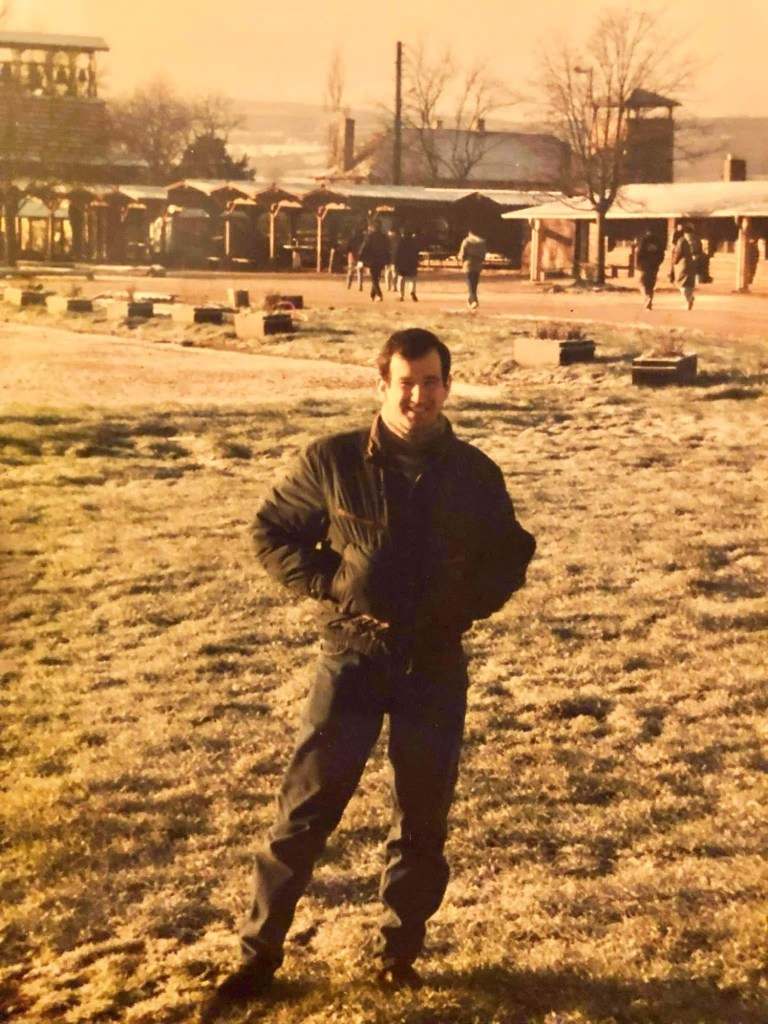

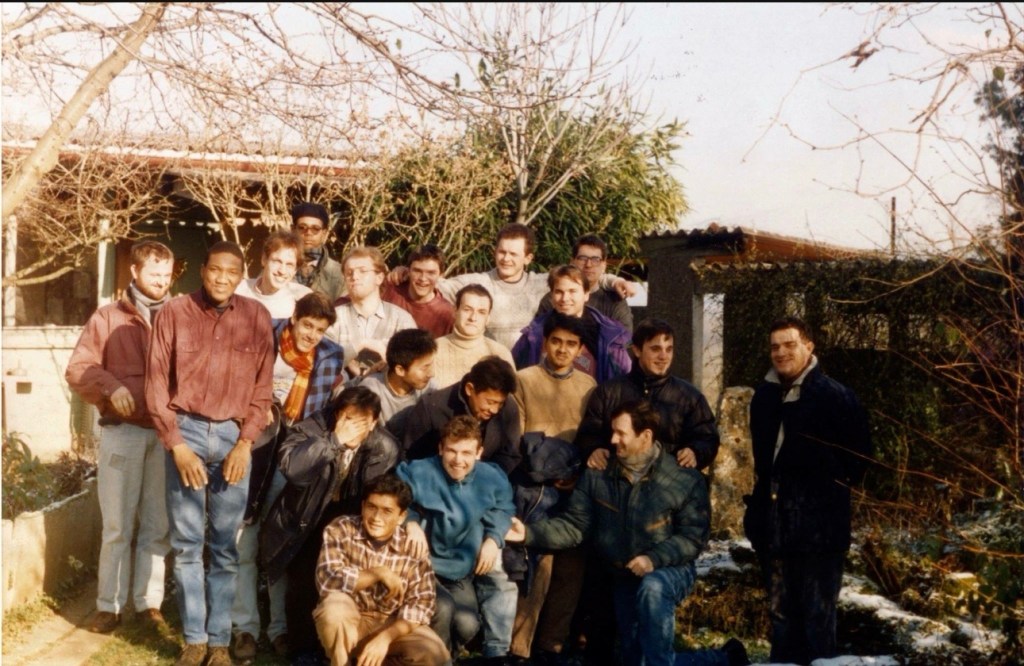

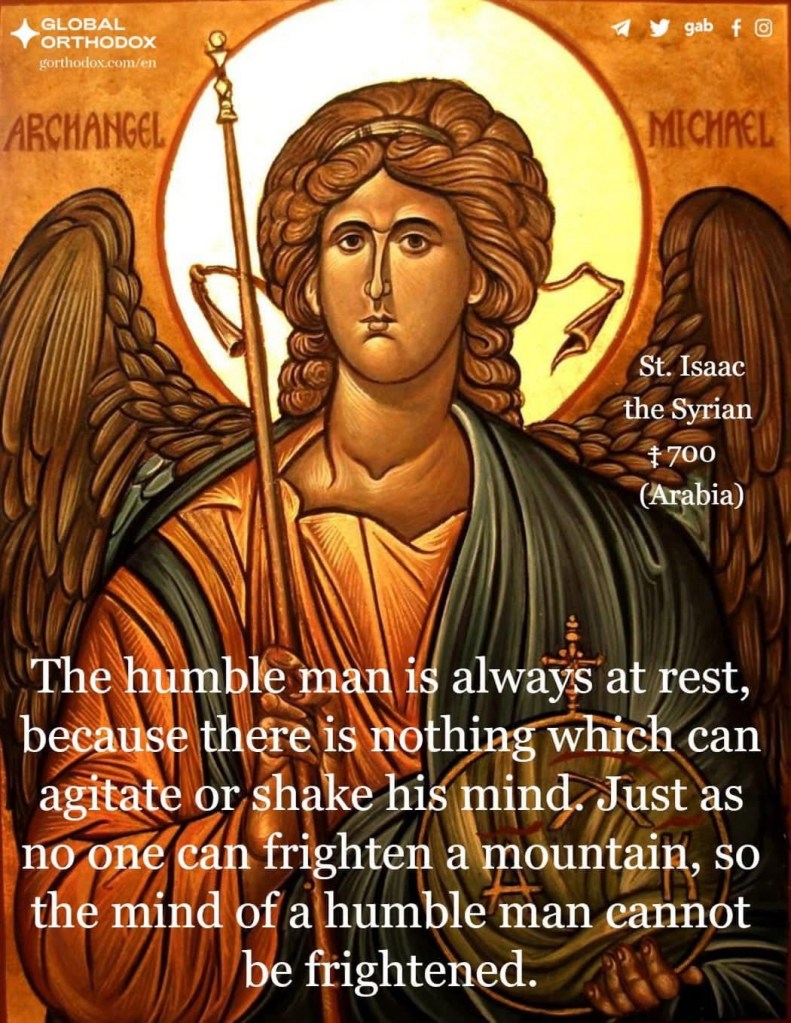


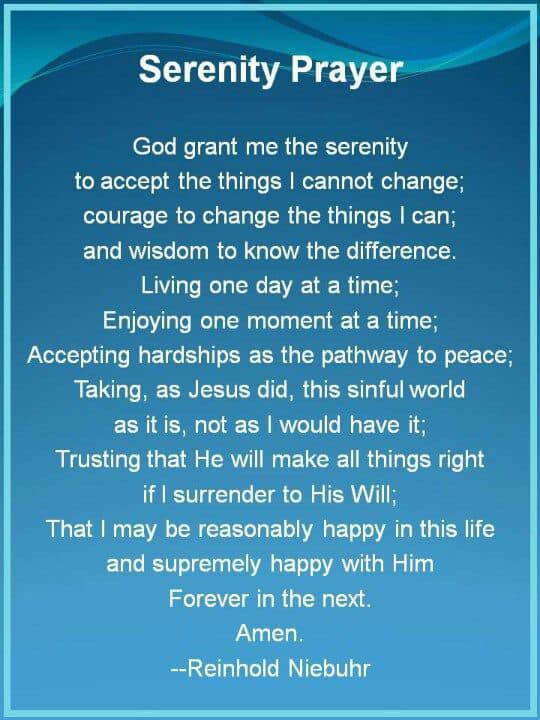


 2pennyblog