Tag Archives: law enforcement

Law Enforcement Chaplains Help Keep the Peace

The Hub, July 30, 2019

Wichita’s Keeper of the Plains

Last week, I was fortunate to complete my Virginia Synod’s continuing education requirement through the International Conference of Police Chaplains’ Annual Training Seminar in Wichita, KS. This conference brought together approximately 500 law enforcement chaplains from across the United States and five other countries.  

Chaplaincy programs in the United States must pass the “Lemon Test” established by the Supreme Court (Lemon v. Kurtzman, 1971). Chaplains must have a secular purpose, must not excessively entangle the government with religion, and neither proselytize nor inhibit religion.

In effect, chaplains are to serve everyone. They can provide counseling and referrals. They can serve in support roles for crisis situations. Most often, they tend to serve through a ministry of presence; responding to emotional, mental or spiritual needs as they arise. Chaplains can pray and provide overtly spiritual counseling if requested, but religion is never to be pushed. Most often, chaplains help connect law enforcement, staff and citizens in need to spiritual or psychological resources of their choice – both secular and religious, quite often facilitating previously established relationships.

Duties vary but for the agencies I serve, chaplains often assist officers with death notifications, crime victim support, and homeless outreach. They go on regular “ride-alongs” with police where they get to know officers and their work better, but informal, confidential counseling might also occur. “Ride-alongs” might also help connect them with victims of crime, accidents or deaths. Chaplains also help facilitate community policing efforts, emergency relief, and law enforcement response to major crises. Chaplaincy is only one option to help with the general health, resiliency and retention of officers. They regularly help provide voluntary emotional, mental and spiritual care to law enforcement officers and their families serving alongside employee assistance programs, staff psychiatrists or psychologists, and peer support offerings.

Thus, the courses I took often overlapped with ministry needs of our congregation. This year, I received training in stress reduction, suicide interdiction and support, counseling techniques specific for varied generations, coping with death, building resiliency, funeral protocols, and more. I hope my continuing education helps me serve your needs better but also our neighbors in the greater community. Thanks to you and our council for supporting my attendance. With your support, I am better able to make a loving difference in our faith community and beyond.

Originally published in The Hub, a weekly email of Christ Lutheran Church, Fredericksburg, VA.

© 2019 The Rev. Louis Florio. All content not held under another’s copyright may not be used without permission of the author.

Leave a comment

Filed under Pastoral Letter

Walking a New Beat

The Hub, Mar. 13, 2019

Police officers in Fredericksburg still feel pain from the relatively recent murder of a friend while on duty. Officers and their families continue to experience repercussions and pressures from past and present systemic problems related to policing here as well in other communities far away. Dealing disproportionately with evil in society, officers everywhere need to be on guard that they aren’t overcome by that evil.

That’s where chaplains come in. They meet the officers where they are, walk with them and their families through the darkness, and seek to help them stay healthy and whole. Doing so, officers will hopefully experience a more abundant life, but it also helps them become healthier servants to all.

Considering my past experiences and training, Chief David Nye [of the Fredericksburg (VA) Police Department] recently asked me if I would be willing to serve our local law enforcement community as a chaplain, and I wholeheartedly agreed.

What does this mean for our congregation? I will be serving our police department’s officers, staff and families seeking to build resiliency and facilitate hope and healing when crises come. Yet, I will also be seeking to serve victims of crime, those recently arrested, people in need of all kinds of services, and everyone I meet.

It’s just another way to live into the beatitudes, to love even some who may now be our enemies, and to help establish peace and justice on earth. Through the Spirit, we are one. You will also be with me as I serve. This is an opportunity to make new and exciting connections in our community as we seek to love our neighbors and our God in new, expansive ways. Please pray for the success of this outreach and the safety of all.

Originally published in The Hub, a weekly email of Christ Lutheran Church, Fredericksburg, VA.

© 2019 The Rev. Louis Florio. All content not held under another’s copyright may not be used without permission of the author.

Leave a comment

Filed under Uncategorized

Church arson: More than a hoax or what meets the eye

Church_on_fire_Credit_butterbits_via_Flickr_CC_BY_SA_20_CNA_8_3_15

Church on fire. Photo credit butterbits via Flickr CC by SA 20 CNA 8-3-15.

Arson is a horrific crime. When motivated by hate, it becomes even more abominable. If in the context of the Charleston active shooter at Emanuel AME Church (Charleston, SC) and then eight black congregations erupting in flame within ten days, it causes great terror and outrage.

It is little wonder many reporters, pastors and others are tweeting and posting speculations about these recent incidents. It seems a pattern. One should indeed be open to the possibility of a racially motivated attack, yet others point out that it seems a hoax when such fires are too quickly attributed to racism. Yet to be fair to both sides, the average person tends to be ignorant of the broader context of arson committed against faith communities. They don’t necessarily have access to the wealth of research, experience and training available to properly interpret such events.

Certainly, things aren’t always what they first seem. Already, three of the ten religious building fires have been (at least initially) attributed to other causes such as a lightning strike. Many don’t realize that church fires are all too common, and that many of these fires prove to be arson events. The National Fire Protection Association has reported from their research:

From 2007 to 2011, U.S. fire departments responded to an average of 1,780 structure fires in religious and funeral properties each year.  NFPA estimates that these fires resulted in an annual average of two civilian fatalities, 19 civilian injuries, and $111 million in direct property damage. The largest share of fires involved religious properties, with just four percent taking place in funeral parlors. Since 1980, the average number of reported fires in religious and funeral properties has fallen by 54%, from 3,500 per year to 1,660 in 2011.[i]

The Southern Poverty Law Center and others are not totally off base to suspect a more sinister, violent pattern perhaps lies underneath these recent fires. Arson happens, and even one faith community burned down for hate is too much. Still, we need to be accurate in our discussions. We shouldn’t base our reactions on often misleading, summary headlines. Exaggerations tend to distract people from the very real dangers of such arson and fires in general. They tend to cause greater fear (if not panic), suspicion and division. People act on perceptions and emotion rather than any factual basis. Even an honest mistake can appear a lie or manipulation of fact; unintentionally hurting efforts to combat racism and violence in our communities by fermenting fear or suspicion. Yet, lackadaisical attitudes can also help facilitate such crimes and cover-up very real racist threats in our communities.

Past media outcry over what appeared to be a rash of attacks against minority churches caused the formation of the National Church Arson Task Force in 1996. (It has since been disbanded.) The Church Arson Prevention Act passed that same year. This made arson against faith communities a Federal offense and doubled the potential sentence from ten years to twenty years.

Since then, the Federal Bureau of Investigation (FBI) and the Bureau of Alcohol, Tobacco, Firearms and Explosives (ATF) have been tasked to oversee church fire investigations. Things have improved dramatically, but we still face great risk. Citing NFPA, the Insurance Information Institute (III) reports that incidents of arson of religious buildings dramatically dropped from 1,320 in 1980 to 240 in 2002. However from 2007-2011, they report 1,600 cases of arson targeting houses of worship causing $105 million in property damage.[ii] This means that over that five year period an average 320 houses of worship per year were victims of arson. Studies vary, but one may expect an estimated three to five cases of church arson per week nationally.

Many express dismay that what appears an obvious hate crime to them isn’t regarded as such by law enforcement authorities. Report details can vary depending on methodology and data source(s). Statistics can be hard to come by for those outside law enforcement or the insurance industry. It also appears that since the National Church Arson Task Force disbanded, statistics for “church arson” are included within the larger published hate crime statistics. This clouds the already complicated issue of hate crimes.

By their nature, hate crimes remain difficult to classify or quantify. A criminal offense needs to be confirmed as motivated by hate. If there are no connections established by previous threats, evidence on scene, or suspect admission, it may not be listed as a hate crime. As explained by the Federal Bureau of Investigation (FBI):

A hate crime is a traditional offense like murder, arson, or vandalism with an added element of bias. For the purposes of collecting statistics, Congress has defined a hate crime as a “criminal offense against a person or property motivated in whole or in part by an offender’s bias against a race, religion, disability, ethnic origin or sexual orientation.” Hate itself is not a crime—and the FBI is mindful of protecting freedom of speech and other civil liberties.[iii]

For 2013, the FBI recorded 6,933 confirmed hate crimes. It is probable that more occur. Arsons have a low closure and arrest rate compared to other crimes, because of their destructive nature. Evidence indicating the suspect’s intent might not be available. If motive cannot be determined, the event is not captured as a hate crime. When victims, agencies, or organizations don’t participate in the reporting process, incidents obviously cannot be included. Just as the debate about officer involved shootings (OIS) has revealed, criminal justice reporting needs to improve. Yet of the data captured, approximately thirty-five percent of hate crimes were crimes against property totaling 2,424 incidents. Only thirty-six of these confirmed hate related incidents were determined to be arson.

Still, one can discern that accidental fires and arson occur relatively and regrettably often at houses of worship. Religious buildings too often have flammables poorly stored, faulty electrical work, and other property risks. About a third of religious structure fires are from cooking related accidents. Yet, faith communities tend to be high profile organizations in their neighborhoods, and their buildings are occupied often on a fixed schedule. They might serve at-risk community members. This makes them attractive targets for burglars, vandals and arsonists.  Motives for arson go beyond hate and may include: concealing another crime, fireplay, influence of media/copy cats, monetary gain, mental illness, pyromania, and (the most common) vandalism. III reports, “In 2013, 27.9 percent of the people arrested for arson were under the age of 18.” One should not automatically assume that every church fire is arson or a hate crime. The research doesn’t support it.

Racially based arson does occur. One case is too many, but all houses of worship face risk. Media reports indicate that the Quba Islamic Institute (Houston, TX) experienced a confirmed arson in February 2015 when one of its unoccupied buildings was torched. A predominately white ELCA congregation, First Evangelical (Lorain, OH), was a victim of arson following a break-in.

Without suspect admission, known threats, or other firm evidence, one can’t necessarily prove hate as a cause, but arson for any reason remains appalling. Trying to speak and write accurately about the issue won’t minimize the horror to any black or other faith communities being targeted. However, we might reduce their occurrence further by working together. It might just help us get to the bottom of things quicker by limiting gossip and misinformation. Undoubtedly, it will help defeat a primary goal of such terrorist acts – fear and discord in the community. Unity of vision and purpose in the local community best fights such fires.

What your faith community can do:

  • Cut back bushes and growth near your buildings. This helps slow the spread of fire, but it also increases visibility for law enforcement and any passersby.
  • Keep up general maintenance, landscaping and cleaning on the property. Disheveled surroundings and unsecured premises tend to encourage unwanted activity.
  • Remove possible sources for ignition and accelerants.
  • Correct problematic landscape designs or features facilitating furtive activity.
  • Post no trespassing signs in problem areas.[iv]
  • Lighting, fencing and other physical security measures are proven deterrents.
  • Secure and lock as many interior parts of the building as you can to inhibit access of unwelcome guests and spread of any fire.
  • Don’t hide keys in fake rocks, etc. People know to look for these. Know who has keys and is allowed access. Key control is important.
  • Consider electronic surveillance and alarms, preferably connected to an outside monitoring service.
  • Speak of security awareness to your congregation. Ask nearby members to keep a watch on the building. Don’t be afraid to report anything suspicious.
  • Report domestic threats against employees or members, vandalism, other “petty crimes,” and any signs of suspicious activities or footprints around remote parts of the building.
  • Take advantage of free security surveys often offered by local fire departments, law enforcement, insurance carriers, lock smiths and security companies.
  • Participate in available community crime prevention programs such as a Business Watch or Worship Watch program.
  • The recommended insurance carrier for the ELCA, Church Mutual, has educational products available for clients. Check with your own insurance carrier to learn more.

Updated statistical review:

Since first publishing this post, Pew Research has done a statistical review of church arson dated October 26, 2015:

Half of all church fires in past 20 years were arsons

Endnotes

[i] Campbell, R. (June 2013) US Structure Fires in Religious and Funeral Properties. Quincy, MA: National Fire Protection Association. http://www.nfpa.org/research/reports-and-statistics/fires-by-property-type/assemblies/religious-and-funeral-properties

[ii] Insurance Information Institute (February 2015). Arson. New York, NY. http://www.iii.org/issue-update/arsons

[iii] Federal Bureau of Investigation (UD). Hate Crime – Overview. Washington, DC.  https://www.fbi.gov/about-us/investigate/civilrights/hate_crimes/overview

[iv] Virginia has a code (18.2-125) prohibiting trespassing on graveyard and church property at night, but not every law enforcement officer is familiar with it or prone to enforce it without permission of the property owners. Signs fit into the general trespassing code (18.2-119). It might be prudent to ban repeat offenders. Consult local law enforcement.

Resources

Bonetti, E. (7 Apr 2014). Church Arson: Facts and prevention. Posted on EpiscopalCafe.com. As found at http://www.episcopalcafe.com/church_arson_facts_and_prevention/ on July 1, 2014

Campbell, R. (June 2013). US Structure Fires in Religious and Funeral Properties. Quincy, MA: National Fire Protection Association. [Electronic Version] As downloaded from http://www.nfpa.org/research/reports-and-statistics/fires-by-property-type/assemblies/religious-and-funeral-properties on July 1, 2014.

Federal Bureau of Investigation (UD). Hate Crime – Overview. Washington, DC. As found at https://www.fbi.gov/about-us/investigate/civilrights/hate_crimes/overview on July 1, 2015.

Ingraham, C. (1 Jul 2015). The surprising frequency of church arson. Washington, DC: Washington Post. As found at https://www.washingtonpost.com/blogs/wonkblog/wp/2015/07/01/church-arsons-happen-way-more-often-than-you-think/ on July 2, 2014.

Insurance Information Institute (February 2015). Arson. New York, NY. As found at http://www.iii.org/issue-update/arsons on July 1, 2015.

U.S. Fire Administration (2010). Community Arson Prevention: National Arson Awareness Media Kit. Washington, DC: Federal Emergency Management Administration (FEMA). [Electronic Version] As downloaded from https://www.usfa.fema.gov/downloads/pdf/arson/aaw10_media_kit.pdf on July 3, 2015.

U.S. Fire Administration (n.d.). Statistical reports on the U.S. fire problem. Emmitsburg, MD: Federal Emergency Management Administration (FEMA). As found at http://www.usfa.fema.gov/data/statistics/reports.html on July 1, 2015.

Virginia’s Legislative Information System (LIS) as found at http://lis.virginia.gov/

© 2015 The Rev. Louis Florio. All content not held under another’s copyright may not be used without permission of the author. This blog post has also been shared at  ELCA.org.

Leave a comment

Filed under Crime

We hasten in darkness…

As I think of and pray for the struggles in Baltimore, this simple chant from Taizé presented itself once again. It provides shape for my deep, inexpressible cries.

I cry out for those who mourn the death of Freddie Gray, for the police involved and those declared guilty by association, for those hurt by the riots and those hurt by historic, ongoing injustices, for all in Baltimore or places like Baltimore, for all the children of God who wound each other from their own woundedness out of ignorance or intentional malice.

Yes, we hasten in our darkness and amidst the darkness which surrounds us. We seek easy answers when love is never easy. The love of Christ calls us to love one another – even our enemy. We are to do good even to those who persecute us and always desire reconciliation. Is this possible? How shall we know if we don’t seek for it together?

People are thirsty for peace, all people. Yet for peace to happen, we need to first listen to God and one another even when difficult – without all the finger pointing and name calling; loving each other without preconditions even as we strive for justice. I have experienced such peace and witnessed such improbable miracles during and after my first sojourn with the Brothers of Taizé. It was a love that changed my life and called me out from isolation.

I learned peace is possible even now – an inner peace as well as with one’s enemy, a peace not of this world and yet within our reach. It begins with our humble and contrite heart, one we dare open to others who might reject us. Christ, too, was rejected, and yet he chose to love us to the end.

Let us search for this peace together no matter how hidden or distant it seems. We should not give up in our thirst, but instead be led onward. The darkness need not crush us.

Choose to love to the end, for the light who is Christ will reveal himself in such love. We will be refreshed. We will find new life where there was none. We’ll discover that we need not walk alone and afraid. We never did.

I invite you to pray along with this chant. The lyric translation of De noche iremos is: By night we hasten in darkness to search for living water, only our thirst leads us onward, only our thirst leads us onward.

And I close this post in prayer:

God of compassion, we give you thanks for Brother Roger’s life. In a world often torn apart by violence, through his life and those of his brothers he created a parable of communion. We give you thanks for his witness to the Risen Christ and for his faithfulness right up until death. Send your Holy Spirit upon us, that we may also be witnesses to reconciliation in our daily lives. Make of us builders of unity among Christians where they are separated, bearers of peace among people when they are opposed. Help us to live in solidarity with those who are poor, be they near or far away. With Brother Roger we would like to say: Happy those you abandon themselves to you, O God, with a trusting heart. You hold us in joy, simplicity, mercy.
(Prayer written by Brother Alois to commemorate the 100th anniversary of Brother Roger’s birth)

© 2015 The Rev. Louis Florio. All content not held under another’s copyright may not be used without permission of the author.

Leave a comment

Filed under Community Life, social justice

Life Work

National Law Enforcement MemorialMany social scientists call the work of emergency responders and others in the medical field “death work.” This applies to the law enforcement community for many reasons. We certainly deal with a great deal of violence and death, but we also face it head on.

As the recent Law Enforcement Memorial Day reminds us, some within our calling will pay the ultimate price. Indeed, I never really stop thinking about my three coworkers[1] that died over the six years I was a police officer. They and other heroes who I never had the honor to know have somehow become a part of me.

Reflecting upon such loss, I believe the term “death work” proves quite the misnomer. For as the National Law Enforcement Officers Memorial reminds us, “It is not how these officers died that made them heroes, it is how they lived.” Their legacy continues to challenge, inspire and shape our service to the community whether still active in law enforcement or retired from it. When I meet current law enforcement officers, I think of the important “life work” they do without often realizing it – whether finding a lost autistic child, helping a domestic violence victim, comforting those experiencing loss or without hope, or seeking justice in a world that is too often unfair.

I remember a police officer in the town I grew up in who planted positive seeds in my life (a somewhat delinquent one at the time) just through conversation and simple kindness. I recall the valor of those who so rightly earned awards for heroic deeds. I recall as well the kindness of other officers done without fanfare as they provided diapers for young families without or shared their own lunch with the homeless. I have seen those arrested for acts that were quite inhumane, and yet they were treated with human dignity by the officers they claimed as enemies.

These kinds of experiences taught me that the vocation that is shared by law enforcement officers is a sacred one, a holy summons to nurture life and shed light in what can seem a dark world. The long shifts, the thankless tasks, the time away from family and friends are very real costs, but it isn’t without benefit or meaning. It is a death to oneself and one’s desires so that others might live. It is life giving work embodying the truth of Jesus’ words, “No one has greater love than this, to lay down one’s life for one’s friends” (John 15:13).

Law enforcement is often a difficult life, but it is a life worth living and sharing with others.

[1] Two died in the line of duty and are listed at the National Law Enforcement Officers Memorial. A third died from an unknown congenital heart condition at home following a foot pursuit earlier that evening. A fourth died years later from medical complications after being shot while apprehending robbery suspects.

Originally written for the newsletter of the Hanover County (VA) Sheriff’s Office. 

Unless otherwise indicated, all scripture quotations for this article are from the New Revised Standard Version (NRSV) translation. This post was first published in The Messenger, the newsletter of Messiah Lutheran Church (June 2014). 

© 2014 The Rev. Louis Florio. All content not held under another’s copyright may not be used without permission of the author.

2 Comments

Filed under Law Enforcement

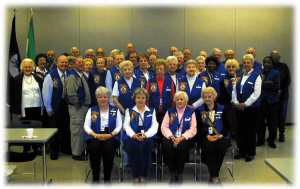
Seniors and Law Enforcement Together (SALT), 2012 Christmas Gathering

Click on the picture to learn more about the Henrico County Police SALT Program - Used under fair use for teaching - (C) 1996- 2012 Henrico County

Click on the picture to learn more about the Henrico County Police SALT Program – Used under fair use for teaching –      (C) 1996- 2012 Henrico County

On December 4th, I was invited to speak to the members of Henrico County Police Department’s Seniors and Law Enforcement Together (SALT) program. The SALT program seeks to empower seniors to be aware of and address crime problems they commonly face, as well as invites them to volunteer for the agency. This following is my prepared text:

When asked to speak this morning about my transition from law enforcement to being a pastor, I was hesitant. I am not too excited about talking about myself, and I am not sure how much it would interest you. So rather than just speaking on that issue, I wish to consider my journey in light of our shared call to community service. How do our own sacred life stories – and they are all sacred whether you realize it or not in my view – intersect with passions, interests, gifts, and ultimately our call or vocation?

The word vocation – at its root – indicates a mingling with the sacred…our purpose in life. It comes from the Latin root vocātiō, meaning a call or summons and inferring a higher power’s involvement. Now, vocations can and do indeed change during periods of our life just as mine did. We are much more than what we do, but I believe we all share a purpose to love God and our neighbor as ourselves in whatever we do.  At every moment of our lives, even facing death, God can use those moments to bless us and others.

So using my own story to begin this reflection, we begin in my younger years. I was part of a family with some serious problems – as many families have problems – and amidst those problems rooted in generational bouts of alcoholism and mental illness, there indeed was love; at least as well as people could love at the time with their own woundedness. Now my parents provided and cared for me very well in many respects, but the systemic problems we faced often distracted them and sometimes caused people in my family to make even more poor choices. As is often the case as a teen in such situations, I found myself dabbling in things that I had no business in. Most people had no idea, including my parents. Indeed at one point, I did find myself in juvenile court over a serious auto accident. Looking back, I realize I could have spiraled much lower. Yet when some parents had written me off as a trouble maker, others did not.

In one instance, I was being driven with a friend to an event by his mother. She began to talk about how good we were and unlike that boy who got into trouble. The only problem remained that unknown to her I was that boy. Yet, others did see past my problems to possibilities. Another friend’s father, a volunteer with a youth ministry, reached out to me, and he got me involved. At my workplace (a local 8,000 seat arena), a police officer always found time to talk to me, ask about my grades and my future plans. At school, one English teacher treated me with respect and helped me learn to begin to respect myself more. He challenged me to look at the world and myself through new eyes and with imagination.

Such interactions made a difference. I am sure these folks might not have known it at the time. They might not even remember me, but one never knows what kind word or ethical action observed might plant a seed. And seeds were planted. In time, I came to want to serve others, and attended the Virginia Military Institute, and after a short time on active duty for training as an Army Reserve officer, I transitioned into my own police career at the City of Alexandria Police.

Now at the time, crack was hitting cities hard. The metro-DC area news had body counts each day, and as I graduated from the academy, one of our officers, Corporal Charles Hill, was murdered in a drug related hostage situation. It was a wild time, and I grew up a lot. A sense of idealism was difficult to maintain with some of the things I saw and experienced. Yet again, thanks to friends, I was invited to participate in a loving church family and volunteer in some outside service activities: shop with a cop, bicycle helmet drives, other things of that nature, but also as an adult volunteer with a campus ministry at what is now the University of Mary Washington. Already, I had noticed a gift for working with youth from the housing projects during my midnight shift, but this volunteering really helped broaden and mature my view of the world, myself, and even God.

You probably already recognize that law enforcement officers face a disproportionate amount of evil on a daily basis. They see and experience what John Calvin would describe as humanity’s depraved nature or what Martin Luther would consider examples of the human tendency to be bent inward upon oneself (in other words selfish, and therefore not loving of God and neighbor as we should be). For some, this turns the officer into a fountain of cynicism. For others, they see humanity for what they are – not always the best they can be – but they recognize more is going on in the world. Goodness is still at work, and so in the face of evil and tragedy, they dedicate their hearts to make a difference. I witnessed this as fellow officers raised funds during the shift from other officers for a homeless couple who needed diapers for their baby. I saw it as people I knew volunteered with service projects in the community unrelated to policing; one even volunteering with a jail ministry.

This wasn’t naïve idealism. There were victory and losses to be sure, but the call to make a difference kept them trying. Hope kept them oriented on what could be rather than just settling. Like many of them, I found in volunteering that I got more than I gave. Working with the college students I rediscovered a more positive, hopeful way to look at the world and others even as I mentored them. I also found my faith in God grow stronger.

Eventually, I began to wonder if God was calling me to something else…something else not better mind you….just different. Through connections, I was eventually invited to spend some time volunteering and discerning with an international, ecumenical group that works with young adults in France called Taizé. So, I took my leave of law enforcement to test the waters of full time ministry. Although I didn’t stay with this ministry, I found my law enforcement and personal background and experience fit well with what they did. It helped me relate to young adults, many with troubled pasts or coming from violent areas throughout the world. As one brother told me, “We have similar hearts.”  Yet, I felt a strong pull to come back to the United States to use the gifts I had been identifying perhaps more fully.

My first weekend home, I attended my parent’s Roman Catholic Church, and coincidentally a bishop from South Dakota was thee seeking funds and/or volunteers. I had mentioned to my parents of my possibly seeking a mission stint in Eastern Europe, South America or Native Americans (areas of interest and places I had met friends from in France), so I went and spoke to the bishop, now Archbishop Chaput of Philadelphia. This “chance” meeting resulted in an invitation to have my resume past around state of South Dakota, and I found a new home and call at St. Joseph’s Indian School.

St. Joseph’s Indian School is a residential school serving at risk Native Youth from elementary age through high school, and recently into college aged young adults. I was to live as a house parent among the high school students, serving as the father figure, mentoring counseling, helping with homework and driving kids to places – most anything any parent would do. Yet once again, my past experiences helped me in the present.

Most of these kids were from among the poorest and most addicted places in America, where violence and sex crimes against children are much too common, and gangs have a strong foothold. We had kids that lived in home without heat in a place where -35 degrees could be the high for the day, or perhaps they had no toilet, or maybe they had no home at all and bounced from house to house as people became willing to take them in. At least one I worked with had all his possession including clothes fitting in a small brown paper grocery bag. It was a tough place, isolated and with extreme weather.

Many new employees quite, but I found that the kids responded well to me. My police work helped me meet them as they were, without shock or pity. I could understand what they would share with me without needing to ask what they would think of as stupid questions, and I respected them as my own mentors respected me. I understood that as messed up as their families might be, it was still there family, and that amidst all the violence and trouble, their culture and they themselves had much to offer me. In fact, the logo of the school reflects a truth I already mentioned. We often get more than we receive when we volunteer and serve others. The tag line for the logo was “We give and teach. We receive and learn.” Students and staff mutually benefited and grew from this relationship with one another.

After three and one half years, I had completed my initial commitment. I returned to Virginia to attend seminary. I entered a special dual program where I earned a Master of Divinity degree from Union Presbyterian Seminary and an MS from Virginia Commonwealth University. My thesis focus was upon how faith and mentoring can help mitigate delinquency, but this experience again brought home to me the reality that law enforcement for me was and remained a real ministry. It has continued to help me as I served in hospice chaplaincy and now in the parish. I am realistic about the challenges we face, but I am hopefully about the God we share. I maintain my foothold in the policing community as a chaplain for law enforcement, and I find my law enforcement experiences always helpful in the midst of the ordinary lives of people I serve – lives that often face significant troubles.

In law enforcement, we face sin and death head on. We seek to shine light in the darkness, restore family relationships, and bring justice to the community. We can find ourselves counseling or comforting a wayward teen, grieving family member or victim of violence at any time. In doing so, we have an opportunity to live out what Jesus said was the summary of all the law and the prophets, loving God with all we are and our neighbor as ourselves – even sometimes unto death.

As volunteers, you might not recognize the good you do, nor the eternal Good that works through you. Paperwork, small unrecognized tasks, or even a friendly, sincere hello might not seem like much, but one never knows what God might use to make the world and our community a better place and encourage others. Seeds can be planted through relationship. These small acts of love can free up others to love in some pretty difficult circumstances, so I argue your volunteering with the Henrico County Police Department has significant and eternal value. It is part of your vocational, sacred call in the present. Through this call, you have the opportunity to be a blessing to others and the community.

My experiences over the years has affirmed for me that we need to be united – faith communities, secular organizations, police agencies, and individuals – in bearing hope and love into our communities. It is a hope and love that I personally believe first came to us in a small town called Bethlehem long ago. A hope no one expected, an act of love that seemed so small, and yet it is a hope and love that remains with us and can work through us even on the darkest day.

In closing, I thank you again for your invitation and for your willingness to love. I wish you all a Merry Christmas and happy new year.

© 2012 The Rev. Louis Florio. All content not held under another’s copyright may not be used without permission of the author.

2 Comments

Filed under Community Life, Law Enforcement, Ministry, social justice

Waking from the dark

Recently, I had the good fortune of attending a momentous and joyous event. A past coworker and forever dear friend of mine was retiring from the City of Alexandria (VA) Police Department. I arrived in the city early, so I visited all the old haunts from my patrol days. The neighborhoods I used to patrol have really changed, but the memories linger. Faces, emotions, and more vividly came back to me as I drove – not all of them bringing joy: the place where I handled my first homicide; a telephone pole where two college students died tragically; a courtyard where a brave fellow officer was shot and killed. For a police officer, such memories reflect much of one’s life on the street. It is often frustrating, sad, and sometimes even briefly terrifying. Such memories tend to linger in your days and sometimes even during your nights.

As I arrived at the restaurant to honor my friend, I rejoiced at meeting several old comrades; many who I had not spoken with for sixteen years. The bonds of the life we shared were still strong, and it was like I had never left except for the many new (and younger) faces of police officers in the room. Soon, one younger man came up to me. I recognized the face, but I couldn’t quite place him. He was a captain now, but I had been his Field Training Officer for two weeks as he started his service just before I resigned to enter ministry. After some catching up, he pointed out that I might be back for a lot of retirements in the next few years, for all my contemporaries are at the age to retire. (Police work can prove hard on the body, soul and your family, so officers often retire at a younger age than other professions.) The bittersweet truth of what he said really hit home. My ties to this city and the brave men and women who served it would soon seem to be fully cut.

Along with a great lunch and fellowship, my friend entering retirement gave us some wonderful food for thought. As he sometimes tearfully shared about his many years with the force, the tears were of joy and thanksgiving. He didn’t focus on the bad times, even if he couldn’t forget them. He lifted up the relationships that had blessed him in his vocation, family, and life. We were officers together when violent crime was at its height in the twentieth century. It was an exciting time and a meaningful time. It brought us together in ways few people will ever understand. Together, love for one another had not only helped us survive but also thrive. Speaking to the younger officers, he shared the things that mattered most at the end of the day, especially going home safe to your family and friends. He lifted up those whose dedication to service had inspired him, and by honoring them, he hoped to inspire those who remained on the force after he left.

As I listened, I sensed the sacred at work in and through our shared life. As difficult as the past had been at times, I could see more and more clearly the light of Christ shining even among those many darker memories. Ours had always been a road of blessing, not curse. We were bonded to others of the past and the future through the service we shared. We are bonded to one another forever. The love of God at work, even when you don’t see it at first, has a way of unifying things and making them new. Although imperfectly at times, we had sought together to do our best out of love – acted justly, loved mercy, and walked humbly with our God – and it all mattered. The good and the bad times mattered. God had used them all. Now, the world and I will never be the same. Thanks be to God.

From Psalm 71 (NRSV translation):

16 I will come praising the mighty deeds of the Lord God,
I will praise your righteousness, yours alone.
17 O God, from my youth you have taught me,
and I still proclaim your wondrous deeds.
18 So even to old age and gray hairs,
O God, do not forsake me,
until I proclaim your might
to all the generations to come.
Your power 19and your righteousness, O God,
reach the high heavens.
You who have done great things,
O God, who is like you?


© 2011 The Rev. Louis Florio. All contents not held under another’s copyright may not be used without permission of the author.

1 Comment

Filed under Law Enforcement