Tag Archives: martin luther

Why Reformation Day?

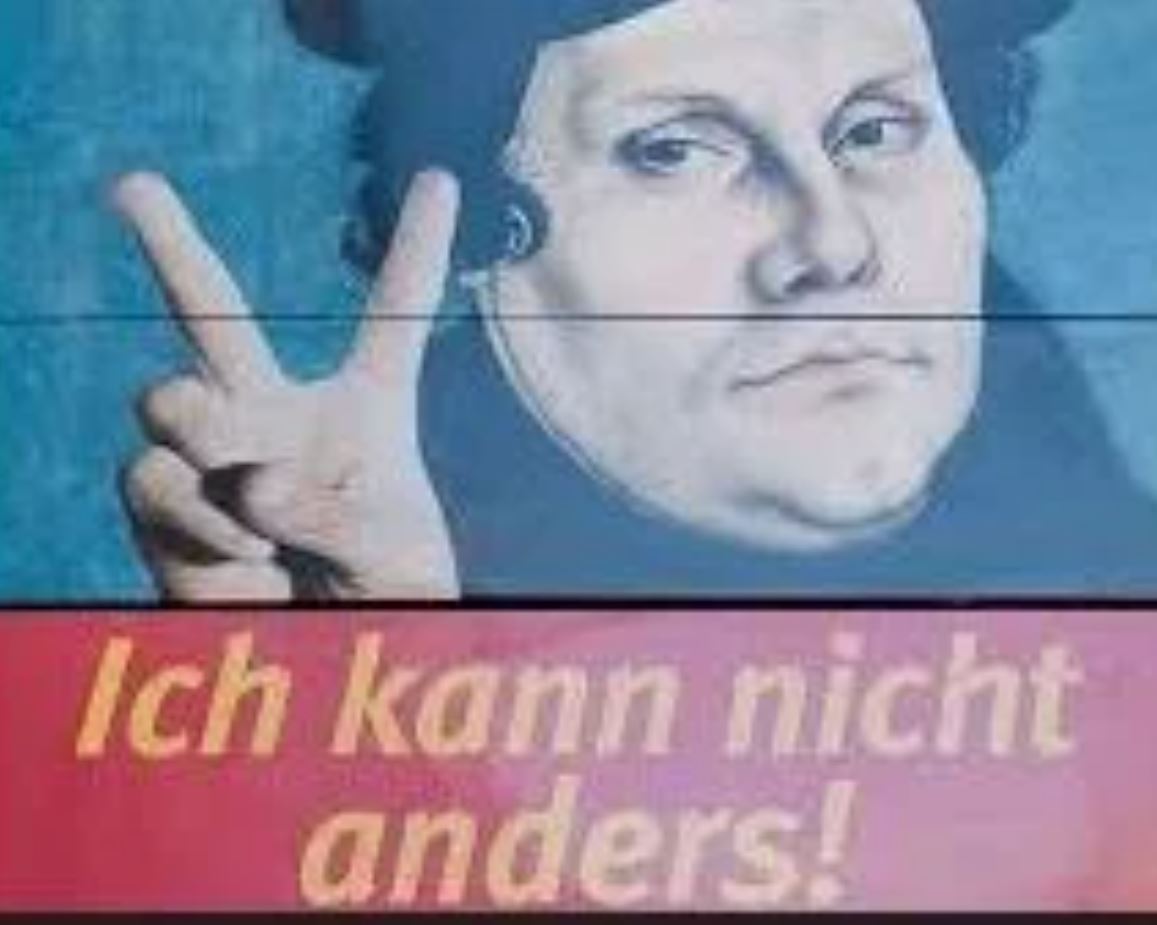
Image: picture-alliance/dpa/P. Ending from the article Luther in the City of Worms on DW.com.

Another Reformation Day is upon us, and so one might wish to ask in the spirit of Martin Luther’s Small Catechism, “What does this mean?”

Reformation Day is a church festival that recalls how the Holy Spirit moved through Martin Luther and other Reformers to spur a religious, political, and cultural reform movement that reshaped modern history and had many lasting effects.

Many mark the feast through worship on the Sunday prior to October 31st calling it Reformation Sunday. Because we believe it was Spirit led, the liturgical color of the day is red recalling the fires of Pentecost. In 1517 on All Hallows Eve (All Saints Eve today), professor and monk, Martin Luther, posted his 95 Theses in Wittenberg, Germany, listing points of debate and inquiry regarding the practice of indulgences by the Medieval Roman Catholic Church and its associated abuses. It sparked a fire leading to a reexamination of all Medieval church practices in the West, and as a result, some unintended fractures came to pass. Yet, it also bore the fruit of a purified theology in a Church seeking to resist superstition, ignorance, and abuse. Biblical scholarship of today originates with the Reformation witnesses, especially Martin Luther.

Although others before Luther had suggested sharing the scriptures and worship in the common, local tongue, it stuck as a widely accepted norm after Martin Luther’s efforts to translate the Bible into German. Where the Medieval church had stopped allowing laity to share the blood of Christ (the reason is lost to us), the Reformation emphasized a return to Christ’s teaching that the body and blood be shared among all baptized believers. The spiritual equality of laity and ordained person as one within a “priesthood of all believers” became a force in the daily life of the Church, and with that, laws, schools, and governments saw reforms helping to lead Western Europe out of the dark ages. Everything was on the table for review, such as what books should be considered scripture or what of the seven major ministry practices of the Church should be considered sacrament. (Martin Luther came to argue that only baptism and the Eucharist were sacraments, although confession was held up as a sacrament in his earlier catechisms.) Perhaps the biggest change was understanding that we are saved by grace through faith in Jesus Christ, not by any works on our part.

Certainly, this is a broad brushstroke, as there remained many voices arguing over theological nuances and details right up through today. Even among those Christians coming to be known as Lutherans, there were arguments. Philip Melanchthon, a coworker with Luther who is largely responsible for the famous Augsburg Confession defending the Reformers’ faith, was even blacklisted by some for his attempts to reconcile with followers of John Calvin. Later, Lutherans would divide over local or national practices, how strictly one should adhere to the Lutheran confessions (the central writings of the Lutheran faith), as well as how “orthodox” (traditional, usually more high Church) worship should be or Pietistic (heart centered, often low Church). Luther himself has rightly come under some criticism for his support of government suppression of the German Peasant Wars, his approval of the persecution of Anabaptists, and later in life, his hardening heart against his Jewish neighbors. (These issues merit a separate essay of their own.) Luther like all of us is a sinner-saint at best.

Yet, Lutheran witnesses would positively influence the larger Church and world too. The Lutheran pastor, Martin Bucer, influenced Anglican worship and the formation of the Book of Common Prayer. William Tyndale who is credited with creating the first English biblical translation that was mass-produced studied in Wittenberg. The Thirty-Nine Articles, the historically defining statements of doctrines and practices of the Church of England, largely reflect the arguments of the Augsburg Confession. The oppressed Moravian Church was saved by a Lutheran, and they now adhere to Martin Luther’s Catechism. (They are one of six denominations with which the ELCA shares full communion.) They, in turn, introduced John Wesley to Luther’s Commentary on Romans which “strangely warmed his heart” resulting in what we now know as Methodism. A Lutheran helped influence the foundation of Alcoholics Anonymous, while another Lutheran helped form the Gideons. The Lutheran understanding of justification by faith has now led to The Joint Declaration on the Doctrine of Justification (JDDJ) signed by the Lutheran World Federation and the Roman Catholic Church on October 31, 1999. Twenty-five years later, the World Methodist Council, the Anglican Communion, and the World Communion of Reformed Churches have also signed. (There are still some issues with details and practice, but we formally agree that only God’s grace can save us.) Even our Roman Catholic siblings have adopted many of our 16th Century Reforms after their council gathering now known as Vatican Council II (in the 1950s). Lutherans have also been center stage when it comes to relief efforts and work with Refugees. In fact, one in five Americans receive assistance through Lutheran ministries/nonprofits under the banner of Lutheran Services in America, one of the nation’s largest and most respected health and human services networks.

The impact of the Reformation is still being worked out in our lifetimes. It has faced many bumps in the road, we can fall short, but God is still at work. On Reformation Day, it is ultimately God who we celebrate. You might like to explore some of these resources to learn more:

By Heart: A conversation with Martin Luther’s Small Catechism was written by one of my former professors, Dr. Kirsi Stjerna, and several others. It is an excellent, accessible, highly readable unpacking of Lutheran core beliefs.

The ELCA publisher Augsburg Fortress points out, “Martin Luther posted his Ninety-five Theses on the church door at Wittenberg in 1517. In the three years that followed, Luther clarified and defended his position in numerous writings. Chief among these are the three treatises written in 1520.” They still apply today, and you can find them in one text at the Augsburg Fortress website, Amazon, or through other vendors. His Three Treatises (“To the Christian Nobility of the German Nation” asking leaders to play a part in the Reformation; “On the Babylonian Captivity of the Church” particularly focusing on the Sacraments; and “On the Freedom of the Christian” about living the Christian life) are fundamental to understanding the Reformation. As a former Roman Catholic, I can testify that they still have application in our times.

You might also like Heiko Oberman’s Luther: Man Between God and the Devil, a deep, psychological and spiritual treatment of Luther.

The Annotated Luther Series illuminates the essential writings of Martin Luther. You can find it here: Annotated Luther Series.

If you want to go all in, Logos.com offers the collection of Luther’s writings (55 volumes) for online access at $259. Since this collection was created, several more volumes have been added as his works were translated from German. Those are available at an extra charge.

Lutherans solidified their faith by agreeing on core documents collected now in our book of confessions called The Book of Concord, meaning book of unity. You can see it for free online at several sites, or buy it at Augsburg Fortress or another vendor of your choice.

If you prefer podcasts, try the Doth Protest Podcast. It focuses on church history and how the theology of the 16th-century Reformers can inform us today. Many Lutheran scholars are interviewed among others from varied traditions. A friend of mine, a local Episcopal priest, is one of the hosts.

For heavier theology, you might enjoy the Queen of the Sciences Podcast: Conversations between a Theologian and Her Dad. Rev. Dr. Sarah Hinlicky Wilson is Associate Pastor at Tokyo Lutheran Church and the Founder of Thornbush Press. Her father is Paul Hinlicky who after 22 years of service has retired from Roanoke College as the Tise Professor of Lutheran Theology. He is currently Distinguished Fellow and Research Professor of the Institute of Lutheran Theology.

Then, of course, there are many movies about the Reformation. Luther (2003) is among the most recent starring Joseph Fiennes, Bruno Ganze, and Peter Ustinov. You can find many past documentaries streaming as well.

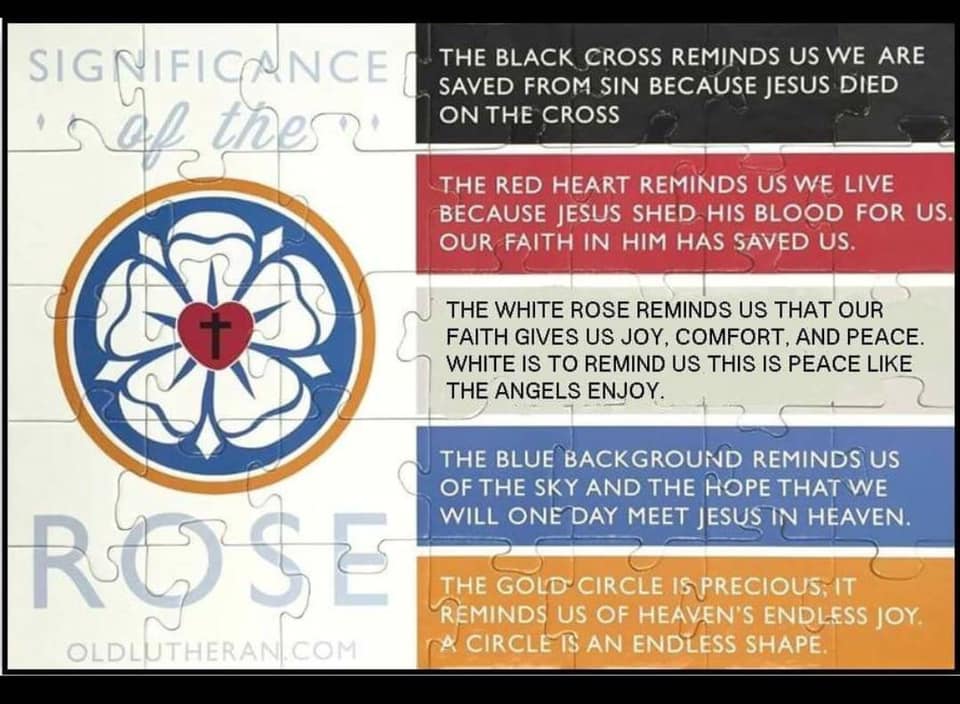
Have you ever seen the rose image on the floor in our Christ Lutheran entryway? The Luther rose or Luther seal is a widely recognized symbol for Lutheranism. It is the seal that was designed by Martin Luther while Luther was staying at the Coburg Fortress during the Diet of Augsburg. Martin Luther thought it a summary of our Lutheran faith. See the image below for an explanation. (Source: OldLutheran.com)
Originally published in the October 22, 2024 weekly newsletter, the Hub, of Christ Lutheran Church, Fredericksburg, VA.

© 2024 The Rev. Louis Florio. All content not held under another’s copyright may not be used without permission of the author.

Leave a comment

Filed under Pastoral Letter

Is this a season of spooks or saints? The historic relationship between Halloween, Reformation Day & All Saints Day

Luther schlägt die 95 Thesen an (Painting of Luther nailing 95 theses), by Julius Hübner (1878), Public Domain

All Hallows’ Eve, more commonly known as Halloween, is an important time for us Lutherans (and the entire Church, I might add). Yes, on October 31, 1517, good old Martin Luther posted his 95 Theses critiquing practices and teachings related to indulgences.(1) It was good – and likely not coincidental – timing. The Church was thinking about matters of death and resurrection.

Indeed, the harvest was ending. Plants were dying or growing dormant. Hunting became harder as animals became scarce due to migration or the movement into hibernation. The season was growing darker and days shorter. People’s minds in these more superstitious days could turn to some very dark things. As a television show popularized, they would sense, “Winter is coming” in the worst sense. Death seemed afoot with demons, goblins, and ghosts to boot.

Pagan cultures for centuries had used this time of year to remember the dead and dark things, especially those who might still be walking or floating around them.  As Christianity supplanted paganism, people did not really change. Many of the fears remained the same. Not everyone trusted that Jesus had fully defeated death, at least where they were concerned. It seemed reasonable and likely that more suffering was to come as people they loved transitioned into the afterlife.

In this context, people strained to make sense of it all. Drawing from some dubious scriptural citations and some very creative thinking, people expected they would never be good enough to merit heaven. The idea of limbo and purgatory – places where those not ready or quite good enough for heaven could be purged of sin and maybe one day enter heaven after much suffering – came into the fore. Hell caught more and more of the common folk’s attention, as heaven seemed more and more unattainable. They feared God’s judgement in a world where many died before thirty years of age. The world was a frightening place, and God seemed distant, angry and terrifying.

So, the Church tried as it could in those times to respond to (and within) that worldview. Although there certainly were early practices honoring saints and imploring divine help and mercy for the dead, one can trace a more significant line toward today’s practices. On 13 May 609 or 610, Pope Boniface IV consecrated the former Pantheon at Rome to become a Christian shrine, Our Lady and the Martyrs. He is believed to have chosen this date to witness against and supplant the ancient, Italian pagan feast of the Lemuria. The Lemuria was celebrated on three days — May 9, 11, and 13. Even days were considered unlucky by the Romans. The day honored the dead and particularly the lemures, the unfriendly if not dangerous spirits of people who died violent or untimely deaths. Pope Boniface IV ordered a celebration should be held every year.

In a similar fashion, sources indicated that Pope Gregory III dedicated a worship space in Old St. Peter’s Cathedral to venerate relics of saints, martyrs, and the Apostles of the Church on November 1, 731. This, too, was to be remembered each year with festival worship. By the late 8th Century, a practice to remember the saints and martyrs also grew seperately in what is now the British Isles and Ireland as the Church fought back popular Celtic pagan practices related to remembering the dead. A Northumbrian abbot, Alcuin, whether reflecting upon events in Rome or perhaps something else, argued alongside others that an annual remembrance and celebration should occur every November 1. At the insistence of Pope Gregory IV and other religious leaders, the Holy Roman Emperor, Louis the Pious, finally decreed November 1 would become a “day of obligation” in 835.(2) Failure to attend worship would risk one’s salvation and perhaps result in fines or punishment. By the 12th Century, the 13 May celebration had been supplanted by the November 1 saintly celebration and its accompanying October 31 vigil services.

It was easy in those days to assume the “perfect” and holy saints might be with God, but what about our family members who, well, we knew not to be so perfect or even “bad”? In the 13th Century, All Souls’ Day became a companion observance on Novmber 2 to remember all those still in pergatory. All Saints’ Day remained a day to recognize the exulted few. Also known as the Commemoration of All the Faithful Departed and the Day of the Dead, All Souls’ Day is specifically meant to be about prayer and remembrance for the souls of these still suffering, baptized members of the Church. (3)

All the while as these litrugical practices developed, amidst the ravages of the plague and on and off again wars in Europe, things became more frightening. Coffers became emptier. The Church began to seek funds through the selling of indulgences. Indulgences were like a “get out of Purgatory free card,” a way to reduce the amount of punishment one had to undergo for their sins.(4) In other words, one could pay for oneself or one’s family members (even those already dead) to be released earlier from purgatory, and you received a paper that said so. Looking upon the mass as a sacrifice, people could also pay for masses to be said to help their dearly beloved departed. Each mass paid for meant less time suffering. Under the auspices of “the keys” (Matthew 16:19), believed to be a hereditary power gifted to those succeeding St. Peter as bishop of Rome, Popes began to use that power to their advantage and disgrace. The money would build a new cathedral in Rome, but it also fueled a growing corruption in the western Church.

On October 31, 1517, in walked a college professor, a Bible scholar, theologian, and Augustinian Monk, named Martin Luther. He posted his 95 Theses, or Disputation on the Power and Efficacy of Indulgences, against these abuses in the hope of sparking discussion and reforms. The day he chose to do this was the Vigil of All Hallows (or now, All Saints’) Day, also originally called All Hallows’ Eve (now Halloween to most people). The Church was remembering Christ’s victory over sin, death, and the Devil. It was celebrating the freedom his faithful followers had been gifted. What a perfect time to assert, “When our Lord and Master Jesus Christ said, ‘Repent’ (Mt 4:17), he willed the entire life of believers to be one of repentance.” He went on to argue ninety-five theological points that the process of repentance (a turning back toward God) and frogiveness of sin should not be about money or based on fear. Martin Luther had come to believe our loving God has already freed us in love through what Jesus had done and promised. If the Papal authorities really had the power to forgive sin, why not do so out of love? In response to Christ’s sure promises, we are invited to trust and reorient our life toward God and others in love – in thanksgiving not fear. We can run back to God for foregivenss over and over agains without fear. We can walk on through tribulations, punishments and even hell itself with confidence. Our battle is already won by Jesus, and death has lost its sting. This good news turned into what we know today as the Reformation.

Foot notes:

(1) Some scholars suggest that Martin Luther did not nail his 95 Theses to any door, but instead, they argue he only mailed (“posted”) it. Yet, I would argue to accept that he mailed something does not necessarily exclude the possibility that he also (or only) posted/nailed/tacked something on to the door of the university church. He we are in the 21st century, and I still see occasional missives posted on or near the nearby university – much as I did in the 2000s and 90s. I’ve seen this behavior in other countries as well. I’m not so fast to give up on pervasive social memory. I’ve seen “stories” discarded as myth as told by Native Americans and others, and then someone goes and discovers something proving the story holds some truth. Anything is possible. Indeed, in the early 1600s, he was depicted writing them on the door with a quill. Here’s an article from the Washington Post (2017) that might help explain this still unsettled debate – to often presented as fact: https://www.washingtonpost.com/news/retropolis/wp/2017/10/31/martin-luther-shook-the-world-500-years-ago-but-did-he-nail-anything-to-a-church-door/

(2) For Roman Catholics, All Saints’ Day remains a “holy day of obligation.” All Souls’ Day is not. Yet, the Code of Canon Law (1246 § 2) declares that an Episcopal Conference “can suppress some of the holy days of obligation or transfer them to a Sunday” with the required approval of the Apostolic See. The United States Conference of Catholic Bishops decided to eliminate the obligation to attend Mass when the solemnities of January 1 (Mary, Mother of God), August 15 (The Assumption) and November 1 (All Saints’ Day) fell on Saturday or Monday. The Holy See approved this decree on July 4, 1992. Thus, All Saints’ Day will not be a day of obligation for Roman Catholics in 2021.

(3) Later with the Reformation’s influence affirming the unbiblical nature of beliefs in pergatory and Martin Luther’s and other Reformers’ contentions that at our best we can be only imperfect sinner-saints, All Souls Day became primarily a Roman Catholic observance. Most Protestants remember and give thanks for the Christian life and witness of all our dearly departed on All Saints’ Day along with all the more famous saints of the Church. After all, we are all saints through our faith and baptism, even as we struggle with sin. We don’t believe the blessed dead need our prayers when they already have Jesus. We are all considered saints through the power and promise of our faith and baptism – by grace through faith in Jesus Christ. That said, some Protestants in the Anglican Communion and elsewhere still have liturgies for that similar purpose on November 2, although individuals might or might not fully reject the concept of pergatory.

(4) Indulgences could also be earned for praying certain prayers, wearing certain medals or scapulas, or making a pilgrimage.

The 504th anniversary of the Reformation will fall on October 31 in 2021. Modern Lutherans tend to mark it in worship on the Sunday closest to or on Ocvtober 31. All Saints’ Day, still on November 1, will be marked most years on the following Sunday (if November 1 is not a Sunday) by most Lutherans and many others in Christ’s one, holy, and apostolic Church – and by that, I mean many across the ecumenical Church. Roman Catholics still observe All Saints’ Day on November 1 along with All Souls’ Day on November 2.

Originally published in the October 26, 2021 edition of Christ Lutheran Church’s (Fredericksburg, VA) weekly newsletter, the Hub.

© 2021 The Rev. Louis Florio. All content not held under another’s copyright may not be used without permission of the author.

Leave a comment

Filed under Church History, Pastoral Letter, saints

The Door’s Open

“To preach Christ is to feed the soul, to justify it, to set it free, and to save it, if it believes the preaching.” – Martin Luther

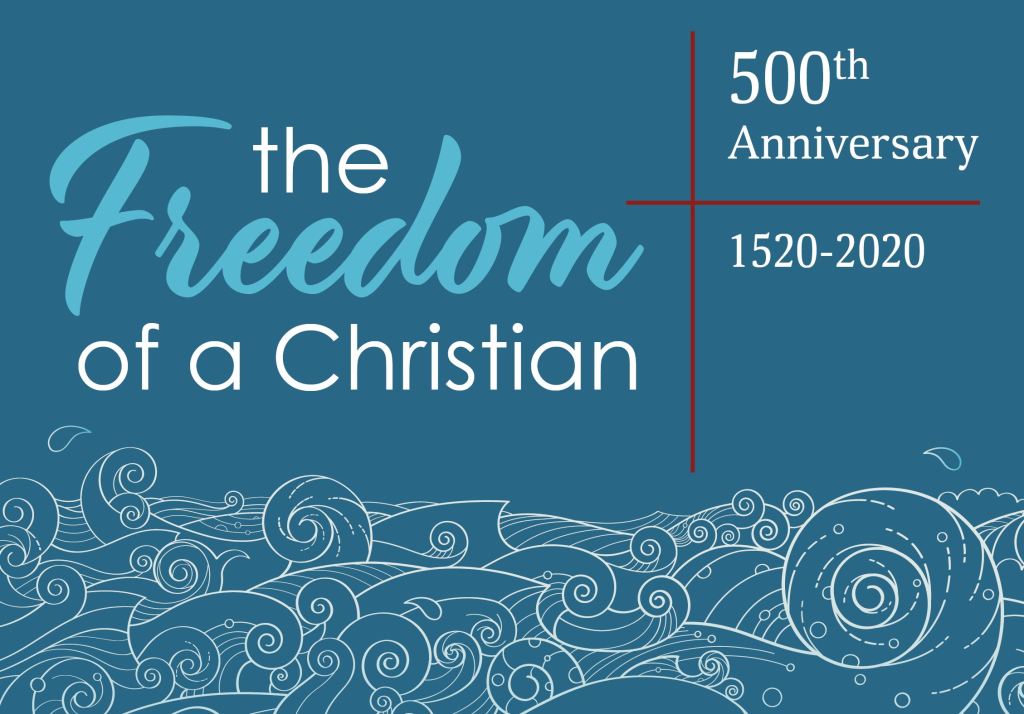
This fall, the ELCA marks the 500th anniversary of Martin Luther’s early important work, The Freedom of a Christian (also known as On Christian Liberty and other similar names), and we will remember it as well at Christ Lutheran. Why? Well, through this early work, Martin Luther decisively influenced the entire Protestant movement in all its forms. As the theologian Dietrich Oppen noted, “As such, it is one of the great documents of world history, a work which opened doors to the future, first in Luther’s time and still in our own.”

Starting on Thursday, September 10, at 10:00 am, join me as we journey through this important work anew or for the first time. Our sessions will help us better understand the mystery of Christ, especially Christ’s work in and through our daily lives. Participants will be provided a pdf copy of the text (which can be printed out or read electronically), but the text is also widely available for purchase if you prefer. A special anniversary study guide will also be provided. Recognizing both the importance of this work and busy schedules, sessions will be recorded and posted on our private Facebook group, but the sessions’ quality and impact will improve if you make an effort to attend together live – willing to share both your faith and questions about faith with others. Don’t worry if you can’t make every session, as always, just come as you can.

In these challenging times amidst much fear for the future, I cannot emphasize enough how important it is to trust in Christ’s saving, active love for each of us and our world. Like the earliest disciples, we are called to certainly watch and pray, but we are also asked to be Christ in the world. God has a purpose for you and I to fulfill in this time and this place as unlikely as that might seem to us. Doubts may grow strong, but they are never stronger than Christ’s love for us or his purpose.

My hope remains that – whether you find yourself out in the world or find yourself restricted to serving Christ’s Church from home – these sessions bless you to be a blessing. I also pray that they nurture a joyful, certain hope to be found in our shared future as children of God. You and I have been set free for a purpose, and so as my friend and spiritual mentor Br. Roger of Taizé once wrote, “Set out, forward, one step at a time, from doubt toward faith, not worrying about the impossible ahead.” The door has been opened by Christ alone. Let us walk through it together.

I remain in communion with you and love you,

Pastor Lou

For the ELCA’s curriculum and/or a free copy of Martin Luther’s “The Freedom of a Christian” visit elca500.org.

If you have interest in our congregation’s class, please contact me.

© 2020 The Rev. Louis Florio. All content not held under another’s copyright may not be used without permission of the author. This letter was first published in Christ Lutheran Church’s September 2020 newsletter.
Leave a comment

Filed under Pastoral Letter

Fever vs. Faith: Handling Hot Topics

Bells rang on Sunday, August 25, 2019

As August ends, I am participating in a community worship service and national ringing of church bells. Sunday, August 25, will mark four hundred years since the first Africans arrived by force at Fort Monroe, Virginia. Slavery is a tough subject to address, and when you add the many ongoing sins related to slavery, Jim Crow Laws, segregated communities, and other signs of personal and systemic racism, it becomes even more difficult.

Whether racism or any other hot button issue, it is helpful to remember that forgiveness is already ours. We need not get stuck in shame whether it is our sin, the sin of others or of the world. Nor should we fear acknowledging guilt. Instead, humility calls us forward into a future together with Christ. We who have been reconciled to God through Christ have also been entrusted with a ministry of reconciliation (see 2 Cor. 5: 11-21). We can indeed address hurtful, “hot button” issues without defensiveness or unholy anger.

As election fever rises again and troubles of the world present themselves, I find it helpful to listen more than talk. What is really being said and why? Is my momentary adversary speaking from their own woundedness and therefore wounding me? Sometimes angry people facing compassion and gentleness can be moved toward compassion and gentleness themselves. In speaking, I try to avoid blanket statements, as hot button issues are often multilayered, nuanced and intersect with others. As a flawed human, I might even be wrong, so I try to consider both what I might need to learn and where we might be able to find areas of agreement. Although Lutheran Christians have always been encouraged to engage the world and call authorities to account when necessary, regarding the Eighth Commandment (as Lutheran’s count them, the admonition to avoid bearing false witness), Martin Luther cautions, “We are to fear and love God, so that we do not tell lies about our neighbors, betray or slander them, or destroy their reputations. Instead we are to come to their defense, speak well of them, and interpret everything they do in the best possible light” (Small Catechism).

And then, of course, we have Christ’s own teaching and example, “You have heard that it was said, ‘Love your neighbor and hate your enemy.’ But I tell you, love your enemies and pray for those who persecute you, that you may be children of your Father in heaven.” Praying for those we oppose might not always result in an observed change in their behaviors, but I always find it brings a change in me – in attitude toward them and the world, in my own general peace, or sometimes in my own repentance. Consider praying before you hit that post button or begin a difficult conversation. Or, just step away, and then come back to address things after some prayer and reflection. It is amazing how the Spirit can give us just the right words.

Like the Psalmist in Psalm 27, “I believe that I shall see the goodness of the Lord in the land of the living.” Sometimes that goodness will enter the world through us.

Originally published in the June 2019 newsletter of Christ Lutheran Church, Fredericksburg, VA.

Unless otherwise indicated, all scripture quotations for this article are from the New Revised Standard Version (NRSV) translation.

© 2019 The Rev. Louis Florio. All content not held under another’s copyright may not be used without permission of the author.

Leave a comment

Filed under Community Life, Pastoral Letter