
Recently, a congregant received a mass card from Roman Catholic friends after her mother died. A certain number of masses are going to be said at a church community or through a religious community on behalf of the beloved departed. I often get the question in such circumstances, “What is this all about?”
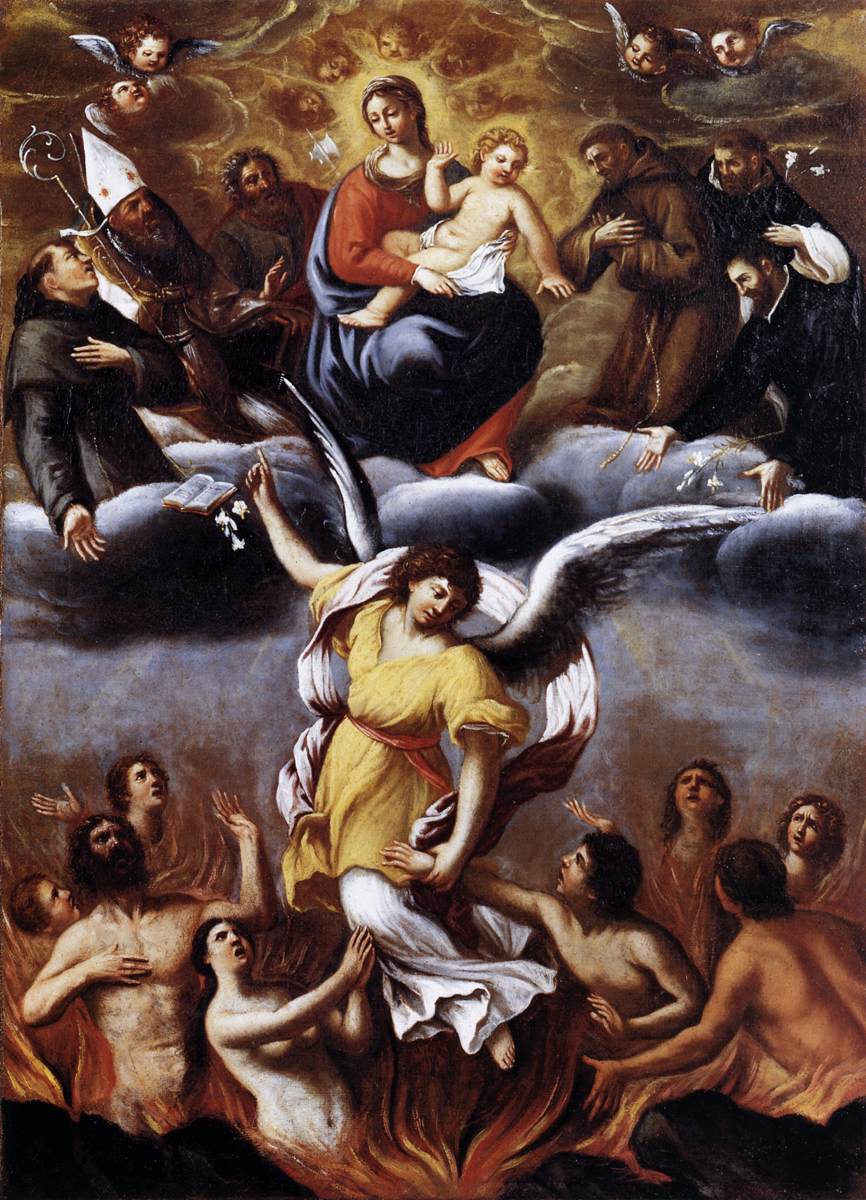
That’s a great and common question. It is all related to the idea of purgatory. From several verses in the Bible and the Apocrypha (Old Testament books not recognized at the level of scripture by Lutherans, but respected), Roman Catholics had developed the idea of purgatory – a place where our sins would be purged after death in order to make us worthy of living with God. More sin meant a longer time in purgatory perhaps hundreds or thousands of human years.
Thought to be a painful process or place, Roman Catholics discerned those languishing in purgatory might be helped with prayers offered for their sake. (Again, they did so using some scripture and Apocryphal sources, but also some questionable human mythic ideas that popped up over time.) In short, they began to think people could make sacrifices, pilgrimages, etc. to help the dearly departed or themselves. This eventually came to include paying money to satisfy any debt for sin. That’s where paid indulgences came into popularity and eventually Luther’s 95 Theses in opposition.
Although paid indulgences don’t exist as they did in the 16th Century, the Roman Catholic Church still holds onto the idea of purgatory and the need for additional satisfaction for sin. Although some modern Roman Catholic theologians now focus on purgatory being more of a process than a place, you still find literature and devotions allowing for a certain number of years off any time in purgatory based on prayers (rosaries said or novenas for example), masses said where the souls of those in purgatory are prayed for (usually for a donation), or specified approved service or pilgrimages (for example, some pilgrimage completed and 0 or 500 years off). At other times no such benefit is promised. The benefit is discerned by the Church leadership under the Pope, not locally. Despite some changes in or diversity amidst explanations offered, old ways die hard.
Although Lutheran’s often pray at the time of death, funerals, and committals that Christ accept the soul of the departed into his care and keeping, we don’t agree with the idea of purgatory per se. We don’t feel there is firm scriptural proof for it. Luther did for a time seem to hold onto the idea that some kind of purging would happen, but this did not necessarily mean a place existed nor was it anything faith in the death and resurrection of Jesus couldn’t cover. If there is any “purging” (or in effect “purifying”) this isn’t something we worry about or seek to describe. We are saved by grace through faith in Jesus. That’s all we know clearly from scripture. That’s what we trust in. Luther used to argue, “Remember you are baptized,” and “Jesus doesn’t lie.” If you are Jesus’ through faith and baptism, you are saved. Yet, Lutherans and other Protestants (particularly the Reformed) sometimes still talk in terms of “glorification” after death which might echo the Roman Catholic view somewhat. Yet again, we all basically reject the Roman Catholic construct of purgatory.
That said, when someone Roman Catholic has paid for masses to be said for the soul of someone who has died, a “mass card” is often sent to let the bereaved family members know. The mass is said as an offering for the person to be acceptable before God. (There might be other names prayed for at the same time.) It is meant to honor and help the departed and comfort the grieving, so I just say thank you instead of entering any theological debate. It was a gift offered in love and their faith. If they ask about our faith in regards to this practice, I’m honest. In my heart, I trust my loved one is already covered by grace through faith. On the negative side, some Roman Catholic agencies and parishes (not all) can use paid for masses as a form of fundraising – not so unlike Luther’s hated indulgences. Its problematic on many levels even among the Roman Catholic faithful, but sadly, it does happen.


 2pennyblog