
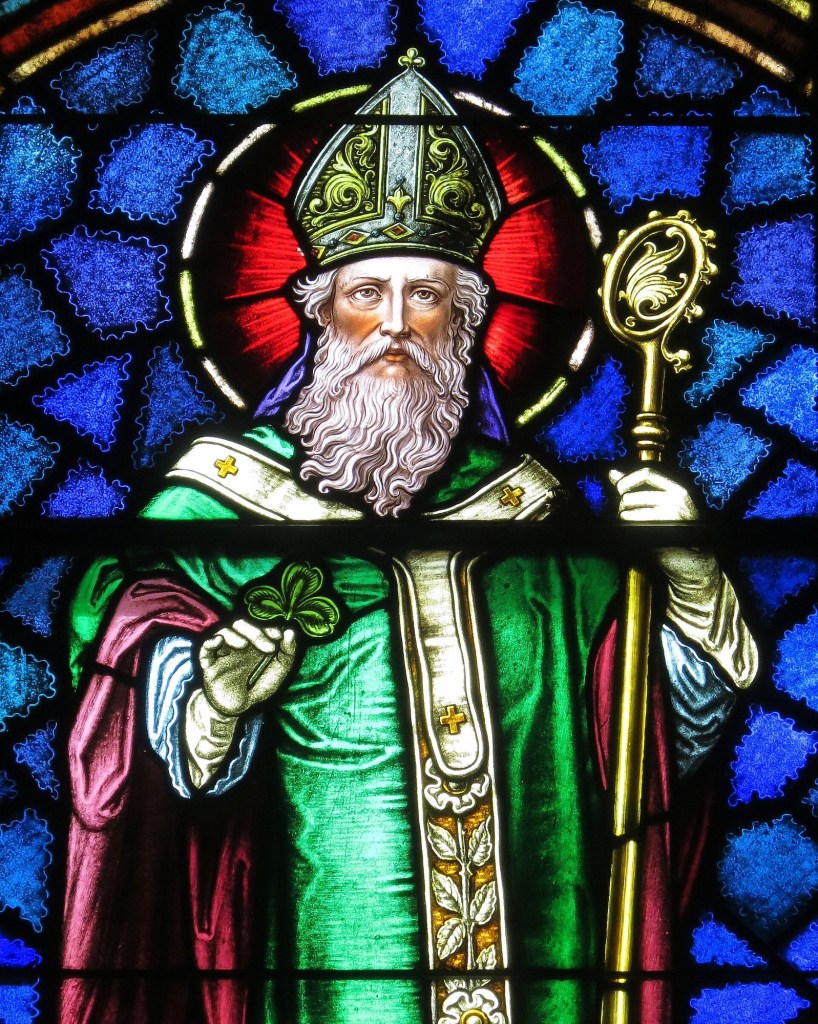
Stained-glass window of Saint Patrick from Saint Patrick Catholic Church, Junction City, Ohio, United States (Wikimedia Commons)
On St. Patrick’s Day, you often see at least part of his famous Breastplate prayer from the Fifth Century posted on social media somewhere. (The full prayer is below.) Yet, people can often miss the significance of what Patrick said when he encountered Christ in other people – in every eye that saw Patrick and every ear that heard him.
Basically, a deep, traditional belief of Christianity was that Jesus is in everyone before we ever know him. He’s waiting to be discovered and made known, calling us, ultimately to be trusted as Savior and Lord. As Martin Luther later argued in the 1500s, Jesus is in us as we seek to love and serve, and we can hear Jesus crying out to us in the suffering of others. A saintly Orthodox nun, Mother Gavrilia, warned in the 20th Century, “If you don’t like someone, remember you are looking at Jesus in the face.” (If you know me, you likely know these quotes are among my favorite for how they challenge me.)
So perhaps in modern times, we might like to add to Patrick’s prayer: “Christ in Republicans. Christ in Democrats. Christ in everyone in between. Christ in citizens and legal immigrants. Christ in those without papers. Christ in persons of all nations and races. Christ in those that love us. Christ in those who hate us. Christ in everyone I see or hear.”
If we dare recognize that Christ is in others, if we seek to find him there, how might that temper our responses to hot button issues of our day? How might it convict us and make us pause when Jesus isn’t seen in our actions or what we say? I imagine it would make us less severe. At least, it often helps me be so. We might even discover a common cause, for we already share a common call from Jesus, “Come. Follow me.”
Among the most difficult and sometimes disturbing commands of Jesus is that we love our enemies. Even those who annoy us, we are to love. As I’ve noted before, this does not mean there are never consequences for ill behavior. It doesn’t prohibit us from turning our cheek and walking away when things are too dangerous, toxic, or prove to be situations tempting us to fall into grave sin. We might not be friends, but we must seek to love.
Why? Jesus asks us in his teaching and preaching to see the sacred in others; to tread carefully as best we can for we who Jesus claims as his own always stand on holy ground. You see, he is with them and us, too. And how we respond to one another matters. He hung on his cross to draw all people to himself (John 12:32). We are not to declare others outside of his love. We are not to get in the way. Thus, many of these people drawn will likely shock us as Jesus’ associates often did the Pharisees of his day.
We struggle to live out this command to love because we are fallen humans prone to tribalism and selfishness. Still, never give up hope when Jesus is present. When we fail, which as humans we will fail, we can confess our error, ask forgiveness, and seek to make amends. Even then there’s grace.
We can arise today because Jesus loves us. We need never act in fear of “the other,” be crushed when others reject us, or doubt about ourselves because of our darkness or shame. We can arise to love others as Jesus loves us because of God’s desire that we do so. We can arise who are sinners, outsiders, and too often betrayers of Jesus ourselves because he died and rose for us.
In the name of Jesus Christ, despite whatever we’ve done or left undone, it is time to rise up and walk – wrapped in his love and forgiveness, ready to embrace the day and those we meet. Let nothing trouble us or stop us. For Jesus is in us, walking with us, and waiting to meet us on our road ahead. He is above and below us. Jesus longs to be our everything.
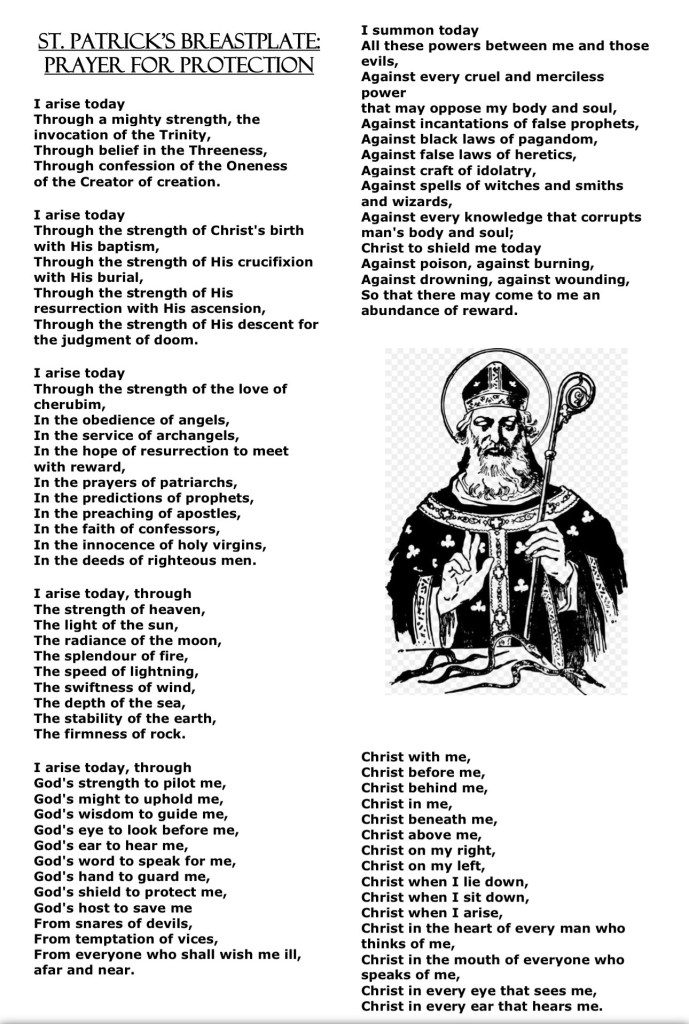
in the United Kingdom
© 2026 The Rev. Louis Florio. All content not held under another’s copyright may not be used without permission of the author unless under terms of fair use and properly attributed. Scripture passages when used are from the NRSVue translation unless otherwise indicated.


 2pennyblog