
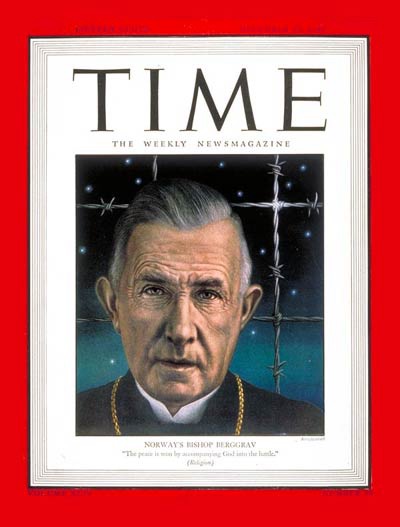
“In this world of despotism and injustice, the Lutheran church will always be something dangerous or else it will cease to be a Christian church.” Eivind Berggrav, late Bishop of Norway addressing Assembly II of Lutheran World Federation, Hanover, 1952.
Just last year at this time, Lutheran social service organizations were being called money launderers, sex traffickers, and criminal conspiracies by members of the administration and DOGE supporters. As I’ve written and spoken about elsewhere, this was patently ridiculous as they generously help 1 in 50 people in the USA and always strive to meet non-profit best practices including outside audits. Many organizations serve our international neighbors as well, especially since the ravages of World War 2. Certainly, here and there one can point to moral failures or ignorance, but overwhelmingly, these non-profit para-church organizations have historically been celebrated internationally and at home by those whom are liberal or conservative.
With the passage of time, people have moved on to other things to be publicly outraged about. An alleged concern for the budget has turned into gigantic expenditures for concerns over immigration and border control. A majority of the US population in turn has concerns about how this is being done according to polls, not just if it’s being done. (One poll shows that voters are split on deportations, but two-thirds feel ICE is acting in error.) Meanwhile despite drastic cuts and a country in political conflict, these parachurch organizations continue to try to love our neighbors concretely.
Of course, sometimes trying to do what’s right means putting up with slander or worse. In Bishop Eivind Berggrav’s case, he was arrested by the Nazis in Norway, and sent to a concentration camp. He was the primate of the Church of Norway, and as he would not cooperate with their desired control of the Church’s messaging and practice, he was considered a threat as do many individuals.
The Church under Bishop Berggrav’s leadership and urging refused to alter the liturgy and scripture to fit anti-simitic norms and Nazi cult preferences, compromise their youth groups, or allow Nazis to dictate how the Church serves their neighbors – all of them. After his arrest, a majority of Church of Norway bishops and pastors gave up their state offices in protest. (It was a national church in Norway, not a “free Church” as in the US, so the symbolism and impact was significant and dangerous.) Due to the intervention of some German dissidents, his life was spared and solitary confinement followed. While under house arrest, he was able to secretly help lead the ongoing resistance against the Nazis. Some sources indicate that some guards even helped him leave his confinement to do so.
Our modern issues might be different, but the true Church often remains in conflict with the powers too often wrongly ruling our hearts and our world; sadly blinding us to empathy and compassion. Indeed, some deeply mistaken if not sinful pastors wrongly call such longstanding Christian values a sin. Yet despite aspersions, being true to our faith and seeking to love all our neighbors remains critical at all times. There should be no compromise.
Yet, life is complicated. The above doesn’t mean all laws are to be cast out or ignored, as border control and fair immigration laws can help protect everyone to include immigrants. I agree when people say, “I lock the door to my home, and it’s good to know who is in any country.” I also understand those who have been given much by God have a sacred responsibility to generously care and share with others which for some might include offering a path to citizenship. It certainly includes making some sacrifices to help the poor and oppressed in other countries too. I’m not making light of anyone’s understandings or concerns, but I do hope to stretch them.
Despite some passionate and sincere voices, I know there are dangers if immigration policy is not enforced. When a police officer, I remember encountering the realities of gang activity and violence related to immigration issues of the 1980s and 1990s. I saw the violence and can’t unsee it. I experienced the frustration when people that I arrested for violent crimes were here illegally yet set free on bond and ultimately did not appear in court. I remember receiving grave warnings about booby traps and ambushes.
Yet even amidst danger, if laws and their enforcement don’t reflect justice with mercy, and we struggle to understand that all people are our neighbors and derserve humane treatment, and prosecution is selective or politically punitive, the Church needs to stand firmly and unequivocally against those unjust practices. It must also speak to grace and generosity. Unfortunately, such stances won’t be welcomed by some. Thus, it can take courage.
If Christian, our individual manifestation of this call might not always be found in active, peaceful, public protest so popular in our culture, although it remains the important calling of many. Violent protest and interfering with force of any kind in law enforcement proceedings is a huge risk to yourself and others. There’s a time for war, the Bible says, but let’s not hastily assume it’s now. Mob justice isn’t justice either, and peaceful protests have been making a valuable difference.
And if you are a Federal agent or government official reading this, what then? One can seek to exemplify patience and as much gentleness as possible even as an angry crowd surrounds you. Expect and demand ethical behavior from yourself, and if one sees violations report them to authorities that will listen and act against them. Be on guard about “group think fears” that danger is lurking everywhere, as for decades, research has showed it makes one more prone to violence. We are to see Jesus in those suffering but also our enemies. (This is an ancient belief dating back to the Church Fathers.) Don’t celebrate violence, for violence is not God’s will for the world even if deemed necessary in a fallen world. If the wrong is too much for you to stand up to or change in your agency, resign and speak out. It will be stressful but God will provide. At all times and every level of government, police legitimacy matters, and a lack of legitimacy in many people’s minds is making violence and accidental injury or death much more possible for both agent and citizens.
The immigration debate is an important one. I can’t solve it here. It might never be solved to everyone’s satisfaction no matter who is in power. For a democratic republic to work, one has to give and take. The same goes for policies trying to meet all our wants and help the hurting people of the world. Jesus knows the poor will be with us always until he comes again (Matthew 26:11, Mark 14:7, John 12:8), but he also asked us to love, serve and help them anyway. Certainly, we must vote with all its risks and problems. Yet most importantly, whatever our calling, whatever form of government, our daily witness to love our neighbor – while inviting or inspiring others to do so – makes a difference. And, that often overlooked, “ordinary” witness can come in many forms.
If in favor of the policies in place, how can they be reformed to have less mistakes or abuses occur, as well as lower anger against the policy? If against, how can one communicate this with tolerance, patience, and not becoming what one says one hates? We have to see one another as nothing more than what we all are – fallible humans, prone to hubris induced blindness, in need of love and forgiveness. Not all protestors are “terrorists,” and not all agents are “evil,” although any of what we do on any day can be unwittingly evil, and all of our choices and insights fall short due to sin.
Our society is sick right now, and we need God’s help and guidance to heal. And so, God is calling you, me and all to be part of the answer to our collective problems – ultimately sin. God’s call varies as much as God’s people, but the call also can include changing over time. Don’t be afraid to repent, a turning back to God and God’s ways. One can’t settle or refuse to change with the Spirit (not a matter of changing with the times necessarily). Whatever our vocation, whatever stage of life one is at, God calls all of us to love our neighbor as ourselves concretely in both word and deed. Our goal is as Micah 6:8 says, “To act justly and to love mercy and to walk humbly with your God.”
Anything else is falling short. It matters not if it’s the government representing us, a church or para-church organization, or our own actions day to day, we need to work together, as hopeless or impossible as it might seem, to make the world a better place. We need to hold others to a just account when wrong for their own sake as well as society’s. We are called to offer forgiveness, responding as peacefully as one is able while being a human in a fallen world. And perhaps among the hardest things, remain open to reconciliation. Ultimately, we are not to sit on the sidelines, lose hope, or give up. For, Christ is our hope, and he has shown us how to love – unto our death.
Sadly in the unhealthy tenor of these times, critiques, criticism or doing what is right can result in condemnation if not attacks. I’ve had people say they are afraid to speak or post what they think pro or con, on any issue. Yet calling for kinder treatment, following the law and established use of force policies, or even patience as one deals with or works through both just or unjust anger is not something we as Christians should be disagreeing about. It’s our only way forward.
Yes, some violent protests have happened, but it’s not the norm despite some catastrophizing claims. Certainly, some violent criminals are being removed but government reports say they are the minority despite political claims. (ICE data in November 2025 analyzed by the Cato Institute indicated that only 5% had a violent conviction. Nearly half had no criminal conviction nor even any pending criminal charges.) True, some anarchists and people who often frequent protests are present at protests, but the vast majority are just regular, concerned citizens and neighbors. I know of people in Minnesota protesting when they never have protested before. With reported aggressiveness and questionable uses of force, even a two time Trump voter and still admitted MAGA supporter expressed concerns to me recently over how things are being done. Can’t we do better? Right now, things seem at a pretty low bar. We have to.
Thus, I’ve been thinking a lot about Bishop Berggrav and others in the church who stood up for justice. Some worked behind the scenes while in government positions like Bonhoeffer. Others valiantly spoke out risking death like Martin Luther King or Oscar Romero. Still others were quieter witnesses serving all others out of the spotlight like Br. Roger of Taize’ during World War 2 – helping Jews during the war and German POWs afterwards. Countless others did their part to bring goodness into a bad situation but will never be known but to God.
We all need to consider what we can do to act in love rather than react in anger or fear in our social space. (This includes social media.) This should not be seen as a claim that we are facing Nazis (or “terrorist immigrants” for that matter) under every bed. Yet we aren’t loving others when our justice system doesn’t reflect the love of Christ and laws are too often disregarded or worked around. Americans and other legal residents have been wrongly detained. I’ve noted watching videos what appears to be unnecessary aggressiveness and occasions of excessive force. People have died needlessly. And agents and government officials have been caught in lies. It’s all too common and happening too much. It’s not about left or right. It’s about justice. It’s about loving as God loves us through law and gospel. We need to repent for our part and call others to repentance. If we do otherwise, look away, or stay silent, we might be the ones on the wrong side of the border when it comes to God’s law and his gospel grace.
In following such a call, we will likely be misunderstood. Many may accuse us. Many more will never listen. We might be threatened or face violence. Yet, this proved Jesus’ path, too, and we, the Church, are meant to be his living body walking in his love. No matter how bumpy or unclear the road, we remain his. Be comforted, and seek to act justly and with mercy without delay.
Scripture for meditation: [Jesus said,] “If you were of the world, the world would love you as its own; but because you are not of the world, but I chose you out of the world, therefore the world hates you. Remember the word that I said to you: ‘A servant is not greater than his master.’ If they persecuted me, they will also persecute you. If they keep my word, they will also keep yours.” (John 15:19-20)
Let us pray: Mighty God, you gave your servant Eivind Berggrav, together with the bishops and faithful priests of Norway, strength and courage to resist tyranny, to defend your ancient people the Jews, and to uphold the rights of your church: So strengthen our faith by their witness, we pray, that we in our generation may serve you faithfully and confess your Name before the world; through your Son, Jesus Christ our Lord, who lives and reigns with you and the Holy Spirit, one God, now and forever. Amen.
Eivind Berggrav is commemorated by the Church on January 14 for his Christian life and witness.
I previously wrote about Bishop Berggrav when I first started my blog, the very first post on January 14, 2011. You can learn a bit more about him here.
Post Script: After publishing this post, Reuters indicated that courts have ruled over 4,400 times that ICE detained people illegally. We need to demand better.
Click the link in the comments below.
© 2026 The Rev. Louis Florio. All content not held under another’s copyright may not be used without permission of the author. Scripture passages are from the NRSVue translation unless otherwise indicated


 2pennyblog