On coming to the house, they saw the child with his mother Mary, and they bowed down and worshiped him. Then they opened their treasures and presented him with gifts of gold, frankincense and myrrh.” (Matthew 2:11)
Have you ever taken a good look around our sanctuary? Our stained glass windows are beautiful and educational. Long before the average person could read, people attempted to capture and share the wonder of God’s love for us through the art of stained glass.
At this time of year, my thoughts are always drawn to meditate upon the meaning behind our nativity window. It shows the star of Bethlehem shining above a manger. In the manger is the ancient “Chi Rho” symbol. This symbol is the first two letters of “Christ” in Greek joined together. Early Christians used this mark to represent Jesus. The window reminds us that Jesus, the Christ, came to us in human form at Christmas. Such news becomes even more wondrous when one considers that he comes to us throughout time. He is the Alpha and Omega, the beginning and the end – present before history began and will be after it ends – because Jesus always was, is and will be our God who is with us and for us.
Luther once wrote that the Bible is like the manger where we can meet, know and worship Jesus the Christ over and over again. This, too, is true, but it also doesn’t quite capture this special relationship – the intimacy spoken of goes well beyond “knowing” Jesus with only our intellect. Our holy texts assure us that Jesus has come to live with us in our hearts. Jesus wants to abide in us. He longs to be an intimate part of every aspect of our lives. This joyful mystery cannot be captured fully in written word or by any other human art, yet my thoughts came back to an old 18th Century Danish hymn which focuses upon the joining of our human hearts with the divine heart though the incarnation and gift of faith. It is one of my favorite pieces of Christmas music.
Written by a Danish Lutheran pastor and later bishop, Hans Adolph Brorson, Mitt Hjerte Alltid Vanker (in English, sometimes entitled “My Heart Always Wanders” or “My Heart Remains in Wonder”) movingly grasps at the surprise and mystery of the incarnation. Soundly pietist, the reflection remains more oriented toward his feelings and heart rather than any intellectual exploration. The lyrics reflect relationship and intimacy, as well as grace and gratitude. Contemplating this miracle, God coming to us as a vulnerable newborn in a stable, Brorson’s own mind and heart wanders and enters a blissful wonderment as he thinks about his current saving, relationship with Christ.
O come, my Lord, I pray Thee!
And be my honour’d guest,
I will in love array Thee
A home within my breast.
That home can be no stranger
You bought it all yourself.
Thou will surely stay here
Swaddled in my heart.
We will never be able to fully appreciate, capture, or understand the miracle of love offered to us through Jesus Christ. Yet because it is not just an historical event, each and every day we may strive to cooperate with grace and make room for the Christ child in our hearts above all other things. His birth should move us to reflect upon the ultimate, ongoing Christmas miracle which comes to us through Christian faith, worship, fellowship and service. Christ’s Spirit continues to shape us and sanctify us into the gift God first intended with our own creation. We become part of God’s greatest gift to the world, where in Jesus’ name, we will love others. Through grace, we concretely become the Christ’s body, here and now.
Throughout your holiday wanderings and celebrations, I pray that you, your family and friends stop and ponder the nativity. Continue to wonder about and experience this joyful mystery and invitation in your life. Rejoice, for a child has been born for us! His name is Jesus, and we will never be alone or unloved. In response, let us seek to rightly worship him, opening our hearts and offering all that we are to him in thanksgiving.
—————————–
Many variants of the song exist in English due to the difficulty of translation. Along with the above video, here are English lyrics for this wonderful Christmas song:
My Heart Remains in Wonder/My Heart Always Wanders
My heart remains in wonder (or better translation: My heart always wanders)
Before that lowly bed
Within the stable yonder
Where Christ, my Lord, was laid. (or: was born)
My faith finds there its treasure,
My soul its pure delight,
Its joy beyond all measure,
The Lord of Christmas night.
But Oh! my heart is riven
With grief and sore dismay
To see the Lord of heaven
Must rest on straw and hay,
That He whom angels offer
Their worship and acclaim
From sinful man must suffer
Such scorn, neglect and shame.
Why should not castles royal
Before Him open stand,
And kings, as servants loyal,
Obey His least command?
Why came He not in splendor
Arrayed in robes of light
And called the world to render
Its homage to His might?
The sparrow finds a gable
Where it may build its nest,
The oxen know a stable
For shelter, food and rest;
Must then my Lord and Savior
A homeless stranger be,
Denied the simplest favor
His lowly creatures see.
O come, my Lord, I pray Thee,
And be my honored guest.
I will in love array Thee
A home within my breast.
It cannot be a stranger
To Thee, who made it free.
Thou shalt find there a manger (or: Thou will surely stay there)
Warmed by my love to Thee.[i](or: swaddled in my heart)
In English, it is difficult to find a flowing, direct translation of the traditional final stanza in Danish or Norwegian, but it means roughly:
I’ll willingly spread branches Of palms around your bed. For you and you alone I will live and I will die. Come, let my soul find bliss In this moment of delight: To see you born right here, Deep inside my heart’s abyss. (or: loving heart)[ii]
[ii] Translation merging multiple sources, primarily the above video and pust.org
The above piece was adapted from one shared in Messiah’s newsletter, The Messenger, in November 2009. Unless otherwise indicated, all scripture quotations for this article are from the New Revised Standard Version (NRSV) translation.
Grace and peace to you from God our Father and from the Lord Jesus Christ. Amen.
Every year as we approach Lent, I am surprised at how many comments I hear or read about indicating that “Lent is not biblical.” When I come across such comments, I bristle a bit. I feel disappointment and frustration, and yes, sometimes even some anger when the person is particularly snarky about it. Of course, it isn’t biblical! No one is claiming that the season of Lent is biblical. It is no more biblical than Christians arbitrarily deciding upon December 25th as a good day to remember Jesus’ birth is biblical – not in the strictest sense anyway.
Yet, I fear these folks are missing the forest for the trees. They are sadly missing an opportunity to be blessed. There is no specific call for Lent in the Bible (no one is arguing that), and still, isn’t it remarkable that the earliest Christians found designating such a season spiritually helpful? During these forty days (not counting Sundays which are remembered as days of Resurrection), special disciplines are encouraged as they serve to nurture faith in the individual even as they might serve to witness to our faith and grow Christ’s Church. This season…a season designated by the community of faith for the good of all and to honor God…was found to be a meaningful, beautiful time of preparation for Easter. So, it became a yearly practice and was given a suitable name. The season became known as Lent, an old English word meaning spring.
Yes as with spring, we may witness new growth and new life during Lent. This is what we hope for during these forty days, but we may prevail upon its disciplines at any time of year. Such disciplines don’t lead to a reward for our goodness. They aren’t something we do to become holy, for we cannot become holy by our own power. Instead, such practices become our opportunity to “live in Christ” – to live out our faith concretely nurturing our love for God and others and thereby offering us a chance dwell in God’s grace and love for us. It is for that reason that we find such disciplines commended in the Law and the Prophets, and even by Jesus himself.
The Psalms[1] are filled with such spring-like imagery as are the prophetic texts[2], and some of Jesus’ own parables[3]. Our life with God is always filled with bounty and blessing, often symbolized by natural things: the streams that refresh us; or the trees that serve as protection or a home for God’s beloved creatures. For the many disciplines of Lent – reflection upon one’s life and repentance, fasting, prayer, and most certainly almsgiving and acts of mercy – they can become like the tall cedars of our faith providing us a safe dwelling place in this world of trouble…a place of comfort and shade, strength and renewal. Amidst their many branches, God embraces us. God can even transform us. This Lenten invitation to take actions rooted in our faith in Christ serves only as a reminder of what Paul said in his letter to the Romans, “God’s kindness is meant to lead us to repentance.”[4] It leads us toward a deepening unity with Jesus, both his life and in his church.
Indeed as someone said recently, “Ashes don’t say we’re holy. They say we’re sinners.” They are to reflect the ongoing prayers of our hearts, “I’ll try to be better. I’ll do what Lent asks: more prayer, more sacrifice, more almsgiving.”[5] Western Christians whether Roman Catholic or Protestant desire to remember their total reliance upon God’s grace. “Remember you are dust, and unto dust you shall return,” we are told. This life is fleeting, sometimes dangerous, and we at our best are only sinner-saints.[6] We need the grace of Jesus Christ to help us make it through. The church as a community, as the body of Christ, commends these practices to us. Through them, we may be built up by God and encouraged to build up one another.
Using varied words throughout Christ’s diverse and universal Church, we hear as much during community worship on Ash Wednesday. For example, the Episcopal Book of Common prayer (not too unlike our Lutheran commendation to a holy Lent heard earlier tonight) rightly proclaims, “The first Christians observed with great devotion the days of our Lord’s passion and resurrection, and it became the custom of the Church to prepare for them by a season of penitence and fasting. This season of Lent provided a time in which converts to the faith were prepared for Holy Baptism. It was also a time when those who, because of notorious sins, had been separated from the body of the faithful were reconciled by penitence and forgiveness, and restored to the fellowship of the Church. Thereby, the whole congregation was put in mind of the message of pardon and absolution set forth in the Gospel of our Savior, and of the need which all Christians continually have to renew their repentance and faith.”[7]
So, we begin this season of Lent with ashes – a broken, struggling people – but also gathered together as one holy people of God. Our sin is systemic, shared and individual, but we are also chosen and loved. God plans for our redemption. In a time of trial for the nation of Israel, Joel commended these same types of behaviors.[8] By their apathetic faith, unholy alliances with powers of this world, and acts of selfishness and sin, the people of God were at risk in those days. They were weakened as a nation by such behaviors, and a terrible plague of locusts put them further at risk – at risk of invasion, starvation, and suffering. Joel hoped that by immediate repentance the advancing threat would be turned aside by God.
Well, hear the Good News! Thanks be to Jesus Christ, we need not just hope. Salvation is ours. Forgiveness is possible, and it isn’t too late. No matter who we are, what we have done or failed to do, the grace of Jesus Christ invites us into his loving arms. These are days not of gloom and doom but of growing light. They are days to be celebrated. Through Christ’s cross, the sin of all who trust in him has been redeemed. His cross previously an instrument of torture and death became for us a forgiving place of shade where we can invite our friends and neighbors to also find rest. Through our baptism, we are clothed in Christ, the finest of garments, given new life and a new family of God. This is much as Zachariah and other prophets have promised throughout the ages.[9] It is a new day, a final age where Jesus is coming back to complete his work, and we are invited. In our hearing, all God’s promises have been fulfilled in Jesus Christ.[10]
As unworthy as we all might be, we are still loved by Jesus! And since we are so loved – loved unto his own death, Jesus invites us to gather, remember, and experience new life: remember our need for God; remember our failings and all the ways we turn away from God; and not least of all, remember all the grace-filled ways Jesus reaches out to us, drawing us back.[11] We have this shared forty-day journey to re-experience Jesus’ parable of the vine and the branches.[12] In this season, we will bear fruit by intentionally striving to remain in the vine which is Jesus. We admit openly that without Jesus we can produce no fruit, and so we turn to him all the more and hold on in faith. We will seek intentionally to better love God and our neighbor. We desire that this dedication and fruitfulness will not fade after forty days but instead last a lifetime. It will be Jesus who will use this time to prune us and bring new life. His light will overcome our darkness, and it will shine more and more brightly.
This is our Lent, our springtime given us as a gift in the present even as we await the eternal Easter of our future. Lent is more than a season of time. It is a call to a way of life, Christ’s way. It goes well beyond the Bible even as it is rooted in it, because together on this journey, we have the opportunity to personally encounter anew the living Word of God, Jesus Christ, our Lord and Savior. Amen.
The above pastoral letter was originally published in Messiah Lutheran Church and School’s newsletter, The Messenger (June 2013 edition). To view the entire issue of The Messenger or to see the full calendar of events, visit: http://www.mlcas.org
Unless otherwise indicated, all scripture quotations for this article are from the New Revised Standard Version (NRSV) translation.
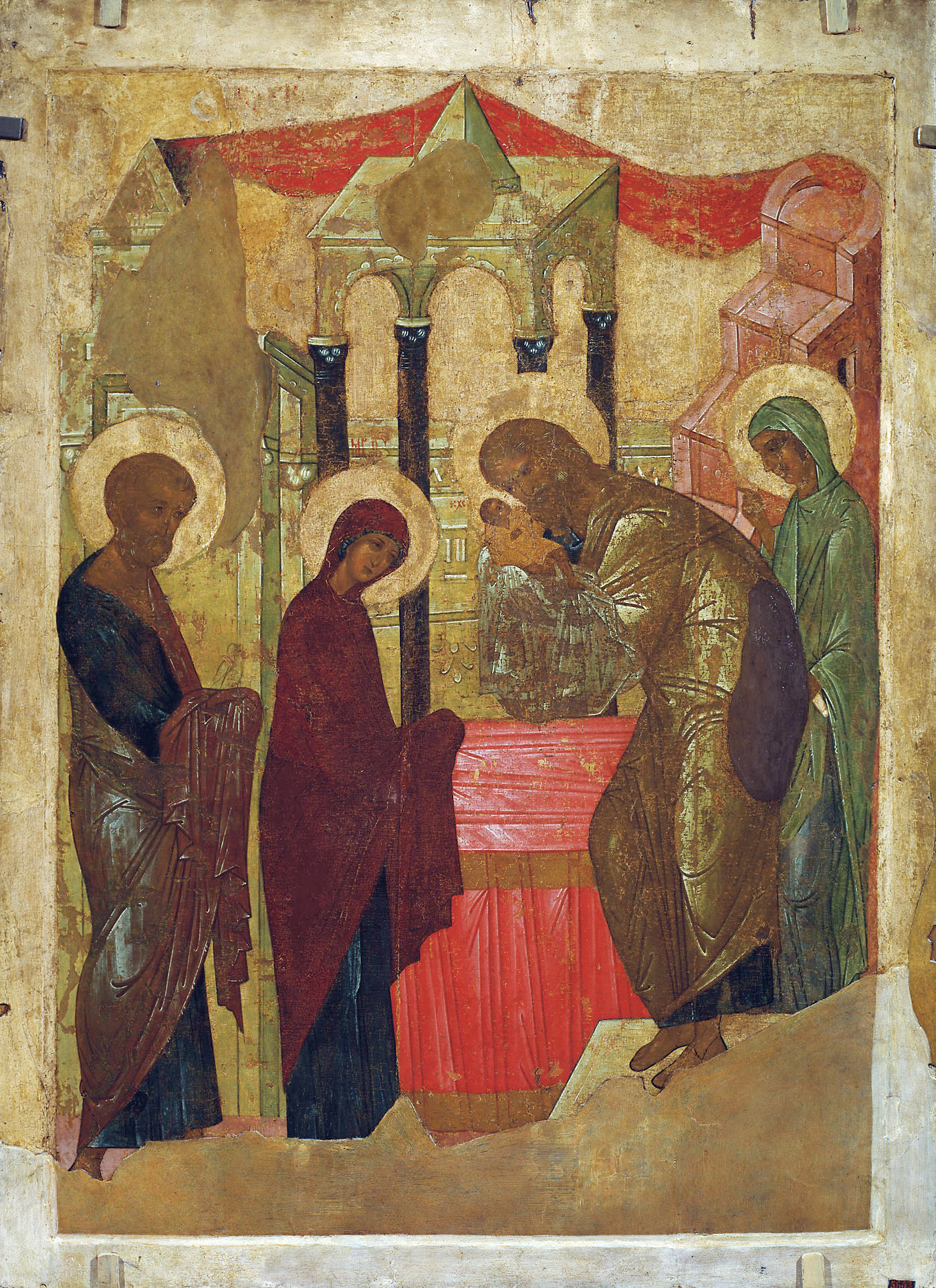
Forty days after Christmas on February 2nd, Christians recall the Presentation of Jesus in the Temple. In a number of Christian denominations the season of Epiphany comes to an end. According to scripture, Mary and Joseph took the baby Jesus to the Temple in Jerusalem forty days after his birth to complete Mary’s ritual purification after childbirth and to perform the redemption of the firstborn in obedience to the Law of Moses (Leviticus 12, Exodus 13:12-15).
As Mary and Joseph were poor, Mary was relieved of offering a lamb and a dove for her offering. Instead, she was to “take two turtle-doves or two pigeons, one for a burnt-offering and the other for a sin-offering; and the priest shall make atonement on her behalf, and she shall be clean” (Leviticus 12:8).
Around the globe, Christians will likely remember these early events as reported in Luke 2: 22-40. In fact, it is one of the most ancient feasts of the Christian church. With the traditional end of Epiphany, many remove any remaining Christmas greenery from their homes. If you are visiting the Taize’ Community in France, you will likely see a cage with two doves or pigeons in their Church of Reconcilliation. After the service, the birds are released. As the story reflects the light of Christ breaking into the world, it remains a common practice at many services throughout the world to bless candles for use during the year. To this day, some countries share special meals during family celebrations (i.e. crepes in France, or tamales in Mexico).
Pennsylvania Dutch folklore attached an ancient, pagan European practice of weather prognostication to this day. If the groundhog sees its shadow, superstition indicates winter weather will continue for six more weeks. (In ancient Europe, one might have heard of a badger or sacred bear serving this purpose.) Yet, such beliefs weren’t only held in Germanic nations. In England, one old English poem exclaims:
If Candlemas be fair and bright,
Winter has another flight.
If Candlemas brings clouds and rain,
Winter will not come again.
No matter the weather, I hope you and your family will develop your own ways of recalling the Presentation of Jesus. It reminds us of the Holy Family’s piety, and our family’s call as well. It displays a family united by love, as our own should be. The feast most importantly can remind us of how that young male child redeemed on that day came to redeem us through his cross and resurrection. We really should celebrate!
Unless otherwise indicated, all scripture quotations for this article are from the New Revised Standard Version (NRSV) translation.
The following are the three meditations I shared during our Family Christmas Eve Service at Messiah Lutheran Church and School in 2012. Our theme was “Sent into the World.” We remembered both how Jesus was sent into our world to save us as a newborn babe and how we are sent as his church out into the world. Thus, the service included many hymns and carols from all over the world. The three below were part of the meditation portion of the program, but it was a night filled with music and fun.
The Gift of Jesus
Reading: Isaiah 9:2-7
Prop: small Christmas tree ornament of the globe
“The people who walked in darkness have seen a great light; those who lived in a land of deep darkness—on them light has shined” (Isaiah 9:2).
Consider the world [holding up ornament]….Ok, it’s a bit larger than this ornament, but it’s a relatively small place in the vast, extensive darkness of space. Proportionally, this ornament in comparison to your own size is much, much larger – infinitesimally so – than what we would find with a God’s eye view of our planet. Our world is only a small rock in a vast galaxy that itself is only one of millions of galaxies. Our universe was created from a black void – both the Bible and science think so – and this poor little sphere spends much of its time suspended amidst that darkness; hidden by larger heavenly bodies, and threatened by them as well. Yes, our fallen world is filled with threats and horrors and many terrible unknowns, and it always has been. Yet, light breaks in to give warmth, nurture life, and bring joy. Amidst a cosmic battle, God doesn’t leave us unloved or alone in the dark. Instead, he chose to dwell among us…even became one of us on this tiny, out of the way planet we call home.
Long ago, the great prophet Isaiah lived in the 8th Century BC. It was a time of much darkness. Certainly, they didn’t have our modern conveniences or scientific knowledge, but they shared in our troubled humanity. Throughout Isaiah’s life, the nation of Israel faced wars and rumors of war. At least three times, the existence of Israel was at risk of obliteration and exile. It was a time of early death due to violence, famine and disease. There was seemingly too little joy and never enough peace. Yet, a son was born to a young maiden, wife of the king, and the prophet saw in this somewhat ordinary experience the promise that lay within. God would be faithful no matter how dark the days got. God’s plan to rescue his Holy people would never go unfulfilled. Later Christians would understand this same passage to testify to the coming of Jesus Christ.
Over the last few weeks, we have seen too much darkness. Many are still homeless in the northeast after Hurricane Sandy. Diplomats in Benghazi were horrifically killed. In Connecticut, we hear the cries of modern “Rachels” weeping as foretold by the prophet Jeremiah. (See Jeremiah 31:15-17 and Matthew 2) They cry over too many innocents and our own innocence lost in the safety of their small town school. Closer to home and only in these past few weeks, members of our community have suffered new joblessness, accidents and serious illness, and our beloved Assistant to the Bishop, Pastor Chip Gunsten, died unexpectedly. More tears. More death. Darkness. We might be tempted to echo the writer of Lamentations wondering, “Why God would allow such things? Why would he punish us so?” as we groan anew:
5 [God] has besieged and enveloped me
with bitterness and tribulation; 6 he has made me sit in darkness
like the dead of long ago. (See Lamentations 3)
Yet in these times of trouble, hear the promises that come to us through Isaiah. Much like that time long ago, there is a sign to remember and hope to be found amidst our darkness. When the time was right, a virgin did conceive, and a very different child was born…one like no one before or since…perhaps beyond Isaiah’s own understanding. He would be a miracle of light, giving hope, joy and love to all the nations. This king would not be a king in our political sense. Instead, he would suffer under the political forces of our world as we might. He would live amongst the ill and dying. His life would be continually threatened from the slaughter of the innocents in Bethlehem until his own death on a cross. God had come, not to punish us, but to share our lot and change it; to end suffering and bring everlasting peace. All authority rested on Jesus’ shoulders, and yet out of love, he took upon those same shoulders the weight of sin, death and the Devil to defeat them all and save us.
Like that original Christmas night long ago, Jesus comes to our tiny planet to touch our tiny lives and hearts today. He wishes to be God with Us, Emmanuel, and so none of the political chaos, evil or darkness is powerful enough to stop him. Although it might be hard for us to recognize him with our human senses at times, our faith hears his voice and trusts he is near. Together as church, we gather as one, holding on in the darkness and never alone. God does not will such suffering. God is only love. Jesus remains our proof, and the fullness of God’s Kingdom will banish our darkness forever when the time is right.
Until then, we testify to the light and hold on to one another – teaching, serving, worshipping, loving God and neighbor. For, “What has come into being in [that baby] was life, and the life was the light of all people. The light shines in the darkness, and the darkness did not overcome it (See John 1).”
Although we remain in this land of darkness, the light shines on us and through us still, and our Lord Jesus promises that it always will. No matter what worries us or threatens us…no matter the darkness we sense around us or in us, rejoice! Rejoice with the choirs of angels and all God’s saints for the promise of Christmas has come to us, and we will never again be separated from his love. Amen.
Carol, “Angels We have Heard on High,” Red, 289
The Gift of Grace
Reading: Titus 2:11-14
Prop: Wrapped package or gift bag – empty inside
One of my favorite traditions each Christmas Eve is to gather with my extended family and friends, share a special meal and open gifts. It is such a great joy to see the look of expectation through the eyes of my young nieces and nephews gathered together. Unfortunately sometimes…and I’m afraid it was the same when I was young too…the package comes all wrapped and beautifully bowed…it gets opened frantically, quickly…only to have the child move on just as rapidly to the next gift. The gift delights for a moment, but then the child moves on perhaps as if that beautiful gift box or bag was filled with nothing. [Emptying and examining package]
We, the children of God, spend much of our lives in a similar fashion. We chase after the next bobble or possession, seek positions of power that don’t last, and spend too much time in activities that can’t love us – costly time away from our family and friends. I often hear when someone has a near death experience or approaches the end of their life, “I wish things were different. I have wasted my life.” Yes, as children, we can easily lose our way.
Yet through Christ, a different gift lies before us; one that is eternal and can fill all our life’s empty places. We sense that something is missing, and that perhaps, we could do better. We somehow in our hearts expect more from this life. And so, Jesus calls us buy name, offering us the ultimate gift of his love and friendship.
The theologian Dietrich Bonhoeffer compared us to miners trapped underground. We might feel that we are without hope – waiting for death – until suddenly a voice is heard, calling from seemingly nowhere, yet calling in our darkness. “Where are you? Help is coming!” The helpless miner stands up, mustering strength to cry out in return, “Here I am! Come through to me and rescue me!” Faced with the inability to save himself, the miner admits his neediness, “I cannot come through. I cannot help myself. But I wait. I wait and will hold on until you come. Only come quickly.” The miner sees nothing, nothing at all to give him hope. He only hears the promise of the savior, “I am coming for you!” Blow after blow, the sound comes nearer. There is a last crashing, seemingly thunderous blow of the hammer…light breaks in…at first just a hope or glimmer of light…but yes, more…certainly more! One strike and he will be free. New life will be his.[i]
This story is a metaphor for the giftedness of our present life. Jesus has come to save us, he is with us, and he will come again. That saving work began in a small stable. It continued on a cross. It proceeded from a tomb. Yet this is only the first breaking in of his light and love. His saving work continues to dawn in our daily lives today. He calls us to wait…listen for his voice, hold on for his help, and live in his hope. Look up, raise your heads, and expect salvation…a salvation that not even the power of death can keep from us.
In return, we are only asked in the present age to seek lives that are self-controlled, upright, and godly, 13while we wait for the blessed hope and the manifestation of the glory of our great God and Savior,* Jesus Christ (see Titus 2:11-14). He will do all the heavy work, so that through faith, we receive a gift beyond price – a saving grace, a living grace…a grace that must be shared with others, so that we may one day taste our freedom fully together. With such a life reborn of faith, we’ll sense the light of Christ is near us even amidst our darkness. Amen.
Carol, “I Am So Glad Each Christmas Eve,” Red, 271
The Gift of Church
Reading: Luke 2:1-20
“Props”: the people of God!
In these modern times, skeptics demand proof. “Prove that the reason for the season is Jesus! Prove to me that God is love!” What signs can we give them?
Long ago, some less modern skeptics gathered in a field. They were of lowly status, shepherds of sheep. They were known for dirty bodies and dirty lives filled with drinking, lies, and even theft. They were a hard people shaped by the hardness of life, and they expected little.
“Then an angel of the Lord stood before them, and the glory of the Lord shone around them, and they were terrified. But the angel said to them, “Do not be afraid; for see—I am bringing you good news of great joy for all the people: to you is born this day in the city of David a Savior, who is the Messiah, the Lord. This will be a sign for you: you will find a child wrapped in bands of cloth and lying in a manger.” (see Luke 2)
The long expected sign for the King of Kings, the Messiah, our Savior…the one who would change all the world…was a baby! It was a poor infant from a poor family in poor circumstances. A child swaddled in simple, torn strips of cloth. That was the great sign of God’s love. God had come to share in the hardness of life and free us from it.
That child would grow to be a boy wise beyond his years. Then, he would become a man who preached and taught not as the scribes and priests did but as one with the authority of God. This great rabbi would travel the land by foot. He would walk far and wide reaching out not only to the expected Chosen Ones of God, but all people: the lepers, the wounded, and the greatest of sinners. Even on his cross, that man would share comforting words of God from scripture, pray for his persecutors, offer forgiveness to someone crucified beside him, care for his mother, and give up his own life so that others might live. Jesus’ life and being was and remains that greatest of signs of God’s love for us.
And so here we are, gathered as millions and millions of Christians have done over the millennia and do so tonight. We would not be here if Jesus hadn’t been born as one of us and risen from the dead…if people like us hadn’t been touched by the light of his life and past that light on to us through the ages (as we will symbolically do with candlelight later this evening). The incarnate Christ is who we worship…the ever so real and yet divine Jesus…and he is present in our world through the incarnate church, the embodiment of his teachings, life and love.
We can be a hard people with a hard life, and yet the angels speak to us…call us to become Christ’s messengers. “Do not be afraid! To you is born a Savior”…for you a Savior. He is a gift come to you, so that you with others might share one communal, eternal, joyful life with him. Through faith, we are to be his body, a sign of good news and great joy for all people.
As his body, we are asked to share in his life, suffering, death, and resurrection out of love. It is his Spirit that washes over us in our baptism, and his flesh and blood that touches our own in our sacred meal. Just as Jesus’ life is the final answer to sin, death and the Devil, he has spoken us into being for this time and this place with all its unique challenges. Look to your right and left…see yourself in a mirror. We are the church! We are to be Christ in the world!
We are called to be Christ’s church together, a gift to the world as Jesus was God’s loving gift to us. As the Spirit was a gift to the first disciples that same Holy Spirit seeks to empower us now. Therefore go and make disciples of all nations (see Matthew 28:16-20)…be zealous in good deeds (Titus 2:14)…walk in his light (Isaiah 9:2)…For God so loved the world that he sent his only Son into our world to rescue us and dwell in our hearts (John 3:16-17). Out of that same love, God sends us back out into that hard, dark world – strengthened and never alone – to share his light not just on this holy night, but always.
May we like those shepherds, praise God and share with one and all what we have seen and heard. Amen.
Carol, “Infant Holy, Infant Lowly,” Red, 276
[i] Paraphrase of a portion of a sermon by Dietrich Bonhoeffer as translated in Robertson, E. (trans. And ed.) (2005) Dietrich Bonhoeffer’s Christmas Sermons. “How a prisoner awaits for his release.” December 3, 1933. pp. 88-90.
Unless otherwise indicated, all scripture quotations for this article are from the New Revised Standard Version (NRSV) translation.
As a prisoner for the Lord, then, I urge you to live a life worthy of the calling you have received. Be completely humble and gentle; be patient, bearing with one another in love. Make every effort to keep the unity of the Spirit through the bond of peace. There is one body and one Spirit, just as you were called to one hope when you were called; one Lord, one faith, one baptism; one God and Father of all, who is over all and through all and in all. (Ephesians 4:1-6)
[Jesus said,] I will remain in the world no longer, but they are still in the world, and I am coming to you. Holy Father, protect them by the power ofyour name, the name you gave me, so that they may be one as we are one. (John 17:11)
Dear members and friends of Messiah Lutheran:
As announced in our newsletter and at worship, we have the great opportunity to concretely live out Paul’s hope for unity among believers and Christ’s prayer that we live as one. Our brothers and sisters of All Souls Episcopal (a mission congregation) will begin worshiping at 9:30 AM on most Sundays as our regular guest while they work toward establishing their own facility. This required we set new worship times of 8:00 AM and 11:00 AM starting this Sunday, August 12th.
Please join me in welcoming them, as I am confident they will welcome you, as one family in Christ. Along with our worship space, we will be sharing in some ministries to build up the body of Christ and share Christ’s love within our community. We hope this sets a firm foundation for when they have their own building; that this cooperative relationship continues to the glory of God.
The early Lutheran Reformers did not see themselves as fracturing the church, but rather hoped to repair divisions while living consistent with their individual understandings of scripture. Thus, the vast majority of Lutheran bodies throughout the world have been open to ecumenical efforts from the beginning. To learn more about the special cooperative relationship of the ELCA and Episcopal Church as well as with five other denominations in the United States, follow this link:
A “full communion” relationship does not indicate a merging of these denominations with the ELCA, but it instead declares our intention to live as one as much as possible (repairing historic wounds while helping one another through the sharing of pastors, ministries and assets whenever deemed appropriate).
Thank you for your willingness to try to live out this unity in Christ. If you note any problems or concerns, or you have ideas of how to do something better while the All Souls community remains our guest, please be sure to speak with me or a council representative. See you Sunday!
Recently, we added clip art to our online calendar showing a small church on a tropical island. The caption reads, “Don’t take a vacation from church.” This does make some sense. Our spiritual needs and the needs of others don’t stop just because it is summer. We all need to be cared for, built up, strengthened and fed – sometimes in concrete ways. Coming together as the people of God – where we share our time, treasure, and talent, as well as our own needs – changes our lives along with the lives of others. These always remain important and sacred times where we will encounter the Risen Christ in some way, because as Jesus taught, “For where two or three are gathered in my name, I am there among them” (Matthew 18:20).
Yet note, Jesus said “where two or three are gathered.” Wherever we go, Christ awaits to meet us. Wherever we gather, Christ is. We are reminded that we are the church, not some building. Our brothers and sisters in Christ live well beyond Mechanicsville and Virginia and wish to welcome us in his name. No building or denomination can contain them. Some of our family members even wait to be discovered, as they will finally learn of Christ’s great love for them through us.
Wading in our faith and baptism, we are no longer our own. We are a new creation and part of a growing family. We always remain Christ’s, and we can never truly take a vacation from whom we are or who’s we are. As Christian’s, we are only asked to hold on to the hand of grace while we journey; trying to live up to our sacred family name.
Yes, we discover that we are “Christ-bearers” created, called, and sent into the world. This summer wherever we find ourselves – at home or away – I hope we all get the rest and relaxation we need, but also recapture, embrace, and come to better understand our true identity. As the communion of saints, let us remain the church that always recognizes Christ’s presence in our lives and makes his love known.
Peace,
Pastor Lou
The above pastoral letter was adapted from Messiah Lutheran Church and School’s newsletter, The Messenger (June 2012 edition). To view the entire issue of The Messenger or to see the full calendar of events, visit: http://www.mlcas.org
Unless otherwise indicated, all scripture quotations for this article are from the New Revised Standard Version (NRSV) translation.
Husband, Pastor, Law Enforcement Chaplain, and member of the Clerical Errors (aka "The Three Priests"), I'm sharing my two cents with anyone who cares...
You can also find me on social media as Loudluthrn (Lou-d-Luthrn or Lou the Lutheran). It is a moniker given me while attending a Presbyterian Seminary, but I'm a loud and proud Lutheran too (just not too loud and proud, mind you).

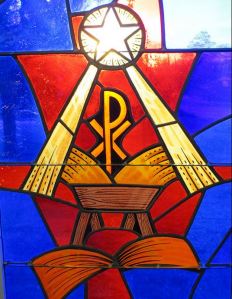 On coming to the house, they saw the child with his mother Mary, and they bowed down and worshiped him. Then they opened their treasures and presented him with gifts of gold, frankincense and myrrh.” (Matthew 2:11)
 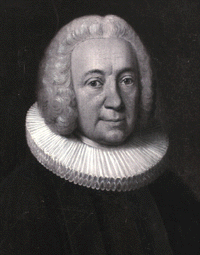 Written by a Danish Lutheran pastor and later bishop, Hans Adolph Brorson, Mitt Hjerte Alltid Vanker (in English, sometimes entitled “My Heart Always Wanders” or “My Heart Remains in Wonder”) movingly grasps at the surprise and mystery of the incarnation. Soundly pietist, the reflection remains more oriented toward his feelings and heart rather than any intellectual exploration. The lyrics reflect relationship and intimacy, as well as grace and gratitude. Contemplating this miracle, God coming to us as a vulnerable newborn in a stable, Brorson’s own mind and heart wanders and enters a blissful wonderment as he thinks about his current saving, relationship with Christ.


 2pennyblog