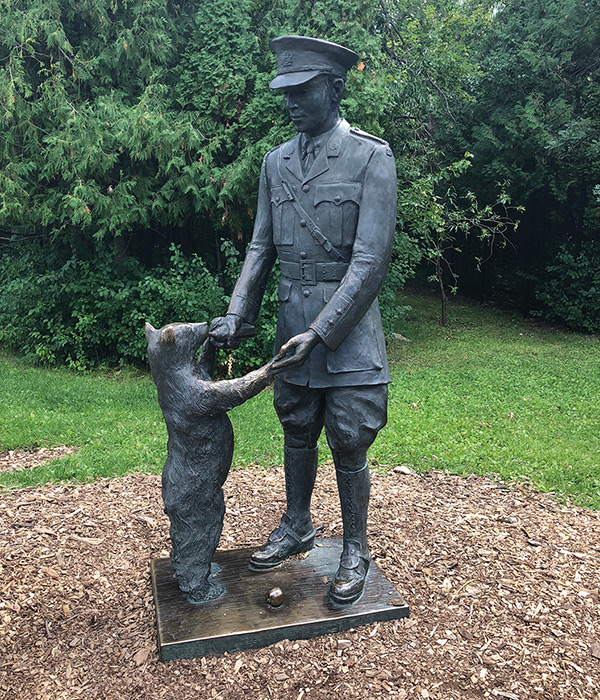
The first Winnie the Pooh book was published by A.A. Milne on October 14, 2026. E.H. Shepard’s artistic vision shaped Pooh’s earliest, detailed depictions. Yet it wasn’t just a fluke or moment of inspiration. As a Wikipedia post, countless articles, books, and documentaries attest, this childhood tale was inspired by a likely orphaned, black bear cub named, Winnipeg (later nicknamed Winnie) purchased by a Canadian soldier during World War 1, and a stuffed bear belonging to the author’s son, Christopher Robbin. The real Winnie was given to a London zoo before the soldier, Lt. Harry Coleburn, went to France, and there he stayed to become a beloved figure among the children of the city.
As far as I recall, Winnie the Pooh first came to my attention as part of the weekly Sunday night show, The Wonderful World of Disney. (It first aired in 1963 when I was about three years old.) Certainly, like other children, I loved it, but than as we can tend to do as we mature, I moved on to new interests, distractions, joys and concerns. I suppose Pooh and the Hundred Acre Wood likely next caught my attention through the song, House at Pooh Corner, by Loggins and Messina. Kenny Loggins wrote the song when only seventeen. He was feeling the melancholy sadness of losing his childhood innocence. He rereleased it in the early 1990s to try to reflect his new adult perspectives, particularly as a parent.
Then came my own young adult years. The popular book, The Tao of Pooh popped on the scene in 1992, followed ten year’s later by another companion book, The Te of Piglet. As with what happened with Peanuts and other cartoons and children’s stories during that period, the author used the stories to explore spiritual truths as they understood it.
At that time, as I have written about elsewhere, I had come into police work with a lot of previous wounds before then, and things were not working out so well. Thanks to God reaching out to me through old friends, I reentered the Church, began to understand new things about things I thought settled matters, and I began volunteering at two local college campus ministries. Through one trip, while serving as as a chaperone to the first ever United States ecumenical young adult Taizé gathering (about 8,000 attended at the university of Dayton), I was introduced to Winnie the Pooh in a transformative way.
A cluster of the young adult college women attending from my van pool, loved the above books, and they were going through a new phase celebrating their childhood love of Pooh. The meaningful spirituality of Taizé, the simplicity of Pooh, and their joy was infectious. I came to reappreciate how children’s tales don’t necessarily need to stay on the shelf. They can help you remember life lessons and rediscover joy as an adult.
Jokingly at first, and then regularly by some other youth and college students as year’s past, they and others compared me a bit to the character Tigger. In fact, some of them used that as a kind of nickname for a time. Since then, I have gotten many bouncy, trouncy, flouncy, pouncy, fun, fun, fun, fun, fun gifts related to that energetic, optimistic tiger named, Tigger. Hopefully, I am still nurturing and growing in the best qualities from him as well.
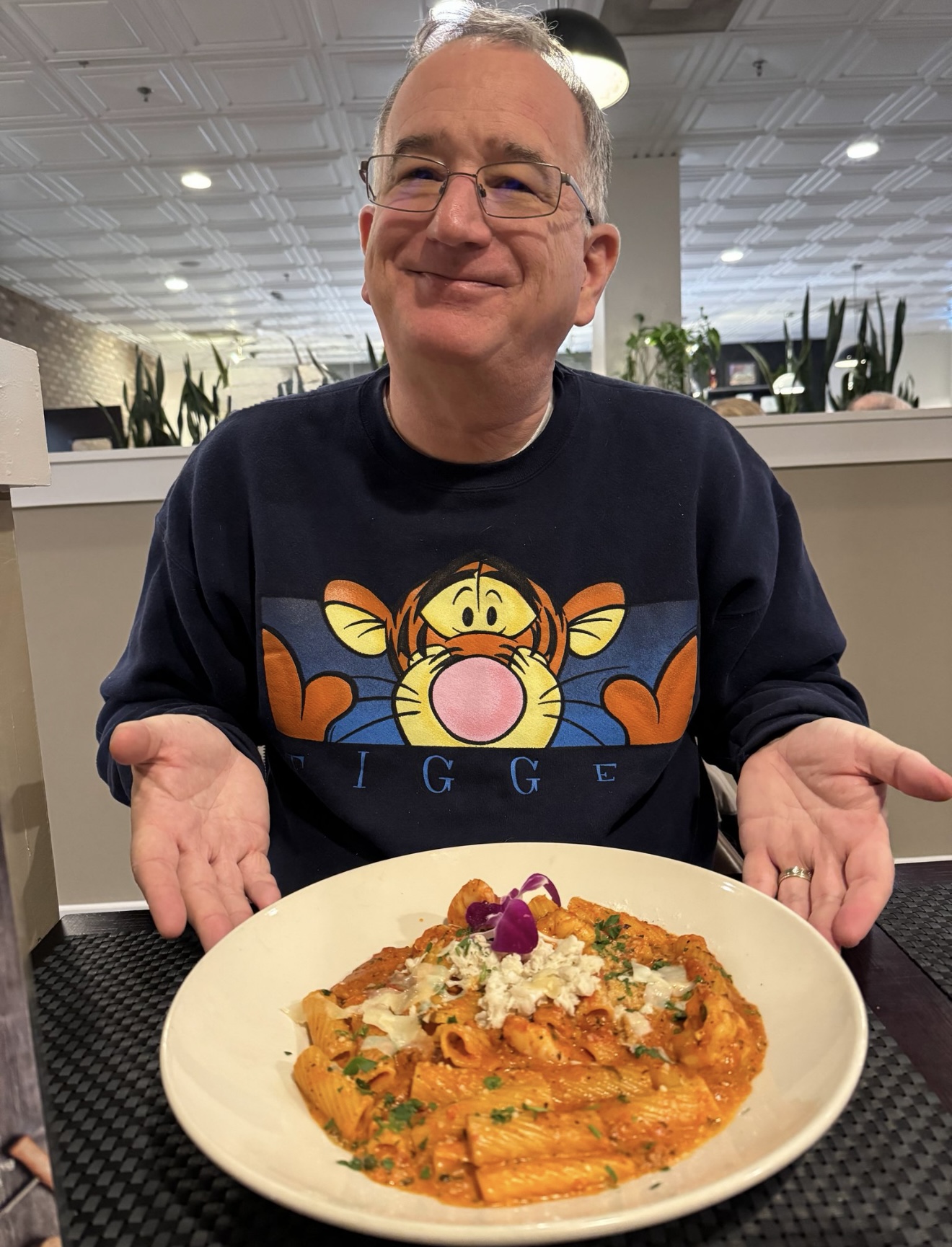
Still at the time, this somewhat surprised me. As written about elsewhere, the pain of life had taken it’s toll in many ways, and as a human, I still can struggle to believe that I am always completely free as scripture promises (John 8:36). I had grown cynical as a cop. I can be rough around the edges. Yet these young adults saw that I was more than a few of my characteristics or my wounds. God used their childlike witness (and by connection Winnie the Pooh) to help me find my way not just to the Hundred Acre Woods but spiritually home. I rediscovered joy.
Unfortunately, too many, as I had, forget the lessons of their youth. And yet what we learned in the woods with Pooh and his friends, in Mister Rogers’ Neighborhood, or on Sesame Street and elsewhere still matters. They help us learn what it means to be a child of God. And if you doubt that value, remember what Jesus taught. To understand and receive his Kingdom, we must be like children letting go of pride, self-reliance, and status concerns while rediscovering wonder, playfulness, empathy and compassion, and more “childlikeness” rather than holding onto selfish expressions of childishness.
Saying that, I know that the world remains a hard place. Workaholism and need for control challenges we modern adults, not unlike Rabbit. Our perceived wisdom can turn into hubris, fall short, or leave us lacking like Owls’ own. I understand a children’s story isn’t the answer to all that ails us. Being so small in a big world beyond our control, we might find ourselves struggling for hope or lost in our sadness and grief like Eeyore.
And as one of our nation’s favorite library kid boosters, Mychal Threets, confesses and struggles with himself, mental illness is a very real thing that can be caused or complicated by biology (even if complicated by choices, family systems or inappropriate medical treatment). You can love books, even the Bible, and know them by heart and still suffer.
Yet our conditions are never who we are. Sometimes all one can do is try day by day. It is ok not to be ok. And in that, Michael echoes what we chaplains teach law enforcement officers. (If you need emotional support, reach out to the national mental health hotline by texting or calling 988.) And with the terrible realities that we all might face, we might even be tempted to waste our time submitting to these negative messages that we hear in our heads as if they were from Job’s wisest advisors. (But, we should not.) Ask for help, for your are worth it. God would not have created you otherwise.
Indeed, God can use the smallest and silliest things, including children’s’ books, to catch our attention and remind us that we are loved. God wants us to be comforted promising and reminding us through Isaiah (66:13a), “As a mother comforts her child, so I will comfort you.” Scripture often teaches us that we should remember our God while still in our youth to learn and grow straight “before the days of trouble come and the years draw near when you will say, ‘I have no pleasure in them'” (Ecclesiastes 12:1).
Yet never forget that God created us all to be children of God. There’s the divine trying to call each of us into love. Fun still matters. Joy is a necessity and can be chosen. Allow yourself to be loved and be childlike. Remember the God who created and cares for us out of love is the same one who gifted us with healthier human communities to help sustain us and grow. Even as imperfect as any human community can be (including in the Church and families), God is at work. Find people who will love, support, and accept you as you are and hope with you in all that God can and will make you become.
So no matter who laughs and scoffs at me, no matter how harshly judged, no matter what anyone thinks, I am publicly giving God thanks for my friends in the Hundred Acre Wood. They are now part of who I am and still teaching me.
Happy birthday, Pooh, you silly, old bear!
© 2026 The Rev. Louis Florio. All content not held under another’s copyright may not be used without permission of the author unless under terms of fair use and properly attributed. Scripture passages when used are from the NRSVue translation unless otherwise indicated.