Category Archives: Uncategorized

Come, Lord Jesus, Come!

The following is a short sermon I preached to my congregation at Messiah Lutheran Church and School, on the Third Sunday of Advent, often called Gaudete (Rejoice) Sunday. Although our preschool students and elementary-agers were present to perform a joyous Christmas musical, the death and sadness of the last week, especially in Newtown, CT, could not be ignored.

As our last hymn [O come, O come, Emmanuel] reminds us[i], the Advent season is a time of waiting and expectation. The song is much like many others among our Advent hymns and even some of our more traditional Christmas carols. Many project a sense of sadness and longing. They can prove almost melancholy. Our hymn writers and liturgists – just like us – know the imperfections and pain of this world, and so we look toward Christ to deliver us. Our music, images, and prayers can reflect that sense of loss, waiting and hope. Being a Christian, I heard someone once say, is like being a person separated from their greatest love; something is missing, and not quite right. We hunger and thirst for that love to be one with us again, so that our lives can feel whole.

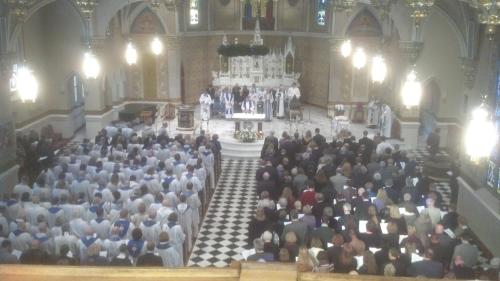
This week, we have been unhappily reminded of that truth. We lost our assistant to the bishop, Pastor “Chip” Gunsten, a dear friend of mine and many here at Messiah as well as throughout our synod, who died suddenly while undergoing treatment for cancer. We are not the only ones mourning, for our Catholic brothers and sisters lost their former beloved bishop, Walter Sullivan on the same day. He was someone I knew well, and he proved influential to my own discernment of service within the church. Our Presbyterian friends in Virginia lost one of their own leaders as well, Cynthia Bolboch, Moderator of the 219th General Assembly of the Presbyterian Church (U.S.A.) on December 12th.  Having many Presbyterian friends after attending a Presbyterian seminary, I shared in their own grief and sadness. As the week closed, I was tired and worn down from dealing with death and the many emotions that always accompany it. Then, we received the horrific, numbing news of Newtown, CT. People thousands of miles away shared in that community’s dread and grief and fearfully held their own loved ones closer.

How can we make sense of such things? I’m not sure that we can. Oh, as a Christian, I trust that God can use them – turn them on their head and make all things work for our good. I know blessings and signs of love can be found even amidst tragedy – perhaps especially at times of tragedy – through the heroes and servants shining in those times of darkness, or through the love that is shared with us to help us make it through. Yet, maybe we are never supposed to make sense of these things at all. It isn’t within our capabilities to make sense of the nonsensicle. The issues can be too involved for us to handle or beyond us. Maybe they just can’t ever make sense, because they are counter to what God wants for us. God’s will is to save us for a future full of hope, not to condemn us to an eternity of woe[ii]. God’s plan from the time of Adam and Eve was to redeem and save us out of love.[iii]

These sufferings are symptoms of that earlier wound. They are parts of our life as a fallen, imperfect people in a fallen, imperfect world. People sin. People suffer. People die. Uncontrollable evil and sadness do exist. Perhaps instead of looking back for answers as to why things happened, we should look forward. Our time is better spent in the face of such evil asking, “What would you have us do, Lord?”

Certainly, God never abandons us to this sorrow. God has a purpose and a plan which includes us. Jesus was sent into our world as a little child to share our life and lot; even our suffering unto death. God doesn’t rejoice at our destruction, but rather wants us to live abundantly through his only son.[iv] Jesus would become God’s final word on evil, sin and death. They have been defeated through his cross and resurrection, and we are saved here and now. Yet, sin and death are enjoying their final death throws at our expense. Jesus declares we are free from their power; saved even as we and creation might groan at times.[v]

In this present age, Jesus promises to come again to complete the work which he started and banish sin and death forever. There will be a new heaven and earth where suffering will be no more.[vi] In the meantime amidst our lingering troubles, he asks us to look up and be ready, not as a sullen or defeated people, but as his beloved people. Be ready, he says, so that our hearts are not weighed down with dissipation and drunkenness and the worries of this life, so that the day doesn’t catch us unexpectedly, like a trap.[vii]

No, we who are saved have a purposeful, divine work to do. We are left here – called to this time and this place – as his messengers speaking his words of love, healing and forgiveness; words so sorely needed in this wounded, combative world. Like the law and the prophets before him including John the Baptizer [viii], Jesus taught us what we need to do – love God with all we are and our neighbors as ourselves.[ix]

Today both despite our suffering and because of it, we are to speak these words and embody them. God uses us with all our weakness and imperfection to give them form and substance, flesh and bone, to make them real. We are echoes of Jesus crossing all the earth shouting, “Do not be afraid! Jesus has come! He is risen and will come again!” We are called to lovingly and boldly put these words into actions together as church…Christ’s church…his body…his hands reaching out and touching broken lives through our own.[x]

Today, we have also heard words that Paul spoke to Christians in Philippi when they were persecuted, broken and felt alone. These same words were shared with us yesterday at Pastor Gunsten’s funeral. Perhaps it is providential that the lectionary had them as one of our assigned texts considering recent events:

Rejoice in the Lord always. I will say it again: Rejoice! Let your gentleness be evident to all. The Lord is near. Do not be anxious about anything, but in every situation, by prayer and petition, with thanksgiving, present your requests to God.And the peace of God, which transcends all understanding, will guard your hearts and your minds in Christ Jesus.  (Philippians 4: 4-7)

Rightly, Jesus is called Emmanuel, God with Us. We need not get stuck in our fear, hurt or anger. Look up! Raise your head! Do not be afraid! These are the words Jesus speaks to us in the face of our most unimaginable threats or losses. When the world and its realities rage, when struck by great sorrow, or when we cannot find reconciliation with others we so deeply long for, Jesus speaks to us as he did similarly to that storm long ago, “Peace I leave with you; my peace I give you. I do not give to you as the world gives. Do not let your hearts be troubled and do not be afraid.”[xi]

This world can be a frightful, sad and lonely place, but we need not grieve as people without faith.[xii] We need not live as a people without love.[xiii] Despite any of our doubts, Christ’s peace and love are with us always[xiv], and we have a shared ministry to do in his holy name.[xv] His light is in our midst and shining through our hearts, and the darkness shall not overcome it.[xvi] Remember always that we are baptized – claimed and called, to be Christ and to serve Christ in the world.[xvii] We must never try to hide ourselves from the pain of this life and thus not truly live.[xviii]

We are Christ’s church, together with Jesus and thus never alone. He has come for us and will come again. Our longing will be vindicated. This truth is rightly celebrated at every moment and forever, but especially during Advent. We celebrate it this morning through our young people attending Messiah Lutheran School who have come to proclaim the story of Christ’s birth with us anew today.[xix] Amen.

Readings for the Third Sunday of Advent – December 16, 2012
Zephaniah 3:14-20
Isaiah 12:2-6
Philippians 4:4-7
Luke 3:7-18


[i] “O come, O come, Emmanuel, and ransom captive Israel, that mourns in lonely exile here until the Son of God appear. Rejoice! Rejoice! Emmanuel shall come to you, O Israel. (Evangelical Lutheran Worship, Hymn 257, verse 1)

[xiv] In Mother Teresa and Brother Roger’s book called Seeking the Heart of God (1993), Brother Roger writes: “Four hundred years after Christ, a believer names Augustine lived in North Africa. He had experienced misfortunes, the death of his loved one. One day he was able to say to Christ: ‘Light of my heart, do not let me darkness speak to me.’ In his trials, St. Augustine realized that the presence of the Risen Christ had never left him; it was the light in the midst of his darkness.”

[xvii] At times of fear or doubt, Martin Luther is said to have reminded himself, “I am baptized”; a reminder that he was Christ’s called, claimed and sent child. His writings also indicate that we act as Jesus in the world, but also encounter Jesus in the least of these, those suffering and alone. Through their lives Jesus cries out to us for compassion.

[xix] Isaiah 11:6

The Funeral of the Rev. Paul "Chip" Gunsten by The Rev. David Delaney, Ph.D

The Funeral of the Rev. Paul “Chip” Gunsten by The Rev. David Delaney, Ph.D

Unless otherwise indicated, all scripture quotations for this article are from the New Revised Standard Version (NRSV) translation.

© 2012 The Rev. Louis Florio. All content not held under another’s copyright may not be used without permission of the author.

Leave a comment

Filed under Community Life, Law and Gospel, Liturgical Year, Uncategorized, worship

St. Lucy – Innocent on all counts of burglary, witchcraft, & pagan roots

Lucy Before the Judge, by Lorenzo Lotto, 1523-32

Throughout Scandinavia and especially Sweden, the feast of St. Lucy on December 13th holds a special place on the liturgical calendar. Associated today with the lights and laughter of Christmas, the roots of this holy day are much darker.

Before science proved otherwise, December 13th was commonly considered the darkest point of the year. In nations where darkness reigns at wintertime due to their extreme northern location, a celebration developed to mark the transition from darkness to light. The pre-Christian season of Yule honored the winter solstice and the return of the sun through feasting, gift giving, and other gatherings. Such activities would hopefully keep one safe from the evil forces that lurked as an ever present danger.

One such danger was Lussi, a female demon who was thought to actively roam on December 13th. She would ride through the air with her followers, the Lussiferda. It would be dangerous to walk alone in the darkness. People feared falling asleep and becoming her victim. In some traditions, she might even come down the chimney to snatch away misbehaving children. Throwing all night parties seemed to remedy her threat.

Much later and far away in Italy, Lucy (sharing the Latin root for light, lux) was born in 283 CE. In Italian, she is known as Santa Lucia. Details of her life are sketchy and often tinged with myth, but she seems to have been a devoted Christian woman known for her generosity and faithfulness. The core of the story indicates she was pledged to a pagan for marriage. Lucy’s heart was elsewhere. She wanted to devote her life to Jesus Christ. Instead of using her dowry for marriage, she gave it to the poor. One story accounts that she wore a wreath with candles atop it to keep her hands free in order to deliver more assistance to her fellow Christians in the catacombs. Word came to her betrothed that she had found a more suitable bridegroom. In anger, he turned Lucy over to the local Roman authority, the magistrate Paschasius.

Here the stories vary, but what seems certain is that Lucy refused to marry her intended husband or reject Christ even under torture. She was perhaps blinded, thus hagiographic images of Lucy often show her eyes on a plate of some kind. Yet, this part of the story didn’t appear until the 15th Century in any known writings. However she met her end, it is uniformly reported she did so with faith in Christ even unto death in 304 CE. She is remembered as a martyr, thus her feast day’s liturgical color is red.

Lucy’s legacy is not that of Lussi, yet in the northern European lands, there stories somewhat merged. The light of Christ which shined so brightly through this young virgin’s life now became associated with the winter solstice. She doesn’t break into the home through the chimney. No one hides in fear. Instead a young girl is often selected to represent her and bear gifts (usually foods such as Lussekatt – a “St. Lucia Bun” – made with saffron) to her family, singing songs and wearing a wreath with lit candles around it. The song lyrics vary, but they have the Italian tune Santa Lucia. Today, many cities in Northern Europe have public processions to remember Lucy.

This is the English translation to one version called “Night Walks with a Heavy Step”[i]:

Night walks with a heavy step
Round yard and hearth,
As the sun departs from earth,
Shadows are brooding.

There in our dark house,
Walking with lit candles,
Santa Lucia, Santa Lucia!

Night walks grand, yet silent,
Now hear its gentle wings,
In every room so hushed,
Whispering like wings.

Look, at our threshold stands,
White-clad with light in her hair,
Santa Lucia, Santa Lucia!

Darkness shall take flight soon,
From earth’s valleys.
So she speaks a Wonderful Word to us:
A new day will rise again From the rosy sky…
Santa Lucia, Santa Lucia!

So whether in Italian (Santa Lucia), Swedish (Sankta Lucia), or English (Saint Lucy), this woman shouldn’t be confused with the burglarizing evil spirit or witch of old legends. Lucy is her own woman, not just a remake from paganism. She deserves to be remembered for her Christian witness through her ordinary life. She can serve as an inspiration for us to let the light of Christ shine through us. She is just one of a great cloud of witnesses God has used to break into the darkness of our world.

Like Lucy, we are children of that same light. We are innocent of all charges against us, real or imagined, through faith in the Son of God who came as a child in Bethlehem long ago. All powers of evil, sin and death raged against him then, but “The light shines in the darkness, and the darkness did not overcome it” (John 1:5). We are asked to serve as his living symbols, an assurance that he once came that Christmas long ago, but also proof that he is risen. We remain signs pointing to the truth that he will come again. We do this through boldly loving in his name, even unto death, for we know we shall share in his final victory. “Whoever loves a brother or sister lives in the light, and in such a person there is no cause for stumbling” (1 John 2:10). In Christ, we shall find forgiveness, new life, and a love we never dared hope for.

When Jesus finally does come at the end of the age, a new everlasting day shall rise. Darkness will forever take flight. “And there will be no more night; [those who trusted in him] need no light of lamp or sun, for the Lord God will be their light, and they will reign for ever and ever” (Revelation 22:5). With Lucy and all the communion of saints, we await and announce his coming.

Let us pray:
Lord God, Saint Lucy did not hide her light under a bushel, but let your light shine for the whole world, for all the centuries, to see. We may not suffer torture the way she did, but we are still called to let the light of our faith illumine our daily lives and the lives of others. Help us to have the courage to bring our faith into our work, our recreation, our relationships, our conversations, and every corner of this day. Amen[i]

Merry Christmas! Buon Natele! God Jul!

Pastor Lou


[i] Variation of a Roman Catholic prayer and one seen in a devotion by Bishop Kanouse of the Northern Texas-Northern Louisiana Synod, ELCA)

[i] Translation from http://www.mamalisa.com/blog/santa-lucia-day-song-and-saying-why-its-a-festival-of-light/


Unless otherwise indicated, all scripture quotations for this article are from the New Revised Standard Version (NRSV) translation.

© 2012 The Rev. Louis Florio. All content not held under another’s copyright may not be used without permission of the author.

Leave a comment

Filed under Church History, Community Life, Liturgical Year, Uncategorized

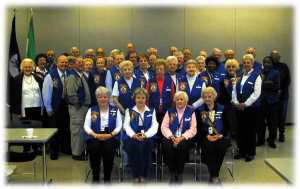
Seniors and Law Enforcement Together (SALT), 2012 Christmas Gathering

Click on the picture to learn more about the Henrico County Police SALT Program - Used under fair use for teaching - (C) 1996- 2012 Henrico County

Click on the picture to learn more about the Henrico County Police SALT Program – Used under fair use for teaching –      (C) 1996- 2012 Henrico County

On December 4th, I was invited to speak to the members of Henrico County Police Department’s Seniors and Law Enforcement Together (SALT) program. The SALT program seeks to empower seniors to be aware of and address crime problems they commonly face, as well as invites them to volunteer for the agency. This following is my prepared text:

When asked to speak this morning about my transition from law enforcement to being a pastor, I was hesitant. I am not too excited about talking about myself, and I am not sure how much it would interest you. So rather than just speaking on that issue, I wish to consider my journey in light of our shared call to community service. How do our own sacred life stories – and they are all sacred whether you realize it or not in my view – intersect with passions, interests, gifts, and ultimately our call or vocation?

The word vocation – at its root – indicates a mingling with the sacred…our purpose in life. It comes from the Latin root vocātiō, meaning a call or summons and inferring a higher power’s involvement. Now, vocations can and do indeed change during periods of our life just as mine did. We are much more than what we do, but I believe we all share a purpose to love God and our neighbor as ourselves in whatever we do.  At every moment of our lives, even facing death, God can use those moments to bless us and others.

So using my own story to begin this reflection, we begin in my younger years. I was part of a family with some serious problems – as many families have problems – and amidst those problems rooted in generational bouts of alcoholism and mental illness, there indeed was love; at least as well as people could love at the time with their own woundedness. Now my parents provided and cared for me very well in many respects, but the systemic problems we faced often distracted them and sometimes caused people in my family to make even more poor choices. As is often the case as a teen in such situations, I found myself dabbling in things that I had no business in. Most people had no idea, including my parents. Indeed at one point, I did find myself in juvenile court over a serious auto accident. Looking back, I realize I could have spiraled much lower. Yet when some parents had written me off as a trouble maker, others did not.

In one instance, I was being driven with a friend to an event by his mother. She began to talk about how good we were and unlike that boy who got into trouble. The only problem remained that unknown to her I was that boy. Yet, others did see past my problems to possibilities. Another friend’s father, a volunteer with a youth ministry, reached out to me, and he got me involved. At my workplace (a local 8,000 seat arena), a police officer always found time to talk to me, ask about my grades and my future plans. At school, one English teacher treated me with respect and helped me learn to begin to respect myself more. He challenged me to look at the world and myself through new eyes and with imagination.

Such interactions made a difference. I am sure these folks might not have known it at the time. They might not even remember me, but one never knows what kind word or ethical action observed might plant a seed. And seeds were planted. In time, I came to want to serve others, and attended the Virginia Military Institute, and after a short time on active duty for training as an Army Reserve officer, I transitioned into my own police career at the City of Alexandria Police.

Now at the time, crack was hitting cities hard. The metro-DC area news had body counts each day, and as I graduated from the academy, one of our officers, Corporal Charles Hill, was murdered in a drug related hostage situation. It was a wild time, and I grew up a lot. A sense of idealism was difficult to maintain with some of the things I saw and experienced. Yet again, thanks to friends, I was invited to participate in a loving church family and volunteer in some outside service activities: shop with a cop, bicycle helmet drives, other things of that nature, but also as an adult volunteer with a campus ministry at what is now the University of Mary Washington. Already, I had noticed a gift for working with youth from the housing projects during my midnight shift, but this volunteering really helped broaden and mature my view of the world, myself, and even God.

You probably already recognize that law enforcement officers face a disproportionate amount of evil on a daily basis. They see and experience what John Calvin would describe as humanity’s depraved nature or what Martin Luther would consider examples of the human tendency to be bent inward upon oneself (in other words selfish, and therefore not loving of God and neighbor as we should be). For some, this turns the officer into a fountain of cynicism. For others, they see humanity for what they are – not always the best they can be – but they recognize more is going on in the world. Goodness is still at work, and so in the face of evil and tragedy, they dedicate their hearts to make a difference. I witnessed this as fellow officers raised funds during the shift from other officers for a homeless couple who needed diapers for their baby. I saw it as people I knew volunteered with service projects in the community unrelated to policing; one even volunteering with a jail ministry.

This wasn’t naïve idealism. There were victory and losses to be sure, but the call to make a difference kept them trying. Hope kept them oriented on what could be rather than just settling. Like many of them, I found in volunteering that I got more than I gave. Working with the college students I rediscovered a more positive, hopeful way to look at the world and others even as I mentored them. I also found my faith in God grow stronger.

Eventually, I began to wonder if God was calling me to something else…something else not better mind you….just different. Through connections, I was eventually invited to spend some time volunteering and discerning with an international, ecumenical group that works with young adults in France called Taizé. So, I took my leave of law enforcement to test the waters of full time ministry. Although I didn’t stay with this ministry, I found my law enforcement and personal background and experience fit well with what they did. It helped me relate to young adults, many with troubled pasts or coming from violent areas throughout the world. As one brother told me, “We have similar hearts.”  Yet, I felt a strong pull to come back to the United States to use the gifts I had been identifying perhaps more fully.

My first weekend home, I attended my parent’s Roman Catholic Church, and coincidentally a bishop from South Dakota was thee seeking funds and/or volunteers. I had mentioned to my parents of my possibly seeking a mission stint in Eastern Europe, South America or Native Americans (areas of interest and places I had met friends from in France), so I went and spoke to the bishop, now Archbishop Chaput of Philadelphia. This “chance” meeting resulted in an invitation to have my resume past around state of South Dakota, and I found a new home and call at St. Joseph’s Indian School.

St. Joseph’s Indian School is a residential school serving at risk Native Youth from elementary age through high school, and recently into college aged young adults. I was to live as a house parent among the high school students, serving as the father figure, mentoring counseling, helping with homework and driving kids to places – most anything any parent would do. Yet once again, my past experiences helped me in the present.

Most of these kids were from among the poorest and most addicted places in America, where violence and sex crimes against children are much too common, and gangs have a strong foothold. We had kids that lived in home without heat in a place where -35 degrees could be the high for the day, or perhaps they had no toilet, or maybe they had no home at all and bounced from house to house as people became willing to take them in. At least one I worked with had all his possession including clothes fitting in a small brown paper grocery bag. It was a tough place, isolated and with extreme weather.

Many new employees quite, but I found that the kids responded well to me. My police work helped me meet them as they were, without shock or pity. I could understand what they would share with me without needing to ask what they would think of as stupid questions, and I respected them as my own mentors respected me. I understood that as messed up as their families might be, it was still there family, and that amidst all the violence and trouble, their culture and they themselves had much to offer me. In fact, the logo of the school reflects a truth I already mentioned. We often get more than we receive when we volunteer and serve others. The tag line for the logo was “We give and teach. We receive and learn.” Students and staff mutually benefited and grew from this relationship with one another.

After three and one half years, I had completed my initial commitment. I returned to Virginia to attend seminary. I entered a special dual program where I earned a Master of Divinity degree from Union Presbyterian Seminary and an MS from Virginia Commonwealth University. My thesis focus was upon how faith and mentoring can help mitigate delinquency, but this experience again brought home to me the reality that law enforcement for me was and remained a real ministry. It has continued to help me as I served in hospice chaplaincy and now in the parish. I am realistic about the challenges we face, but I am hopefully about the God we share. I maintain my foothold in the policing community as a chaplain for law enforcement, and I find my law enforcement experiences always helpful in the midst of the ordinary lives of people I serve – lives that often face significant troubles.

In law enforcement, we face sin and death head on. We seek to shine light in the darkness, restore family relationships, and bring justice to the community. We can find ourselves counseling or comforting a wayward teen, grieving family member or victim of violence at any time. In doing so, we have an opportunity to live out what Jesus said was the summary of all the law and the prophets, loving God with all we are and our neighbor as ourselves – even sometimes unto death.

As volunteers, you might not recognize the good you do, nor the eternal Good that works through you. Paperwork, small unrecognized tasks, or even a friendly, sincere hello might not seem like much, but one never knows what God might use to make the world and our community a better place and encourage others. Seeds can be planted through relationship. These small acts of love can free up others to love in some pretty difficult circumstances, so I argue your volunteering with the Henrico County Police Department has significant and eternal value. It is part of your vocational, sacred call in the present. Through this call, you have the opportunity to be a blessing to others and the community.

My experiences over the years has affirmed for me that we need to be united – faith communities, secular organizations, police agencies, and individuals – in bearing hope and love into our communities. It is a hope and love that I personally believe first came to us in a small town called Bethlehem long ago. A hope no one expected, an act of love that seemed so small, and yet it is a hope and love that remains with us and can work through us even on the darkest day.

In closing, I thank you again for your invitation and for your willingness to love. I wish you all a Merry Christmas and happy new year.

© 2012 The Rev. Louis Florio. All content not held under another’s copyright may not be used without permission of the author.
2 Comments

Filed under Community Life, Law Enforcement, Ministry, social justice

Crime Log: Nicholas of Myra

Mugshot of Suspect: Bishop Nicholas of Myra


Mugshot of Suspect: Bishop Nicholas of Myra.
Used under fair use guidlines – (c) Anand Kapoor, 2004
(Click the photo for more images from stnicholascenter.org)

Ladies and gentlemen, the report you are about to read is true. Only some names have been changed to protect the innocent…

Nicea Police Department – Crime Report

Date: On or about May 20, 325 AD

Offense: Assualt & Battery                                                       Case Number: 1225

1. Victim: Arius, Presbyter of Alexandria, Egypt

DOB: UD, 250 AD or 256 AD     National Origin: Central-North African

S: Male     Ht.: UK     Wt.: UK  Skin: Dark to Olive color

Other: Facial Hair – full beard; described as “tall and lean, of distinguished appearance and polished address.”

Previous Arrests & Torture: N/A

2. Suspect: Nicholas, Bishop of Myrna, Region of Lycia

DOB: UD, 270 AD     National Origin: Greece

S: Male      Ht.: 5′ 6″      Wt: 160 – 200 lbs.  Skin: Olive

Other: Facial hair – full beard; previously broken nose

Previous Arrests & Torture: During the persecution of Christians under Roman Emperor Diocletian

3. Disposition: Arrest

4. Incident Summary:

Presbyter Arius of Alexandria, Egypt reported that Bishop Nicholas of Myra (aka Nikolaos of Myra) did intentionally assault and batter him in the presence of multiple witnesses on or about the start of the Emperor’s church council in 325 AD. Witnesses included his royal highness, Flavius Valerius Aurelius Constantinus Augustus (aka Constantine I), Emperor of Rome, along with over 300 bishops, other clergy, scribes, servants, and attendees.

Presbyter Arius stated to officers that he was attending the First Ecumenical Council of Nicea to defend his position on the Trinitarian controversy over the nature of The Son, Jesus Christ, and his relationship to God the Father. Arius contended that Jesus as the Son of God was not the eternal God, but rather was created by God the Father – a denial of the more widely accepted concept of the Trinity.

Bishop Nicholas took issue with Arius’ position. He rejected the view of Arius and his followers that “there was once that when he was not” and was of the attendees arguing for the co-eternity of the Son with the Father. Also rejected was the position that Jesus was  “mutable or subject to change” in his essence. Bishop Nicholas agreed with those who maintained that the Son just like the Father was beyond any form of weakness or corruptibility, and most importantly that he could not fall away from absolute moral perfection.

At some unspecified point, the scholarly debate turned into an argument, and the victim along with mutiple witnesses from the assembled council (see supplement to this report to be filed later) stated that Bishop Nicholas did use his right hand or fist to punch or slap Arius, causing the victim to fall to the floor. Seeing the alleged offence, the Emperor and assembled bishops had Bishop Nicholas taken into custody, stripped of his bishop’s garments,  and thrown in prison to cool off.

Upon interview of the prisoner by this reporting officer, Bishop Nicholas admitted the offense done “out of love for Jesus Christ.” He stated he had grown tired of Arius’ insults to Christ’s full divinity. Further legal action is pending, but Bishop Myra is expected to return to his duties upon the request of Emperor Constantine in his role as Pontifex Maximus,  the high priest of the College of Pontiffs of Rome.

It should be noted that the suspect has reportedly been involved in previous altercations and incidents of public controversy, including but not limited to: saving young women from slavery, protecting sailors, sparing innocents from excecution, providing grain in a famine, and the rescue of a kidnaped boy.

Artist rendition of the alleged offense.

Artist rendition of the alleged offense.

Form NPD-CR1                           Reporting Officer: Centurion A. Brutus 

Happy Feast of St. Nicholas, December 6th!

© 2012 The Rev. Louis Florio. All content not held under another’s copyright may not be used without permission of the author.

Leave a comment

Filed under Church History, Liturgical Year, Uncategorized

Put the Chi back in Christmas

For all the hubbub about using “Xmas” instead of “Christmas” as shorthand (and in some cases where people intentionally desire to erase any reference of Christ from Christmas by using Xmas), the ironic, historic truth remains that ancient Christians utilized the Greek letter Chi and letter symbol Chi-Rho as a means to represent Jesus Christ. Such symbols are called christograms.

You see, the name Jesus Christ in Greek, the language of the New Testament texts, is Ἰησοῦς Χριστός. The first letter of the title Christ (signifying Jesus as the anointed one, the Messiah) looks like our English X and became a convenient, somewhat obscure way for early Christians in the catacombs and elsewhere to identify artistic representations of Jesus and Christian markings, signs, or art – similar to use of the Christian fish symbol.

Later, the Emperor Constantine I had a dream that he should put the “heavenly divine” symbol of Chi-Rho on his army’s shield before the Battle of the Milvian Bridge to guarantee victory. He did just that, won the battle, and turned the formerly pagan empire into a Christian one. The Chi-Rho symbol became and remains one of the most common christograms used in sacred and liturgical settings. In fact, it is often used as part of the modern Christmas tradition of the Chrismon Tree. Invented by a Lutheran in Danville,  Virginia in 1957, this practice is now popular in many congregations throughout the United States and across denominational lines.

As I find the debate over the use of Xmas somewhat distracting if not tedious and dislike the rush toward Christmas only to hide it away from the public eye as soon as December 25th passes, I try to experience Advent as a true time of expectant waiting and preparation. I also make an effort to enjoy the traditional Christmas period lasting twelve days through Epiphany on January 6th. So last year as Christmas approached, I posted an image I had found by Orthodox iconographer Raymond J. Mastroberte on Facebook saying, “Keep Chi in Christmas…Because early Christians used Greek abbreviations!” The illustrator’s image struck my sometimes questionable funny bone, and I playfully proclaimed that I would be putting the Chi in Christmas all twelve days.

Image and copyright by Orthodox iconographer Raymond J. Mastroberte. Image used here for teaching and not for profit under the terms of fair use.

Image and copyright by Orthodox iconographer Raymond J. Mastroberte. Image used here for teaching and not for profit under the terms of fair use.

In the context of our modern conundrum over Xmas, it wasn’t long until someone missed my attempt at humor. They argued that surely since Jesus Christ had done so much, suffered and died for our sake, we could most certainly take the time to spell out his name in full. It was as if the ancient Christian signs and symbols were suddenly disrespecting our Lord. And so, my attempt at lighthearted banter fell as another victim of this modern culture war.

As the past few years attest, an annual argument has indeed arisen about the secularization and explicit anti-Christian elements of our Christmas celebration. It should be expected, for in school gatherings and shopping malls, on public plazas and in our homes, religious symbols for Christ and his birth have come to be often replaced by winter scenes, Santa and his reindeer, snowmen, cute penguins or polar bears…the list goes on and on. In fact, some suggest that many Americans can’t specify what the Christmas holiday commemorates.

In opposition to Christmas, one atheist author argues that there is historically no proof that “Christ is the reason for the season.”[i] They suggest that winter celebrations have always existed, and such a modern mantra is only a Christian attempt to assert their cultural superiority over everyone else. Sadly in the name of multiculturalism, echoing choruses of Merry Christmas can be explicitly prohibited in some environs. Yes, just as there was no room at the inn on the original Christmas Eve, there seems to be no room in our public lives for Jesus today.

Yet, let’s not be too quick about things, as there are other signs to look for. Gallop found, “Ninety-five percent of Americans celebrate Christmas, and of these, 51% describe the holiday as ‘strongly religious’ for them, continuing an upward trend seen since 1989.” This 2010 poll also found a majority of Americans self-reported “incorporating specific religious activities or symbols into their holiday celebrations. This includes 62% who attend religious services on Christmas Eve or Christmas Day, 65% who display decorations with a religious meaning, and 78% who take time to reflect on the birth of Christ.”[ii] Self-reporting surveys can prove inflated, but we can see signs of hope for our beloved holiday.

Nevertheless, further confusing this debate, this same Gallop study found many more Americans were likely to practice secular traditions (in the ninetieth percentile range, depending upon the activity) than religious. Sadly, a recent poll by Think Finance claimed that 45% would rather skip Christmas due to the debt accumulated from gift giving.[iii] Others seasonally face bouts of depression or other mental illnesses magnified by their isolation or sense of loss during the holiday season, and thus they dread Christmas’ arrival.[iv]

Amidst debates and arguments, blinded by bobbles, decorations, and good deals, we can forget that our redemption is drawing near. Our time on earth is short, and we should live with hopeful and loving expectation as if Christ will indeed come soon. Signs of trouble and even outright persecution are nothing new. Jesus promised us such as these in his prophesies, comparing them to birth pangs.[v]

Should we then be so surprised that people are confused, lost, and hurting when it comes to Christmas and more importantly Jesus Christ? Should we let this distract us from our call as a holy people living together in Jesus’ holy name? Intentionally seeking the newborn Christ in our own hearts, we can repent of our own errors and grow in faith. Living as part of his body through our shared ministry of preaching, teaching and baptizing, or accepting and loving others (even our enemies) as they are, we can be used by God to bear Jesus into the world.

The devil’s in the details, and so it appears with our modern Christmas. Let’s not get anxious about the holiday – lost in empty debates or the holiday wrapping of materialism. As Christians, we are called to celebrate!

Look to the true heart of Christmas toward Jesus Christ himself, the final Word on this argument, come to save us. Whatever we choose to do and however we choose to say it, let’s seek to make Christ known every day. Look past the veneer of our time and see those suffering and alone around us. Enter relationship with them, help them, or guide them toward people who can. Celebrate the truth of Christ’s coming within every aspect of our lives – for the love of Χριστός, ourselves, and our neighbors.

There are more than enough signs of trouble and discord. Let’s not waste time dwelling upon them or pointing them out. Instead, let’s seek to be living, joyful signs that Jesus is near. That’s probably the best way for any of us to wish the world a meaningful Merry Christmas and eternity.

My wife, Kristine, and I wish you a holiday filled with blessings. May those same blessings flow through you to help transform the lives of others.

Pastor Lou

For those interested, visit OldLuteran.com for their comical take on this debate. Access their site through the image below:


[i] Cline, C. Putting Christ Back in Christmas: Is Jesus the Reason for the Season? as downloaded from http://atheism.about.com/od/christmasholidayseason/p/JesusReason.htm on November 30, 2012.

[ii] Jones, J.M. Christmas Strongly Religious for Half in U.S. Who Celebrate It: Secular traditions more common among Americans than religious traditions.  December 24, 2010 as downloaded from http://www.gallup.com/poll/145367/Christmas-Strongly-Religious-Half-Celebrate.aspx on November 30, 2012.

[iii] Berk, C.C. Why One Poll Says 45% Would Rather Skip Christmas. November 19, 2012 as downloaded from http://www.cnbc.com/id/49880517/Why_One_Poll_Says_45_Would_Rather_Skip_Christmas on November 30, 2012.

[iv] See for example Mayo Clinic’s Stress, depression and the holidays: Tips for coping at http://www.mayoclinic.com/health/stress/MH00030

[v] See for example Luke 21: 25-36 or Mark 13:8.

The above pastoral letter was originally published in Messiah Lutheran Church and School’s newsletter, The Messenger (December/January 2012 edition) in an abridged version. To view the entire issue of The Messenger or to see the full calendar of events, visit: http://www.mlcas.org

Unless otherwise indicated, all scripture quotations for this article are from the New Revised Standard Version (NRSV) translation.

© 2012 The Rev. Louis Florio. All content not held under another’s copyright may not be used without permission of the author.

Leave a comment

Filed under Church History, Community Life, Lectionary, Liturgical Year, Pastoral Letter, Uncategorized

A belated thanksgiving…

On October 18, 2012, I experienced one of the highlights of my life – literally and figuratively. I went Over the Edge of a 25 story skyscraper in downtown Richmond for Special Olympics Virginia. Thanks to the wonderful staff and volunteers of the Over the Edge event. We had clear skies, lots of great fellowship, and super fun. Best of all, we broke some overall giving records for the event. Many more Special Olympians will benefit as a result.

Also, thanks to all those who helped me achieve the rank of top individual fundraiser and establish a new record for any individual participating in the event. I had signed up late due to concerns with my schedule. So when I started, I wasn’t sure that I could raise the $1000 minimum required to rappel. You certainly taught me a thing or two about faith. To think we raised $6000 in only four weeks is humbling to me. Yet both I and the event staff well exceeded our goals. Over $120,000 was contributed overall which well exceeded the $100,000 goal and established a new event record.

I would like to encourage you to do this next year (or as soon as you can make it happen). You won’t regret it personally, and it is a great gift to our community. Perhaps you can even nominate your own community faith leader to take this leap of faith. It has been highly rewarding experience for us at Messiah Lutheran Church and School to “Push the Pastor over the Edge”, and we made many new connections and friends in our community. In addition, we have helped Special Olympics Virginia serve more than 11,000 athletes through seven regional offices and 30 area programs. If heights scare you, consider joining their network of over 20,000 volunteers. I think you will find your volunteering blesses you and others.

To add to the fun, I promised a party for our preschoolers and elementary age after school students to thank them for their support and prayers. In addition, I promised I would share some pictures and videos of the event. It took me awhile to get the time to edit and upload them all, but you can find them below.  Through the photo, you can access a complete photo gallery of the event. I also am posting a series of three YouTube videos: a birds eye view of the entire rappel from my head cam, a view from the ground as I started my descent, and my arrival back on the ground. I am afraid the video isn’t as exciting as actually doing it, but you’ll get an idea of my experience.

Due to the great fun and success of my efforts, I have told Special Olympics Virginia that I would try to recruit other pastors to participate next year.  Already, I have a few that have expressed interest, so stay tuned. If you would like to nominate your faith leader to be “pushed Over the Edge”, feel free to contact me about how I went about things, and be sure to check out the Over the Edge website.

Special thanks for supporting me and my efforts to help the intellectually disabled as well as spreading the news about this event goes to: Sheriff David Hines & the men and women of the Hanover County Sheriff’s Office; members of the Virginia Crime Clinic – Central Virginia Chapter; Hanover Adult Center & my friends in their Linking Lives ProgramFriends of L’Arche Central Virginia; the faithful servants of Lutheran Family Services of Virginia (Richmond Office); the always awesome & helpful FaithInRichmond.com, the VCU Alumni Association and my fellow alumi at VCU (Go Rams!), my BRs from the Class of 1986 and many other fellow alumni from VMI (I hope I made Coach King proud in putting my Rat Training to good use), and of course my wonderful family of faith, friends, students & staff at Messiah Lutheran Church and School in Mechanicsville, VA.

In the 1930’s, my Aunt Theresa was born with an intellectual disabilty. My grandmother told me that many of her relatives and friends encouraged her to institutionalize my aunt. Although this was more common than not during that time period, my grandmother refused. Despite any disability, my Aunt Thesea grew into a beloved and active family member who worked and contributed to the greater community in many ways. My grandmother’s love and wisdom remains a testimony to me, as does the love and friendship of the many people I have been in relationship with over the years who had intellectual disabilities. They were and remain much more than any disability that challenged them, and I dedicated this effort to all of them. They have done more for me than I have ever done for them. Thanks again to the Special Olympics, Lutheran Family Services, Linking Lives, and L’Arche for loving so many people well. I am truly your fan. I remain also the biggest fan of my wife, Kristine, who puts up with all my crazy ideas and long hours with both patience and love.

Leave a comment

Filed under Community Life, Law Enforcement, social justice, Uncategorized

A sturdy shelter

Our church isn't this building (Messiah Lutheran, October 1991)

Our church isn’t this building
(Messiah Lutheran’s “new” sanctuary, October 1991)

I thank my God every time I remember you. (Philippians 1:3)

Over the last several years, we have spent much time working on and worrying about our aging building (much of which dates to 1968). It sometimes seemed that once one problem was addressed, another would turn up. It is remarkable to see how much has been done to improve our grounds and facility, especially during such difficult economic times. Messiah has physically become a more safe, beautiful and welcoming place, and so I am thankful for the council, property team, and all those that help with painting, fixing, mowing and more. People have been very generous with their time, treasure, and talent; blessing both us and the greater community we serve.

Yet as vitally important as such work remains, I don’t lose sleep over the challenges we face. Our strong foundation and cornerstone has and will remain Christ. It is a joy to be among so many Christians who are willing to take time to participate in Christian formation classes so that they and others can grow. Dr. Paul Hinlicky recently shared at a Virginia Synod ACTS class, “The more educated the laity is, the more powerful the ministry is.” This has proven true as more and more members have discerned that they should participate in existing ministries at church and within our community, or have felt called to initiate new ones. It is also seen in the thoughtful and prayerful way our council approached the refinancing question or the welcome of All Souls Episcopal to share our building on Sundays and beyond. The conversations were thoughtful, biblical, challenging, and sometimes quite passionate, yet always, those involved went away secure in their love for one another and more committed to sharing in the mission placed before us by God. It is quite a testimony to the reality of the priesthood of all believers that James Anderson, Jake Addair, and Tripp Dillard conducted our congregational meetings about our financial challenges with such honesty, compassion, and vision. Few congregations exhibit such strong leadership across the board as I witness time and time again here at Messiah. It inspires me, and it builds up Christ’s church.

All this reminds me that it isn’t our building or the hierarchy of the ELCA that is ultimately the church. We are the church together in the way we love God, each other and our neighbors – not perfectly yet certainly well. “Your cooperation with the Richmond staff of Lutheran Family Services is a model for the entire state,” commented the CEO of Lutheran Family Services of Virginia on a visit a few weeks ago. As Thrivent Financial for Lutherans reviewed our church life, assets and vitality, the loan officer noted one of the greatest assets we have is one another. He said, “Amazing. I’ve looked at congregations ten times your size that don’t seem to have as much going on.” One recent visitor commented without any solicitation, “I felt the presence of God in your worship today.” A member of Messiah who travels many miles to worship with us told his surprised friends why he travels so far instead of finding an assembly closer by his home. He said, “I just can’t accept not seeing the people here at this church.”

We are a smaller congregation than many. We face many challenges – financial and otherwise. Yet Jesus is most certainly among us as our Lord and our friend. We are sincerely seeking to be faithful witnesses to him by living as loving friends to one another and our community, and your participation at any level has blessed many others whether you realize it or not. The ancient wisdom of Sirach proves true here:

“Faithful friends are a sturdy shelter:
whoever finds one has found a treasure.
Faithful friends are beyond price;
no amount can balance their worth.
Faithful friends are life-saving medicine;
and those who fear the Lord will find them.”

In you, I have found friends, and even more so, brothers and sisters in Christ, a true treasure. In this season of thanksgiving, I offer mine to you and my God. Kristine and I will continue to celebrate your love and faithfulness in our lives. We pray that you and your families be blessed not just this Thanksgiving but always.

Peace,
Pastor Lou

 Messiah began on November 3, 1968 (All Saints Sunday). To see pictures of our history together, visit the heritage page of our website’s gallery. (Complete photo gallery available through http://www.mlcas.org)

The above pastoral letter was originally published in Messiah Lutheran Church and School’s newsletter, The Messenger (November 2012 edition). To view the entire issue of The Messenger or to see the full calendar of events, visit: http://www.mlcas.org

Unless otherwise indicated, all scripture quotations for this article are from the New Revised Standard Version (NRSV) translation.

© 2012 The Rev. Louis Florio. All content not held under another’s copyright may not be used without permission of the author.

Leave a comment

Filed under Community Life, Pastoral Letter

Politics aside, all will be well

I woke up this morning to a brand new day, yet it was sadly much like yesterday: split executive and legislative branches, split senate and congress, split populace (almost a 50-50 vote), split country (the heartland states look like a bloody knife through the US, splitting the east and west coast blue states), split urban v. rural (in many cases, the majority of any state voted for Romney geographically but the few, heavily populated areas went for President Obama), split white male voters versus (seemingly) almost everyone else, and split young versus old. I hear cries of despair with some angry insults from “the losers.” I also have witnessed arrogant blustering over victory. Some wrongly make the President appear to be the answer to every ill known to humankind, yet he is human and not the Messiah. That isn’t fair to neither him nor the country, and to me, it seems to diminish God’s role in our public affairs. Despite a few boasts of a mandate, there is clearly a risk of a Divided States of America if we don’t watch ourselves, repent of our wrongs, and seek to love one another.

On both the Left and Right and among many inbetween, we need to change our ways. Policies shouldn’t be thrust down the throat of others, and any movement shouldn’t be log jammed mechanically. We should demand our leaders talk to one another rather than isolate themselves in their Congressional chamber or executive mansion. We all should practice some self-reflection and restraint. In addition, “We should fear and love God so that we do not tell lies about our neighbor, betray him, slander him, or hurt his reputation, but defend him, speak well of him, and explain everything in the kindest way” (Luther’s Large Catechism, section on the 8th Commandment).

Pastors and people should remain cognizant that faithful Christians can and do disagree on serious topics regarding loving God and neighbor. The pulpit shouldn’t be a place of personal, one-sided political agendas passed off as being “prophetic,” but rather the ministry of Word and Sacrament should prove a source of healing, reconciliation, and new life. We should think and pray hard before speaking and seek to engage and comfort those who have perhaps been thought of as our political enemies.

As with many times before in our fallen world, the difficult work of reconciliation lies before us. If we are ever to move forward to discover beginning signs of a true new day, we must intentionally seek to embrace this call from Christ. In times like these, I remember the words of Br. Roger of Taizé: “Human beings are sometimes severe. God, for His part, comes to clothe us in compassion. He weaves our lives, like a beautiful garment, with the threads of His forgiveness. He buries our past in the heart of Christ and He had already taken care of our future.”

We need no longer react in fear or self-interest. Jesus has freed us to act in love. Still being true to our faith and ideals; still calling out what we think to be sin, political wrongs, or violations of law  (even if seemingly in our favor or fitting our world view); still demanding true transparency and not just promises of it – we can seek to be gentle with one another, as Christ is always and will forever be so gentle with us.  We can recall that at our best, we are sinner-saints, imperfect, and thus, we can humbly acknowledge that we might just be the ones in error in the end. First and foremost, we must remember we are called to be one in Christ, and we need to try to view others as Jesus does.

No matter what happens politically or economically, I remain confident – not in the powers of this world, or even in myself, but in Jesus Christ alone. God’s will will be done, and all will be well.

I invite you to reflect upon 2 Cor. 5, as I will be, over the days ahead. In addition, consider enacting a practice at your congregation started by our Mennonite brothers and sisters right here in Virginia – Election Day Communion. Learn more here:

http://electiondaycommunion.org/

Peace,
Pastor Lou

© 2012 The Rev. Louis Florio. All contents not held under another’s copyright may not be used without permission of the author.

Leave a comment

Filed under Community Life, Pastoral Letter, social justice, Uncategorized

One fish. Two fish. Lutherans catch fish…and people too.

by Pastor Lou Florio with lots of help and inspiration from Dr. Seuss’ Cat in the Hat and OldLutheran.com

Due to continued requests, I am sharing the following Seuss-like poem about the Reformation. Inspired by Old Lutheran’s 2012 Reformation Party Kit theme (Luther in the hat), our intern, Vicar Nathan Huffman, and I participated in a short skit and then recited this poem. It was all part of our children’s sermon at Messiah Lutheran (Mechanicsville, VA) on Reformation Sunday, October 28, 2012.

The sun did not shine.
It was too wet to play.
The church was adrift.
The pope lost his way.

Though many saw problems,
Others did not.
Forgiveness was sold.
Salvation bought.

So the people in their houses did nothing at all.
They assumed it was just life,
at least since the Fall.

“Oh, how could this be?”
The people did say.
“It seems oh so wrong…
But in the church we must stay.”

So all they could do was
Sit sit sit sit.
But God did not like it;
not one little bit.

And then something went bump.
How that bump made us jump.
We looked and we saw him
step on the church mat!
We looked and we saw him
– Luther in his old monkish hat!

Knock knock went his hammer
on that old church door
He posted 95 theses
and then wrote much more.
He wrote and he wrote.
Oh what was Luther to do?
The church was so sick. It had spiritual flu.

Luther sat there and pondered, “How can one be saved?
…oh how, how, how, how?”
He studied and read, then it came to his mind
“Grace alone, faith alone, word alone – That’s a new find!”

Well, not really new.
It was as old as the bible.
Jesus called us to be one
And not at all tribal.

We should love with our hearts
And serve with our hands
We should teach about Jesus
And catch fellow-man.

It’s never for credit.
It’s never for pay.
It’s just out of love.
That’s Jesus’ way.

Yes, a Reformation of sorts had truly begun.
Led by God’s Spirit, honoring God’s Son.
But the pope and his friends said,
“No, no, no, make that cat go away.
Tell that Luther in his hat you do not want to play.
He should not be here. He should not be about.
He should not be around while indulgences cast out.”

Yet, it was just far too late.
A new day begun.
The people excited.
To be Lutheran found fun.

Yes, long, long ago
In a place far away
The Reformation did come and decided to stay.

There is no need to bribe God.
No need to hide.
Christ’s cross is enough
and the bible our guide.

Some call us Lutheran, together we’re church,
Sinner-saints all, yet in baptism, given new birth.
“We study and learn, it’s most certainly true!
Together as Lutheran’s we have some fun too.”*

“It’s Fun to be Lutheran, this much we know now.
It’s fun to be Lutheran and I’ll show you how.
Follow me, follow me we’ll have all kinds of fun.
Sing songs and tell stories and dance in the sun.
Follow me, follow me said a cat from the steeple.
We’ll teach and we’ll preach”*
and catch lots of people.

“Look at us! Look at us! Look at us now!
It’s fun to be Lutheran
You just have to know how.” *

Grace, word and faith, we need nothing more.
It’s just such as these that sends us out the church doors.

“It’s fun to be Lutheran
so let others know.
Wear this red and white button
The message will show!”*
(Holding up the OldLutheran.com “Fun to be Lutheran” button. These were shared with those present.)

There is plenty of fun. We won’t use it up.
Love God,
love your neighbor,
and share in Christ’s cup.

Together, be Christ
Together, we’ll serve.
Stick to Christ in faith,
and try never to swerve.

The Reformation ain’t over.
The church…it is we.
This is most certainly true,
because Christ set us free.

* Indicates quotes from OldLutheran.com

To get your fix of Lutheran fun, be sure to visit http://www.oldlutheran.com  –  Its “the Center for Lutheran Pride (but not too proud).”

© 2012 The Rev. Louis Florio. All contents not held under another’s copyright may not be used without permission of the author.

1 Comment

Filed under Liturgical Year, Uncategorized

Sharing Faith

And every day in the temple and at home they did not cease to teach and proclaim Jesus as the Messiah. (Acts 5:42)

As September ended, Messiah Lutheran began a new adventure. We became a “teaching parish” for a Lutheran student currently attending Union Presbyterian Seminary in Richmond. Nathan Huffman is a member of Epiphany Lutheran Church (Richmond), but he comes to Messiah to be further nurtured in his faith and developed in his pastoral knowledge and skills. This is an unpaid internship where he will serve seven to ten hours per week during the fall and spring semesters of his first year at seminary. Primarily he will observe and try to learn about our life together, but he will also be asked to conduct a few classes, teach, and assist with some pastoral duties. Later in his seminary career, Vicar Nathan will be required to serve in a full-time internship with many more responsibilities prior to his being approved for ordination. His time with us is intended only to get his feet wet.

It is indeed an honor for Messiah Lutheran to be asked to serve in such a capacity. Certainly, the bishop’s staff and the seminary hope I will prove a worthy mentor appropriate for Vicar Nathan’s background and needs, but you also have been chosen. Our community is deemed a welcoming and healthy place with vital ministry, and you are being trusted to help shape Vicar Nathans theological and pastoral understandings, sense of call, and future ministry.

In many ways, we are simply being asked to share our lives and faith in a way that will help encourage Vicar Nathan and build him up. If problems or concerns are noted, we are asked to help him start to work through them. We all are to serve as his mentors, teachers, and guides – sharing our insights and understandings of God and church along with any of our own lingering questions – as best as we are able. We are to invite him to share in our tasks and help him discern his unique call from God.

In the early church, our scriptures make clear that people sensed an urgent but attainable call for them to actively share in the building up of Christ’s church, for faith in Christ is best shared through honest and loving relationships in the context of our ordinary lives. Each helped in the ministry as they were able in such a way that faith in Christ would be made known in temple, home and marketplace. All had something to offer.

Just as Vicar Nathan will share his faith, pastoral gifts and learning with us, we are asked only to share our lives and faith with him; such as they are. And when it comes time for Vicar Nathan to move on, we will remain in communion with one another – we part of his future ministry and he part of ours – teaching and proclaiming Jesus as the Messiah no matter what may come. Finding ourselves thoroughly wet and reminded once again of our shared baptismal mission, we will all walk on into the future better able to make Christ known.

Peace,

Pastor Lou

If you think you are perhaps being called to ordained ministry or another leadership roll within Christ’s church, I encourage you to speak to your pastor and explore the vocations links of the ELCA website: http://www.elca.org/Growing-In-Faith/Vocation.aspx

The above pastoral letter was originally published in Messiah Lutheran Church and School’s newsletter, The Messenger (October 2012 edition). To view the entire issue of The Messenger or to see the full calendar of events, visit: http://www.mlcas.org

Unless otherwise indicated, all scripture quotations for this article are from the New Revised Standard Version (NRSV) translation.

© 2012 The Rev. Louis Florio. All content not held under another’s copyright may not be used without permission of the author.

Leave a comment

Filed under Community Life, Ministry, Pastoral Letter, Uncategorized