This fall has seen a flurry of activity at Messiah: new audio-visual assets installed in the sanctuary; a very successful and well attended effort during God’s Work – Our Hands Day; a growing craft fair and pet blessing; wonderful and numerous contacts made at the county’s community fellowship festival; and of course an attention getting but very helpful effort by Kevin Hendrickson and our Virginia Synod team at Over the Edge for Special Olympics. I could make a longer list if I cared to do so. In short though, it has been a busy but productive time, and it couldn’t have happened without your support. I give thanks to you and our God for all the mighty things that God has accomplished through our small church family and its shared ministry.
As we continue into November, things will seem only to get busier. I would encourage all of us (me included) to not get lost in the hustle and bustle. Turn toward God and his church instead. Remember we were created to be human beings, not human doers. God reminds us, “Be still and no that I am God” (Palm 46:10). Let’s take time to reconnect with friends and family, as well as our family of faith. Let’s take time to be together and to rejoice in the love that we share. If you have been away, we invite you to come back and join our celebrations. Let’s give thanks together.
The truth remains, we need one another, and the world needs our witness. As Jesus reminds us, “Wherever two or three are gathered in my name, I am there” (Matthew 18:19-20). Yet also we are told that we proclaim the risen Christ through our gatherings, service and celebrations. “By this all people will know that you are my disciples, if you have love for one another” (John 13:35). Jesus needs to be invited into our lives and thus made manifest in the world. Do you already sense his presence, or is he perhaps inviting you to seek him out? Either way, we’ll find our place at his table when we live as church together.
I pray that the holiday season ahead serves to bless you to be a blessing to your family, your congregation, and the world. Come, taste and see that the Lord is good; his love endures forever. His love is at work in you.
Happy Thanksgiving!
Pastor Lou
This post was originally published in Messiah Lutheran Church and School’s newsletter, The Messenger (November 2014).
Unless otherwise indicated, all scripture quotations for this article are from the New Revised Standard Version (NRSV) translation.
When the ways of people please the Lord, he causes even their enemies to be at peace with them. – Proverbs 16:7
Try to critique Israel and/or Hamas about the violence in Gaza and this tends to happen…
For those of us not directly in the conflict:
If we truly want peace, we need to start learning how to humbly speak with and listen to each other about the multi-layered costs and causes of war and violence. We need to love our enemy enough to listen to their hopes and fears while seeking to protect and speak for all victims of violence – not just those who reflect the more popular cause of the day.
Instead, we tend to settle for half-truths about the situation presented through emotionally manipulating, agenda driven pictures, memes and reporting. We have educated, peace proclaiming people that present themselves as fair minded but won’t even try to listen to the points made by those on the other side of an issue. It apparently proves easier to dehumanize and condemn others as “enemy.” We see people in the West calling for peace while throwing stones (or worse).
If simplistically declaring fault only on one side in a conflict with many to blame throughout history and violations on both sides, we are at risk of unfairly choosing a side while representing ourselves as an impartial judge. We can make the opposition feel even more trapped and thus more aggressive. We can miss opportunities for outreach and peace overtures. Even if we feel violence is necessary or one party more responsible than another for the current state of affairs, making broad, one-sided assertions is a mistake. War is always more complicated than that.
Many choices we make can inhibit prayerful, productive discernment. Having only like-minded friends isn’t a sign of intellectual honesty or broad thinking. Reading only sources you tend to agree with tends to lead to warped thinking. Cutting off from those who disagree with us is to be left for the most toxic of circumstances, not our first recourse. Attacking the messengers who challenge our beliefs or seek to call us to account is wrong. It should instead lead us to introspection and honest discussion. Are they right? Could we do better? Is there another way? If they are wrong, we can perhaps point them toward a greater understanding.
In such a society, this tendency to humiliate and defeat our adversaries (often while anonymous) facilitates more fear and violence. It smothers honest discussion and important questions. It promotes closed mindedness. It limits new understandings and possibilities. It helps lead to more injury and war. This will never be a road to reconciliation, justice and peace.
These are not enlightened, loving behaviors. It is sin.
Its past time for repentance. It is time to grow up and admit that loving our enemy is always hard, but it is always what we need to strive to do. It is time to listen and not just shout. It is time to honor our God by loving our neighbor, even those we disagree with.
Someone may always choose us as their enemy or resist reconciliation. We are powerless over that, but we don’t have fall into their trap. Jesus has shown us a better way.
“O taste and see that the Lord is good.” Psalm 34:8
Ironically a time commonly associated with fasting, Lent can prove a time of refreshment and renewal. Through intentionally refocusing our faith, seeking out spiritual disciplines, service, and yes, even simple food and fellowship together, we can grow as children of God and be used to build Christ’s church.
In John’s Gospel, Jesus first invites his followers, “Come and see.” To walk with him and share his life, that’s where we will come to know him – and perhaps ourselves and our purpose – all the more. Rooted in faith, we often grow by doing. When Jesus calls himself the living water or bread of life, you’ll also read that Jesus invites all to come to him, to taste and see, so that we will never hunger and thirst again.
Certainly, faith in Christ alone saves us, but his intention is for an active, communal faith that blesses us and others. It is a faith that calls us to assemble regularly to feast on his Word, share our gifts to honor God as well as for the good of others, and ultimately “remember” him and meet him; receiving his body and blood as a means of grace through his holy supper. This prepares and empowers us to go back out into the world, where we come to him in the lost, lonely, sick and dying. We become the vessels which carry his living water and bread of life, and yet, we often (if not always) find ourselves blessed more by such compassion than those we serve.
At home or away, we can always take private moments of prayer and meditation, but we are and remain the body of Christ. Jesus doesn’t want us to go through this life alone. Faith in Christ implies relationship with God, our brothers and sisters in Christ, and all our neighbors. For such love always feeds our lives, and Jesus seeks to love us always.
Yet, will we come to the feast being offered us? Do you feel you have been too busy laboring for your daily bread, running after things that don’t last, or beat up by the world, empty or alone? Perhaps you realize you haven’t loved Jesus as you should – that you are human? Well, don’t just sit there. I encourage you to come join your local family of faith. Come, taste and see. Rediscover the love that you were always meant to share.
Everyone is invited to eat, drink and be merry with Christ and his church this Lent, for “The Lord redeems the life of his servants; none of those who take refuge in him will be condemned” (Psalm 34:22). That’s surely something to celebrate with our lives.
Peace,
Pastor Lou
Unless otherwise indicated, all scripture quotations for this article are from the New Revised Standard Version (NRSV) translation.
Epiphany, also historically known as “Little Christmas,” marks the end of Christmas celebrations in Western Christendom on January 6th. The arrival of the Magi is often remembered as part of these celebrations. Although scripture never numbers the gentile Magi who came to worship Jesus, a tradition developed that there were three; each one baring a special gift of gold, frankincense, and myrrh. They became popularly known as Melchior, Caspar and Balthazar and are often artistically represented as being of different peoples and races, for Jesus came to offer salvation to all.
Over time, a popular custom began to bless one’s home on Epiphany with the words in Latin, Christus Mansionem Benedicat (May Christ bless this house). I surmise this was because of the biblical scene from Matthew 2: 1-12. (Jesus was no longer in the stable but described to be in a house with his own family when the Magi visit.) Yet, I have not confirmed the origin of this practice. The first letter from each word of this blessing corresponds to the traditional names given the Magi. Which came first – the blessing or the names – remains a mystery, but their development within popular culture is likely related.
As we move forward into a new year, I suggest use of a simple blessing ceremony I have adapted from the internet. You can further adapt it to meet your family’s needs:
Leader: Peace be to this house and to all who dwell here, in the name of the Lord.
All: Blessed be God forever.
Reading: Matthew 2:1-12
Using chalk, write on the outside of your house’s door or frame (alternatively, on a path or driveway, or above or next to an entrance):
+ 20 C M B 14 +
This stands for the first half of the current year written out, Christus Mansionem Benedicat (Christ bless this house), then the other half of the current year written out. Start and end with a cross.
Optionally, the entire phrase may be written out. Each marking or word could be written by a varied member of the household if desired. The leader can share a prayer of their own or simply ask God to bless your home as the markings are made.
When finished, all can join in a closing prayer – “Lord God of heaven and earth, you revealed your only begotten Son to every nation by the guidance of a star. Bless this house and all who inhabit it. May we be blessed with health, goodness of heart, gentleness and the keeping of your law. Fill us with the light of Christ, that our love for each other may go out to all. We ask this through Christ our Lord. Amen.”
May a joyful and blessed Epiphany be yours!
Pastor Lou
Unless otherwise indicated, all scripture quotations for this article are from the New Revised Standard Version (NRSV) translation.
On coming to the house, they saw the child with his mother Mary, and they bowed down and worshiped him. Then they opened their treasures and presented him with gifts of gold, frankincense and myrrh.” (Matthew 2:11)
Have you ever taken a good look around our sanctuary? Our stained glass windows are beautiful and educational. Long before the average person could read, people attempted to capture and share the wonder of God’s love for us through the art of stained glass.
At this time of year, my thoughts are always drawn to meditate upon the meaning behind our nativity window. It shows the star of Bethlehem shining above a manger. In the manger is the ancient “Chi Rho” symbol. This symbol is the first two letters of “Christ” in Greek joined together. Early Christians used this mark to represent Jesus. The window reminds us that Jesus, the Christ, came to us in human form at Christmas. Such news becomes even more wondrous when one considers that he comes to us throughout time. He is the Alpha and Omega, the beginning and the end – present before history began and will be after it ends – because Jesus always was, is and will be our God who is with us and for us.
Luther once wrote that the Bible is like the manger where we can meet, know and worship Jesus the Christ over and over again. This, too, is true, but it also doesn’t quite capture this special relationship – the intimacy spoken of goes well beyond “knowing” Jesus with only our intellect. Our holy texts assure us that Jesus has come to live with us in our hearts. Jesus wants to abide in us. He longs to be an intimate part of every aspect of our lives. This joyful mystery cannot be captured fully in written word or by any other human art, yet my thoughts came back to an old 18th Century Danish hymn which focuses upon the joining of our human hearts with the divine heart though the incarnation and gift of faith. It is one of my favorite pieces of Christmas music.
Written by a Danish Lutheran pastor and later bishop, Hans Adolph Brorson, Mitt Hjerte Alltid Vanker (in English, sometimes entitled “My Heart Always Wanders” or “My Heart Remains in Wonder”) movingly grasps at the surprise and mystery of the incarnation. Soundly pietist, the reflection remains more oriented toward his feelings and heart rather than any intellectual exploration. The lyrics reflect relationship and intimacy, as well as grace and gratitude. Contemplating this miracle, God coming to us as a vulnerable newborn in a stable, Brorson’s own mind and heart wanders and enters a blissful wonderment as he thinks about his current saving, relationship with Christ.
O come, my Lord, I pray Thee!
And be my honour’d guest,
I will in love array Thee
A home within my breast.
That home can be no stranger
You bought it all yourself.
Thou will surely stay here
Swaddled in my heart.
We will never be able to fully appreciate, capture, or understand the miracle of love offered to us through Jesus Christ. Yet because it is not just an historical event, each and every day we may strive to cooperate with grace and make room for the Christ child in our hearts above all other things. His birth should move us to reflect upon the ultimate, ongoing Christmas miracle which comes to us through Christian faith, worship, fellowship and service. Christ’s Spirit continues to shape us and sanctify us into the gift God first intended with our own creation. We become part of God’s greatest gift to the world, where in Jesus’ name, we will love others. Through grace, we concretely become the Christ’s body, here and now.
Throughout your holiday wanderings and celebrations, I pray that you, your family and friends stop and ponder the nativity. Continue to wonder about and experience this joyful mystery and invitation in your life. Rejoice, for a child has been born for us! His name is Jesus, and we will never be alone or unloved. In response, let us seek to rightly worship him, opening our hearts and offering all that we are to him in thanksgiving.
—————————–
Many variants of the song exist in English due to the difficulty of translation. Along with the above video, here are English lyrics for this wonderful Christmas song:
My Heart Remains in Wonder/My Heart Always Wanders
My heart remains in wonder (or better translation: My heart always wanders)
Before that lowly bed
Within the stable yonder
Where Christ, my Lord, was laid. (or: was born)
My faith finds there its treasure,
My soul its pure delight,
Its joy beyond all measure,
The Lord of Christmas night.
But Oh! my heart is riven
With grief and sore dismay
To see the Lord of heaven
Must rest on straw and hay,
That He whom angels offer
Their worship and acclaim
From sinful man must suffer
Such scorn, neglect and shame.
Why should not castles royal
Before Him open stand,
And kings, as servants loyal,
Obey His least command?
Why came He not in splendor
Arrayed in robes of light
And called the world to render
Its homage to His might?
The sparrow finds a gable
Where it may build its nest,
The oxen know a stable
For shelter, food and rest;
Must then my Lord and Savior
A homeless stranger be,
Denied the simplest favor
His lowly creatures see.
O come, my Lord, I pray Thee,
And be my honored guest.
I will in love array Thee
A home within my breast.
It cannot be a stranger
To Thee, who made it free.
Thou shalt find there a manger (or: Thou will surely stay there)
Warmed by my love to Thee.[i](or: swaddled in my heart)
In English, it is difficult to find a flowing, direct translation of the traditional final stanza in Danish or Norwegian, but it means roughly:
I’ll willingly spread branches Of palms around your bed. For you and you alone I will live and I will die. Come, let my soul find bliss In this moment of delight: To see you born right here, Deep inside my heart’s abyss. (or: loving heart)[ii]
[ii] Translation merging multiple sources, primarily the above video and pust.org
The above piece was adapted from one shared in Messiah’s newsletter, The Messenger, in November 2009. Unless otherwise indicated, all scripture quotations for this article are from the New Revised Standard Version (NRSV) translation.
An image of a ‘light echo’ produced by the glare from a star that was, for one brief shining moment, the brightest star in the night sky – V838 Monocerotis (Source: Daily Mail)
“And I, when I am lifted up from the earth, will draw all people to myself.” (John 12:32)
Through the fall, the world suffered what seemed to be irreparable separation from God. Instead, the rest of scripture reveals God’s ultimate plan, the reconciliation and unity that occur through Jesus Christ.
In the Jewish scriptures, God promises time and again to use the Jewish people as a means to bless all nations. In the Gospels, we see Jesus preach, teach and do miracles in ways that heal the world and draw people together in his love. As the church begins, we learn from the Spirit that there is no longer gentile or Jew, male or female. Economic and political differences, ethnicity and language are moot points when it comes to the reach of God’s love.
In the end of time, all promises will be fulfilled. Jesus will come again as “the bright morning star” announcing:
“The Spirit and the bride say, ‘Come.’
And let everyone who hears say, ‘Come.’
And let everyone who is thirsty come.
Let anyone who wishes take the water of life as a gift.” (Rev. 22:17)
Until that day, we have been called together to be his one body, the church. On his behalf and with his authority, we have the honor and duty to share the water of life and invite all we meet, “Come, follow Jesus. Be one with us in his love.”
Discussion questions:
What gets in your way of a deeper relationship with Jesus? How do you live as one with his church? How can you invite others into such a relationship?
The above reflection was originally published in Messiah Lutheran Church and School’s worship bulletin for the Second Sunday of Advent, 2013. It is meant to complement Creative Communications’ Bright Star of Bethlehem series for Advent and Christmas.
Unless otherwise indicated, all scripture quotations for this article are from the New Revised Standard Version (NRSV) translation.
This Hubble photo is but a small portion of one of the largest seen star-birth regions in the galaxy, the Carina Nebula.
Luther observed, “Our Lord has written the promise of resurrection, not in books alone, but in every leaf in springtime.” God is, was, and always will be part of the creation that surrounds us.
Yet in a fallen world, that wasn’t good enough. The works of sin, death, and the Devil enslave our lives, separating us from God and one another.
Instead, God longs for relationship and intimacy; to replace our hearts of stone with hearts of flesh. Through the prophets, God promised to make his home with us, not in some new stone temple, but in those same hearts so prone to wander and fail.
Into the world, God sent his only Son to fulfill this promise. Jesus would take on flesh for our sake. He would live for us, work for us, suffer for us, and die for us. From his resurrection, our own eternal life springs forth.
Through the mysteries of our shared faith and baptism, we now become a new creation, freed from our flesh and the limits of this world to be the children of God. We are saved to be his body which proclaims the Good News: Jesus has come into the world to offer new life to all.
Discussion questions: As part of God’s creation, the promise of resurrection is written in each of us, as we are now. How does your life signify or serve as a promise of the resurrection? How could you “shine more brightly” to better give God glory and point others toward Christ?
The above reflection was originally published in Messiah Lutheran Church and School’s worship bulletin for the First Sunday of Advent, 2013. It is meant to complement Creative Communications‘ Bright Star of Bethlehem series for Advent and Christmas.
Unless otherwise indicated, all scripture quotations for this article are from the New Revised Standard Version (NRSV) translation.
Thanks to all those who helped Messiah Lutheran Church and School celebrate our 45th anniversary. I created the above video to present during our worship service to help us reflect on our past, present and future together. It includes many (but not all) of our partners in ministry. For a small church, you’ll see once again that we have a long and loving reach! It is not by accident a Thrivent loan representative remarked that we do more than many congregations ten times our size.
At Messiah Lutheran, we live out many signs of discipleship: feeding the hungry, caring for the sick and those at risk, meeting the marginalized and loving them as they are. Our financial stewardship has increased each year (faster than our growing membership), and our volunteering and lay leadership at our congregation and in the community has increased even more so. We have many new partners and now friends in ministry that help us reach beyond Hanover County to the world. Firmly Lutheran, we open our hearts to work with other Christians as part of one universal church, the family of God.
Yet we aren’t just busy bodies. Our activities, programs, wealth, size or location don’t make us who we are. In fact, we sometimes “lack” in those areas by standards of the world. No, we seek to act in response to our greatest gifts from God – hope, faith and love – and that makes all the difference. It defines us, shapes us and is the source of our ultimate significance. It is what makes so many notice our small little church in Mechanicsville as something “different.”
Over six years ago, the love I saw you have for one another attracted me to say yes to the offer of a call as your pastor. It is your love, a reflection of Christ’s own, that inspires me still. It is what amazes so many I meet, and I see it changing the world a relationship at a time. God’s doing something here. Christ is being made known.
Sure we aren’t perfect, and we can always do better. A small church that seriously struggles at times, we have Jesus and we have each other. That’s more than enough, and so we keep on discipling…together…no matter what.
As my friend from the Congo wrote, “Glory be to God for his faithfulness, happy celebration to everyone at the Messiah Lutheran Church and School.” Indeed, it is God’s faithfulness that invited us to be church together and made our celebration possible. Thanks for letting me walk with you. It is my honor, privilege and joy.
Pastor Lou Christ the King Sunday November 24, 2013
(I hope you enjoy the video. Please feel free to share this video with your family and friends.)
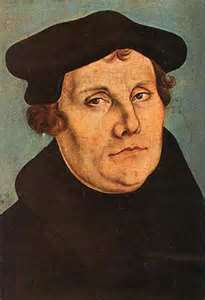
In case you come across this article by Thomas Cahill as I have being reposted and misused by some Roman Catholic brothers and sisters (along with some rather un-Christian remarks), be assured the author misses the mark somewhat when it comes to Luther’s psychology and theology. His take is too simplistic.
Luther’s efforts to reform the church (especially at the start) weren’t about ego alone, but about the Word of God being adhered to without mental gymnastics to make them fit corrupt and superstitious practices of the day. He was a pastor caring for his people, and a teacher seeking truth. His intent was not to be independent, revolutionary, or famous.
Unlike the short quote within the article, Luther’s words at Worms were more nuanced [please note the points I emphasize]:
“Unless I am refuted and convicted by testimonies of the Scriptures or by clear arguments (since I believe neither the Pope nor the Councils alone; it being evident that they have often erred and contradicted themselves), I am conquered by the Holy Scriptures quoted by me, and my conscience is bound in the word of God: I can not and will not recant any thing, since it is unsafe and dangerous to do any thing against the conscience.” (History of the Christian Church, vol. VII, ch. 3, sec. 55).
Martin Luther was posting an academic disputation – a common practice of his day – and wrote later writings to be discussed in community. He wasn’t looking for a fight nor a break with the church catholic, and his efforts were shaped by much more than just a matter of an individual’s ego.
True, self-interpretation of scripture has its weaknesses and excesses, but Luther wasn’t guilty there either. His focus remained on the assembly (the church) in relationship with one another and Christ. (This is made quit clear in his Large Catechism and other theological writings.) The church guided by the Spirit and tested by the divine revelation of scripture is the corrective for us all when it comes to interpretation, for Luther knew we all can err as much as popes and councils. We need to open scripture, listening for the Spirit and to one another.
As the debates rolled on and intensified, Luther failed to do that at times himself. Much like those posting anti-Lutheran insults and commentary, he let his anger and disappointment (and perhaps later his mental illness) govern some of his responses. After all, many people wanted to see him dead and weren’t exactly charitable either.
Martin Luther was human, and he realized it. In reviewing much of his writings, you will see him hesitate to state things definitively rather than to risk error. He critiques himself and his lack of ability. You will see calls for discernment rather than name calling over theological issues. He turns toward grace to light his way forward and not some internal power of his own.
I think such an attitude represents a very human, Christian humility and maturity rather than egocentricity. Adapted beyond theology discussions to a way of life, such an attitude will likely prove the best answer to what gridlocks us in our politics and divides our culture today.
As St. Paul reminded Luther and reminds us all, “And do not grieve the Holy Spirit of God, with which you were marked with a seal for the day of redemption. Put away from you all bitterness and wrath and anger and wrangling and slander, together with all malice, and be kind to one another, tenderhearted, forgiving one another, as God in Christ has forgiven you.” (Eph. 4:30-32). Even amidst important theological or other disputes, we are to remain one family of faith, the holy people of God.
Unless otherwise indicated, all scripture quotations for this article are from the New Revised Standard Version.
Rejoice always, pray without ceasing, give thanks in all circumstances; for this is the will of God in Christ Jesus for you. (1 Thess. 5:16-18)
How can we properly give thanks to God? According to Paul’s letter to the community of faith in Thessalonica (Thessaloníki), it isn’t just by our words alone. As his letter comes to a close, Paul reminds the local congregation that Jesus is coming. We don’t know when, but we are asked to be prepared to welcome him. We are to remain sober, “putting on faith and love as a breastplate, and the hope of salvation as a helmet,” and all the while trusting that he will remain true to all his promises.
In other words, yes, we will share in Christ’s ultimate victory through faith, but we aren’t to be lazy while we wait for it. Our salvation isn’t just about our needs and our feelings. We are part of a much bigger, cosmic battle and purpose where we are to live – and yes, in some ways die – for one another: “encourage one another and build each other up”; “acknowledge those who work hard among you,” loving them and respecting their call to leadership; “warn those who are idle and disruptive, encourage the disheartened, help the weak, be patient with everyone.” It might require putting our needs behind the needs of others. We might need to forgive someone who hurt us or be gentle in our reproach. Ultimately, we are to humbly love and serve one another and all those entrusted to our care. That can be hard!
Yet actively discerning our call from Christ, we are empowered to go forward in confidence. Victory is assured. We respond in thanksgiving by seeking to follow his Holy Spirit wherever it leads, no matter the risk or cost. Our Christian lives prove to be a great and noble effort based solely upon the love of our God and never our own legacy. We give thanks by being more than “country club” church members. We are to live actively as Christ’s disciples and saints, for by grace through faith that is exactly who we are.
So, yes I give thanks in prayer for all that we have shared and accomplished these past five years together at Messiah. I give thanks for our wonderful shared legacy of forty-five years serving Mechanicsville, Hanover County, and beyond. I remain thankful for all the saints in my own time and before who continue to inspire me. Yet most of all, I rejoice with you in our call to shared life and ministry; one that might prove hard at times but always consists of a future full of hope. It is together as church where we find the abundant life that Jesus promised us, and I am grateful for living as church with you.
This life of discipleship is Christ’s way, leading us and all the saints to the eternal feast of thanksgiving yet to come. To help celebrate, I invite all of us to reflect upon how we can live out Messiah’s mission more fully, “To share the good news of Jesus Christ and to invite all to join us in faith, worship, and service,” for there always remains room at Christ’s table.
Christ’s peace be with you always. I send you my prayers for a blessed Thanksgiving. Please pray for Kristine and me as well.
Your brother in Christ,
Pastor Lou
Unless otherwise indicated, all scripture quotations for this article are from the New Revised Standard Version (NRSV) translation.
Husband, Pastor, Law Enforcement Chaplain, and member of the Clerical Errors (aka "The Three Priests"), I'm sharing my two cents with anyone who cares...
You can also find me on social media as Loudluthrn (Lou-d-Luthrn or Lou the Lutheran). It is a moniker given me while attending a Presbyterian Seminary, but I'm a loud and proud Lutheran too (just not too loud and proud, mind you).