Of Lions, Lambs & Love

Image Used with Permission (c) Clipart.email

Although written in 2020, Lent once again begins the first week of March. This has been popular of late, so I am reposting it. Blessings this Lent and always. PL

Although we have had a mild winter (as I write this), we likely enter March with the old adage, “March comes in like a lion, but goes out like a lamb,” entering our minds. Although not a phrase related to faith, it recently struck me that it very well could serve as one. For this year with March, we have also just entered Lent.

Some people are intimidated by Lent. They don’t want to think about sin and death. Yet as Christians, we should. Jesus came to defeat these dark powers over our lives. Recognizing our need is not only being honest and humble but an opportunity to increase our gratitude.

Lent isn’t just about more sacrifice and activity. It is a chance for us to reflect upon the story of salvation at work in the past and in each day of our lives. We are sinners yet simultaneously saints. Struggling yet free. Dying yet growing in our experience of a new life that will last eternally. Through the grace-filled moments and disciplines of Lent, God helps us grow in our love for God, our neighbor and of ourselves.

The lion which is sin proves a ravenous foe. Its roar is ignored at our peril, but it need not be a roar lasting in our ears or misshaping our lives. For the Lamb of God has come and speaks love to us. A name given Jesus by John the Baptizer, the Lamb of God reflects the sacrificial lamb, an atonement for sin, during the Temple period. The image is so powerful, the meaning so important, the symbol of a lamb carrying a Roman banner of victory became synonymous with Jesus. The Risen Christ has conquered death for us and for all who trust in him. It is the certainty of this truth that inspired Paul to write the church in Rome, “Yet in all these things [all the suffering and struggles of our worldly experience] we are more than conquerors through Him who loved us.” We already share his victory, and we can thus walk on in his peace.

The lion and lamb (as I am using them today) remain part of the story of our salvation and always go together. They cannot be separated for they prove both our history and inheritance. No surprise, the lion has thus commonly come to symbolize Christ, both in his suffering and his triumph. Echoing prophecy, the lamb and lion laying together have become a rightful symbol of paradise. It’s both resurrected life and a promised paradise that we will celebrate on Easter. I wish you all the blessings of a fruitful Lent, an experience graciously magnified by our shared Easter joy. Come, Lord Jesus, come!

Originally version published in the March 2020 newsletter of Christ Lutheran Church, Fredericksburg, VA.

© 2020 The Rev. Louis Florio. All content not held under another’s copyright may not be used without permission of the author.

Leave a comment

Filed under Pastoral Letter

Light, light brief candle

Photo by Annie Spratt on Unsplash. Used by permission.

As his official biography reveals, “Hendro Munsterman is a Religion journalist and Vatican correspondent in Italy, The Netherlands, and France. After having studied and taught theology and religious studies at universities in The Netherlands, Switzerland and France, he became a full-time religious journalist and analyst for the national Dutch daily, Nederlands Dagblad.” Yes, he’s a smart cookie, as we might say in the United States, with a heart for God and others. I am also blessed that he is a friend. We served together in France as volunteers with the Ecumenical Community of Taizé in our young adult years.

I’ve enjoyed listening to or reading his reports and ponderings over the years. Yesterday, I came across his Facebook post about a recent television panel he was invited to join. As a “Vatican Watcher,” Hendro was asked to comment on the current Pope’s legacy as his health has recently declined. (For those that have not heard, Pope Francis suffered a polymicrobial infection with subsequent pneumonia in both lungs which forced him to remain in the hospital.) The short clip from the panel discussion got me thinking.

In the clip, Hendro provided some helpful analysis of the current Pope Francis’ legacy. Hendro mentioned how Pope Francis sought to turn the Vatican’s face outward. He is one who wants the Church to go to the people where they are, not wait for others to come to the Church. Pope Francis is a “pope of proximity” where people want to touch him in his approachability, yet he exemplifies the desire for the Church to go into the world and to touch human realities and consider those on the peripheries. This is at its heart all a great witness for a Savior who asked us go and make disciples of all nations, baptizing them in the name of the Father and of the Son and of the Holy Spirit (Matthew28:19) – even if the Devil can be in the details of political policies and realities.

In listening to him speak, I thought of the many conservative Roman Catholics whom I know personally that hate (yes, hate) this Pope. I have seen them post about it, and in some cases, I somehow ended up on an email chain with argumentative, unfriendly articles attached. Sometimes, the complaints surrounded his openness to relationships with Protestants or the fearful perception that Pope Francis was reinterpreting dogma or traditional practices. His restrictions on the Latin Mass is also unpopular in that camp, as is his Franciscan, Argentinian approach to liberation theology, which they claim has created confusion. They often claim he is too political, sometimes as if the Church should never interact with business or the world. Speaking of business, Pope Francis has sought to reform the Vatican bank, the Institute for Works of Religion (IOR), to make it more transparent and accountable. This was not always popular with movers and shakers in the Vatican. The list can go on much further, but whatever he has done or failed to do, the posts, articles and emails are often very ungenerous. In fact, some can demonize him as if he is an antipope or antichrist of some sort seeking to kill the Roman Catholic Church.

This is all in the face of a broad popularity – 75% of United States Catholics see Pope Francis in a positive light. (It is much harder to gage any sure Protestant view of the Pope due to historic differences and in some traditions animosity, yet a Barna study found that 35% of respondents thought Pope Francis actually improved their view of the Roman Catholic Church.)

Yet as with all of us who believe in Jesus, imperfect as we are, God can still always use our humble, sin tainted witness for good (Romans 8:28). Martin Luther’s caution regarding the commandment not to give false testimony – number eight as Lutherans count them – comes first to my mind: “We should fear and love God so that we do not tell lies about our neighbor, betray him, slander him, or hurt his reputation, but defend him, speak well of him, and explain everything in the kindest way” (from his Small Catechism). Then in the case of Pope Francis, I must say that his hoping to turn the Vatican’s face outward, having the Church go to the people outside the walls, is admirable. All Christians should agree that this is needed in a world with so much pain, suffering, and often times ignorance.

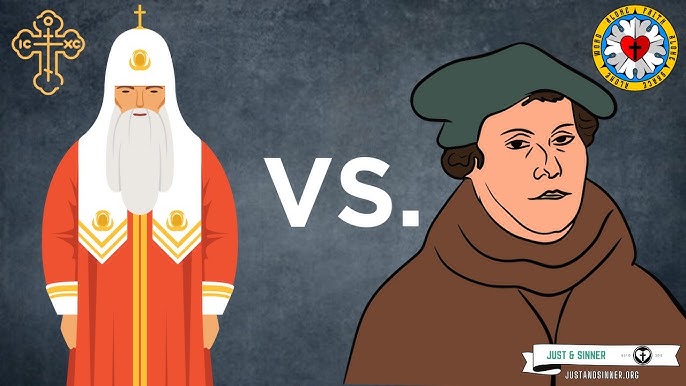
Sure, Martin Luther was no fan of Popes. (He called his contemporary Pope the Antichrist in 1520.) Yet, he, too, would likely agree that this is the way the Church should seek to live out the Gospel. He once argued, “Anyone who is to find Christ must first find the Church.” He goes on to say the Church is not a building but us in the flesh! Luther wrote extensively on vocation, God’s call in our ordinary, day to day lives. Our vocation is ultimately for the glory of God and the service of others. To Luther, even a father changing a dirty diaper becomes holy when done in love. Yet, this is never about earning merit for heaven. “God does not need our good works, but our neighbor does,” quipped Luther. The Church, you and me and all who believe, need to be active in the world to meet people, love them, and share our love of God with them through word and example.

Then, Martin Luther taught a great deal about what we call the Theology of the Cross. Yes, this understanding holds that we can never save ourselves. Only Jesus through his cross and resurrection can do that. Yet, it also reminds us that God often shows up not in and through power but in places of weakness and suffering. We remember that we were saved for a purpose. As Jesus told his disciples, “If any wish to come after me, let them deny themselves and take up their cross and follow me. For those who want to save their life will lose it, and those who lose their life for my sake will find it” (Matthew 16:24-25). Our lives are not just about us; our security and happiness. We are sent to this time and this place to love as Jesus loved. This often infers sacrifice and suffering alongside or for the benefit of “the least of these” (Matthew 25:45).

Finally, Martin Luther thought of sin as ultimately our being “curved inward on ourselves” (incurvatus in se). Looking out for ourselves first can keep us from caring for the neighbors and world around us. It can lead to greed. It might encourage indifference to the suffering of those around us. We might abuse employees or others close to us. We might hear ourselves saying, “That’s not my problem” when Jesus says, “Love one another as I have loved you” (John 13:34). When our eyes are on ourselves, we can’t accurately see the world as it is, nor our place in it. We tend to take our eyes off of Jesus and lose our way, hurting ourselves, others, and our world – intentionally or not. So despite some profound theological, polity, and worship differences, I think Pope Francis is taking his stand not too distant from us Lutherans. We are indeed asked to be Light bearers to the people of this world.

When Lutherans are baptized, they are often presented a small candle lit from the Paschal candle (a much larger candle in the sanctuary representing Christ’s own light). The lay leader giving the candle to the newly baptized quotes Jesus telling them, “Let your light shine before others, so that they may see your good works and give glory to your Father in heaven.” (Matthew 5:16). We have to fight by God’s help our human tendency to be curved inward on ourselves. Look to Christ in his examples, teachings and promises. He’s the Light of the World (John 8:12). We can ask for his Spirit to guide us and correct our course when we are wrong (John 14:16 and John 16:7).

As old Marty would repeatedly say in his catechism, “This is most certainly true.” We were created and called to cooperate with the grace offered us to help fulfill God’s will for the world. Yet if we are in the habit of not doing so, our lives will likely become similar to an old, ill-used wick bent inward and broken. Our light, really Christ’s light, can appear as if snuffed out. At the very least, we won’t shine with the abundant life Jesus promised and intended for us (John 10:10 and Romans 5:17). What a loss for us and our world!

If you wish to see the video of the full panel conversation at France24 in English, click here – “Which direction for the Church? Pope’s hospitalisation puts prelates on stand-by.”

This detailed post evolved from a simple Facebook exchange on February 26, 2025. I want to thank Hendro Munsterman again for sharing about his panel discussion.

© 2025 The Rev. Louis Florio. All content not held under another’s copyright may not be used without permission of the author.

Leave a comment

Filed under Church History, Theology

Sunrise, Sunset

Photo by the author, July 16, 2022.

I recently read an article about the benefit of watching sunrises and sunsets. Based on research, people across the world find such solar events to be “the most beautiful and awe-inspiring weather.” It has long been argued that being out in nature can help one’s mental, emotional, physical, and spiritual health. Time outdoors can help lower blood pressure for example.

Yet, it appears gazing at sunrises and sunsets can bring extra benefit. (Even looking at pictures of sunrises and sunsets on screensavers or paintings can have an impact apparently.) The lead author of the study, Alex Smalley, said, “We have, as Western populations, become very disconnected from the natural world. When you see something vast and overwhelming or something that produces this feeling of awe, your own problems can feel diminished and so you don’t worry so much about them.”

This should really be no surprise. John Calvin argued that looking at sunrises and the marvels of creation can become the start of a human’s search for or belief in the existence of a divine being. Martin Luther seems to have agreed. He reportedly said, “God writes the Gospel not in the Bible alone, but also on trees, and in the flowers and clouds and stars.” Recognizing that there is a beauty and purpose bigger than ourselves can lead to awe and ultimately a sense of joy and peace,

Perhaps that’s why St. Paul commended people to focus on the good rather than the bad. He wrote, “Finally brothers and sisters, whatever is true, whatever is honorable, whatever is just, whatever is pure, whatever is pleasing, whatever is commendable, if there is any excellence and if there is anything worthy of praise, think about these things” (Philippians 4:8).

Readings such as Psalm 8 even use nature to argue for our significance thanks be to God’s love for us, “When I look at your heavens, the work of your fingers, the moon and the stars that you have established; what are humans that you are mindful of them, mortals that you care for them?”

We aren’t just talking about positive thinking here. In looking at the cosmos around us, listening to the laughter of children, resting in the quiet, or even sharing laughter among friends, we can sense a connectedness to something bigger than ourselves. A spark of joy and meaning can come.

So, put down the phone. Set aside rushing to the next program or event. Be still, look around, and take note of the beauty that is always in your midst. Hear it from the word of God found in scripture or the birds singing to God’s glory above you. Feel the beauty under your toes and smell it in the forests or by the sea. Then, let your awe rise with your prayers of thanksgiving. For our God created this all out of love for you and for all.  

© 2025 The Rev. Louis Florio. All content not held under another’s copyright may not be used without permission of the author.

1 Comment

Filed under Uncategorized

No one is trash to Jesus (Sermon)

The below sermon was offered at Christ Lutheran Church in Fredericksburg on February 23, 2025. It proved a difficult sermon for me to preach on several levels, but it was received extraordinarily well by people I know as left, right, and in between. I don’t post all my sermons, but based on that response and the many people that I have already spoken with because of my sermon at our two services, I suspect it might resonate with many others as well. So, here I post. I hope it somehow blesses you. If you prefer to listen to the sermon, a recording of our worship service follows the below text.

The woman that we meet today in Luke’s account proves a bit of a mystery, and everything about this meeting seems a bit unorthodox for that day. Here, we have an unescorted, unnamed woman of low rank and reputation barging into a high-ranking citizen’s home, a rabbi’s home, to approach a great religious teacher, Jesus. Then, she unceremoniously baths his feet in perfumed oils and her tears…drying them with her hair…kissing the feet that Peter would later say he was unfit to wash. How dare she presume such a scandalous interaction?

Well, she does so because she is thankful beyond words. Jesus commends her and identifies her actions as a sign of her gratitude for being forgiven of many sins…many sins…potentially very grave and serious sins…yet sins which are never explicitly named in Luke…any more than the woman herself.[i]

As I have shared before, when I was a teen and young adult, I often felt unlovable and unworthy. I imagined my sins were too great even for the power of the cross. So, as I came back into the Church, finally trusting in the forgiveness of all my sins, it proved easy for me to imagine myself in the place of that woman. Thinking of it, I can still experience a joy that can bring me to tears at times.

This realization of forgiveness changed the direction of my life, but I had much still to learn. You see, I could still play the part of the Pharisee. Sure, I finally trusted Jesus’ promises, and it had changed my life in remarkable ways…ways that others even began to notice. Yet, notwithstanding Paul’s encouragement to forgive one another, as God in Christ forgave us (Ephesians 4:32), it proved terribly hard to put forgiveness into practice.

I had been through a lot of traumatic experiences in my family of origin. I have experienced much trauma later through my police service. Such wounds of the world can last. The sin and unfairness we face can warp the way we look at ourselves and others. Despite my best intentions, I could judge people harshly. I could objectify them. I still could return hatred for the hate that I encountered on patrol, because I was prone to only see the sin and not the struggling, wounded person underneath…a person who through grace could be forgiven by Jesus too.

This past week on social media, I expressed to a friend that I was really concerned with the immediate cessation of all aid overseas. I suggested that perhaps some people who urgently needed help might suffer and die. A person unknown to me chimed in, “I chalk that up to [stuff] happens.” (Now, he used a different word than stuff, but we are in church.) Stuff happens? Well, my first response was, yes, stuff does happen to the just and the unjust alike just as Jesus taught (Matthew 5:45). That’s partly why God calls us to care for one another, because stuff happens.

I came across others who called government workers vermin and parasites. And yet although some government workers might fail in their duties, I look around here in this sanctuary, seeing current and past government workers that I know well, and I see people who are nothing of the kind. They are people who work hard and honorably. I don’t see vermin… I don’t see parasites, no matter any failings that might have…No matter any failings, I see Children of God, imperfect but loved siblings in Christ whom I must love…who I do love.

Then, I encountered others who thought anyone who supported the President at any level must be white trash and racist, ignorant or cruel…perhaps even a Nazi. And yet I see people here that I know have voted for president Trump…who are supportive of some of his policies…and I know them differently. They are nothing of the kind. These people are prone to generosity and love, who just want what they think is best for their country, and so they voted that way. No matter any failings, I see Children of God, imperfect but loved siblings in Christ whom I must love…who I do love.

You know…y’all are messed up! …We are all messed up in our own way. And yet I love you…and I hope that comes across…I love you. And I hope you can love the mess that is me. For, we are only human even at our best. We fail often. We can be selfish or shortsighted, and we always need one another’s love and forgiveness. We can also just be plain and blindly wrong at times.

Yet as tribal, sinful humans, we can be awful to one another…truly, abysmally awful. We can close off our hearts…And those we should love, we push away…We judge…We coldly condemn…We see evil, but we fail to see evil at work within our own hearts. And those who hate us, we might tend to hate all the more. This might surprise many in the world, but we can actually say we think someone or something is wrong without hating or objectifying. In fact, the Bible says for us to defeat evil with good (Romans 12:21), not with name calling or insulting memes.

Not doing good with our words and actions can have unintended, deadly consequences. For with such sin, as Luther teaches, we can become murderers killing peace, relationships, and in some cases, killing the spirit of others. This sin is like a disease that can spread from person to person. Perhaps this is partly why an eleven-year-old girl died by suicide in Texas after being taunted over her immigration status by other children. We can become murderers, Luther argues, through the simmering anger, hatred, and contempt hidden in our hearts, and others like our children might just pick up on that and go further than we ever intended.  

So, Luther states passionately in his Large Catechism, that “Thou shall not murder” goes way beyond actually stabbing someone. “God wishes,” he writes, “to remove the root and source by which the heart is embittered against our neighbor…[urging us] to commit to [God] the wrong which we suffer. Thus, we shall [put up with] our enemies to rage and be angry, doing what they can, and we learn to calm our [own] wrath, and to have a patient, gentle heart, especially toward those who give us cause to be angry, that is, our enemies.”

Thus, this week, I thought of my own hard and terrible lesson about this sin that works within me. As a police officer in the 1980s and 1990s, I told you before that my heart had grown hard. I was on bicycle patrol one night with my partner and close friend, Willie, when a burglary of an athletic store occurred. The thieves had gone through the roof, stole a lot, and they had successfully gotten away. Hours later in the early morning…hours before any commuters had awoken…Willie and I saw a young male walking with an athletic bag. His clothes were covered in black pitch and tar, and the bag was stuffed to the brim with items. In the context of the recent theft, this seemed like reasonable suspicion for a stop.

Yet soon after we began to speak to him, the suspect got nervous and began to fight us with all his might. He was big. He was strong…very strong…and it took all we had to try to contain and restrain him. And during the fight, the suspect reached for my weapon and tried to wrench my weapon multiple times out of its holster violently. I was fighting with all my might to keep control of it. It came to my mind that if I lost this fight I might die. (I can remember this moment so unbelievably clearly.)

He broke away almost as quickly as he had begun to attack us, and a pursuit by foot and bicycle began. We had already called a Signal 13 which in Alexandra meant an officer was in dire trouble, and units were screaming their way toward us from all over the city. As we sought to cut off and corner the man, Willie and I were separated during the chase, and in the midst of the pursuit my radio went dead just as a large bang could be heard echoing through the darkness. (I remember that clearly too.) A friend told me later that with no one able to reach me, he feared that I had been shot and killed.

So, it was chaos. There was adrenaline pumping, and there was fear. And there was righteous anger, too. After all, he was a thief. He had fought the police. He had even fought for my gun likely to use it against us. This man was caught hiding in a dumpster. (That was the loud bang that people heard.) Yet to arrest him, a police K9 had to be deployed. And as the man fought more and more, the dog bit him more and more…He was damaged pretty badly…until he submitted.

So when I came up to the group, there he was, my enemy, on the pavement in cuffs, profusely bleeding and waiting for an ambulance. He was in pain…that’s for sure…but what I remember very clearly was looking at his eyes and seeing a lot of anger and hatred. (A look that I will not forget…a lot of hatred.) And as I surveyed him in all his suffering, I thought in the depths of my heart, “Good. I am glad he is hurt. He deserves to suffer. He deserves to die. He is trash.” I am ashamed to say it. It is ugly, but it is true. I would have been happy in that time of my anger if he had died.

Yet it was at that very moment, like a voice in my head, I heard the words, “How can you condemn him, after all that I have forgiven you? He could be with you in heaven someday.” Whether that voice was the Spirit of God, or my mind’s synapses had finally made a new but powerful connection between scripture and my life[ii]…I knew I was a murderer…a sinner…a person who must repent. And although I know that the use of force was necessary, and the arrest was ultimately for the community and even the man’s safety (stopping him from harming himself and others more), my heart immediately softened. I saw myself in him, and I began to have compassion for him…to love him…wanting him to have the love and forgiveness that I had myself received. Now, this did not mean that I regretted any consequences for him that he faced. (Consequences can be necessary or unavoidable.) Yet, I recognized that more was going on in that situation…something eternal.

Years later, I have no idea what became of this man, but I still pray for him when he comes to mind. And he often does whenever I struggle to forgive someone, or whenever I start to objectify someone, or whenever I call someone a jerk. I catch myself thinking of that moment and of him. This was a life-changing event for me. It is one still difficult to share, especially in the context of what happened in Virginia Beach this past week.[iii] But it is also difficult to share because I am ashamed of my sin. And yet at this time, where people are failing in love so often and to such a great extent, painting groups of people with a broad brushstrokes with little or no discernment of their unique differences or situations, I see so many strong parallels.

You likely have seen it or experienced it yourselves. We tend cut off from one another in judgement and hate…where an adult child might not wish to speak to a parent due to disagreements over hot button political issues of our day. And after arguments, longtime friendships have died. I thought it important to confess my sin once again…this time to you. To acknowledge that I struggle at times to resist becoming the Pharisee of this tale, the one saying, “Doesn’t Jesus know who these people are, these sinners?”

Why, yes…yes, he does. They are the people he has come to love and save. Jesus taught us in his Beatitudes, as children of the Kingdom of God, saved-sinners, that we must love our neighbor as ourselves, even our enemies. In fact, Jesus had just shared the Beatitudes in Luke’s account immediately before this dinner. As with the women in Luke, it might seem sometimes a mystery how others have found themselves struggling in sin or on another political side opposed to us. Yet the mystery of Jesus’ suffering, death, and resurrection for our sake, for all of us, points us only toward love for those whom we might otherwise judge without mercy or objectify.

My brothers and sisters, we live in a time of trouble. There are wars and rumors of wars – but not just overseas. These wars are happening in our communities, congregations, and within our families. People are turning against the ones they should love, forgive, and be gentle toward, and in their hearts, they start to think of others as trash…disposable. Our hearts have divided allegiances between Jesus’ way and the world’s way.

Yet, we who have been forgiven so much need not give in to the malevolent spirit of these times. By God’s help, whatever others say or do, we can be moved by the Holy Spirit toward patience, compassion, and forgiveness for those who might not deserve it in the eyes of the world. We can seek to protect and speak up for those who are maligned, objectified, or threatened even when those people are wrong. For we have been forgiven all our sin, because of what Christ suffered on the cross and nothing else…proving that no one is trash to Jesus, including you or me. Amen.


[i] Jane Schaberg, “Luke,” The Women’s Bible Commentary, ed. Carol A. Newsome and Sharon H. Ringe (SPCK, 1992), p. 285-286.

[ii] I know what I believe, that it was a theophany of sorts, but I will leave it up to you to decide for yourselves.

[iii] Two Virginia Beach Police officers died after being shot during a traffic stop the Friday night (February 21, 2025) before this sermon was delivered. The sermon was already written, but many police friends and I had been reflecting how such a loss impacted us. Losses from our own departments came back to haunt us. I lost four colleagues during my six years as an officer – two from being shot, one from suicide, and one from a unknown, preexisting heart condition after a foot pursuit. The death of any officer resonates through the police community plus their families in a way hard to describe. The grief sticks with us for the rest of our lives.

I am not sure of the original source of the above artwork. I found it at the Holy Smack blog. If you know the artist, please let me know. I’d like to give proper attribution.

If you would like to hear my sermon or watch our service, the video can be found below. The Gospel text and sermon begins at about the 17 minute mark.

© 2025 The Rev. Louis Florio. All content not held under another’s copyright may not be used without permission of the author.

1 Comment

Filed under Sermon

Called to decency, not consequentialism

As an ethicist from Grove City College, a conservative, evangelical institution, opined recently, a consequentialist “holds that good ends, however they might be defined, can justify the use of unethical means.” As he reflects on recent administration’s behaviors, he suggests that sort of thinking is a utilitarian approach, but not truly Christian. I agree, and I’ve been suggesting the same over the last few weeks. “I don’t agree with what’s happening (or all that’s being done or said), but…” isn’t a great approach to Christian ethics.

I’ve spoken or written to a number of Christians including pastors in favor of the administration’s ultimate goals about current events. I, too, want safety, prosperity, and justice. I am sensitive to how people long for a government that reflects their values, American traditional values included. I love and have served my country, making an oath to defend the Constitution. I have been injured doing so at times (as a police officer), and I have had several near death experiences. I say this as evidence that I love our nation, and I admit that I am supportive of some (not all) of the stated goals. Yet, I also know there is no justice without mercy (Micah 6:8). I remember that Jesus came to call all people to himself, not just Americans (John 12:32). We live in a political world where good people might not agree, but we don’t have to hate one another or demonize. Jesus calls us to be better than that.

I have come to understand from scripture that there is no “me first” sentiment overruling love of neighbor or enemy, but we are told to follow Jesus which means we must instead cary a cross (Matthew 16:24). Sacrifice is often necessary. I’ve sought to apply Christ’s Beatitudes to whatever I should do or not do, especially in difficult situations. I have of course failed at times, sometimes abysmally so, but I try to repent and make amends for my sin, turning to God so that I might live (Isaiah 45:22) – to live abundantly now as well as eternally as Jesus promises.

As Christians, we need to have our yes mean yes, and no mean no (Matthew 5:37). We should not explain away sin, rude behaviors or hurting people – intentionally or not – because we think the goals are “good.” We are to defeat evil with good (Romans 12:21) whether a liberal, a conservative, or an “anywhere in between” Christian. Humbly, we should listen and consider where we might be wrong, because no human is always right. We should repent and show others grace if they are willing to change. For as Jesus says in Mark 8:36, “For what does it profit a man to gain the whole world and forfeit his soul?”

This doesn’t mean we must go to war, culture war or otherwise, but we are called to decency – to be human in the best sense of the word, loved and changed by God. St. Peter himself argued, “but as he who called you is holy, you also be holy in all your conduct” (1 Peter 1:25). We are to love, not objectify, demean or abuse. Meekness was a word used to describe both Moses and Jesus, so I expect it does not mean what much of the world thinks. It takes courage, and it’s hard.

So perhaps like Sophie Scholl, Christian martyr of WW2, we must grow to understand that, “Just because so many things are in conflict does not mean that we ourselves should be divided” (as quoted in Seeking Peace: Notes and Conversations Along the Way, 1998, by Johann Christoph Arnold, p. 155). Or as with Dietrich Bonhoeffer, we can try to just be decent in the face of evil, as Victoria Barnett, a Bonhoeffer scholar, points out so well. Or even as Mother Teresa, Br. Roger of Taizé, and so many others who sought to live simply and at peace demonstrated through the simplicity of their lives, we can seek to do all things with great love. That’s often how the world experiences change; ultimately experiences Jesus.

A hero of mine, Jonathan Daniels, closed his valedictory address at VMI with this sentiment, one which I share, “I wish you the decency and nobility of which you are capable.” By God’s help, we are all capable of such a life no matter how impossible it might seem.

© 2025 The Rev. Louis Florio. All content not held under another’s copyright may not be used without permission of the author.
Leave a comment

Filed under Theology

It Can Always Be Springtime

These Ukrainian eggs were gifted to my in 1995 while volunteering in France.

The below is a reposting of an earlier blog (May 17, 2022) – an item originally for my congregation as the war against Ukraine’s independence and sovereignty escalated. As I recently posted on Facebook, no, Ukraine didn’t start the war no matter what the President or anyone else says. Way back as Russia hosted the Olympics in 2014, I wrote Russia would attack Ukraine, and they did. I wasn’t a prophet. It was clear, and I wasn’t alone in my prognosticating. Russia wanted to reestablish its empire, secure Black sea access, and acquire more economic benefits. Things escalated in 2022 with a total invasion marked by many war crimes and actions that international law calls genocide. Personally, I believe based on my experience and past training in the military, an unjust peace will only encourage Russia to push further for their advantage down the road. They have already been sabotaging industry and communications in the West. Ukraine’s wanting to be part of the EU or NATO isn’t an excuse for Russia’s invasion, kidnapping children, raping women, bombing noncombatants and hospitals, starving/torturing/killing prisoners, taking or destroying cultural heritage or using human shields. War crimes and crimes against humanity are never virtuous no matter the result or perceived benefits. Christians must denounce them. And if you think we can trust old Vlad as an ally, I would ask you to think again. “Woe to those who call evil good and good evil, who put darkness for light and light for darkness, who put bitter for sweet and sweet for bitter” (Isa . 5:20). And yet, with all I have said, the below reflection still proves true. With all the dark clouds of war, I remain hopeful – not in humanity, but in Christ’s promises. It haunts me that the man in my story might have become a casualty of the war, but I trust nothing separates us from the Love of God, not even death. The man was right to live out his faith as he did. Lord have mercy. +

When I served as a volunteer with the Ecumenical Community of Taizé in the mid-1990s, it was an exciting time. The Berlin Wall had just come down, and the Eastern Bloc nations had recently transitioned from tyranny toward freedom. With this change, Christianity in the east of Europe and into Russia experienced what one might call a little springtime – a true rebirth of faith.

So, almost naturally, many Eastern Europeans decided to visit the community on pilgrimage. Since the end of World War 2, it had become a yearly event for the hillside that was home to the monks of Taizé living in the province of Burgundy to flower with multicolored tents helping to welcome young Christians from across the denominations and continents. The village could swell from 200-plus people in the winter to several thousand each week from Easter through summer. Now, the brothers welcomed Eastern Europeans among their many guests.

Indeed, the ecumenically minded Pope John XXIII loved the community and what the Spirit was doing there so much, he once greeted Brother Roger, the Prior, shouting, “Ah, Taizé, that little springtime!” Spending a week with the monks (fifty percent Protestant and fifty percent Roman Catholic), helping with their daily work welcoming and supporting visitors and local ministries, participating in small group discussions over scripture guided by the brothers, and praying their beautiful chants in community three times a day was more than just busy work or a distraction. Over time, people often heard God’s call in their lives better, including the call to love one another in community.

Yet, how difficult it might prove to have Estonians, Ukrainians, and Russians arrive at the same time for a week’s visit among other guests. Bitterness still existed over mistreatment of the recently deceased Soviet imperial power. As much as the Estonians and Ukrainians were overjoyed and boisterous, the Russians appeared as a defeated people: quiet, suspicious, and tending to stay among themselves. (Certainly, religious, economic, and cultural differences with the Western Christians present didn’t help.)

Surprisingly, during the week, I witnessed firsthand what can happen when people get to know one another as individuals. In reflecting upon scripture and sharing one’s understanding, hopes and struggles, the Word went to work. Friendships formed. Attitudes changed. Forgiveness and grace were shared. It is no wonder the brothers had become known for their work – really Christ’s work – of reconciliation and trust. They had even worked secretly in support of Christian young people behind the Iron Curtain at times.

I remember one Ukrainian teacher who stood out from the crowd of pilgrims that week. He told me he made about $25 USD per month (about $50 today). He recalled the horrors and worry over Chernobyl. He remembered the fear that came with Soviet domination and its prescription against almost any signs of faith. And yet each day, I would see him rejoicing among new people, including Russian people. He gave away gifts – small flags of the now independent Ukraine as well as small sets of Ukrainian Easter Eggs. An ancient folk art, the eggs had moved in meaning as his country became Christian in the Middle Ages from representing the rebirth of the Earth each spring to the rebirth of humanity through Christ’s resurrection.

I still treasure that man’s joy, openness, and generosity. As the war in Ukraine continues, as political divisions and violence challenge us in the USA, as even within our church families we might encounter people tending to judge and withdraw rather than offer grace, I stare at his eggs gifted to me and many others that week now long ago. Through his past witness, hope comes back to me today. Without a doubt, I believe springtime will come again. Jesus will come again. Signs of spring can be found everywhere if we dare look through the eyes of faith and seek to love one another – even our enemies.

Originally published in The Hub, a weekly email of Christ Lutheran Church, May 17, 2022 edition. Christ Lutheran Church is located in Fredericksburg, Virginia.

© 2025 The Rev. Louis Florio. All content not held under another’s copyright may not be used without permission of the author.

1 Comment

Filed under hope, Pastoral Letter

My little springtime

This is me in Taizé shortly after my arrival, perhaps January 1995. A new Lithuanian friend who was a former draftee in the Soviet Army took the photo for me. I finished my own US Army commitment in 1994. Enemies can become friends.

“Ah, Taizé, that little springtime,” remarked Pope John XXIII about the ecumenical monastic community nestled on a hill in Burgundy, France. Being there definitely was a springtime experience for me. I have recently been thinking about my time there a lot. For, I moved to Taize’ in France on December 5, 1994 – 30 years ago! 

I first met the brothers escorting Mary Washington College students to their first large meeting ever held in the US at Dayton University. Several thousand young adults from across the US gathered across denominational lines. As part of “the Pilgrimage of Trust,” we stayed with local families where conversations would continue. 

I had no idea how my heart would open when I first volunteered to go as a chaperone and participant. My experience changed the way I looked at life and the Church – how I understood myself as well. People sharing their faith, positive interactions with people who were previously “other” to me, and a more intimate prayer life energized me. 

I read much about the Ecumenical Community of Taizé and from Br. Roger, the founder, after that. I continued to pray with chants at home and with friends. I went to a few smaller regional meetings. It slowly became a part of me. I’d even catch myself singing their chants (ultimately prayers) as I drove to emergency calls or in quiet moments of my day. Like the prophet, Nehemiah, my prayer life and work life merged. I found myself praying all the time. As I found more peace, I became more patient and discerning when working with others or arresting people. I discovered peace even when amidst the thick of things. Even my sergeant noticed the change. He said during my review, “I don’t know what you are doing, but keep it up.” I think it was more what God was doing in my life, but his observations affirmed for me that I was in a better place and heading in the right direction. Whatever my future, God was with me.

All the while, I began to wonder if I was being called to become a brother. When younger, I had investigated becoming a priest while Roman Catholic. Yet like many young adults, with unaddressed trauma, grief and sin from the past, I had wondered far. I finally became open to radically trusting God after a crisis. Thanks to seeds planted in my past, faith-filled friends, and intentional spiritual, mental, and emotional work, I found my way back home. The Dayton meeting came when the time was right and catapulted me forward toward a new, radical trust in God. Now, I also understood the Church was more than my denomination. I came to believe my past errors need not hold me back. I was and remain forgiven and free. I became determined to address the issue of serving in the Church once and for all wherever God might lead me. For God had been faithful to me, and again, I trusted the Spirit would set me on the right path. 

During this time of growth, I had come to know Br. John. Br. John is one of the community’s American brothers, and he is often asked to go abroad. He had introduced me to a Croatian immigrant in Alexandria who hoped to have a meeting in the DC region where I then lived. Certainly, I would help! It proved such a special event. Only about 100 attended, but the impact was similar to my time in Dayton. As I spoke with Br. John during a break, I tentatively told him of my vocational search over the years – on and off. My friend Tony and I would be visiting Taizé in France for the first time, and I wondered – although I can’t sing well or speak French – maybe there was still an answer for me there? 

Brother John did not laugh at me as I feared. I was not rejected, but instead taken seriously in my search. Although I had not been before to the community, Br. John said that as I was in a different place than many in my search (I had done a lot of work regarding my repentance, healing, and discernment) perhaps I should spend a week in silence. I still would go to the three daily prayers. I would have moments of conversation. Yet mostly, I would spend time in silence or speaking with my future contact brother, Br. Francois, who would serve as a kind of spiritual director. (He was an early brother, and much later, I learned he was also a Lutheran pastor.) 

My contact brother, Brother Francois

Of course, most of my time was indeed spent meditating on scripture, praying, or going for walks. Yet, I was invited to eat with Br. Roger and the brothers once during this first visit as well. A brother who did not know me introduced himself and said, “You are in a week of silence aren’t you?” I said yes, but asked how he knew. He said that people experiencing a week of silence often had a glow about them. (Although I did not understand it at the time, I would later see that glow on other faces.) My growing trust and peace showed.

As my week closed, I told Br. Francois that I thought perhaps I should come for a longer time for more discernment. This would necessitate my resigning from the police department. My eyes and heart had opened wider, so I understood it was time to take a leap of faith. I felt pulled there. He said after a short time of discussion, “We cannot know yet what the answer will be, but we have similar hearts. You must come.” And so, long story very short, I resigned from the police department and came. I began my service as a long term volunteer, “a permanent” in Taize’ parlance, primarily working among the campsites and with meeting preparations. 

Upon arrival, I continued to meet with Br. Francois, and there were many, many more important friendships and memories made during my time there including at the Paris European Meeting with over 100,000 young adults! 

A group photo of the male Permanents at the time from all over the globe. Br. Mathew, a “young brother” in charge of caring for us, is now the Prior of the community (far right). Great memories!

Yet after about seven months, it became clear that I was not to stay, but I never doubted that I had been called there. I came to that little hill, and I saw Christ more clearly than ever before. I just now knew he was calling me to something else. Back to the valley for me! This led me to other people, and thus more new understandings of God’s love, but that’s for another time to share. 

I have not been back to what I still consider my spiritual home, but my wife, Kristine, and I did make it to a European Meeting in Barcelona. (It was the last time I saw Br. Francois. He died a few years ago.) I also was able to welcome Br. John and Br. Emile for a meeting at my church in the Richmond area in 2019. I hope our paths will cross again, but as I have written to my many dear fellow volunteers now across the globe, it’s ok if I don’t meet them again. I still sense the deep, living communion which we share any time I hear Taize’ chants, see a photo, or think of them. The Spirit works this way among the Church, a communion of saints. That communion spoken about in the creeds of the Church is tangible.

Yes, we are together still. It’s hard to explain, but it is true. I trust – thanks be to God – that it will be so forever.

“The Hill,” the village of Taizé in Burgundy, France.

Reflection expanded upon from a Facebook post shared on the 30th anniversary of my arrival to the Ecumenical Community of Taize’.

© 2025 The Rev. Louis Florio. All content not held under another’s copyright may not be used without permission of the author.

2 Comments

Filed under Memories

New Apostolic Reformation?

Image from Logos Books

I know a bit about the New Apostolic Reformation (NAR). Sure, I’ve seen articles, and some sermons plus speeches on video. Yet I first started studying this theology as I went through training regarding nationalist hate groups or Central and South American dictatorships in the 1980s/90s as a police officer and military intelligence analyst.

Why? The teachings have roots in the 1940s and have been “repackaged” over the years. Not all those espousing such beliefs are inherently dangerous,  although many Christians consider their theology heretical. Yet, this family of theological ideas has been often used and manipulated to help hold up dictatorships in Central America; rationalizing abuses and violence. Closer to home, White Nationalists and groups against the US government also often incorporated beliefs from this theology into their religious practices back then and still do. The theology seemed to support their worldview establishing a “Christian” nation in expectation of and preparation for Jesus’ return.

You see, even in a purer form, many adherents favor Christian dominion over society in a belief this will help prepare for an End Time army. Thus, my classes and research back in the day wasn’t to suppress religion, but it was to help understand and help combat people who wanted to overthrow the government, kill law enforcement, disregard laws, and oppress minorities or other faith traditions using violence.

Not everyone with an End Time (eschatological) theological focus or a belief in contemporary prophecy is criminal or dangerous, but sadly, some are. Partly, this is because such theology often relies heavily on personal revelation and prophesy which historically has led many astray when left untested or improperly interpreted. Also, wanting a theocracy in a democratic republic espousing freedom of religion is…problematic. What will qualify one as the right kind of Christian? How will those who don’t believe be dealt with?

Further, there’s a stated goal of reinstating the Temple in Jerusalem (a Third Temple) to help precipitate or be a sign of Jesus’ return. What is not often recognized, this Zionism often masks a teaching among some adherents that once the Temple is restored, non-converting Jews can be eliminated. Thus, this is a popular belief among some related White Nationalist hate groups.

Adherents are also commonly known for imprecatory prayer; asking God to smite those they feel are against them. They see demons at work. With such a worldview, they tend to desire the dismantling of secular government. That’s antithetical to a Constitutional system espousing freedom of religion – the freedom to believe as you want even as one might not have religious faith at all. As a Lutheran Christian, I believe the Gospel rightly preached (with words as necessary as St. Francis once remarked) is strong enough to attract people without force or intimidation.

It’s important to note once again that the eschatology they hold dear is not held by the majority of Christians in the world. It stems from biblical interpretation by members of the Plymouth Brethren which broke away from Anglicanism in the 1820’s. You can trace contemporary rapture theology to the 1830’s within this movement. It derived from both supposedly prophetic vision and biblical interpretation. A leader, John Nelson Darby, had his ideas popularized in the United States during the 20th Century through the Scofield Reference Bible. Through its extensive commentary, many fundamentalist began to hold strongly to the notion of dispensationalism. This also began an extensive speculation about the Book of Revelation and eschatology in general. Not all of this speculation has been good, as we have seen with a number of groups trying to discern and manipulate the timing of Jesus’ Second Coming. It has spread even more thanks to popular books and movies echoing these themes.

Many in the United States have come to see this eschatological teaching as THE teaching of the Church due to its cultural influence. It has seeped into the theology of many when their denomination actually might consider it anathema. This is particularly true in the South or anywhere charismatic faith traditions are common. Yet the Orthodox, Roman Catholic Church, Lutherans (both confessional and non-confessional), Anglican tradition, Methodism, and more (the majority of Christians in the world) consider it a terrible misunderstanding of scripture and Apostolic teaching. You are hard pressed to find it in early Church teachings, and even in scripture, the verses used in support often are out of context or linked with a great bit of mental gymnastics. Even Evangelicals, charismatic churches, and Anabaptists often interpret and apply the relevant scriptures quite differently.

The New Apostolic Reformation comes out of questionable biblical interpretation and often personal visions. The ministries associated often have a tendency toward personality cult surrounding the favored “prophets” and “Apostles” of their sect. It too often becomes problematic if not dangerous when applied in the real world. Unfortunately, there are parallel theologies, such as Roman Catholic integralism. None of it represents the best that the United States has to offer, and it leans heretical in my view. That said, people in the United States are free to be theologically wrong, but it doesn’t mean they have to be accepted in leadership positions.

So, if the President is surrounding himself with folks adhering to this theological worldview held by friends of the NAR, and he is, to include his new faith office leader, I want to learn more. You might like to as well.

I can’t vouch for this book, as I’ve not read it yet, but I just bought the digital version at Logos: A New Apostolic Reformation? A Biblical Response to a Worldwide Movement.

I encourage you to read up on the movement, talk to other Christians as well as others, and take a look at scripture also in dialogue with others, to help you discern about this movement for yourself. I fear a number of adherents will likely have a profound negative impact on the President’s own view of things and ultimately our national policy. It has been historically used by bad actors for their personal agendas or benefit, and that should give one pause. Upon reflection, it will be good to have our educated, thoughtful voices and votes heard.

According to Matthew D. Taylor, Senior Scholar at the Institute for Islamic, Christian and Jewish Studies in Baltimore, the circles identify people he knows to be identified as NAR or NAR-affiliated people in this White House photo. He suggests there might be more that he cannot clearly see in the back due to crowding.
I believe the picture is from Inauguration Day.

© 2025 The Rev. Louis Florio. All content not held under another’s copyright may not be used without permission of the author.

4 Comments

Filed under Uncategorized

Be at peace.

Image from Global Orthodox

St. Isaac the Syrian knew what he was talking about. For the Orthodox and many other Christians (sadly not all) humility isn’t docileness. It’s an understanding and deep trust that all we have comes from God. We are sinners in need of God’s mercy and direction. Yet because God is love and loves us, we can find peace. We can be nonanxious as others rage. We can rest in Jesus even as we work hard for justice, mercy and truth. We can be patient with those who don’t see the world as we do. We know who we are but also whose we are. This doesn’t mean we don’t struggle with fear at times or never fail or fall, but we find the strength in God’s Spirit to keep trying; to seek to love as God loves us; to keep moving forward knowing we don’t walk alone. Some people will see Christ in us and want the peace we have. Many more might reject us as they do Jesus and his message through word or deed, even as they might call themselves “Christians.” That matters not. Embraced by Christ, we can do no other than cling to Christ and our call nonetheless, even as we fight the interior whisper of demons telling us we aren’t good enough, don’t have the strength, must give up. Yet how can we give up when we have everything in Jesus who has already made us victorious? In that shared victory, we ought not judge or puff ourselves up. We must love the other. We should forgive. We should nurture peace. We do this from a God-given humility, not out of our willfulness. “What is hell as compared with the grace of resurrection?” St. Isaac once asked. Nothing. We can always choose to live in hope by God’s help. And through the power of his Spirit, God will.

© 2025 The Rev. Louis Florio. All content not held under another’s copyright may not be used without permission of the author.

Leave a comment

Filed under saints

Loving and learning as we go (Sermon)

The below sermon was offered at Christ Lutheran Church in Fredericksburg on February 2, 2025. It is definitely much longer than my normal sermon, because the topic was immediate, adjusted last minute to a high profile current event on the fly, and about an issue prone to nurture strong disagreement. Although our denomination, the Evangelical Lutheran Church in America leans politically liberal, multiple surveys suggest that the membership leans toward the center. Indeed at this congregation, we have strong supporters for President Trump and those adamantly against him. This sermon was intentionally crafted so that all people could hear and reflect about these things without shutting down. Maybe it would spark conversation? I cannot change Elon Musk’s mind with my sermon, but I might be able to help my congregation see things in a new way.

In my time with Brother Roger and his community in France, the Ecumenical Community of Taizé, we often had people come who lived in severe conflict with one another in their home country or region. How can we speak to one another with open hearts if we call one another names or shut down? So in small groups, people were asked to share their experiences of faith, but not in a way of debate or even to convince. Listen for the Spirit in what others say. I also learned and came to believe that the Spirit is calling all people and within them even before they might realize it. We should treat them with respect, even if we struggle to like them or do not approve of what they do or say.

This was modeled in Brother Roger’s own history. Before the community formed, he risked his life to help Jews escape persecution in France. As a result, he was narrowly escaped arrest by the Gestapo. After the war, he offered care and hospitality to German prisoners returning home. This was not popular with some of his French neighbors who had suffered so much and were rightfully angry. And living in one of the most Communist areas of post-war France, amidst people who sometimes overtly hated Christ and his Church, he and his brothers helped their neighbors no matter their political leanings. They even were able to start food cooperatives which benefitted all. In time, authentic love at work in his life and the lives of other brothers earned trust and effected change. This witness has impacted the way I try to address conflicts of our day and in my life. It shows in this sermon.

Some pastors and others will likely say I did not go far enough to condemn or fight what they perceive as evil. (They might be right. At the very least, it is a mistake to have stripped the funding in the way it was done – too carelessly and with false accusations – likely a sin, certainly a shame despite any intentions.) Yet, like the brothers, I feel a profound call to try to live as an agent of reconciliation. (See 2 Corinthians 5:17-20.) If we wait for people to be perfect before we seek to reconcile, reconciliation will never happen. In reconciling, sometimes people change or see their wrongs more clearly. It proves a give and take process, requiring ongoing forgiveness and patience along with self-awareness.

Further, this sermon was shared with people whom I know well and deeply love. Sometimes a pastor can do more good using the gentle nudging of a staff rather than the full force of a rod. And I take Jesus’ mandate for us to love one another very seriously. I want my congregation to as well. I think this approach might prove the same for you in your relationships even if not a pastor.

The text of my sermon follows, but I will also include the YouTube link at the bottom of this post if you prefer to watch all or part of the service. I have tried to adjust the original manuscript to better reflect what was said balanced with clarity. Is a sermon ever truly done? I am confident I will write or speak more about what appears to be bad policy if not illegal as it impacts a nonprofit I know to be honorable. This is only a start of a conversation.

To listen to the mp3, click here.

Peace+
Pastor Lou


It has been a stressful 2025 for many of us. There’s a lot going on in the world – wars and pestilence – but there’s been a lot of change, too. Whether you like change or not, whether good or bad, our recent political changes are still change. And as any health practitioner will tell you, “Even good changes can leave you feeling drained, out of control, and depressed.”[i] And as our national administration does change things, we have seen many fast and furious changes making some neighbors of ours worried about the security of their jobs, what might happen to their medical aid, or even the legality of their marriage. And much as it was when I lived along the Arizona border while in the Army, a lot of people are rightly afraid of some of the violence or other negative issues that can come with unbridled, unsecured immigration, and perhaps at the same time, we might be concerned about our friend, or neighbor, or fellow employee, or fellow student who has a questionable immigration status – someone that might have been here for many years, who is a good worker and kind neighbor, but at risk because of past choices they made. (Or maybe, adult relatives made a choice for them.) And I know of friends that have already had their adult child lose their government job suddenly as a result of different government priorities. It happens. My uncle used to be an executive with Lincoln-Mercury, and he had to lay people off at times… regrettable, difficult, but it happens.

Yet coming in this morning (I’m going off text now, so hang in there), I saw a tweet from Elon Musk, and it talked about “the Lutherans.” Oooo, that tweaked my attention. Basically, he was complaining about all the money going to Lutheran parachurch organizations for their social services. Yet, he never explained what this money went for. His main concern was probably immigration, because there are elements that do help with refugees and other immigrants including our allies from Afghanistan. (Some of these live right here in Fredericksburg.) Yet, he lumped all the services together. The thing that I would like you to know…that I know because I used to be on the board of Lutheran Family Services of Virginia (now enCircle)…is that Lutheran Services of America, the overarching organization (which is kind of like the United Way) helps one in fifty Americans with all different kind of things. (This is a correction from the recording. I said, “one in five,” in error. Still, this is a staggering, impressive number.)

And so, when you look at a group like Lutheran Family Services of Virginia (now enCircle), they have some programs that help refugees and immigrants, but they also facilitate adoption and foster care. They help with counseling services which some people in our community have taken advantage of. They help with schools for at-risk youth. They have helped with kids who are on the spectrum. They helped with elder care. They have houses for folks with intellectual disabilities and help them live independently or in community. So, there are a lot of things that go into these nonprofits…these parachurch organizations (started by the Church, but not the Church). And they receive grants from the government, yes, but also from industry and other nonprofit funds, and then, they get funding from good people like you who donate in support of what they do. Yet as funding streams change, so does their ministry or outreach. Even in the nine years that I was a board member, Lutheran Family Services did that.

And so, funding streams are changing because political priorities are changing. And that really is “fair,” right? That’s the way our government works. That’s the way the world works. Yet, I do hope that we are concerned that with doing things quickly…lumping all things together…that maybe, some people will be left behind or hurt unintentionally. And that, I think, is something that we can certainly speak about as Christians. We want to do things “smart.” We want to do things in a way that doesn’t hurt others and make things worse.

So, with all these political changes, right or wrong (as you see them), good or bad (as time will tell), I hope we can recognize that this is a stressful time for many people. During this period of change, mistakes might be made, and there are things people will have to adjust to, but some people might even be afraid. (Whether you understand why or not, they might be afraid.) And that is no secret. You can just look at social media posts and see that. Yet, whenever we strive for justice and peace, to do the right thing, whether left or right in our political leanings, we as Christians are supposed to approach others empathetically…care for them…offering mercy and help as we can (as all the prophets say)…forgiving when they make mistakes…and try to love and help them as they are…even as we see them as totally wrong, or sinful, or whatever the problem may be. Even when I was a police officer, long ago in the 80s and 90s, and I would arrest people…one of the things I learned as I came back into the Church again…started to really believe this Jesus stuff was true…one of the big challenges I had as I arrested people for violations that were serious remained: How do I treat this arrestee as a human? Do justice, but how do I show mercy in the way I relate to them. That’s a kind of love and a kind of Christian witness, too. So, I know it is hard…but with God’s help, we can do it. We can do it and change becomes possible.

These are all huge issues that we are talking about nationally and locally…important issues! You should care! And I am not going to tell you today how to vote or think. I am not going to dissect policies or waste your time during this sermon pointing fingers at those “bad people.” You can fill in the blank for who those bad people are. Yet, I do believe today’s sacred stories perhaps ask us not to point at others, but instead, maybe point at ourselves. Where am I in all of this? What am I doing or failing to do? These stories lend themselves to discernment. Are we responding from our faith, hope, and love as we should, or are maybe some other influences…even sin…are affecting our decisions? This comes up with issues of religiosity (how we behave in church, how we live our faith), politics, or any other areas of our lives. Are we responding in faith, or is something else guiding us? So, we can always do better whoever we are, because none of us are perfect in our ability to love…ever.

In fact, our friend Martin Luther always sought to remind us that we can be sure that we are absolutely, positively not perfect. You and I are a mess. Selfishness, shortsightedness, and other sin can always creep in to blind us, to trick us, so that we start to call bad something good. In fact, he argued that really, we don’t truly have free will. We think that we do, but we don’t, because sin is so powerful that even when we do our best, what we do is always tainted…always. We remain fallen creatures even if are saved; sinner-saints all.

And so much like the days of old, theological and political debates can happen, and they can merge into hot button issues of our day. Thus, we must ask ourselves, how should we act? What are the right standards to maintain? How do we uphold justice while trying to be merciful at the same time? And faithful people, “good people,” end up all over the political spectrum. And why is that? Because they are applying their experiences, their knowledge, the wisdom God has given them, but in the end, it is all coming through and from a human being. So, we come to different conclusions. (Sometimes these are very wrong conclusions.) And so, that begs us to try to treat each other with a great amount of compassion or patience. We are only human. And only God perhaps knows the best and perfect answer for any situation you can come up with. We are like beggars that can only reach out for grace-filled guidance and commit to try to do our best in striving to be like Jesus…yet also always ready to repent…and always ready to forgive.

Certainly, one side of any human argument might be closer to God’s truth than the other, but in humility…recognizing our own human fallibility…perhaps we should not be so quick to think that we are totally, infallibly correct and the other side totally, unbelievably wrong. Again and again, it must be said, we are all human with limited intellects and an imperfect capacity for unselfish love. We need God’s help. We need to listen to God, as well as listen and learn from one another. Spiritual and moral truths exist to be sure, but our ethical and our concrete situations change. How we apply our beliefs and laws need to change sometimes. We must keep our minds open to new possibilities when a God claiming to always be doing something new comes around.

Today’s passage proves an example of situations just like that. Jesus doesn’t cancel out the law, but we see him reapply and interpret it under specific, challenging circumstances. He kind of expands our understanding of the law. So, here we are…in a field with Jesus on the Sabbath. His disciples are hungry, and so they plucked some heads of grain. They took what they needed to satiate their hunger and no more. That was an allowable practice on other days…except on the Sabbath. So, what should Jesus have done? Let them starve? Does God’s care for the hungry end on the Sabbath? Jesus thinks not. Jesus understands that he is Lord of the Sabbath, but also, the Sabbath is a gift to us. It serves us. It blesses us. We don’t serve it.

In fact, there is the precedent with David as he fled from King Saul, and he ate the bread of the Temple meant to be offered to God. Technically by the law, this was explicitly wrong, but in that situation, he is not condemned by scripture. Jesus declares, “The Son of Man is the Lord of the Sabbath,” and it is not the other way around. Now, Jesus isn’t throwing the law away or ignoring it. He’s reapplying it in a way that allows for a greater capacity to love in a certain circumstance…a way that honors God’s original intentions. His teaching is consistent with the love of God and neighbor accentuated in Deuteronomy 11. When it comes to the laws of God, they are always meant to prove a blessing and not a curse.

And similarly, on another Sabbath Day, Jesus is faced with a man who has a withered hand. He could have waited until the Sabbath was over to heal him, but is our God a God of love or indifference…a God of life or death? Jesus has come to proclaim the Good News that the Kingdom of God is at hand, and so healing such illnesses were an important sign of the things to come. Could there be any better place than the sanctuary in the context of praise and worship among God’s beloved people to make God’s love known through healing? The time was right and the place appropriate, so Jesus opted for life and love (the intended fulfillment of the law) over a rigorous observance of the law.

As one commentator points out, Pharisees were like the mainline Protestants of first century Judaism.[ii] They were trying to bring faith into the community and into the home. They created local houses of worship, the synagogue. And they also suggested religious disciplines, practices, that people could do to embody the faith…deepen their faith. They studied the Word of God arduously and tried to apply it to the everyday life rigorously. And so, we have extra-biblical writings – the teachings of the rabbis, not always agreeing – describing how faithful Jews should live out their faith as best as they can. They believed all the actions of our lives, even those of less consequence, should seek to reflect our faith in the one true, living God concretely. I hope all of us agree with that, for faith should inform our lives.

Yet at that time, keeping the Sabbath holy was a critical, central faith conviction of the Pharisees as well as other Jews. Yet what constituted rest and what constituted work…ah, that’s the question. It appears that at least some Pharisees tended to opt for the strictest construction of the Law – no work at all, even to feed people who are hungry or heal someone in need. Over time, very fine points of Jewish ritual law have been defined by Rabbis – both in and outside of scripture – in admittedly a copious and complex way. On one Jewish site that I visited, the consensus suggested that we really can never learn enough about keeping the Sabbath holy.[iii] Yet even today, the more orthodox believers of Judaism avoid writing, erasing and tearing paper on the Sabbath for that is work…a kind of physical exertion. They aren’t allowed to make business transactions or prepare food either. (That can be done ahead of time with proper planning.) As kindling or sparking fires were prohibited in the Levitical law, turning on lights or a stove (allowing for a sparking of electricity) remain forbidden today. And the list goes on and on, but this is not out of some obsessive love for the Law, but it is an explicit, intentional attempt to encourage people to honor and love our one true God with their lives…through those actions, to bring God to the forefront of our minds and hearts. It stops us during our day to think about God in our life.

These two Sabbath controversies are about observing the Sabbath day rightly, but it is also ultimately about how we should honor and love God and neighbor. That dual command of loving God and neighbor that Jesus lifted up over and over again is critical to interpreting the scene put before us today. Loving God and neighbor as ourselves, reflecting the biblical teachings and mandates, proves the highest form of worship and holy living according to Jesus. Our actions should embody this faith. Yet, this wasn’t new with Jesus…just sometimes not properly applied or understood. Many of the earliest Jewish interpretations (through many today) always emphasize that saving a life always overrides Sabbath law.[iv] They agree with Jesus’ interpretation.

Name whatever hot button political issue you like…consider any ethical dilemma you are facing (or our nation might face for that matter)…we are to consult scripture and discern our response the best we can. (Hopefully, we do so in community.) According to Luther, the prophets, and Jesus, loving God and neighbor as ourselves is to remain our ultimate maxim and measure. When justice and mercy are at odds, there is to be a bias toward mercy.

Yet when we are asked to love others, this doesn’t mean we aren’t to love our community, family, or ourselves and automatically ignore any of our risks or needs. No, no, no, the context matters, and that’s what makes Christian ethics so difficult. The context matters. Our options and gifts that we have been given matter. Our willingness to be open to God’s love and sharing that love with others matters. We should wrestle with our problems intentionally, not fall back into some kind of autopilot, for if we have not love, we gain nothing. (So, St. Paul argued.)

As we face the many controversies of our own time, I am not called here as pastor to provide you specific, political answers for your life. I’m human, and I can be just as wrong or more wrong than you. (I’m wrong all the time…ask my wife.) Instead, what I wish to do is encourage us all to engage the issues of our days in a faith-centered, faith-filled, intentional way as Jesus did. In doing so, seek to be gracious and humble. Seek to listen more than we talk…to love more than we judge or condemn…to try to understand and be empathetic toward the opposition rather than for us to worry about being understood…because when we do that, then we might just learn something. All these hot button issues are important. In some cases, they are life or death matters. So, I don’t think we should expect easy, pat answers…We should more likely expect a cross.

Therefore, our Savior is rightly consulted and trusted: through prayer and bible study…through following Christ’s own example of humility, gentleness and peace…and yes, through listening to the concerns and cares of our neighbors…even those opposed to us…even those we might think have lost their way or lost their minds…for God has often used “the least of these” to help redirect others whom God loves. It might even be helpful to take a moment to rest, to step away from all that troubles us, or to find others to share our time with. So, don’t feel obligated to post that meme that might insult another or stir the pot. If you see something offensive to you, it is ok to turn the other cheek and scroll right by it. After all, among all the controversies Jesus faced and busyness of starting his ministry with others, there’s one little verse today that we might have missed (v. 12)…this is about Jesus: “Now during those days he went out to the mountain to pray; and he spent the night in prayer to God.” Facing all these controversies and dangers, he stopped to pray, to rest.

I don’t have all the answers to the troubles of our time any more than you, and that’s ok, because we are not God. Yet, we can turn to God in trust. We can seek to love one another as best as we are able, even our enemy. As God’s chosen people, holy and dearly loved, clothe ourselves with compassion, kindness, humility, gentleness and patience (Colossians 3:12). Fast and pray, repenting of our own sins first, before trying to fix others…because we really cannot fix anybody. That’s the way of true wisdom; leading us to where we need to be…walking with Jesus as his disciples…loving and learning as we go. Amen.


[i] “How to Cope with Stress and Change,” Newport Healthcare (November 5, 2024) at https://www.newporthealthcare.com/resources/industry-articles/10-ways-to-cope-with-change/.

[ii] Allen, O. Wesley Jr. (2017) Commentary on Luke 6:1-16 at https://www.workingpreacher.org/commentaries/narrative-lectionary/healing-on-the-sabbath/commentary-on-luke-61-16-4.

[iii] https://www.chabad.org/library/article_cdo/aid/5724/jewish/Questions-Answers.htm

[iv] The Jewish Annotated New Testament, Editors: Amy-Jill Levine, Marc Zvi Brettler (2017). Oxford University Press. Footnotes on Luke 6.

My sermon starts at 21:40 on this video of our service from February 2, 2025.

© 2025 The Rev. Louis Florio. All content not held under another’s copyright may not be used without permission of the author.

1 Comment

Filed under Sermon