I recently read an article that indicated more than half the population has experienced sleep disruption due to the pandemic, protest violence, economic fears and more. And this finding came before the recent events at the Capitol! Most certainly, we tend to be a stressed, fearful and tired people these days. (And if statistics prove true, I suppose I do not really need to tell you that.)
So, where can we find rest? How is hope and peace possible during these times? I often start with a promise made by Jesus, “You will hear of wars and rumors of wars, but see to it that you are not alarmed. Such things must happen, but the end is still to come (Matthew 24:6).” To some, this might sound like a threat, but with open hearts, we hear these words with joy. Whatever happens today or tomorrow, the end will come. Nothing including our pain will last forever. We are due for an end with no ending; an eternal joy made complete. For the end Jesus speaks of is a new heaven, new earth, and our eternal, perfect life with him.
It won’t be easy as we wait for that day. I can’t tell you exactly what tomorrow will bring, but I know Jesus is already there in the future waiting to welcome us. And so, when I get anxious or afraid, that is who I turn to through scripture, songs of faith, and prayer. When I do so, I taste peace. I feel like I can stare down death in its face. It must be a bit like the Transfiguration experience of long ago. To be honest, I don’t want to leave those moments where grace breaks through. I want to escape the world and all its difficulties; to stay. Yet I know like the first Apostles, I cannot stay up on that mountain. I have work to do down below. The days of lasting peace are yet to come.
Through such spiritual disciplines, I can draw strength for my day from the Water of Life. I am reminded that I am not alone in any pain or my work, and my hope will not disappoint. Indeed, it helps change how I see my place in the world, as I find hope blooming like spring. I remain in communion with others of the Church. Despite all the rumors and threats always around us, we are never alone in seeking to watch, and wait, and love. Creation itself “waits with eager longing” (Romans 8:19-23).
As humans, we might wish to keep the pain of life far away, but what kind of life would that be? Jesus’ current work is in the valley. For now, anyway, that is perhaps where we might just need to be – with him – in order to serve and grow. And no matter our situation, others stuck in the valley need our loving witness, support, and prayer as well.
When a child, I used to pray for God to keep me as I slept. I trusted then that Jesus heard such prayers. Despite the angry adult voices and threats around us, he still does. God is only love, and it is God that loves us in our worry, sadness or joy. So sleep well, dear Church. Try to close your eyes and rest easy in the arms of Christ, even if you can only muster it for a few moments. For I find wisdom in what Victor Hugo is reported to have once observed:
“Have courage for the great sorrows of life and patience for the small ones; and when you have laboriously accomplished your daily task, go to sleep in peace. God is awake.”
This pastoral letter was originally published in Christ Lutheran Church’s February 2021 newsletter.
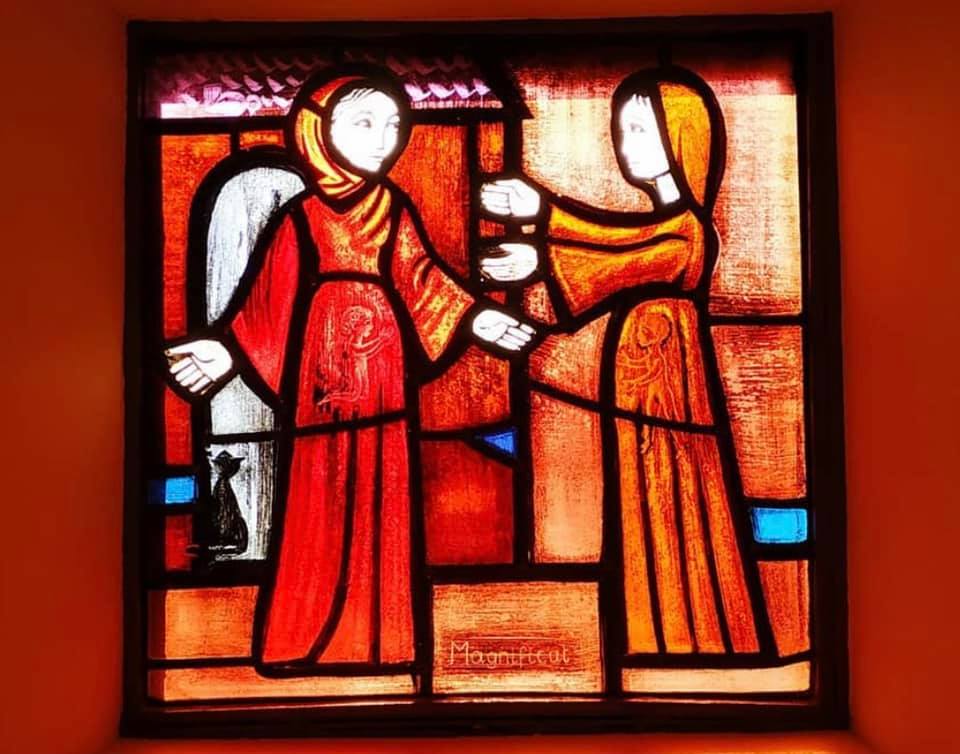
Look closely at the details to this window recalling the Magnificat (a story shared yesterday in many Christian churches). It is one of my favorites in the Ecumenical Community of Taizé’s Church of Reconciliation due to its simplicity, beauty and subject matter.
As I came back into my Christian faith as a young adult, this story of Mary served to remind me of how each of us in our own way is created, called and set apart by God. Our souls truly magnify the Lord, but especially as we but trust and seek to follow Jesus. God sees to that.
This simple revelation caused a profound change in my understanding of who I was and who I could become – who I am still becoming. Mary’s example and song helped empower me to change direction in my life from what had proven a very hopeless and wrong direction. God, I learned, saw something more in me than I had up to that point. When in France, I sat many hours by this window thinking and praying.
“My soul magnifies the Lord, and my spirit rejoices in God my Savior…”
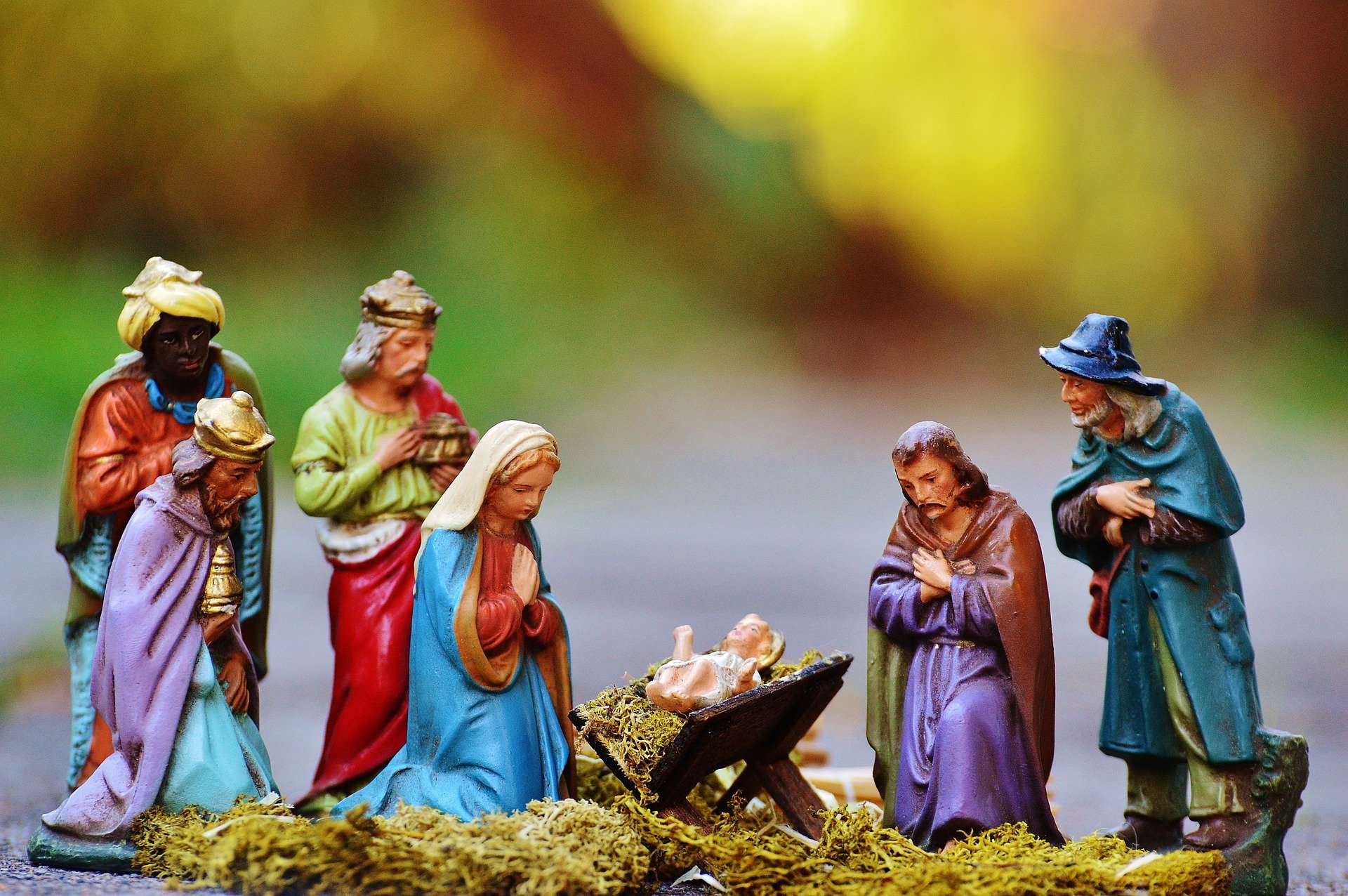
Photo by Alexas_Fotos on Pixaby. Used by permission.
During the pandemic of 2020, it seems many people are being tempted to put our 2020 goggles on (rather than see the world with 20/20 vision) as we look toward the holiday season, especially Christmas. “There won’t be much to Christmas this year.” “Christmas won’t be like we remember it.” Some have wondered out loud if there will be any Christmas at all!
This is very human, but it is not seeing things very clearly. Among the greatest biblical truths regarding Christmas, we do not find feasts, bright colored lights, and gifts wrapped in bows. We find Jesus who came to us as a vulnerable babe to share our lot. In this incarnate form, he would grow up to face emotional wounds, isolation, sickness, physical suffering, and death. Members of his own family would reject him, at least for a time. In other words, he became fully human in a fallen world – just like us.
Yes, suffering was part of Christ’s experience, so it remains an important part of the Christmas story. A baby is born in abject poverty in unsanitary conditions. His parents are so poor, all he can be dressed in are bands of cloth. He is surrounded by threats: war and revolution, plagues, and early death accepted as a norm. His mother and father flee with their child to avoid assassination. A tyrant king sends his troops to kill innocent babes and toddlers in the insane hope of stopping God’s will. This is Christmas too.
And yet thanks to scripture, carols, family and community traditions over the years, we know that this is not the full story. To only focus on the negative would be like telling ourselves a lie. We hear angels come to announce good news of great joy for us amidst any suffering. We see poor and marginalized shepherds find hope in the Christ child. It is a hope so bursting with possibility, they cannot help but share it despite (or perhaps because of) the exceedingly difficult lives they share with their families and neighbors. We also learn how God protects those God loves. Yes, Jesus and his parents are protected, but we are told our God desires to offer that same protection and peace to all the earth. Amidst all the frightening and sad things, God’s loving will remains. Jesus has come for our good – to ultimately crush suffering, sin and death – and nothing will stop God’s will…not even our own doubts and fears.
A Spanish priest poetically answered the question of “Will there be a Christmas?” in this way:
Will there be Christmas? Of course! More silent and with more depth. More like unto the first one, when Jesus was born in solitude. Without many lights on earth, but with the star of Bethlehem shining on paths of life in its immensity. Without colossal royal processions, but with the humility of feeling as if we are shepherds, young and old, seeking the Truth. Without big tables and with bitter absences, but with the presence of a God who will fill everything.
Merry Christmas, dear Church. Let nothing trouble us, for Christ is here.
Whenever someone is baptized, we gather in community (or at least a subset of our local community and the universal Church) to remember. We recall promises our Triune God makes to each of us every day, not only to the newly baptized, and we give thanks for the spiritual gifts we are all given for free. During the ritual, we proclaim a list of sorts for all to hear enumerating when God has used ordinary people and ordinary things like water to do miracles.
As ordinary people baptized and set free, we are then sent out in hope – an expectant, miraculous, mysterious body connected through the Holy Spirit – to separate places and spaces where God needs us to be. Wherever this road takes us, alone or with others, we are invited to reflect God’s light in what can prove a dark land. We find ourselves on a sacred journey, not necessarily and easy one.
Under persecution like the early Church or during times of pandemic, famine, economic crisis, or war as with any of the saints before us, our loving God remains the same, and we remain God’s beloved. As uncertain or hard as it might be to answer God’s call today, it is our time and place to be and remember that we are the Church. No one and nothing can ultimately stand against us with God on our side.
Much as God swore to Joshua after the death of Moses, God speaks to us. “I will be with you; I will not fail you or forsake you. Be strong and courageous…” (Joshua 1). It is our time to remember and trust. It is we who are now asked to help lead others to hope and light in the Lord. With God’s boundless love and help, we can give thanks in all circumstances (1 Thessalonians 5:16-18) in both word and deed. And what if we struggle to see the light ourselves? Jesus promises to somehow come to us. With all the Church throughout time, we can watch and wait, for deliverance – our joy is at hand and will be made complete. I know that such trust can be hard, but trust is the start of any thanksgiving journey.
This week, I challenge all of us to remember who God is. Scripture proclaims God is only love and that God loves and delights in us. We are never defined by our circumstances or our failures. We are defined by God who spoke us into being and calls us to this time and place. All is well with us. As hard or lonely or unusual as this year’s Thanksgiving holiday might prove, we remain God’s people. We can choose to give thanks. Wherever we are, however we find ourselves, God will never cast us aside. Indeed, Jesus and the Spirit have reached out to us to gather us in and lead us home. In that alone, we can begin to discover joy and peace.
Originally published in The Hub, a weekly email of Christ Lutheran Church, Fredericksburg, VA.
Unless otherwise indicated, all scripture quotations for this article are from the New Revised Standard Version (NRSV) translation.
For those that might still be wondering what all the recent Facebook hubbub about Parler is about, here’s a pretty reasonable article. I’ve seen plenty of old friends announcing their migration to this newer social media platform. As for me? I don’t often use Facebook for political stuff. I prefer to talk in person about weighty issues. On Twitter, I share more news articles but from multiple sources and usually little or no commentary.
I know there’s a lot of junk on these sites. (To be honest, let’s admit it’s from both the left and right.) I recognize attempts at curtailing bad or untrue comments by the social media powers that be has been sloppy at best and often seemingly lopsided. And yes, these platforms seek to manipulate us and limit competition. So, I try to ignore the junk and educate myself from multiple news sources with varied perspectives off of Facebook. I actually talk to live people which includes a lot of listening.
If on social media, I much prefer looking at funny memes, or pictures from my friends garden in Africa, seeing a morning walk of a congregant, and sharing joyful events like births or even sad or troubling events like surgeries or deaths. These can help us feel connected and cared for. Heck, I even enjoy my friend’s post who shares his photos of small, rural post offices. Simple joys can matter. Through social media, I’ve found weightier things such as positive resources for prayer and meditation and even some resources to consider future travel when the pandemic ends (or at least dream about it).
That’s the better side of social media, and to make that my focus helps improve my attitude for the day as well as shape what I say or post. I don’t need to personalize or catastrophize everything. I can choose to be happy. I can try to be patient, kind and understanding. I don’t have to be compelled to comment on everything. Those are powers we all have with some intentionality and God’s help.
And in reality, I doubt Facebook will last forever. Younger folks have already tended to move on. It will likely go the way of Six Degrees or MySpace unless it changes drastically. Whatever the platform we choose, I’ve seen too many relationships broken needlessly, and I don’t need that in my life. The world can be hard enough on its own. We don’t have to let that happen or play along with those less healthy than we might be. At the same time, that doesn’t mean we should cut off from everyone who thinks different than us.
Instead, we can turn the other cheek and scroll or click away without total cut-off, or cancelling, or condemning anyone to the fires of hell. We are free not to feel obliged to answer in haste or perhaps at all. We can wish others well even as we disagree or are offended, pray for them, and perhaps model a better way forward if we are right. If we discover we are wrong, we might learn something from them as well.
As I’ve said elsewhere, a new “thing” will certainly come along, but I’m just not sure I need another or new social media platform of any type in my life right now. In fact, I’ve been using social media less. That’s certainly helped make this election cycle and my life better. There’s plenty of research indicating that too much social media has led to social isolation, depression and other concerns.
Paul wrote (Phil. 4:8): “Finally, beloved, whatever is true, whatever is honorable, whatever is just, whatever is pure, whatever is pleasing, whatever is commendable, if there is any excellence and if there is anything worthy of praise, think about these things.” If that doesn’t sound like our Facebook or other social media feeds, maybe it’s we who are doing it wrong and not just the platform. Changes can be made for good based on our desires, resilience and love for others. For all those migrating, or staying, or totally turning things off, go with God wherever you digitally find yourself. You can always contact me in the real world to share your news. I’d be happy to hear it.
Photo by Valiphotos on Pixaby. Used by Permission.
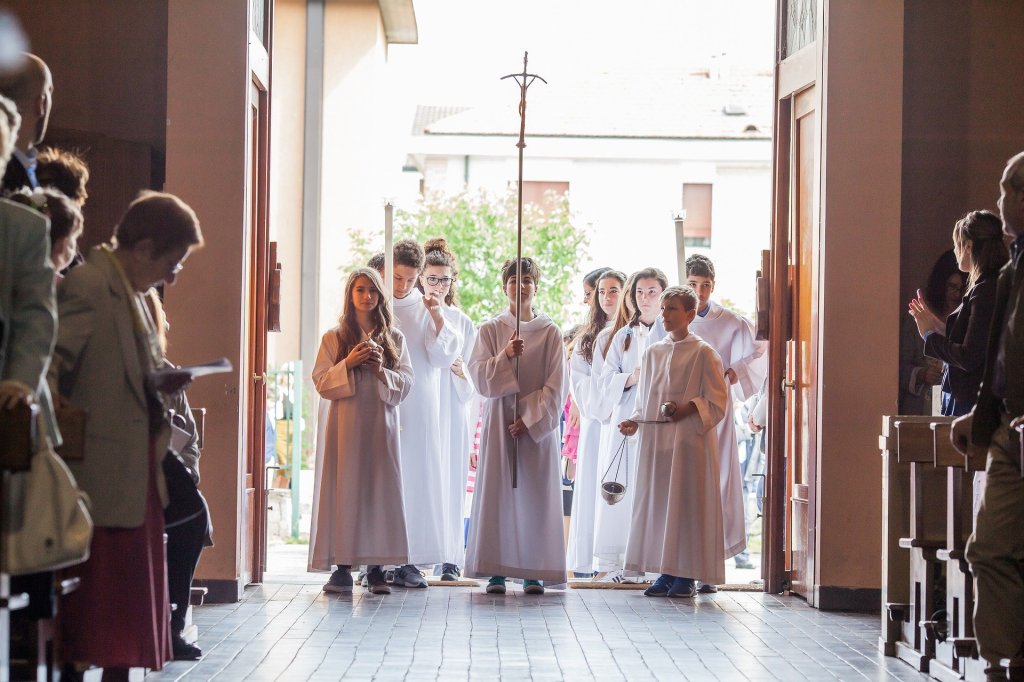
With the excitement of our seven CLC youth confirmed on Reformation Sunday and our return to worship in the sanctuary on All Saints Day, we have many reasons to thank and honor God. But, as Martin Luther reminds us, works cannot on their own do this – “only faith of the heart can.”
As the year gets darker around us, let us look to the light which is Christ and welcome him by the warm hearth of our heart with joy. How? Perhaps we can better cooperate with the grace reaching out to us. Take some time to meditate on the scripture of the day. Participate in book studies and group discussions about faith. Integrate a discipline of prayer into your daily life. Seek to learn more about Jesus, not just as an historical oddity or mythic figure, but as he is. All that he has done, he has done in love for you.
If we don’t know the one who loves us, how can we welcome him well? How can we be sure that we aren’t worshipping an image of Jesus (one of our own making) rather than the resurrected Son of the Living God? Jesus wants to be known in our lives in an intimate way. He wants to reveal himself as much as he did for the disciples over a meal on the road to Emmaus. As with Paul, only Jesus can remove the scales from our eyes.
Like any relationship, spending time with the one we love and who loves us matters. Getting to know them and our taking the risk to become vulnerable opens us up to one another. There is so much more to learn about God’s great love for us, but it isn’t possible just through doing or thinking. We are asked to abide in Jesus. Take some time to be still this season – intentionally waiting for Jesus to speak – so that you will know all the more that he is truly your God.
This pastoral letter was originally published in Christ Lutheran Church’s October 2020 newsletter.
For those who attend our theology on tap meetings, Three Priests Walk in a Bar, you might recall that we originally created a special Facebook group so conversations could continue. Our producer and facilitator, Nick2, similarly invited folks to “pick apart” our gatherings conversation at a later date. We invite you to join our Facebook group and join the ongoing conversations related to our gatherings and podcasts. Here’s the second of two essays that I am sharing regarding the Lord’s Supper in response to issues raised. The live event’s topic was “Can Christians Worship Together or Not?,” Episode 3.
When I was a child long ago, it was a common practice to have those coming to the Lord’s Table for the first time to dress in white. It was to serve as a reminder of our baptism. Baptism and the Lord’s Supper, both means of God’s grace, are intricately linked almost as if one sacrament. Fr. Adam (Orthodox), Fr, Nik (Episcopal) and I (Lutheran) agree on that understanding.
As our last live gathering came to a close, Father Nik offered last words, passionate and extensive ones, in defense of common liturgical practice and Apostolic tradition: the unbaptized should not receive communion. I can’t say I explicitly disagree with his argument. Nor is it the first time that I’ve heard it. Yet, I do wonder about the certainty of his biblical interpretation, particularly as it comes to the Parable of the Wedding Banquet (Matthew 22:1-14). God might surprise us yet.
Fr. Nik, as many others before him, argued as if the meaning of the parable is both clear and specific. (At least to my ear, that’s the way I heard it.) One of those guests let in to the wedding banquet had refused to wear the appropriate wedding garment to the feast. Traditionally, such wedding garments were provided by the host, much as baptismal candidates were presented a white robe upon their baptism to remind them of their now being clothed in Christ. Many see the wedding banquet, an End Time symbol when we will live in the fullness of God, as also representing the Lord’s Supper, “a foretaste of the feast to come.” So, the argument goes, our faith and Baptism (the grace-filled garment) must be worn to the feast (the Lord’s Supper).
I accept the tradition and polity of the historic Church as understood by the ELCA. We do save communing for baptized members of Christ’s Church. Yet, I think it immensely important to point out (but we did not have the time to do so at our gathering) that parables are teaching stories. In Jesus’ time, they were commonly riddles and short stories used as a tool by instructors of all kind. They are meant to be wrestled with and often can have multiple answers and meanings. Despite the apparent certainty of Fr. Nik’s argument, isn’t it possible more is going on here? Isn’t it possible he (and others) have misapplied it to fit their already held liturgical and religious dispositions? What else could God be saying?
Certainly, there is no one way to understand this famous parable and its component pieces. Yes, as mentioned above, baptismal garments were offered the newly baptized (who entered the waters naked) to reflect our “putting on” Christ, our rebirth and regeneration – at least in a number of communities. Yet, that practice only became a norm after Jesus’ resurrection. In the scriptural account, Jesus was speaking to a crowd who would not necessarily make such a connection, even though later Christians might. In this point of his ministry, most of the original audience would likely have interpreted Jesus’ parable through the lens of Jewish scriptures and experience.
If you side with some scholars that argue the story might reflect later teachings of the community of Matthew, you might be assuming a great deal. Even with each Gospel witness being somewhat different, sometimes quite different, I’ve not been convinced by anyone that the writers played with Jesus’ central teachings freely to better fit their specific geographic, cultural context or the current theology. Jesus certainly could have intended elements of the story for future disciples, but that too, is hard to prove. It might be best to look for allusions and connections to the Jewish scriptures; something Jesus’ original audience (and the original audience of Matthew’s Gospel who are widely thought to have been Jewish Christians) would be familiar with. Let’s consider what he is saying to them, and that might help us make better applications today.
In Genesis 3, God made garments of skin to cover Adam and Eve, a sign of God’s grace amidst their rebellion. There are many instructions and commands regarding the use and care of religious garments in the Jewish scriptures. Garments could reflect one’s tribe and one’s purpose. In the Psalms, God’s loving activity and light is often compared to a garment. And the prophets speak of putting on the Lord’s splendor like a garment. So, the original listeners could have made many complimentary interpretations while excluding any particular allusion to Baptism or the Lord’s Supper.
Many argue that the garment at some level represents God’s love, grace, protection and works. It defines who we are and who we trust in through faith; faith itself being a gift. The garment in this parable need not be explicitly or solely connected to Baptism and the Lord’s Supper. Indeed, many scholarly and historic interpreters do not limit it in such a way. One modern Orthodox resource alluded to Baptism, but more so, the author argues we will be examined at the End of Time to see if we have shared in a life of repentance within the Church (in their mind, the Orthodox Church alone). Did we desire and accept God’s mercy? It isn’t so much about the Lord’s Supper as much as it is about our entire lives lived in faith within the holy community. Explicitly, the author asked, “Have we lived in the light we have been given?” Perhaps that proves a better understanding of the passage.
Indeed, Pope Gregory the Great argued in a sermon that ultimately the garment is God’s love. “[Jesus] came as a bridegroom to unite Himself to the Church. There was no other means than God’s love by which the Only-begotten could unite the souls of the elect with Himself. This is why John tells us: God so loved the world, that He gave His only-begotten Son (John 3:16). He who came to men for love’s sake, calls this love the wedding garment.” To him, this garment has two threads: the love of God and neighbor. As Jesus taught and recorded in Matthew, this is the greatest commandment. This doesn’t necessarily exclude one referencing the Baptism or the Eucharist, but that explicit connection seems a bit forced if Gregory the Great’s argument and many others like it hold true. Indeed, the Jewish foundation of Matthew’s Gospel might promote the greatest commandment being the preferred interpretive lens over any sacramental focus.
So, is it wrong for Fr. Nik and others to use this parable to defend the sanctity of the Lord’s Supper and how we should participate? I don’t think it necessarily is so, but there is a need for caution. It appears this parable might primarily be aimed at something quite different – a simpler application. Trust or faith in Jesus Christ might prove the preferable focus. Love and grace in light of “the fulfillment of the law” might serve as a better, more direct interpretive key. The parable might even be best understood as a warning for Christians not to take their salvation for granted as in Bonhoeffer’s arguments against “cheap grace.” Yet if one believes it to be primarily about Baptism, the Lord’s Supper, and the risk of being cast out for receiving the Lord’s Supper improperly (without being baptized, or while being ignorant or ill prepared) then there remain important questions to be addressed.
Does this mean only those who are baptized or who died as martyrs are saved? If someone receives the Eucharist in error or with bad intention or practice, are they without hope? Would that be a mortal sin? (As Roman Catholics understand it, this is a sin that leads to damnation if not confessed and repented of, but Lutherans reject such a hierarchy of sin. All sin separates us from God and one another.) Can faith be enough to save us, even the faith of those who are not yet baptized for whatever reason? Could not God choose to save those who are unbaptized whether infants or those who have not heard of Jesus yet for extenuating circumstances, even as we remain certain that through our faith and participation of the Sacraments we are saved by grace?
And what about those who have had members of the Church act as stumbling blocks to the faith, keeping the “little ones” who would otherwise believe away from Jesus, the Church and the Sacraments? In this last case, one might recall Jesus’ comment that it would be better to die with a millstone around one’s neck and be cast into the sea than be the one who kept the “little one” away. The sin appears to be on those who keep people away from Jesus, not those who are kept away (Matthew 18:6-9). There exist people historically and today who have been kept away from Christian faith through individual abuse and poor witness as well as the corporate power and influence of political and family systems in the Church. If we share in that sin as part of the Church or explicitly, does that mean we will found naked at the feast? I trust from the promises of Christ that will not be the case for us, and I suspect greater grace will be offered to others “outside” the Church than many Christians expect.
In the West (and perhaps the East), it appears historically common to have at times simply interpreted the parable as a call for faith, Baptism, and active life in the Church to include the Lord’s Supper. This doesn’t mean it is the best interpretation. In truth, pastors and theologians, Popes, Patriarchs, Bishops and councils have erred when addressing important issues. This parable was not always deemed explicitly about the Lord’s Supper, and I think it improper to present it as if it was.
To reject the garment was thought to reject God’s grace. But what is the garment explicitly? Anyone out of communion with the Church (as defined by varied dogma, councils, and cannon law; East verses West; Orthodox, Roman Catholic, Protestant or Radical traditions all interpreted differently) was often declared doomed. To not be baptized would doom you. To not receive the Sacraments “rightly” and regularly would doom you. To not believe in approved dogma and previous interpretations of scripture (even when it might be wrong) was believed to doom you. Unfortunately, real life like the parable is never so cut and dry as our too often simplistic interpretations. God’s love is cut from a broader clothe, and I am not sure any of us humans can fully discern the scope and full intentions of God’s grace in the present.
Perhaps like Martin Luther, it is best to trust in, remember, and encourage others to believe in what we know saves us (as promised by Jesus). Through revelation, we know that we are saved by grace through faith in Jesus Christ, but God might yet have mercy on whomever God wants to. If these folks are saved (shown mercy), I believe it would ultimately be because of Jesus’ sharing our lot through his life, death and resurrection. Yet with our finite wisdom, we can never really know in this life God’s full plan.
Rather than act as if we are God, proclaiming and arguing about who is or will be cast into the pit, perhaps we should be more humble. In condemning others to hell, we risk being unscriptural and walking astray ourselves. (We can address the power of the keys at another time.) Let’s not limit the power of amazing grace, when we don’t understand its full limits.
As the Church already has often done, we of varied denominations might develop policies and procedures regarding the administration of the Sacraments for good order, right theology, or for other good and loving reasons, but we need to always be prepared for grace, a gift that is often unfair and not ours to give. There might just be something more going on in the parable and with the Spirit’s activity in our lives. After all, “for now we see in a mirror, dimly” (see 1 Corinthians 13:12). Certainly, all things remain possible with God (see Matthew 26:25-26). Regarding the Lord’s Supper, God could be doing something new. It is worth talking about even as I listen to the arguments and teachings of the past.
Post Note:As with any of our theology on tap events or podcasts, please remember we are limited by both the time and format. When someone speaks authoritatively, whether me (as a Lutheran Christian), Fr. Nik (as an Episcopalian Christian), or Fr. Adam (as an Orthodox Christian), we are speaking for ourselves as best as we understand scripture and tradition from our context. We certainly can err in the moment as well. To those who listen, our teachings might unintentionally become conflated or we can appear to be in full agreement when we are not. Feel free to ask us questions after the event for further clarification.Also, keep coming back!
For those who live elsewhere, we invite you to listen to the Three Priests Walk in a Bar podcast on Apple Podcast, Spotify and more.
“By the end of the seventeenth century, many Lutheran churches celebrated a festival commemorating Martin Luther’s posting of the Ninety-five Theses, a summary of abuses in the church of his time. At the heart of the reform movement was the gospel, the good news that it is by grace through faith that we are justified and set free.” (Bread for the Day 2019, p. 414)
What is Reformation Day? Historically, it marks the day when Martin Luther called for reforms in the church on October 31, 1517, All Hallows Eve (All Saints Eve).
On November 1, All Saints Day, and November 2, All Souls Day (no longer observed by Lutherans), the Church traditionally celebrated the saints while pondering human mortality. Martin Luther chose this specific time to challenge the theological status quo. He provided ninety-five reasons (or theses) as to why no purchased or earned indulgences (a kind of pardon) were needed to save us from damnation. He argued that Jesus’ death and resurrection had opened the door to heaven for us as a free gift. All one needs to do is to hear, believe and claim this gift as our own. Trust in the promises given us in Christ.
Many noble reforms came out of the resulting theological debate. There was an explosion in personal faith. Both religious and secular institutions changed forever. Yet occasion for sin came as well. Christians began to divide and accuse one another of error. So today, we tend to say that we “mark” the day instead of “celebrate.” Christ’s universal church continues to be transformed and reformed led by the Spirit even as we seek to be reconciled with God, one another and the world.
As important as the historic Reformation events remain, perhaps we should use this day to ponder God’s activity today. What changes are God calling us to make?
Originally published in The Hub, a weekly email of Christ Lutheran Church, Fredericksburg, VA.
This
Sunday, I presided at a bittersweet wedding. The bride’s beloved grandfather
had died unexpectedly this past year, and he was sorely missed. The
grandfather’s absence was palpable, but there was a lot of joy as people shared
stories about him. As part of this celebration of ongoing life and love, the
bride’s grandmother gifted the bride with a Bible given to her at her own
wedding over 60 years ago as a remembrance to be used during the service. Among
the texts chosen was the popular John 15:9-12 where Jesus invites us to abide
in his love.
The
bride’s grandfather, John, was a very intelligent, loving, Italian grandfather,
the kind who could lovingly dote on children without spoiling them. Indeed, he
often became a surrogate grandfather to many children at my former
congregation. Not only would he give them little penny candies, he often asked
questions about their week. He would offer them advice and encouragement in
response to their answers. He was never too busy for a child.
It
had become John’s habit long ago with his own children to jokingly offer a
grade whenever a task was performed, or a challenge met. No matter how well
they did, it was a C (an average grade) – maybe on a very good day a C+.
Perhaps this was meant to challenge people to increasingly do better, or perhaps
it was offered for the laughs and smiles it would solicit as they heard this
grade and saw his smile again, and again, and again. Whatever the reason, I found
in it a loving reminder. We are all human. We can always do better, love
better, be better, and we need one another.
The
liturgical wedding service reminds all of us through its words that although life
is filled with love and excitement, it can become overcast and hard. Yet, the
service, especially the Gospel, also reminds us of an A+ kind of love. It’s a love that we can rest in and find
strength from. It is a love that helps us bear all things patiently, to wait
with hope, to accept one another as we are and not for what we would hope to
be. It is a love that grows and lasts; always protects, always trusts, always
hopes, always perseveres. It is a love that forgives and never fails. It
reflects our God who is love and loves us.
As individuals, couples or community, we
might only reach the grade of C+ on our own (even at our best), but God’s love
is transformative. It is an A+ kind of love that we can abide in each and every
day. It has the power to make our lives significant and declare us perfectly
forgiven and free.
Originally published in The Hub, a weekly email of Christ Lutheran
Church, Fredericksburg, VA.
Everyone has a unique call from God. Ultimately, we are to glorify God by
loving God with all that we are and through loving others as ourselves – no
matter what we do or where we find ourselves. Yet, the Devil is often in the
details! How do we know which way to go?
Interests, hobbies, varied experiences and talents all come together to
help clarify our way. Some of us end up in overt care, teaching or service
professions. Others might find their primary place is in the home building
family life. Still others might find themselves placed in jobs which seem far
removed from faith. Indeed, our call may even change over time as we learn more,
encounter new people and experiences, or our abilities change.
Yet not surprisingly, if love for God and our neighbor is present in
the way we fulfill our duties, we will discover sacred moments in ANY
job. If faith shapes how we treat others in business, Christ will be there with
us. God wants sacred light to shine throughout the world, even where we work or
study. Our intended vocation (at its root meaning “sacred call”) often will be discovered
where our passions and God’s purpose for us cross.
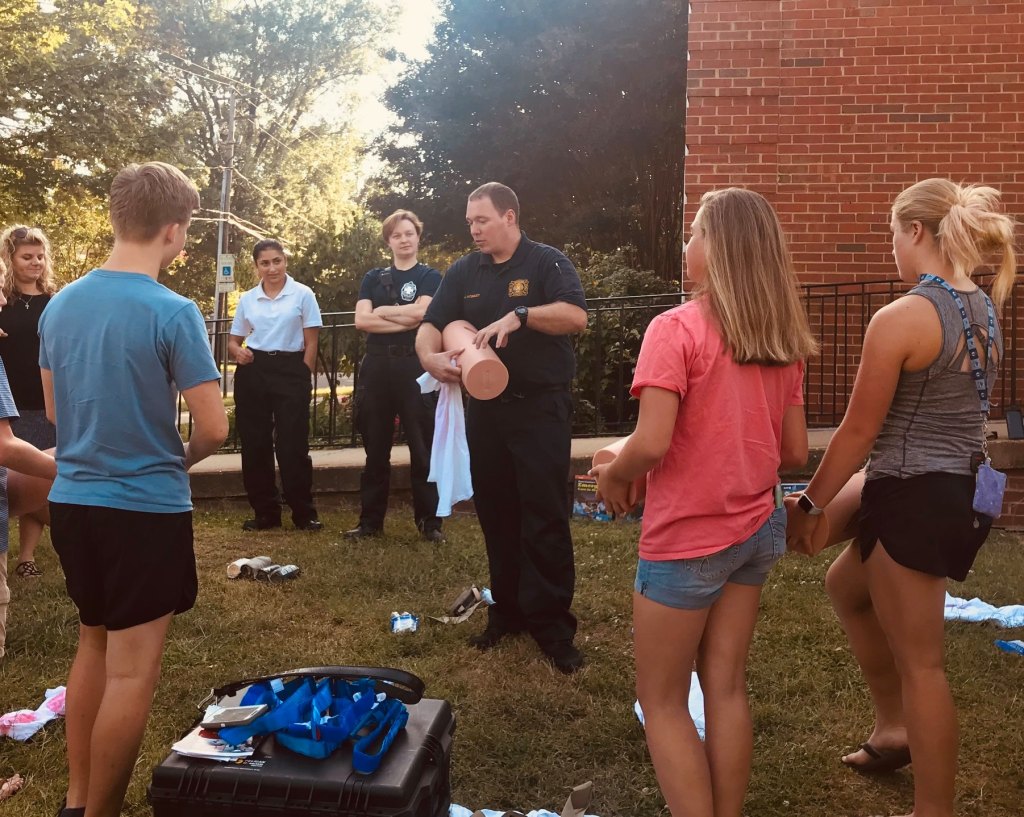
Last Sunday, we exposed our youth to a “Wheel of Service.” In one
station, a Fredericksburg medic taught them about emergency medical care for
serious, bleeding wounds. He also shared about volunteer opportunities for
teens with his department and the joys of his career. In a second station, our
youth group served other youth by packing “Feed the Children” bags. These bags
help food insecure students in our region. They also learned about the
operations of our Food Pantry and how it helped our neighbors. Finally, Pastor
David Casey, our Campus and Young Adult Missioner, led us in a discussion about
campus ministry. Not only are such ministries an opportunity for food,
fellowship and relaxation, such programs can help one grow in faith and find
one’s way forward to the place Jesus is trying to lead us. Retreats, spiritual
direction, volunteering (such as with Young Adults in Global Mission or the
Lutheran Volunteer Corps), service projects, presentations about other people’s
calls and our shared ministries, and yes, even attendance at Sunday worship can
all come together to plant seeds for tomorrow.
However, don’t think such discernment is only for the young. Each and every day, we have a new adventure instore when following Jesus. No matter how old we are, our perceived abilities or disabilities, our assets or struggles, Jesus is calling us. Jesus is calling you. Seek to intentionally discern that call and follow Jesus. There might be a time of waiting. Perhaps we will only understand looking backward. Yet, Christ will get us to where we each need to be for the sake of his Church and the world.
Originally published in The Hub, a weekly email of Christ Lutheran Church, Fredericksburg, VA.
Husband, Pastor, Law Enforcement Chaplain, and member of the Clerical Errors (aka "The Three Priests"), I'm sharing my two cents with anyone who cares...
You can also find me on social media as Loudluthrn (Lou-d-Luthrn or Lou the Lutheran). It is a moniker given me while attending a Presbyterian Seminary, but I'm a loud and proud Lutheran too (just not too loud and proud, mind you).









 2pennyblog