The readings for the 17th Sunday After Pentecost, Yr. A were: Jonah 3:10—4:11; Psalm 145:1-8; Philippians 1:21-30; Matthew 20:1-16. This sermon was preached at Grace & Glory Lutheran Church in Palmyra, VA on September 20, 2026.
Another election cycle is upon us. Oh, yeah! If you aren’t aware of it, early voting in Virginia began on September 18. If you have not done so, the National Council of Churches (of which we are part of through the ELCA) asks us to please take two minutes sometime soon to check that you are registered and verify your information so you can fully participate. And for Lutherans, that’s very important theologically. We hear and understand a call from both our Jewish and Christian scriptures that we are to pray for the welfare of the land where we are in exile (see Jeremiah 29:7). We are to also actively participate in the life of our community to better love our neighbor (especially those overlooked and in need). And we are also to help our imperfect government (Martin Luther called it the left hand of God) maintain peace, order, and justice as best we can.
That said, I can understand if you aren’t much in the mood to talk politics or struggle with hope these days. You might wish to hold your nose and vote. For we are a generation seemingly stuck in the grist mill of corruption, ongoing caustic conflict, and sour divisions. As some studies suggest, our nation has become more radically divided than since perhaps the Civil War. Then according to 70-year tracking by the Pew Research Center, current trust levels in our government hover around 17% to 27% depending on the specific phrasing of the survey and the government system being discussed.[i] The faceless nature of social media and the selfishness of some political authorities only makes things more insulting, aggressive, and hurtful. It can make one exhausted.
Yet, I am not sharing this in order to tell you how to vote. That’s for you to prayerfully discern. Still, I do think this very real struggle is instructive to our humanity and how we should live as Church. We are to reject the way of the world even though in the world.[ii] We are to love God, our neighbor, and, as stewards of creation, all that God created. We are to love as God has loved us, for we, too, in our sin, faults, and failings, have acted at times as enemies of God. And yet, God loved us always. Jesus died and rose for us. And the Spirit through our faith and baptism still works to sanctify us despite our struggles with sin.
In a past election cycle, a seminary friend of mine posted a startling if not controversial image on Facebook. It was a picture of Hillary Clinton and Donald Trump together…both smiling. On it was posted the words, “These people are made in the image of God. Both of them. Yes. Both.”[iii] Well, you can probably imagine the guffaws and less than polite commentary that resulted. This included rants from anonymous sources and likely some bots.
Yet, it remains true! Donald Trump, Hillary Clinton, you, me, and any other fallible, miserable, or corrupted by sin human being that we can think of in our world…even the person or persons who most irritate us or prove the enemies of all that is good…or “the worst of the worst,” citizen or not…they are created in God’s image. And this should serve as a caution to all of us as Christians no matter our political bent. Do not be quick to judge. Do not let our hearts close to them even as we struggle if not fight for justice. Treat them with mercy, for God loves them too and wants better for us all.
Indeed, the Ten Commandments call us toward mutual love in community with God and neighbor. The prophets demand justice in God’s name which is impossible without mercy. We must temper our gossip and lies about others even if on social media. Martin Luther argued that to fulfill the commandment on bearing false witness, we should try to frame the actions of others in the best way possible. And when there is seemingly no best way? Well, counselors of this day and across wisdom literature of many ancient cultures suggest we consider how these people we struggle to love got that way. How has their upbringing, traumas, losses, or whatever impacted their decision. This might not limit repercussions. It doesn’t erase error or fix everything, but that attempt hopefully softens our hearts. Even in praying for our enemies, we might open our hearts a bit more to love as God loves.
Once again, I want to remind you that Jesus taught (Matthew 5:22) that calling others raca (the Aramaic word for worthless, good-for-nothing, or empty headed) is a grave sin.[iv] That ends up being consequence of the yoke of the pharisees, a biblical metaphor for legalism, self-righteousness, and the crushing burden of strict religious rules.[v] The Pharisees could have the tendency to think non-Jewish people or those struggling with grave sin were irredeemable. As Jesus unpacks the Beatitudes for us, he explicitly cautions that such attitudes puts us at risk, for murder begins in our hearts.
In response to this biblical call, the image my friend posted was created by a movement called Election Day Communion. Started by Mennonites but now ecumenical, it promotes the sharing of communion on election days since 2012. The founders of this movement remind us, “We are one in Christ, no matter what we vote.”[vi]
Where offered, Election Day Communion is a chance to remind ourselves that our allegiance to Christ is higher than allegiance to any party or political campaign. By gathering with neighbors, we can encounter the power to truly change the world. It is not found not in politics, or presidents, or protests, but in the life, death, and resurrection of Jesus.
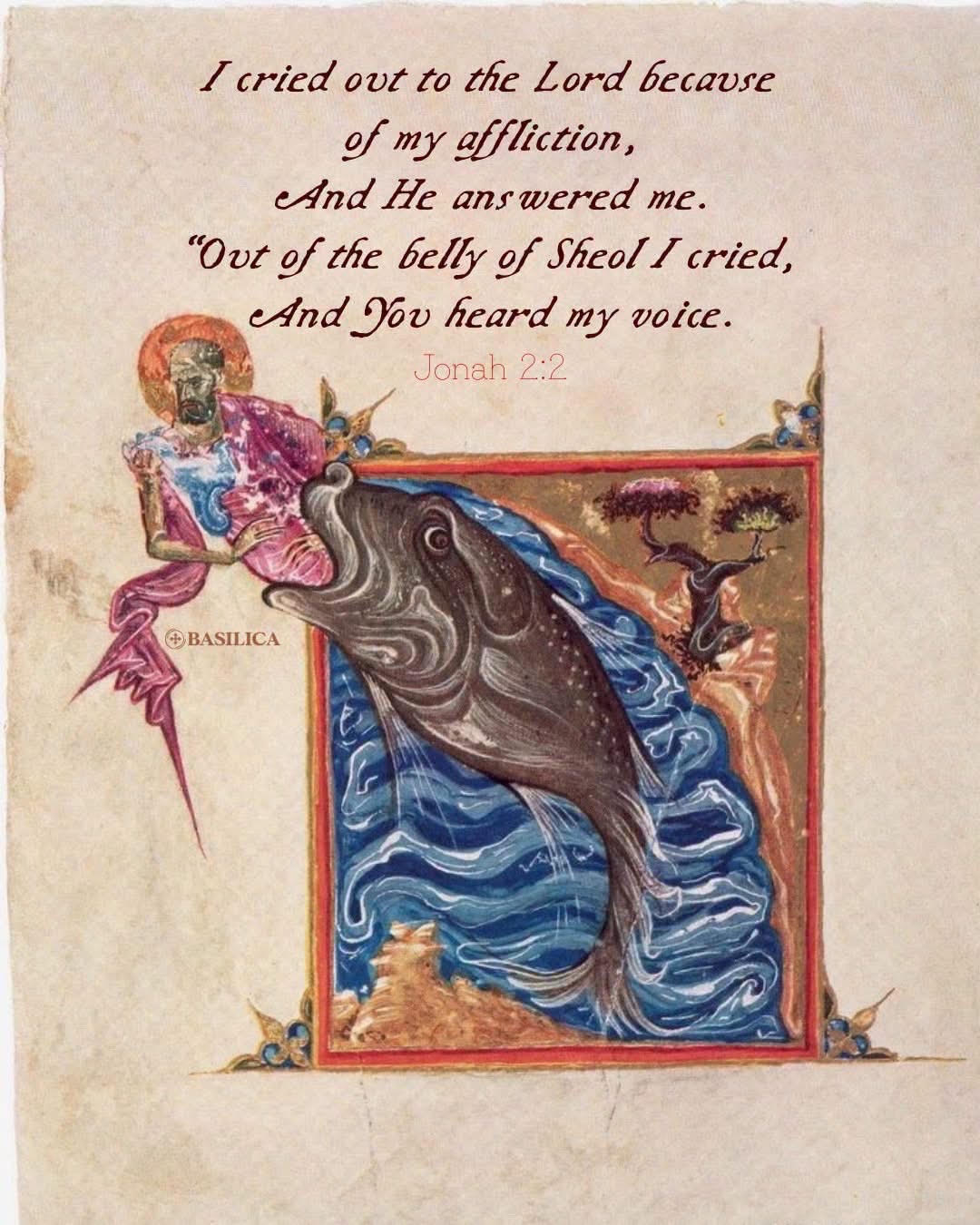
Today, we see similar struggles undergone by the prophet Jonah. Through the complete tale, we hear of pagan sailors turning to God for redemption and aid. We hear of a pagan city turn to God in repentance. And we hear of a prophet, chosen by God, unwilling to follow God’s requests if it means we must love our enemies. And while Jonah understands his prophetic message from God that Ninevah be “overthrown” in a violent sense, the Hebrew word for overthrown as used in the passive or reflexive participle can also mean “overturned” in the sense of changed or transformed.[vii] Jonah expected only judgement. God willed inclusion, transformation, reconciliation.
Of all the people in the Book of Jonah, it is Jonah the prophet who turns from God and runs. Others including his enemies turn toward God. And when God relents against Ninevah, Jonah not only questions God’s decision, but Jonah grows angry. After all he went through, why did God let the city survive? As Professor Neal Walls writes, “Our anti-hero takes phrases from what is perhaps the most theologically programmatic description of the God of Israel in Exodus 34:6–7, which extols God’s compassion, mercy, forgiveness, and steadfast love, and throws them in God’s face as an accusation rather than praise.”[viii]
Did you catch it? In the text, Jonah argued scripturally that he knows that God is a gracious and merciful God, slow to anger, abounding in steadfast love, and relenting from punishment (Exodus 24:6-7), but then as if not understanding the words he just spoke, he accuses God for not destroying the city. Jonah profanes the description of God as love and misinterprets God’s purposes as he wills.
The people of Nineveh were a dreaded enemy of the tribes of Israel, worshippers of a foreign God, defilers of what was deemed sacred. They had likely murdered or betrayed people that Jonah knew. Righteous anger might be understood in such a situation. The dispensing of harsh justice might be appropriate. Yet rather than offering grace as he has received released from some sort of giant fish or whale, Jonah developed hate for them in his heart. He wished for their murder and total destruction.
Fortunately for Jonah and for us, God’s mercy is deep and wide. We are blessed by the ironic reality that grace is not fair…Hear it again and understand, grace is not fair. God showed the people of Nineveh a second chance they did not deserve just as God gives us that chance through our faith and baptism. And as Jonah began to lick his wounds and pout, God did not give up on Jonah either. God patiently tries to explain things to the prophet, although no explanation is owed from our Creator.
While Jonah mourns the loss of the bush offering him shade, God has compassion on the hundred and twenty thousand residents of Nineveh and their animals, too.[ix] The residents don’t know their right hand from their left, and so God reaches out to them – to show them mercy and embrace those who had been lost.
And this same theme resounds among Jesus’ last words when he dies on the cross for us. He prays for his abusers and those who abandoned him, “Father forgive them. They know not what they do.” Sadly, sin can be so subtle, insidious, and self-justified, that this is often the case. People do not know the right hand from their left…We do not know what we are doing. We come to call evil good and rationalize sin (as the people in the Book of Judges).
With the election upon us, we have many lessons we can learn from Jonah and the Parable of the Laborers in the Vineyard. Perhaps the most important thing is to remember that we aren’t the boss. God created each of us with a unique purpose – some important in the eyes of the world, some smaller purposes, some won’t be recognized until with are with Jesus, yet all matter to God. God’s ways are too wonderful for us; to lofty to attain, says the Psalmist.[x] So in the end, God can save whomever God wants; judging with both perfect justice and mercy framed by hesed, loving kindness.
In a world where our understanding of Christian baptism is so often used as a dividing line if not centrifugal force pulling Christians apart, we were urged to see baptism as it was intended…a centripetal force, pulling us (sometimes against our will) toward the centrality of Christ…pulling us inward toward relationship with one another.[xi]
Just before Jesus shared his parable about the Laborers in the Vineyard, he said that with God all things are possible when it comes to salvation – the last can become first, or the greatest sinner become the most honored of saints. In Matthew 20, landowner is literally “master of the house.” And as master of the house of Israel, our Triune God is the boss. If Jesus wants to include gentiles and sinners, his disciples are asked to follow his lead.
And for us, whatever happens, we don’t have to fear for the future of the Church. Islam and other faith traditions, perceived enemies, and all those different from us need not have power over us unless in fear and anger we give it to them. We can seek to treat them justly with loving kindness even when laws must be enforced. We are free to splash in our baptismal waters; trying to love even our enemies rather than drowning in our fears.
Yes, Jonah the prophet was a stubborn, old fool in many ways. And as we face our political divide, business decisions, family tensions, and yes, even life in the church, we can be too. Yet, it isn’t too late for us to learn. It is possible for us to stop our running away to turn toward God and live. And this love turns us toward our neighbors – all of them. As we go into our voting booths, or businesses, or clubs, or schools, I pray we hear Jesus’ words in our minds and our hearts, “A new command I give you. Love one another, as I have loved you.” God has chosen to love all that God created, and since God’s the boss, we should strive to do so as well. Amen.
[i] Pew Research Center (December 4, 2025). Public Trust in Government: 1958-2025. Downloaded at: https://www.pewresearch.org/politics/2025/12/04/public-trust-in-government-1958-2025/ on September 18, 2026.
[ii] See John 17:16.
[iii] Election Day Communion (November 2016).
[iv] Bible Study Tools (u.d.). Raca. Downloaded at: https://www.biblestudytools.com/dictionary/raca/ on September 18, 2026.
[v] Got Questions (2026). What does it mean when Jesus says, “My yoke is easy and my burden is light” (Matthew 11:30)? Downloaded at https://www.gotquestions.org/yoke-easy-burden-light.html on September 18, 2026.
[vi] Election Day Communion (November 2016).
[vii] Wall, N. (September 2026). Commentary on Jonah 3:10—4:11. Working Preacher. As downloaded on September 18, 2026 at https://www.workingpreacher.org/commentaries/revised-common-lectionary/ordinary-25/commentary-on-jonah-310-411-5.
[viii] Ibid.
[ix] Ibid. As Neal Walls explains, “The New Revised Standard Version Updated Edition translation of the verb as ‘concern’ in 4:10–11 misses the nuance of the Hebrew, which really means ‘to pity’ or ‘to have compassion.’”
[x] See Psalm 139:6-11.
[xi] This comparison was read or heard somewhere in my life, but sadly, I cannot give an appropriate citation. I apologize.
Below, please find a video of our worship service. The sermon starts at about the 27:09 minute mark.
© 2026 The Rev. Louis Florio. All content not held under another’s copyright may not be used without permission of the author unless under terms of fair use and properly attributed. Scripture passages when used are from the NRSVue translation unless otherwise indicated.