The audio version of this post can be listened to here.
In 2011, I remember when members of a former L’Arche community from Lynchburg, Virginia visited my past congregation, Messiah Lutheran (Mechanicsville), for the first time. Speaking of such communities, L’Arche USA explains, “The first L’Arche community was founded in 1964 in the small town of Trosly, France in response to the inhumane conditions of the large institutions where people with intellectual disabilities had been placed.” From that first community of four people living together as one, with one person more able and three persons having profound disabilities, has grown an international network of communities based on love and mutuality. All members give of themselves. All members receive gifts of God’s grace through others. My friends in L’Arche Metro Richmond testify, “L’Arche is global community of faith that celebrates the gifts of persons with developmental disabilities – gifts of welcome, wonderment, spontaneity, and directness. They touch hearts and call others to unity through simplicity and vulnerability.” Honest, trusting, loving relationship binds them and helps everyone grow.
In preparing our welcome, we had taken down the center altar rail where people normally communed. We knew a number of those visiting us had physical disabilities and some used wheelchairs, and this simple change would help with access. As soon as I had invited people forward to share in the meal, a young lady from L’Arche came running. She came right up to the altar itself and joined the assisting minister, acolyte, and me as we prepared to offer the Lord’s Supper. She came hungrily, joyfully holding out her hands in front of me with one of the biggest smiles I have ever seen. She wasn’t concerned about propriety, yet she was reverent. She understood that this was a moment of sacred celebration – Christ with us. She felt loved and accepted, comfortable enough to charge up to the altar with great abandon as if she was sharing a meal in her own home at L’Arche. Even as a stranger to me, she absolutely belonged. There was something beautiful in that moment. There was something theologically and perhaps even scripturally poignant if not profound. Those so often seen among the least would once again be first. They would bless us with their joy and simplicity of trust that they were loved by Jesus, even as they were welcomed by Jesus through us.
As we prepare in 2022 to enter Christ Lutheran’s 75th anniversary year, I wonder what we can learn from that experience. What keeps us back from fully embracing the gift of community offered us? Where can we tear down barriers both concrete or symbolic that might otherwise serve to keep those who might be timid or afraid away? We have a great deal to celebrate in a community that has blessed us in so many ways, but how can we better share that blessing with others? With this anniversary, we aren’t just to look backward. We are invited to rush forward seeking Jesus! He is calling others who might not yet know him. He is waiting to come to others through our hands, feet, and hearts. Each one of us has a part to play if only we will risk showing up.
A 75th anniversary is traditionally understood to be appropriate for gifts of gold or even diamonds. Yet, our true treasure can only be found in Christ often as we share his love. That’s why we were created and called. It is our deepest, most meaningful significance. If you don’t sense that wonder or joy yet, do not be alarmed. Christ is still shining within you. He promises this, and his love has burned within you even before you knew him. Seek to listen to him instead of the darkness whispering within and around us. Jesus once told his disciples, “Let the little children come to me, and do not hinder them, for the kingdom of heaven belongs to such as these.” You are his child, not because of what you do or your strength of faith, but because he invites you. Come, taste and see!
Pastor Lou has been bleesed from being an active member of L’Arche Metro Richmond’s Community Life Group, an official project of L’Arche USA. If you would like to support them in their life together as they move toward full community status or you want more infromation, please visit: larchemetrorichmond.org
Originally published in the February 2022 newsletter of Christ Lutheran Church, Fredericksburg, Virginia.
For those who attend our theology on tap meetings, Three Priests Walk in a Bar, you might recall that we originally created a special Facebook group so conversations could continue. Our producer and facilitator, Nick2, similarly invited folks to “pick apart” our gatherings conversation at a later date. We invite you to join our Facebook group and join the ongoing conversations related to our gatherings and podcasts. Here’s the second of two essays that I am sharing regarding the Lord’s Supper in response to issues raised. The live event’s topic was “Can Christians Worship Together or Not?,” Episode 3.
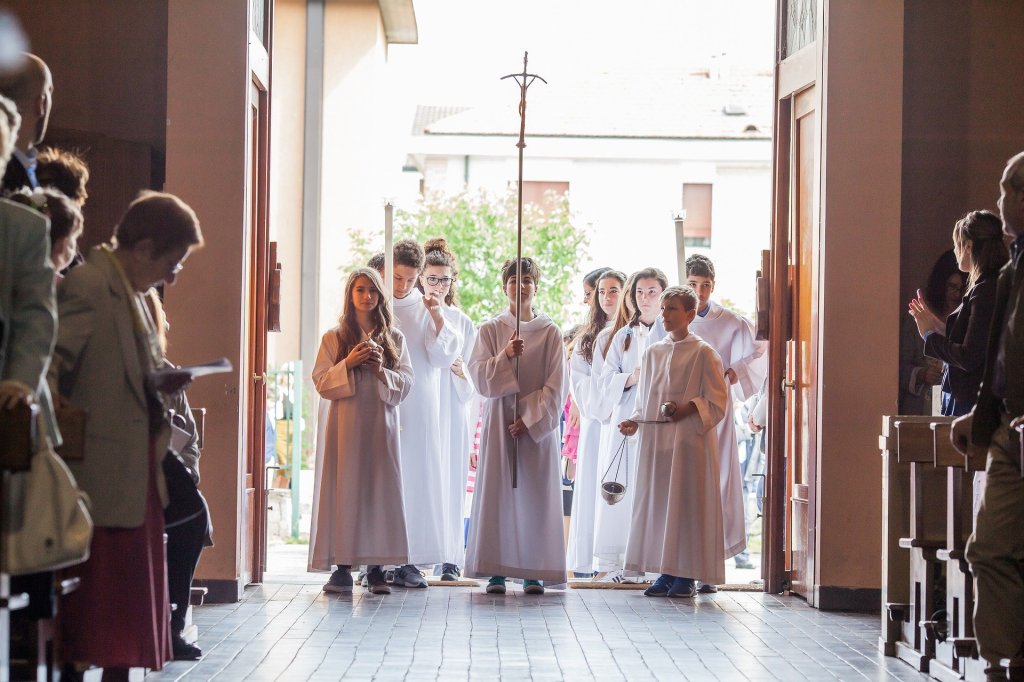
When I was a child long ago, it was a common practice to have those coming to the Lord’s Table for the first time to dress in white. It was to serve as a reminder of our baptism. Baptism and the Lord’s Supper, both means of God’s grace, are intricately linked almost as if one sacrament. Fr. Adam (Orthodox), Fr, Nik (Episcopal) and I (Lutheran) agree on that understanding.
As our last live gathering came to a close, Father Nik offered last words, passionate and extensive ones, in defense of common liturgical practice and Apostolic tradition: the unbaptized should not receive communion. I can’t say I explicitly disagree with his argument. Nor is it the first time that I’ve heard it. Yet, I do wonder about the certainty of his biblical interpretation, particularly as it comes to the Parable of the Wedding Banquet (Matthew 22:1-14). God might surprise us yet.
Fr. Nik, as many others before him, argued as if the meaning of the parable is both clear and specific. (At least to my ear, that’s the way I heard it.) One of those guests let in to the wedding banquet had refused to wear the appropriate wedding garment to the feast. Traditionally, such wedding garments were provided by the host, much as baptismal candidates were presented a white robe upon their baptism to remind them of their now being clothed in Christ. Many see the wedding banquet, an End Time symbol when we will live in the fullness of God, as also representing the Lord’s Supper, “a foretaste of the feast to come.” So, the argument goes, our faith and Baptism (the grace-filled garment) must be worn to the feast (the Lord’s Supper).
I accept the tradition and polity of the historic Church as understood by the ELCA. We do save communing for baptized members of Christ’s Church. Yet, I think it immensely important to point out (but we did not have the time to do so at our gathering) that parables are teaching stories. In Jesus’ time, they were commonly riddles and short stories used as a tool by instructors of all kind. They are meant to be wrestled with and often can have multiple answers and meanings. Despite the apparent certainty of Fr. Nik’s argument, isn’t it possible more is going on here? Isn’t it possible he (and others) have misapplied it to fit their already held liturgical and religious dispositions? What else could God be saying?
Certainly, there is no one way to understand this famous parable and its component pieces. Yes, as mentioned above, baptismal garments were offered the newly baptized (who entered the waters naked) to reflect our “putting on” Christ, our rebirth and regeneration – at least in a number of communities. Yet, that practice only became a norm after Jesus’ resurrection. In the scriptural account, Jesus was speaking to a crowd who would not necessarily make such a connection, even though later Christians might. In this point of his ministry, most of the original audience would likely have interpreted Jesus’ parable through the lens of Jewish scriptures and experience.
If you side with some scholars that argue the story might reflect later teachings of the community of Matthew, you might be assuming a great deal. Even with each Gospel witness being somewhat different, sometimes quite different, I’ve not been convinced by anyone that the writers played with Jesus’ central teachings freely to better fit their specific geographic, cultural context or the current theology. Jesus certainly could have intended elements of the story for future disciples, but that too, is hard to prove. It might be best to look for allusions and connections to the Jewish scriptures; something Jesus’ original audience (and the original audience of Matthew’s Gospel who are widely thought to have been Jewish Christians) would be familiar with. Let’s consider what he is saying to them, and that might help us make better applications today.
In Genesis 3, God made garments of skin to cover Adam and Eve, a sign of God’s grace amidst their rebellion. There are many instructions and commands regarding the use and care of religious garments in the Jewish scriptures. Garments could reflect one’s tribe and one’s purpose. In the Psalms, God’s loving activity and light is often compared to a garment. And the prophets speak of putting on the Lord’s splendor like a garment. So, the original listeners could have made many complimentary interpretations while excluding any particular allusion to Baptism or the Lord’s Supper.
Many argue that the garment at some level represents God’s love, grace, protection and works. It defines who we are and who we trust in through faith; faith itself being a gift. The garment in this parable need not be explicitly or solely connected to Baptism and the Lord’s Supper. Indeed, many scholarly and historic interpreters do not limit it in such a way. One modern Orthodox resource alluded to Baptism, but more so, the author argues we will be examined at the End of Time to see if we have shared in a life of repentance within the Church (in their mind, the Orthodox Church alone). Did we desire and accept God’s mercy? It isn’t so much about the Lord’s Supper as much as it is about our entire lives lived in faith within the holy community. Explicitly, the author asked, “Have we lived in the light we have been given?” Perhaps that proves a better understanding of the passage.
Indeed, Pope Gregory the Great argued in a sermon that ultimately the garment is God’s love. “[Jesus] came as a bridegroom to unite Himself to the Church. There was no other means than God’s love by which the Only-begotten could unite the souls of the elect with Himself. This is why John tells us: God so loved the world, that He gave His only-begotten Son (John 3:16). He who came to men for love’s sake, calls this love the wedding garment.” To him, this garment has two threads: the love of God and neighbor. As Jesus taught and recorded in Matthew, this is the greatest commandment. This doesn’t necessarily exclude one referencing the Baptism or the Eucharist, but that explicit connection seems a bit forced if Gregory the Great’s argument and many others like it hold true. Indeed, the Jewish foundation of Matthew’s Gospel might promote the greatest commandment being the preferred interpretive lens over any sacramental focus.
So, is it wrong for Fr. Nik and others to use this parable to defend the sanctity of the Lord’s Supper and how we should participate? I don’t think it necessarily is so, but there is a need for caution. It appears this parable might primarily be aimed at something quite different – a simpler application. Trust or faith in Jesus Christ might prove the preferable focus. Love and grace in light of “the fulfillment of the law” might serve as a better, more direct interpretive key. The parable might even be best understood as a warning for Christians not to take their salvation for granted as in Bonhoeffer’s arguments against “cheap grace.” Yet if one believes it to be primarily about Baptism, the Lord’s Supper, and the risk of being cast out for receiving the Lord’s Supper improperly (without being baptized, or while being ignorant or ill prepared) then there remain important questions to be addressed.
Does this mean only those who are baptized or who died as martyrs are saved? If someone receives the Eucharist in error or with bad intention or practice, are they without hope? Would that be a mortal sin? (As Roman Catholics understand it, this is a sin that leads to damnation if not confessed and repented of, but Lutherans reject such a hierarchy of sin. All sin separates us from God and one another.) Can faith be enough to save us, even the faith of those who are not yet baptized for whatever reason? Could not God choose to save those who are unbaptized whether infants or those who have not heard of Jesus yet for extenuating circumstances, even as we remain certain that through our faith and participation of the Sacraments we are saved by grace?
And what about those who have had members of the Church act as stumbling blocks to the faith, keeping the “little ones” who would otherwise believe away from Jesus, the Church and the Sacraments? In this last case, one might recall Jesus’ comment that it would be better to die with a millstone around one’s neck and be cast into the sea than be the one who kept the “little one” away. The sin appears to be on those who keep people away from Jesus, not those who are kept away (Matthew 18:6-9). There exist people historically and today who have been kept away from Christian faith through individual abuse and poor witness as well as the corporate power and influence of political and family systems in the Church. If we share in that sin as part of the Church or explicitly, does that mean we will found naked at the feast? I trust from the promises of Christ that will not be the case for us, and I suspect greater grace will be offered to others “outside” the Church than many Christians expect.
In the West (and perhaps the East), it appears historically common to have at times simply interpreted the parable as a call for faith, Baptism, and active life in the Church to include the Lord’s Supper. This doesn’t mean it is the best interpretation. In truth, pastors and theologians, Popes, Patriarchs, Bishops and councils have erred when addressing important issues. This parable was not always deemed explicitly about the Lord’s Supper, and I think it improper to present it as if it was.
To reject the garment was thought to reject God’s grace. But what is the garment explicitly? Anyone out of communion with the Church (as defined by varied dogma, councils, and cannon law; East verses West; Orthodox, Roman Catholic, Protestant or Radical traditions all interpreted differently) was often declared doomed. To not be baptized would doom you. To not receive the Sacraments “rightly” and regularly would doom you. To not believe in approved dogma and previous interpretations of scripture (even when it might be wrong) was believed to doom you. Unfortunately, real life like the parable is never so cut and dry as our too often simplistic interpretations. God’s love is cut from a broader clothe, and I am not sure any of us humans can fully discern the scope and full intentions of God’s grace in the present.
Perhaps like Martin Luther, it is best to trust in, remember, and encourage others to believe in what we know saves us (as promised by Jesus). Through revelation, we know that we are saved by grace through faith in Jesus Christ, but God might yet have mercy on whomever God wants to. If these folks are saved (shown mercy), I believe it would ultimately be because of Jesus’ sharing our lot through his life, death and resurrection. Yet with our finite wisdom, we can never really know in this life God’s full plan.
Rather than act as if we are God, proclaiming and arguing about who is or will be cast into the pit, perhaps we should be more humble. In condemning others to hell, we risk being unscriptural and walking astray ourselves. (We can address the power of the keys at another time.) Let’s not limit the power of amazing grace, when we don’t understand its full limits.
As the Church already has often done, we of varied denominations might develop policies and procedures regarding the administration of the Sacraments for good order, right theology, or for other good and loving reasons, but we need to always be prepared for grace, a gift that is often unfair and not ours to give. There might just be something more going on in the parable and with the Spirit’s activity in our lives. After all, “for now we see in a mirror, dimly” (see 1 Corinthians 13:12). Certainly, all things remain possible with God (see Matthew 26:25-26). Regarding the Lord’s Supper, God could be doing something new. It is worth talking about even as I listen to the arguments and teachings of the past.
Post Note:As with any of our theology on tap events or podcasts, please remember we are limited by both the time and format. When someone speaks authoritatively, whether me (as a Lutheran Christian), Fr. Nik (as an Episcopalian Christian), or Fr. Adam (as an Orthodox Christian), we are speaking for ourselves as best as we understand scripture and tradition from our context. We certainly can err in the moment as well. To those who listen, our teachings might unintentionally become conflated or we can appear to be in full agreement when we are not. Feel free to ask us questions after the event for further clarification.Also, keep coming back!
For those who live elsewhere, we invite you to listen to the Three Priests Walk in a Bar podcast on Apple Podcast, Spotify and more.
For those who attend our theology on tap meetings, Three Priests Walk in a Bar, you might recall that we originally created a special Facebook group so conversations could continue. Our producer and facilitator, Nick2, similarly invited folks to “pick apart” our gatherings conversation at a later date. Here’s a few more items I wish to share after listening to the recent podcast of the live event held on “Can Christians Worship Together or Not?,” Episode 3.
Source: Pixaby. Used by Permission
During our recent discussions, I told a story of a young man in high school who came forward to the altar in order to commune. As I provided him the body of Christ, he said, “Amen,” consumed it, and added excitedly, “This was my first time!” I did not know this young man or his mother kneeling beside him at the time, but she appeared visibly dismayed. Traditionally, Lutherans prepare young people and new adult members for sharing in the Lord’s Supper. Her body language and facial expression indicated she and her son had done something wrong. In response, I simply said, “Welcome to the Lord’s Table.” Then, I continued to commune others and preside over the closing of our worship together.
Normally, I try to be in the narthex (the entrance area of the church building) to greet both visitors and returning church members to our Sunday service. This mother and son were visitors, but they came in as the service began. In our bulletin, we had an invitation to commune which outlined not only how to commune but also who can commune. (It specifically invited all baptized, communing members of any Christian church to do so.) I approached the mother and son after the service, not only to greet them formally, but to invite the mother and son into deeper relationship with our congregation. I didn’t overtly accuse or correct. I didn’t lecture. I just met them where they were in order that we could walk forward together with Jesus Christ.
It turned out that the family had fallen away from church attendance after moving to our area, but they desired to be one with the church again. How wonderful! Why would I put additional stumbling blocks before them to hinder them from coming to Jesus? Instead, I conversed with them, properly instructed them (especially the son regarding the Lord’s Supper), and we welcomed them into our congregation. The previously baptized young man went on to not only commune regularly but also to become a young adult leader in the congregation – one who continued in relationship with the Church through the rite of confirmation and beyond.
If he had not been baptized, it might have been a mistake or a shame, certainly improper by our polity, but I argue it would not necessarily be a sin for him to commune. A sin and a human mistake are not always the same thing. No evil or affront was intended. In 1 Corinthians 11, Paul does indeed argue against receiving the sacrament unworthily (as Fr. Nik noted), but it seems Paul is primarily addressing disunity in the community and not baptism or knowledge of the Sacrament. He never indicates how often the community should commune, but he expresses concern that some have privatized a communal act. Paul appears most concerned with how our lives relate to Jesus’ own and how love ties us in one body together.
As a result, he encourages self-reflection and examination more than present some theological argument over the form and substance of the elements or whom should be admitted to the supper. (Although some of that might have been assumed by Paul, it isn’t his main point nor preserved in writing.) The good news is that we can repent and be renewed even when facing judgement for our lack of discernment regarding love and unity. “Paul’s counsels are driven not by a veneration of the supper properly observed, but by the Corinthians’ failure to have the supper function among them as it should, namely as a beacon by which to keep their lives on the proper path of faith” (The New Interpreter’s Bible Commentary, Abingdon Press, 2002, p. 938). In Paul’s mind the illness and death in the community is a sign of eschatological judgement for disunity, not some sudden, wrath of God, superstitious punishment for lack of understanding while consuming the Eucharist. He seems to believe it is better not to participate in the meal than to dishonor it with disunity. To receive it improperly (in disunity) profanes the life and death of our Lord (Harper Collins Bible Commentary, Harper San Francisco, 2000, p. 1088).
Perhaps this is why “the kiss of peace” and confession were deemed critical to the Lord’s Supper and reserved only for the baptized in some early communities according to some Roman Catholic sources I’ve read in the past. Yet, this particular passage might not prove a great argument against who should commune or changes in practice. It isn’t really about that. Indeed, Christian communities including the Orthodox have changed some practices regarding the Lord’s Supper over time. For example, even when catechumens are dismissed in certain Orthodox liturgies, they actually don’t leave any more. (Listen to our podcast for more on this.) Reserving reception of the Lord’s Supper to those whom are baptized is primarily based upon the earliest known church practices as observed in and interpreted from scripture. It is a tradition handed down to us. Yet just as the “kiss of peace” (now “the sign of peace”) is now open to all, and catechumens are not actually dismissed any longer, perhaps other changes might be discerned by the Church in who should receive the Eucharist. (I’m not saying we should change, as I value the voices of the past, but people aren’t necessarily evil for raising the question.)
In rebuttal to my personal example above, our Orthodox friend, Fr. Adam, spoke about the necessity of knowing whom you commune and protecting the sanctity of the eucharist by overseeing (if not controlling) who participates. In ordination, the Orthodox priest promises “unto death” to protect the Sacrament. They are thought stewards of this mighty, miraculous gift. Those outside of the Orthodox Church, the only true expression of Church in their understanding, cannot and must not commune. He argued this is not exclusionary but a sign of hope that in the future we may all commune. To have someone unprepared or unworthy to commune is anathema, a grave sin in his tradition. Therefore, he must seek to welcome unfamiliar persons, and it is the responsibility of visiting Orthodox to present themselves to him. The expectation remains that only those properly baptized, confirmed and confessed, free of grave sin, participate. Thus, he inferred that the error in this case was not ultimately the young man’s but the priest’s (mine). In the Orthodox view, I should have stopped him from communing. In fact, he never should have even had the opportunity.
Meanwhile the Evangelical Church in America (ELCA), our pastors when ordained or installed promise to love, serve, and pray for God’s people, nourishing them with the word and sacraments. While respecting the sanctity of the Sacrament and the need to preside in a meet and right way, there is no explicitly, strong guardian language as with the Orthodox, although we understand that we are stewards. We recognize that the Sacraments are a means of grace, not an end in themselves. We understand that we share this responsibility with the congregational council and the people of the congregation as well. The sacrament belongs ultimately to Jesus and is our gift and honor to share.
Among those who commune, Martin Luther and our confessions condemn any requirement for preparatory acts such as confessing or fasting in order to do so. We can perform such practices as a personal spiritual discipline, but they aren’t required, and we receive no merit for salvation with any of our efforts. No one is worthy on their own or by their own efforts of receiving the Lord’s Supper – ever. No one can properly prepare to receive what is this pure gift of grace. At some level the sacrament as a means of grace always remains a mystery. It doesn’t truly belong to any bishop’s office or any pastor, but it remains a gift from Christ left in the care of the priesthood of all believers, administered in accordance with scripture, our confessions and polity. In that sense, we all are stewards of it.
Again, following Apostolic tradition, only those baptized commune. (Although, this is now being debated by some.) We instruct those baptized about to commune for the first time in scripture, our confessional beliefs, and our practices, so that they might better participate and value what they are receiving. The methodology and scope of this training varies widely by community. Hopefully, faith will increase through the training and education (by cooperating with the grace being offered), but no specific training is explicitly mandated or outlined by scripture. Though, it appears to have been a practice to educate new members of the community. Our modern model for it based on early Christian communities, early writings and traditions, but again, they vary widely within our denomination and the wider Church.
Traditionally, many if not most Lutherans appear to have communed upon confirmation. Yet with changes in the Roman Catholic Church under Pope Pius X in the 1920s regarding the age for communing and growing ecumenism, it appears discernment over these issues continued. A pan-Lutheran meeting in the 1960s settled on fifth grade as an appropriate age to commune, or nearly settled, for this wasn’t a mandate. Lutherans began to commune youth members at earlier ages as time passed, fifth grade, and still at confirmation. Today, you still find a wide variety of practices with children communing even younger than second grade at times. Even in some Confessional Lutheran bodies, it is left up to pastoral discretion. As for my practice, I enter conversations with parents to discern what might be best for the Church and the individual child. We remember that the age requirement isn’t scriptural but a practice discerned, developed even changed over time. Through our baptism, we are “qualified” in a sense or made worthy by the Holy Spirit’s presence and claim upon us (received through baptism) to be welcomed at the table. We are saved in Baptism and receiving the Eucharist through grace by faith alone. These Sacraments are deemed special means of grace.
Although requiring preparation and sacrifice for communing is condemned, I have actually heard of some American Lutheran pastors (especially in the 1940/50s) requiring confession before communing. This appears contrary to our common understanding of our confessions, the Book of Concord. We do have a rite to offer private confession, and we most often include confession as part of our Sunday liturgy or other times we share in the Lord’s Supper, but it isn’t required. Like the Orthodox, some Lutherans do require visitors present themselves before communing, and I have even been told of congregations expecting some form or written confirmation of denominational participation before one can commune. Still other Lutheran bodies will not let anyone outside of their denomination participate and refuse altar fellowship between Christian bodies if they don’t accept our Confessions fully. These more restrictive measures prove often to be taken by Confessional Lutheran congregations in my experience and the testimonies I have heard, not members of the Lutheran World Federation and ELCA (90+% of all Lutherans globally.)
In contrast, most congregations seem to just include requirements for communing in the Sunday bulletin or make announcements, and we hope and trust visitors will comply. Some of the common wording will invite any baptized communing Christians to participate. Others add that participants must also affirm the real presence of Christ in the Sacrament. We often explicitly explain our understanding of the Sacrament and mention our expectations for communing before weddings, funerals and community worship services where we sometimes celebrate the Eucharist and know many from other traditions might be present. Like the Orthodox, offering the Lord’s Supper at weddings and funerals remains rare, but it is allowed.
Whatever our policy, the majority of Lutherans do not usually challenge people at the altar rail from what I have seen and heard, although perhaps some Confessional Lutherans might. In practical terms, we do not always have the capacity (especially in a 200+ person church) to engage everyone before the service. So, again, trust might be required that people will accept our training, requests and guidance. Ushers, greeters and people in the pews are also asked to help with the welcome and orientation to the service. If people come to the rail, we usually commune them. If they did so in error and we come to know this, pastors tend to meet them later to offer future guidance and instruction. It might be deemed sloppy if not wrong by Fr. Adam and our Orthodox brothers and sisters, but I suspect God has a way of “protecting” the Eucharist better than we do. Here, my supposed “error” providentially led the young man and his family into deeper faith and rootedness in the Church likely because I responded pastorally; taking our theological and scriptural stances seriously while seeking to meet people where they are.
As much as I hear our Orthodox, Roman Catholic and Confessional Lutheran friends framing the need for theological, denominational compliance prior to communing as a hopeful thing, I struggle to accept that. It focuses on division more than welcome. It puts into question the power of our shared baptism. I accept the historic teaching and guidance that only baptized, believing Christians should commune, but if we worship the same Lord and share in baptism, why not commune together? No one properly and fully understands this mystery. I agree with John XXIII that there is more that unites us than divides us. I have witnessed grace in the way pastors and communities welcomed outsiders to the table – sometimes making pastoral exceptions to the common rules. Some communities such as Taizé seem particularly creative in their welcome. Therefore, I accept the benefit of communal standards while arguing for sensitivity and grace.
It brings to mind a story shared by Jean Vanier, founder of L’Arche:
“A young girl with a mental disability made her First Communion during a beautiful celebration of the Eucharist. After the ceremony her uncle said to her mother: ‘What a beautiful liturgy! The sad thing is that she did not understand anything.’ The young girl overheard this remark and said to her mother: ‘Don’t worry, Mommy, Jesus loves me as I am.’”
Perhaps, just perhaps, we self-assured bishops, pastors and lay leaders could learn something about the Eucharist from her?
Husband, Pastor, Law Enforcement Chaplain, and member of the Clerical Errors (aka "The Three Priests"), I'm sharing my two cents with anyone who cares...
You can also find me on social media as Loudluthrn (Lou-d-Luthrn or Lou the Lutheran). It is a moniker given me while attending a Presbyterian Seminary, but I'm a loud and proud Lutheran too (just not too loud and proud, mind you).





 2pennyblog