Tag Archives: community

Rethinking the Civil War, It’s Legacy, & Me

Click this image to read the article alluded to below in my blog, “Why Do Confederate Lies Live On” in The Atlantic.

“When I was a child, I spoke like a child, I thought like a child, I reasoned like a child; when I became an adult, I put an end to childish ways” (1 Corinthians 13:11).

Recently, I came across an excellent article in The Atlantic called “Why Do Confederate Lies Live On.” It was written by Clint Smith, an African American staff writer with the magazine. Focused on his experience with the chapel at Blandford Cemetery, it gave me reason to pause and reflect about my own life.

VMI Cadet Hartsfield of the Battle of New Market is buried somewhere in the Blanford Cemetery in a grave lost to history. In 2014, Petersburg’s VMI alumni group asked me to offer an invocation and benediction for their recognition of the 150th anniversary of the Battle of New Market on May 15th. I was serving as a pastor in Richmond at the time. I naively expected a small, outside event from what I was told. It ended up being a larger event in this cemetery chapel. (I had never heard of this chapel before my visit.)

I was told a World War 2 veteran who survived landing just a day or so after D-Day and fought through the war would speak about his experiences. He did, and that was positive. I did not expect a local SCV color guard with the Stars and Bars battle flag or the explicitly Confederate windows. It was sort of creepy and fascinating at the same time.

My previously prepared prayer alluded to the errors and evils of the Civil War. Yet now, I wish that I had explicitly and strongly refuted slavery and racism as part of it. I mentioned how the cadets’ actions under fire likely helped lead to the preservation and restoration of VMI after the war and perhaps indirectly helped shape or inspire folks like George C. Marshall and Civil Rights Martyr, Jonathan Daniels, and others to bravery or to do their duty. (At some level, I think that remains true for me.) I realize that God can make good come from anything, even our sin. I prayed VMI and our nation would become ever better, more just, and reconciled.

On one hand, I was honored to be asked by fellow alumni, especially for this momentous 150th anniversary year of the Civil War. My fellow alumni were hospitable, and like many alumni including myself, love VMI. On the other hand, I wish I went further and spoke more clearly about the sins of racism, slavery and treason. I value history, but we need to tell the whole story – even the ugliest parts.

Even though I’m from the north, even though some of my ancestors fought for the United States during the rebellion, even though my First Class dykes (senior mentors are called dykes after the cross-belts or dykes worn as part of the uniform) used to have me answer, “The United States of America, Sir,” to the question at VMI about who won the Civil War, the Lost Cause Myth can insidiously take hold of a person if we aren’t wary. It can obscure our vision and understanding, as well as stir division or wound others unintentionally. The myth dresses up and softens what’s ugly. After all, that myth and racism in all forms are just more signs of sin at work in our lives and world. And, sin often traps us subtly over time.

I’m not the person I was in 2014. My attitudes have hopefully continued to evolve, and I pray I continue to grow in understanding and empathy. Wherever needed, I desire the wisdom to repent of my sin including any sin related to racism. I want the courage to challenge racism wherever it is encountered. I’m not looking to erase history. I understand all of us, even the best of us, can only be simultaneously sinner and saint and never perfect. It can be helpful to remember the past. Yet as Christians, we understand we are always reforming. We need to separate ourselves from rigid, dualistic (that everything is all good or all bad), or simplistic thinking and bravely embrace the truth of our past and our present whatever we might see. We can love and respect our enemies, even those of the past, even as we seek to see them and their failures as they truly are.

Want to learn more? I would highly recommend this additional text: Robert E. Lee and Me: A Southerner’s Reckoning with the Myth of the Lost Cause.

Unless otherwise indicated, all scripture quotations for this post are from the New Revised Standard Version (NRSV) translation.

© 2021 The Rev. Louis Florio. All content not held under another’s copyright may not be used without permission of the author.

Leave a comment

Filed under Church History

Our Lord’s Living Garden

In springtime, I often come to think of Thérèse de Lisieux as I take my walks. Thérèse was known for seeing God in the little things, even spring flowers or butterflies. She would regularly stop to reflect upon their intricate beauty. In her own way, it was a source of what we might call meditation or mindfulness. By focusing on her experiences of the moment, she discovered a deeper sense of peace and beauty around her and ultimately at work in her. She recognized even as she battled chronic, often debilitating illness, that she had reason to hope. Even in her illness, she could serve and be faithful to God. Simplicity was her watchword, often called by her “the little way.” And she herself eventually became commonly known as “the Little Flower.” For as much as many would overlook God’s work in creation, contemporaries often overlooked the spiritual beauty found in her lifestyle and vision. Yet today, she is remembered in Roman Catholic and Protestant seminaries and congregations across the world.

Martin Luther once quipped, “Our Lord has written the promise of resurrection, not in books alone, but in every leaf in springtime.” This is most certainly true! Yet, in this busy world, do we often stop to reflect on the gracious beauty at work in each of us and the world? Through our faith and baptism, God is still sharing the promises of the Gospel, and although not everyone will notice or believe it, all our lives make a difference. Indeed, Jesus died and rose from the dead for every one of us. As we are and for what we will become through grace, he sees value and beauty in each of us.

Much as Paul argued that each of us play a varied part in the body of Christ, Thérèse saw us as flowers in the garden. “I understood that every flower created by Him is beautiful, that the brilliance of the rose and the whiteness of the lily do not lessen the perfume of the violet or the sweet simplicity of the daisy. I understood that if all the lowly flowers wished to be roses, nature would no longer be enameled with lovely hues. And so, it is in the world of souls, Our Lord’s living garden.”

Scripture reveals to us that God is our Master Gardner. God has planted us in the region of Fredericksburg to do some particular good, to add unique beauty, and to be individual and communal signs of life and hope. We bloom through worship, fellowship, and service. We are rooted in his love. Yet as summer travels begin again, local gatherings increase, and some might have to continue to stay away due to medical issues or other concerns, know that you are not forgotten. Indeed, you are missed. Come back to us when ready with new stories and love to share. For you make a difference to us, and together, we are most beautiful. I wish you a happy and meaningful summer ahead.

Image: Picture by the author.

Originally published in the June 2021 newsletter of Christ Lutheran Church, Fredericksburg, VA.

© 2021 The Rev. Louis Florio. All content not held under another’s copyright may not be used without permission of the author.

Leave a comment

Filed under Pastoral Letter, Uncategorized

Root of Bitterness or Blessing?

Image source: ykaiavu on pixaby.com

“Pursue peace with everyone, and the holiness without which no one will see the Lord. See to it that no one fails to obtain the grace of God; that no root of bitterness springs up and causes trouble, and through it many become defiled.” Hebrews 12:14-15

As I write this, it seems a bitter time. Some suggest the fall will see a spike in pandemic cases. Others fear or argue over the nomination process for the Supreme Court. There’s concern about the vitality of the economy, protests, violence, corruption and crime. The list could go on, but will listing out all that is wrong with our fallen world help us? In my experience no, and I think scripture agrees.

If we look at the world, ourselves, or others and only see the bad, we are making a mistake. I have done that in my past, and it led me into a dark and lonely place. It fractured my relationships. It might be human, but sin is very human too. Even in Martin Luther’s time, it was a “common evil plague that every one prefers hearing evil to hearing good of his neighbor; and although we ourselves are so bad that we cannot suffer that any one should say anything bad about us, but everyone would much rather that all the world should speak of him in terms of gold, yet we cannot bear that the best is spoken about others.” He challenged believers to: think the best of people (show them compassion and grace); to consider why in their woundedness they might be acting or speaking as they are (practice empathy); to not rush in judging (where we might fall into sin that is greater, acting as if we are God). Simply put, if we see the world in simple terms of clear good and evil, our vision is impaired. We are the one’s who choose to wound ourselves. Then like a sickness, anger, cynicism and sin can and will most certainly spread to others.

Sometimes, I find it hard not to get angry at others. Yet, when I struggle, I try to remember the warnings and encouragement of scripture and our Lutheran confessions. “We love because God loved us first.” If Jesus had not risen from the dead, if he did not promise to return, if he hadn’t said that there would be times of trial, fear and even persecution, but we would be and are ok, perhaps then scorn might be justified. Instead, we are asked to remember that Jesus is the vine and we are the branches. He’s the anchor we can trust in during any storm. Jesus has already made us victors over sin, death and the devil, and we can choose to love – love even those that don’t deserve it or love us back – no matter what happens because he loves us.

Now, I’m not saying consequences or tough actions are never needed. I’m asking, as I ask myself, “Why are we doing what we are doing? How does it reflect Christ’s own love for us?” We need not act like “everyone else.” We are to be in this world but not of it, and that’s a tough spot to be in. Yet it remains true, that we are baptized. We are forgiven and loved. We are empowered by the Spirit to be ambassadors for Christ’s kingdom no matter what political winds blow. Just as evil can spread person to person, so can the justice, peace and love of God. What will we choose to be part of in this world – a root of bitterness or blessing?

Yes, people can prove difficult, ignorant, or worse. I can’t deny it. Yet, they are only human after all. And the world can be unfair, but so is God’s grace. Despite all the storms raging around us, we have been chosen to be like the first bow God put down in the sky declaring a beautiful and everlasting peace.

Unless otherwise indicated, all scripture quotations for this article are from the New Revised Standard Version (NRSV) translation.

This pastoral letter was originally published in Christ Lutheran Church’s October 2020 newsletter.

© 2020 The Rev. Louis Florio. All content not held under another’s copyright may not be used without permission of the author. 
Leave a comment

Filed under Pastoral Letter

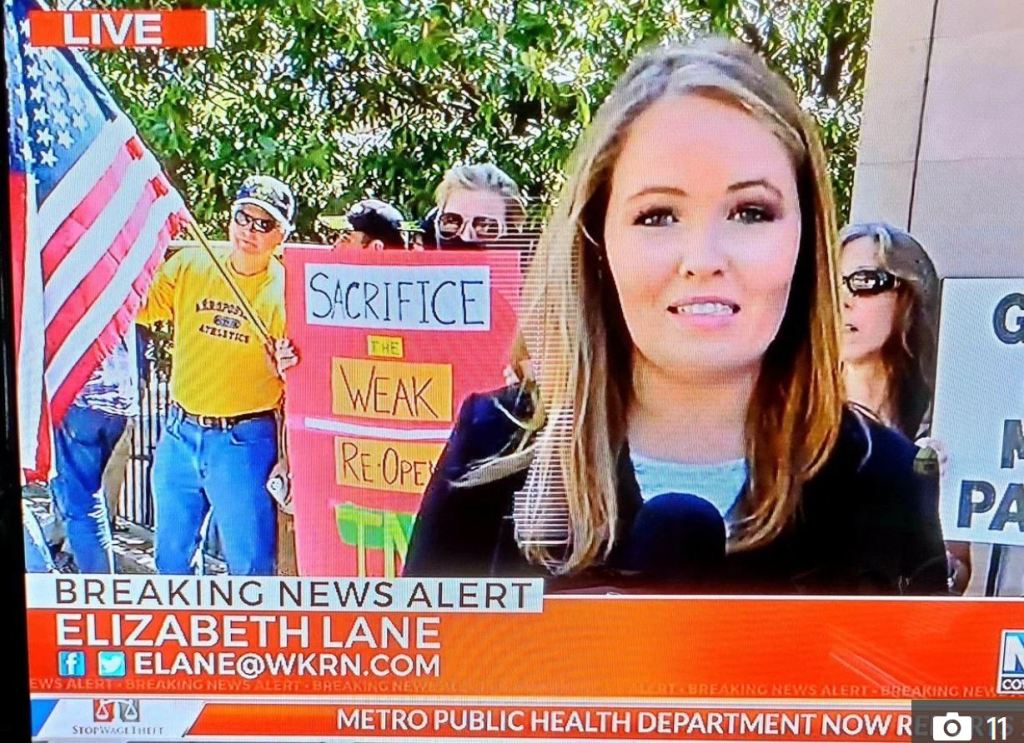
Invite the weak. Don’t sacrifice them.

Photo credit: WKRN screenshot

I wouldn’t post this if it weren’t for the fact I see too many friends on Facebook expressing the same opinion in not so many words. “Sacrifice the weak. Reopen the economy.” A simple, utilitarian approach is antithetical to Christian faith.

No, we need not unnecessarily “martyr” the economy nor “sacrifice the weak.” Yes, I understand that sacrifices will need to be made, among all, and these sacrifices won’t always be perceived as fair. Life isn’t fair. Yet, we do need to remember the “least of these” and the most vulnerable of our society as we seek a way forward. They must remain an important part of our “equation.”

Out of love for our neighbors, some freedoms and prosperity might need to be given up freely; not out of obligation but in love, at least for a time. There is no other way forward if we want to walk with Christ. Loving your neighbor cannot be based solely on death counts or the perceived liabilities of “others.” Who rightly judges who is “weak” and without worth? That’s the way of that past in Nazi Germany and the Soviet Union.

Tough economic decisions can’t be based solely on fear of the virus nor fear about where our daily bread will come from. We can and must do better. Jesus said, “…But when you give a banquet, invite the poor, the crippled, the lame, the blind, and you will be blessed. Although they cannot repay you, you will be repaid at the resurrection of the righteous” (Luke 14:13-14). If you hope to someday celebrate an economic recovery, you might just want to invite these folks as well.

© 2020 The Rev. Louis Florio. All content not held under another’s copyright may not be used without permission of the author.

Leave a comment

Filed under Uncategorized

Fever vs. Faith: Handling Hot Topics

Bells rang on Sunday, August 25, 2019

As August ends, I am participating in a community worship service and national ringing of church bells. Sunday, August 25, will mark four hundred years since the first Africans arrived by force at Fort Monroe, Virginia. Slavery is a tough subject to address, and when you add the many ongoing sins related to slavery, Jim Crow Laws, segregated communities, and other signs of personal and systemic racism, it becomes even more difficult.

Whether racism or any other hot button issue, it is helpful to remember that forgiveness is already ours. We need not get stuck in shame whether it is our sin, the sin of others or of the world. Nor should we fear acknowledging guilt. Instead, humility calls us forward into a future together with Christ. We who have been reconciled to God through Christ have also been entrusted with a ministry of reconciliation (see 2 Cor. 5: 11-21). We can indeed address hurtful, “hot button” issues without defensiveness or unholy anger.

As election fever rises again and troubles of the world present themselves, I find it helpful to listen more than talk. What is really being said and why? Is my momentary adversary speaking from their own woundedness and therefore wounding me? Sometimes angry people facing compassion and gentleness can be moved toward compassion and gentleness themselves. In speaking, I try to avoid blanket statements, as hot button issues are often multilayered, nuanced and intersect with others. As a flawed human, I might even be wrong, so I try to consider both what I might need to learn and where we might be able to find areas of agreement. Although Lutheran Christians have always been encouraged to engage the world and call authorities to account when necessary, regarding the Eighth Commandment (as Lutheran’s count them, the admonition to avoid bearing false witness), Martin Luther cautions, “We are to fear and love God, so that we do not tell lies about our neighbors, betray or slander them, or destroy their reputations. Instead we are to come to their defense, speak well of them, and interpret everything they do in the best possible light” (Small Catechism).

And then, of course, we have Christ’s own teaching and example, “You have heard that it was said, ‘Love your neighbor and hate your enemy.’ But I tell you, love your enemies and pray for those who persecute you, that you may be children of your Father in heaven.” Praying for those we oppose might not always result in an observed change in their behaviors, but I always find it brings a change in me – in attitude toward them and the world, in my own general peace, or sometimes in my own repentance. Consider praying before you hit that post button or begin a difficult conversation. Or, just step away, and then come back to address things after some prayer and reflection. It is amazing how the Spirit can give us just the right words.

Like the Psalmist in Psalm 27, “I believe that I shall see the goodness of the Lord in the land of the living.” Sometimes that goodness will enter the world through us.

Originally published in the June 2019 newsletter of Christ Lutheran Church, Fredericksburg, VA.

Unless otherwise indicated, all scripture quotations for this article are from the New Revised Standard Version (NRSV) translation.

© 2019 The Rev. Louis Florio. All content not held under another’s copyright may not be used without permission of the author.
Leave a comment

Filed under Community Life, Pastoral Letter

Set Like Flint

Image: Alibates Flint Quarry National Monument. National Park Service image.

Image: Alibates Flint Quarry National Monument National Park Service

The Lord God helps me; therefore I have not been disgraced; therefore I have set my face like flint, and I know that I shall not be put to shame. (Isaiah 50:7)

Flint is a hard form of quartz. Since ancient times, it has been used by humans for tools such as axes or to help ignite fires. What a marvelous image Isaiah uses in this Servant Song. A face set like flint is one that is hard in its purpose, knows what it’s about, and perhaps ignites others into faith and action. As we heard in worship recently, these songs were to be embodied by the future Messiah, the ultimate suffering servant, but also, it came to be understood that the experience and ministry exemplified by these songs would be shared by Christ’s church.

As we reflect upon Messiah’s fifty years of ministry, we rightly give thanks for what has come before. Even in hard times, God was there to help us through. Yet, we also set our faces toward a future filled with hope. It is hopeful because God will continue to help and guide us no matter what comes our way. It is joyful because we can discover our wounded Christ in those we serve, and they can discover the risen Christ in us. Together, we are church, and the love we share changes us and the world. We don’t get lost looking back, because Christ calls us forward.

I’m filled with confidence and thanksgiving as I reflect upon Messiah’s future, because I know whatever it holds, Jesus holds us all in his embrace. God’s face is set toward us; seeking to fulfill the ancient Aaronic blessing we hear so often:

The Lord bless you and keep you;
the Lord make his face to shine upon you, and be gracious to you;
the Lord lift up his countenance upon you, and give you peace.
(Numbers 6:24-26)

Happy anniversary, dear Church.
Pastor Lou

Originally published in Messiah Lutheran’s newsletter, The Messenger (October 2018 edition).  

Unless otherwise indicated, all scripture quotations for this article are from the New Revised Standard Version (NRSV) translation.

© 2018 The Rev. Louis Florio. All content not held under another’s copyright may not be used without permission of the author.

Leave a comment

Filed under Pastoral Letter, Uncategorized

Be Christ

Messiah Lutheran Church

‘To be in Christ’ is synonymous with ‘to be in the church-community.’
– 
Dietrich Bonhoeffer, theologian and martyr

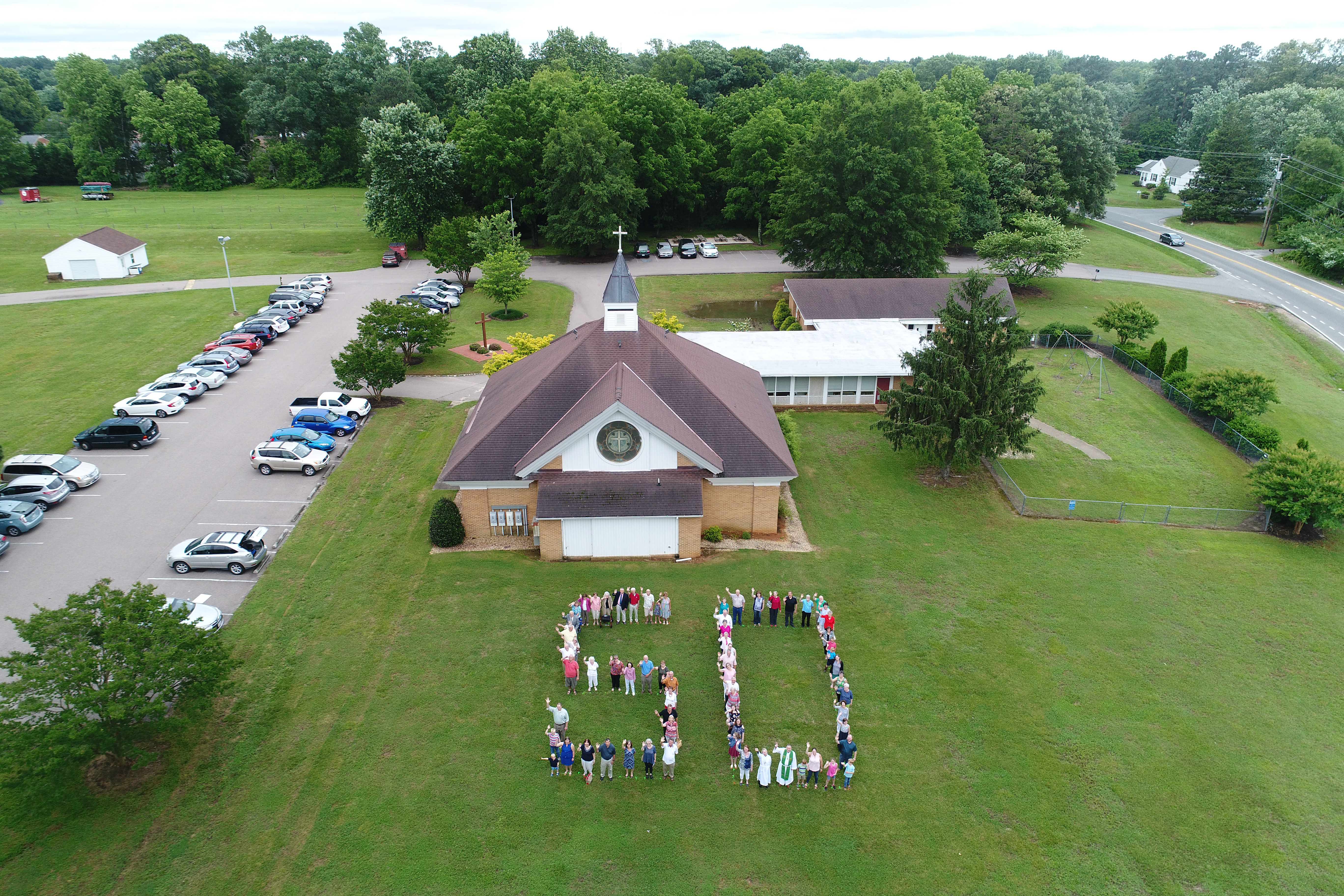
As we approach our 50th anniversary, Messiah members have begun to actively reconsider what it means to be “church” together.

Fellow members of Messiah caught glimpses of our congregation’s own story in the book and movie, All Saints. Here, a radical, trust-centered hospitality and unlikely cooperation led to a struggling, small church’s vibrant renewal. This fostered great conversation and some new ideas for ministry. How have partnerships with others blessed us to be a blessing? Amidst difficulties, where have we seen God’s hand at work?

Your council will soon begin prayerful discernment as our budget and active ministry with All Souls Episcopal faces a challenging transition. What new opportunities and relationships await us? Are we willing to bend with the Holy Spirit’s guidance into uncharted territory?

Our theology on tap events have brought together people from several denominations as well as seekers for discussions on faith. Some who have been wounded by Church in the past overheard us and offered that our gatherings have given them “something to reconsider” when it comes to being “church.” We must continue to wrestle with faith questions openly; trusting Jesus will answer us and that others will hear the Good News though such public, vulnerable yet joyful witness.

And as someone reflected upon our 50th anniversary drone photo, they thought our “50” formation also looked like the word “SO.” This raised the question, “So what’s next for us?” That’s a wonderful, hopeful question for any believer to ask each day. Where is God asking us to help sow his love and mercy? Where will we discover new life?

No human knows all the answers regarding our future, but as Vicar Ginny noted in her farewell during worship (as others have): “Surely the presence of the Lord is in this place. I can feel His mighty power and His grace. I can hear the brush of angels’ wings. I see glory on each face. Surely the presence of the Lord is in this place.”

As the song suggests, Christ reveals himself to us through holy community. We can touch the hem of his garment and almost see his face. Only together can we come into the fullness of this new, promised life with the Risen Christ.

Not everyone will always have the heart to notice, understand or appreciate such authentic community. It is difficult and takes our time, attention and lots of grace. We often fail. Yet, God is doing something miraculous and beautiful each day in and through our lives together. We are growing; together with God and in love of our neighbor.

It is approaching harvest time. In the name of Jesus Christ and your brothers and sisters of the Church, reconsider your place. Wherever you’ve been, whatever you’ve done or left undone, I invite you to walk with Jesus and us anew.

Be still and know. Be active to serve and grow.  Be in Christ together.

Originally published in Messiah Lutheran’s newsletter, The Messenger (September 2018 edition).  

© 2018 The Rev. Louis Florio. All content not held under another’s copyright may not be used without permission of the author.

Leave a comment

Filed under Pastoral Letter, Uncategorized

Starlight, Starbright

1024pxMilkywaysummitlakewv1__West_Virginia__ForestWander

Forest Wander/Wikimedia Commons

When I look at your heavens, the work of your fingers, the moon and the stars that you have established; what are human beings that you are mindful of them, mortals that you care for them? (Psalm 8:3-4)

One of my favorite activities during the summer is to leisurely walk my little buddy, Boomer, as the sun sets and the summer heat subsides. More often than not, we become witnesses to a wondrous spectacle of birds settling in for the night, rabbits and deer foraging, and a magnificent burst of colors as the sun recedes and the moon and stars appear. What a special time of year!

I hope as you travel or recreate closer to home, you take an opportunity to pause in your own wonder and worship. Consider the same loving God who created the world and stars created you. Like all of nature, you have a purpose and place in God’s loving, creative plan. In the hush of the evening, I suspect you might better hear and understand your call to reflect God’s beautiful light.

Yet like the stars above, we remain called to be in communion with one another – reflecting and sharing Christ’s love. We are asked to plant seeds of faith, justice and peace – as when volunteering at vacation bible school, local humane societies, food pantries, or serving in many other ways. At all times, we are invited to raise our voices in worship and praise of God with the mountains, seas, and firmament.

No matter where you go or what you do this summer, please contemplate our shared call to be church. We remain Christ’s, and it is Christ’s light and beauty which we are called to reflect and share. It is you, me and others that were created, called and baptized to be Christ’s church together.


Originally published in Messiah Lutheran’s newsletter, The Messenger (July 2017). Revised version, 26 June 2017. 

Unless otherwise indicated, all scripture quotations for this article are from the New Revised Standard Version (NRSV) translation.

© 2017 The Rev. Louis Florio. All content not held under another’s copyright may not be used without permission of the author.

Leave a comment

Filed under Community Life, Ministry, Pastoral Letter

Hearts of Stone

heart of stone image.pixabay.

A new heart I will give you, and a new spirit I will put within you; and I will remove from your body the heart of stone and give you a heart of flesh. (Ezekiel 36:26)

One of the great promises of the Hebrew scriptures is that God intends to give us a new heart and spirit to replace our hearts of stone. This great work has been started through Christ’s resurrection, the Spirit at Pentecost, and the gift of faith. The process continues throughout our lives as we seek to follow Jesus and grow in intimacy with Christ and his church. It is supported through our shared life and blessed Sacraments, Baptism and the Lord’s Supper, means of grace.

Yet even with this great promise, we can take our eyes off the goal. We can become distracted by the world and our love can grow cold. We can ignore fertile soil and choose to hide in the weeds the world offers us – sometimes not even recognizing it. So as we began our Lent together, I challenged all of us to put our hearts into this season of renewal. I asked each of us to rededicate our bodies, minds and souls to Christ, and see what fruit of the Spirit grows.

Lent is meant to be a kind of springtime bringing new life and order to our lives. Yet in the end, we are all led to the wood of the cross and cold stone of the tomb. Jesus lost his life, his body cold and stiff, so that we might truly live and our hearts beat with his love. As unlikely as it might seem, we must go to the tomb to discover abundant life.

For there like a blooming seed, the power of the resurrection sprung from Christ’s own heart on a Sunday morn more than two thousand years ago. Its power still reaches out through the ages to each of us in love. It wants to take hold of our lives and transform them, but it won’t do so through violence. We need to die to ourselves and willfully surrender.

Jesus is the vine, and we are the branches. Christ taught this. We are meant to stay connected to one another and to him. We are intended to help each other grow. Don’t cut yourself off. Come back if you have been away. Don’t let human faults or failing, yours or that of others, separate us. Don’t give into the darkness of sin and shame when the light of the Resurrection offers us forgiveness. (Reach out to others with that same light!) No matter your burden or business, cast all your cares upon Jesus for he cares for you (1Peter 5:7). Let nothing keep you away!

Then, leaving your old self in the tomb, go and follow Jesus. Be church with us and all the saints. As Martin Luther said, “Anyone who is to find Christ must first find the church… Now the church is not wood or stone, but the company of people who believe in Christ.”

The tomb is empty, and our hearts newly beat with expectation. It is Easter and time for us to leave the tomb of our past behind. Jesus isn’t there. He’s among the living. He wants you and I to join him there forever.


Originally published in Messiah Lutheran’s newsletter, The Messenger (March 2016).

Unless otherwise indicated, all scripture quotations for this article are from the New Revised Standard Version (NRSV) translation.

© 2016 The Rev. Louis Florio. All content not held under another’s copyright may not be used without permission of the author.

Leave a comment

Filed under Pastoral Letter, Uncategorized

No Human is a Pig

fergusonThese images from a recent Daily Mail article reminded me of something Br. Roger of Taize’ once shared while I was a volunteer with his community in France.

When the community was forming, a group of French communists in a nearby village wanted to protest the injustice and riches of Christianity. So, they killed a pig on some church steps one Good Friday. The pig was supposed to be Jesus.

Now, no police officer is Jesus per se, but it strikes me that systemic injustices (no matter how true or not) can’t be addressed by effigies reflecting personal agendas, ignorance, anger or hate. In doing so, we tend to objectify and dehumanize our “enemy”, which makes it harder to recognize any of our own wrongs. We also tend to promote conflict rather than justice and peace. A poet in the 1960s (Ginsberg?) said something like this: “If you call a person a pig enough, they’ll surely become one.”

Like Br. Roger, I’ll strive not to waste time with anger in response. I’ll seek all the more for reconciliation, justice and peace. I will pray for all in Ferguson and our nation, even those who might wish to be my enemy, for I think we all know not what we do when it comes to our current racial divide. I’ll take stock of my behaviors and try to repent where I can identify any of my wrongs. To be sure, there’s enough sin and stupidity to go around, because we all are human.

Perhaps instead of angrily talking, tweeting, posting and pointing fingers, we should try to listen better to one another and learn. Perhaps we should try to seek and recognize the love of God which is planted like a seed within each of us. We are all part of the problem, and we all have a lot to learn from one another.

Entering relationship with one another – as difficult as it might sound – is the way forward. I have seen its power at work through Taize’ prayers and gatherings time and again. Relationship is how Jesus often changes our lives and our lot. It is harder to hate our neighbor when we get to know them, but to do so, requires we put our anger, agendas and arrogance aside. We have to be willing to reflect upon and admit our own sin.

“A fool takes no pleasure in understanding, but only in expressing personal opinion.” Proverbs 18:2

“Love your enemies and pray for those who persecute you…” Read Matthew 5:43-48

Unless otherwise indicated, all scripture quotations for this article are from the New Revised Standard Version (NRSV) translation.

© 2015 The Rev. Louis Florio. All content not held under another’s copyright may not be used without permission of the author.

Leave a comment

Filed under peace