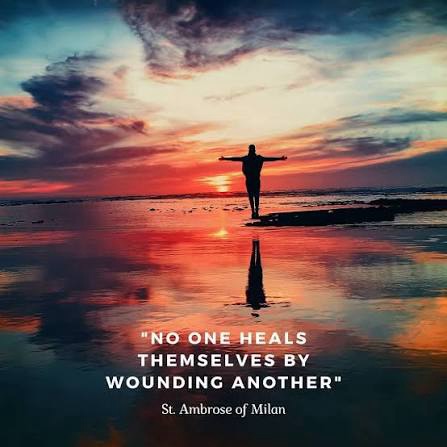
A 2023 study found that 40 percent of both Biden and Trump supporters “at least somewhat believed the other side had become so extreme that it is acceptable to use violence to prevent them from achieving their goals.” That’s pretty disturbing. Yesterday, I could sadly look at my feeds on social media and make a list of people that feel that way from the left and right, some who I know personally. According to Stefani McDade in Christianity today, “Most Americans are in shock, grieving, and rightly concerned for the future of our nation [after the assassination of Charlie Kirk]. Yet there are outliers on both ends of the ideological spectrum who seem inclined to assign a deeper meaning to Kirk’s murder—one that instrumentalizes it to galvanize further support for their respective camps and causes.” That’s not healthy or right either. Making violence sacred in one’s preferred image is itself a form of idolatry.
Many have said that there’s no going back even though our future is never set in stone. Some have just suggested that the Rubicon crossed will lead to more violence (which is likely correct knowing human nature). Others, unwittingly or not, want more – the destruction or elimination of the other, and that’s a bad bridge to cross. “The (fill in the blank party) are evil.” (They don’t act with evil, they are evil, they say. That’s a serious and unbiblical accusation.) People angrily resist that violence is an “us” problem, not just “them.” (Martin Luther in his Large Catechism argues quite effectively that we are all murderers.) They can point out the plank in other people’s post easy enough (Matthew 7:3-5), but they often fail to see how their own vitriol potentially facilitates evil actions of others (if not eventually their own down the line). It’s easy to hate those we objectify. They can become to us something less than human, a being made in God’s image who Jesus died to save.
Jesus calls us to be more and do better. Aggression and violence is a choice, to be an exception in a fallen world, always tainted by sin, if one believes what Jesus taught and exemplified. This is why the Orthodox and others encourage soldiers to go to confession with a priest after wartime experiences. Violence is never “pure” as too many wish to frame it. None of our actions are if we ascribe to Lutheran or Reformed theology. Indeed, because of sin, even the concept of free will is a deception. (Read Luther’s The Bondage of the Will if interested in hearing that argument.)
Instead, we are invited, “Do not be overcome by evil, but overcome evil with good” (Romans 12:21). Love and forgiveness can always be a choice too…always. If you feel stuck in your anger, unable to forgive, pray about it. Talk to a pastor, rabbi or other spiritual leader. (And if they are preaching about retribution or going to war over cultural or political issues, perhaps go somewhere else. Spiritual leaders can live in error, too.) Read and meditate upon the Jewish scriptures and Jesus’ teachings about love of others, forgiveness, and violence. God’s Spirit will help.
Yes, Jesus wishes us his peace, a peace beyond understanding (Philippians 4:7). Jesus offered this to his first disciples and to us when he said, “Peace I leave with you; my peace I give to you. I do not give to you as the world gives. Do not let your hearts be troubled, and do not let them be afraid.”
People can quibble about the veracity of research studies regarding our divisions, or who did what first, but Jesus is clear. “Love one another, as I have loved you” (see John 13). Let us choose to abide in his love.
The below sermon was offered at Christ Lutheran Church in Fredericksburg on February 23, 2025. It proved a difficult sermon for me to preach on several levels, but it was received extraordinarily well by people I know as left, right, and in between. I don’t post all my sermons, but based on that response and the many people that I have already spoken with because of my sermon at our two services, I suspect it might resonate with many others as well. So, here I post. I hope it somehow blesses you. If you prefer to listen to the sermon, a recording of our worship service follows the below text.
The woman that we meet today in Luke’s account proves a bit of a mystery, and everything about this meeting seems a bit unorthodox for that day. Here, we have an unescorted, unnamed woman of low rank and reputation barging into a high-ranking citizen’s home, a rabbi’s home, to approach a great religious teacher, Jesus. Then, she unceremoniously baths his feet in perfumed oils and her tears…drying them with her hair…kissing the feet that Peter would later say he was unfit to wash. How dare she presume such a scandalous interaction?
Well, she does so because she is thankful beyond words. Jesus commends her and identifies her actions as a sign of her gratitude for being forgiven of many sins…many sins…potentially very grave and serious sins…yet sins which are never explicitly named in Luke…any more than the woman herself.[i]
As I have shared before, when I was a teen and young adult, I often felt unlovable and unworthy. I imagined my sins were too great even for the power of the cross. So, as I came back into the Church, finally trusting in the forgiveness of all my sins, it proved easy for me to imagine myself in the place of that woman. Thinking of it, I can still experience a joy that can bring me to tears at times.
This realization of forgiveness changed the direction of my life, but I had much still to learn. You see, I could still play the part of the Pharisee. Sure, I finally trusted Jesus’ promises, and it had changed my life in remarkable ways…ways that others even began to notice. Yet, notwithstanding Paul’s encouragement to forgive one another, as God in Christ forgave us (Ephesians 4:32), it proved terribly hard to put forgiveness into practice.
I had been through a lot of traumatic experiences in my family of origin. I have experienced much trauma later through my police service. Such wounds of the world can last. The sin and unfairness we face can warp the way we look at ourselves and others. Despite my best intentions, I could judge people harshly. I could objectify them. I still could return hatred for the hate that I encountered on patrol, because I was prone to only see the sin and not the struggling, wounded person underneath…a person who through grace could be forgiven by Jesus too.
This past week on social media, I expressed to a friend that I was really concerned with the immediate cessation of all aid overseas. I suggested that perhaps some people who urgently needed help might suffer and die. A person unknown to me chimed in, “I chalk that up to [stuff] happens.” (Now, he used a different word than stuff, but we are in church.) Stuff happens? Well, my first response was, yes, stuff does happen to the just and the unjust alike just as Jesus taught (Matthew 5:45). That’s partly why God calls us to care for one another, because stuff happens.
I came across others who called government workers vermin and parasites. And yet although some government workers might fail in their duties, I look around here in this sanctuary, seeing current and past government workers that I know well, and I see people who are nothing of the kind. They are people who work hard and honorably. I don’t see vermin… I don’t see parasites, no matter any failings that might have…No matter any failings, I see Children of God, imperfect but loved siblings in Christ whom I must love…who I do love.
Then, I encountered others who thought anyone who supported the President at any level must be white trash and racist, ignorant or cruel…perhaps even a Nazi. And yet I see people here that I know have voted for president Trump…who are supportive of some of his policies…and I know them differently. They are nothing of the kind. These people are prone to generosity and love, who just want what they think is best for their country, and so they voted that way. No matter any failings, I see Children of God, imperfect but loved siblings in Christ whom I must love…who I do love.
You know…y’all are messed up! …We are all messed up in our own way. And yet I love you…and I hope that comes across…I love you. And I hope you can love the mess that is me. For, we are only human even at our best. We fail often. We can be selfish or shortsighted, and we always need one another’s love and forgiveness. We can also just be plain and blindly wrong at times.
Yet as tribal, sinful humans, we can be awful to one another…truly, abysmally awful. We can close off our hearts…And those we should love, we push away…We judge…We coldly condemn…We see evil, but we fail to see evil at work within our own hearts. And those who hate us, we might tend to hate all the more. This might surprise many in the world, but we can actually say we think someone or something is wrong without hating or objectifying. In fact, the Bible says for us to defeat evil with good (Romans 12:21), not with name calling or insulting memes.
Not doing good with our words and actions can have unintended, deadly consequences. For with such sin, as Luther teaches, we can become murderers killing peace, relationships, and in some cases, killing the spirit of others. This sin is like a disease that can spread from person to person. Perhaps this is partly why an eleven-year-old girl died by suicide in Texas after being taunted over her immigration status by other children. We can become murderers, Luther argues, through the simmering anger, hatred, and contempt hidden in our hearts, and others like our children might just pick up on that and go further than we ever intended.
So, Luther states passionately in his Large Catechism, that “Thou shall not murder” goes way beyond actually stabbing someone. “God wishes,” he writes, “to remove the root and source by which the heart is embittered against our neighbor…[urging us] to commit to [God] the wrong which we suffer. Thus, we shall [put up with] our enemies to rage and be angry, doing what they can, and we learn to calm our [own] wrath, and to have a patient, gentle heart, especially toward those who give us cause to be angry, that is, our enemies.”
Thus, this week, I thought of my own hard and terrible lesson about this sin that works within me. As a police officer in the 1980s and 1990s, I told you before that my heart had grown hard. I was on bicycle patrol one night with my partner and close friend, Willie, when a burglary of an athletic store occurred. The thieves had gone through the roof, stole a lot, and they had successfully gotten away. Hours later in the early morning…hours before any commuters had awoken…Willie and I saw a young male walking with an athletic bag. His clothes were covered in black pitch and tar, and the bag was stuffed to the brim with items. In the context of the recent theft, this seemed like reasonable suspicion for a stop.
Yet soon after we began to speak to him, the suspect got nervous and began to fight us with all his might. He was big. He was strong…very strong…and it took all we had to try to contain and restrain him. And during the fight, the suspect reached for my weapon and tried to wrench my weapon multiple times out of its holster violently. I was fighting with all my might to keep control of it. It came to my mind that if I lost this fight I might die. (I can remember this moment so unbelievably clearly.)
He broke away almost as quickly as he had begun to attack us, and a pursuit by foot and bicycle began. We had already called a Signal 13 which in Alexandra meant an officer was in dire trouble, and units were screaming their way toward us from all over the city. As we sought to cut off and corner the man, Willie and I were separated during the chase, and in the midst of the pursuit my radio went dead just as a large bang could be heard echoing through the darkness. (I remember that clearly too.) A friend told me later that with no one able to reach me, he feared that I had been shot and killed.
So, it was chaos. There was adrenaline pumping, and there was fear. And there was righteous anger, too. After all, he was a thief. He had fought the police. He had even fought for my gun likely to use it against us. This man was caught hiding in a dumpster. (That was the loud bang that people heard.) Yet to arrest him, a police K9 had to be deployed. And as the man fought more and more, the dog bit him more and more…He was damaged pretty badly…until he submitted.
So when I came up to the group, there he was, my enemy, on the pavement in cuffs, profusely bleeding and waiting for an ambulance. He was in pain…that’s for sure…but what I remember very clearly was looking at his eyes and seeing a lot of anger and hatred. (A look that I will not forget…a lot of hatred.) And as I surveyed him in all his suffering, I thought in the depths of my heart, “Good. I am glad he is hurt. He deserves to suffer. He deserves to die. He is trash.” I am ashamed to say it. It is ugly, but it is true. I would have been happy in that time of my anger if he had died.
Yet it was at that very moment, like a voice in my head, I heard the words, “How can you condemn him, after all that I have forgiven you? He could be with you in heaven someday.” Whether that voice was the Spirit of God, or my mind’s synapses had finally made a new but powerful connection between scripture and my life[ii]…I knew I was a murderer…a sinner…a person who must repent. And although I know that the use of force was necessary, and the arrest was ultimately for the community and even the man’s safety (stopping him from harming himself and others more), my heart immediately softened. I saw myself in him, and I began to have compassion for him…to love him…wanting him to have the love and forgiveness that I had myself received. Now, this did not mean that I regretted any consequences for him that he faced. (Consequences can be necessary or unavoidable.) Yet, I recognized that more was going on in that situation…something eternal.
Years later, I have no idea what became of this man, but I still pray for him when he comes to mind. And he often does whenever I struggle to forgive someone, or whenever I start to objectify someone, or whenever I call someone a jerk. I catch myself thinking of that moment and of him. This was a life-changing event for me. It is one still difficult to share, especially in the context of what happened in Virginia Beach this past week.[iii] But it is also difficult to share because I am ashamed of my sin. And yet at this time, where people are failing in love so often and to such a great extent, painting groups of people with a broad brushstrokes with little or no discernment of their unique differences or situations, I see so many strong parallels.
You likely have seen it or experienced it yourselves. We tend cut off from one another in judgement and hate…where an adult child might not wish to speak to a parent due to disagreements over hot button political issues of our day. And after arguments, longtime friendships have died. I thought it important to confess my sin once again…this time to you. To acknowledge that I struggle at times to resist becoming the Pharisee of this tale, the one saying, “Doesn’t Jesus know who these people are, these sinners?”
Why, yes…yes, he does. They are the people he has come to love and save. Jesus taught us in his Beatitudes, as children of the Kingdom of God, saved-sinners, that we must love our neighbor as ourselves, even our enemies. In fact, Jesus had just shared the Beatitudes in Luke’s account immediately before this dinner. As with the women in Luke, it might seem sometimes a mystery how others have found themselves struggling in sin or on another political side opposed to us. Yet the mystery of Jesus’ suffering, death, and resurrection for our sake, for all of us, points us only toward love for those whom we might otherwise judge without mercy or objectify.
My brothers and sisters, we live in a time of trouble. There are wars and rumors of wars – but not just overseas. These wars are happening in our communities, congregations, and within our families. People are turning against the ones they should love, forgive, and be gentle toward, and in their hearts, they start to think of others as trash…disposable. Our hearts have divided allegiances between Jesus’ way and the world’s way.
Yet, we who have been forgiven so much need not give in to the malevolent spirit of these times. By God’s help, whatever others say or do, we can be moved by the Holy Spirit toward patience, compassion, and forgiveness for those who might not deserve it in the eyes of the world. We can seek to protect and speak up for those who are maligned, objectified, or threatened even when those people are wrong. For we have been forgiven all our sin, because of what Christ suffered on the cross and nothing else…proving that no one is trash to Jesus, including you or me. Amen.
[i] Jane Schaberg, “Luke,” The Women’s Bible Commentary, ed. Carol A. Newsome and Sharon H. Ringe (SPCK, 1992), p. 285-286.
[ii] I know what I believe, that it was a theophany of sorts, but I will leave it up to you to decide for yourselves.
[iii] Two Virginia Beach Police officers died after being shot during a traffic stop the Friday night (February 21, 2025) before this sermon was delivered. The sermon was already written, but many police friends and I had been reflecting how such a loss impacted us. Losses from our own departments came back to haunt us. I lost four colleagues during my six years as an officer – two from being shot, one from suicide, and one from a unknown, preexisting heart condition after a foot pursuit. The death of any officer resonates through the police community plus their families in a way hard to describe. The grief sticks with us for the rest of our lives.
I am not sure of the original source of the above artwork. I found it at the Holy Smack blog. If you know the artist, please let me know. I’d like to give proper attribution.
If you would like to hear my sermon or watch our service, the video can be found below. The Gospel text and sermon begins at about the 17 minute mark.
These Ukrainian eggs were gifted to my in 1995 while volunteering in France.
The below is a reposting of an earlier blog (May 17, 2022) – an item originally for my congregation as the war against Ukraine’s independence and sovereignty escalated. As I recently posted on Facebook, no, Ukraine didn’t start the war no matter what the President or anyone else says. Way back as Russia hosted the Olympics in 2014, I wrote Russia would attack Ukraine, and they did. I wasn’t a prophet. It was clear, and I wasn’t alone in my prognosticating. Russia wanted to reestablish its empire, secure Black sea access, and acquire more economic benefits. Things escalated in 2022 with a total invasion marked by many war crimes and actions that international law calls genocide. Personally, I believe based on my experience and past training in the military, an unjust peace will only encourage Russia to push further for their advantage down the road. They have already been sabotaging industry and communications in the West. Ukraine’s wanting to be part of the EU or NATO isn’t an excuse for Russia’s invasion, kidnapping children, raping women, bombing noncombatants and hospitals, starving/torturing/killing prisoners, taking or destroying cultural heritage or using human shields. War crimes and crimes against humanity are never virtuous no matter the result or perceived benefits. Christians must denounce them. And if you think we can trust old Vlad as an ally, I would ask you to think again. “Woe to those who call evil good and good evil, who put darkness for light and light for darkness, who put bitter for sweet and sweet for bitter” (Isa . 5:20). And yet, with all I have said, the below reflection still proves true. With all the dark clouds of war, I remain hopeful – not in humanity, but in Christ’s promises. It haunts me that the man in my story might have become a casualty of the war, but I trust nothing separates us from the Love of God, not even death. The man was right to live out his faith as he did. Lord have mercy. +
When I served as a volunteer with the Ecumenical Community of Taizé in the mid-1990s, it was an exciting time. The Berlin Wall had just come down, and the Eastern Bloc nations had recently transitioned from tyranny toward freedom. With this change, Christianity in the east of Europe and into Russia experienced what one might call a little springtime – a true rebirth of faith.
So, almost naturally, many Eastern Europeans decided to visit the community on pilgrimage. Since the end of World War 2, it had become a yearly event for the hillside that was home to the monks of Taizé living in the province of Burgundy to flower with multicolored tents helping to welcome young Christians from across the denominations and continents. The village could swell from 200-plus people in the winter to several thousand each week from Easter through summer. Now, the brothers welcomed Eastern Europeans among their many guests.
Indeed, the ecumenically minded Pope John XXIII loved the community and what the Spirit was doing there so much, he once greeted Brother Roger, the Prior, shouting, “Ah, Taizé, that little springtime!” Spending a week with the monks (fifty percent Protestant and fifty percent Roman Catholic), helping with their daily work welcoming and supporting visitors and local ministries, participating in small group discussions over scripture guided by the brothers, and praying their beautiful chants in community three times a day was more than just busy work or a distraction. Over time, people often heard God’s call in their lives better, including the call to love one another in community.
Yet, how difficult it might prove to have Estonians, Ukrainians, and Russians arrive at the same time for a week’s visit among other guests. Bitterness still existed over mistreatment of the recently deceased Soviet imperial power. As much as the Estonians and Ukrainians were overjoyed and boisterous, the Russians appeared as a defeated people: quiet, suspicious, and tending to stay among themselves. (Certainly, religious, economic, and cultural differences with the Western Christians present didn’t help.)
Surprisingly, during the week, I witnessed firsthand what can happen when people get to know one another as individuals. In reflecting upon scripture and sharing one’s understanding, hopes and struggles, the Word went to work. Friendships formed. Attitudes changed. Forgiveness and grace were shared. It is no wonder the brothers had become known for their work – really Christ’s work – of reconciliation and trust. They had even worked secretly in support of Christian young people behind the Iron Curtain at times.
I remember one Ukrainian teacher who stood out from the crowd of pilgrims that week. He told me he made about $25 USD per month (about $50 today). He recalled the horrors and worry over Chernobyl. He remembered the fear that came with Soviet domination and its prescription against almost any signs of faith. And yet each day, I would see him rejoicing among new people, including Russian people. He gave away gifts – small flags of the now independent Ukraine as well as small sets of Ukrainian Easter Eggs. An ancient folk art, the eggs had moved in meaning as his country became Christian in the Middle Ages from representing the rebirth of the Earth each spring to the rebirth of humanity through Christ’s resurrection.
I still treasure that man’s joy, openness, and generosity. As the war in Ukraine continues, as political divisions and violence challenge us in the USA, as even within our church families we might encounter people tending to judge and withdraw rather than offer grace, I stare at his eggs gifted to me and many others that week now long ago. Through his past witness, hope comes back to me today. Without a doubt, I believe springtime will come again. Jesus will come again. Signs of spring can be found everywhere if we dare look through the eyes of faith and seek to love one another – even our enemies.
Originally published in The Hub, a weekly email of Christ Lutheran Church, May 17, 2022 edition. Christ Lutheran Church is located in Fredericksburg, Virginia.
Joseph Chaumet, detail of Via Vita, 1894-1904. Sculpture, Musée eucharistique du Hiéron, Paray-le-Monial, France.
This sermon on Matthew 18:15-35was preached at Christ Lutheran Church (Fredericksburg, VA) on the First Sunday in Lent, February, 26, 2023.You can also find a recording of this post at my2 Penny Blog Podcast.
We just listened to a bit of the fourth of five great discourses made by Jesus as recorded in Matthew’s Gospel. Just as the Books of Moses came in five – called the Pentateuch, the first five books of the Hebrew scriptures – Jesus’ teachings come in five primary installments as Matthew tells the story. Again, this, Matthew hopes, will help people identify Jesus as the Messiah…a figure similar too but greater than Moses, as Jesus is no ordinary prophet. Matthew wants us to see that Jesus is truly the Son of God.
This discourse (our teaching segment today) is often called the Discourse on the Church, for it anticipates the shared life and ministry of the future community we now call “Church.” As humans that form the Church, we live within human relationship and mutuality, bound by the Holy Spirit. Still, some people among us will struggle with vanity, selfishness, or lose their way. There will be a need to call people to correction, but just as with the Old Testament, we will hear Jesus speak of justice wrapped within mercy and grace as well. Humility, self-sacrifice, and love, Jesus teaches, are the virtues that will bind this new community together and help it thrive.
Among the many difficult dynamics that come with human relationship, among the most complicated of topics that Jesus addresses, remains the gift of forgiveness. And indeed, forgiveness is a gift at its heart. After all, Jesus died for the forgiveness of our sins before we even asked…Before we were even born, Jesus responded to our need. Our salvation is pure gift, and with his cross and resurrection, Jesus died for all our sin: the sin that’s always part of us as human, fallen creatures; the sins we have done; and the sins we have yet to do. As John writes in one of his letters (1 John 4), “In this is love, not that we loved God but that he loved us and sent his Son to be the atoning sacrifice for our sins.” He argues that we love because God loves us first. Thus, through Jesus’ own example and teaching, we should understand that we also forgive because God forgave us first. Yet, we aren’t Jesus. We can struggle mightily with forgiveness.
When we are hurt deeply, we can tend to cling to our anger and pain. We can become too focused upon it. We can get stuck and ruminate on our wounds. Now, anger itself isn’t sin. Jesus who never sinned got angry at times, but we are cautioned in scripture to avoid sinning in our anger (Eph. 4:26). So, as we focus on the sin we see as perpetrated against us, we might feel justified anger, but we can also slip into sin. We aren’t Jesus. Normal humans can tend to hold onto grudges and even nurse them. Then like a disease, those human, sinful feelings can begin to seep out of our wounds, misshaping our choices along with our view of others and our world.
There’s an old saying, “hurt people hurt people,” and although it is simplistic, I find it often profoundly true. Looking at criminal offenders or people in our family who perhaps don’t love us like they should, we often find their behaviors might not be able to be explained away, but we can often see that their own lives lacked love, tenderness, and forgiveness. They themselves might have been abused or forgotten, and their hurtful choices often might reflect their desire to be significant, have their needs met, or act out like a small child. They might not know the words for their pain and longing. They might not even be aware they are in pain. That’s just what they know. Sadly, the examples they have seen of loving relationships are too often far from the love that Jesus teaches about and exemplifies. Of course, they can be bent inward upon themselves, selfish, as Luther says. The best humans can make bad choices when they have free choice.
In families, the sins of the parents can be revisited upon several generations until someone finally says enough is enough and seeks to return to God’s ways…or so says Deuteronomy 5. Yet, not everyone who grows up exposed to brokenness offends, and just because a parent struggled to love you doesn’t mean that God could not have taught you how to love in some other way. Again, there’s an element of free choice. God can send us people to love us in lieu of a family incapable of loving as they should. So, we should not be too quick to just say “turn the other cheek” or “forgive and forget.” I am not suggesting wrong should be explained away. For our safety, for the safety of others, and even for the protection of the person we are mad at, erasing any error might cause more harm than good. Consequences can sometimes protect people or help teach people to do better.
Some of you have heard my story of a women I met as an officer while on a domestic dispute. She had faced many years of emotional and physical violence, and this night, she had been injured. Her spouse hit her so hard that her cheek was swollen up like a grapefruit. When I suggested to her that she might need to put up some protective boundaries between her and her husband, she ironically said with her swollen face in tears, “But Jesus told us to turn the other cheek.” I had to explain to her that Jesus loved her too, and he likely wasn’t calling her to martyrdom (or more likely unnecessary victimhood) at the hands or her husband. Jesus loved her too, and sometimes when situations are toxic or dangerous enough, it might be best to turn the other cheek and walk away.[i] This doesn’t mean we stop loving them, or praying for their welfare, or caring. It might just be a humble recognition that we aren’t the one’s called to save them from themselves…In such cases, we might need to love ourselves as much as we say we love them. After all, Jesus said the law and the prophets was summarized in our loving God with all that we are and loving others as ourselves…not better than ourselves.
Yes, forgiveness is complicated. Wounds can run deep and last long. A man once told me that he used to get in terrible fights with his wife. Yet it wasn’t the physical wounds that bothered him. Those scars can heal. He wouldn’t think of those physical incidents unless he stopped to look at his scars. No, often for him, the wounds that come from ill chosen words, gossip, betrayal…emotional wounds…those can be the ones that last the longest. Those can be the hardest to forgive and heal. And yes, he is right. Forgiveness is hard. Jesus never said forgiveness would come quickly like someone turning off a light switch. We might need to try to forgive, and then try again, and again. We might find a place of peace only to have something remind us of past pain, and we need to forgive yet once again. It might take a lifetime to forgive, and we might never quite fully make it. Yet, we aren’t only asked to forgive for the sake of the offending party. In just trying to forgive, in our willingness to be open to it, forgiveness heals and frees us whether the other person benefits or not.
When we seek to forgive, it is not admitting what they did was ok. Counselors suggest, “By forgiving, we are making a conscious decision to let go of any resentment, vengeance, or anger that came from being hurt because we believe we will be better off not having those emotions and thoughts floating around inside us.”[ii] It is not about the person deserving forgiveness or changing their ways. It shouldn’t be that we want the person to suffer more before we forgive. Those are ultimately justice and trust issues, and as an Orthodox saint[iii] reminds us, if God was truly and only just, each of us would be in BIG trouble. As fallen humans, we ourselves can never be fully trusted, and we can never earn our salvation. In God, of necessity, justice comes with mercy. So again, modern counselors note, the person who hurt you might not deserve forgiveness…they might not be worthy of trust… “but that doesn’t mean you deserve to live with the resentment and bitterness.”[iv] Our ability to heal and move on requires forgiveness, so Jesus (who loves us and wants what is best for us) asks us to forgive. It might take a lifetime of trying, but in trying, in praying for our enemies, we will discover that we are always blessed…and sometimes reconciliation might yet come.
How often should we forgive? Peter likely reflecting a the shared consensus of the Apostles suggested seven times. He was being stingy…better than many, but stingy. In context of this conversation, Jesus shares the parable of the Unforgiving Servant in response to Peter’s guess. The parable applies to Peter too, as much as it applies to us and to all. Jesus says we should forgive seventy-seven times (or in some texts seventy times seven times)…an eternity of times, because we have through faith forgiveness for eternity. Jesus is asking us, “Should you not have had mercy on your fellow slave, as I had mercy on you?”
Ultimately, sin has the potential to harm communities including families. It can injure or murder the spirit of someone. We cannot take it lightly. Yet as professors like Dr. Kimberly Wagner of Princeton University point out, “just because sin has the potential for collective harm, doesn’t mean the sinner should be dealt with harshly. Instead, the text lays out a process that foregrounds compassion, strives to avoid shaming and embarrassment [as demanded in Deuteronomy by the way], and ultimately seeks restoration.” This “is a procedure that insists that the spiritual and relational wellbeing of each person is something worth fighting for and restoration to community is worth our time and energy.”[v]
Yes, we are asked to recognize the consequences of sin, but we are also asked to see the humanity in one another…including our vulnerability and need. We all need forgiveness. Grounded in God’s grace, seeking to love others as ourselves, praying for our enemies even as we ask help in forgiving, or as we ask for the wisdom to know what we need to repent from and set aright…trust that justice will come from God eventually, but the blessings that flow from forgiveness can be ours right now. Amen.
[i] Hemfelt, R., Minirth, F., & Meier, P. (2003). Love Is a Choice: The Definitive Book on Letting Go of Unhealthy Relationships. Nashville: Thomas Nelson Publishers.
For those that might still be wondering what all the recent Facebook hubbub about Parler is about, here’s a pretty reasonable article. I’ve seen plenty of old friends announcing their migration to this newer social media platform. As for me? I don’t often use Facebook for political stuff. I prefer to talk in person about weighty issues. On Twitter, I share more news articles but from multiple sources and usually little or no commentary.
I know there’s a lot of junk on these sites. (To be honest, let’s admit it’s from both the left and right.) I recognize attempts at curtailing bad or untrue comments by the social media powers that be has been sloppy at best and often seemingly lopsided. And yes, these platforms seek to manipulate us and limit competition. So, I try to ignore the junk and educate myself from multiple news sources with varied perspectives off of Facebook. I actually talk to live people which includes a lot of listening.
If on social media, I much prefer looking at funny memes, or pictures from my friends garden in Africa, seeing a morning walk of a congregant, and sharing joyful events like births or even sad or troubling events like surgeries or deaths. These can help us feel connected and cared for. Heck, I even enjoy my friend’s post who shares his photos of small, rural post offices. Simple joys can matter. Through social media, I’ve found weightier things such as positive resources for prayer and meditation and even some resources to consider future travel when the pandemic ends (or at least dream about it).
That’s the better side of social media, and to make that my focus helps improve my attitude for the day as well as shape what I say or post. I don’t need to personalize or catastrophize everything. I can choose to be happy. I can try to be patient, kind and understanding. I don’t have to be compelled to comment on everything. Those are powers we all have with some intentionality and God’s help.
And in reality, I doubt Facebook will last forever. Younger folks have already tended to move on. It will likely go the way of Six Degrees or MySpace unless it changes drastically. Whatever the platform we choose, I’ve seen too many relationships broken needlessly, and I don’t need that in my life. The world can be hard enough on its own. We don’t have to let that happen or play along with those less healthy than we might be. At the same time, that doesn’t mean we should cut off from everyone who thinks different than us.
Instead, we can turn the other cheek and scroll or click away without total cut-off, or cancelling, or condemning anyone to the fires of hell. We are free not to feel obliged to answer in haste or perhaps at all. We can wish others well even as we disagree or are offended, pray for them, and perhaps model a better way forward if we are right. If we discover we are wrong, we might learn something from them as well.
As I’ve said elsewhere, a new “thing” will certainly come along, but I’m just not sure I need another or new social media platform of any type in my life right now. In fact, I’ve been using social media less. That’s certainly helped make this election cycle and my life better. There’s plenty of research indicating that too much social media has led to social isolation, depression and other concerns.
Paul wrote (Phil. 4:8): “Finally, beloved, whatever is true, whatever is honorable, whatever is just, whatever is pure, whatever is pleasing, whatever is commendable, if there is any excellence and if there is anything worthy of praise, think about these things.” If that doesn’t sound like our Facebook or other social media feeds, maybe it’s we who are doing it wrong and not just the platform. Changes can be made for good based on our desires, resilience and love for others. For all those migrating, or staying, or totally turning things off, go with God wherever you digitally find yourself. You can always contact me in the real world to share your news. I’d be happy to hear it.
“Pursue peace with everyone, and the holiness without which no one will see the Lord. See to it that no one fails to obtain the grace of God; that no root of bitterness springs up and causes trouble, and through it many become defiled.” Hebrews 12:14-15
As I write this, it seems a bitter time. Some suggest the fall will see a spike in pandemic cases. Others fear or argue over the nomination process for the Supreme Court. There’s concern about the vitality of the economy, protests, violence, corruption and crime. The list could go on, but will listing out all that is wrong with our fallen world help us? In my experience no, and I think scripture agrees.
If we look at the world, ourselves, or others and only see the bad, we are making a mistake. I have done that in my past, and it led me into a dark and lonely place. It fractured my relationships. It might be human, but sin is very human too. Even in Martin Luther’s time, it was a “common evil plague that every one prefers hearing evil to hearing good of his neighbor; and although we ourselves are so bad that we cannot suffer that any one should say anything bad about us, but everyone would much rather that all the world should speak of him in terms of gold, yet we cannot bear that the best is spoken about others.” He challenged believers to: think the best of people (show them compassion and grace); to consider why in their woundedness they might be acting or speaking as they are (practice empathy); to not rush in judging (where we might fall into sin that is greater, acting as if we are God). Simply put, if we see the world in simple terms of clear good and evil, our vision is impaired. We are the one’s who choose to wound ourselves. Then like a sickness, anger, cynicism and sin can and will most certainly spread to others.
Sometimes, I find it hard not to get angry at others. Yet, when I struggle, I try to remember the warnings and encouragement of scripture and our Lutheran confessions. “We love because God loved us first.” If Jesus had not risen from the dead, if he did not promise to return, if he hadn’t said that there would be times of trial, fear and even persecution, but we would be and are ok, perhaps then scorn might be justified. Instead, we are asked to remember that Jesus is the vine and we are the branches. He’s the anchor we can trust in during any storm. Jesus has already made us victors over sin, death and the devil, and we can choose to love – love even those that don’t deserve it or love us back – no matter what happens because he loves us.
Now, I’m not saying consequences or tough actions are never needed. I’m asking, as I ask myself, “Why are we doing what we are doing? How does it reflect Christ’s own love for us?” We need not act like “everyone else.” We are to be in this world but not of it, and that’s a tough spot to be in. Yet it remains true, that we are baptized. We are forgiven and loved. We are empowered by the Spirit to be ambassadors for Christ’s kingdom no matter what political winds blow. Just as evil can spread person to person, so can the justice, peace and love of God. What will we choose to be part of in this world – a root of bitterness or blessing?
Yes, people can prove difficult, ignorant, or worse. I can’t deny it. Yet, they are only human after all. And the world can be unfair, but so is God’s grace. Despite all the storms raging around us, we have been chosen to be like the first bow God put down in the sky declaring a beautiful and everlasting peace.
Unless otherwise indicated, all scripture quotations for this article are from the New Revised Standard Version (NRSV) translation.
This pastoral letter was originally published in Christ Lutheran Church’s October 2020 newsletter.
In case you come across this article by Thomas Cahill as I have being reposted and misused by some Roman Catholic brothers and sisters (along with some rather un-Christian remarks), be assured the author misses the mark somewhat when it comes to Luther’s psychology and theology. His take is too simplistic.
Luther’s efforts to reform the church (especially at the start) weren’t about ego alone, but about the Word of God being adhered to without mental gymnastics to make them fit corrupt and superstitious practices of the day. He was a pastor caring for his people, and a teacher seeking truth. His intent was not to be independent, revolutionary, or famous.
Unlike the short quote within the article, Luther’s words at Worms were more nuanced [please note the points I emphasize]:
“Unless I am refuted and convicted by testimonies of the Scriptures or by clear arguments (since I believe neither the Pope nor the Councils alone; it being evident that they have often erred and contradicted themselves), I am conquered by the Holy Scriptures quoted by me, and my conscience is bound in the word of God: I can not and will not recant any thing, since it is unsafe and dangerous to do any thing against the conscience.” (History of the Christian Church, vol. VII, ch. 3, sec. 55).
Martin Luther was posting an academic disputation – a common practice of his day – and wrote later writings to be discussed in community. He wasn’t looking for a fight nor a break with the church catholic, and his efforts were shaped by much more than just a matter of an individual’s ego.
True, self-interpretation of scripture has its weaknesses and excesses, but Luther wasn’t guilty there either. His focus remained on the assembly (the church) in relationship with one another and Christ. (This is made quit clear in his Large Catechism and other theological writings.) The church guided by the Spirit and tested by the divine revelation of scripture is the corrective for us all when it comes to interpretation, for Luther knew we all can err as much as popes and councils. We need to open scripture, listening for the Spirit and to one another.
As the debates rolled on and intensified, Luther failed to do that at times himself. Much like those posting anti-Lutheran insults and commentary, he let his anger and disappointment (and perhaps later his mental illness) govern some of his responses. After all, many people wanted to see him dead and weren’t exactly charitable either.
Martin Luther was human, and he realized it. In reviewing much of his writings, you will see him hesitate to state things definitively rather than to risk error. He critiques himself and his lack of ability. You will see calls for discernment rather than name calling over theological issues. He turns toward grace to light his way forward and not some internal power of his own.
I think such an attitude represents a very human, Christian humility and maturity rather than egocentricity. Adapted beyond theology discussions to a way of life, such an attitude will likely prove the best answer to what gridlocks us in our politics and divides our culture today.
As St. Paul reminded Luther and reminds us all, “And do not grieve the Holy Spirit of God, with which you were marked with a seal for the day of redemption. Put away from you all bitterness and wrath and anger and wrangling and slander, together with all malice, and be kind to one another, tenderhearted, forgiving one another, as God in Christ has forgiven you.” (Eph. 4:30-32). Even amidst important theological or other disputes, we are to remain one family of faith, the holy people of God.
Unless otherwise indicated, all scripture quotations for this article are from the New Revised Standard Version.
Within an ancient culture that didn’t count women during the government census or necessarily notice or respect them in the home, it is not a real shocker the bible doesn’t often mention women.
Despite this, it remains most probable that women were an important part of Jesus immediate community and present at his final Passover Feast. Matthew reports that at the feeding of the 5,000, the count did not include women and children.[i] Or later, Matthew shares that women who “had followed Jesus from Galilee to care for his needs” watched as he died.[ii] (Was this perhaps after preparing and sharing in his last Passover Feast?). There are other attestations from other Gospel writers as well which some see as supporting that women were among his disciples and active in his ministry.
Whether you agree or not, or think women had their feet washed by Jesus or not, Jesus’ greatest intention on Maundy Thursday was to teach us to love and serve everyone (“one another”) as he had us. After all, Maundy comes from the Latin word mandatum (meaning “commandment”), and it was used in the early Latin Vulgate translation of John 13:34: “I give you a new commandment, that you love one another. Just as I have loved you, you also should love one another.” Using scripture to interpret scripture and seeing Christ’s own example, it is hard to argue that this command to love only covered Christians. Christ longs for his family to grow.
Yes, this final teaching echoed Jesus’ earlier ones. What’s the greatest commandment?[iii] Who is our neighbor?[iv] Jesus reached out to all those marginalized by society whether Jewish or not. We are not to become their stumbling block.[v] We are to let “the children” come to Jesus.[vi] Indeed, we are to love whoever might be thought as “the least of these” – perhaps children, inmates, the poor, women (in many cultures still), anyone we tend to label as “sinners”, and non-Christians. Matthew is said to have been the most Jewish of the Gospel writers; at least his writings reflected many Jewish teachings and responded to many Jewish biases about their being the chosen ones of God. Yet, he shows Jesus to be incredibly open and loving to all. Jesus longs for relationship!
Despite this, some traditionalist Roman Catholics have become more and more vexed by Pope Francis’ election and recent behaviors. He has cast aside signs of regalism. He has acted in ways lifting up the priesthood of all believers. He has expressed openness to Protestants, Orthodox Christians, and people of other faiths entirely. As in Argentina when a Cardinal, Pope Francis seeks simplicity, and he lives that way. Not the least of their issues with him, many traditionalist have expressed “the horror” (not my word, but often found in their tweets and posts) that the Pope would wash not only the feet of a juvenile women who happened also to be a prisoner, but in one case was Islamic. “He cultivates a militant humility, but can prove humiliating for the church,”[vii] Fr. Bouchacourt, head of the traditionalist, schismatic St. Pius X Society, said. I have seen similar less than charitable comments by other traditionalists, even from some of those who haven’t broken from the Roman Catholic hierarchy but instead claim to love and obey it. Some even suggest Pope Francis’ behaviors are just a show in violation of scripture.[viii]
If signs of humility are embarrassing to the Roman Catholic Church, then I bluntly but in love suggest these folks take a look at Jesus’ own behavior. Jesus often intentionally exemplified his teachings through public behaviors. That’s what teachers and leaders need to do. Jesus prayed in public at times not for his own sake and not for a show, but so that others could be comforted and learn of God’s love.[ix] He purposefully embodied earlier prophesies to help reveal his identity, such as by riding a young donkey into Jerusalem.[x] (Certainly, Palm Sunday was quite a spectacle.) Some of the same conservatives – those who were so protective in promoting the sanctity of the conclave and agressively argued that the election process was in the Spirit’s presence and following God’s will – turned on Pope Francis that first night.
Even as a Lutheran, I would agree that the Spirit is involved in leading the Roman Catholic Church, but I would also argue the Spirit seeks to guide all other denominations as well. Institutions made of fallible humans can err (a very Lutheran attitude to be sure), but we still remain Christ’s church. Despite the historic divisions of the universal church, Pope Francis holds one of (if not the most) prominent positions of Christianity. To be ashamed of such humble, public actions that so many “of the least” will take notice of seems the real shame to me.
This Lutheran says, “Good for Pope Francis!” Perhaps I shouldn’t care so much, but I (like countless other Christians) hope and pray for the coming reality of Christ’s own prayer that we live as one.[xi] We are the church together, not our denominations, through the grace of our shared faith and baptism. I humbly support my brother Francis in his efforts to make Christ’s love known in the entire world.
After all, Jesus asked us to love and support one another. He never said with our human minds, hearts and ways that we always would agree on everything.
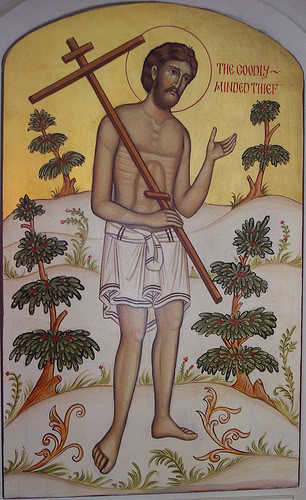
For those that have looked at my Heroes and Sheroes page, you might recognize that today is a special day for me. March 25th is the traditional commemoration date of Saint Dismas on a number of Christian liturgical calendars, and I bear his name.
Widely known as the “Good Thief” or the “Penitent Thief”, Dismas was crucified beside Jesus. The name Dismas was later adapted from a Greek word meaning “sunset” or “death.” His real name is unknown. Most likely, he was not a thief, but instead, some kind of rebel or raider deserving the death penalty under Roman law.
Dismas’ lesser feast day or commemoration derived from a tradition believing that March 25th was the actual calendar date of Christ’s crucifixion, although the Passover and Easter celebrations move due to their following a lunar calendar. The Feast of the Annunciation is the primary, modern celebration on our Lutheran calendars today (except when March 25th falls during Holy Week), but I still stop to remember St. Dismas annually on this day.
Although Dismas was never officially canonized by the Roman Catholic Church, he is declared so in scripture by Jesus himself. We hear in Luke that Dismas defended Jesus from the abuse of the other condemned man, commonly named Gestas (but also unknown). Hearing Jesus preach, teach and pray from the cross, Dismas began to look to Jesus with trust. He asked, “Jesus remember me when you come into your kingdom.” Jesus declared, “Truly I tell you, today you will be with me in Paradise.” (See Luke 23:39-43)
Years ago in a home with many challenges, I came to see the world in black and white terms. I secretly believed myself unlovable and defective even at a young age. As I write elsewhere, I am sure I heard the story of Dismas often in church growing up, but it first really impacted me while watching The Greatest Story Ever Told on television with my father in about eighth grade. At that time, I had been going through confirmation classes at St. Pius X Roman Catholic Church. Prior to confirmation (viewd as a sacrament in the Roman Catholic faith tradition), we were asked to think of a confirmation name, one to symbolize our coming to adulthood in faith and hopefully be a saint who inspired us.
In the Roman Catholic tradition, St. Dismas is the patron saint of condemned prisoners, reformed thieves, undertakers, funeral directors, penitent sinners, and prisoners. Indeed, some Lutheran and other prison ministries are named after him. When confirmed in the Catholic tradition, I decided to take his name. This seems ironic perhaps for one who would become a police officer, yet I always remembered how my heart was deeply touched by his story. In the depths of my being, I hoped I could be so loved.
Later as a young adult, I left active life in the church. I believed in God at some level, but I made bad choices at times, experienced losses that often come with life, and experienced much too much evil as a police officer. In short, I gave up on God. I became empty and cynical. I came to feel that not even Christ’s cross was enough to save me. I had much to repent over, for I was very wrong.
Yet when my life seemed darkest after another profound loss, two dear Christian friends from my past redirected my gaze toward the cross and its certain grace. On March 7, 1992, I had what I call my “re-conversion experience” – for I understand now that since my baptism and before, God has always been active in my life. My faith was small and deformed, but it made a difference in my life. God loved me before I ever realized it, even on Christ’s cross long ago. I truly experienced amazing grace, and my life changed.
Through this renewed experience with grace, I came to understand and more importantly finally trust that I was indeed loved and forgiven. I began to dig into scripture as never before. I hungered for the Word of life, and I found it alive in and through Christ’s church. With the church, I sought to share the grace I knew to be true with others in both word and deed. My police work became a sacred vocation. Later, God would invite me to take his love on the road through mission. Overtime, I discovered a home in the Lutheran family of faith. Still a sinner, I trust that I am also a saint. Christ declares this through his death and resurrection for our sake, and I do trust him for he never lies. His sacrifice atoned for our sin – past, present and future. His death remains enough to save us all.
Each year since my “re-conversion” and return to the church, I think of Dismas and rejoice. I celebrate the opportunities found in Lent and Christ’s forgiveness. I trust that with others who believe (and even those who don’t yet) I was, am and will be remembered. Dismas’ story is our own.
Yes, Jesus remembered us all as he died on that cross. He died, so that we could truly live…starting today.
Psalm 32 – The Joy of Forgiveness 1 Happy are those whose transgression is forgiven,
whose sin is covered. 2 Happy are those to whom the Lord imputes no iniquity,
and in whose spirit there is no deceit. 3 While I kept silence, my body wasted away
through my groaning all day long. 4 For day and night your hand was heavy upon me;
my strength was dried up as by the heat of summer. Selah
5 Then I acknowledged my sin to you,
and I did not hide my iniquity;
I said, ‘I will confess my transgressions to the Lord’,
and you forgave the guilt of my sin. Selah
6 Therefore let all who are faithful
offer prayer to you;
at a time of distress, the rush of mighty waters
shall not reach them. 7 You are a hiding-place for me;
you preserve me from trouble;
you surround me with glad cries of deliverance. Selah
8 I will instruct you and teach you the way you should go;
I will counsel you with my eye upon you. 9 Do not be like a horse or a mule, without understanding,
whose temper must be curbed with bit and bridle,
else it will not stay near you. 10 Many are the torments of the wicked,
but steadfast love surrounds those who trust in the Lord. 11 Be glad in the Lord and rejoice, O righteous,
and shout for joy, all you upright in heart.
Prayer:
Gracious Lord, even as you died on your cross, you looked upon Dismas and saw our human need, shared suffering, and sin. You looked upon him with love before his repentence. His simple trust in you opened a way of communion with your heart’s mercy and forgiveness even as the centurion’s spear sought to tear your heart asunder. Your death and resurrection saves me. His trust in you inspires me. Bless your entire church; that together we remember your cross with confidence, persevere in faith through times of trial, and experience the resurrection of our lives today. Empower us to remember and serve the outcast, sinner, and all who suffer; sharing your grace, mercy and love, as you have so abundantly shared it with us. Amen.[i]
[i] This prayer is inspired by a Roman Catholic prayer.
Unless otherwise indicated, all scripture quotations for this article are from the New Revised Standard Version (NRSV) translation.
The following is a sermon I preached on Sunday, February 13, 2011. Touching upon the all too difficult issues of adultery and divorce, I had several requests for copies. I don’t usually post my sermons, but I am this week. I hope it sparks some healing reflections and conversations.
Lectionary lessons: Deuteronomy 30:15-20; 1 Corinthians 3:1-9; and Matthew 5:21-37.
Each and every day we wake up, we face a number of critical choices to be made. In big and small ways, we must choose life and prosperity or death and destruction (See Deuteronomy 30). We do this over and over again throughout our day. Each choice we make affects us and our world. Our relationships are fragile. Life itself is fragile, and so even the little choices we make can sometimes break down or destroy the things and people we should love. God desires more for us…desires us to make good and godly choices…so that we can truly live. Too often, such a standard sadly proves beyond our reach, but we are never beyond the reach of God no matter how low we might sink.
Due to the reality of our human weakness, God gave the law to help and guide us (not condemn us to Hell or keep us down). First, the Ten Commandments and other such laws are meant to help restrain the wicked. They have a political and civil use. They have practical applications as a family or as part of a larger community. Second, such laws help us recognize our own weakness. They indict all of us, because we can never fulfill the law perfectly despite our best intentions. Therefore as we struggle with our sin, our eyes might look to the hills for help. Through this theological use of the law, we recognize our need to repent, and even more so, our need for a savior. The pain of sin helps break open our hearts as we recognize our need, and our hearts might open to welcome Christ and his grace. Third, the law teaches. It helps shape a vision and means of how we should live together. In Dietrich Bonhoeffer’s words, the law is provided “as God’s merciful help in the performance of the works which are commanded.” Simply put, God didn’t give us law to burden us or to destroy us. Our loving God longs for us to live, and so the law (as scripture itself attests to in both Old and New Testament) is meant as a blessing, not a curse.
Over the last few weeks, we have been reexamining Jesus’ Sermon on the Mount. Recall that this large body of teaching begins with Jesus going up that mountain like Moses, and yet he is not presented any laws. Instead, Jesus proclaims laws as God himself – for he is fully human yet fully divine. This new community being formed (his church) needs guidance like the people of Israel, and his laws and teachings will prove a blessing. The Beatitudes on their face are a series of blessings, but they speak of difficult ethical actions that all Christians should strive for during their life. These are both blessings and laws. Saved by grace through faith…empowered by the Holy Spirit…we will find the grace and opportunity to live them out. We are blessed to be a blessing, called to live out these ethical commandments further blessing ourselves and God’s world.
Then, Jesus commissions us. We are the light of the world. We are the salt of the earth. He declares this! Despite any imperfections, Jesus’ perfect love will work through us. Even our need for grace will witness to the world of God’s love. Yet, this doesn’t mean that all the old ways should be thrown away. Yes, Jesus came to make things new, but he clearly teaches that his way is God the Father’s way. He hasn’t come to abolish the law, but rather, he came to fulfill it. Our righteousness must be greater than that of the Pharisees and other teachers of the law. It must reflect who we are in our hearts. It must witness to the light of Christ within us and bring flavor, life, and healing to the world. The gift of faith is what makes us righteous (not our actions), but faith without works (we are reminded) is dead.
Building off of these teachings, we now come to what some scholars call an antithesis of the Beatitudes. The law is clearly taught, and so at this moment, the law can frighten us and even stop us in our tracks. How are we ever going to be so perfect? Like the people of Moses’ time, we can hear the law and think that we are cursed, but don’t be so fast! Again, remember the law is a gift. Jesus connects his newer, fuller teachings concretely to the laws shared through Moses. If we open our eyes from our fear of failure and self-condemnation just for a moment and calm down, we can hear love spoken to us. We need not get stuck in our sin. As he will do over and over again, Jesus reminds us that the fulfillment of all the law is love alone. Love God with your entire being (your mind, heart and soul), and love others as yourself (not better than yourself, but as yourself).
Looking at today’s lesson, note that Jesus begins with a shocking accusation; murder. To this very day, murder is commonly perceived to be among the worst and most dreadful offenses in society. It is so horrid that most of us believe ourselves free of that sin. Yet here, Jesus expands upon our simplistic understanding of the law. Just as Luther will mimic later in his Large Catechism, Jesus talks about murder in relationship to our anger and reconciliation. He expands our understanding. To follow Jesus infers that we must strive to be agents of peace and reconciliation whenever and wherever possible. To do otherwise can kill relationships. We become murderers. We can kill the spirit and love within other people through our angry words and self-centeredness if we are not careful. Anger itself is not a sin according to scripture, but we are not God. Righteous anger can turn into self-righteous, sinful, over reaching anger in a blink of an eye. Just like murder, the repercussions are severe for the individuals involved and the entire community. So, Jesus commands us, even when angry or when we have earned the anger of others, “Love others as yourself…always.”
After that, Jesus shocks us again. Even in the best and most appropriate of circumstances, adultery and divorce causes hurt, yet they are all too familiar in our fallen world. Just like murder, they are a scandalous indictment shared by each and every one of us. Among all the reasons for divorce, adultery seems the most acceptable. It is a terrible betrayal of a covenant made between two persons in love no matter why it happens. It often kills relationships and affects the entire community. Yet, look deeper. The charge of adultery is reflected in scripture to include any misuse of our sexuality and misdirection of our hearts. Jesus expands upon our understanding once again. Like murder, it is easy to say, “Well, I wouldn’t commit adultery. I wouldn’t ever cheat on my spouse.” Perhaps some of us wouldn’t. Yet in our sin, we are all at times adulterers. Doubt it? Than listen more closely to how Jesus teaches today. “You have heard that it was said, ‘You shall not commit adultery.’ But I say to you that everyone who looks at a woman with lust has already committed adultery with her in his heart.” (NRSV translation) Adultery actually occurs whenever our hearts wander. So, it shouldn’t surprise us that God accused the Jewish people of adultery through the prophets when the people made idols in their lives…when they made anything more important than loving God and their neighbor. Whenever we do the same…when we act unjustly or ignore the needs of others…when we don’t love those entrusted to us or love and respect our bodies…Jesus says (like all the prophets before him) that we are adulterers.
In relationships and life, such wondering happens. We are all imperfect despite our best intentions. So, we find divorce is practiced today much as with faithful Jews of biblical times. Throughout time, divorce reflects the fallen realities of our communal life in this world. Loving others as ourselves is hard. Even in what might be deemed the best and most appropriate of circumstances (cases of adultery, times when a spouse is being abused or beaten, circumstances where a person’s heart loves liquor better, their job better, or anything – even themselves – better than the spouse and family they have promised to love)…divorce can not truly be celebrated. It might be a relief and offer safety, but wounds remain for the family and community; sometimes for years if not a lifetime.
Yes, we might try our best and still fail. Things might happen in this fallen world beyond our control or beyond our ability to repair, but we are asked to love anyway. So, Jesus teaches us of these laws and consequences clearly, but at the same time, we should never forget his words to the adulteress long ago. Similar words are also spoken to us in all our failings and imperfection. “Get up. Go and strive to sin no more. I do not condemn you.” (Paraphrase of personal translation for John 8: 1-11) Continue to love as best as you are able even in your brokenness. Make amends as possible. Try to seek and offer forgiveness. When you sin, repent and ask forgiveness form God and others. Such love will change our lot even when relationships cannot be mended.
In the Ten Commandments, the community, family, individual, and God are always intimately linked. The other ethical, communal commandments about stealing, false witness and gossip, as well as coveting…they all relate to what Jesus reflects on today. Our witness to Christ isn’t meant to be just with our mouths. If we are truly the body of Christ through faith, everything we do or fail to do matters. If our hearts are oriented inward upon ourselves and our self interests rather than God and neighbor, we dishonor God. So, Jesus connects all our oaths, actions and relationships back to the first Mosaic commands to honor God. How we live should reflect who we are called to be…who we are created to be through faith. Let your yes be yes, and your no mean no. Let all your actions and statements reflect your love for God and neighbor as yourself. Doing so, people will see an authentic witness to faith by the way we love one another. If we can forgive others and treat others as we would want ourselves treated, we honor them as God’s creation, and thus we honor God. When we seek to act as if we respect and honor our own lives and bodies as the children of God, we honor God. So Jesus teaches us to be authentic in our faith. Jesus might as well have said, “Love God. Love your family. Love others as yourself (not better than yourself but as yourself).” That is how I often summarize the Ten Commandments for children, and it echoes Jesus’ own teaching in scripture on how to fulfill the law and the prophets.
Today’s lesson is indeed a difficult one. Hearing the law spoken so clearly, the law reminds us that love is hard for mortals. Yet, Jesus asks us to love anyway. We can never succeed in being perfectly like Jesus, for we are not God. So give up that vain hope, but never give up on God. Believe as Jesus teaches that God has not and will not give up on you. Instead, God gives us more than the law. We are given Jesus Christ. He offers us grace and forgiveness. His love is at work in our lives in a way that will not fail to help us grow. Never perfect in this life, we will be empowered to progress in his ways. We are given what we could never deserve or earn on our own…the perfect, life giving love of Christ. You see, both the law and gospel remain proof of God’s love for us. They cannot be separated…ever. Together, Christ will use them both to make us and all things new. Not even sin or death will ever separate us from such a love. That’s the promise of Christ to each of us as his children, and he does not lie. Amen.
Bibliography
Bibleworks for Windows (Version 7) [Computer software]. (2006). Norfolk, VA: BibleWorks, LLC.
Engelbrecht, E.A. (Gen. Ed.) (2009). Lutheran Study Bible: English Standard Version. (2009). St. Louis, MO: Concordia Publishing House.
Keck, L.E. (Ed.). The New Interpreter’s Bible: Matthew – Mark (Vol. 8). (1995). Nashville, TN: Abingdon Press.
Kolb, R., and Wengert, T.J. (2001). The Book of Concord: The Confessions of the Evangelical Lutheran Church (2d edition). Minneapolis: Augsburg Fortress.
Mays, J.L. (Ed.). (2000). The HarperCollins Bible Commentary. New York: HarperCollins Publishers.
Meeks, W.A. (Ed.). (1993). The HarperCollins Bible: New Revised Standard Version. New York: HarperCollins Publishers.
Tunseth, S. (Project Dir.). (2009). Lutheran Study Bible: NRSV Translation. Minneapolis, MN: Augsburg Fortress.
Unless otherwise indicated, all scripture quotations are from the New Revised Standard Version (NRSV) translation.
Thanks also to Messiah Lutheran’s Daily Discipleship Group. Their honest and wise insights and personal stories of faith and struggle always inspire and teach me.
Husband, Pastor, Law Enforcement Chaplain, and member of the Clerical Errors (aka "The Three Priests"), I'm sharing my two cents with anyone who cares...
You can also find me on social media as Loudluthrn (Lou-d-Luthrn or Lou the Lutheran). It is a moniker given me while attending a Presbyterian Seminary, but I'm a loud and proud Lutheran too (just not too loud and proud, mind you).







 2pennyblog