A 2023 study found that 40 percent of both Biden and Trump supporters “at least somewhat believed the other side had become so extreme that it is acceptable to use violence to prevent them from achieving their goals.” That’s pretty disturbing. Yesterday, I could sadly look at my feeds on social media and make a list of people that feel that way from the left and right, some who I know personally. According to Stefani McDade in Christianity today, “Most Americans are in shock, grieving, and rightly concerned for the future of our nation [after the assassination of Charlie Kirk]. Yet there are outliers on both ends of the ideological spectrum who seem inclined to assign a deeper meaning to Kirk’s murder—one that instrumentalizes it to galvanize further support for their respective camps and causes.” That’s not healthy or right either. Making violence sacred in one’s preferred image is itself a form of idolatry.
Many have said that there’s no going back even though our future is never set in stone. Some have just suggested that the Rubicon crossed will lead to more violence (which is likely correct knowing human nature). Others, unwittingly or not, want more – the destruction or elimination of the other, and that’s a bad bridge to cross. “The (fill in the blank party) are evil.” (They don’t act with evil, they are evil, they say. That’s a serious and unbiblical accusation.) People angrily resist that violence is an “us” problem, not just “them.” (Martin Luther in his Large Catechism argues quite effectively that we are all murderers.) They can point out the plank in other people’s post easy enough (Matthew 7:3-5), but they often fail to see how their own vitriol potentially facilitates evil actions of others (if not eventually their own down the line). It’s easy to hate those we objectify. They can become to us something less than human, a being made in God’s image who Jesus died to save.
Jesus calls us to be more and do better. Aggression and violence is a choice, to be an exception in a fallen world, always tainted by sin, if one believes what Jesus taught and exemplified. This is why the Orthodox and others encourage soldiers to go to confession with a priest after wartime experiences. Violence is never “pure” as too many wish to frame it. None of our actions are if we ascribe to Lutheran or Reformed theology. Indeed, because of sin, even the concept of free will is a deception. (Read Luther’s The Bondage of the Will if interested in hearing that argument.)
Instead, we are invited, “Do not be overcome by evil, but overcome evil with good” (Romans 12:21). Love and forgiveness can always be a choice too…always. If you feel stuck in your anger, unable to forgive, pray about it. Talk to a pastor, rabbi or other spiritual leader. (And if they are preaching about retribution or going to war over cultural or political issues, perhaps go somewhere else. Spiritual leaders can live in error, too.) Read and meditate upon the Jewish scriptures and Jesus’ teachings about love of others, forgiveness, and violence. God’s Spirit will help.
Yes, Jesus wishes us his peace, a peace beyond understanding (Philippians 4:7). Jesus offered this to his first disciples and to us when he said, “Peace I leave with you; my peace I give to you. I do not give to you as the world gives. Do not let your hearts be troubled, and do not let them be afraid.”
People can quibble about the veracity of research studies regarding our divisions, or who did what first, but Jesus is clear. “Love one another, as I have loved you” (see John 13). Let us choose to abide in his love.
“You, my brothers and sisters, were called to be free. But do not use your freedom to indulge the flesh; rather, serve one another humbly in love.” Galatians 5:13
Left or right or in between in the US, we all are a sinful, stiff necked people in need of grace; called to become more through Christ. As a culture and fallen people, we historically swing dysfunctionally between political poles of excess and denouncing the “other,” hurting ourselves and those entrusted to our care all the while. Platforms tend to become more important than people, for we rest in the assurance that we are “right,” and we want to defeat the “other.” We self righteously think, “They are the evil ones after all.” In doing so, we often forget that true justice requires mercy and the least of these are indeed our responsibility. At the same time, or perhaps because of this plank in our eye, we tend not to like to reflect deeply on our own sins – what we have done and failed to do – with the gift of holy wisdom at our disposal. We prefer passion and group-think over the Holy Spirit’s guidance and light.
It ultimately doesn’t matter what wrong was done in the past. We must let it go instead of letting anger metastasize. We are called to love one another in the present, not ignoring or enabling wrongs, but striving with God’s help to see the Christ in others and treating them with gentleness, patience, and the love we ourselves have received first. As I’ve said before, it is a habit of life which takes practice. We are to forgive and forgive again when wronged. “Seventy times seven” times according to Jesus, we should forgive. This means we should forgive others without limit even when they don’t deserve it. For Jesus died for our sin – that which we have been born into or done, those we struggle with today, and the sins we’ve yet to do – when we still don’t and never will deserve it.
And what about us? Our recalcitrance in regard to all the teachings of Jesus including doing good to those whom hate us? What evil is at work in and through us and our choices as we face the fears and pressures of our day? How might we be making a bad situation worse? Who are we to condemn people to hell in our hearts or cause others to suffer through our actions? Each day in a similar way to our siblings in Twelve Step programs, we who are addicted to sin and selfishness can take a searching and fearless moral inventory of ourselves. Then, we ask for God’s forgiveness, seek to repent of our wrongs (turning back to God), make amends as we can (as we are empowered by God). We do so because Jesus said he wants us to have his abundant life and peace, and this is the Way.
We might feel caught in an impossible situation, but all things remain possible with God. We can make choices to help change our behaviors and attitudes for the better today; repenting of our wrongs and positively influencing others. God’s Spirit has already been sent to help us, residing in our hearts through the gifts of our faith and baptism. Most importantly, Jesus promises that we are never alone. He will carry our cross when we cannot. He already has!
Jesus once said, “People do not light a lamp and put it under the bushel basket; rather, they put it on the lampstand, and it gives light to all in the house. In the same way, let your light shine before others, so that they may see your good works and give glory to your Father in heaven.” In times of trouble and discord, this is even more true. We need our yes to mean yes and to seek to love God and others as ourselves no matter the cost. It is Jesus who has called us to this time and place to be his body. Don’t be afraid.
Whatever happens around us or to us, our first allegiance as a Christian is always to Jesus. As we American Christians look upon fireworks tonight celebrating Independence Day, never forget that Jesus always wants us to reflect his light…always. Sinning in our anger is never his way. Political waffling is not his style. We can be better as a person and a nation. We can be healed. We live in hope thanks be to God.
I wish you a happy and safe Independence Day, while remembering and seeking to serve the only One who truly makes us free.
JD VANCE: There is a Christian concept that you love your family and then you love your neighbor, and then you love your community, and then you love your fellow citizens, and then after that, prioritize the rest of the world. A lot of the far left has completely inverted that… (January 29,, 2025 in a Fox News interview)
There has been a lot of angry posts created since the Vice President shared the above during an interview on Fox News. If only loving was so organized and clear cut! Sadly, love in a fallen world never is. Loving others is most often difficult, confusing, and often messy. It is easy to love too much as well as not love enough. We find that God is love, but we are not God. All of us fail at loving all the time – sometimes out of selfishness; sometimes out of ignorance.
Yes, things are not as clear and linear as the Vice President suggests. True, I’ve seen some Evangelicals and Roman Catholics write about circles of love reflecting varied intimacy or immediacy – spouse, family, community, nation, world. And certainly, the original Protestant Reformers tried to reaffirm marriage and family as not just a necessary passion but a sacred calling equal to others (particularly celibate vocations) glorifying God. Indeed, Jesus called his disciples a family. It was a fictive family, but with more import eternally. When Jesus spoke about loving one another (John 13:34), it was a command specifically for and amidst disciples. They were to love one another as his body. Yet, this was not selfish. He also called them to go throughout all the earth making disciples of all peoples (Matthew 28:19) – to invite them to be part of the body. Our Christian ethic of love might allow for intimacy, but it is never meant to be exclusive. Instead, it is expansive and generous.
A walk through scripture helps us see that our Christian ethics are as complicated as our lives. Take for example, Matthew 10:37. In it, we hear Jesus tell us to not put father or mother (really anyone) before him. For his mission, people are sometimes called to leave family behind. “And everyone who has left houses or brothers or sisters or father or mother or wife or children or fields for my sake will receive a hundred times as much and will inherit eternal life,” says Jesus (Matt 19:29). His first Apostles and disciples did this. But we also learn in 1 Timothy 5:8, that we might have another slightly different call as the Church develops. We are told that we are to provide and care for family. “And whoever does not provide for relatives, and especially for family members, has denied the faith and is worse than an unbeliever.”
Then, you have Matthew 22:36-40 where we are told to love God but also love our neighbor as ourselves. In Deuteronomy, this twin command was the heart of all the laws that followed, and Jesus agreed. This command pushes us outside the tribal or genetic bonds of family. So when asked who is our neighbor, Jesus uses the Parable of the Good Samaritan found in Luke 10:25-37 to teach us that love and compassion is for anyone in need, even our enemies.
Here’s another tension. When Jesus came into the world, the Kingdom of God was at hand. He was racing to his cross and resurrection. Time was short. So, in Matthew 8:21-22, Jesus tells someone who wants to follow him in mission that his call is more important and immediate than burying the dead – in this case, the man’s father. Yet then in Mark 5:19, Jesus rejects someone’s hope to go with him. “Go home to your own people and tell them how much the Lord has done for you, and how he has had mercy on you.” The person is sent home to do the will of God amidst family and folk! For him at that time, that was the better way to love.
My friends, I think it is a mistake to force things into an either/or dichotomy. Perhaps like St. Paul at his conversion, it is better to ask, “Jesus what would you have me do?” (Acts 9:6). Sometimes we are called to sacrifice all. Sometimes not. Sometimes we need to care for family, community, or nation as part of our primary vocation. Others might have vocations that are outward facing such as missionaries. Such people might be called to go beyond generosity to family or kinship groups to love the stranger. Dependent upon our call from God, we might need to leave family and property behind, or offer our lives as martyrs, or yes, even as a Protestant, live a single life to fulfill God’s call for us. Or, we might need to be a sign of God’s love in a family or community. Still, those at home might be asked to support missions and outreach to others. Vocations vary as much as situations, but we share all one mission to the world.
Yes, the Vice President’s interpretation is too limited and rigid, but so can be the interpretation of those who argue for more generous giving. We have to watch out for enabling behaviors. At times, we must discern who needs our help most like a medical professional in a triage unit. Our context, abilities, resources, and most importantly our call from God can impact what we should do.
Take for a recent popular example, Dietrich Bonhoeffer. He believed after World War I that Christians were called to pacifism. Still, in the face of Nazi evil, he decided a greater evil than committing violence was to do nothing to save Jews from genocide. Nation did not come first. Ideology or theology was not preeminent. Love – even if imperfect human love – did. He erred on the side of mercy.
Yet again, no matter who we are or what our vocation is, there is no denying that Jesus calls us toward one another in the Church, love of family, and even love of “other” to include our enemy. We are not called to tribalism, selfishness, or fear. Sometimes this means sacrifice. “When Christ calls a man, he bids him come to die.” Dietrich Bonhoeffer wrote in The Cost of Discipleship. This can mean a person/family/nation might need to sacrifice if not suffer in order to love others as God calls. For is not that the way Jesus loved us – dying on a cross?
Maybe this is partly why St. Augustine defined virtue as “rightly ordered love” in his work City of God. Augustine believed that a just and holy life requires loving things in the right order. God is first. Then others. Some suggest loving family before others (as you are called as parent or child) might mean caring for “self” first. For example, a pastor might take a leave of call to care for a dying parent or child. Or maybe leave must be taken to fight cancer. There can be valid reasons to prioritize your love for the one’s entrusted to your care by God; not out of selfishness but need.
Similarly, Thomas Aquinas argued for an order of love. Aquinas argues, “One’s obligation to love a person is proportionate to the gravity of the sin one commits in acting against this love.” In his argument, we’re to love with greater devotion those who have been entrusted to our care. Fulfilling our vocation was a key understanding for him.
Yet, I am arguing that the Christian ethic of love is not one size fits all. Your call and the circumstances matter. Therefore, Augustine prays, “Love ever burning, never quenched! O Charity, my God, set me on fire with your love! You command me to be continent. Give me the grace to do as you command, and command me to do what you will!” (Confessions, X.29). Augustine wrote that the earnest student “exercises himself” to find in Scripture that: 1) God is to be loved for his own sake, 2) our neighbor is to be loved for God’s sake, and 3) that God is to be loved above all.
The kicker (very difficult and somewhat surprising) which must be reiterated comes from Matthew 5:43-48, “You have heard that it was said, ‘Love your neighbor and hate your enemy.’ But I tell you, love your enemies and pray for those who persecute you, that you may be children of your Father in heaven. He causes his sun to rise on the evil and the good and sends rain on the righteous and the unrighteous. If you love those who love you, what reward will you get? Are not even the tax collectors doing that? And if you greet only your own people, what are you doing more than others? Do not even pagans do that? Be perfect, therefore, as your heavenly Father is perfect.” We are called to love others who don’t necessarily deserve our love from a human, utilitarian perspective. Certainly, again, this does not mean we become enablers of addiction or other bad behaviors. Sometimes the consequences can be loving as we protect someone from harming themselves or others more. Yet, the command to love our enemy challenges us to consider how we respond to all those whom prove difficult to love.
Then, of course, Christian counselors often remind us that self-care is not always selfish. Even Jesus took care of his needs for solitude, prayer, or fellowship at times. Yet, when the time was right, he offered himself completely up for our sake. Similarly, self-care is sometimes necessary, not a sin, for us. Remember, the maxim is to love others AS yourself, not better than yourself. This reminds me of Carl Jung: “But what if I should discover that the least among them all, the poorest of all beggars, the most impudent of all offenders, yea the very fiend himself – that these are within me, and that I myself stand in need of my own kindness, that I myself am the enemy who must be loved – what then?” If we are caring for ourselves so that we can fulfill our call from God better and value the gift we have been given (our body for example), that is not selfish. As humans, especially as caregivers, self-care is critical.
Sometimes to love others better, you need to love yourself – loving oneself in an unselfish way, recognizing your human needs or limitations – so that you can glorify the Lord all the more in how you love others. At other times, love calls us to die to self. There can be a lot of in between, shadowy times. (God often is found speaking from a cloud, right?) It is hard to see what to do. In welcoming the refugee, facing criminal justice issues, caring for the sick and elderly, we can’t just say “me first” or “America first.” It is not that easy. We are going to have to wrestle over our actions and intentionally discern. The utilitarian answer will not always be the best. We have to open our hearts to God and others, then ask the Spirit to guide us. For without God’s help, without continually questioning and testing our motives and actions, we will surely love less than we ought or are able. Common sense can lead us into sin.
Love is complicated. Let’s strive to love generously and well by God’s help. And if we aren’t sure? Perhaps it is best to err on the side of mercy, for God is merciful toward us. Our God who is love is the God of all people, calling all people, and those outside the Church and our kinship groups are entrusted to our care. As God’s love reaches out, we are invited to be the divine’s hands, feet, and voice. For Christ followers, God’s love is meant to transcend the social and political boundaries of this world.
One day when Jesus returns, we will be one. That’s been God’s will all along.
“Pursue peace with everyone, and the holiness without which no one will see the Lord. See to it that no one fails to obtain the grace of God; that no root of bitterness springs up and causes trouble, and through it many become defiled.” Hebrews 12:14-15
As I write this, it seems a bitter time. Some suggest the fall will see a spike in pandemic cases. Others fear or argue over the nomination process for the Supreme Court. There’s concern about the vitality of the economy, protests, violence, corruption and crime. The list could go on, but will listing out all that is wrong with our fallen world help us? In my experience no, and I think scripture agrees.
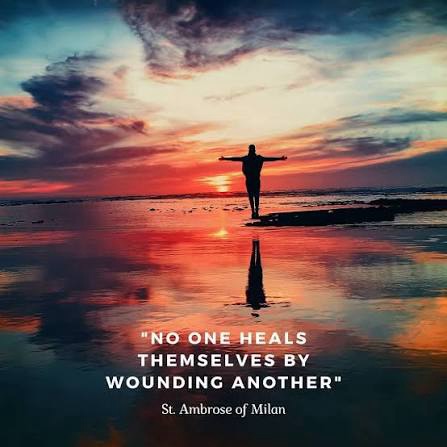
If we look at the world, ourselves, or others and only see the bad, we are making a mistake. I have done that in my past, and it led me into a dark and lonely place. It fractured my relationships. It might be human, but sin is very human too. Even in Martin Luther’s time, it was a “common evil plague that every one prefers hearing evil to hearing good of his neighbor; and although we ourselves are so bad that we cannot suffer that any one should say anything bad about us, but everyone would much rather that all the world should speak of him in terms of gold, yet we cannot bear that the best is spoken about others.” He challenged believers to: think the best of people (show them compassion and grace); to consider why in their woundedness they might be acting or speaking as they are (practice empathy); to not rush in judging (where we might fall into sin that is greater, acting as if we are God). Simply put, if we see the world in simple terms of clear good and evil, our vision is impaired. We are the one’s who choose to wound ourselves. Then like a sickness, anger, cynicism and sin can and will most certainly spread to others.
Sometimes, I find it hard not to get angry at others. Yet, when I struggle, I try to remember the warnings and encouragement of scripture and our Lutheran confessions. “We love because God loved us first.” If Jesus had not risen from the dead, if he did not promise to return, if he hadn’t said that there would be times of trial, fear and even persecution, but we would be and are ok, perhaps then scorn might be justified. Instead, we are asked to remember that Jesus is the vine and we are the branches. He’s the anchor we can trust in during any storm. Jesus has already made us victors over sin, death and the devil, and we can choose to love – love even those that don’t deserve it or love us back – no matter what happens because he loves us.
Now, I’m not saying consequences or tough actions are never needed. I’m asking, as I ask myself, “Why are we doing what we are doing? How does it reflect Christ’s own love for us?” We need not act like “everyone else.” We are to be in this world but not of it, and that’s a tough spot to be in. Yet it remains true, that we are baptized. We are forgiven and loved. We are empowered by the Spirit to be ambassadors for Christ’s kingdom no matter what political winds blow. Just as evil can spread person to person, so can the justice, peace and love of God. What will we choose to be part of in this world – a root of bitterness or blessing?
Yes, people can prove difficult, ignorant, or worse. I can’t deny it. Yet, they are only human after all. And the world can be unfair, but so is God’s grace. Despite all the storms raging around us, we have been chosen to be like the first bow God put down in the sky declaring a beautiful and everlasting peace.
Unless otherwise indicated, all scripture quotations for this article are from the New Revised Standard Version (NRSV) translation.
This pastoral letter was originally published in Christ Lutheran Church’s October 2020 newsletter.
We’ve been talking a lot about saints in our recent podcasts, “What the Halo?!” and “Halo2,” and St. George is among my favorites. Of course, slaying dragons is cool. (OK, maybe that didn’t happen.) Yet, it is also on his feast day in 2001 that I slayed bachelorhood. (That did happen. Kristine and I became engaged.)
Why get engaged on his feast day? It was during a visit to Barcelona for Taizé’s European Gathering that I recognized Kristine was my true one and only. In Barcelona, St. George’s Day is a kind of St. Valentine’s Day, a day for romance.
Spain’s tourism department explains why: “This curious festival comes from a mixture of traditions from different periods. It coincides, on one hand, with the fact that Sant Jordi has been the patron saint of Catalonia since the 15th century and on the other hand, it comes from the famous legend of Saint George and the dragon (the knight defeats the dragon, who was terrorizing the village and the princess, and after penetrating the dragon with his sword, Saint George gave the princess one of the beautiful red roses that spilled out of the beast’s body) and the old medieval tradition of visiting the Chapel of Sant Jordi in the Palacio de la Generalitat, where a rose fair or ‘lovers fair’ used to take place. This is why Sant Jordi is also the patron saint of lovers in Catalonia.”
In 1926, Spain declared the 23rd of April, the anniversary of the death of Miguel de Cervantes, the most famous Spanish writer, as Book Day. These two notable anniversaries (St. George’s Day and Book Day) became marked as one celebration. The most common gifts between those in love remains books and roses often wrapped in the colors of the Catalonian flag.
Although this year’s public celebration is hampered during this time of COVID-19, love need not be. Enjoy your day and the sites and sounds of last year’s festival in Barcelona below.
For those who attend our theology on tap meetings, Three Priests Walk in a Bar, you might recall that we originally created a special Facebook group so conversations could continue. Our producer and facilitator, Nick2, similarly invited folks to “pick apart” our gatherings conversation at a later date. We invite you to join our Facebook group and join the ongoing conversations related to our gatherings and podcasts. Here’s the second of two essays that I am sharing regarding the Lord’s Supper in response to issues raised. The live event’s topic was “Can Christians Worship Together or Not?,” Episode 3.
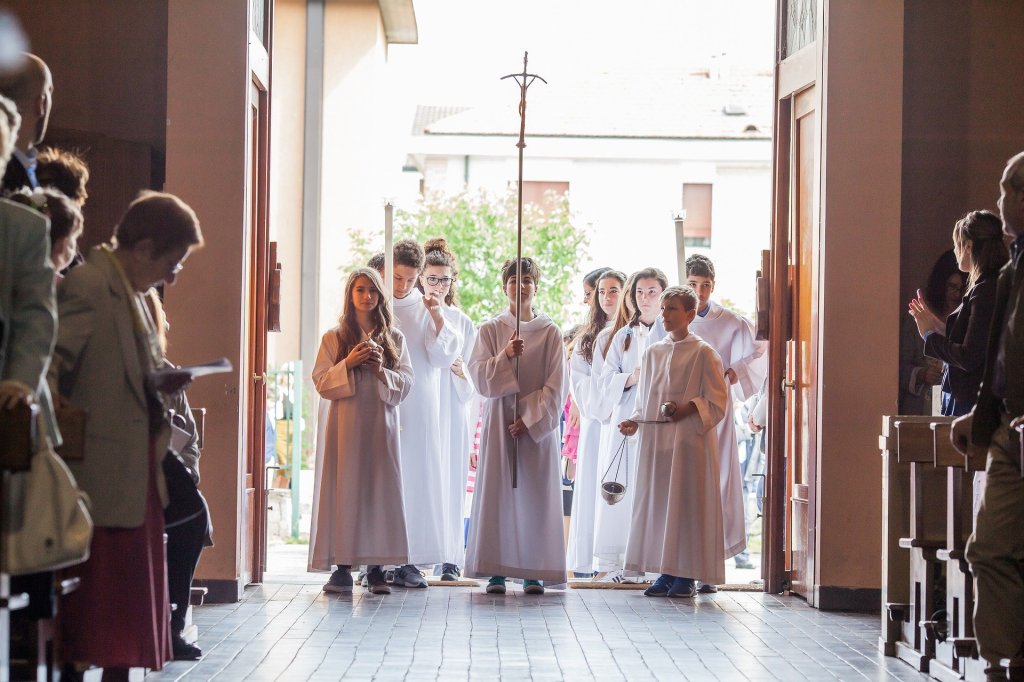
When I was a child long ago, it was a common practice to have those coming to the Lord’s Table for the first time to dress in white. It was to serve as a reminder of our baptism. Baptism and the Lord’s Supper, both means of God’s grace, are intricately linked almost as if one sacrament. Fr. Adam (Orthodox), Fr, Nik (Episcopal) and I (Lutheran) agree on that understanding.
As our last live gathering came to a close, Father Nik offered last words, passionate and extensive ones, in defense of common liturgical practice and Apostolic tradition: the unbaptized should not receive communion. I can’t say I explicitly disagree with his argument. Nor is it the first time that I’ve heard it. Yet, I do wonder about the certainty of his biblical interpretation, particularly as it comes to the Parable of the Wedding Banquet (Matthew 22:1-14). God might surprise us yet.
Fr. Nik, as many others before him, argued as if the meaning of the parable is both clear and specific. (At least to my ear, that’s the way I heard it.) One of those guests let in to the wedding banquet had refused to wear the appropriate wedding garment to the feast. Traditionally, such wedding garments were provided by the host, much as baptismal candidates were presented a white robe upon their baptism to remind them of their now being clothed in Christ. Many see the wedding banquet, an End Time symbol when we will live in the fullness of God, as also representing the Lord’s Supper, “a foretaste of the feast to come.” So, the argument goes, our faith and Baptism (the grace-filled garment) must be worn to the feast (the Lord’s Supper).
I accept the tradition and polity of the historic Church as understood by the ELCA. We do save communing for baptized members of Christ’s Church. Yet, I think it immensely important to point out (but we did not have the time to do so at our gathering) that parables are teaching stories. In Jesus’ time, they were commonly riddles and short stories used as a tool by instructors of all kind. They are meant to be wrestled with and often can have multiple answers and meanings. Despite the apparent certainty of Fr. Nik’s argument, isn’t it possible more is going on here? Isn’t it possible he (and others) have misapplied it to fit their already held liturgical and religious dispositions? What else could God be saying?
Certainly, there is no one way to understand this famous parable and its component pieces. Yes, as mentioned above, baptismal garments were offered the newly baptized (who entered the waters naked) to reflect our “putting on” Christ, our rebirth and regeneration – at least in a number of communities. Yet, that practice only became a norm after Jesus’ resurrection. In the scriptural account, Jesus was speaking to a crowd who would not necessarily make such a connection, even though later Christians might. In this point of his ministry, most of the original audience would likely have interpreted Jesus’ parable through the lens of Jewish scriptures and experience.
If you side with some scholars that argue the story might reflect later teachings of the community of Matthew, you might be assuming a great deal. Even with each Gospel witness being somewhat different, sometimes quite different, I’ve not been convinced by anyone that the writers played with Jesus’ central teachings freely to better fit their specific geographic, cultural context or the current theology. Jesus certainly could have intended elements of the story for future disciples, but that too, is hard to prove. It might be best to look for allusions and connections to the Jewish scriptures; something Jesus’ original audience (and the original audience of Matthew’s Gospel who are widely thought to have been Jewish Christians) would be familiar with. Let’s consider what he is saying to them, and that might help us make better applications today.
In Genesis 3, God made garments of skin to cover Adam and Eve, a sign of God’s grace amidst their rebellion. There are many instructions and commands regarding the use and care of religious garments in the Jewish scriptures. Garments could reflect one’s tribe and one’s purpose. In the Psalms, God’s loving activity and light is often compared to a garment. And the prophets speak of putting on the Lord’s splendor like a garment. So, the original listeners could have made many complimentary interpretations while excluding any particular allusion to Baptism or the Lord’s Supper.
Many argue that the garment at some level represents God’s love, grace, protection and works. It defines who we are and who we trust in through faith; faith itself being a gift. The garment in this parable need not be explicitly or solely connected to Baptism and the Lord’s Supper. Indeed, many scholarly and historic interpreters do not limit it in such a way. One modern Orthodox resource alluded to Baptism, but more so, the author argues we will be examined at the End of Time to see if we have shared in a life of repentance within the Church (in their mind, the Orthodox Church alone). Did we desire and accept God’s mercy? It isn’t so much about the Lord’s Supper as much as it is about our entire lives lived in faith within the holy community. Explicitly, the author asked, “Have we lived in the light we have been given?” Perhaps that proves a better understanding of the passage.
Indeed, Pope Gregory the Great argued in a sermon that ultimately the garment is God’s love. “[Jesus] came as a bridegroom to unite Himself to the Church. There was no other means than God’s love by which the Only-begotten could unite the souls of the elect with Himself. This is why John tells us: God so loved the world, that He gave His only-begotten Son (John 3:16). He who came to men for love’s sake, calls this love the wedding garment.” To him, this garment has two threads: the love of God and neighbor. As Jesus taught and recorded in Matthew, this is the greatest commandment. This doesn’t necessarily exclude one referencing the Baptism or the Eucharist, but that explicit connection seems a bit forced if Gregory the Great’s argument and many others like it hold true. Indeed, the Jewish foundation of Matthew’s Gospel might promote the greatest commandment being the preferred interpretive lens over any sacramental focus.
So, is it wrong for Fr. Nik and others to use this parable to defend the sanctity of the Lord’s Supper and how we should participate? I don’t think it necessarily is so, but there is a need for caution. It appears this parable might primarily be aimed at something quite different – a simpler application. Trust or faith in Jesus Christ might prove the preferable focus. Love and grace in light of “the fulfillment of the law” might serve as a better, more direct interpretive key. The parable might even be best understood as a warning for Christians not to take their salvation for granted as in Bonhoeffer’s arguments against “cheap grace.” Yet if one believes it to be primarily about Baptism, the Lord’s Supper, and the risk of being cast out for receiving the Lord’s Supper improperly (without being baptized, or while being ignorant or ill prepared) then there remain important questions to be addressed.
Does this mean only those who are baptized or who died as martyrs are saved? If someone receives the Eucharist in error or with bad intention or practice, are they without hope? Would that be a mortal sin? (As Roman Catholics understand it, this is a sin that leads to damnation if not confessed and repented of, but Lutherans reject such a hierarchy of sin. All sin separates us from God and one another.) Can faith be enough to save us, even the faith of those who are not yet baptized for whatever reason? Could not God choose to save those who are unbaptized whether infants or those who have not heard of Jesus yet for extenuating circumstances, even as we remain certain that through our faith and participation of the Sacraments we are saved by grace?
And what about those who have had members of the Church act as stumbling blocks to the faith, keeping the “little ones” who would otherwise believe away from Jesus, the Church and the Sacraments? In this last case, one might recall Jesus’ comment that it would be better to die with a millstone around one’s neck and be cast into the sea than be the one who kept the “little one” away. The sin appears to be on those who keep people away from Jesus, not those who are kept away (Matthew 18:6-9). There exist people historically and today who have been kept away from Christian faith through individual abuse and poor witness as well as the corporate power and influence of political and family systems in the Church. If we share in that sin as part of the Church or explicitly, does that mean we will found naked at the feast? I trust from the promises of Christ that will not be the case for us, and I suspect greater grace will be offered to others “outside” the Church than many Christians expect.
In the West (and perhaps the East), it appears historically common to have at times simply interpreted the parable as a call for faith, Baptism, and active life in the Church to include the Lord’s Supper. This doesn’t mean it is the best interpretation. In truth, pastors and theologians, Popes, Patriarchs, Bishops and councils have erred when addressing important issues. This parable was not always deemed explicitly about the Lord’s Supper, and I think it improper to present it as if it was.
To reject the garment was thought to reject God’s grace. But what is the garment explicitly? Anyone out of communion with the Church (as defined by varied dogma, councils, and cannon law; East verses West; Orthodox, Roman Catholic, Protestant or Radical traditions all interpreted differently) was often declared doomed. To not be baptized would doom you. To not receive the Sacraments “rightly” and regularly would doom you. To not believe in approved dogma and previous interpretations of scripture (even when it might be wrong) was believed to doom you. Unfortunately, real life like the parable is never so cut and dry as our too often simplistic interpretations. God’s love is cut from a broader clothe, and I am not sure any of us humans can fully discern the scope and full intentions of God’s grace in the present.
Perhaps like Martin Luther, it is best to trust in, remember, and encourage others to believe in what we know saves us (as promised by Jesus). Through revelation, we know that we are saved by grace through faith in Jesus Christ, but God might yet have mercy on whomever God wants to. If these folks are saved (shown mercy), I believe it would ultimately be because of Jesus’ sharing our lot through his life, death and resurrection. Yet with our finite wisdom, we can never really know in this life God’s full plan.
Rather than act as if we are God, proclaiming and arguing about who is or will be cast into the pit, perhaps we should be more humble. In condemning others to hell, we risk being unscriptural and walking astray ourselves. (We can address the power of the keys at another time.) Let’s not limit the power of amazing grace, when we don’t understand its full limits.
As the Church already has often done, we of varied denominations might develop policies and procedures regarding the administration of the Sacraments for good order, right theology, or for other good and loving reasons, but we need to always be prepared for grace, a gift that is often unfair and not ours to give. There might just be something more going on in the parable and with the Spirit’s activity in our lives. After all, “for now we see in a mirror, dimly” (see 1 Corinthians 13:12). Certainly, all things remain possible with God (see Matthew 26:25-26). Regarding the Lord’s Supper, God could be doing something new. It is worth talking about even as I listen to the arguments and teachings of the past.
Post Note:As with any of our theology on tap events or podcasts, please remember we are limited by both the time and format. When someone speaks authoritatively, whether me (as a Lutheran Christian), Fr. Nik (as an Episcopalian Christian), or Fr. Adam (as an Orthodox Christian), we are speaking for ourselves as best as we understand scripture and tradition from our context. We certainly can err in the moment as well. To those who listen, our teachings might unintentionally become conflated or we can appear to be in full agreement when we are not. Feel free to ask us questions after the event for further clarification.Also, keep coming back!
For those who live elsewhere, we invite you to listen to the Three Priests Walk in a Bar podcast on Apple Podcast, Spotify and more.
This
Sunday, I presided at a bittersweet wedding. The bride’s beloved grandfather
had died unexpectedly this past year, and he was sorely missed. The
grandfather’s absence was palpable, but there was a lot of joy as people shared
stories about him. As part of this celebration of ongoing life and love, the
bride’s grandmother gifted the bride with a Bible given to her at her own
wedding over 60 years ago as a remembrance to be used during the service. Among
the texts chosen was the popular John 15:9-12 where Jesus invites us to abide
in his love.
The
bride’s grandfather, John, was a very intelligent, loving, Italian grandfather,
the kind who could lovingly dote on children without spoiling them. Indeed, he
often became a surrogate grandfather to many children at my former
congregation. Not only would he give them little penny candies, he often asked
questions about their week. He would offer them advice and encouragement in
response to their answers. He was never too busy for a child.
It
had become John’s habit long ago with his own children to jokingly offer a
grade whenever a task was performed, or a challenge met. No matter how well
they did, it was a C (an average grade) – maybe on a very good day a C+.
Perhaps this was meant to challenge people to increasingly do better, or perhaps
it was offered for the laughs and smiles it would solicit as they heard this
grade and saw his smile again, and again, and again. Whatever the reason, I found
in it a loving reminder. We are all human. We can always do better, love
better, be better, and we need one another.
The
liturgical wedding service reminds all of us through its words that although life
is filled with love and excitement, it can become overcast and hard. Yet, the
service, especially the Gospel, also reminds us of an A+ kind of love. It’s a love that we can rest in and find
strength from. It is a love that helps us bear all things patiently, to wait
with hope, to accept one another as we are and not for what we would hope to
be. It is a love that grows and lasts; always protects, always trusts, always
hopes, always perseveres. It is a love that forgives and never fails. It
reflects our God who is love and loves us.
As individuals, couples or community, we
might only reach the grade of C+ on our own (even at our best), but God’s love
is transformative. It is an A+ kind of love that we can abide in each and every
day. It has the power to make our lives significant and declare us perfectly
forgiven and free.
Originally published in The Hub, a weekly email of Christ Lutheran
Church, Fredericksburg, VA.
As I think of and pray for the struggles in Baltimore, this simple chant from Taizé presented itself once again. It provides shape for my deep, inexpressible cries.
I cry out for those who mourn the death of Freddie Gray, for the police involved and those declared guilty by association, for those hurt by the riots and those hurt by historic, ongoing injustices, for all in Baltimore or places like Baltimore, for all the children of God who wound each other from their own woundedness out of ignorance or intentional malice.
Yes, we hasten in our darkness and amidst the darkness which surrounds us. We seek easy answers when love is never easy. The love of Christ calls us to love one another – even our enemy. We are to do good even to those who persecute us and always desire reconciliation. Is this possible? How shall we know if we don’t seek for it together?
People are thirsty for peace, all people. Yet for peace to happen, we need to first listen to God and one another even when difficult – without all the finger pointing and name calling; loving each other without preconditions even as we strive for justice. I have experienced such peace and witnessed such improbable miracles during and after my first sojourn with the Brothers of Taizé. It was a love that changed my life and called me out from isolation.
I learned peace is possible even now – an inner peace as well as with one’s enemy, a peace not of this world and yet within our reach. It begins with our humble and contrite heart, one we dare open to others who might reject us. Christ, too, was rejected, and yet he chose to love us to the end.
Let us search for this peace together no matter how hidden or distant it seems. We should not give up in our thirst, but instead be led onward. The darkness need not crush us.
Choose to love to the end, for the light who is Christ will reveal himself in such love. We will be refreshed. We will find new life where there was none. We’ll discover that we need not walk alone and afraid. We never did.
I invite you to pray along with this chant. The lyric translation of De noche iremos is: By night we hasten in darkness to search for living water, only our thirst leads us onward, only our thirst leads us onward.
And I close this post in prayer:
God of compassion, we give you thanks for Brother Roger’s life. In a world often torn apart by violence, through his life and those of his brothers he created a parable of communion. We give you thanks for his witness to the Risen Christ and for his faithfulness right up until death. Send your Holy Spirit upon us, that we may also be witnesses to reconciliation in our daily lives. Make of us builders of unity among Christians where they are separated, bearers of peace among people when they are opposed. Help us to live in solidarity with those who are poor, be they near or far away. With Brother Roger we would like to say: Happy those you abandon themselves to you, O God, with a trusting heart. You hold us in joy, simplicity, mercy.
(Prayer written by Brother Alois to commemorate the 100th anniversary of Brother Roger’s birth)
This fall has seen a flurry of activity at Messiah: new audio-visual assets installed in the sanctuary; a very successful and well attended effort during God’s Work – Our Hands Day; a growing craft fair and pet blessing; wonderful and numerous contacts made at the county’s community fellowship festival; and of course an attention getting but very helpful effort by Kevin Hendrickson and our Virginia Synod team at Over the Edge for Special Olympics. I could make a longer list if I cared to do so. In short though, it has been a busy but productive time, and it couldn’t have happened without your support. I give thanks to you and our God for all the mighty things that God has accomplished through our small church family and its shared ministry.
As we continue into November, things will seem only to get busier. I would encourage all of us (me included) to not get lost in the hustle and bustle. Turn toward God and his church instead. Remember we were created to be human beings, not human doers. God reminds us, “Be still and no that I am God” (Palm 46:10). Let’s take time to reconnect with friends and family, as well as our family of faith. Let’s take time to be together and to rejoice in the love that we share. If you have been away, we invite you to come back and join our celebrations. Let’s give thanks together.
The truth remains, we need one another, and the world needs our witness. As Jesus reminds us, “Wherever two or three are gathered in my name, I am there” (Matthew 18:19-20). Yet also we are told that we proclaim the risen Christ through our gatherings, service and celebrations. “By this all people will know that you are my disciples, if you have love for one another” (John 13:35). Jesus needs to be invited into our lives and thus made manifest in the world. Do you already sense his presence, or is he perhaps inviting you to seek him out? Either way, we’ll find our place at his table when we live as church together.
I pray that the holiday season ahead serves to bless you to be a blessing to your family, your congregation, and the world. Come, taste and see that the Lord is good; his love endures forever. His love is at work in you.
Happy Thanksgiving!
Pastor Lou
This post was originally published in Messiah Lutheran Church and School’s newsletter, The Messenger (November 2014).
Unless otherwise indicated, all scripture quotations for this article are from the New Revised Standard Version (NRSV) translation.
Then Jesus said to his disciples, “The harvest is plentiful, but the laborers are few.” (Matthew 9:37)
It is harvest time again! After a milder summer with a good amount of rain, I see many gardens overflowing. Nearly a ton of fresh vegetables have been harvested in All Souls’ community garden alone to feed our hungry neighbors. More is likely to be harvested throughout September. We are blessed to share in that effort as well as that of our community food pantry, MCEF.
Yet, we have neighbors who hunger for much more than food. In the upcoming months, we’ll need to feed the souls of those participating in worship, as well as others longing for the word of God through our Christian formation programs and witness. We’ll be asked to help Hanover Habitat in its mission to provide affordable, quality homes to our neighbors. We’ll seek to help the local Gideon’s comfort and enrich travelers, military members and others by providing Bibles. We’ll be feeding the intellect, heads, hearts and stomachs of our preschool and after school students. We’ll be actively preparing our house of faith to better welcome those with physical and intellectual disabilities. At times, we’ll be visiting the sick, suffering and dying. At other times, we’ll celebrate God’s creation through arts and crafts as well as our pets. At all times, we’ll continue to walk with our homeless brothers and sisters – especially those in our congregation – toward greater stability and renewal. This is just a short list of the harvest our shared ministry yields all year long. As busy as it may get, we are asked by Jesus to love one another, so we’ll plan to have some fun together too.
I once saw a sign that said, “Church is a verb.” As a past English major, I can’t strictly agree with that, but I do agree wholeheartedly with the sentiment. We are the church. We were created to be living, growing beings who share a living, growing faith in active community. We are God’s hands and feet, and our faces shine upon others with the love of God.
If you have been away, distracted, or just plain unavailable, think about returning once again to the mission field with us. We invite you to worship, bible study, prayer and service, but I think you’ll find it filled with fellowship and fun. Your life will be enriched along with the lives of others. It is as scripture tells us, “Faith without works is dead.” Instead, Jesus’ desires to offer us an abundant life; one so full of love that it overflows to bless the lives of others. Even our most humble attempts to share faith, hope and love will even be used to usher in the kingdom of God.
Trust that our labor together will not be in vain, for it is God who sends us. Why not come, taste and see? Why not have your vision and sense of family and purpose renewed? Welcome back to another year at Messiah Lutheran! Let’s roll up our sleeves and get to work.
Learn about upcoming events and more at mlcas.org or our news pages. (Be sure to check out the “more news” tab for hot off the press information.)
Originally submitted for Messiah Lutheran’s newsletter, The Messenger (September 2014).
Unless otherwise indicated, all scripture quotations for this article are from the New Revised Standard Version (NRSV) translation. This post was first published in The Messenger, the newsletter of Messiah Lutheran Church (June 2014).
Husband, Pastor, Law Enforcement Chaplain, and member of the Clerical Errors (aka "The Three Priests"), I'm sharing my two cents with anyone who cares...
You can also find me on social media as Loudluthrn (Lou-d-Luthrn or Lou the Lutheran). It is a moniker given me while attending a Presbyterian Seminary, but I'm a loud and proud Lutheran too (just not too loud and proud, mind you).







 2pennyblog