Category Archives: Lectionary

Shedding a Light on Candlemas

An audio version of this post can be found here.

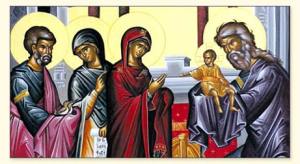
There’s definitely some confusion when it comes to Candlemas each February 2. Not only is it overshadowed by Groundhog Day, but it also remains rather obscure to many modern Christians and most certainly non-Christians. Candlemas is perhaps most properly or commonly called the Feast of the Presentation of Jesus. The Church remembers Mary and Joseph taking Jesus to the Temple forty days after his birth to complete Mary’s ritual purification after childbirth and to perform the redemption of the firstborn son as reported in Luke 2:22-40.

Photo by Sixteen Miles Out on Unsplash; licensed under CC0.

Candlemas is an old feast of the Church, a kind of holiday or holy day one might say. Normally, a feast day commemorates a person or event. Unfortunately, with Candlemas, it appears multiple, closely related meanings have been attached to it over the centuries and events perhaps merged. In a web search, you will quickly learn that Candlemas can not only be called Feast of the Presentation of Jesus, but it can also be known as the Feast of the Purification of the Blessed Virgin Mary, or the Feast of the Holy Encounter.

In Leviticus 12:2-8, we learn “A woman who becomes pregnant and gives birth to a son will be ceremonially unclean for seven days, just as she is unclean during her monthly period. On the eighth day the boy is to be circumcised. Then the woman must wait thirty-three days to be purified from her bleeding. She must not touch anything sacred or go to the sanctuary until the days of her purification are over.” (There are separate requirements for the birth of a girl child.) For the male, a year-old lamb was to be offered for a burnt offering and a young pigeon or a dove for a sin offering. If the mother and her family could not afford a lamb, she was to bring two doves or two young pigeons, one for a burnt offering and the other for a sin offering. God was thought to be a God of life. Things that smacked of death and illness such as blood were deemed unclean. In sacrificing the offering as part of the ritual in faith with prayer, the priest was thought to be atoning for any of her sins. A person was being made fit to be in the presence of God and among God’s Holy People.

The first male child held special significance to the early Hebrews. With their cultic life and practice centered around priestly activities and offerings relating to the Ark of the Covenant and Ten Commandments, members of the twelve tribes were expected to support the work of the Tent of Meeting and later the Temple in Jerusalem. As the people became more numerous and the cultic practices more established, it was recognized that not every first male child need to serve with the priests. Indeed, sometimes families making a subsistence living might need him more just to survive.

Exodus 13:2-15 describes another ordinance. Through Moses, God was believed to have commanded, “Consecrate to me every firstborn male. The first offspring of every womb among the Israelites belongs to me, whether human or animal.” All the firstborn males of their livestock were also to belong to the Lord. When people asked why, they were to explain, “Pharaoh stubbornly refused to let us go, the Lord killed the firstborn of both people and animals in Egypt. This is why I sacrifice to the Lord the first male offspring of every womb and redeem each of my firstborn sons.”

In Numbers 18:15-16, it says, “The redemption price for firstborn non-Levites was set at 5 shekels.” Today, this practice is known as the pidyon haben, the redemption of the first-born son, and silver coins are used. It is only conducted for male babies but not if the baby was delivered by cesarian section. In effect, the father “buys” or “redeems” his son from the priest and the expected, traditional service. (The Temple no longer exists, so it is more symbolic than in the past.) At least under rabbinical practice today (if not earlier), this obligation only exists if the parents are not Levites or part of the priestly class.  In a quick review of scripture, I see no date for this to be held in scripture, but today the obligation begins when the baby is 30 days old, and so the ceremony often occurs on the thirty-first day after birth. If included parents do not redeem the child for whatever the child becomes responsible for his own redemption at thirteen years of age. (See the article Redeeming firstborn sons for more details.)

Certainly, Luke seems to confuse these two practices – the redemption of the first male child and the purification of the mother forty days after birth. In fact, Luke has the fee for the purification of the mother become the redemption price for the son. Remember, Luke did not observe these events. He was a Greek doctor who had come to believe in Jesus and served with Paul for a time. To me, it certainly seems reasonable that he didn’t fully understand Levitical codes. I’ve read some articles suggesting that there was no such custom of presenting a Jewish male child in the Temple back in the first Century, but with the redemption needing to be made to a priest, perhaps a child need not be there, but I would certainly not be surprised if a family did. I see no reason to doubt the ultimate truth of the passage. Jesus was presented in the Temple. Simeon and the prophet Anna could have certainly encountered Jesus and through the Spirit’s revelation understood his import. (Hence, Candlemas can also be known as the Feast of the Holy Encounter.)

Whether we focus on some kind of presentation of Jesus including most likely the story of his redemption, the purification right of Mary, or Jesus being revealed as the Messiah to Simeon and Anna, I hope we remember all these early stories and practices amidst their variations. They help make Jesus and his family come alive in context of their time. February 2 being forty days Christmas remains the perfect day to do so. Indeed, as I have written elsewhere, the date was once was considered the end of what was called the Season of Epiphany, and any remaining Christmas greens were taken down. (Today, most denominations don’t have a season of Epiphany but have January 6 as the Feast of Epiphany and what is now called the start of the Season after Epiphany.)

So that all said, with all those names and remembrances possibly now making more sense, why is the day also called Candlemas? Well, in past days, Christian families would commonly bring candles to the church as we remembered Jesus as “a light for revelation to the Gentiles, and the glory of [God’s] people Israel.” Much as we bless food to our use or dedicate worship items through prayer, families would ask that the candles used in the home for light be blessed.

Happy Candlemas everyone! As Jesus urged, “let your light shine before others, so that they may see your good works and give glory to your Father in heaven.”

Unless otherwise indicated, all scripture quotations for this post are from the New Revised Standard Version (NRSV) translation.

© 2022 The Rev. Louis Florio. All content not held under another’s copyright may not be used without permission of the author.
Leave a comment

Filed under Church History, Lectionary, scripture, worship

Candlemas for the young family (And the young at heart)

presentation

What a wonderful opportunity to rejoice in the light of Christ once again – Candlemas!

Candlemas is actually the Christian “Feast of the Presentation of Jesus at the Temple.” The Holy family had come to the Temple to fulfill the Law of Moses. Forty days after the birth of the male child, Mary’s ritual purification and the redemption of the firstborn son were due to be performed. Being a poor family, only a pair of turtledoves or two young pigeons needed to be offered to God.

Yet while they prepared to do so, two elderly, faithful people, Simeon and Anna, saw something else going on beyond the sacrifice. God was doing something much greater and offering something much dearer. God was doing something new. The Spirit revealed to them that God’s light had broken through the darkness. The infant, Jesus, was the long awaited Messiah and nothing would be the same ever again. Jesus, our joy and salvation, had come into the world!

This feast day comes forty days after Christmas and historically closed out the season. The remaining Christmas greens would be taken down. The days were still short and nights long. Spring was, well, yet to be sprung. And so this day came to serve as reminder that, “The light shines in the darkness, and the darkness did not overcome it” (John 1:5).

In time, it became a practice to bless the candles to be used in church during the coming year. Later, families would bring their own candles to church for a blessing. Hence, we now have the alternative name for the feast day, Candlemas.

candlemas at home

Using resources from Evangelical Lutheran Worship and the Revised Common Lectionary, your family can easily mark this day and your own baptismal call. The following is a short ritual I offered my congregation for home use:

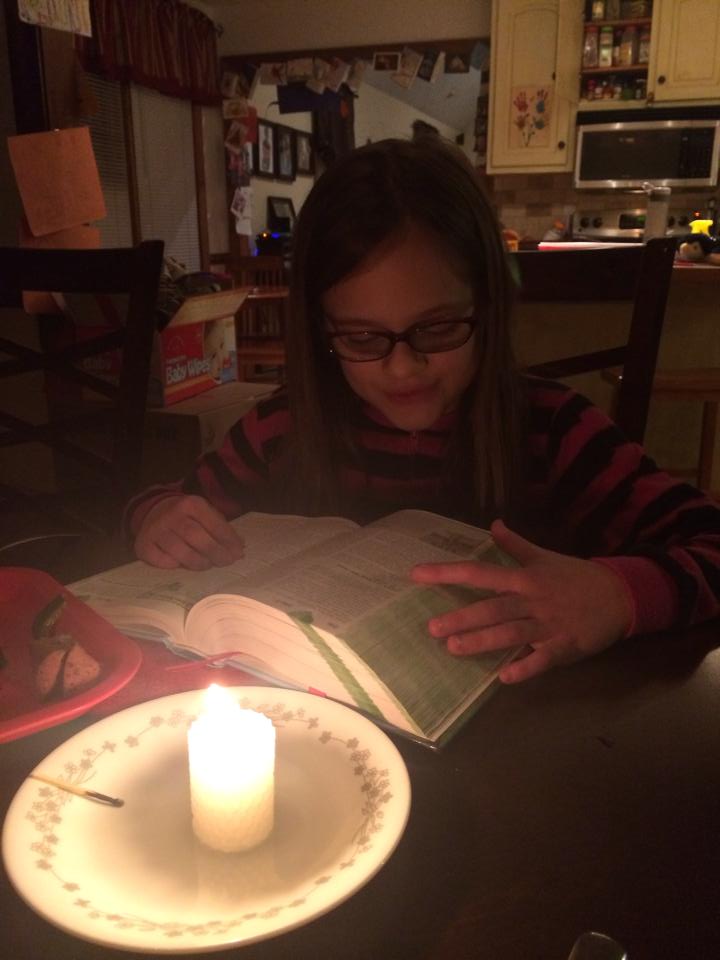
As the family gathers for a meal, before bed or at another convenient time, light your candle.

All: Alleluia. My eyes have seen your salvation, which you have prepared in the presence of all peoples. Alleluia.

Leader reads: Luke 2:22-40

A short reflection may be shared, or discussion time, or even a brief moment of silence to reflect in the light of the candle. When finished…

Leader: Let us pray together…
All: Almighty and ever-living God, your only-begotten Son was presented this day in the temple. May we be presented to you with clean and pure hearts by the same Jesus Christ, our great high priest, who lives and reigns with you and the Holy Spirit, one God, now and forever. Amen.

Leader: “Let your light shine before others, that they may see your good deeds and glorify your Father in heaven.” Go in peace to love and serve the Lord.
All: Thanks be to God.

Optional –

Close the gathering with a hymn or song dealing with light, perhaps “This little light of mine.”

This might also be a wonderful time to take out any saved baptismal candles and reflect upon the meaning of our individual baptism and talk about events of that day.

As better candles are made of beeswax, perhaps make a beehive cake to help your family celebrate.

A quote from John Chrysostom comes to my mind, “The bee is more honored than other animals, not because it labors, but because it labors for others.”

As we look upon our candles this Candlemas, let us urge our children (and all the children of God) to not waste time just being “busy bees” chasing things of this world. Let us instead love God and neighbor. Then, our lives will be used to build the Kingdom of God with Jesus. His light will come to shine through us.

Happy Candlemas, everyone!

early behive

Unless otherwise indicated, all scripture quotations for this article are from the New Revised Standard Version (NRSV) translation.

© 2015 The Rev. Louis Florio. All content not held under another’s copyright may not be used without permission of the author.

Leave a comment

Filed under Church History, Community Life, Lectionary, worship

Jesus is Risen! Now what?

empty_tomb

We welcome Easter morn with shouts of “Jesus is risen. He is risen indeed!” As they echo through our sanctuary, I wonder if that truth will continue to resonate through our lives. Jesus is risen, we proclaim. His resurrection is to be a new, ongoing reality for us; one that changes our actions and very being. This is present tense, touching our here and now; in our lives, our world, and his holy universal church.

Yet like those first disciples surprised by the empty tomb, we can instead get lost in that past moment of time. The resurrection tends to serve as a historical marker rather than a living sign for our present reality. We remain stuck in our shock and fear trying to make sense of things. What can such a resurrection mean? Perhaps more so, what can it mean for me?

Soon after that first Easter morning, Peter preached that Jesus was not abandoned to the realm of the dead, nor did his body see decay. Paul explains to us in many of his letters that through faith the power of that resurrection makes us a new being, a child of God, and we will be heirs to Christ’s victory to share in that resurrection forever.

This is all true, yet neither great Apostle came to understand the resurrection as a singular past event or one all about our far off future with Christ. Instead, the Risen Christ and the Holy Spirit woke them from their initial shock. It was revealed that they were to share in the living resurrection for eternity – starting now. Christ’s light is to shine through us as we walk with him and talk with him, but unlike that old Gospel song (In the Garden), we cannot tarry there.

Jesus instead tells us, “I have come that you may have life, and have it abundantly.” This resurrected life isn’t one found by standing alone; mute and in shock. It isn’t a life solely about what Jesus can do for us as individuals or a community. It calls us to action.

The resurrected life that we are invited to share is one of living relationship. It is one of service, fellowship, and corporate worship. It is one where we seek to follow Jesus each day and introduce him to others. It is one where we might even be called to share in the sting of Christ’s sacrifice and cross out of love.

Let’s not just stand here pondering. Let’s live like we believe in the resurrection. As the Father has sent him, he sends us now. Among the greatest miracles, Jesus has chosen to make the resurrection universal and eternal through our own unworthy love and lives. We must now go and share that miracle with others, for Jesus is truly risen in us. We are to live as his risen body, a resurrected people, forever – starting now.

Christ’s peace be with you always,
Pastor Lou

Unless otherwise indicated, all scripture quotations for this article are from the New Revised Standard Version (NRSV) translation.

© 2013 The Rev. Louis Florio. All content not held under another’s copyright may not be used without permission of the author.

2 Comments

Filed under Church History, Lectionary, Liturgical Year, Pastoral Letter

Where in the world was Jesus on Holy Saturday?

Harrowing of Hell
Harrowing of Hell

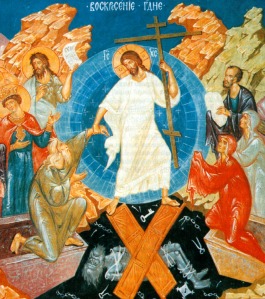
As the Passion ends, we leave with Jesus laid in the tomb. Was he asleep? No, scripture clearly strives to prove and proclaim that Jesus truly died on that cross. Did he go to heaven? Actually, scripture leads us to believe that Jesus was somehow still miraculously at work but not in heaven.

Our Lutheran confessions state that “we believe simply that the entire person, God and human being, descended to Hell after his burial, conquered the devil, destroyed the power of Hell, and took from the devil all his power.” (See Solid Declaration, Art. IX.) Luther seems to have believed it an ultimate mystery that Jesus descended. Nothing tells us if he did so in “humiliation” or in glory, but we should just believe the faith in which we baptize (see the Apotles’ Creed: Jesus descended into  sheol – in Hebrew the place of the dead, sometimes called hades).

Early Christianity believed this and scripture alludes to it in such passages as 1 Peter 3:18-20: For Christ also suffered for sins once for all, the righteous for the unrighteous, in order to bring you to God. He was put to death in the flesh, but made alive in the spirit, in which also he went and made a proclamation to the spirits in prison, who in former times did not obey, when God waited patiently in the days of Noah, during the building of the ark, in which a few, that is, eight people, were saved through water.”

In the Old English, harrowing was the term used to describe Christ’s descent. Ancient icons often show Jesus amidst previous saints of the Jewish Testament, standing on the gates of sheol now opened. The gates are often an “X” or Chi in Greek, reminding us that Jesus is Χριστός, or Christ – the Annointed One and our Messiah come to save us from sin, death and the Devil.

Christians may debate whether Jesus entered triumphantly or suffered more indignities, but mainstream Christianity looks to both scriptures and the faith handed down to us. Jesus’ entrance into the grave was not the last of his journies for us. With sundown, his burial was complete. The Jewish sabbath had begun, and Jesus went to work. The Saturday of our Holy Week is indeed good (holy), and we rightly rejoice even as we wait for the Day of Resurrection. Jesus has come to save all his people.

Unless otherwise indicated, all scripture quotations for this article are from the New Revised Standard Version (NRSV) translation.

© 2013 The Rev. Louis Florio. All content not held under another’s copyright may not be used without permission of the author.

Leave a comment

Filed under Lectionary, Liturgical Year, saints

There is no shame in humility

Italy Vatican PopeA response to “Pope’s foot-wash a final straw for traditionalists” as reported by the AP

Within an ancient culture that didn’t count women during the government census or necessarily notice or respect them in the home, it is not a real shocker the bible doesn’t often mention women.

Despite this, it remains most probable that women were an important part of Jesus immediate community and present at his final Passover Feast. Matthew reports that at the feeding of the 5,000, the count did not include women and children.[i] Or later, Matthew shares that women who “had followed Jesus from Galilee to care for his needs” watched as he died.[ii] (Was this perhaps after preparing and sharing in his last Passover Feast?). There are other attestations from other Gospel writers as well which some see as supporting that women were among his disciples and active in his ministry.

Whether you agree or not, or think women had their feet washed by Jesus or not, Jesus’ greatest intention on Maundy Thursday was to teach us to love and serve everyone (“one another”) as he had us. After all, Maundy comes from the Latin word mandatum (meaning “commandment”), and it was used in the early Latin Vulgate translation of John 13:34: “I give you a new commandment, that you love one another. Just as I have loved you, you also should love one another.” Using scripture to interpret scripture and seeing Christ’s own example, it is hard to argue that this command to love only covered Christians. Christ longs for his family to grow.

Yes, this final teaching echoed Jesus’ earlier ones. What’s the greatest commandment?[iii] Who is our neighbor?[iv] Jesus reached out to all those marginalized by society whether Jewish or not. We are not to become their stumbling block.[v] We are to let “the children” come to Jesus.[vi] Indeed, we are to love whoever might be thought as “the least of these” – perhaps children, inmates, the poor, women (in many cultures still), anyone we tend to label as “sinners”, and non-Christians. Matthew is said to have been the most Jewish of the Gospel writers; at least his writings reflected many Jewish teachings and responded to many Jewish biases about their being the chosen ones of God. Yet, he shows Jesus to be incredibly open and loving to all. Jesus longs for relationship!

Despite this, some traditionalist Roman Catholics have become more and more vexed by Pope Francis’ election and recent behaviors. He has cast aside signs of regalism. He has acted in ways lifting up the priesthood of all believers. He has expressed openness to Protestants, Orthodox Christians, and people of other faiths entirely. As in Argentina when a Cardinal, Pope Francis seeks simplicity, and he lives that way. Not the least of their issues with him, many traditionalist have expressed “the horror” (not my word, but often found in their tweets and posts) that the Pope would wash not only the feet of a juvenile women who happened also to be a prisoner, but in one case was Islamic. “He cultivates a militant humility, but can prove humiliating for the church,”[vii] Fr. Bouchacourt, head of the traditionalist, schismatic St. Pius X Society, said. I have seen similar less than charitable comments by other traditionalists, even from some of those who haven’t broken from the Roman Catholic hierarchy but instead claim to love and obey it. Some even suggest Pope Francis’ behaviors are just a show in violation of scripture.[viii]

If signs of humility are embarrassing to the Roman Catholic Church, then I bluntly but in love suggest these folks take a look at Jesus’ own behavior. Jesus often intentionally exemplified his teachings through public behaviors. That’s what teachers and leaders need to do. Jesus prayed in public at times not for his own sake and not for a show, but so that others could be comforted and learn of God’s love.[ix] He purposefully embodied earlier prophesies to help reveal his identity, such as by riding a young donkey into Jerusalem.[x] (Certainly, Palm Sunday was quite a spectacle.) Some of the same conservatives – those who were so protective in promoting the sanctity of the conclave and agressively argued that the election process was in the Spirit’s presence and following God’s will – turned on Pope Francis that first night.

Even as a Lutheran, I would agree that the Spirit is involved in leading the Roman Catholic Church, but I would also argue the Spirit seeks to guide all other denominations as well. Institutions made of fallible humans can err (a very Lutheran attitude to be sure), but we still remain Christ’s church. Despite the historic divisions of the universal church, Pope Francis holds one of (if not the most) prominent positions of Christianity. To be ashamed of such humble, public actions that so many “of the least” will take notice of seems the real shame to me.

This Lutheran says, “Good for Pope Francis!” Perhaps I shouldn’t care so much, but I (like countless other Christians) hope and pray for the coming reality of Christ’s own prayer that we live as one.[xi] We are the church together, not our denominations, through the grace of our shared faith and baptism. I humbly support my brother Francis in his efforts to make Christ’s love known in the entire world.

After all, Jesus asked us to love and support one another. He never said with our human minds, hearts and ways that we always would agree on everything.

Postscript: Vatican responds to complaints: http://bit.ly/Z02evs


[i] See for example Matthew 14:13-21.

[ii] See for example Matthew 27:55-57.

[iv] In response, Jesus taught about the Good Samaritan. See Luke 10:29-37.

[v] Read Matthew 18.

[vi] See for example, Matthew 19:14.

[viii] See for example Matthew 6.

[xi] See John 17.


Unless otherwise indicated, all scripture quotations for this article are from the New Revised Standard Version (NRSV) translation.

© 2013 The Rev. Louis Florio. All content not held under another’s copyright may not be used without permission of the author.

2 Comments

Filed under Community Life, Lectionary, Liturgical Year, Theology, Uncategorized

In those desert times

The Judean desert from Jerusalem the Movie (expected in 2013)

The Judean desert from Jerusalem the Movie (expected in 2013)

“From early Biblical times to the Middle Ages to the Present, the rugged, isolated beauty of the Judean Desert (Midbar Yehuda) has long attracted those seeking refuge, solitude or spiritual inspiration. According to the Bible, the prophet, Elijah, King David, John the Baptist, and Jesus all spent time here. Herod the Great built two fortresses here, Herodium and Massada, and during the Byzantine period (6th century A.D.), magnificent monasteries were built into its cliffs and rock crevices. Bordered by the Judean Mountains to the West and the Dead Sea to the East, the Desert’s 1,500 km landscape features canyons up to 500 meters deep and cliffs up to 300 meters high. Arid hills and valleys are contrasted with ancient springs that create oases such as Nahal Arugot, Nahal Prat, and Nahal David. It’s no wonder that this breathtaking, harsh and often surprising place has held the attention of so many for so long.” – as posted by Jerusalem the Movie on Facebook, March 8, 2013

Coming across the above picture of the Judean desert got me thinking…

As we walk these forty days of Lent, we remember the forty years that the Jewish people wandered in the desert due to their wandering hearts, as well as Jesus’ own forty days there fasting. As the note with this striking picture attests, the desert has often been a fruitful place for the people of God. Sadly, we need not travel far to find desert times in our lives. This can be so even when we practice “proper disciplines” and actively seek out God. Even in France, Br. Roger often compared the beautiful community, ministry and village of Taize’ to a desert, for no matter where we are, we can feel at times parched and long for the water of God.

I entered such a time once again this past week. Already tired from a new ailment recently diagnosed, I had two members of my congregation die within two days. During that same time, my mother called in tears to let me know my aunt had died. My mother’s melancholy increased as she came to realize she is the last of her generation in our family. My own grief grew as I realized that I couldn’t respond to New England to support her and my cousins due to my illness. Just when I thought I had had enough, I heard more tragic news – a member of my former police department had been shot during a traffic stop.

I remember well how such incidents tear at the heart of the entire police community. In fact while already grieving the present, I found myself thrust back in time to attend to other wounds now reopened. My soul cried out for my friends and the entire agency. I wondered, “Is it someone I knew?” I grieved anew the losses I remembered while serving with the Alexandria Police Department and elsewehere. I felt sad. I felt physically sick. I felt terribly and utterly alone in those moments.

Throughout the day, I prayed. I watched and wandered through my day. Yet, God seemed far away. Words of friends and family didn’t (couldn’t?) fully console me, and I longed for my hidden God. Yet all the while, many long past experiences reminded me of God’s faithfulness. Amidst the darkness, I clung to the light and love experienced in those times and the written promise of the steadfast love of God in scripture like a life preserver.

As the Bible assures us and Martin Luther reminded us, don’t trust our eyes, reason, or feelings. Trust Jesus. Hold onto him trusting that he will prove true to his promise that he holds on to us, guides us, and love us – always. As one of my favorite fictional crime fighters, Cadfael (a medieval monk and Sherlock Holmes rolled into one), was prone to say, “Sleep well, for God is awake.” Yes, even when we haven’t the strength to raise our heads, God looks kindly upon us. Life may still prove hard at times, but God’s love proves everlasting.

Since that day, I have been thinking a lot about my wandering, human heart. I am grateful that the officer shot is recovering. I am grateful for the spouse, family, friends, and congregation that joined me in prayer and waiting. I am thankful for the God who once again reminded me during a time of desert that our wanderings will come to an end, and healing will be ours.

Yet, another officer has been shot in Virginia and died; this time a Virginia State Trooper. Others in my congregation have faced new losses, and because I love them, I suffer with them. Still I hold on and wait, for to whom else can I go? Why should I hide? Instead, I’ll seek to serve, and worship, and love while I wander, for I’m called to live. I will find life within Christ’s community the church. I’ll seek to share hope and life outside of it. This desert time will end, for Jesus has already spoken the words of eternal life. Amidst the savage beauty of our desert wilderness, I trust we’ll discover the wonderous truth that Jesus never lies.

Through Isaiah, we hear God promise that our desert time can only lead to new life. Let’s, together, seek to remember these words as we walk on:

“The poor and needy search for water, but there is none;
their tongues are parched with thirst.
But I the Lord will answer them;
I, the God of Israel, will not forsake them.
I will make rivers flow on barren heights, and springs within the valleys.
I will turn the desert into pools of water, and the parched ground into springs.
I will put in the desert the cedar and the acacia, the myrtle and the olive.
I will set junipers in the wasteland, the fir and the cypress together,
so that people may see and know, may consider and understand,
that the hand of the Lord has done this,
that the Holy One of Israel has created it.” (from Isaiah 41)

Indeed, and the Holy One has created us as well. His hands will never let us go.

This is a trying time for all those in Virginia’s law enforcement community. Please keep all of them and their families in your prayers. If you would like to learn how you can better support law enforcement in your community during times of death and beyond, consider visiting and supporting:
Concerns of Police Survivors
National Law Enforcement Memorial Fund
International Conference of Police Chaplains
or, contact your local police agency to volunteer.

If you would like to help the Laboy family, you can drop off a donation at the Alexandria Police Department, 3600 Wheeler Avenue  Alexandria, VA 22304 or send a donation to:
Alexandria Police Association
c/o Peter Laboy
P.O. Box 1228
Alexandria, VA 22313

The Alexandria Police Association has also established a PayPal account for those who wish to give by debit or credit card.

If you wish to make a monetary donation to honor the memory of Trooper Walker, the Walker Family is asking you to make them to the Virginia State Police Association Emergency Relief Fund.

Thanks to Jerusalem the Movie for allowing me to use their photo. They remain in sole control of its use. The movie is due for worldwide release in 2013. Visit their website, follow them on Twitter or Facebook, and be sure to see it when released!

Unless otherwise indicated, all scripture quotations for this article are from the New Revised Standard Version (NRSV) translation.

© 2013 The Rev. Louis Florio. All contents not held under another’s copyright may not be used without permission of the author.

6 Comments

Filed under Community Life, Law Enforcement, Lectionary

Is Lent biblical?

Palm Sunrise at Viera Wetlands (Some rights reserved by photographer, Used by permission)

Palm Sunrise at Viera Wetlands,
by Matthew Paulson
(Some rights reserved by photographer, Used by permission)

The following sermon was preached during our Ash Wednesday service at Messiah Lutheran Church and School on February 13, 2013.

Texts:
Joel 2:1-17;
2 Corinthians 5:20b–6:10;
Matthew 6:1-21

Grace and peace to you from God our Father and from the Lord Jesus Christ. Amen.

Every year as we approach Lent, I am surprised at how many comments I hear or read about indicating that “Lent is not biblical.” When I come across such comments, I bristle a bit. I feel disappointment and frustration, and yes, sometimes even some anger when the person is particularly snarky about it. Of course, it isn’t biblical! No one is claiming that the season of Lent is biblical. It is no more biblical than Christians arbitrarily deciding upon December 25th as a good day to remember Jesus’ birth is biblical – not in the strictest sense anyway.

Yet, I fear these folks are missing the forest for the trees. They are sadly missing an opportunity to be blessed. There is no specific call for Lent in the Bible (no one is arguing that), and still, isn’t it remarkable that the earliest Christians found designating such a season spiritually helpful? During these forty days (not counting Sundays which are remembered as days of Resurrection), special disciplines are encouraged as they serve to nurture faith in the individual even as they might serve to witness to our faith and grow Christ’s Church. This season…a season designated by the community of faith for the good of all and to honor God…was found to be a meaningful, beautiful time of preparation for Easter. So, it became a yearly practice and was given a suitable name. The season became known as Lent, an old English word meaning spring.

Yes as with spring, we may witness new growth and new life during Lent. This is what we hope for during these forty days, but we may prevail upon its disciplines at any time of year. Such disciplines don’t lead to a reward for our goodness. They aren’t something we do to become holy, for we cannot become holy by our own power. Instead, such practices become our opportunity to “live in Christ” – to live out our faith concretely nurturing our love for God and others and thereby offering us a chance dwell in God’s grace and love for us. It is for that reason that we find such disciplines commended in the Law and the Prophets, and even by Jesus himself.

The Psalms[1] are filled with such spring-like imagery as are the prophetic texts[2], and some of Jesus’ own parables[3]. Our life with God is always filled with bounty and blessing, often symbolized by natural things: the streams that refresh us; or the trees that serve as protection or a home for God’s beloved creatures. For the many disciplines of Lent – reflection upon one’s life and repentance, fasting, prayer, and most certainly almsgiving and acts of mercy – they can become like the tall cedars of our faith providing us a safe dwelling place in this world of trouble…a place of comfort and shade, strength and renewal. Amidst their many branches, God embraces us. God can even transform us. This Lenten invitation to take actions rooted in our faith in Christ serves only as a reminder of what Paul said in his letter to the Romans, “God’s kindness is meant to lead us to repentance.”[4] It leads us toward a deepening unity with Jesus, both his life and in his church.

Indeed as someone said recently, “Ashes don’t say we’re holy. They say we’re sinners.” They are to reflect the ongoing prayers of our hearts, “I’ll try to be better. I’ll do what Lent asks: more prayer, more sacrifice, more almsgiving.”[5] Western Christians whether Roman Catholic or Protestant desire to remember their total reliance upon God’s grace. “Remember you are dust, and unto dust you shall return,” we are told. This life is fleeting, sometimes dangerous, and we at our best are only sinner-saints.[6] We need the grace of Jesus Christ to help us make it through. The church as a community, as the body of Christ, commends these practices to us. Through them, we may be built up by God and encouraged to build up one another.

Using varied words throughout Christ’s diverse and universal Church, we hear as much during community worship on Ash Wednesday. For example, the Episcopal Book of Common prayer (not too unlike our Lutheran commendation to a holy Lent heard earlier tonight) rightly proclaims, “The first Christians observed with great devotion the days of our Lord’s passion and resurrection, and it became the custom of the Church to prepare for them by a season of penitence and fasting. This season of Lent provided a time in which converts to the faith were prepared for Holy Baptism. It was also a time when those who, because of notorious sins, had been separated from the body of the faithful were reconciled by penitence and forgiveness, and restored to the fellowship of the Church. Thereby, the whole congregation was put in mind of the message of pardon and absolution set forth in the Gospel of our Savior, and of the need which all Christians continually have to renew their repentance and faith.”[7]

So, we begin this season of Lent with ashes – a broken, struggling people – but also gathered together as one holy people of God. Our sin is systemic, shared and individual, but we are also chosen and loved. God plans for our redemption. In a time of trial for the nation of Israel, Joel commended these same types of behaviors.[8] By their apathetic faith, unholy alliances with powers of this world, and acts of selfishness and sin, the people of God were at risk in those days. They were weakened as a nation by such behaviors, and a terrible plague of locusts put them further at risk – at risk of invasion, starvation, and suffering. Joel hoped that by immediate repentance the advancing threat would be turned aside by God.

Well, hear the Good News! Thanks be to Jesus Christ, we need not just hope. Salvation is ours. Forgiveness is possible, and it isn’t too late. No matter who we are, what we have done or failed to do, the grace of Jesus Christ invites us into his loving arms. These are days not of gloom and doom but of growing light. They are days to be celebrated. Through Christ’s cross, the sin of all who trust in him has been redeemed. His cross previously an instrument of torture and death became for us a forgiving place of shade where we can invite our friends and neighbors to also find rest. Through our baptism, we are clothed in Christ, the finest of garments, given new life and a new family of God. This is much as Zachariah and other prophets have promised throughout the ages.[9] It is a new day, a final age where Jesus is coming back to complete his work, and we are invited. In our hearing, all God’s promises have been fulfilled in Jesus Christ.[10]

As unworthy as we all might be, we are still loved by Jesus! And since we are so loved – loved unto his own death, Jesus invites us to gather, remember, and experience new life: remember our need for God; remember our failings and all the ways we turn away from God; and not least of all, remember all the grace-filled ways Jesus reaches out to us, drawing us back.[11] We have this shared forty-day journey to re-experience Jesus’ parable of the vine and the branches.[12] In this season, we will bear fruit by intentionally striving to remain in the vine which is Jesus. We admit openly that without Jesus we can produce no fruit, and so we turn to him all the more and hold on in faith. We will seek intentionally to better love God and our neighbor. We desire that this dedication and fruitfulness will not fade after forty days but instead last a lifetime. It will be Jesus who will use this time to prune us and bring new life. His light will overcome our darkness, and it will shine more and more brightly.

This is our Lent, our springtime given us as a gift in the present even as we await the eternal Easter of our future. Lent is more than a season of time. It is a call to a way of life, Christ’s way. It goes well beyond the Bible even as it is rooted in it, because together on this journey, we have the opportunity to personally encounter anew the living Word of God, Jesus Christ, our Lord and Savior. Amen.


[1] i.e. Psalm 104

[5] Sr. Mary Ann Walsh (February 12, 2012). Ashes for the unabashedly Catholic. WashingtonPost.com

[6] Martin Luther suggested believers are “simultaneously sinner and saint.” To learn more about this, read this short article: Saints and Sinners: Sin & Forgiveness from 2003.

[8] Joel 2: 1-17. This text speaks of a plague of locusts using quite powerful imagery as if it was an army of God.

[11] Lutheran Church of the Master , ELCA (Troy, MI) , Lenten reflection for Ash Wednesday. 2013.

[12] John 15

The above pastoral letter was originally published in Messiah Lutheran Church and School’s newsletter, The Messenger (June 2013 edition). To view the entire issue of The Messenger or to see the full calendar of events, visit: http://www.mlcas.org

Unless otherwise indicated, all scripture quotations for this article are from the New Revised Standard Version (NRSV) translation.

© 2013 The Rev. Louis Florio. All content not held under another’s copyright may not be used without permission of the author.

Leave a comment

Filed under Lectionary, Liturgical Year, Sermon

Surprise! It’s time to celebrate Lent.

“From silly devotions and from sour-faced saints, good Lord, deliver us.”
– St. Teresa of Ávila

Much too often, I come across people dreading Lent. Perhaps these folks might not like to remember that we are all sinners. Perhaps they feel threatened by the scriptural reminders of condemnation and death found in the texts so often used at our worship. They might be filled with dread as they overly focus on sacrifices and rituals. In doing so, we risk minimizing the power of Christ’s cross and resurrection; forgetting God’s grace reaching out to each of us. We tend to forget to live out and share our faith in daily life, and thus fail to fully experience the joy that it can bring to us and others today (not just in heaven). Lent in its Old English root means “spring,” and today, I have trouble viewing Lent as anything but a beautiful experience of growth and new life.

As I have shared with others, I become remarkably joyful during Lent. Even as I might confess my sins anew with ashes on my head, I can’t keep from smiling. You see, Lent was coincidentally the time of my rapproachement to the Church after many years away. Much like the prodigal son, I had spent my early adult years squandering the grace offered to me in my baptism. A difficult family life and things I saw as a police officer had hardened my heart against God and others. Eventually, I had come up empty. (No surprise there, I suppose.)

It was at this time of crisis – as Lent began in 1992 – faith-filled friends reminded me of the reality of God’s grace. With their loving witness, invitation and guidance, I discovered the compassion that God had for me all along. Much like Zaccheus in his tree, I became excited to hear Christ’s invitation to join with him in celebration within his Church. God was love indeed, and God could even love me! (This was indeed a great surprise to me at the time, for I had suspected wrongfully that my sins were too great even for Christ’s cross.)

Lent that year became a gift for me to be excitedly opened and treasured; a period of renewal and celebration. It was a joyful time of being embraced by Christ and by his Church. It proved to be my “re-conversion” experience, where I discovered the beauty of our baptismal promises and shared faith. It wasn’t a perfect time, and I still struggle with sin, but Jesus used this time of shared disciplines, fellowship, and service to restore me to wholeness. By Easter, I understood more about the Resurrection than I ever dreamed possible. I had begun to experience its reality in my own life. Thus affirmed, I trust I have much more to learn and experience in the years ahead.

Despite our sin and unworthiness, I don’t believe sour-faces or dread are necessarily very appropriate as we go about our Lent. Instead, I echo Paul proclaiming, “Rejoice in the Lord always; again I will say, Rejoice!” For with Jesus, all things are possible – even our new life in him. I pray this Lent prove a time of “re-conversion” for us all and a very real celebration. I am sure God’s grace will surprise us once again. [1]

For even more Joy this Lent…
Lent Madness 2012

As I reentered the Church, I found listening to other people’s stories helped me on my own walk with Jesus. Both historic persons – biblical personas such as the Prodigal Son, or real people such as Zaccheus and later saints – as well as people around me became a testimony about the grace God offers us through a beautifully diverse “great cloud of witnesses.”[2] These people of faith speak to me, not of perfection, but of God’s grace at work in our everyday lives. They remain concrete signs of God’s love active in the world as we ourselves strive to love God and neighbor.

Even as Lent is meant to be a time of self-examination and repentance, it is also certainly a time of joy. Fun need not be outlawed. Therefore, I am very grateful to the two Episcopal priests who created the interactive fun known as Lent Madness, and I happily recommend it to you as part of your own Lenten devotions.

Lent Madness is basically 32 saints (those primarily included in liturgical commemorations by the Church) matched up in a tournament-like single elimination bracket. By participating in Lent Madness, you will likely learn and laugh, because the bloggers responsible also seek to reveal the sometime laughable nature of Christ’s saints – a nature we all share.

So, I strongly urge you join other saints of our time at the website daily. We’ll read about some very special, faithful people and have the chance to vote for our favorites. Jesus offers salvation to us all, but your vote helps determine who “wins” the Golden Halo.

Watch this helpful video to learn more:

Voting 101 : A How-to Guide for the Lent Madness Voter from Forward Movement on Vimeo.

Unless otherwise indicated, all scripture quotations for this article are from the Today’s New International Version translation.

© 2011 The Rev. Louis Florio. All content not held under another’s copyright may not be used without permission of the author.


[1] The above portion of this post was written for use in the Lenten reflections to be shared by FaithInRichmond.org during Lent 2013. It was published under the title, Surprised by God’s Love.

Leave a comment

Filed under Church History, Community Life, Lectionary, Liturgical Year, saints, worship

Put the Chi back in Christmas

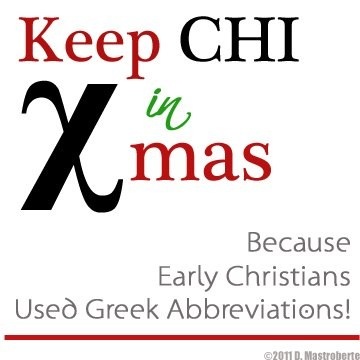
For all the hubbub about using “Xmas” instead of “Christmas” as shorthand (and in some cases where people intentionally desire to erase any reference of Christ from Christmas by using Xmas), the ironic, historic truth remains that ancient Christians utilized the Greek letter Chi and letter symbol Chi-Rho as a means to represent Jesus Christ. Such symbols are called christograms.

You see, the name Jesus Christ in Greek, the language of the New Testament texts, is Ἰησοῦς Χριστός. The first letter of the title Christ (signifying Jesus as the anointed one, the Messiah) looks like our English X and became a convenient, somewhat obscure way for early Christians in the catacombs and elsewhere to identify artistic representations of Jesus and Christian markings, signs, or art – similar to use of the Christian fish symbol.

Later, the Emperor Constantine I had a dream that he should put the “heavenly divine” symbol of Chi-Rho on his army’s shield before the Battle of the Milvian Bridge to guarantee victory. He did just that, won the battle, and turned the formerly pagan empire into a Christian one. The Chi-Rho symbol became and remains one of the most common christograms used in sacred and liturgical settings. In fact, it is often used as part of the modern Christmas tradition of the Chrismon Tree. Invented by a Lutheran in Danville,  Virginia in 1957, this practice is now popular in many congregations throughout the United States and across denominational lines.

As I find the debate over the use of Xmas somewhat distracting if not tedious and dislike the rush toward Christmas only to hide it away from the public eye as soon as December 25th passes, I try to experience Advent as a true time of expectant waiting and preparation. I also make an effort to enjoy the traditional Christmas period lasting twelve days through Epiphany on January 6th. So last year as Christmas approached, I posted an image I had found by Orthodox iconographer Raymond J. Mastroberte on Facebook saying, “Keep Chi in Christmas…Because early Christians used Greek abbreviations!” The illustrator’s image struck my sometimes questionable funny bone, and I playfully proclaimed that I would be putting the Chi in Christmas all twelve days.

Image and copyright by Orthodox iconographer Raymond J. Mastroberte. Image used here for teaching and not for profit under the terms of fair use.

Image and copyright by Orthodox iconographer Raymond J. Mastroberte. Image used here for teaching and not for profit under the terms of fair use.

In the context of our modern conundrum over Xmas, it wasn’t long until someone missed my attempt at humor. They argued that surely since Jesus Christ had done so much, suffered and died for our sake, we could most certainly take the time to spell out his name in full. It was as if the ancient Christian signs and symbols were suddenly disrespecting our Lord. And so, my attempt at lighthearted banter fell as another victim of this modern culture war.

As the past few years attest, an annual argument has indeed arisen about the secularization and explicit anti-Christian elements of our Christmas celebration. It should be expected, for in school gatherings and shopping malls, on public plazas and in our homes, religious symbols for Christ and his birth have come to be often replaced by winter scenes, Santa and his reindeer, snowmen, cute penguins or polar bears…the list goes on and on. In fact, some suggest that many Americans can’t specify what the Christmas holiday commemorates.

In opposition to Christmas, one atheist author argues that there is historically no proof that “Christ is the reason for the season.”[i] They suggest that winter celebrations have always existed, and such a modern mantra is only a Christian attempt to assert their cultural superiority over everyone else. Sadly in the name of multiculturalism, echoing choruses of Merry Christmas can be explicitly prohibited in some environs. Yes, just as there was no room at the inn on the original Christmas Eve, there seems to be no room in our public lives for Jesus today.

Yet, let’s not be too quick about things, as there are other signs to look for. Gallop found, “Ninety-five percent of Americans celebrate Christmas, and of these, 51% describe the holiday as ‘strongly religious’ for them, continuing an upward trend seen since 1989.” This 2010 poll also found a majority of Americans self-reported “incorporating specific religious activities or symbols into their holiday celebrations. This includes 62% who attend religious services on Christmas Eve or Christmas Day, 65% who display decorations with a religious meaning, and 78% who take time to reflect on the birth of Christ.”[ii] Self-reporting surveys can prove inflated, but we can see signs of hope for our beloved holiday.

Nevertheless, further confusing this debate, this same Gallop study found many more Americans were likely to practice secular traditions (in the ninetieth percentile range, depending upon the activity) than religious. Sadly, a recent poll by Think Finance claimed that 45% would rather skip Christmas due to the debt accumulated from gift giving.[iii] Others seasonally face bouts of depression or other mental illnesses magnified by their isolation or sense of loss during the holiday season, and thus they dread Christmas’ arrival.[iv]

Amidst debates and arguments, blinded by bobbles, decorations, and good deals, we can forget that our redemption is drawing near. Our time on earth is short, and we should live with hopeful and loving expectation as if Christ will indeed come soon. Signs of trouble and even outright persecution are nothing new. Jesus promised us such as these in his prophesies, comparing them to birth pangs.[v]

Should we then be so surprised that people are confused, lost, and hurting when it comes to Christmas and more importantly Jesus Christ? Should we let this distract us from our call as a holy people living together in Jesus’ holy name? Intentionally seeking the newborn Christ in our own hearts, we can repent of our own errors and grow in faith. Living as part of his body through our shared ministry of preaching, teaching and baptizing, or accepting and loving others (even our enemies) as they are, we can be used by God to bear Jesus into the world.

The devil’s in the details, and so it appears with our modern Christmas. Let’s not get anxious about the holiday – lost in empty debates or the holiday wrapping of materialism. As Christians, we are called to celebrate!

Look to the true heart of Christmas toward Jesus Christ himself, the final Word on this argument, come to save us. Whatever we choose to do and however we choose to say it, let’s seek to make Christ known every day. Look past the veneer of our time and see those suffering and alone around us. Enter relationship with them, help them, or guide them toward people who can. Celebrate the truth of Christ’s coming within every aspect of our lives – for the love of Χριστός, ourselves, and our neighbors.

There are more than enough signs of trouble and discord. Let’s not waste time dwelling upon them or pointing them out. Instead, let’s seek to be living, joyful signs that Jesus is near. That’s probably the best way for any of us to wish the world a meaningful Merry Christmas and eternity.

My wife, Kristine, and I wish you a holiday filled with blessings. May those same blessings flow through you to help transform the lives of others.

Pastor Lou

For those interested, visit OldLuteran.com for their comical take on this debate. Access their site through the image below:


[i] Cline, C. Putting Christ Back in Christmas: Is Jesus the Reason for the Season? as downloaded from http://atheism.about.com/od/christmasholidayseason/p/JesusReason.htm on November 30, 2012.

[ii] Jones, J.M. Christmas Strongly Religious for Half in U.S. Who Celebrate It: Secular traditions more common among Americans than religious traditions.  December 24, 2010 as downloaded from http://www.gallup.com/poll/145367/Christmas-Strongly-Religious-Half-Celebrate.aspx on November 30, 2012.

[iii] Berk, C.C. Why One Poll Says 45% Would Rather Skip Christmas. November 19, 2012 as downloaded from http://www.cnbc.com/id/49880517/Why_One_Poll_Says_45_Would_Rather_Skip_Christmas on November 30, 2012.

[iv] See for example Mayo Clinic’s Stress, depression and the holidays: Tips for coping at http://www.mayoclinic.com/health/stress/MH00030

[v] See for example Luke 21: 25-36 or Mark 13:8.

The above pastoral letter was originally published in Messiah Lutheran Church and School’s newsletter, The Messenger (December/January 2012 edition) in an abridged version. To view the entire issue of The Messenger or to see the full calendar of events, visit: http://www.mlcas.org

Unless otherwise indicated, all scripture quotations for this article are from the New Revised Standard Version (NRSV) translation.

© 2012 The Rev. Louis Florio. All content not held under another’s copyright may not be used without permission of the author.

Leave a comment

Filed under Church History, Community Life, Lectionary, Liturgical Year, Pastoral Letter, Uncategorized

Doom but not gloom

Christ the King

Today, too many fear the promised return of our Lord Jesus. In movies and other works of fiction, many can only imagine a terrible time of horror, suffering and judgment. Indeed, we are told in scripture that the end of time promises some form of Judgment Day will occur, but all is not a future full of darkness alone. With the symbolic language and prophetic texts used to speak of such a time, people tend to actively speculate about what such a time could be like. Many let their imaginations run wild for profit, the intimidation of others, or perhaps just out of ignorance. Yet in truth, to try to discern the mechanisms and mechanics of Judgment Day puts us at risk of being unbiblical. Such an exercise always proves futile for we lack God’s vision and understanding.

Instead of speculating about suffering or damnation, perhaps we should hold fast to Christ’s promise that he returns out of love for us. For rather than inspiring fear or proving a map to a terror-filled future, texts such as Revelation were written as much for (if not more for) Christians suffering in the present time to find hope and encouragement amidst persecution. In it, we are assured Jesus will most certainly come to complete what his life, death, and resurrection started. Jesus will come for us and our sake, to set the world right and bring new life. Thus rather than fearing the End of Time, the earliest Christians prayed that Jesus would come soon. The Second Coming is Christ’s answer to all that terrorizes our present lives, and we modern folk should rightfully celebrate along with those Christians who came before us.

Much after the first Christians, during a time when nationalism and secularism was taking a toll on the world through wars, greed, and political dysfunction, the feast of Christ the King was first introduced by Pope Pius XI in 1926. By 1969, the date was changed from the last Sunday in October to the last Sunday of the liturgical calendar year. Today, it is celebrated by the Roman Catholic Church along with many Anglicans, Lutherans, other Mainline Protestants, as well as parts of the of the Orthodox Church.

This ecumenical feast day is a celebration of hope while the universal church awaits Christ’s return. It serves to remind us that we should seek to live as one under our one Lord, Jesus Christ, loving God and our neighbor as ourself. Like the Christians before us, we remember and trust that Christ will come again – praying with hope that he comes soon. For only then will we experience the fullness of our promised life with him where “he will wipe every tear from their eyes. death will be no more; mourning and crying and pain will be no more, for the first things have passed away” (Revelation 21:4).

In the Evangelical Lutheran Church in Sweden, this feast day has been referred to as the Sunday of Doom. This name is somewhat ironic. There is doom in a sense, but we should never be overcome with doubts and sorrow as Christians. There is much more in store. The old world will pass away, and a new heaven and earth will be shared with us. Those who believe will be fully saved  and judged as if righteous; not based upon what they have done, but solely by grace through faith – trusting in what Jesus has already done for us through the power of his cross and resurrection. This Christ proclaimed, and it will be fulfilled.

Our true King will indeed return, but whatever trouble must come in the meantime, we should worship him, rejoice and be glad while we wait. We should set our hands and hearts to the work of making ourselves and our world ready for his return. For as much as we expect Christ, he asks and expects this of his faithful church.

Yes, the best is yet to come, and as Christians, we are promised that End of Time will mean a new beginning with our loving Savior and King. Our future (in the end) is nothing but bright.

Happy Christ the King Sunday!


Unless otherwise indicated, all scripture quotations for this article are from the New Revised Standard Version (NRSV) translation.

© 2012 The Rev. Louis Florio. All content not held under another’s copyright may not be used without permission of the author.
Leave a comment

Filed under Church History, Law and Gospel, Lectionary, Liturgical Year