My “Being Like…” blog posts profile the moral, ethical, and spiritual life of persons that I feel kinship too and most often am inspired by.
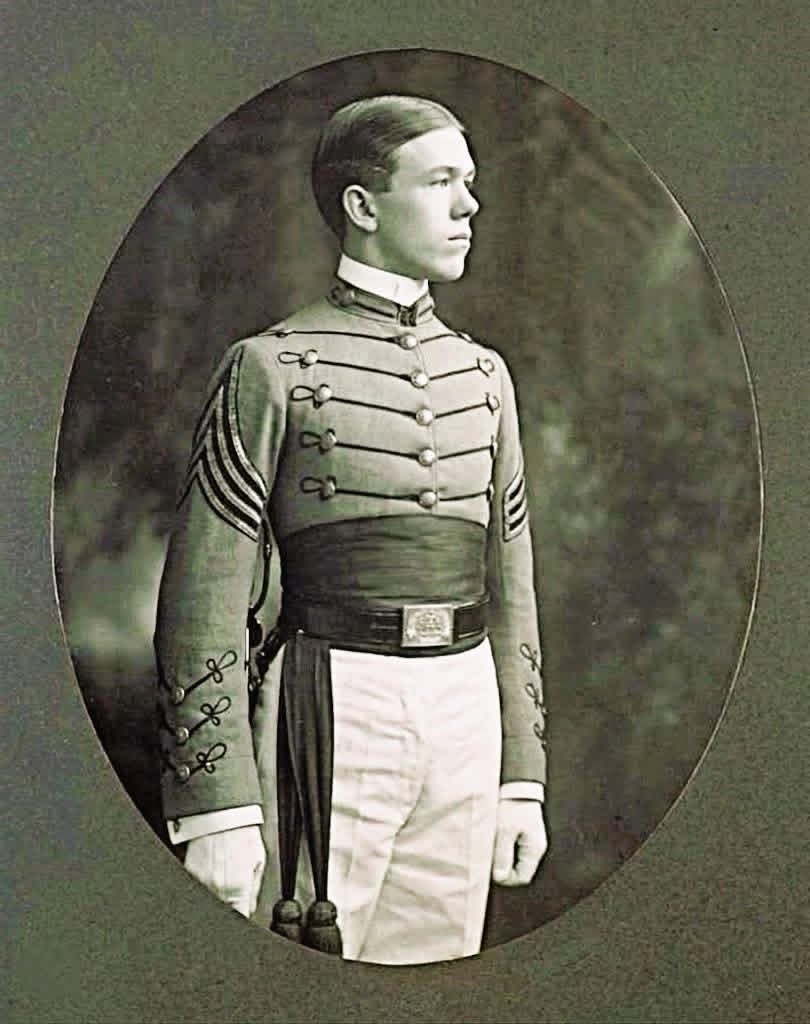
A recent post by History Uncovered on Facebook reported on the life of General George C. Marshall. If you don’t know him, you should. He led a remarkable life.
George C. Marshall rose from relatively humble beginnings in Uniontown, Pennsylvania. It was reportedly a stable family and one with some wonderfully historic roots. He was a first cousin, three times removed, of former but still renowned Chief Justice of the Supreme Court John Marshall. (John Marshall is definitely regarded as one of the most influential justices ever to serve, and he often came up in classes on legal procedure as I pursued my Masters in Criminal Justice.) With deep family roots in Virginia and an interest in pursuing a military career, George Marshall entered the Virginia Military Institute, my alma mater.
While there, Marshall was a solid cadet. He finished academically in the middle of his class. Yet, his overall performance, dependability, and character garnered attention and promotion. By his First Class Year (Senior), he was First Captain of the Corps serving in Company A.
As a cadet myself, he grew in my esteem with almost daily reminders as I was assigned to Alpha Company eventually becoming its commander as a Cadet Captain. By then, the top rank in the Corps of Cadets was Regimental Commander. I was told that I was one of six considered as finalist for that role, but was assigned to the company level due to my abilities working with others and positive cadet surveys. Yet, to be Alpha Company Commander as he was felt in my young mind like a connection of import and an honor of sorts.
There were other less personal reminders of his legacy thanks to a statue and arch commemorating him, but we also had access to the wonderful George C. Marshall Foundation and Museum on post. (Unfortunately, in my mind, it is more of a library for research today discontinuing some of its displays.) I spent much time there.
Thanks to the foundation’s presence, we had relatively regular access to presentations and writings about Marshall. I recall several that I attended were offered by the eminent, definitive Marshall biographer, Forrest Pogue. Yearly, VMI also served as host to the Marshall Awards where top military cadets of Army ROTC units came for an annual conference in the spring. As a cadet branching with the Army, I often escorted Generals attending the event and was able to listen in to many fabulous scholars and leaders as they shared their wisdom.
Although I changed directions from my initial desire for a military career (God had other ideas), thankfully for the world, Marshall did not. He eventually became Chief of Staff of the U.S. Army under presidents Franklin D. Roosevelt and Harry S. Truman. He’s largely credited for the Allied victory by Winston Churchill and others, although Eisenhower is more commonly known today.
After World War 2, he served as Secretary of State and Secretary of Defense under Truman. He also had the vision behind what became known as the Marshall Plan. (My grandfather graduated at the Harvard Commencement where Marshall first announced the plan on June 5, 1947. My mother was there too, as at the time, my grandfather was the oldest graduating senior that Harvard ever had to that point. He had gone directly into business, and after some success, sought more education.)
Following all his sacrifices, President Truman knew that Marshall was still not truly ready to retire. He asked Marshall to consider becoming head of the American Red Cross. Marshall consented by letter on March 15, 1949. Yet as busy as he was, he still found time to serve in the church as a leader on his local Episcopal vestry. He was a person dedicated to loving his neighbor, serving his nation but also the world. His faith and VMI seems to have greatly influenced him in this direction.
The History Uncovered post observed, “VMI was not simply an academic institution—it was a training ground for responsibility, where leadership had to be earned through conduct, consistency, and example. By absorbing these values, he gradually transformed from an ordinary student into a dependable presence within the Corps of Cadets. His performance at VMI revealed a pattern that would follow him throughout his career: he did not seek attention, but he consistently delivered structure, planning, and accountability.”
There are many great leaders from VMI, but of them all, I’ve come to be most inspired by Jonathan Daniels and George Marshall. As I’ve written before, I admire Jonathan Daniels’ clear sense of justice, willingness to serve others, and his desire to love and help free others from darkness including those who saw him as an enemy. He died doing so, saving a young African American girl’s life, thus he’s on the calendar of saints for the Episcopal Church.
As I learned more about George Marshall beyond VMI, I continued to be inspired by his humble service which I suggest also shaped by his Christian faith and loving family life along with his experience at VMI. He truly spoke truth to superiors even if likely unwelcome. A famous example is when he boldly spoke plainly to General Pershing as a Major in World War 1. While others hedged bets, Marshall told the truth. As a result, many thought his career was done for. One article reports, “Marshall shrugged off his friends’ condolences, saying: ‘All I can see is that I may get troop duty instead of staff duty, and certainly that would be a great success.” Rather than ending his career, Pershing was impressed. Marshall became a favored, trusted advisor of Pershing.
Marshall was the consummate team player, yet his morals and ethics kept him from conforming to group think or accept that which was wrong. Even at the risk to his career, he always strove to do the right thing. Although he advanced in rank, he did not seem to seek that out. He just tried to serve his nation and others.
Jonathan Daniels and George Marshall are two excellent role models, and I hope and pray my experiences at VMI and beyond along with their faithful witness will increasingly help shape my own life. Part of this influence is seen in my resume. I’ve served in a military staff position (battalion level in the National Guard) and on interdisciplinary teams as a missioner at St. Joseph’s Indian School, a hospice and hospital chaplain, as a board member on one of the largest nonprofits in Virginia, helping community groups and serving local congregations. I feel that Marshall’s example has always been before me challenging me to always do better when it comes to being a team player and to not worry about credit. (Who else rightly judges us other than God anyway?)
Yes, it’s nice getting awards or being promoted. It’s appropriate to thank people for their efforts. Yet all I really want to do is love my neighbor in thanksgiving for how Jesus changed the direction of my life. He’s still changing it, and I’m still learning, but that’s my daily hope and prayer. I think in their own unique way, both Daniels and Marshall echoed Christ’s own life and have something to teach all of us. Maybe George C. Marshall should be on a calendar of saints somewhere, but I don’t think he’d ever have cared. For in the end, whatever our vocation, we who believe are called to be saints too.
© 2026 The Rev. Louis Florio. All content not held under another’s copyright may not be used without permission of the author unless under terms of fair use and properly attributed. Scripture passages when used are from the NRSVue translation unless otherwise indicated.