A response to “The invention of Ego in Martin Luther’s Defiance”

Martin Luther posting his 95 Theses

In case you come across this article by Thomas Cahill as I have being reposted and misused by some Roman Catholic brothers and sisters (along with some rather un-Christian remarks), be assured the author misses the mark somewhat when it comes to Luther’s psychology and theology. His take is too simplistic.

Luther’s efforts to reform the church (especially at the start) weren’t about ego alone, but about the Word of God being adhered to without mental gymnastics to make them fit corrupt and superstitious practices of the day. He was a pastor caring for his people, and a teacher seeking truth. His intent was not to be independent, revolutionary, or famous.

Unlike the short quote within the article, Luther’s words at Worms were more nuanced [please note the points I emphasize]:

“Unless I am refuted and convicted by testimonies of the Scriptures or by clear arguments (since I believe neither the Pope nor the Councils alone; it being evident that they have often erred and contradicted themselves), I am conquered by the Holy Scriptures quoted by me, and my conscience is bound in the word of God: I can not and will not recant any thing, since it is unsafe and dangerous to do any thing against the conscience.” (History of the Christian Church, vol. VII, ch. 3, sec. 55).

Martin Luther was posting an academic disputation – a common practice of his day – and wrote later writings to be discussed in community. He wasn’t looking for a fight nor a break with the church catholic, and his efforts were shaped by much more than just a matter of an individual’s ego.

True, self-interpretation of scripture has its weaknesses and excesses, but Luther wasn’t guilty there either. His focus remained on the assembly (the church) in relationship with one another and Christ. (This is made quit clear in his Large Catechism and other theological writings.) The church guided by the Spirit and tested by the divine revelation of scripture is the corrective for us all when it comes to interpretation, for Luther knew we all can err as much as popes and councils. We need to open scripture, listening for the Spirit and to one another.

As the debates rolled on and intensified, Luther failed to do that at times himself. Much like those posting anti-Lutheran insults and commentary, he let his anger and disappointment (and perhaps later his mental illness) govern some of his responses. After all, many people wanted to see him dead and weren’t exactly charitable either.

Martin Luther was human, and he realized it. In reviewing much of his writings, you will see him hesitate to state things definitively rather than to risk error. He critiques himself and his lack of ability. You will see calls for discernment rather than name calling over theological issues. He turns toward grace to light his way forward and not some internal power of his own.

I think such an attitude represents a very human, Christian humility and maturity rather than egocentricity. Adapted beyond theology discussions to a way of life, such an attitude will likely prove the best answer to what gridlocks us in our politics and divides our culture today.

As St. Paul reminded Luther and reminds us all, “And do not grieve the Holy Spirit of God, with which you were marked with a seal for the day of redemption. Put away from you all bitterness and wrath and anger and wrangling and slander, together with all malice, and be kind to one another, tenderhearted, forgiving one another, as God in Christ has forgiven you.” (Eph. 4:30-32). Even amidst important theological or other disputes, we are to remain one family of faith, the holy people of God.

Unless otherwise indicated, all scripture quotations for this article are from the New Revised Standard Version.

© 2013 The Rev. Louis Florio. All content not held under another’s copyright may not be used without permission of the author.


Leave a comment

Filed under Books, Church History, Community Life, Uncategorized

Rediscovering the Spirit of Halloween

Luther Posting His 95 Theses

Luther Posting His 95 Theses

Each year, we hear debates among Christians regarding Halloween. With all its secular, commercial and bewitching components and hoopla, should Christians celebrate? I argue, “Yes!” If one considers the history of the day and its likely very intentional relationship to the start of the Protestant Reformation, it is impossible to deny the Christian faith’s connection to Halloween. We should celebrate with vigor, yet we should also understand its origins, purpose and potential.

Historically, the word Halloween is a contraction of All Hallows Eve. You might recall that hallow is an Old English word for “to be made holy” (as a verb) or saint (as a noun). Halloween is the evening before the Feast of All Hallows (or in modern English, Saints). Today, we know this religious celebration more commonly as All Saints Day, November 1st.

During All Saints Day, many in the Western church remember with thanksgiving the saints who are now with God. (Orthodox Christians celebrate this feast the Sunday after Pentecost.) Originally, the feast seems to have been celebrated intermittently and not uniformly on May 13th. That’s when Pope Boniface IV consecrated the Pantheon in Rome, a temple formerly dedicated to all gods, in about 609 CE. Thereafter, it became a church dedicated to Mary, the Mother of God and All Martyrs, those who died for their Christian faith. Since the Renaissance period, the building has served as a tomb rather than a church.

This ancient All Saints Day became a time to remember martyrs of the faith and later all canonized saints. During the reign of Pope Gregory III (731-741), the feast day was officially moved to November 1st. Some argue this was done to help combat and suppress the particular pagan Celtic practice of Samhain, a celebration on or about sunset 31 October to sunset 1 November.

Samhain and other similar pagan festivals marked the end of the harvest season and the beginning of winter. It was a time of growing darkness when the Celtic culture and many others – including many early superstitious Christians – believed the lines between our world and the place of the dead became blurred. Stories of hauntings and practicing divination were deeply associated with the pagan holiday.

As with Jewish custom, Christian worship practices recognize the next day begins at sundown. This allowed for a “vigil mass” or service to be held the evening before All Saints Day. This further helped coopt that evening of October 31st into a firmly Christian celebration.

Over the years, the Christian liturgical calendar continued to develop. A Commemoration of All Faithful Departed, not just martyrs or those declared to be saints through canonization, was officially added on November 2nd.[i] In Roman Catholic theology, the belief in purgatory (a place of purging sins to help make one worthy of heaven) had become accepted. This added religious feast day would serve to remember those faithful not yet in heaven and pray for their quick release from purgation. It was intimately associated with the practice of indulgences; pardons earned by works or paid for to free oneself or a loved one from purgatory more quickly.

With the many obvious medieval abuses of this teaching and his own spiritual awakening, Martin Luther began to wrestle with the contemporary practices of the Western church, especially indulgences. A biblical professor and Roman Catholic priest, he wrote 95 points (or theses) he wished to debate regarding how one is saved. Could one buy forgiveness paying for what was called an indulgence? Is it possible to earn your way into heaven or to prove yourself worthy of salvation? These were his ultimate questions.

From studying scripture, the answer had become obvious to Martin Luther. Faith comes down to trusting what Jesus did for us on the cross and through his resurrection. Jesus’ holy work was enough to cover all our sins – past, present and future – just as Jesus promised in scripture, “So if the Son makes you free, you will be free indeed.”[ii]

Although I personally have not yet found any writings explicitly connecting Luther’s posting of his 95 Theses on 31 October 1517  to Halloween, it seems exceedingly likely. Luther would expect large crowds to be present at church for the feast days ahead. Further, this educated man probably recognized the propriety of discerning about indulgences and purgatory as the Western church prepared to celebrate All Hallows Eve or Halloween, the Feast of All Saints, and the Commemoration of All the Faithfully Departed (now commonly known as All Souls Day). His 95 Theses specifically addressed beliefs, practices and excesses associated with these celebrations.

Understanding that we are saved by grace through faith in Jesus Christ, Lutherans no longer recognize purgatory or All Souls Day, but Halloween as well as All Saints Day remain on many of our personal and religious calendars. (For Roman Catholics and some others, many still look at the three days of October 31st through November 2nd as intimately connected and call it “the triduum of Hallowmas.”)

As a Protestant Christian, Halloween need not be a time where we find ourselves over focusing on evil, commercialism, violence or anything else. It can become a time of worship and spiritual formation. Despite its origins and relationship with pagan practices, it can now serve as the perfect time to remember what ignited the Protestant Reformation and particularly the saving work of Jesus Christ. We can celebrate both the love and memories of the faithfully departed as well as share in family fun – yes, trick-or-treating, trunk-or-treating or parties included. Like all things in life, our Halloween celebrations can be whatever we choose to make of them including something appropriate for all Christ’s sinner-saints[iii] still here on earth. How we celebrate can witness to our shared faith in Jesus and love for one another.

Some practices you might like to consider:

  • Visit grave sites of loved ones to place flowers, candles or luminaria (as allowed by regulation or law). Pray with thanksgiving for how God shared love with you through their lives.
  • In your faith community, share the names of those who have died over the last year perhaps ringing a bell for each one. You might allow for a special wreath where flowers can be added to symbolically represent those God used to shape your life and faith. Pray for all those who continue to mourn.

all saints sunday

  • Talk about your ancestors and family history together. Share stories of faith. How did your family communicate and pass down their faith in Jesus? Where do you see God’s steadfast love at work in the stories of the past or in your present lives?
  • Have a Reformation Day party or reenact Martin Luther’s posting of the 95 Theses.
  • Instead of dressing up as a ghost or goblin, consider positive role models such as faith-filled saints of the past or inspiring heroes of the present.
  • Share in a bonfire and hymn sing with friends and family or attend a fall festival.
  • For something different, carve pumpkins with religious or Reformation themes.

We need not grieve like the rest of humanity over those who have died. Sin, death and the Devil no longer have a hold over us thanks be to Jesus Christ, so there is no cause to be afraid. As the children of God, we have a multitude of reasons to celebrate for all eternity. So, why not celebrate Halloween?


[i] Recognitions similar to All Souls Day seem to have been a practice from early Christianity, but they varied greatly in timing and scope. CatholicCulture.org reports this about the origin of All Souls Day: “Masses for the dead are found in the fifth century. But it was St. Odilo [c.962 – c.1048], fourth abbot of Cluny, who was responsible for the institution of the general commemoration of all the faithful departed; he instituted it and fixed its celebration on November 2, the day after All Saints. The practice spread to the rest of Christendom.” (Others claim the three day celebration stems from an order by Pope Gregory IV in the 8th century.) Indulgences are still attached to All Souls Day in the Roman Catholic Church. Learn more at: http://bit.ly/Hstmm5

[ii] John 8:36

[iii] Luther came to argue that Christians remain simultaneously sinners (still struggling with sin) yet saved (through faith in Jesus Christ). We should strive to follow Christ, but we must accept our constant need for grace. Jesus is the only source of our salvation, not our works.

Unless otherwise indicated, all scripture quotations for this article are from the New Revised Standard Version (NRSV) translation.

© 2013 The Rev. Louis Florio. All content not held under another’s copyright may not be used without permission of the author.

The image “pumpkin of Luther posting his 95 Theses” used above with this post is believed not to be copyrighted. If I am in error, please contact me, and I will remove it or provide proper attribution as desired. Efforts were made to identify its source but unsuccessfully.

Leave a comment

Filed under Church History, Liturgical Year, saints, Theology

Giving Thanks is Hard Work

Rejoice always, pray without ceasing, give thanks in all circumstances; for this is the will of God in Christ Jesus for you. (1 Thess. 5:16-18)

How can we properly give thanks to God? According to Paul’s letter to the community of faith in Thessalonica (Thessaloníki), it isn’t just by our words alone. As his letter comes to a close, Paul reminds the local congregation that Jesus is coming. We don’t know when, but we are asked to be prepared to welcome him. We are to remain sober, “putting on faith and love as a breastplate, and the hope of salvation as a helmet,” and all the while trusting that he will remain true to all his promises.

In other words, yes, wHard Work Aheade will share in Christ’s ultimate victory through faith, but we aren’t to be lazy while we wait for it. Our salvation isn’t just about our needs and our feelings. We are part of a much bigger, cosmic battle and purpose where we are to live – and yes, in some ways die – for one another: “encourage one another and build each other up”; “acknowledge those who work hard among you,” loving them and respecting their call to leadership; “warn those who are idle and disruptive, encourage the disheartened, help the weak, be patient with everyone.” It might require putting our needs behind the needs of others. We might need to forgive someone who hurt us or be gentle in our reproach. Ultimately, we are to humbly love and serve one another and all those entrusted to our care. That can be hard!

Yet actively discerning our call from Christ, we are empowered to go forward in confidence. Victory is assured. We respond in thanksgiving by seeking to follow his Holy Spirit wherever it leads, no matter the risk or cost. Our Christian lives prove to be a great and noble effort based solely upon the love of our God and never our own legacy. We give thanks by being more than “country club” church members. We are to live actively as Christ’s disciples and saints, for by grace through faith that is exactly who we are.

So, yes I give thanks in prayer for all that we have shared and accomplished these past five years together at Messiah. I give thanks for our wonderful shared legacy of forty-five years serving Mechanicsville, Hanover County, and beyond. I remain thankful for all the saints in my own time and before who continue to inspire me. Yet most of all, I rejoice with you in our call to shared life and ministry; one that might prove hard at times but always consists of a future full of hope. It is together as church where we find the abundant life that Jesus promised us, and I am grateful for living as church with you.

This life of discipleship is Christ’s way, leading us and all the saints to the eternal feast of thanksgiving yet to come. To help celebrate, I invite all of us to reflect upon how we can live out Messiah’s mission more fully, “To share the good news of Jesus Christ and to invite all to join us in faith, worship, and service,” for there always remains room at Christ’s table.

Christ’s peace be with you always. I send you my prayers for a blessed Thanksgiving. Please pray for Kristine and me as well.

Your brother in Christ,
Pastor Lou


Unless otherwise indicated, all scripture quotations for this article are from the New Revised Standard Version (NRSV) translation.

© 2013 The Rev. Louis Florio. All content not held under another’s copyright may not be used without permission of the author.

1 Comment

Filed under Community Life, Ministry, Pastoral Letter, saints, social justice

Needy? Our Cup Overflows

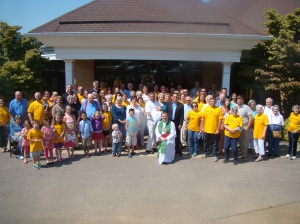
Messiah Lutheran.group shot

Messiah Lutheran Church Members & Friends,
8 September 2013

We want you to know, brothers and sisters, about the grace of God that has been granted to the churches of Macedonia; for during a severe ordeal of affliction, their abundant joy and their extreme poverty have overflowed in a wealth of generosity on their part. (2 Cor. 8:1-2)

Reading the above passage, I began to reflect upon our life together at Messiah Lutheran. Seeking assistance for a mission, Paul was encouraging the larger, more affluent congregation in Corinth to look toward the example of the struggling Christian community in Macedonia. I began to see a parallel. How has our little church faced with so many historic and current problems been used to encourage others?

Once a person mentioned to me in passing that it seemed our community is made of a “disproportionate number of people in need” and perhaps we would always remain small. This indeed might be true (only God knows the plans in store for us), yet I embrace that description. After all, Jesus came for the “least of these”: the hungry, the naked, the homeless and marginalized, even prisoners. Therefore at Messiah, we have intentionally forged strong relationships with those having intellectual, physical and mental disabilities. We have actively sought to support members of our community with food, clothing, and housing. Hospitality and authentic welcome are recognized marks of our ministry regardless of social, economic, political or other differences. Some of our members and neighbors have been helped to lift themselves out of domestic abuse, addiction, and even jail. We are truly trying to live as Christ’s disciples in mission, no longer Gentile or Jew, male or female, but all one in Christ. If two or three gather in his name, Christ is there, so our size doesn’t really matter either. Our congregation is exactly the kind of beloved community spoken about in scripture!

Despite our needs (or perhaps because of them), we have come together to rebuild and strengthen this congregation’s ministry, not perfectly but as best we can, and this has made a difference worth celebrating. Although we are still small and at times people might leave, worship attendance has increased over 35% since 2006. Giving has gone up about 10% per year no matter the ebb and flow of our national economy. We still struggle financially (sometimes wondering how we will pay our bills), but we have closed a $35,000 deficit while supporting others – fully funding our tithe to the greater church, ranking several years in the top 20 for donations to the Virginia Synod’s United Lutheran Appeal, starting new ministries in support of Lutheran Family Services, serving as a covenant congregation with Hanover Habitat, reinvigorating the shared, ecumenical food, clothing and benevolence ministry which is MCEF, and much, much more. Our outreach has dramatically increased and a number of long-time members have suggested our community is more spiritually oriented than ever before.

Thanks to the grace of God working through our lives together, we have all contributed to our “success.” A Thrivent loan officer remarked, “We have seen congregations ten times your size not do as much.” It is often why when I am at area events that people remark, “I hear things are going great at Messiah,” or “Your that church that is so active in the community.” In our welcoming of All Souls Episcopal to share our worship space, I have had three different Evangelical pastors comment at the great and unusual witness to Christian love being made manifest here. When we attended the Virginia Synod Assembly, other congregations have asked for appointments to discuss why and how things are “going so well” at Messiah for two years running. We are further affirmed as a community by the reality that 46% of our membership comes from outside of Mechanicsville. These people are willing to make drives of 30 minutes to an hour because they recognize that this community is indeed “different.”

Are we challenged as an institution in property and programs? Do we dine with people who are marginalized, hurting, sinful and alone? Do we struggle as individuals? You bet! We are real people with real problems, but we are a saved people all the more. Thanks be to Christ, we are the church! We seek to live as disciples more than as “members”; striving to concretely love God and neighbor. We are invited to walk on in a living hope of what is promised us in Christ’s victory, not based upon what we get or experience here and now.

In the end, we are ultimately a family of faith not defined by geography, finances, numbers or programs, and especially not our aging building. Instead, love, abundant joy and generosity – a response to what God has already offered us – describes us well. We are being recognized locally and beyond because as Jesus has promised, “By this everyone will know that you are my disciples, if you have love for one another.”

As we continue to celebrate our 45 years in ministry, I want to say that I am always proud and grateful to serve you as well as alongside you in mission. If you are a visitor or have been away, I invite you to come join our celebration; not an event but our shared life in Christ Jesus.

Peace,
Pastor Lou

Everyone makes a difference at
Messiah Lutheran!

To see pictures from our God’s Work – Our Hands Day, click here.  

Unless otherwise indicated, all scripture quotations for this article are from the New Revised Standard Version (NRSV) translation.

© 2013 The Rev. Louis Florio. All content not held under another’s copyright may not be used without permission of the author.

1 Comment

Filed under Community Life, Grace, Ministry, Pastoral Letter, saints

Be a clown!

Be a clownA cheerful heart is a good medicine, but a downcast spirit dries up the bones. (Proverbs 17:22)

I have been called many things in my life, but this past month I was called a clown. To be more precise, I was called to be a clown as part of our Vacation Bible School. Through skit and song, crafts and games, I was blessed to share a journey with forty youth and almost as many adults into deeper friendship with God and one another.

I find that relationships are most easily formed through joyful encounters and positive attitudes, and it isn’t much different for our relationship with Christ and his church. Our happy fellowship, laughter, and even a caring smile can serve as a witness to our faith and help sustain others, but I believe it also serves to encourage us in our work and shape our own futures.

What kind of joy is this? I am talking about much more than a positive attitude (although that helps). In fact, it ultimately isn’t about us at all. Trusting that no matter what happens we will always be cared for by Christ frees us to smile, to laugh, to risk relationship and love no matter the cost. We can be rejected, and yet our healthy self-esteem can continue unharmed because we are loved by God. We can seem to fail in our efforts and yet not worry; we share in Christ’s victory. Even as we struggle with sin or illness or tears, or anything else one can think of, we can trust with Julian of Norwich, “All shall be well, and all shall be well, and all manner of things shall be well.” God will use whatever happens for our good.

“Faith is a living, daring confidence in God’s grace, so sure and certain that a man could stake his life on it a thousand times,” declared Martin Luther. Yes, faith is God’s punch line to our world’s fallen reality. Faith surprises and empowers us. Even amidst difficulties or tears, it manifests itself through the fruit of the Spirit: love, joy, peace, forbearance, kindness, goodness, faithfulness, gentleness and self-control. It keeps us going in the face of great obstacles, and in answer to death, it births an abundant life.

Long ago, Francis of Assisi and his followers encountered Christ’s love in their midst through active fellowship, service and worship together. This radical communal lifestyle raised the eyebrows of many who called them “Fools for Christ,” yet that way of life brought Francis, his friends and those they served an abundance of joy – not sour, pious faces, rigorous religiosity, or burdensome obligations. Perhaps, they had the last laugh by adopting the name meant to deride them.

That is the kind of clown I hope I can be…that I believe Christ intends us to be together as church. Please help us together discover the gift of such joy this fall as we celebrate 45 years of ministry at Messiah. No kidding, it might just change the world.

May Christ’s peace and joy always reign in your life,

Pastor Lou

Unless otherwise indicated, all scripture quotations for this article are from the New Revised Standard Version (NRSV) translation.

© 2013 The Rev. Louis Florio. All content not held under another’s copyright may not be used without permission of the author.
Leave a comment

Filed under Community Life, Grace, Ministry, Pastoral Letter, Uncategorized

Celebrating Our Christian Unity: Christ’s gift to us!

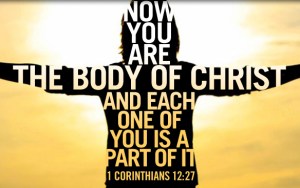
thebodyofchrist

Join us for our second of two special services celebrating our Christian Unity, Sunday July 14th, 9:30 am. All Souls Episcopal Church and Messiah Lutheran Church will share in the Episcopal liturgy for communion with Pastor Lou presiding. More information is in the pastoral letter below:

Dear Messiah members and friends, and to all our brothers and sisters in Christ:

On July 3-7, Lutherans and Anglicans in Canada gathered in a joint assembly in Ottawa for worship, fellowship and to make important decisions about ministering together as Christians. In anticipation of the assembly, leaders of the Evangelical Lutheran Church in Canada, The Anglican Church of Canada, The Episcopal Church and the Evangelical Lutheran Church in America (ELCA) shared in a letter how members of the four denominations have come “closely together in service of the gospel.” (You can read it here: http://bit.ly/1aeSwNR )

For twelve years, Lutherans of the ELCA and Episcopalians have shared “full communion.” As the our denomination’s website states, “Full communion is when two churches develop a relationship based on a common confessing of the Christian faith and a mutual recognition of baptism and sharing of the Lord’s Supper. This does not mean that two churches merge; rather, in reaching agreements, churches also respect differences. These denominations likewise jointly worship, may exchange clergy, and also share a commitment to evangelism, witness and service in the world.”

This journey is as old as Christ’s own prayer that his disciples live as one. It has been a continued hope since the Augsburg Confession called for unity amidst serious differences between Roman Catholics and those who would later be called “Protestant.” Following the world wars of the last century, Christians searched to understand how Christians could visit such atrocities upon one another, and a new openness arose to ecumenism as evident by Vatican II and many new ecumenical bodies and efforts being formed. Since then, ministry has been joined globally, nationally and locally to be sure. In fact, Lutherans seeking unity would help create the ELCA out of several Lutheran faith traditions 25 years ago. Eventually, this was followed by full communion agreements between the ELCA and a number of other denominations. (To learn more about that, visit: http://bit.ly/Z1bXY1 )

In our case, All Souls Episcopal and Messiah Lutheran members remain individual congregations, but share our building and much ministry. We have helped each other to meet crucial, practical needs. We have shared in outreach to our community and world. Recently, both pastors have spent time learning about each other’s liturgy. This facilitates pulpit exchanges, and now, each pastor will seek to aid the other church whenever an absence or emergency need arises without the added cost of a supply pastor. On a practical level, this is all good stewardship. On a spiritual level, it helps expose us all to the fullness, depth and breadth of Christ’s church and its varied theological riches.

There is no one model for living out our shared faith and call. Some Episcopal-Lutheran congregations (such as in Galax, VA) have fully merged or formally yoked together for the sake of the Gospel. Others like us, share our lives openly without any formal expectations or agreements. Others might join together as needs and opportunities for ministry arise. In each unique context, we must prayerfully find the path Christ has prepared for us and go. Christ prayed for our togetherness long ago, but in many ways, our journey together as Episcopalians and Lutherans has just begun.

Whether we continue to share the same building or not, we are, will be, and should be the church together. Messiah and All Souls members intend to labor together and along with other area congregations for the sake of sharing the Good News of Jesus Christ. It leads us toward the fulfillment of Christ’s prayer and calls us to the same future.

This Sunday, July 14th, the congregations of Messiah and All Souls will come together as part of the catholic (universal) church and celebrate our unity in one service at 9:30 am. We’ll share in worship and break bread at our Lord’s Table. Our prayer and fellowship together will fortify us for the work ahead, such as: our combined Vacation Bible School, our ongoing ministry to those suffering hunger and homelessness, our youth’s combined mission trip in July, our seeking to be good stewards of everything God has given us. The service will also powerfully witness to us and others of God’s grace and love. Jesus said, “I give you a new commandment, that you love one another. Just as I have loved you, you also should love one another. By this everyone will know that you are my disciples, if you have love for one another.” (John 13:34-35)

God is doing something special here in and through our small but mutually growing congregations. I invite everyone to come and celebrate our unity in Jesus, not just at worship this Sunday, but as we leave to go out into the mission fields together as brothers and sisters in Christ.

Peace,

Pastor Lou Florio

Unless otherwise indicated, all scripture quotations for this article are from the New Revised Standard Version (NRSV) translation.

© 2013 The Rev. Louis Florio. All content not held under another’s copyright may not be used without permission of the author.

Leave a comment

Filed under Uncategorized

How shall our garden grow?

Vegetable-Garden-Layout1

“Other seed fell into good soil and brought forth grain, growing up and increasing and yielding thirty and sixty and a hundredfold.” (Mark 4:8)

Summer is a season of growth. Planting is done, but there is much watering, weeding and tending left to do before the harvest. Sure, we can plant seed in the best soil available, then walk away and hope things grow by the grace of God. Yet, our plot probably won’t bear as much fruit, vegetables or flowers without our active, attentive, intentional involvement. Life might never sprout at all.

We, too, grow by the grace of God. The seed of faith has been planted in our hearts, and our history, surroundings and dispositions affect us much like soil. Worse, life can be hot and dry or too stormy; threatening to wither us, outside of our control. So like the local fields, we need tending. Our summer travels can be part of that, refreshing and renewing us, yet we can’t ever think rest alone is enough to make us yield thirty, sixty or a hundredfold. God has to be in the mix, for only God makes things grow and become greater (1 Cor. 3:7).

To help with this, Messiah is offering a number of opportunities to encourage individual growth, as well as the growth of our congregation and greater community. We’ll have a series of unified services with special offerings from visitors wishing to minister to us – including their use of liturgical music and performing arts. We’ll celebrate our full communion and shared ministry with All Souls Episcopal in worship together and pulpit exchanges. We will minister to others through our Lutheran Family Services Picnic for adopted and foster care families, the summer program at our school, our popular vacation bible school, and more. These efforts will certainly bless our neighbors this summer, but volunteers time and again report the multiplied blessings they have encountered through building relationship with others and in serving together. Yet, that’s not all. Opportunities continue for bible study, contemplative prayer, Christian formation, and active service including with our many partnering non-profits. We’ll also have youth and adults attending Caroline Furnace Lutheran Camp, mission trips, and other retreats for all ages. God will be active here. Why not you?

Growth requires balance – daily rest and work centered on and fed by the love of God. Yes, near or far, at rest or active in service, we remain the church. We have nothing to fear from darkness, storm or death, for eternal life will be ours through faith. Still, our shared hope remains as in Paul’s long ago prayer; that all of us together may lead lives worthy of the Lord, fully pleasing to him, as we bear fruit in every good work and as we grow in the knowledge of God (Col. 1:10).

No matter our circumstance, we find ourselves always in a mission field. Jesus has come so that we might have life, and have it abundantly (John 10:10) while in that field and beyond. On vacation or not, no matter the season, let us heed Christ’s invitation, cooperate with the grace offered us, and intentionally strive to nurture his life in our hearts and the hearts of others.

Peace,
Pastor Lou


The above pastoral letter was originally published in Messiah Lutheran Church and School’s newsletter, The Messenger (July 2013 edition). To view the entire issue of The Messenger or to see the full calendar of events, visit: http://www.mlcas.org

Unless otherwise indicated, all scripture quotations for this article are from the New Revised Standard Version (NRSV) translation.

© 2013 The Rev. Louis Florio. All content not held under another’s copyright may not be used without permission of the author.

Leave a comment

June 29, 2013 · 11:28 pm

Godspeed to our Vicar

US_Navy_Chaplain_Corps_Seal_2001
Dear Messiah members and friends,

Effective June 2nd following our unified worship and picnic, Vicar Nathan Huffman[i] will have completed his first year seminary field work at Messiah. During his year, he spent 7-10 hours per week assisting at worship, visiting members, and receiving required vocational counseling. He also preached three Sundays and completed requirements to be accepted into the Navy’s chaplaincy program. (He was sworn into the Navy Individual Ready Reserves in May as an Ensign, and he will begin his military training this summer.) This is only the beginning of his journey toward ordained ministry. He has three more years of seminary training which will include a year assignment as a full-time intern, along with military chaplaincy training throughout.

It will be sad to say goodbye to Vicar Nate, but it is also a joy to know we have helped him on his way. He has learned more about himself, his call, and Christ’s church by sharing in our ministry and our lives, and we, too, have been blessed. Wherever he goes, we will be part of the blessing he brings, and he will remain part of the love our community shares. He’ll travel the world, but we will remain in communion through the love of Jesus Christ and our on-going shared mission.

As we move forward, council, the mutual ministry team and I intend to explore options for another field education or full-time intern placement. It has been a great experience for us, for Nate and the church. Why not let the good times roll?

Bon voyage, Nate. We hope our paths will cross again many times in the future. Until then, “We have this hope, a sure and steadfast anchor of the soul”  (Hebrews 6:19), Christ is with us always and loves us. Our journey together will never end.

Peace,
Pastor Lou


[i] In the Evangelical Lutheran Church in America, the title “vicar” indicates a pastoral intern. Vicar Huffman is a first year student at Union Presbyterian Seminary in Richmond, VA.

The above pastoral letter was originally published in Messiah Lutheran Church and School’s newsletter, The Messenger (June 2013 edition). To view the entire issue of The Messenger or to see the full calendar of events, visit: http://www.mlcas.org

Unless otherwise indicated, all scripture quotations for this article are from the New Revised Standard Version (NRSV) translation.

© 2013 The Rev. Louis Florio. All content not held under another’s copyright may not be used without permission of the author.
Leave a comment

Filed under Ministry, Pastoral Letter

Time to Live

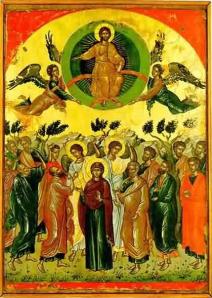
ascension

The Ascension of Jesus

So let us not grow weary in doing what is right, for we will reap at harvest time, if we do not give up. So then, whenever we have an opportunity, let us work for the good of all, and especially for those of the family of faith. (Galatians 6: 9-10)

I am tired: tired of wars and rumors of war; tired of terrorism; tired of illness and trials; tired of death.[i] I know I am not alone. Our nation and world has experienced much too much suffering these last few weeks. Just watching the news was emotionally draining, and many still feel alone and isolated. Others grieve or remain afraid.

Yet if we overly focus on this very real suffering and evil, is it any wonder we grow tired? It seems too much for us, because it is! We are not God, able to work healing, life-giving miracles at our whim. As frail, fallible humans, we are not able to stand alone. So what can we do?

At such difficult times, I don’t give up. I find comfort, strength and motivation in a promise – something not yet a reality, but definitely coming. We are told there will be a day with no more death, mourning, crying or pain. All will be made new.[ii]

Oh, that day’s not here yet, but Christ’s ascension into heaven[iii] foreshadows his certain return.[iv] Although Jesus isn’t with us in body, it is Jesus himself who promises us, “I am with you always.”[v] Granted much stands against us, yet our God is for us and standing with us. We are already conquerors sharing in Christ’s victory over sin, death and the Devil no matter how we might feel about it.[vi]

This promise is our inheritance and claims us as Christ’s people – a people of living faith, hope and love.[vii] It turns our eyes to look beyond our own suffering and fears toward how we are called to help answer such pain and injustice in the world.[viii] Indeed, in Jesus’ physical absence, we serve as his body.[ix] Our feet are those which bring his good news to dark places.[x] Our hands are those that bring his healing.[xi] Our shared ministries are used to create miracles and give life in his name.[xii]

This is no time to run and hide. It isn’t time to be caught asleep or medicating ourselves with escapist, self-indulgence. Instead, Jesus invites us to truly live saying, “Don’t be afraid. Follow me.” Jesus is coming, and we have much left to do in preparation.

No, we still aren’t God, but we are God’s people. At home or away, at work, school or vacation, even in places of emergency, we remain his church – together with Jesus and never alone. When people look to the hills for help[xiii], it might just be us whom Jesus has sent to be his living answer to their cries for help.

So, let us rest when needed, mourn if we must, support one another, pray and wait with patience, but never give up. There will be a day when there will be no more broken hearts. Until then, Jesus asks us as his body to surrender our hearts to his own – trusting in his promises; fulfilling his Father’s will; freed to love God and our neighbor as his Spirit leads us with all that we are, wherever we might be, whatever might happen. In the face of death, it is time to live.

Just as Jesus came when the time was right[xiv], he sends us now to a world in need of his love – a world where we will meet the Risen Christ on our way already waiting to sustain us with his joy and peace.

At a time of terror or indeed any time, it proves a blessing to take up our cross and seek to do what is right. All will be well, for we always belong to Christ.[xv] Jesus never grows tired, and he will never give up on us.

As I posted this pastoral letter, I recalled this song by Stephen Curtis Chapman. Inspired by the Book of Acts, it often comforted me as a police officer and since. I believe it echoes the above message shared with my community:


[i] Read Jesus’ teaching on such signs in Matthew 24.

[ii] For example, see Revelation 21:1-8.

[iii] Read about Jesus’ physical ascension into heaven here.

[iv] Read for example Matthew 24:30-31 and 1 Thessalonians 4:13-18. Although some biblical scholars argue these passages are metaphorical or symbolic of his return, orthodox Christians maintain Jesus will somehow return to earth for the final resurrection and judgment – whether we understand the details of how or not.

[vi] Read Romans 8.

[viii] See for example, Micah 6:8.

[ix] Church is not a physical building or meeting place, but believers united together in and with Christ, the Head of the Body. We are the church. Sometimes called the catholic (with the small “c” meaning universal) church, we extend beyond time and place. Some passages to explore: Romans 12:3-5; 1 Corinthians 10:31-33; 1 Corinthians 12:12-26; Ephesians 1:18-23; Ephesians 2:19-22; Ephesians 5:25-32; Colossians 1:17-20; Colossians 3:14-16; and 1 Peter 2:9-10.

[xi] Consider these passages in the context of your own life: 1 John 1:1; 1 Thessalonians 4:10-12; James 4:8

[xii] See for example, John 12:26.

[xv] “All shall be well, and all shall be well, and all manner of things shall be well.” Julian of Norwich

The above pastoral letter is adapted from one originally published in Messiah Lutheran Church and School’s newsletter, The Messenger (May 2013 edition). To view the entire issue of The Messenger or to see the full calendar of events, visit: http://www.mlcas.org

Unless otherwise indicated, all scripture quotations for this article are from the Today’s New International Version translation.

© 2013 The Rev. Louis Florio. All content not held under another’s copyright may not be used without permission of the author.

1 Comment

Filed under Community Life, Grace, Pastoral Letter, saints, Uncategorized

Faithful responses to emergency

Boston Marathon bombing aftermath

Boston Marathon bombing aftermath

Although not traditional first responders, pastors and other ministry leaders prove an integral part of the response to any emergency. What they choose to do or not do impacts the entire community as people seek to deal with the physical, mental, emotional and spiritual aftermath. I hope pastors, other ministers and church leaders might consider and discuss the following points for their benefit and the benefit of those they serve.

When it comes to facing evil, sin and death, I don’t think anyone can ever be an expert. The context of any situation and the needs of those affected vary. Our own resiliency and competencies change. I don’t think there can be a single, perfect response when we and our world are so imperfect.

The following comments are not meant to reflect expertise or suggest a perfect response, but they do reflect some things I have learned along my way as a former police officer and hospice chaplain. Currently, I serve as a volunteer law enforcement chaplain,[i] yet I am still learning. At the same time, I desire to learn from your comments and feedback based upon your own experiences and training. Please share them privately with me or in the comments section below.

Regarding unexpected emergencies and disasters:

1. Stay calm and listen: Listen to local media for instructions from emergency officials. As you listen, recognize that there exists a great deal of confusion. As the media and individual politicians seek to get information out quickly, the result is often many false reports and much bad information. Not unlike gossip, avoid passing this on or instinctually reacting to it as if true. Wait for official statements of first responders, disaster organizations, and government officials actually in charge of rescue operations and response. Even though these too can err, they remain your best sources for information to inform your own response and pass on. Try to listen to or watch any and all official press conferences. Prior to emergencies, consider following your local first responders, aid organizations, and local government, state and federal entities (especially departments of emergency management at the county and state level) on Twitter and Facebook. If they offer texts in emergencies, sign up for that service.

2. Observe and report: Before, during, and after an unexpected emergency don’t call 911 unless an emergency. Store your local first responder’s non-emergency numbers in your cell phone and address books prior to your need for them. These can be used in cases where there is no immediate or confirmed threat, leaving emergency lines open for those who really need them. Report all suspicious activity, as any info can be helpful. Let those in charge decide what is important. If community truly is a response to a common call, we must all seek to serve and protect those entrusted to us, our neighbors.

3. Avoid phone use in and to affected areas. Don’t overload the system with needless calls. No matter how concerned you are for a loved one, your call may inhibit first responder’s response to those in need and their use of communication assets. (In Boston, the media suggested officials had turned off cell service. It is more likely local service was overwhelmed as with past terrorist activity.) Remember also, cellular signals can inadvertently cause detonations of explosive devices and fumes. If you are in the immediate area of the emergency, follow the directions of emergency personal. Wait on calls until in a safe place or longer if possible. Even once in a safe place, Twitter and Facebook might be the best way to communicate. You might reach many more people at once.

After a recent earthquake, people could not reach our preschool as phone systems were overwhelmed. Through Twitter (including an automatic feed to our website) and Facebook, we were able to advise that everyone was safe, thus removing the need for calls to our location. After a hurricane, we were able to easily pass on information about emergency services and resources (such as ice, food and water) to those without regular phone service or power. Most people were still connected to the internet and social media through charging mobile phones in their cars.

4. Stay in a safe place. Don’t clog roads with needless travel or get in way of first responders. If they or aid agencies need help, they will ask for it. They will direct you to a staging area or advise of materials needed and collection points. Even in weather emergencies, don’t assume because you can get to your church people should be on the roads. Emergency responders and utilities will be slowed and unnecessarily taxed by accidents resulting from people thinking the roads are safe when they aren’t. Signals out at intersections can be as dangerous as downed trees, power lines and flooding. PLEASE follow the directives of your local and state governments. If they ask people to stay off the roads, don’t hold services or events. More traffic means more risk for emergency responders, transportation employees, and utility workers. Traffic related accidents is among the biggest killer for these publiuc servants. Sadly, businesses tend to ignore such directives, but I think they do so selfishly. Faith communities should and can do better.

5. Pray, comment and act wisely. As leaders in the community, the concept of being a non-anxious presence remains valid. While recognizing your own emotions and limits, it will not be the best time to share them openly and unfiltered on Facebook, Twitter or in person. Again, don’t add to the gossip and sharing of bad information. People will react to your own modeling of behaviors and attitudes, so seek to be prudent, loving and faithful.

If responding to an act of violence or terror, it is biblically sound to speak of the need to avoid scapegoating. Yet in speaking of love, peace, reconcilliation and forgiveness, let’s not forget the great challenges of those who might be called to a vocation where they must manage and use violence. They do so in order to serve and protect others. At their best, they are seeking to establish Christ’s justice and peace in the world, defend and protect the week, and love their neighbor – even their enemies at times. Choose your words wisely.

Unless you consider the Christian call one of pure pacifism, or you feel pacisifism a higher call, I would argue theirs can and should be deemed a holy vocation. Speaking solely of turning the other cheek and ignoring the real needs of police and others tasked to defend us serves to isolate them and can add to their immediate and long-term burden. As well, families and friends of victims might not be able to see past their anger yet, and anger can indeed be a justified, healthy response as long as we don’t get stuck in it or sin in our anger. Inadvertently, our words can wound their spirit and have long term, unintended consequnces upon recovery. I suggest that as we pray for love and forgiveness we might also pray for God’s justice and peace be achieved by those called to that task in our fallen world[ii]. We all need guidance in how to respond to and deal with such events. Let’s not forget the military, first responders, and victim families and the emotional, ethical turmoil they face.

Running down to the place of the emergency might be your gut instinct, but consider that you might get in the way or put yourself needlessly at risk. As you were likely urged a sa child, “Walk, don’t run.” You might not know all the threats and hurried responses can turn into accidents and error. Try to contact those in charge of a response before you act and seek their direction. (This might require your patience until things are under better control.)

In seeking to respond to the emergency, not everyone need put themselves in danger. Those outside the immediate area affected need ministry too. As Martin Luther suggested in Whether one may flee from a deadly plague (1527)[iii], don’t be too quick to become a martyr (or, I would add, a person in need of rescue). Considering individual gifts and the availability of others should impact any decision about who and how many should respond to any event. Again, listen to local authorities. Making preparations beforehand through emergency responders, relief agencies, and local ministeriums will prove helpful. As a volunteer fire-fighter (and pastor) told me, don’t be a hero. Instead, seek to work as a team rather than as a lone wolf. It will tend to make everyone safer.

6. Seek to be prepared. Before any emergency, I suggest you receive training and familiarize yourself with assets and their procedures beforehand. Volunteer for citizen police academies. Participate in emergency drills offered by fire and rescue. Train all staff in first aid and CPR. Connect with and get training from nonprofits and government entities that respond to emergencies before incidents happen. Join the other faith communities in FEMA’s National Preparedness Coalition: http://www.ready.gov. Make emergency plans for your institution. Examples are widely available from government and non-government entitities on the web. Along with joining FEMA’s National Preparedness Coalition, some churches and faith-based organizations might benefit from contacting the FEMA Voluntary Agency and Donations Coordination Section. Let others know about the American Red Cross’ Safe and Well Program and other nonprofit or government offerings to help prepare for and deal with disasters.

7. Do not be afraid. Yes, fear is a normal, God-given human response to help preserve life, but we shouldn’t let it be the primary control of our response no more than anger. Despite fear, sometimes we are called to act in love.

The world can be a dangerous place and people can prove frightening. As a police officer, I learned the hard way that despite all the evil I saw in person and in the often disproportionate media reporting, God was, is and will be still at work for our welfare – often through ordinary people with little fanfare. I needed to keep my eyes and heart open to those signs of hope, or I would become what I hated. Even during emergencies, striving for self-care to the best of your abilities will help us be open to the work of God before us and around us. Be honest about our limitations. Admit if you need help. Such behaviors will help us love others better in the long run and see God and the world more clearly.

When God seems hidden, it is all the more reason to hold on to Christ’s promises. He is there in the chaos! Let us cast all our cares upon Christ[iv] and seek to do whatever we as individuals and a community are called to do. Jesus is with us, and we might be in this place, time and circumstance so that he can be glorified through us. His body, the church, needs to be present at exactly such scary, dangerous times. As I headed out each night for duty, I chose to intentionally remember the promises of Romans 8; nothing not even death will separate us from the love of God[v]. More than comfort, it strengthened me for the shift ahead.

In the face of evil, sin and death, we need only seek to respond in faith, hope and love to the best of our imperfect abilities. Beyond that, Jesus has our back. So as Elliott Ness said in The Untouchables, “Alright now, let’s do some good.”[vi] No matter the odds against us, love will win the day. Do not be afraid. Act wisely in faith, hope and love.

In Virginia, consider following these agencies on Twitter, find them on Facebook and the web:
Federal Emergency Management Administration (FEMA)  @fema
Centers for Disease Control @CDCemergency, @CDCgov and more
Virginia Department of Emergency Management @VDEM
Your local Red Cross, for example @RedCrossRVA
Virginia Department of Health @MyVDH
Virginia Department of Transportation @VaDOT
Official local, state, and federal exective branch leadership & agencies
Local, state, and federal law enforcement serving your area
Public utilities serving your area
Your denominational or other faith tradition resources for disaster response

[ii] You might like to read Martin Luther’s pamphlet, On whether soldiers too can be saved? As a police officer, I found it helpful in dealing with the evil I faced and shaping how I should respond.

[vi] The Untouchables (1987). Paramount.


Unless otherwise indicated, all scripture quotations for this article are from the New Revised Standard Version.

© 2013 The Rev. Louis Florio. All content not held under another’s copyright may not be used without permission of the author.

1 Comment

Filed under Community Life, community services, Law Enforcement, Theology