The readings for the 20h Sunday After Pentecost, Yr. A were: Isaiah 45:1-7; Psalm 96:1-13; 1 Thessalonians 1:1-10; Matthew 22:15-22. This sermon was preached at Grace & Glory Lutheran Church in Palmyra, VA on October 18, 2026.
As we continue with Matthew’s account, Jesus continues to be in grave danger. Remember, this is his last week in Jerusalem. The forces of cosmic darkness are gathering in a last gasp of power. Sin is starting to have a firmer grip on the better angels of humanity’s nature, and underlying conflict is coming to a head. As in politics today, this has resulted in strange partnerships of convenience. A past seminary friend of mine, now a professor himself, rightly noted several years ago in a reflection, “No one [emphasis mine] would have expected the Pharisees and the Herodians to come together on the issue of taxation.”[i] Yet here they are in today’s passage seeking to entrap Jesus together over that issue.
You see, these groups have decided along with other powerbrokers in Jerusalem that Jesus is clearly their enemy and a problem to manage. A decision has been made to see that Jesus die. Due to Jesus’ popularity and fear of the crowds, they want plausible deniability if possible.
Under the yoke of Rome, the Sanhedrin, the supreme legislative and judicial assembly of ancient Israel, has lost the authority to sentence people to death. Thus, the Pharisees, the Priests, the Scribes and other power groups are starting to circle. They need Rome’s help. If they can catch Jesus in heresy and frame him as a social destabilizer, the Military Governor, Pontius Pilate, will likely consent to their requests for Jesus’ death. It is not that Pilate cared so much about the Jewish faith. He didn’t, but Rome as an Empire and culture demanded strict social controls to help establish their famous peace.
The Pharisees were one of the most influential and popular religious groups of that period. They lived and worked among the ordinary people. They led local synagogue worship. They were like a beloved neighborhood priest or pastor, but they thus had power, too. The entire movement came out of a challenge faced long ago as a people during the Babylonian Captivity. The Pharisaical practices and beliefs were an effort to maintain culture, language and faith…ultimately to remain Jews not Babylonians…particularly faithful Jews. Hence, the Pharisees were in opposition to Rome and all its influences including the complicit Jewish King.
Yet next to them stood the Herodians. They were a group who favored the Roman friendly policies of King Herod Antipas. They were Jewish but open collaborators. Like the Romans, they wanted peace and prosperity. They valued the Greco-Roman culture around them, and they were known for more of a “lip service” or performative approach to the religious laws of Israel.
Their leader, King Herod, was one of the three sons of Herod the Great, who himself had become king only because of the Romans. When King Herod the Great died, his territory was split between his three sons. Herod Antipas became the vassal King of Judah with its capital city Jerusalem. When he could not control the political and religious resistance to Rome, Pontius Pilate was sent to town, and everyone feared him. For he already had an incredibly bloody and ruthless reputation. This is documented outside of scripture. He was a bad dude.
And so here they came, representatives from two enemy groups, to entrap Jesus. Both groups ultimately hate taxes and the Romans. They hate one another. They just hate Jesus more.
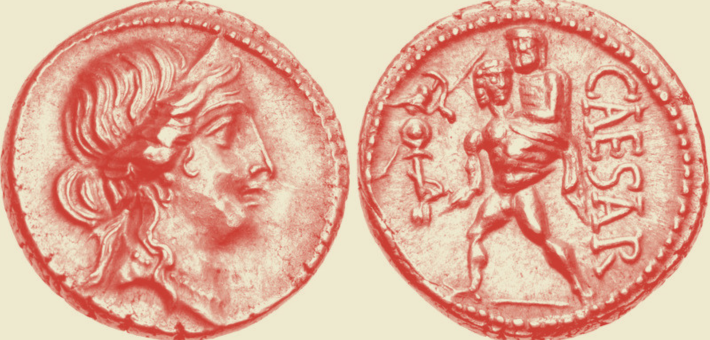
The coin they present has Caesar’s image on it. You cannot use it in the Temple. Although the Caesar of the time had not declared himself God yet, the Pharisees and other religious authorities decried the coins due to strict religious prohibitions against idolatry, blasphemy, and the intermingling of the Roman cult with money. The Herodians, whether from personal belief or political advantage, also frowned on those coins officially for those same reasons. And yet, here they just happen to have one in their pocket. “They are all trading in Caesar’s economy, so they are [all] legally obligated to pay the tax.”[ii]
And despite their hypocrisy and reservations over the coin, Roman power, and one another, they ask Jesus if a Jewish person should pay taxes or not. “Is it permissible?” These words sound like a simply religious question…innocent enough…but Jesus realizes his answer could lead to the death of himself (before he is ready), and the death of any followers influenced by his answer. The Herodians, Pharisees, and everyone else in Israel must already pay taxes or they might suffer torture or death.
And so, Jesus focuses on the aspect of “paying.” As Warren Carter has noted, “Paying taxes acknowledges Rome’s political power but not its moral authority to rule. That moral authority belongs to God. Which is why Jesus quickly adds that one must pay to God the things that are due to God.”[iii] The moral authority always belongs to God. And this is why Jesus instructs, “Give therefore to Caesar the things that are Caesar’s and to God the things that are God’s” (Matthew 25:21).
My friends, money remains a challenging topic…for all of us. It’s a worldly necessity, and yet we can abuse it. If it is in short supply or plenty, we can make too much of it; valuing it too highly…even pining for it. It can become an idol for us turning our hearts from God and God’s ways. Many a time in premarital or family counseling or after deaths, money can play an incredibly important part in any discord discovered. Money is deeply interwoven throughout our earthly lives for both good and ill.
And so, you might have already heard from pastors or stewardship chair that money is referred to by Jesus more than any other one subject related to the Kingdom of God. Eleven of his thirty-nine recorded parables are about our relationship with and use of (if not often misuse of) money. That’s because we should not ignore its very real power and influence over us. To do so can lead to our physical death, loss of freedom, and destruction of relationship. Without money, the economy would not go round, and people would be unemployed and starving. It remains true that without money the world would not go round. People would not work, be fed, and more. It is a necessary evil we say, but it is really just a thing. In and of itself, it has no power other than what we give it.
Being human in a fallen world, we might be caught up by the law we hear… “Sell all your things, give to the poor, and come follow me” (Matthew 19:21). We struggle to discern how to use what we have been given to us as “gift.” (And it is all “gift.”) There’s a struggle to balance healthy self-care and spoiling oneself. Jesus’ teachings on money are not the easiest. We can get stuck on guilt if not shame for our own relationship with money, and sometimes that’s false guilt or shame.
In my past driving around the Richmond area as a pastor, I often saw unhoused if not addicted persons begging. In the areas that I have previously served, it wasn’t unusual to encounter someone struggling to keep their home. And in my mission travels, I have seen the poorest of the poor. For example a Native American boy in high school during my time in South Dakota came to our school with all his earthly possessions in a small plastic bag from the grocery store. These kinds of sights and stories can pierce even the hardest of hearts…but sadly, they do not always do so.
Yes, the world is hard and often unfair, and we do…if we are honest…play a part with every monetary investment, purchase, and political decision that we make. Yet I’m not so sure Jesus’ intent is to shame us…to make us feel so bad about the persons God created us to be and the gifts we’ve been given by God that we give up. That might just be too simplistic. For as Lutherans, we understand everything we do is tainted by sin. So, we should get over that.
What if Jesus looks at each of us in the same way he looked at the rich man struggling to perfect himself by selling all his things and give to the poor in Luke 18? “Jesus looked at him and loved him” as he struggled…He didn’t shame him. Jesus didn’t make fun of or condemn the man. Jesus loved the man. In the context of the man’s life, with all his personal practical and assets and liabilities, Jesus wanted him to discover more joy, not the yoke of the Pharisees, impossible perfection.
Indeed, I have known some Christians that have given up much (if not everything) to try to follow Jesus. It is a wonderous testimony of faith. There is nothing wrong with that, but not everyone is called to sell everything and follow Jesus. It was not true in the Bible, and it remains untrue today. Jesus also sent people home to share what he had done for them. Whatever our unique, individual call, we are asked to be part of his Kingdom of justice and peace…with all that we are and have…sharing and nurturing abundant life no matter how much time we have left.
Thus, rather than getting stuck in shame and sadness, we might seek to identify and acknowledge our guilt fearlessly – “Where can I do better?” Trusting that no one is good except God alone, we can examine how we could possibly do better with glad and hopeful hearts. We can commit together as individuals and a community to do better with God’s help.
Yesterday in preparation for this sermon, I was reminded of what a previous Lutheran World Federation President, Bishop Josiah Kibira from Africa once said, “There is no church so big and so rich, that it wouldn’t depend on the gifts of others; there is no church so small and so poor it wouldn’t be able to enrich others.”[iv] I think this applies to individuals as well. We can all challenge ourselves to do and be better together. That’s part of our ongoing Christian repentance we commit to when we confess, “Jesus is Lord!”
Yet in the end, money can come and go. It will not last. It is part of this world’s vanity (as Ecclesiastes might declare) not the new heaven and earth God has coming. We won’t need money or have taxes in the new heaven and earth. But the love of God…a love planted in our hearts through our faith and baptism…is here now and lasts forever. It is trying to wrap itself around us and claim us. It has the power to change us and the world around us in payoffs and dividends that we might never see or fully understand in this life. That might not easily be qualified by human measures. God’s love ultimately gives us our real value. And so, I find the old Christian maxim proves true, “Those who have God already have enough.”[v]
No matter how little we have, no matter how God decides to share daily bread with us, we are promised that we have enough. We might not have as much as we want. It is ok to complain. We are encouraged to ask for more (all our needs)…But trust God.
Yes, our God is powerful enough to fit our sinful selves through the eye of a needle (see Matthew 19:24), and God can help us to live more like true saints when we humbly recognize our true value doesn’t come from money or anything else at all but only from God’s love. Yet as we struggle under the powers of this world, as we fear for our daily bread, as we wonder if we are good and generous enough, we never need slink away from Jesus and his Church in sadness.
You see, Jesus loves us. Rich or poor or anywhere in between, Jesus deeply loves you…He knows each of us can do better and wants to help us do so. Like Jesus on the way to his own death, we might even be blessed to help others on our own way. Rather than just showing him our money (as a famous movie shouted, “Show me the money!), Jesus hopes we show our hearts more each day to a world in need of him and his salvation joy. Amen.
[i] Nadella, R. (October 18, 2020). Commentary on Matthew 22:15-22. Working Preacher. https://www.workingpreacher.org/commentaries/revised-common-lectionary/ordinary-29/commentary-on-matthew-2215-22
[ii] Nadella, R. (October 18, 2026). Commentary on Matthew 22:15-22. Working Preacher. https://www.workingpreacher.org/commentaries/revised-common-lectionary/ordinary-29/commentary-on-matthew-2215-22-7
[iii] As quoted in Nadella, R. (October 18, 2026). Commentary on Matthew 22:15-22. Working Preacher. https://www.workingpreacher.org/commentaries/revised-common-lectionary/ordinary-29/commentary-on-matthew-2215-22-7.
[iv] Former LWF President (1977-1984), Bishop Josiah Kibira was quoted saying this in a Lutheran World Federation Facebook post, October 5, 2018. https://www.facebook.com/share/p/1GnvFDZTdF/
[v] Often attributed to quotes by Teresa of Ávila, Matthew 13:12, the Lord’s Prayer, and many other testimonies speak to this to us.
Below, please find a video of our worship service. The sermon starts at about the 32:07 minute mark.
© 2026 The Rev. Louis Florio. All content not held under another’s copyright may not be used without permission of the author unless under terms of fair use and properly attributed. Scripture passages when used are from the NRSVue translation unless otherwise indicated.