Keeping the faith, really trust in God, is not easy in a fallen often unfair world. So, how do we walk on?
It helps if we tend to our whole being as best we can before disaster strikes. Tend to our mind, body and emotions, but seek the Lord, too. Friendships grow in love and trust as you spend more time with them. This proves true with Jesus as well. Prayer, worship, scripture study, fellowship with believers, service in his name can all help you grow stronger in faith and understanding. These can also help lift your spirits and sustain you.
Amidst any storm, turn to him most certainly but look for the resources and supports God has thrown you to keep you afloat until safety returns. Remember, it’s ok to not be ok. Consider counseling, support groups, and medical assistance if needed. Turn to and be vulnerable with trusted friends and family who love you. Remember that you belong to Jesus. This, too, shall pass.
Like the psalmist, express your emotions honestly with God. God understands you are only human, but understand that God’s love for you is steadfast and perfect; beyond anything any human can offer you. We might be tempted to give up, but look to the hills for your help.
God sees us, and God will deliver us. As I’ve said before, God will not give up on us. Keep your head up, and look with confidence for your Lord who loves you.
They are four simple words, “Thy will be done.” It’s a phrase easy to say, but it proves hard to live. On the mountain top, it’s easier to trust God’s love. It seems that you can see forever. Walking in the messy, dark valleys of our days, it proves much harder. Even Elijah almost gave up when his life was at risk. So, is it really a surprise that we who are not great prophets can struggle?
No, God understands our weakness, but more than that, God loves us. As a favorite song of mine says, God can’t love us more than God loves us right now. We are promised God’s will is for our ultimate good. Can we hold on? In our day, can we see signs, no matter how small, to help sustain us? God’s Spirit groans in prayer for us with words we can’t seem to say. Angels might be ministering to us in ways we can’t detect. The laughter of a child or smile of a friend can bring us joy. The songs of birds at the sunrise invite our own hearts to sing in praise.
“Thy will be done” is often rightly said in the acceptance of suffering as Jesus did before he was crucified. Yet, never forget that God’s ultimate will is to love us forever. Pain passes and even death has no power over us. So, maybe…just maybe… “Thy will be done” should be said with hope, although we might still say it through tears.
As we accept our crosses, real or imagined, remember the resurrection that we will be part of someday. As Paul rights, “And we know that in all things God works for the good of those who love him, who have been called according to his purpose” (Romans 8:28). We are loved and chosen. We will never be forgotten or cast away by God even when it seems the world might give up on us or want to cast us aside. In fact, Jesus promises he’s here with us always to the end of the world.
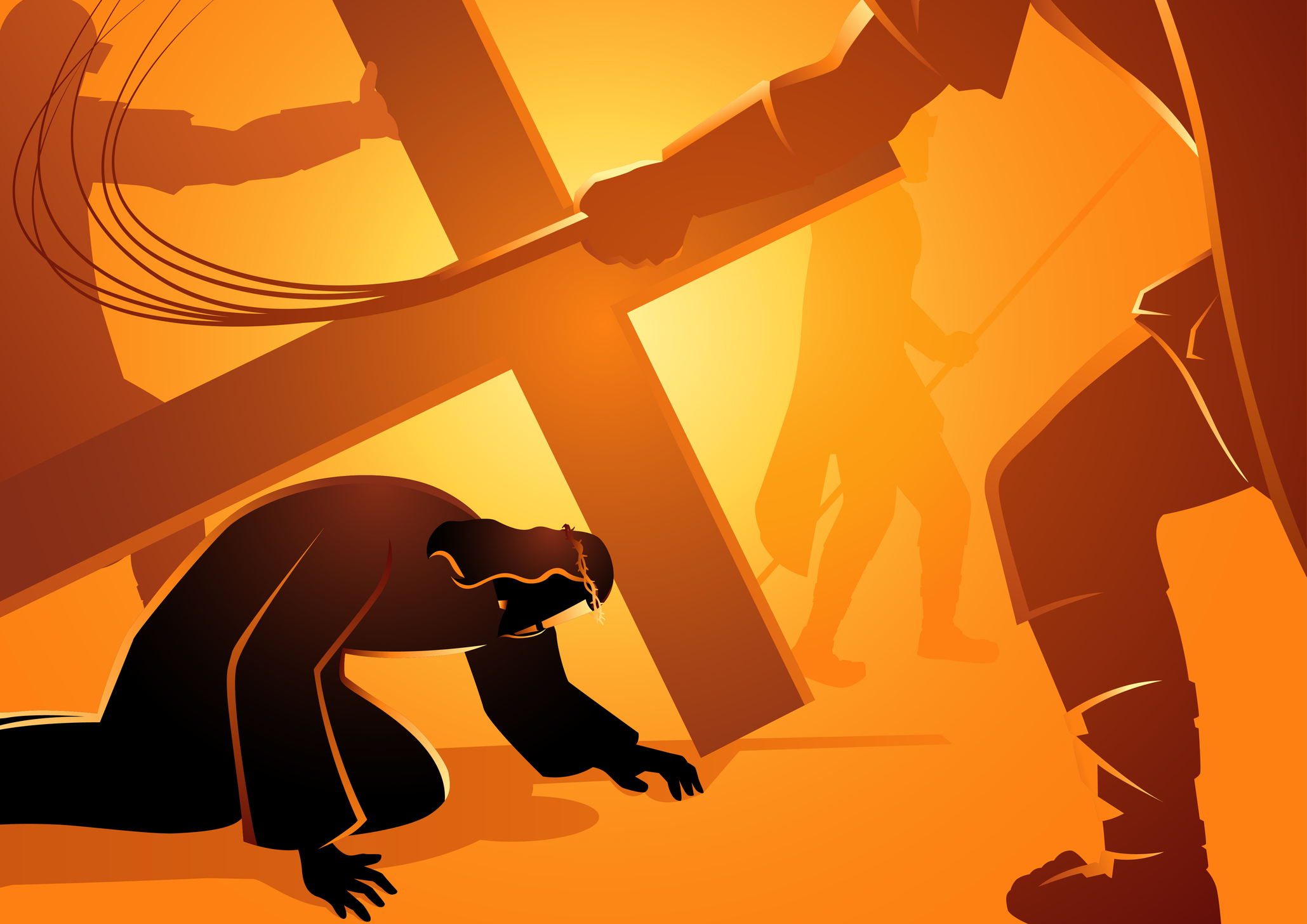
Amidst any suffering, accident or betrayal, whatever happens or fails to occur like we wish, Jesus, too, is here with us; calling us to accept our cross, pick it up and walk in faith. All is well even when life’s seemingly unfair.
The Apocrypha including texts like the Book of Sirach is not considered part of the Protestant cannon of scripture, but Martin Luther did suggest the Apocrypha was “profitable and good to read.” The Apocrypha is a collection of works primarily in Greek, and they can help provide historical context for the period between what is identified as Jewish scriptures and the Christian scriptures. They also can help us better understand God and our world.
As they contain teachings that some traditions find unbiblical, they can be challenged. Jewish people of Luther’s time and today have consistently found that they are not the level of scripture. That said, the Roman Catholic and Orthodox world both consider the Apocryphal texts scripture, but they do recognize some different texts as part of those works. So, there’s no fully ecumenical or interfaith consensus. Our Lutheran bibles often include them with explanation (and we do study them in seminary), but I’ve read some Protestant editions began to drop them over time after the Reformation to help make the Bible more affordable. So, they aren’t always well known.
And still, some Evangelicals and others – like Pat Robertson who I saw once denounce them as dangerous – have had no use for them. It’s a minority voice among worldwide Christianity, and I have suggested that if such people don’t want you to risk reading the Apocryphal texts, then perhaps they should offer the same counsel about their own writings available for purchase. For, those aren’t scripture either.
I stand with Luther. There’s no consensus among Jewish traditions nor Christian ones regarding them. That gives me pause to consider them scripture. Yet, they are profitable and good to read, for historical insights or wisdom including this saying by Sirach about friends (Sirach 6:14-17):
14 A faithful friend is a sturdy shelter: he that has found one has found a treasure. 15 There is nothing so precious as a faithful friend, and no scales can measure his excellence. 16 A faithful friend is an elixir of life; and those who fear the Lord will find him. 17 Whoever fears the Lord directs his friendship aright, for as he is, so is his neighbor also.
Through chapter 6, he argues, “True friends are discerned not by prosperity (v. 11), but through the trials of adversity: distress, quarrels (v. 9), sorrow (v. 10) and misfortune (v. 12) (USCCB Daily Readings, 2025).
The Book of Sirach which was written in Hebrew remains the oldest example of such wisdom literature. It is absolutely applicable to modern times as it addresses friendship. Similar to Proverbs or Ecclesiastes, it offers helpful sayings about ethics written by Yeshua ben Eleazar ben Sira (Ben Sira), a Hellenistic Jewish scribe of the Second Temple period, yet it also can inspire or encourage.
Friends prove a treasure as other scriptural texts and my own life suggest. Friends helped me reconnect to the Church and lift me up after traumas in my past. Friends helped identify my call as a pastor, and they have concretely and through prayer supported my work. Friends helped me as I grieved the death of loved ones, faced cancer, or experienced past jobless periods in my life. In many ways, I discover Gospel truth and holy wisdom through them, not of the level of scripture but true nonetheless.
Friends, new and old, I covet your prayers always, and give thanks for you as I pray. Peace+ and love be with you this day and always. Yet if you ever find yourself doubting or afraid, if you ever feel like giving up, remember your trusted friends. For Christ is waiting in their hearts ready to help and embrace you.
Over the last few years, I’ve had people besmirching my reputation and my faith because I’ve defended police (all cops are not bastards), prayed for the President after an assassination attempt, or said national guard troops were not appropriate for a police issue, or argued that anyone deported or arrested should always be treated with respect. I even had someone claim that I likely would burn my VMI diploma because I suggested slavery was the cause for the Civil War and the southern memorial statue (clearly propaganda) should not be returned to Arlington Cemetery. (They said I was an embarrassment to VMI.)
There are other examples, but basically, I always try to speak the truth as I see it and repent if proved wrong. This song by my friends Nick Henretty and Sarah Henretty has been helpful in helping my yes mean yes and my no mean no, as Jesus said and I’ve quoted much of late. (It’s true that my VMI experience helped me here too.) Yet, it also holds true when people who should have been more transparent with you aren’t and recognized your love for them but don’t.
God is my defender. I know God is near in my distress. I don’t have to fear. I don’t have to strike back. I can choose to do good to the best of my ability even amidst great sadness, gossip, threats, or lies. I invite you to listen. For God defends you too when you trust in him. Do and say what’s right, as best as you can discern it, no matter the opposition or how people might let you down or oppose you. God will help us stand – forever.
What our Jewish siblings call the Writings (or Ketuvim) are examples of “wisdom literature.” They are the third and final section of the Tanakh (the Jewish scriptures, or what many Christians call the Old Testament). These selections are found after the Torah (“instruction”; the five Books of Moses, also called the Pentateuch) and Nevi’im (the “prophets”). How does this journey to wisdom start? Proverbs tells us, “The fear of the Lord is the beginning of knowledge.”
No, we aren’t supposed to run away from God like Adam and Eve after sinning in the Garden of Eden. We are supposed to seek after God. We experience a holy fear as we encounter the one true God, and we come to understand our vulnerability and reliance in something greater than ourselves. We tremble before God’s greatness, because we discover we are not God, nor even masters of our destiny. In fact, on our own, we are worthy of condemnation. To think otherwise is vanity. Yet, we turn to God humbly, because we discover that God is only love, and we know we need God’s grace and salvation. We also know through Jesus and the tug of the Holy Spirit, God desires to save us, not destroy.
A favorite Christian musician and Bible scholar of mine back in the 1990s was a man named Michael Card. He used his love of scripture to ponder God’s greatness through music. He created a three CD work contemplating the Torah, The Prophets, and the Writings. In his reflection song on Proverbs, he reframes this fear with these words, “The Way of Wisdom beckons us; To find the end of fear that perfect love pursues; Wisdom did not come to simply speak the words of truth; He’s the Word that makes us true.” In other words, our holy fear leads us eventually to our grace-filled salvation found only in Jesus. Jesus’ love has the power to transform us.
The path of wisdom leads us from fear toward a perfect love, one that wishes to help and embrace us. Indeed, Wisdom in the Writings is often personified as a welcoming woman. It is much as the Jewish faith has often contemplated and represented God’s Spirit in female imagery in art and other poetry. As Jesus describes God’s love as a Mother Hen, Proverbs tells us that Wisdom beckons us home in our weakness and need. It invites us to knock at the door and seek as Jesus did saying, “I love those who love me, and those who seek me diligently find me.”
So how do we seek? The way of Wisdom calls us to live a life in community where forgiveness is offered, where support is shared, where we meet Christ in one another as well as the Word and Sacraments. The original wisdom works were based on observations and experiences rather than visons and dreams – people found God at work in real life and reflected upon it.
Through their lives, poetry, and sayings preserved in scripture, we learn that our seeking is not just a Sunday adventure or a diversion to our week. It cannot be fully explored alone. We seek to listen for Wisdom daily as we interact with the world. For, God is there. We uncover our true place is among God’s chosen people, and we see that God is at work around us. Even in small acts of love or kindness to our neighbor, we might spot Wisdom.
It is only through such Wisdom that we find our true significance. As we are promised, whoever finds Lady Wisdom, finds true life. I think it comforting that the source of such Wisdom, the Holy Spirit (by the way, spirit is a feminine word in ancient Hebrew), is already seeking and reaching out to us. Perhaps, we should stop, look, and listen for her during our busy days or on days when we feel overwhelmed or afraid. She’ll be there waiting to not just teach us, but embrace us, as our Triune God’s children.
Unless otherwise indicated, all scripture quotations for this post are from the New Revised Standard Version (NRSV) translation.
Originally published in the July 18, 2023 weekly newsletter, the Hub, of Christ Lutheran Church, Fredericksburg, VA, this post was edited and expanded upon for my blog.
A 2023 study found that 40 percent of both Biden and Trump supporters “at least somewhat believed the other side had become so extreme that it is acceptable to use violence to prevent them from achieving their goals.” That’s pretty disturbing. Yesterday, I could sadly look at my feeds on social media and make a list of people that feel that way from the left and right, some who I know personally. According to Stefani McDade in Christianity today, “Most Americans are in shock, grieving, and rightly concerned for the future of our nation [after the assassination of Charlie Kirk]. Yet there are outliers on both ends of the ideological spectrum who seem inclined to assign a deeper meaning to Kirk’s murder—one that instrumentalizes it to galvanize further support for their respective camps and causes.” That’s not healthy or right either. Making violence sacred in one’s preferred image is itself a form of idolatry.
Many have said that there’s no going back even though our future is never set in stone. Some have just suggested that the Rubicon crossed will lead to more violence (which is likely correct knowing human nature). Others, unwittingly or not, want more – the destruction or elimination of the other, and that’s a bad bridge to cross. “The (fill in the blank party) are evil.” (They don’t act with evil, they are evil, they say. That’s a serious and unbiblical accusation.) People angrily resist that violence is an “us” problem, not just “them.” (Martin Luther in his Large Catechism argues quite effectively that we are all murderers.) They can point out the plank in other people’s post easy enough (Matthew 7:3-5), but they often fail to see how their own vitriol potentially facilitates evil actions of others (if not eventually their own down the line). It’s easy to hate those we objectify. They can become to us something less than human, a being made in God’s image who Jesus died to save.
Jesus calls us to be more and do better. Aggression and violence is a choice, to be an exception in a fallen world, always tainted by sin, if one believes what Jesus taught and exemplified. This is why the Orthodox and others encourage soldiers to go to confession with a priest after wartime experiences. Violence is never “pure” as too many wish to frame it. None of our actions are if we ascribe to Lutheran or Reformed theology. Indeed, because of sin, even the concept of free will is a deception. (Read Luther’s The Bondage of the Will if interested in hearing that argument.)
Instead, we are invited, “Do not be overcome by evil, but overcome evil with good” (Romans 12:21). Love and forgiveness can always be a choice too…always. If you feel stuck in your anger, unable to forgive, pray about it. Talk to a pastor, rabbi or other spiritual leader. (And if they are preaching about retribution or going to war over cultural or political issues, perhaps go somewhere else. Spiritual leaders can live in error, too.) Read and meditate upon the Jewish scriptures and Jesus’ teachings about love of others, forgiveness, and violence. God’s Spirit will help.
Yes, Jesus wishes us his peace, a peace beyond understanding (Philippians 4:7). Jesus offered this to his first disciples and to us when he said, “Peace I leave with you; my peace I give to you. I do not give to you as the world gives. Do not let your hearts be troubled, and do not let them be afraid.”
People can quibble about the veracity of research studies regarding our divisions, or who did what first, but Jesus is clear. “Love one another, as I have loved you” (see John 13). Let us choose to abide in his love.
A Smithsonian Institution sign is seen on the National Air and Space Museum on the National Mall in Washington, D.C., on March 28, 2025. KEVIN DIETSCH/GETTY/Newsweek – See the Newsweek article sparking this post.
Recently, the President pondered about slavery in the context of what he suggested was one sided history presentations at the Smithsonian. Certainly, one can point to possible errors, but the President made a big one himself. Plenty of people on social media have regrettably expressed similar things before and since. He said that their portrayal of U.S. history was too negative and focused too much on “how bad Slavery was.”
Well, unfortunately, slavery was worse in the USA than many understand or admit. Don’t take my word for it. Read first hand slave narratives from diaries and interviews: extreme poverty, dismemberments, whipping, rape, murder, and more abominable acts were a norm. Many potential slaves, Native American, African and others, historically feared slavery more than death. In fact, you read of suicidal acts rather than being dragged into slavery or returned to it.
So if anyone is wondering, in the best of circumstances one could imagine, slavery is wrong. It was and always has been steeped in sin, a sign of our fallen world not God’s Kingdom. In Genesis, every human was created in God’s image, male and female alike. Some (I sadly know from experience) will say God allowed it. They will point at a few verses which l agree seem to affirm slavery in that period, but even in speaking of the Ten Commandments, Mosaic law called for better treatment and freedom processes for slaves.
God’s patience with our sin should not be confused with God’s approval of it. (God was not too keen on Israel having a king other than God or the Temple in Jerusalem being built either, for they could lead to idolatry and other sin. Yet, God consented.) By the time the Church comes around, Jesus has extended the understanding of the neighbor whom we should love as oneself to include everyone. Paul emphasizes how slave and master should live within the existing structure while prioritizing Christ, as he did regarding women, but he never argued for slavery. He argued that Christ’s plan is to make all one. In the dangerous context of the Roman Empire where slavery was so embedded, order valued, and social roles defined, he expects Jesus back soon. He didn’t want anything to hinder the spread of the Gospel, so within an unjust fallen world, he counsels humility, patience and love even to one’s enemy. Living faithfully was his primary concern whether a slave or any other lot in a fallen life.
Yet, God did not stop speaking in biblical times. As the Church grows and becomes more diverse, as education spreads (both knowledge and wisdom are said to be gifts of the Spirit), as people pray, meditate on scripture, preach and teach about our Lord, the consensus and understanding grew that slavery and prejudice of any kind is sin. The Spirit works through such holy discernment to try to open our hearts to God’s truth. So again, God called and created everyone. Jesus is to call all peoples to himself. And we are to love one another and see the Christ, the sacred, in one another – in everyone whether friend or foe, believer or not.
Still to this day, prejudice of all kinds, slavery, and ignorance sadly continue to exist. Some people don’t want to see their ancestors as “bad,” but we are all sinnners, so let’s get over it. Going in circles about the multiple causes of the Civil War is a distraction distancing us from the horror. Slavery always takes away a person’s self determination, rights, dignity, health and ultimately life. It’s a kind of theft and murder, as Luther extended those commands similarly to many sins in his Large Catechism. (He suggests we are all murderers at times as we lack care for our neighbors or live selfishly.) As I often quote from Jesus, let your yes be yes, and your no be no. Slavery was evil. It was and remains sin. Let’s leave it at that.
Our ancestors might not have understood this was a sin, but we now do. So, we shouldn’t forget or be shy about their errors. We can learn from them. Sinner-saints all, certainly there could be signs of kindness or generosity back then like now. Yet let God be their ultimate judge, for we have our own sins still to address including modern slavery and human trafficking.
Good thing God is still patient and kind. For, we all need his forgiveness.
As many of you have read, I left police work in the City of Alexandria, Virginia, to discern my religious vocation and volunteer with the Brothers of Taizé in December 1994. (I previously shared about this in some detail in another blog post.) I had come to know them through young adult gatherings in the United States.
My first encounter was while escorting Mary Washington College students to the first ever, large Taizé gathering for young adults in the United States at the University of Dayton. Approximately eight thousand attended. As for me, I had only recently returned to the Church after years of wandering. I experienced a conversion of sorts, a deepening of faith. Or as a hero of mine, Jonathan Daniels, noted in his own life, my faith was synthesized during a time of great trial and loss. At that time, March of 1992, I reconnected with a campus minister I had known in college, and I began to volunteer with her ministry.
I had not heard of the brothers or Brother Roger before, but this trip and its many experiences of the Risen Christ and his Spirit, encountered through others, further redirected my life more radically in May 1992. I subsequently read many of Br. Roger’s books, other writings, and prayers. I prayed with their chants daily. Then, I came to finally visit their village in France in 1993 for a week of silence, and I was invited to come back by my “contact brother,” one who basically serves as a spiritual director for the week. As I shared before in yet another blog post, I thought – just maybe – my call might be with them. Brother Francois said, “We cannot know yet what the answer will be, but we have similar hearts. You must come.” I agreed.
Once back in France to volunteer, Br. Roger joined the male volunteers from all over the world and many denominations for supper when not traveling. I also had an invitation to join the younger brothers nightly for song practice where he always joined us when home in the village and would share news and insights. Among my private memories with him is a walk where he listened to my pain while a very beloved friend and mentor was facing death in the United States from cancer. I had spoken to her by phone for the last time the night before, and my spirit was greatly disturbed. He understood from his own life of sacrifice how hard it could be to find oneself in this beautiful village, surrounded by joyous people, and yet still carry one’s crosses. He uttered a phrase he shared often, “Taize’ is such a desert.”
I was in a desert once again twenty years ago today as I learned of his death at the hands of a person suffering mental illness during an evening prayer in Taizé. Kristine, my wife, had been with me for the Barcelona European Meeting in 2000, so she understood and shared my grief to some extent. Yet as signs of life went on around me, it was among the hardest things I ever experienced to be so far away from others whom I love also grieving deeply, the brothers I called friends and my fellow volunteers now at home in multiple countries or some having become brothers themselves. Meanwhile, so few around me even knew of him while I was so very deeply saddened. I felt somewhat alone.
Yet in the desert, God can make life still bloom. Letters, emails and prayers connected me with these friends and helped sustain and heal me. This remains a living sign of the communion of saints we share through the power of the Holy Spirit. My wife, my greatest gift from God, was an embodied sign of Christ’s love for me. The Spirit also groaned on my behalf carrying prayers that I had no words for. I recognized once again that I was never alone even if tears must come at times. Sometimes, the most beautiful of desert flowers can only come to life this way.
I learned a lot from Brother Roger, especially to trust God and move forward through the desert times. And as we walk, we pray, we sing to the glory of God, and seek to serve. This is just as Brother Roger sought to do throughout his own life, sometimes facing great dangers in order to love others, especially the vulnerable and those alone. Through his example, I also came to understand the Gospel ethic to love our enemies even if others do not approve or understand. It was just his way, and ultimately the Way of Jesus.
Br. Roger died in 2005, but I think of him, his commmunity, and my fellow volunteers daily. I carry them in my heart. I try to live for Christ and others as Brother Roger tried to live. While we might not always succeed, wherever we might fall short, I now truly believe love never fails. God will make the desert bloom as Isaiah foretold, both now and fully at the End of Time.
As I just wrote, Brother Roger, who I lived with and loved, was murdered twenty years ago on August 16, 2005. Jonathan Myrick Daniels, a Civil Rights martyr on the Episcopalliturgical calendar of saints, who I never met but came to know through my own attendance at the Virginia Military Institute and later study of his legacy, was murdered sixty years ago on August 20, 1965. Through curating a Facebook page in his honor, I’ve been blessed to become connected with members of the West family who he once lived with in Selma, his grand-niece, and other people and ministries inspired by his life. These two men are both remembered by the Church for their faith – how they lived – not for how they died. They both remain among the greatest influences upon my own life and the lives of many others. Their Christian witness ultimately helped change how I see myself, others, and the world, and especially how I see our Triune God who is ultimately only love as John the Evangelist plainly and all of scripture ultimately attests.
In a prayer shared on this anniversary of Brother Roger’s death back in 2023, the next prior (now retired from the role), Brother Alois, shared the following:
Christ Jesus, today we give you thanks for the life of Brother Roger. For so many people, he awakened trust in God. By his welcome and his listening, many people were encouraged to commit themselves and to take on responsibilities in the world and in the Church. In his footsteps, we would like to put into practice what we have understood of the Gospel, remembering that with you, Christ, who came for every human being, nothing can separate us from God’s love. (Quoted from a social media post by the Ecumenical Community of Taizé)
I pray with my friends in France for world peace (see link in comments as it wouldn’t post), and I’m praying for those impacted by today’s political violence in the US. Sad is an understatement. We might feel impotent in the face of such senseless violence, but we aren’t. Loving our neighbor including our enemies can be lived out through our lives. If enough people do, just as bad or hate filled sentiment can spread like a disease, so can faith, hope and love from person to person. As hard as it is, try to pray for your political opponents and try to treat them with respect as human beings even as we might think they live in grave error. Ask the Spirit to use you as an agent of reconciliation and peace in your context. Pray for the person or persons who did this for they do not know what they do even as we pray for justice. And seek to defeat evil with good. Sounds easy enough, but it’s a biblical intentional practice often in tension against our baser instincts. Yet if we seek to practice over and over, with God’s help, it will become a habit – a new instinct or gift from the Holy Spirit dwelling within you. Jesus said to his anxious friends, “Peace I leave with you; my peace I give you. I do not give to you as the world gives. Do not let your hearts be troubled and do not be afraid” (John 14:27). He’s still saying that to us today.
Stained glass window in L’Eglise de la Réconciliation
While serving at Christ Lutheran, I have not had many opportunities to participate in any concrete, personal ministry serving those with intellectual disabilities or those on the autism spectrum. Yet, such experiences remain a deep part of who I am. They have shaped my vocation, my relationships and theology, even my personal relationship with God. People experiencing these issues have always been part of my life, and they have taught me a lot…even helped me experience Jesus…if not see him.
Long before I was born, my grandmother chose to keep my Aunt Therese at home after she was born with intellectual disabilities in the 1930s. Many relatives pressured my Nana to give her daughter up…to institutionalize her and move on with her own life. That was the way things were back then. Instead, my grandmother (with my grandfather’s support) ensured that my aunt learned how to read and write, manage household tasks, and was educated about Jesus and the importance of loving others. As a result, Aunt Therese was eventually able to find a job in a factory, serve on her congregation’s altar guild, and even drive. Later in life, she could live alone with the proper support in place. When I came along and still a child, I only saw my aunt as my aunt. There were no labels yet in my mind. She was just another person to love and care for me. And I loved her. I still love her although she died many years ago.
In high school, I was one of several students chosen to assist physical education teachers during the school day. One day, a coach came over to ask me if I would be willing to help a teen new to the school with intellectual disabilities. He was having a hard time adjusting, had loads of energy, and was prone to act out as a result. My job, if I accepted it, was to help accompany him…to model and teach sportsmanship and relationship…and try to get some of his energy out in a healthier way. I was maybe 15 years old, and I must confess I was intimidated. This was not my aunt. It was a new experience.
Yet, I said yes, and my relationship with that young man led me to a new kind of joy. I was eventually asked to help the Special Education Teacher at our high school on a regular basis, and I made more friends who just happened to have disabilities as a result. I also discovered that these students who were sometimes made fun of by others, discounted, ignored, or cast aside, could teach me more things than I ever taught them – especially about kindness and the acceptance of others. Those who were often called the least of these proved to have an inestimable value.
Once in college, I was on a vocational retreat exploring service in the Church. We were in the Appalachian region of Kentucky, and as part of the ten days, we stopped by to visit and help residents at an underserved nursing care facility. Brother Cal, the group leader, invited me to help feed a young woman who was restricted to a life reclining in a special wheelchair. She was physically, and intellectually, severely disabled. She was also almost blind, only able to see shadowy figures. I believe I’ve shared with some of you this experience, for my fear and reluctance turned to a profound joy with new understandings as she responded to my male voice, felt the contours of my face and stubble of my unshaven chin (in order to “see” me in some way), and giggled like a small child as she felt words and noises come from my mouth. I came to sense a kind of holy relationship form between us. Although brief, I still sense our connection as I speak of her or when I think of her. It created a kind of mystical and life-changing communion like that which we speak of in our prayers.
Later remembering these experiences and many others, I would come to support Special Olympics as a police officer after college. You likely know that police officers love to support Special Olympics. (It’s a thing.) Still later as a pastor, I therefore quickly volunteered to Go Over the Edge for Special Olympics Virginia, rappelling down the 26-story Sun Trust building in Richmond for donations. “Push your pastor over the edge” was my tagline, and apparently many people wanted to do just that! I raised over $6,000 that first year. And in following years, other pastors and Lutheran lay people (including Pastor Anne) were crazy enough to join me on that rooftop. In three outings, Lutherans in Virginia raised nearly $20,000 for Special Olympics. This went not only to high quality training and sporting events for those with intellectual disabilities but also to school programs, health and dental programs, along with family support. These are all the activities of Special Olympics.
This became one factor leading to my being invited to serve on the Board with Lutheran Family Services of Virginia, now called enCircle. The nonprofit began with adoption related care in the 1800s, but it now helps with foster children and adoption, geriatric issues, schools for at-risk youth, counseling services for individuals or family, some migrant and refugee assistance, and many other things. Their efforts, of course, include services helping those with intellectual disabilities and autism. They offer day centers, in home care and support, and options to live in community.
I served for nine years on that board, and eventually came to also serve with a L’Arche community in Richmond. L’Arche is an international Christian program that supports and promotes people with different levels of ability living together in community. At one worship service at Messiah Lutheran, my former congregation, a severely autistic young woman, a member of L’Arche, could not wait for the Lord’s Supper and ran up to the altar with great abandon and joy to stand next to me. In her hunger and excitement for Jesus, she taught me something holy that day. And as with everything else I mentioned, I learned a lot about myself, life, and Jesus.
In reflection, I recognize that I could feel my heart burning inside me. There was something…is something…sacred about all these relationships and experiences. In summary, I agree with the words of Father Henri Nouwen, famous for what he learned through his involvement with L’Arche communities:
Giving yourself to others is only possible when you have been fully received…only when you know yourself as unconditionally loved – that is fully received by God – can you give gratuitously. Giving without wanting anything in return is trusting that all of your needs will be provided by the one who loves you unconditionally. It is trusting that you do not need to protect your own security but can give yourself completely to the service of others…When you know yourself as fully loved, you will be grateful for what is given to you without clinging to it, and joyful for what you can give without bragging about it. You will be a free person….Free to love! (As quoted at Apprenticeship to Jesus.)
I do not share these experiences to brag, but hopefully to help point you a way down your own road…a way available to all of us…to help us encounter the Risen Christ. In life, too often, the stressors of our day, the fears over our tomorrows or potential want, and the sin that is at work in us and around us can blind us. We forget God’s promises, and we fail to see Christ’s presence…even though he is right before us!
Today, we heard of Cleopas and another unnamed disciple (possibly his wife, Mary, according to some early authorities) traveling to Emmaus after stories of Jesus’ resurrection had begun to spread. Think about what they had just experienced… profound grief and fear. They were likely still in shock over the death of their beloved Jesus…Now, they were to believe in his physical resurrection? It would be unthinkable for many of us. We would likely be overcome with perplexity and confusion just as they were. Again, fear remained like a specter before them as well.
Then unexpectedly, Jesus appears. He’s in a form where they do not recognize him at first. He’s just another traveler on the road as far as they are concerned…an uninformed one at that. So, they begin to share their dilemma. They speak of Jesus and all that was seen and heard. Jesus finally has had enough. How foolish they are! They seem not to remember all that Jesus and the scriptures before them have taught. “Then,” scripture says, “beginning with Moses and all the prophets, [Jesus] interpreted to them the things about himself in all the scriptures.” He unpacked the scriptures for them…held them up…so they might see how the scriptures touched their lives.
As they near the day’s end, they must have found some comfort or inspiration from their time with this supposed stranger. “Please do not go. Stay.” They perhaps hoped to help him, as he had helped them. This is the context in which their food is shared…a mutual, caring relationship. As Jesus blessed and broke the bread, only then do they see Jesus for whom he is. They ask in wonder, “Were not our hearts burning inside us?”
It is highly unlikely that Jesus will appear to us in a dream or a vision. (It is not impossible, but it is unlikely.) It is even more unlikely that we will see him in the flesh until our own resurrection. Yet, we are promised Jesus is here. Sure, scripture can help us catch a glimpse of Jesus. The sacraments rightly practiced and received in faith might give us a glimpse of Jesus sparking a fire in our hearts. These are both true, but they are not the totality of where we might see Jesus.
Let us recall Jesus’ parable about the judgement of the nations at the end of time for help. To those at the King’s right hand, he will say: “‘Come, you who are blessed by my Father, inherit the kingdom prepared for you from the foundation of the world, for I was hungry and you gave me food, I was thirsty and you gave me something to drink, I was a stranger and you welcomed me, I was naked and you gave me clothing, I was sick and you took care of me, I was in prison and you visited me.’ Then the righteous will answer him, ‘Lord, when was it that we saw you hungry and gave you food or thirsty and gave you something to drink? And when was it that we saw you a stranger and welcomed you or naked and gave you clothing? And when was it that we saw you sick or in prison and visited you?’ And the king will answer them, ‘Truly I tell you, just as you did it to one of the least of these brothers and sisters of mine, you did it to me.’” (See the complete parable at Matthew 25:31-46).
Indeed, in our faith and baptism, we become the vary body of Jesus as we serve. Yet, Jesus is reminding us that he is all around us in the world. He’s in all those who are suffering need. Jesus is even in the hearts of our enemies and those who don’t know him yet…trying to set a spark of recognition…wanting to warm their hearts. He can be spotted at the oddest times…when ordinary kindnesses are seen as the sacred things that they are meant to be…binding us together as one…helping us learn more about Jesus and the life he himself exemplified.
Today’s story tells us of a great miracle, but, oh, how foolish we remain and how slow of heart to believe all that the prophets have declared!…We are slow to believe what Jesus himself has taught us. Our life is meant to be sacred…a life where Jesus is not only made known but fully made present. We might only catch a glimpse, but he says he is there. Can you not perceive him? Have you ever slowed down enough to try. We can so often be like those travelers – seeing people for what they do or don’t do, or maybe as the world labels them, blinded by our own shortsightedness or our concerns for self. It is too easy to prove blind to Jesus who is always with us!
Yet, Jesus wills to not leave us in our blindness. He comes to us again and again in the need we find around us. In our ordinary life, we are called to a holy purpose that we might not ever fully recognize…or maybe we might never know and understand in this world…Still, there is something Jesus would have us do. If we want to glimpse…just glimpse…even a shadow of the Risen Christ in our lives, we have to look up and around us. We must walk the roads and byways aware and alert for those in need but also those marginalized and easily overlooked. For Jesus will be there.
Yet, we live in a world that often sees things otherwise. The autistic and intellectually disabled are sometimes said to not provide value. For too many, they are not seen as fully human. The homeless deserve what they get, some say, and those suffering mental weakness might be labeled as weak. The old are an inconvenience, a drag on finances. To have empathy and compassion is said to be against Christian values. (Some Christians say that!) These are all things I have seen, heard and read over the years…not just these last months. The day is over, and things are getting dark.
Who might Jesus be calling us to break bread with, so that he might be seen? It might be through serving others or in the sacraments. We might catch a glimpse of him in the forgiveness and kindness we offer others. It could be just non-anxiously accompanying someone through a life’s challenge, not having answers but being willing to listen and care as we walk with them.
These kinds of opportunities to see Jesus can happen when we least expect it…when we are so tired or stressed that we think that we cannot take anything else on…or present themselves at the most inconvenient of times. Yet Christ’s love is a fire, and his love burns in our hearts. When we feel it, we must pay attention to it…no matter how small a spark or even if it might lead toward our own sacrifices or death. For it is at just those times, we and others can be profoundly gripped by the wonder of Christ’s love. We will come to know that we are loved, and we will be better able to find a road forward loving others; leading us to a deeper communion with God; taking us to places where we will come to see Jesus face to face…together. Amen.
If you would like to listen to the above sermon or watch our service, the video can be found below. The Gospel text and sermon begins at about the 18:45 minute mark.The preaching text isLuke 24:13-35.
Husband, Pastor, Law Enforcement Chaplain, and member of the Clerical Errors (aka "The Three Priests"), I'm sharing my two cents with anyone who cares...
You can also find me on social media as Loudluthrn (Lou-d-Luthrn or Lou the Lutheran). It is a moniker given me while attending a Presbyterian Seminary, but I'm a loud and proud Lutheran too (just not too loud and proud, mind you).